
0 ITEMS

How to Make a Startup Financial Plan for Fundraising?
Table of Content
- What Is a Startup Financial Plan?
- Why Do Startups Need a Comprehensive Financial Plan?
- How to Build a Startup Business Financial Plan
- Step 1 – Analyze First Traction
- Step 2 – Conduct Industry Research
- Step 3 – Construct the Model
- Step 4 – Identify Revenue Sources
- Step 5 – Model the Cost Structure
- Step 6 – Optimize Capital Expenditure Plan
- Step 7 – Polish the Net Working Capital
- Step 8 – Quantify Funding Needs & Options
- Step 9 – Refine the Financial Statement Forecast
- Step 10 – Set Up an Exit Plan
- Brandy Distillery: Small Business Financial Plan Example
- Get Your Financial Plan Template for a Startup Business and Secure Your Fundraising Blueprint Today!

Creating a solid startup financial plan is essential for attracting investors and managing growth.
- It should clearly outline your revenue streams, cost structure, and funding needs to demonstrate profitability potential.
- Analyzing initial traction and industry data helps set realistic financial forecasts and market expectations.
- Constructing detailed income statements, balance sheets, and cash flow projections guides strategic decisions.
- Tailoring your plan for different audiences, like investors or internal teams, improves communication and confidence.
- Regularly updating and refining your financial model ensures your startup stays prepared for future challenges and opportunities.
A well-prepared financial plan provides the roadmap to turn your startup vision into a sustainable business.
What Is a Startup Financial Plan?
A startup financial plan is a roadmap for financial growth, outlining the current financial position, the direction to pursue, and the steps needed to effectively reach the set goals. It outlines anticipated revenues, expenses, and cash flows over a specific period, usually three to five years. This plan includes budgets, financial forecasts, funding requirements, and break-even analysis. It serves as a roadmap for attracting investors, guiding decision-making, and managing resources by demonstrating the startup’s potential for profitability and growth.
A startup financial plan is a forward-looking, reassuring component of a winning business plan. It typically includes income statements, balance sheets, cash flow statements, and funding strategies, ensuring the startup is financially viable and prepared for future challenges. It goes beyond merely copying and pasting this data. Instead, it focuses on projecting future financial performance and setting strategies to achieve long-term goals. By looking ahead, a comprehensive financial plan helps businesses not only navigate the present but also strategically position themselves for future opportunities and risks, ensuring ongoing financial stability and success.
Why Do Startups Need a Comprehensive Financial Plan?
A comprehensive financial plan is crucial for any new venture, serving as the roadmap that guides entrepreneurs toward achieving their business goals. So, what can you expect to gain from a comprehensive financial plan? While the advantages are virtually limitless, a comprehensive financial plan has distinct benefits that stand out.
- Fundraising: A comprehensive financial plan is not just important, it’s crucial for fundraising. It’s the tool that demonstrates to potential investors the viability and profitability of the business idea. Investors need to see detailed financial revenue, expenses, and cash flow projections to assess the potential return on their investment. Including a competitor and market analysis and a unique value proposition on a startup financial plan convinces investors of the startup’s growth potential and sustainability. Without this clear financial roadmap, securing funding becomes significantly more challenging as investors are less likely to take a risk on an unproven concept.
- Managing Financials: Effective financial management requires a comprehensive financial plan to monitor and control the business’s financial performance. A startup financial plan serves as a benchmark against which actual performance can be measured, enabling the identification of variances and the implementation of corrective actions. It includes budgeting, forecasting, and financial reporting processes that help in maintaining financial discipline and ensuring that the business stays on track to achieve its financial goals. Regular review and adjustment of the financial plan are necessary to adapt to changing market conditions and internal dynamics, ensuring the business remains financially healthy and competitive, providing a sense of security and reassurance to the business owners.
How to Build a Startup Business Financial Plan
Starting your entrepreneurial journey without a startup business financial plan is like navigating a ship without a map or compass. You may have a general idea of where you want to go, but you need a clear direction to maintain your way at sea and stay afloat. A startup business financial plan outlines your objectives, strategies, and tactics, helping you make informed decisions about funding, investments, and resource allocation. Here’s a step-by-step process of creating a startup business financial plan that will help you achieve your goals and drive success.
Step 1 – Analyze First Traction
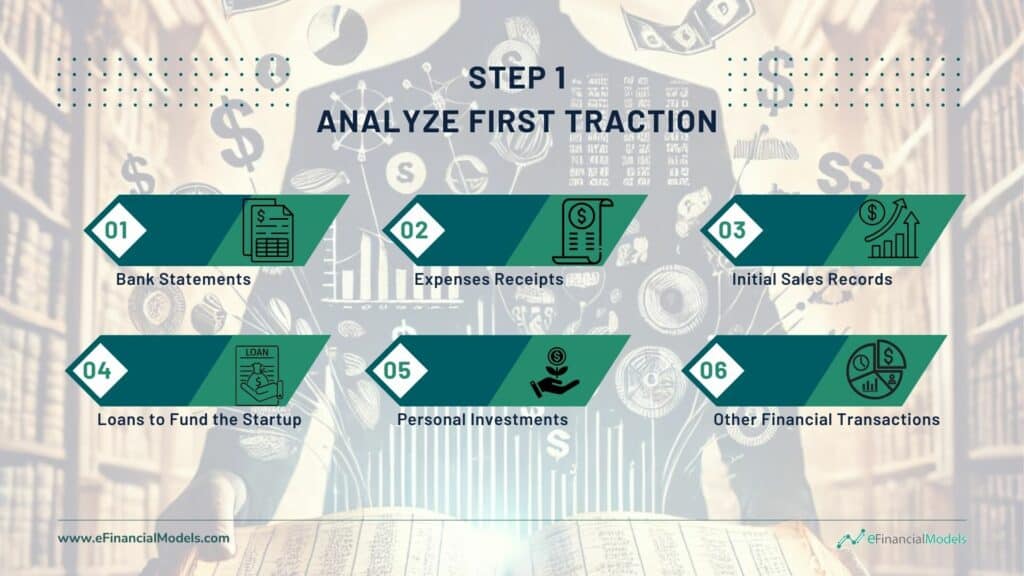
Financial planning for a startup involves a comprehensive data collection process. For startups with limited historical data, it’s essential to analyze the first traction or the first available data meticulously. This initial step is crucial as it provides the groundwork for all subsequent financial planning activities. Information can be collected from various sources, such as initial sales records, expense receipts, bank statements, and other financial transactions. Entrepreneurs should also gather data from personal investments and loans to fund the startup.
When internal data is scarce, market research and industry benchmarks play a pivotal role in understanding the startup’s financial position relative to competitors. Financial software or essential accounting tools can help organize and analyze this data if the business has been operating for a few months. Even with minimal data, this thorough analysis is vital for developing a robust startup business financial plan and steering the startup toward success. Once the data is collected, the next part of this step involves a detailed analysis to derive meaningful insights. It includes various financial calculations and projections, such as cash flow forecasts, break-even analysis, and profitability assessments. Entrepreneurs should also compare their data against industry benchmarks and standards to gauge the startup’s potential performance and set realistic financial goals. This thorough analysis helps understand the startup’s financial viability, identify the required capital, and set realistic financial goals.
Step 2 – Conduct Industry Research
When creating a startup financial plan, moving beyond just management estimates is crucial. While internal projections provide a foundational outlook, incorporating data from the industry and similar companies can challenge those assumptions and offer a more realistic picture of where the company might be heading. Industry research helps benchmark your startup against peers and understand market trends, competitive landscape, and potential growth rates. By comparing management’s estimates with industry standards and historical data from similar businesses, you can adjust your financial projections to reflect the realities of the market better, thus enhancing the credibility and accuracy of your financial plan.
To perform industry research for a startup financial plan:
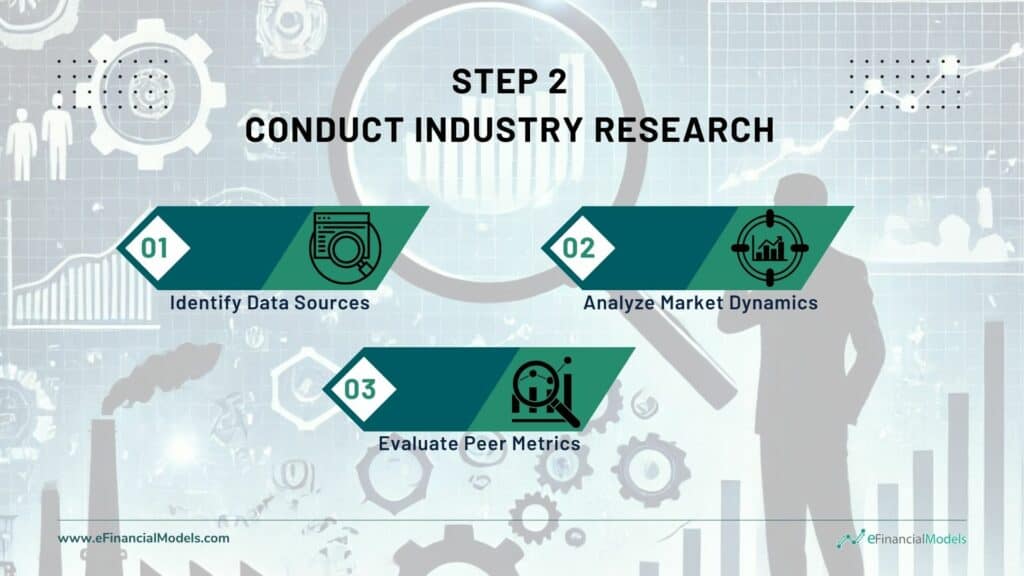
- Start by identifying key industry data sources such as market research reports, industry publications, government databases, and trade associations.
- Analyze market size, growth trends, and key drivers influencing the industry.
- Look into financial performance metrics of similar companies, such as revenue growth, profit margins, and cost structures.
Understanding the competitive landscape is also critical; identify significant competitors, their market share, and their strategies. Engage with industry experts, attend trade shows, and participate in relevant online forums to gather qualitative insights. Use this comprehensive data to inform your financial assumptions, ensuring they are grounded in the current market context and aligned with industry realities. This rigorous approach refines your financial projections and prepares your startup for informed strategic decision-making.


























































Step 3 – Construct the Model
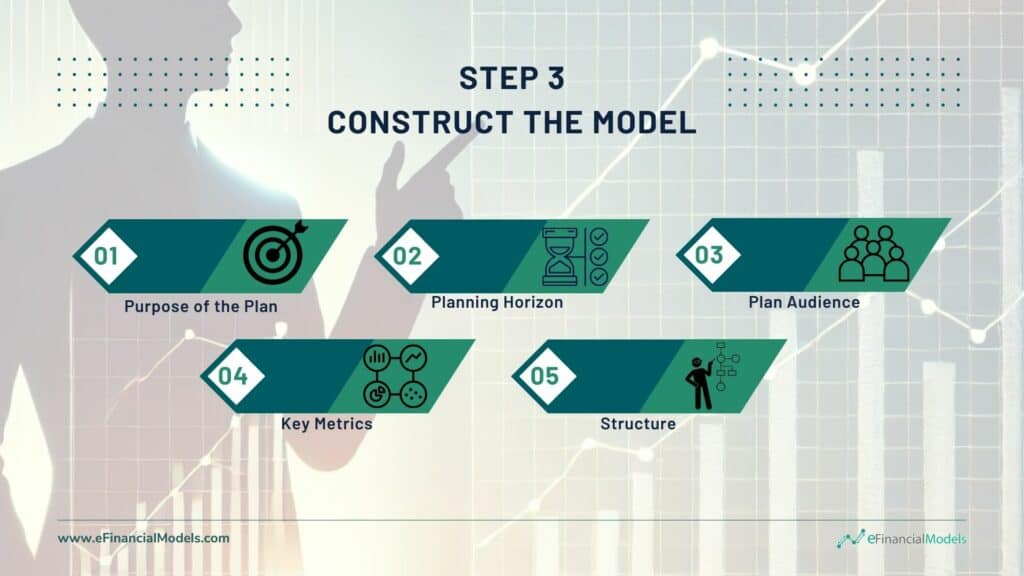
When constructing the financial plan model, there are several things a startup needs to consider:
- Purpose of the Plan: Determine why you created the startup business financial plan. Is it for securing funding, setting milestones, managing cash flow, or evaluating business performance? The purpose will guide the level of detail and the type of information you include.
- Planning Horizon: Decide on the timeframe for your financial projections. Startups often use monthly forecasts for the first year to closely monitor cash flow and operations and then switch to yearly predictions for the following years. This helps balance detailed short-term planning with longer-term strategic outlooks.
- Plan Audience: Identify who will be using the financial plan. Is it for internal stakeholders like the management team and employees or external stakeholders such as investors and banks? Different audiences may require different levels of detail and focus areas.
- Key Metrics: Determine the key metrics that are important to your audience. Investors focus on revenue growth, profitability, and burn rate, while management needs to track customer acquisition costs, churn rates, and operational efficiency. Understanding these metrics helps tailor the financial plan to meet the needs of its users.
- Structure: When deciding on the model’s structure, you need to consider how to organize and present the information effectively. The financial planner will then need to analyze all the gathered data and build a planning model—often done in Excel—that reflects the company’s business logic.
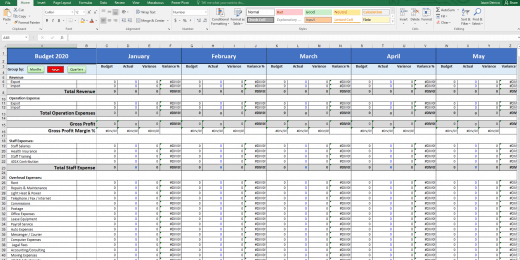
Using a spreadsheet program like Excel ensures that the startup business financial plan is organized clearly and logically, with separate sections for different financial components. This makes it user-friendly and adaptable to changes. Such a structure allows for easy updating and scenario analysis, enabling the company to adapt to changing conditions and make informed decisions.
Step 4 – Identify Revenue Sources
Good planning happens using a bottom-up approach. It starts with analyzing each source of revenue and its key drivers, such as demand, supply, volumes, and pricing. A common mistake beginners make is to do top-down planning by simply taking a percentage of the market share to estimate revenue. The problem with this method is that it doesn’t answer the critical question of where exactly the revenue will come from. A bottom-up approach, on the other hand, provides a detailed and realistic view by breaking down the revenue into manageable components, ensuring that all assumptions and forecasts are based on actual market dynamics and business activities.
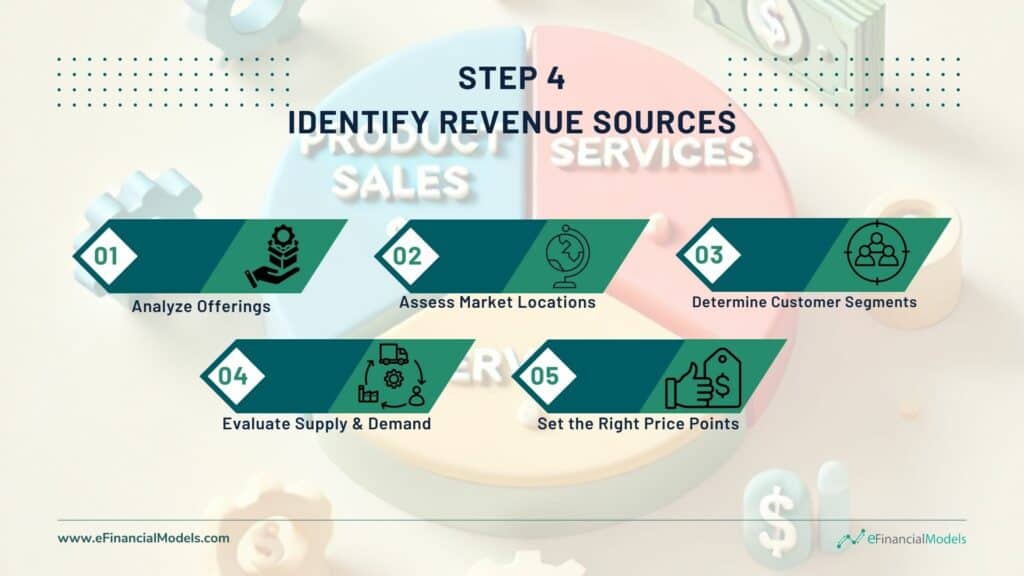
To identify revenue sources for a startup business financial plan, look at various revenue streams the business can tap into.
- Analyze offerings: Identify all products and services your startup will offer and their unique value propositions.
- Assess market locations: Understand the market dynamics in the geographical areas where your startup will operate.
- Determine customer segments: To tailor your offerings, segment your target audience based on demographics, behaviors, and needs.
- Evaluate supply & demand: Analyze the potential volume of your offerings that can be supplied and the expected customer demand in the market. Demand refers to the market need or desire for the startup’s offerings. While the supply or volume pertains to the number of products or services expected to be sold,
- Set the right price points: Establish pricing strategies that reflect the value of your offerings, market conditions, and customer willingness to pay to maximize revenue while remaining competitive.
Understanding the interplay of revenue drivers is crucial. It helps you create a comprehensive startup business financial plan that accurately reflects your startup’s revenue potential.
Step 5 – Model the Cost Structure
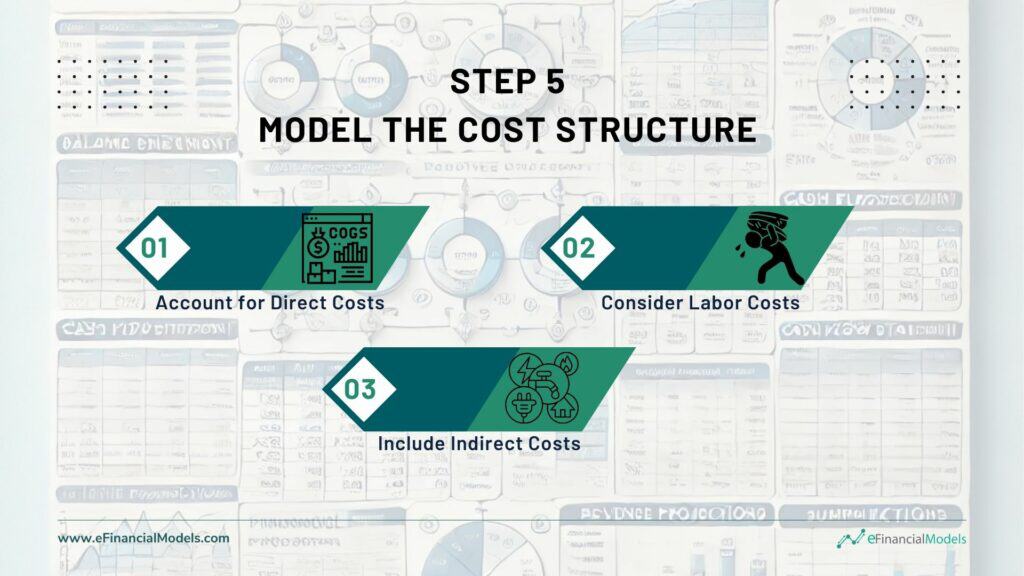
Once the drivers of revenues are clear, the next crucial step in the startup financial plan is to specify how to plan the costs. Begin with identifying direct expenses, salaries, and indirect costs.
- Direct costs, directly tied to producing goods or services, need to be meticulously understood. It is essential to determine whether these costs are linked as a percentage of sales or calculated on a cost-per-volume-unit basis. Additionally, it is necessary to consider their potential escalation factors over time. Understanding these aspects ensures that the cost structure accurately aligns with the revenue projections and future growth.
Including labor and indirect costs in the startup business financial plan is vital.
- Labor costs encompass all expenses related to employee compensation, including wages, benefits, and taxes.
- Indirect costs, often called operating expenses, cover various expenditures such as rent, utilities, marketing, administrative, and other overheads. These costs are not directly tied to the production process but are necessary for the overall operation of the business.
Correctly accounting for labor and indirect costs ensures a comprehensive startup business financial model that reflects the business’s actual cost and supports informed decision-making for sustainable growth.
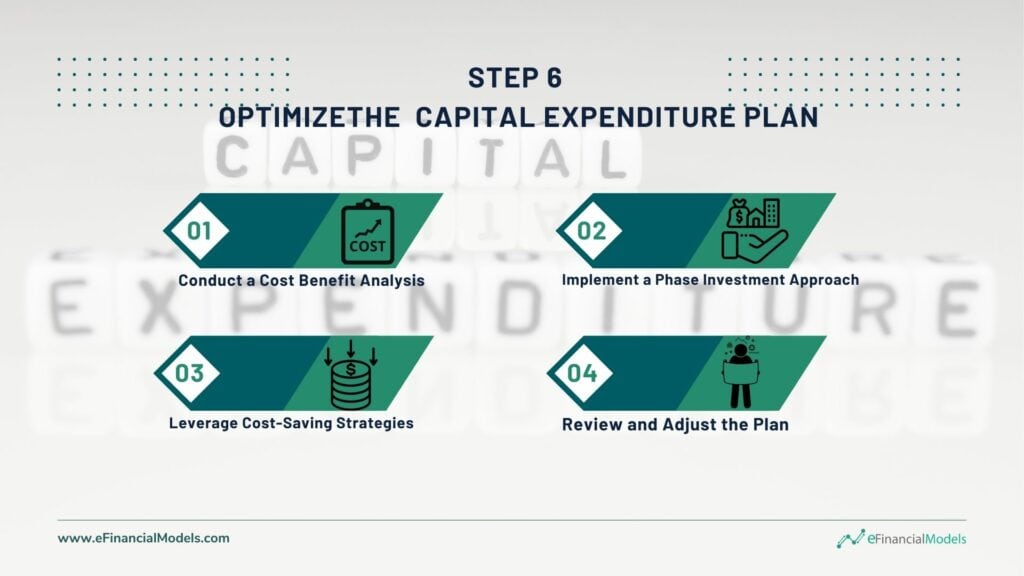
Step 6 – Optimize Capital Expenditure Plan
A startup business financial plan requires careful identification and timing of capital expenditures (CapEx) to ensure resources are allocated efficiently and effectively. Initially, a significant portion of CapEx will be directed towards establishing a solid foundation for operations. It might involve purchasing essential equipment, securing office or production space, and investing in software or technology platforms critical for the business’s core activities. Timing these investments is crucial to align with the business’s operational milestones and market entry strategy. As the business progresses, additional investments may be needed to scale operations, such as expanding facilities, upgrading technology, or increasing inventory levels to meet growing demand. Projecting these expenditures accurately is essential to avoid cash flow problems and ensure the business can support its growth trajectory.
To optimize capital expenditure in a startup business financial plan, prioritize investments directly contributing to revenue generation and growth.
- Begin by conducting a thorough cost-benefit analysis for each potential expenditure, ensuring that resources are allocated to high-impact areas.
- Implement a phased investment approach, starting with essential assets and gradually scaling up as the business grows.
- Leverage cost-saving strategies such as leasing equipment, using shared workspaces, and negotiating favorable terms with suppliers.
Regularly review and adjust the CapEx plan based on performance metrics and market conditions to maintain financial agility and ensure efficient use of capital.
































Step 7 – Polish the Net Working Capital
Apart from Capital Expenditures (CAPEX), it’s crucial to determine how much Net Working Capital (NWC) your startup will require to operate efficiently. It is the difference between its current assets (like cash, inventory, and receivables) and its current liabilities (like payables and short-term debt), representing the funds needed to manage day-to-day operations. NWC is often overlooked and vital in ensuring smooth business operations. For many startups, the build-up in NWC is significant as it also needs to be financed, making it an essential component of a comprehensive financial plan.
To polish the net working capital in a startup business financial plan, consider the following steps:
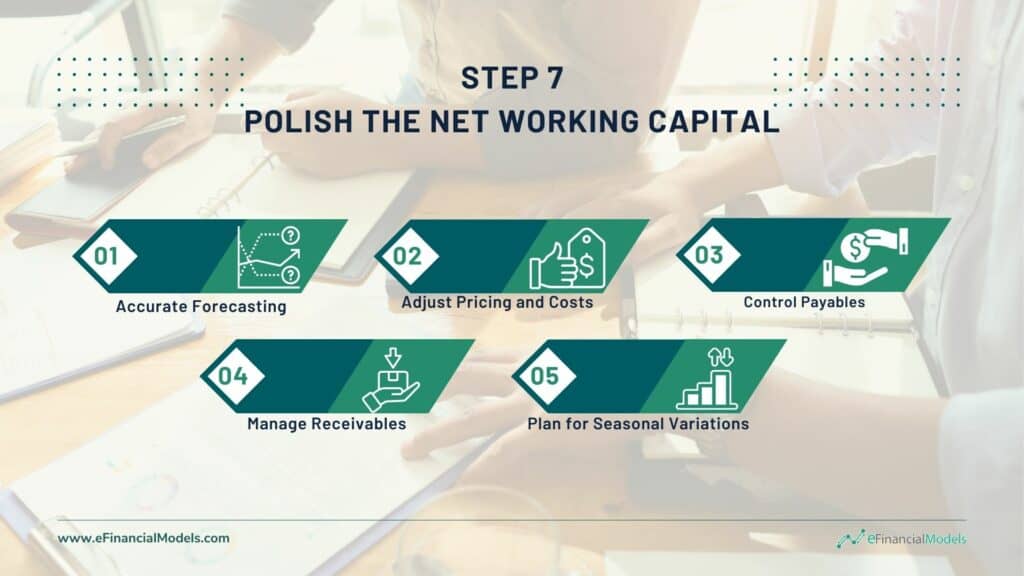
- Accurate Forecasting: Use realistic projections for sales, expenses, and cash flows to accurately estimate the startup’s future working capital needs.
- Adjust Pricing and Costs: Evaluate pricing strategies and cost structures to improve profit margins, which can positively impact net working capital.
- Control Payables: Negotiate favorable payment terms with suppliers to extend the time frame for paying bills without incurring penalties.
- Manage Receivables: Accelerate collections by setting clear credit policies, offering discounts for early payments, and following up promptly on overdue accounts.
- Plan for Seasonal Variations: Anticipate and prepare for seasonal fluctuations in sales and expenses to maintain stable working capital throughout the year.
By meticulously managing these aspects, a startup can enhance its net working capital position, ensuring better financial health and operational efficiency.
Step 8 – Quantify Funding Needs & Options
Creating a startup business financial plan involves quantifying the financing needs and exploring various funding options. In this step, it is essential to identify the total financing requirement of the business. It includes a detailed analysis of all startup costs, operational expenses, and other financial outlays necessary to get the business up and running. Additionally, entrepreneurs must strategize how the startup will be financed through equity, debt, grants, or a combination of these sources. Capital providers, such as investors and lenders, must clearly understand how their funds will be allocated and utilized. This transparency helps build trust and ensures the financial backers are confident in the entrepreneur’s ability to manage and grow the business effectively.
Preparing a Uses and Sources of Funds table is imperative to achieve this clarity. This table serves as a financial roadmap, detailing where the funds will come from (sources) and how they will be spent (uses).
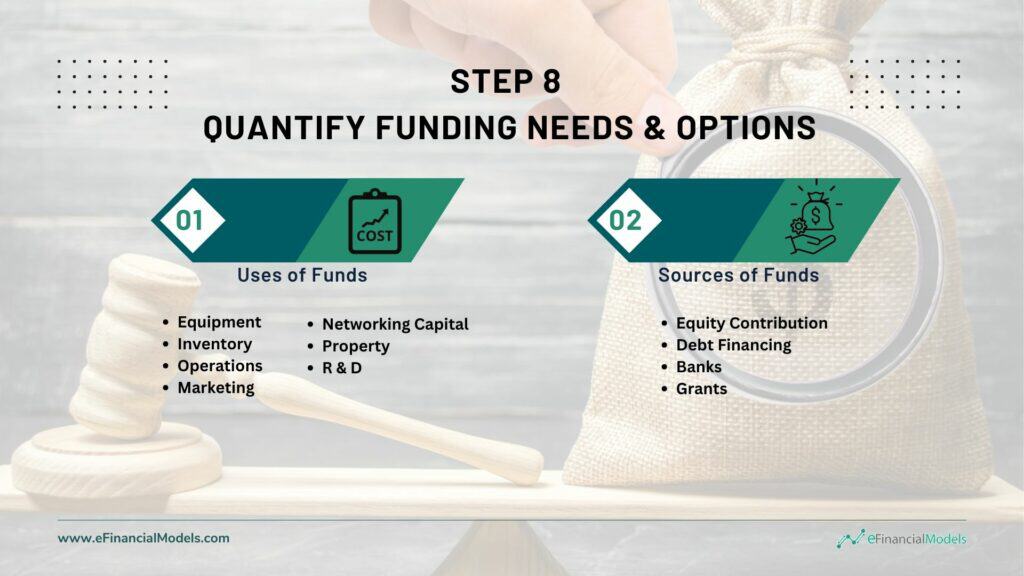
Common items under the Uses of Funds are:
- Equipment: Funds used to purchase machinery and tools necessary for production or service delivery.
- Inventory: Money allocated to buy raw materials or finished goods for resale.
- Operations: Expenses related to the daily running of the business, such as utilities and salaries.
- Marketing: Budget set aside for promoting the business and attracting customers.
- Networking Capital: Working capital covers short-term liabilities and operational expenses.
- Property: Investment in real estate, either for business premises or expansion purposes.
- Research & Development: Funds dedicated to innovating and improving products or services through research activities.
Typical items under the Sources of Funds are:
- Equity Contribution: Capital invested by the business owners or shareholders in exchange for ownership stakes.
- Debt Financing: Borrowed funds that must be repaid with interest, typically from loans or bonds.
- Banks: Financial institutions that provide loans or lines of credit to businesses.
- Grants: Non-repayable funds governments, organizations, or foundations provide to support specific projects or initiatives.
This structured representation not only aids in financial planning but also provides a clear and concise summary for potential investors and lenders, showcasing financial prudence and strategic resource allocation.
Step 9 – Refine the Financial Statement Forecast
This step requires the preparation of three main financial statements:
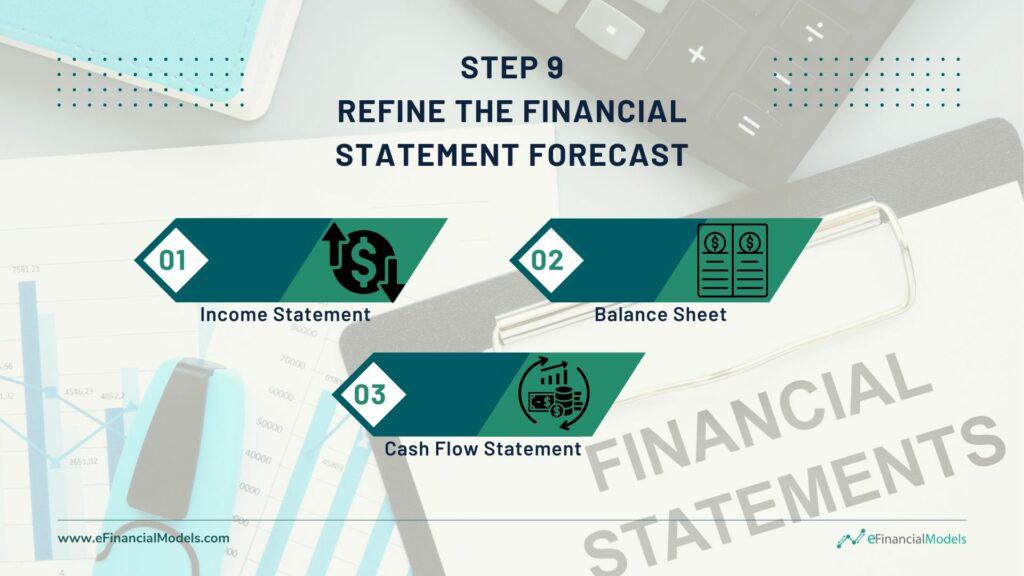
- The Income Statement, also known as the Profit and Loss Statement, details the startup company’s revenues, expenses, and profits over a specific period, highlighting operational efficiency.
- The Balance Sheet provides a snapshot of the company’s financial position at a given time, listing assets, liabilities, and shareholders’ equity, which helps assess the company’s stability and optimal capital structure.
- The Cash Flow Statement tracks the flow of cash in and out of the business, ensuring that the company can meet its short-term obligations and maintain liquidity, crucial for sustaining operations and growth.
To refine the financial statement forecast in a startup business financial plan, start by meticulously reviewing and adjusting your financial projections’ assumptions, ensuring they are realistic and grounded in current market conditions and business strategies. Take the initiative to update the income statement with accurate revenue projections and expense estimates. This proactive step will ensure that any changes in operational costs or market trends are incorporated, reflecting the company’s responsible financial management. Adjust the balance sheet to accurately represent the company’s assets, liabilities, and equity, reflecting any new financing, capital expenditures, or changes in working capital. Refine the cash flow statement to ensure it accurately captures all cash inflows and outflows and highlights any potential liquidity issues or investment needs. This meticulous process ensures consistency and reliability, providing a secure and trustful foundation for making informed business decisions and attracting potential investors.
Step 10 – Set Up an Exit Plan
Setting up an exit plan is crucial for the longevity and success of a startup business. Investors, who are an essential source of funding for startups, typically seek to exit their investment within a specific time frame, usually between 5 to 10 years. This exit plan provides a roadmap for investors to recoup their investment with a profit. Establishing a preliminary understanding of the potential worth of the business at the time of exit is essential for attracting and reassuring investors. It gives them confidence in the startup’s future profitability and growth potential, aligning their financial expectations with the business’s strategic goals. An exit plan also helps the startup founders to make informed decisions that drive growth and increase the business’s value, ensuring that all stakeholders benefit from the investment.
As a startup business owner, setting up a well-structured exit plan is not just a crucial component of any comprehensive financial strategy but a powerful tool that puts you in control. It ensures that you can maximize the value of your business when it comes time to sell or transition ownership. This process involves several key steps that you, as the owner, can take to prepare and position your company for a successful exit.
- Analyze Market Valuation Multiples: Start by analyzing market valuation multiples. These multiples are ratios used to value a company relative to its peers. Common examples include the Price-to-Earnings (P/E) ratio, Enterprise Value-to-EBITDA (EV/EBITDA) ratio, and Price-to-Sales (P/S) ratio. Analyzing these multiples involves comparing your company’s financial metrics to those of similar companies in the market. This comparison helps determine a realistic valuation range for your company, which is crucial for planning an exit strategy.
- Optimize Free Cash Flow Forecast: Free cash flow is the cash the company generates after accounting for capital expenditures. It’s a critical measure because it reflects the company’s ability to create surplus cash that can be used for expansion, dividends, or debt reduction. It would help if you created detailed and realistic financial projections to optimize your FCF forecast. It involves analyzing historical financial data, market conditions, and future growth prospects. Ensuring your FCF projections are accurate and robust provides potential buyers or investors with a clear picture of your company’s financial health and future potential, which is vital for negotiating a favorable exit.
Streamline Key Metrics: The final step in setting up an exit plan is to streamline vital financial metrics, primarily focusing on the Internal Rate of Return (IRR) and Cash Yield. IRR measures the profitability of potential investments, indicating the expected annualized return rate. On the other hand, Cash Yield is the annual cash income from an investment expressed as a percentage of the investment’s value. Streamlining these metrics means ensuring they are clearly defined, accurately calculated, and easily accessible to potential investors. Doing so makes it easier for investors to understand the potential returns on their investments. A high IRR and attractive Cash Yield can significantly enhance the attractiveness of your company to potential buyers, facilitating a smoother and more lucrative exit.























Brandy Distillery: Small Business Financial Plan Example
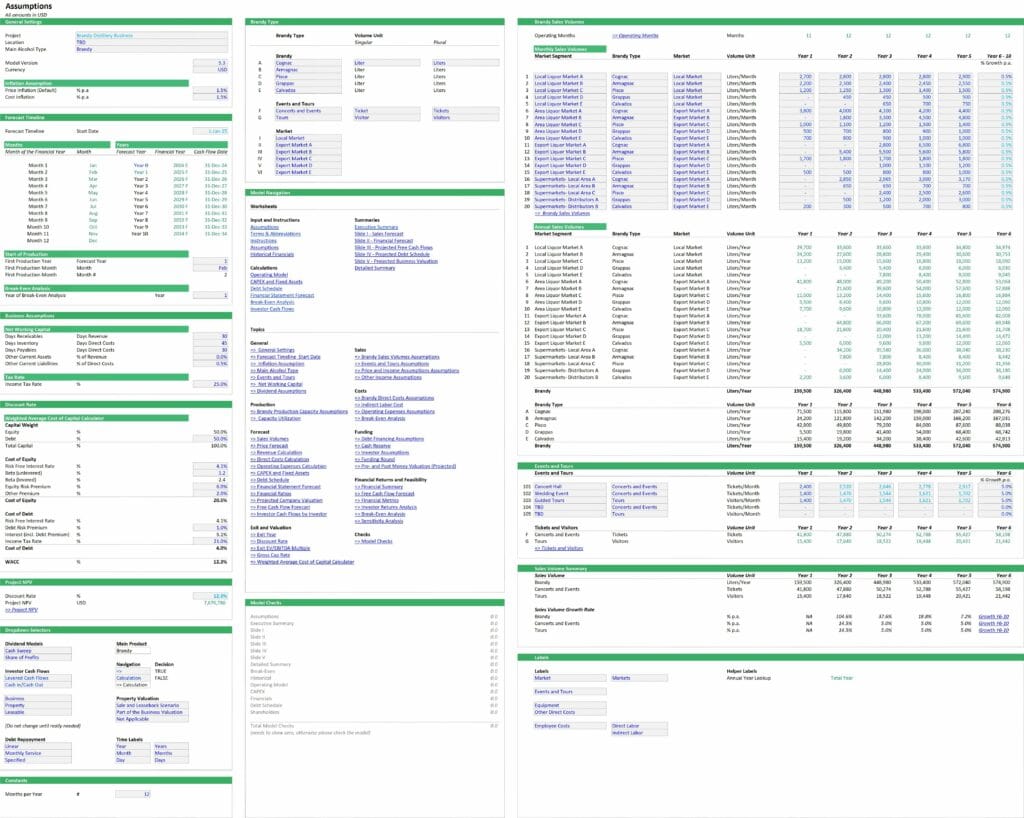
Here’s a small business financial plan example for a Brandy Distillery. It details the strategic framework and financial blueprint required to launch and successfully run a craft brandy production company. This comprehensive plan is essential for fundraising, as it provides potential investors with a clear picture of the business’s strategy and financial projections, helping them gauge the viability and potential return on their investment. The assumptions section in the brandy distillery small business financial plan example is crucial for fundraising as it provides potential investors with a clear, detailed foundation for the business’s financial projections. By outlining critical elements like production timelines, pricing strategies, market segmentation, startup costs, and capital structure, this section helps to demonstrate the startup’s understanding of its market and operational realities. Establishing these parameters allows the business to set realistic and measurable objectives, such as market penetration goals and profitability timelines, which can instill confidence in investors. It shows that the company has a well-thought-out strategy and a solid plan for achieving its financial targets, making it a more attractive investment opportunity.
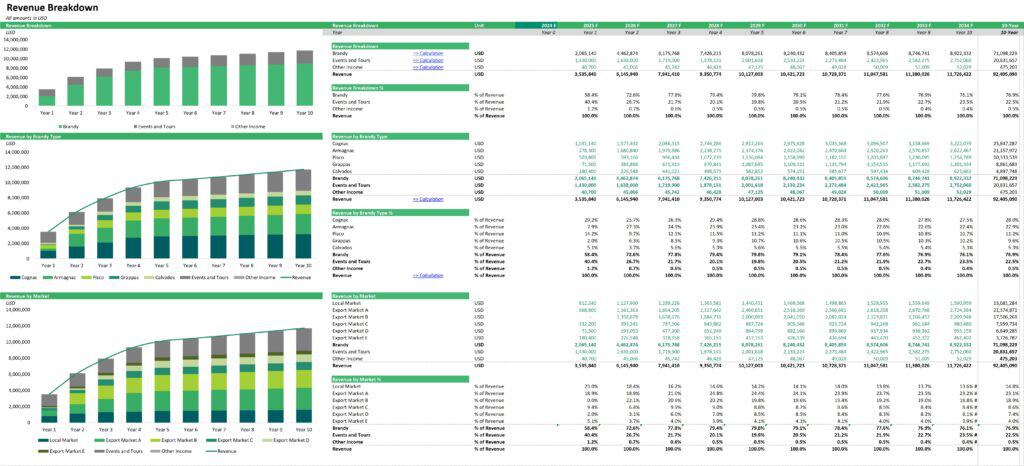
The revenue breakdown section of our brandy distillery small business financial plan example is instrumental for attracting potential investors and securing support. It provides a clear picture of how the startup will generate income by categorizing revenue from products like Cognac, Armagnac, and Pisco and services such as events and tours. The plan highlights vital revenue sources and growth opportunities by projecting this revenue over ten years. It also breaks down income by market segments—local and export markets—to identify the most profitable areas and evaluate expansion potential. Presenting this data visually and numerically helps potential funders understand the business’s financial health, prioritize investment areas, and make informed decisions about supporting the distillery.
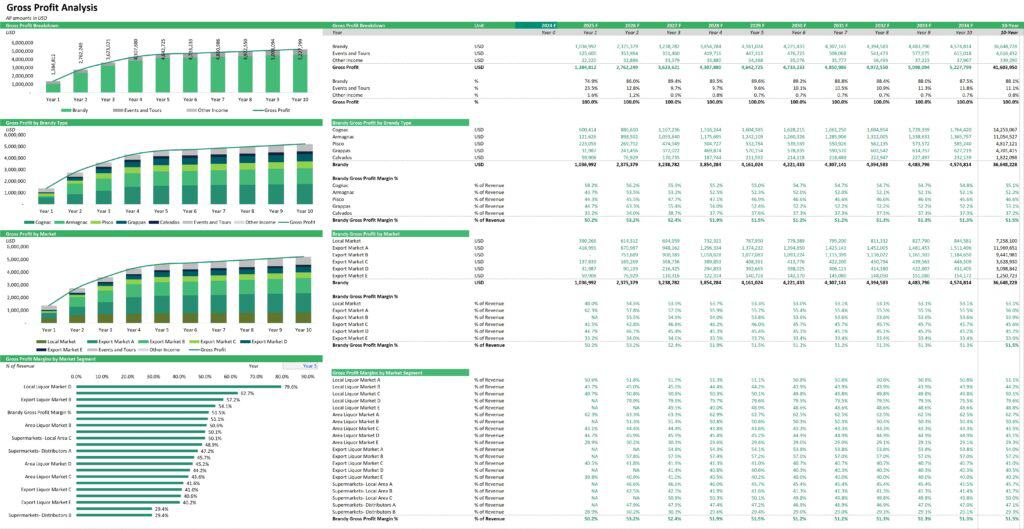
The gross profit analysis section of our brandy distillery small business financial plan example demonstrates the business’s financial potential to investors. This section offers a detailed view of how various revenue streams contribute to overall profitability over ten years. By analyzing gross profit by product types, this brandy distillery small business financial plan example helps identify the most profitable areas and where investment should be focused.
The CapEx section of our brandy distillery small business financial plan example is crucial in outlining the capital requirements for each stage of business expansion. It provides a detailed breakdown of building, land, machinery, vehicles, and other equipment costs. This thorough allocation helps potential investors understand the total capital needed for various development phases. It also plays a crucial role in determining the funding requirements and evaluating financing options, such as debt or equity. By including a debt schedule and detailing the funding needed, this brandy distillery small business financial plan example offers a comprehensive strategy for structuring and timing funding rounds to meet capital expenditure needs effectively, thereby helping investors assess the feasibility and attractiveness of supporting the distillery’s growth.
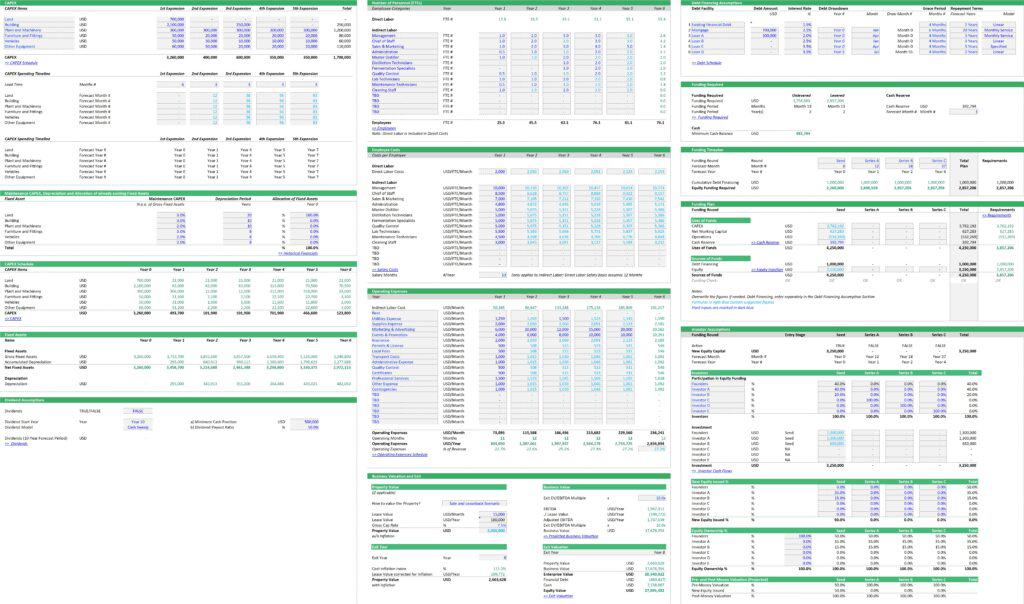
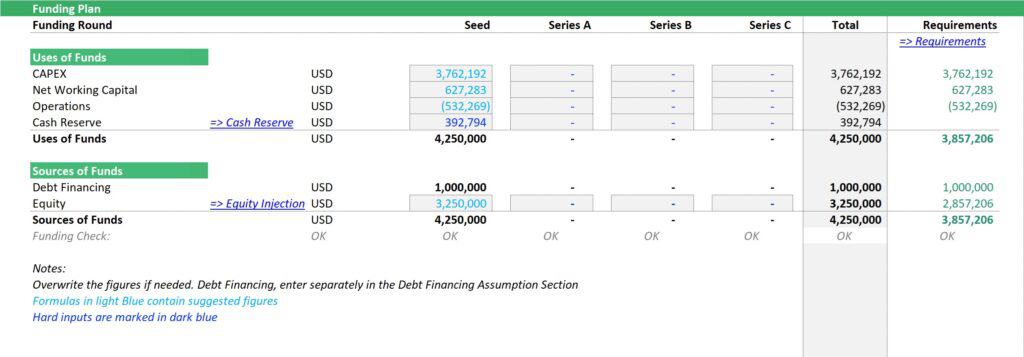
Regarding fundraising, the Uses and Sources of Funds table in our small business financial plan example provides a clear overview of financial requirements and available funding options. It outlines how funds will be allocated across capital expenditures (CapEx), net working capital, and cash reserves during the seed round. The table also details the sources of funds, distinguishing between debt financing and equity to match the total financial needs. By balancing each category and ensuring that the total sources of funds align with the required uses, the table demonstrates a structured approach to securing the necessary capital through debt and equity financing. This clarity helps potential investors and lenders understand how their contributions will be utilized and ensure that the distillery’s financial needs are comprehensively addressed.
The financial statement section of our small business financial plan example plays a crucial role in demonstrating the distillery’s economic health to potential investors. These financial statements provide a detailed look at the distillery’s financial performance, including revenue streams, expense breakdowns (such as costs for labor, marketing, and packaging), and profit margins over time. By presenting key metrics like total revenue, net income, and operational efficiency, this section allows stakeholders to evaluate the distillery’s profitability and financial stability. The balance sheet further illustrates the distillery’s assets, liabilities, and equity, offering insights into its financial strength and liquidity. This comprehensive financial overview is essential for potential investors to make informed decisions about supporting the distillery’s growth and sustainability through funding.









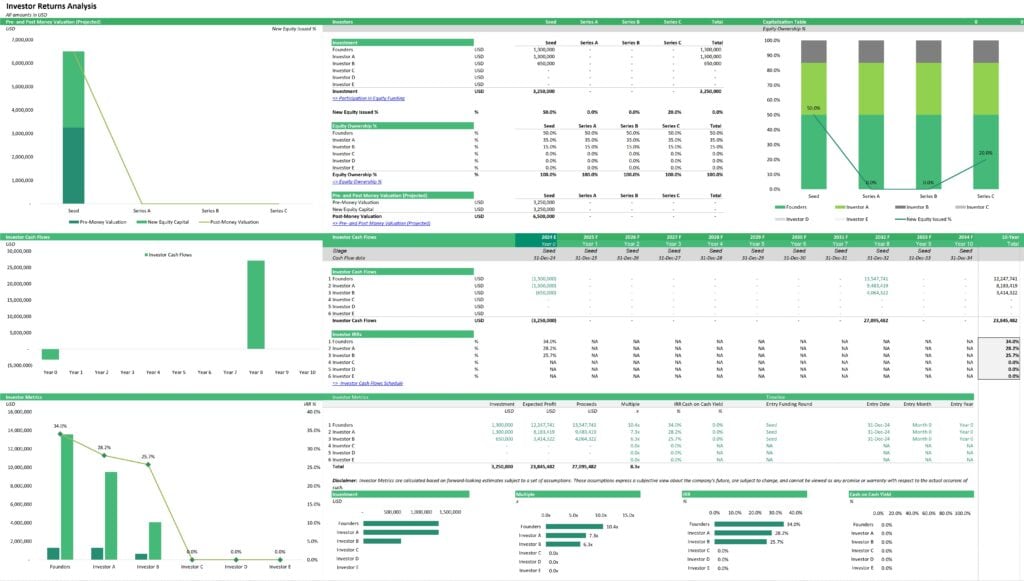
In fundraising, the investor return analysis section of our small business financial plan example is crucial for showcasing the potential economic outcomes and returns for investors over ten years. This section outlines the anticipated results of various funding rounds (Seed, Series A, Series B, and Series C), including initial and follow-up investments, and details pre-money and post-money valuations. It presents cash flow projections, expected profits, investment multiples, and each investor’s internal rate of return (IRR). Graphs and tables illustrate how equity ownership and company valuations are expected to evolve, culminating in a comprehensive exit valuation. This analysis provides a clear and structured view of potential returns at different stages, helping investors understand the financial trajectory and align their expectations for future exits.
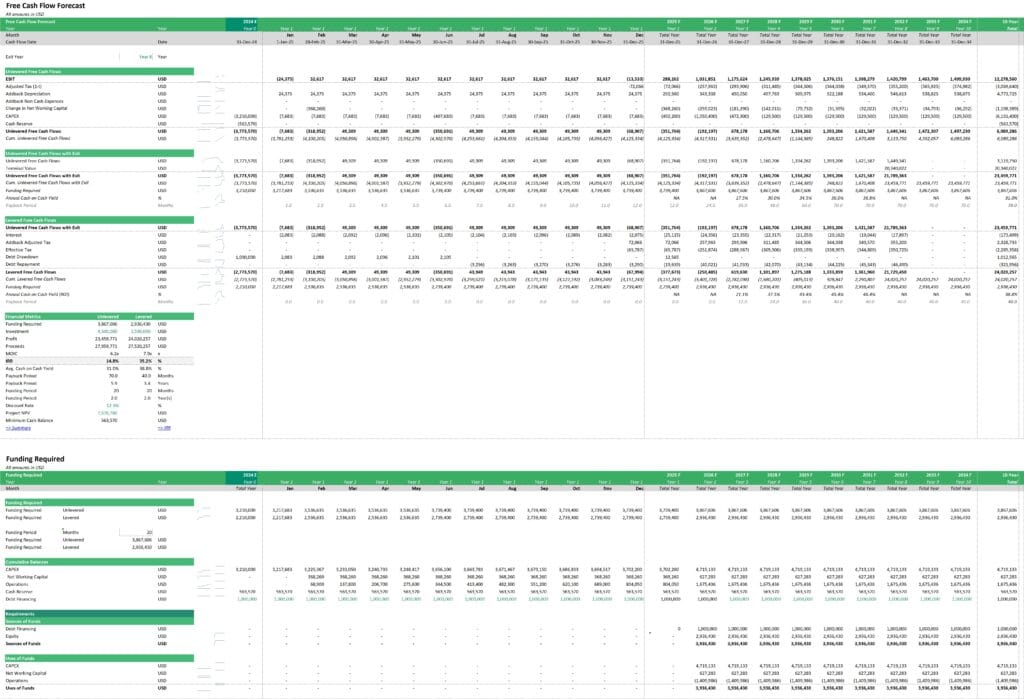
A free cash flow forecast within our brandy distillery small business financial plan example is essential for projecting the company’s cash inflows and outflows over a company’s period. This forecast includes vital financial metrics such as EBITDA, changes in net working capital, and financing needs. It helps the distillery anticipate periods of cash surplus or shortages, allowing for proactive liquidity management. By pinpointing when additional funding will be necessary, the distillery can plan its financing strategy, ensuring that operations run smoothly and strategic investments are made at the right time. Additionally, the detailed analysis of operational expenses and revenues helps optimize efficiency, control costs, and prioritize capital investments, which is crucial for supporting sustainable growth and maintaining financial stability. This clear financial roadmap is vital for potential investors to assess how their funding will be utilized and the impact on the distillery’s long-term success.
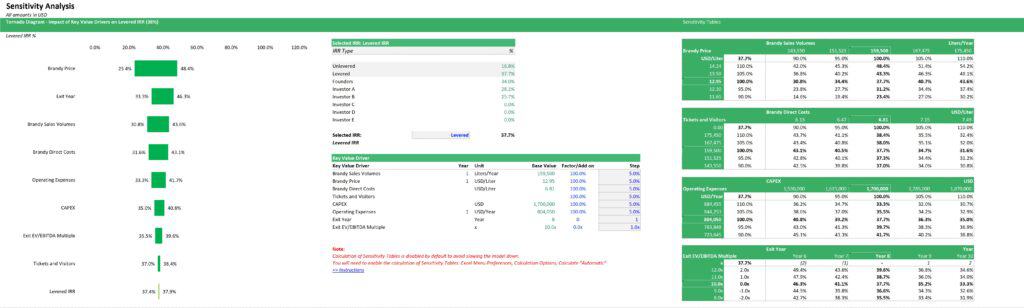
In fundraising, a sensitivity analysis in our small business financial plan example for a Brandy Distillery is crucial for identifying and managing financial risks. This analysis demonstrates how fluctuations in critical variables—such as brandy prices, sales volumes, direct costs, operating expenses, and capital expenditures—affect the leveraged Internal Rate of Return (IRR). The distillery can focus on monitoring and controlling these critical variables by highlighting which factors have the most significant impact on financial performance. This insight enables better strategic planning and ensures that contingency measures are in place to address potential adverse effects on profitability. For potential investors, understanding the range of possible outcomes and how the business plans to manage risks provides confidence in the stability and resilience of their investment.
A thorough startup financial plan, including a distillery business, is essential for successful fundraising. This plan should carefully detail startup costs, ongoing operational expenses, revenue projections, and potential risks. It must outline initial investments in equipment and facilities, the continuous costs of raw materials and labor, and income projections based on market research and pricing strategies. The distillery can ensure sustainable growth and profitability by maintaining rigorous financial oversight. A well-structured comprehensive financial plan provides a solid foundation for the business. It builds investor confidence, demonstrating that the distillery is well-positioned to achieve its goals of producing high-quality brandy and succeeding in a competitive market.
Get Your Financial Plan Template for a Startup Business and Secure Your Fundraising Blueprint Today!
You’ve finally reached the finish line! Congratulations on completing this vital milestone! You’ve taken the first important step toward securing your business’s financial future. By now, you should clearly understand what a startup financial plan entails, its benefits, and how to customize it to meet your specific fundraising goals and business needs.
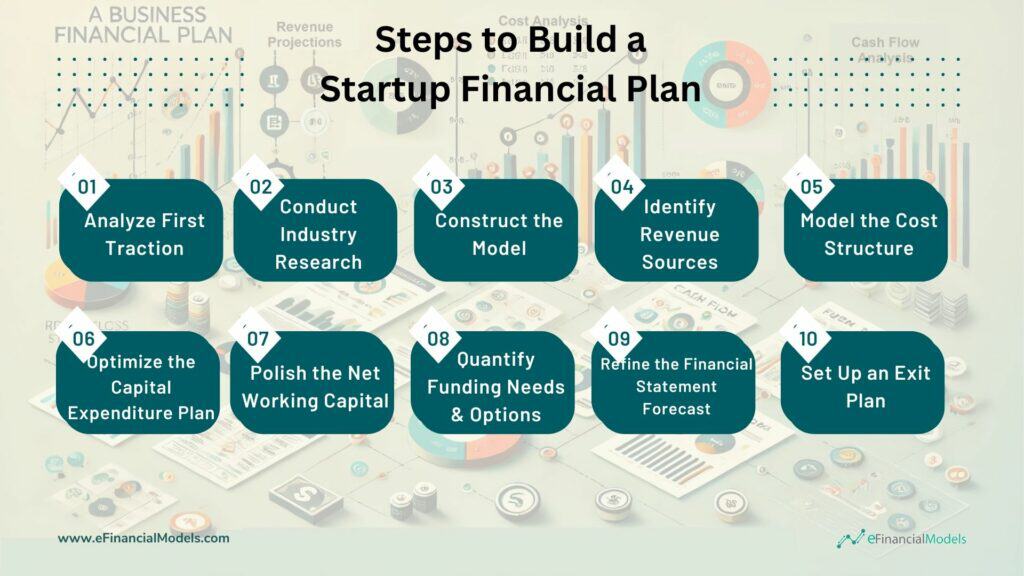
The steps to creating a startup financial plan act as a roadmap, guiding you through the complexities of the business world and keeping you aligned with your financial goals. While securing funds can be intricate, a financial plan template for a startup business simplifies the process. This financial plan template for a startup business is essential as it offers a structured framework for organizing financial data, projecting future revenues and expenses, and pinpointing funding requirements. It ensures that all critical financial elements—like cash flow, profit and loss statements, and balance sheets—are thoroughly addressed, enabling detailed financial analysis and effective strategic planning for your fundraising efforts.
Moreover, a financial plan template for a startup business aids in communicating the company’s economic viability to potential investors and stakeholders, enhancing credibility and increasing the likelihood of securing the necessary funding. By leveraging a financial plan template, startups can more effectively manage their finances, make informed decisions, and set a solid foundation for sustainable growth. Remember, a plan is only as good as its execution. It’s time to put your plan into action, and that’s where the real work begins.
You might also like:
- 10 Best Practices in Financial Modeling
- 10 Main Elements of a Business Plan
- 10 Tips to Develop a First Class Business Valuation Report
- 5 Practical Tips to Help Raise Funds For Startups
- Financial Modeling for Startups and Small Businesses
- How to Prepare a Financial Feasibility Study?
- Investment
- Startup Model Templates in Excel that can help your Business Grow
- Fundraising
- Financial Model Templates Easy to Use
- Financial Planning for Small Business Owners – Taking an SBA Loan
- Financial Ratios Analysis and Its Importance
- Financial Spreadsheet – A Key Tool for Entrepreneurs
- Monthly Google Sheets Budget (with Financial Statements)
- How to Calculate Annual Recurring (ARR) Revenue for Sustainable Growth
- How to Make Smart Decisions with 6 Key Financial Metrics?
- Real Estate Valuation
- Financial Due Diligence
- Investment Multiple
- Financial Planning Retirement Tips
Tags: financial planning