
0 ITEMS

Impairment Test
Listed here are financial model templates that include an impairment test which helps measure whether a balance sheet item is worth the amount stated on the balance sheet. The balance sheet amount should be reduced if the impairment test indicates a lower value.


Premium TCFD / ISSB Physical Climate Risk Financial Model designed…

A professional Excel-based IFRS 9 Expected Credit Loss model designed…

Professional Goodwill Valuation & Impairment Model bundle by PDMM, built…

IFRS 9 ECL Excel Model — a turnkey, audit-ready impairment…

Comprehensive Excel model for goodwill testing, CGU-level DCFs, and impairment…


IFRS 9 Excel template for calculation of Expected Credit Loss…

This model is extremely useful for M&A acquirers to test…
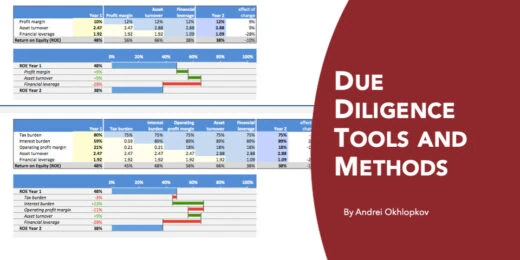


Goodwill impairment is a charge that companies record when goodwill's…
Smart Financial Planning for Impairment Test Success

Understanding Impairment Testing in Financial Planning
This section delves into the core function of impairment testing and its significance in financial planning. Impairment testing evaluates whether the carrying amount of an asset or a cash-generating unit surpasses its recoverable value, necessitating an adjustment to reflect true market conditions. Under frameworks like IFRS (International Financial Reporting Standards) and GAAP (Generally Accepted Accounting Principles), impairment testing is mandated, providing a standardized approach for assessing and reporting asset values. The regulatory requirements ensure that asset valuations are not overstated and that businesses present a true and fair view of their financial position. Various scenarios can prompt the need for impairment tests. An economic downturn, for example, can significantly impact asset utilization and market demand, prompting a reassessment of asset values. Similarly, if there's a change in the market value of a key asset or a significant technological advancement renders existing assets obsolete, impairment testing is imperative. Accurate financial planning, supported by tools like our Excel templates, underpins these assessments, ensuring that asset valuations reflect current and realistic market conditions.Key Performance Indicators for Impairment Tests
In this section, we identify essential key performance indicators (KPIs) that are crucial for successful impairment testing. These KPIs provide insights into different aspects impacting the asset's operational effectiveness and financial outcomes.- Asset Utilization Ratios: Asset utilization ratios measure how efficiently assets are being used to generate revenue. These ratios are significant as they indicate whether an asset is operating at full potential or if there are inefficiencies that could signal potential impairments. High asset utilization suggests optimal performance, whereas declining ratios could indicate an asset's underperformance, necessitating a closer examination through impairment testing.
- Discount Rate Calculation: The discount rate is a pivotal factor in impairment testing, influencing the outcome of future cash flow valuations. Calculating the appropriate discount rate involves assessing the risk factors associated with future cash flows and the cost of capital. A well-determined discount rate ensures accurate present value calculations, impacting the impairment test outcome significantly. For those looking to refine their skills, our guide on calculating discount rates provides valuable insights.
- Future Cash Flow Projections: Accurate cash flow projections are vital for determining the recoverable value of assets. Future cash flows should be forecasted with precision, drawing on historical data and market analysis. Techniques such as trend analysis and expert forecasting can refine these estimates, ensuring they align with realistic expectations. Inaccurate cash flow projections can result in incorrect impairment assessments, affecting financial transparency and decision-making.
- Market and Economic Analysis: Evaluating external market conditions and economic developments is essential for an impairment test. External factors, such as industry trends or macroeconomic changes, can significantly impact asset valuations. Comparative analysis with industry benchmarks offers valuable insights, helping businesses align their asset valuations with market realities. By integrating market and economic analysis, businesses can make informed decisions about potential impairments efficiently. Our market analysis tools can assist in this process.
Developing a Comprehensive Financial Model for Impairment Testing
This section explains the importance of a well-structured financial model for executing effective impairment tests. A financial model integrates diverse elements, ensuring that all relevant factors are considered in the impairment analysis.- Framework for Constructing Financial Models: Developing a financial model for impairment testing involves a systematic approach. Inputs, such as cash flow forecasts and discount rates, form the backbone of the model. Accurate calculations determine the present value of future cash flows, leading to outputs that indicate potential impairments. By incorporating these essential components, a financial model provides a robust foundation for impairment analysis, making our financial model framework an excellent resource.
- Scenario Planning and Sensitivity Analysis: Scenario planning and sensitivity analysis are critical aspects of financial modeling. By testing different scenarios, such as best, worst, and most likely cases, businesses gain insights into potential outcomes across varying conditions. Sensitivity analysis further refines these scenarios, highlighting variables that most influence impairment outcomes. This analytical approach helps organizations make informed, data-driven decisions regarding asset impairments.
- Integration with Broader Financial Plans: For impairment testing to be effective, it must align with a company’s broader financial strategy. The financial model should reflect the interconnectedness of various financial elements, ensuring consistency across all aspects of financial planning. By integrating impairment testing with broader financial plans, businesses can ensure strategic coherence and comprehensive financial oversight.
The Advantages of Using MS Excel Templates for Financial Planning
In this section, we look at the advantages of using MS Excel templates for creating efficient financial models for impairment testing. Their widespread use and familiarity make them a go-to tool for finance professionals.- User-Friendly Interface: Excel’s user-friendly interface allows finance professionals to design and customize financial models efficiently. Its accessibility ensures that users can tailor templates to suit specific needs, such as impairment testing, facilitating ease of use and adaptation.
- Robust Analytical Capabilities: Excel's built-in functions enable complex calculations, supporting detailed variance analysis and financial forecasting. These capabilities make Excel an ideal platform for conducting comprehensive impairment testing, providing the necessary tools to execute advanced financial analyses.
- Time Efficiency: Pre-built Excel templates significantly reduce the time required for model preparation. These templates allow for rapid iteration and adjustments of assumptions, delivering timely and accurate insights into potential impairments and financial health.
- Error Reduction and Consistency: Excel’s functionality includes error checks and audit trails, minimizing the risk of errors in financial modeling. The consistent application of formulas ensures reliability and accuracy in results, bolstering confidence in impairment assessments.
Conclusion: The Path to Successful Impairment Testing
In summary, smart financial planning is fundamental to successful impairment testing. By leveraging key performance indicators and comprehensive financial models, businesses can accurately assess and report asset values in adherence to regulatory standards. The significance of precise financial models is evident in achieving compliance and maintaining financial health. For finance professionals seeking to enhance their impairment testing processes, eFinancialModels offers a range of specialized spreadsheet templates. These resources streamline the impairment analysis, leading to informed decision-making and improved financial outcomes. Explore eFinancialModels’ offerings today to elevate your financial planning and impairment testing strategies.FAQ
- What is impairment testing in financial planning? Impairment testing involves evaluating whether an asset's carrying value exceeds its recoverable amount, leading to necessary adjustments in asset valuation to reflect true market conditions.
- Why is impairment testing important? Impairment testing is crucial for regulatory compliance, maintaining investor confidence, and ensuring that financial statements accurately portray the economic realities of a company.
- What frameworks require impairment testing? IFRS (International Financial Reporting Standards) and GAAP (Generally Accepted Accounting Principles) mandate impairment testing as part of their regulatory compliance requirements.
- What are key performance indicators for impairment testing? Key performance indicators include asset utilization ratios, discount rate calculations, future cash flow projections, and market and economic analysis.
- How does scenario planning aid in impairment testing? Scenario planning helps organizations understand potential outcomes by analyzing best, worst, and most likely scenarios, enabling more informed and data-driven impairment assessments.
- What are the advantages of using Excel for financial modeling in impairment testing? Excel offers a user-friendly interface, robust analytical capabilities, time efficiency, and error reduction, making it a preferred tool for creating financial models for impairment testing.
You might also like: