
0 ITEMS

Poultry Farming
Financial models related to poultry farming including broiler birds, breeder birds, day old chicken and eggs


Poultry Farm Financial Model – 10-Year Forecast, Valuation, Feasibility &…


This Broiler Poultry Farm Financial Model Template has been built…

Financial Model providing a dynamic up to 10-year financial forecast…


This Excel model is a highly adaptable and user-friendly tool…
Financial Model providing a dynamic up to 10-year financial forecast…
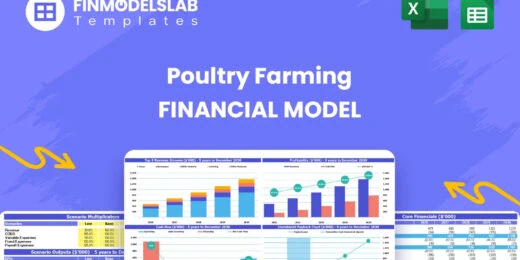

The Poultry Farming Financial Model helps users turn a poultry…

This poultry financial model template in Excel provides a framework…

This is a collection of financial model templates for businesses…

The Poultry Farm Valuation Model allows forecasting the financial statements…
Profiting from Poultry Farming through Smart Financial Planning

Poultry farming is a cornerstone of agriculture, providing a vital source of protein through meat and eggs to meet global food demands. As one of the fastest-growing segments in the agriculture industry, poultry farming has a significant economic impact, offering employment opportunities and contributing to food security. With historical roots that trace back to small-scale operations, poultry farming has evolved into a sophisticated, technology-driven industry. The evolution has been fueled by advancements in breeding, nutrition, disease management, and production systems, making financial planning an indispensable element for profitability and sustainability.
In recent years, the poultry industry has witnessed significant trends, primarily driven by consumer preferences and sustainability considerations. Today's consumers seek transparency in food production, prioritizing health, environmental impact, and animal welfare. This has pushed poultry farmers to adopt sustainable practices, incorporate organic products, and engage in ethical farming processes. As the industry adapts to these changes, robust financial planning becomes crucial to navigate market dynamics and secure profitability. A well-crafted financial plan enables farmers to make proactive decisions, optimize resources, and sustain competitive advantages amidst shifting industry landscapes.
Understanding the Poultry Farming Landscape
This section examines the pivotal role poultry farming plays in the global agricultural landscape, its evolution, and the modern sustainability practices that are becoming essential.
Poultry farming is vital in the global agricultural landscape, accounting for a sizeable portion of animal husbandry practiced worldwide. The industry's significance extends beyond mere food production, impacting economic development, nutrition, and employment. Historically, poultry farming was characterized by family-based, small-scale operations. However, advances in technology and growing market demands have transformed it into a high-efficiency industry with integrated systems that optimize production processes, ensuring consistent quality and supply.
In modern poultry farming, sustainability has become a key focus area. With increasing emphasis on environmentally friendly practices, farmers are adopting energy-efficient systems, managing waste responsibly, and minimizing carbon footprints. Moreover, consumer preferences are increasingly inclined toward organically produced poultry, with a keen focus on ethical farming practices. This shift necessitates that poultry farmers not only adjust their operations to meet these demands but also engage in sound financial planning to effectively manage associated costs and benefit from emerging market opportunities. Utilizing financial modeling templates can significantly streamline this process.
Key Financial Metrics for Poultry Farming
This section outlines the crucial financial metrics that poultry farmers should monitor to enhance productivity and profitability.
Profitability in poultry farming hinges on understanding and managing key financial metrics that directly influence operational efficacy. These industry-specific Key Performance Indicators (KPIs) offer insight into performance, cost-effectiveness, and potential areas for improvement. The Feed Conversion Ratio (FCR) is a primary metric assessing cost efficiency by measuring the feed input required to produce a specific output of chicken or eggs. A lower FCR indicates higher efficiency, making it a critical tool for cost control.
The Egg Production Rate is another vital KPI, reflecting productivity levels necessary for revenue generation. Monitoring this rate helps identify production inconsistencies, allowing farmers to adjust strategies and maintain output quality consistently. Furthermore, the Mortality Rate offers insights into flock health and its financial implications. High mortality rates necessitate addressing health issues promptly to minimize economic losses and ensure optimal flock performance.
Understanding Direct and Indirect Costs is also crucial in poultry farming. Direct costs, such as feed and labor, are variable and directly tied to production, while fixed indirect costs, like infrastructure and depreciation, remain constant. Discerning these expenses helps farmers create accurate budgets and identify savings opportunities, improving overall financial strategy and stability. Implementing budgeting templates can be valuable for this task.
Crafting a Financial Plan for Poultry Operations
This section discusses the essential elements involved in creating a comprehensive financial plan for poultry operations.
Creating a comprehensive financial plan is fundamental for poultry operations, involving a detailed assessment and strategic forecasting of all facets of business finance. One must start with an Initial Cost Assessment, considering land acquisition, equipment procurement, and other startup investments. This assessment informs budgeting processes, aiming to manage initial outlays efficiently.
Operating Expense Forecasting follows, encompassing ongoing expenses such as feed, labor, maintenance, and veterinary care. Accurate projections ensure resource availability and operational continuity. Equally important are Revenue Projections, which derive from strategic product pricing and market analysis. These projections help plan for income streams and accommodate market variances.
Effective Cash Flow Management is pivotal, supporting liquidity to manage operations smoothly. It is vital to maintain cash reserves to address unforeseen market fluctuations or emergency costs promptly. Additionally, contingency planning becomes essential, preparing farmers to adapt swiftly to any economic or environmental challenges, safeguarding long-term financial stability.
The Role of Financial Models in Poultry Farming
This section highlights the significance of financial models and how they aid decision-making in poultry farming.
Financial models are analytical tools that enhance decision-making capabilities by forecasting revenues and expenses with heightened accuracy. In poultry farming, these models enable scenario analysis, assessing various business strategies under different conditions to minimize risks. Such proactive insights ensure informed decisions, pivotal for navigating uncertainties in the volatile poultry market.
Utilizing MS Excel spreadsheet templates is advantageous, given its user-friendly interface and versatility. These templates are customizable, accommodating specific industry needs and automating complex calculations to streamline data management. For poultry farmers, eFinancialModels offers a range of financial modeling templates specifically designed to meet the unique challenges of poultry farming. These templates serve as foundational tools for building robust financial plans that align with business goals and market realities.
Conclusion: Embracing Smart Financial Planning for Successful Poultry Farming
Smart financial planning is paramount in maximizing profitability within the poultry industry, addressing the multifaceted challenges and dynamic market conditions. By leveraging industry-specific financial models and templates, farmers can optimize operational strategies, enhance decision-making, and ensure sustainable growth.
Poultry farmers are encouraged to explore eFinancialModels’ extensive library of financial model templates, tailored specifically for the poultry sector. These resources facilitate informed financial planning, providing the capabilities needed to thrive in a competitive marketplace. By embracing smart financial planning, poultry farmers position themselves for success, ensuring resilient operations and sustained profitability in a constantly evolving industry.
FAQ: Poultry Farming Financial Planning
- What are key metrics to monitor in poultry farming for financial success? It is crucial to monitor metrics such as Feed Conversion Ratio (FCR), Egg Production Rate, Mortality Rate, and assess both Direct and Indirect Costs to ensure cost-efficiency and productivity.
- How important is financial planning in poultry farming? Financial planning is essential for maximizing profitability and sustainability, helping farmers make proactive decisions, optimize resources, and adapt to market dynamics effectively.
- What role do financial models play in poultry businesses? Financial models aid in forecasting revenues and expenses accurately, enabling scenario analysis to assess different strategies and minimize risks, thus ensuring informed decision-making.
- How can poultry farmers start with financial planning? Begin with an Initial Cost Assessment for startup investments, followed by Operating Expense Forecasting and Revenue Projections to manage ongoing and future financial needs.
- What resources are available for poultry financial planning? eFinancialModels provides a range of financial model templates specifically designed for poultry farming, aiding in building robust financial plans in alignment with business goals.
You might also like: