
0 ITEMS

Fish Farming
Financial planning tools and financial model templates related to aquaculture and fish farming businesses and startup venture projects


A professional Excel financial model suite for fish farming and…
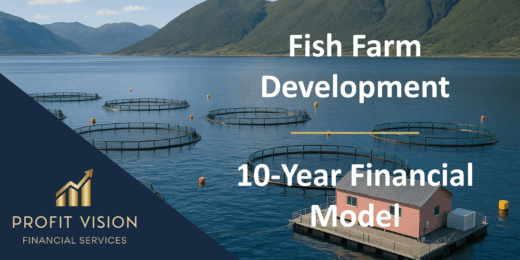

Dynamic and investor-focused 10-year financial model, designed to evaluate the…
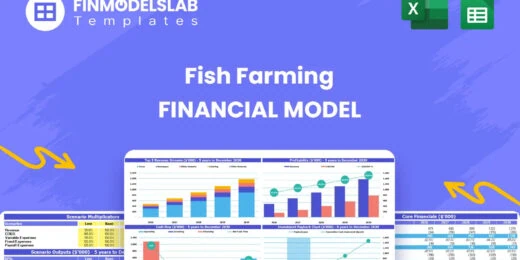

The Fish Farming Financial Model template helps entrepreneurs, aquaculture founders,…

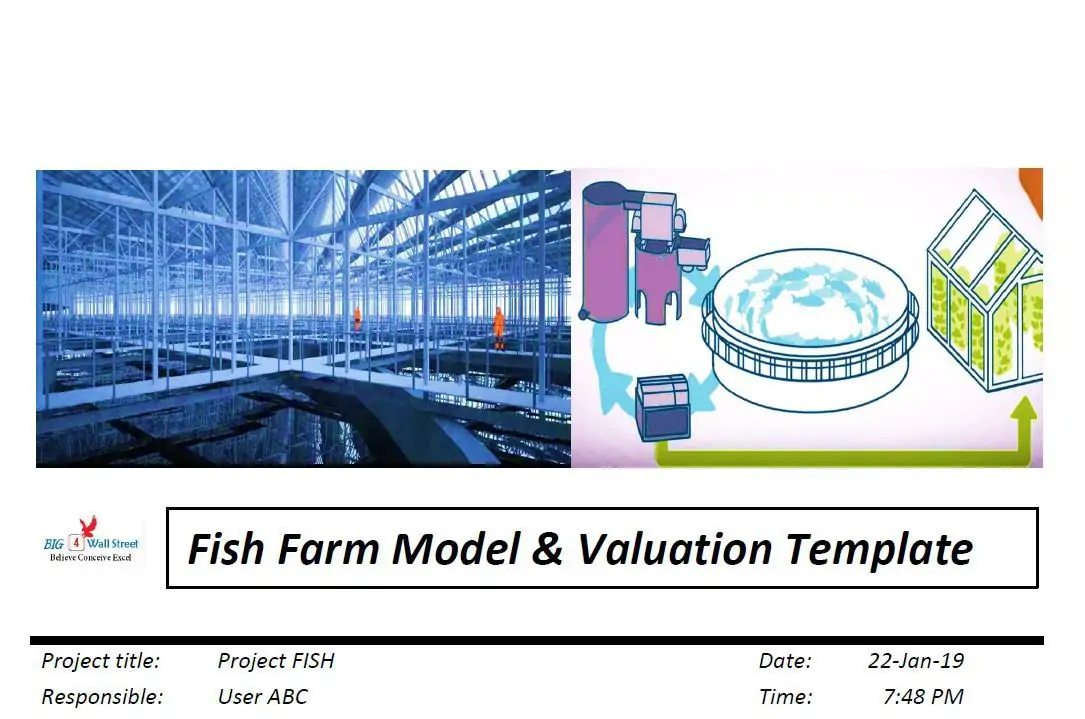

Financial Model Templates that generates a three statement financial model…


This is a collection of financial model templates for businesses…
Optimizing Cash Flow for Sustainable Fish Farming Growth

Fish farming, or aquaculture, stands as a crucial pillar in meeting the growing global demand for fish and seafood. As the industry expands, financial planning emerges as a pivotal factor that determines the success and sustainability of fish farms. Effective financial management not only supports operational efficiency but also paves the way for long-term growth and profitability. However, fish farming is rife with unique cash flow challenges such as fluctuating feed costs, investment in infrastructure, and environmental impacts, making astute financial planning indispensable. Utilizing financial models tailored to the aquaculture industry can significantly enhance decision-making, aligning financial strategies with sustainable growth objectives.
In this highly competitive market, fish farmers must harness the power of financial models to navigate the complex landscape of aquaculture economics. These models serve as vital tools to forecast cash flows accurately, helping farm operators manage resources more efficiently and capitalize on opportunities for expansion. By incorporating specific parameters unique to the fish farming industry, financial models empower farm managers to gain greater insights into their operations, allowing them to make informed choices that boost profitability while sustaining the health and welfare of their aquaculture environments.
Financial Planning: A Necessity in Fish Farming
Financial planning in the fish farming sector is not just beneficial; it's indispensable. The industry is marked by volatile cash flows due to variable market prices, unpredictable environmental conditions, and an ever-increasing need for sustainable practices. To manage these challenges, financial planning is key. It involves outlining a strategic approach to allocate resources efficiently across various operational needs, from purchasing feed to maintaining infrastructure.
Cash flow challenges can often derail a fish farm's growth trajectory. Spikes in feed costs, unexpected equipment failures, or downturns in market demand can quickly erode financial stability. Yet, these challenges also present opportunities. By leveraging financial models, fish farmers can anticipate potential cash shortages and surpluses, streamline operations, and plan for future expansions. Financial models offer a systematic way to visualize and analyze every financial aspect, from inflows and outflows to calculating returns on investment, thus ensuring more resilient and sustainable business operations.
Key Performance Indicators (KPIs) for Financial Success
To navigate the complex financial landscape of fish farming, identifying and monitoring relevant KPIs is essential. These indicators provide measurable values that are crucial for achieving successful financial outcomes.
- Feed Conversion Ratio (FCR) is fundamental, measuring the efficiency with which fish convert feed into body mass. A lower FCR denotes higher efficiency and can significantly reduce feed costs, the largest expense in aquaculture. Closely tied with FCR is the Stocking Density, which influences growth rates and fish health. An optimal stocking density ensures that fish have enough space to thrive, thus enhancing growth and maximizing yield without incurring additional costs from diseases or mortality.
- Another critical KPI is the Harvest Yield—the total weight or quantity of fish ready for sale. This directly correlates with revenue and overall profitability. Similarly, Survival Rates are crucial for determining the number of fish reaching market size, directly impacting sales volume and cash inflow.
- Finally, the Operating Margin is a pivotal indicator of a fish farm’s financial health. It reflects the percentage of revenue left after covering all operating expenses. A robust operating margin is indicative of efficient cost management and is vital for ensuring the long-term sustainability of fish farming operations. Effectively monitoring these KPIs using advanced financial models helps fish farmers make data-driven improvements, optimize resources, and enhance profitability.
Crafting Accurate Cash Flow Projections
Accurate cash flow projections are the bedrock of effective financial planning in fish farming. They provide a detailed picture of where and how money flows in and out of the business, enabling farm managers to plan wisely and make strategic decisions. Key components of cash flow projections must include all potential Revenue Streams, primarily from fish sales but also from any value-added products like processed or frozen fish.
Operating Expenses form another significant component, encapsulating costs like feed, labor, utilities, and maintenance. Understanding these costs in granular detail is crucial for effective cash flow management. Moreover, Environmental Factors such as water quality and weather fluctuations can unpredictably impact operational costs, requiring fish farmers to be vigilant and adaptive.
Another component to consider is Investment Costs, which encompass initial setup costs and ongoing capital expenditures necessary for upgrades and expansions. Successful cash flow projections must also account for seasonal variability, identifying peak revenue periods to buffer against leaner times. By integrating these projections into a comprehensive financial model, fish farmers can anticipate future financial needs, mitigate risks, and seize growth opportunities.
Leveraging Excel for Customized Financial Modeling
Excel is a powerful tool that offers immense flexibility for financial planning in aquaculture. Its ability to Customize templates to specific operational needs and local conditions makes it an invaluable resource for fish farmers. With Excel’s Advanced Features like cash flow analysis, scenario planning, and data visualization, fish farmers can simulate various operational scenarios and forecast financial outcomes with precision.
Moreover, Excel enhances Efficiency by streamlining data entry and automating complex calculations, allowing fish farmers to focus more on decision-making than on manual data handling. The platform’s built-in formulas and checks significantly improve Accuracy, reducing human error and helping fish farmers maintain reliable and transparent financial records.
At eFinancialModels, we offer Excel templates specifically designed for fish farming, incorporating industry-specific KPIs and financial components. These templates serve as a comprehensive framework to assist fish farm operators in developing robust and dynamic financial models, empowering them to optimize cash flows effectively.
Transforming Financial Strategies for Growth
Effective cash flow management is the cornerstone of achieving sustainable growth in the fish farming industry. By employing specialized financial models and utilizing Excel templates, fish farmers can refine their financial strategies, ensuring long-term viability and success. These tools not only streamline operational efficiency but also provide actionable insights for proactive financial management. As the industry evolves, embracing these advanced financial solutions becomes imperative.
We encourage you to explore and utilize the financial model spreadsheet templates available from eFinancialModels to enhance your financial planning capabilities in the fish farming industry. By integrating these tailored models into your financial strategy, you can unlock new levels of efficiency, profitability, and sustainable growth outcomes. Visit eFinancialModels.com today to discover how these tools can transform your fish farming business into a thriving, future-proof enterprise.
Frequently Asked Questions
- Why is financial planning crucial for fish farming? Financial planning is essential due to the unique cash flow challenges posed by the aquaculture industry, such as fluctuating feed costs and environmental impacts. It helps in resource allocation, risk mitigation, and ensuring long-term profitability.
- What are the main financial components to consider in fish farming? Key components include revenue streams, operating expenses, environmental factors, and investment costs. These elements are critical for accurate cash flow projections and strategic financial planning.
- How do financial models benefit fish farmers? Financial models help fish farmers forecast cash flows, manage resources efficiently, and capitalize on expansion opportunities by incorporating industry-specific parameters.
- What role do Excel templates play in financial modeling for fish farms? Excel templates provide customization and advanced features for financial modeling, enhancing accuracy and efficiency in data handling and decision-making.
- What KPIs should fish farmers monitor for financial success? Important KPIs include Feed Conversion Ratio (FCR), Harvest Yield, Survival Rates, Stocking Density, and Operating Margin, as they provide measurable values for financial efficiency and profitability.