
0 ITEMS

Life Science
The life science industry improves health through pharmaceuticals, biotechnology, medical devices, and diagnostics. Companies develop treatments driven by gene therapy, AI, and personalized medicine innovation. Success depends on regulatory approvals, clinical trials, and R&D investments. Startups, corporations, and research institutes lead discoveries. Partnerships and mergers drive progress. Despite high costs and strict regulations, demand for new therapies keeps growing.
Life science financial models help businesses plan and forecast. They estimate revenue, costs, and profitability. These templates support biotech, pharma, and medical device companies. Models include R&D expenses, clinical trial costs, and regulatory timelines. They also calculate funding needs, investor returns, and break-even points. Clear financial projections help secure investments and guide decision-making. Startups and established firms use these tools for strategy. Investors rely on them to assess risks and growth potential.

A specialized Excel valuation model for longevity and anti-aging biotechnology…

An institutional-style, fully editable model for probability-adjusted pharmaceutical valuation, commercial…


FinModelAI Biotech rNPV Valuation Model Pro is a purpose-built Excel…


The main objective of this model is to develop a…

A professional 5-year integrated financial statements Excel model designed for…
A professional biotech and pharma startup financial model package built…

Professional Clinic / Healthcare Business Financial Model Template in Excel…


A comprehensive Excel-based financial model designed for pharmaceutical companies involved…


Offers a comprehensive framework for building accurate financial projections with…


Highly versatile and investor-ready Excel model designed to assess the…


Elevate your Biotech or Pharma startup with our Excel-based Biotech…


This Pharma and Biotech Valuation and Financial Model Template has…

The main objective of this model is to develop a…

CBD Personal Care Financial Model and Valuation Template, a comprehensive…


Financial Model analyzing a Biopharmaceutical Company using a Risk-Adjusted NPV…

5-year rolling 3 statement financial projection for a biopharma business…

Financial Model providing a dynamic up to 15-years financial forecast…


The Pharma Biotech Valuation Model Template calculates the risk-adjusted DCF…
Investor Opportunities in the Life Sciences Industry

Ever heard of Moderna? Beyond its groundbreaking COVID-19 vaccine, how has this life sciences powerhouse leveraged mRNA technology to revolutionize medicine and reshape the future of healthcare? The life sciences industry has evolved from ancient medicinal practices to a high-tech, multi-trillion-dollar sector, driving innovation in healthcare, pharmaceuticals, and biotechnology. With advances in gene editing, personalized medicine, and AI-driven drug discovery, the future of life sciences promises groundbreaking developments that will continue shaping the world.
Life sciences industry companies represent the most dynamic and lucrative investment opportunities, driven by rapid innovation, growing global health needs, and increasing public and private sector funding. Investors looking to capitalize on this sector must navigate complex financial landscapes, requiring detailed financial planning and robust financial modeling to assess risks, forecast returns, and optimize capital allocation.
This article explores key investor opportunities in the life sciences industry, highlighting emerging trends, breakthrough innovations, and high-growth companies driving the sector forward.
Life Sciences Industry Definition: What It Is and Why It Matters
The life sciences industry definition focuses on the study, development, and application of biology-based innovations to improve health and quality of life. It combines science and technology to drive medical, genetic, and sustainability breakthroughs. Companies in this field research diseases, develop treatments and create technologies to enhance medical care and agriculture. The life sciences industry definition also includes businesses researching, developing, and producing products to improve health and biological understanding. It covers pharmaceuticals, biotechnology, medical devices, and diagnostics. Companies in this sector focus on drug development, genetic research, and medical innovations. The industry drives advancements in healthcare, agriculture, and environmental science.
The Life Sciences Industry is vast and multidisciplinary. Below is a breakdown of the major branches it covers:
- Biotechnology: Scientists use living organisms and technology to create medicines, biofuels, and genetically modified crops.
- Pharmaceuticals & Drug Development: Researchers develop and test new drugs to treat diseases and improve health.
- Biomedical Research & Healthcare: Experts study cells, genes, and diseases to advance medical treatments and patient care.
- Medical Devices & Diagnostics: Engineers create tools like MRI machines, prosthetics, and blood tests to detect and treat health conditions.
- Healthcare & Medical Technology: Innovators use digital tools, AI, and data to improve patient care and streamline healthcare systems.
- Agricultural & Food Sciences: Scientists enhance farming, food production, and nutrition to ensure sustainable and safe food supplies.
- Environmental & Industrial Life Sciences: Specialists develop eco-friendly solutions, such as bioremediation and bio-based materials, to protect the planet.
- Neuroscience & Cognitive Science: Researchers explore the brain, nervous system, and human behavior to understand and treat mental and neurological disorders.
- Genomics & Precision Medicine: Experts analyze DNA and genes to create personalized treatments for diseases.
- Synthetic Biology & Future Technologies: Scientists design and build artificial genes, cells, and biological systems to develop new medicines and bio-engineered materials.

The life sciences industry is continuously evolving and driven by advances in biotechnology, AI, and data analytics, making it one of the most dynamic fields in science and business.
Top 10 Life Sciences Industry Companies Today
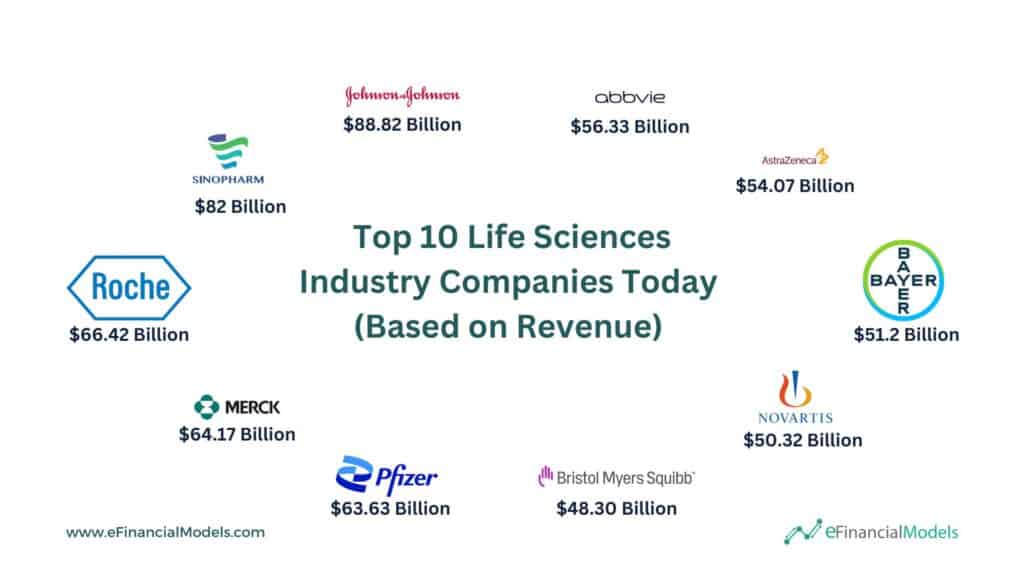
The life sciences industry has evolved through key milestones. In the 19th century, germ theory revolutionized medicine. In 1928, penicillin was discovered, leading to modern antibiotics. The 1953 discovery of DNA’s structure unlocked genetic research. In the 1970s, biotechnology advanced with genetic engineering. The 2000s saw breakthroughs in personalized medicine and genomics. In 2020, the COVID-19 pandemic accelerated the adoption of mRNA vaccines, with Pfizer-BioNTech and Moderna leading the way. Today, life sciences industry companies drive innovation in healthcare, agriculture, and sustainability. Here are the top 10 life sciences industry companies today based on revenue:
- Johnson & Johnson ($88.82 Billion): Johnson & Johnson leads the life sciences industry with its diverse healthcare portfolio. The company excels in pharmaceuticals, medical devices, and consumer health products. Its strong revenue reflects consistent innovation, strategic acquisitions, and a global presence in key markets.
- Sinopharm ($82 Billion): Sinopharm dominates China’s pharmaceutical sector with its vast distribution network and strong government ties. The company specializes in drug manufacturing, medical devices, and healthcare services. Its rapid growth is driven by increasing demand for vaccines and essential medicines.
- Roche ($66.42 Billion): Roche stands out in biotech, focusing on oncology and personalized medicine. The Swiss giant generates strong revenue from innovative drugs and diagnostics. Its commitment to R&D ensures a steady pipeline of breakthrough treatments.
- Merck & Co. ($64.17 Billion): Merck & Co. thrives on blockbuster drugs like Keytruda and Gardasil. The company focuses on oncology, vaccines, and infectious diseases. Its strong financials stem from scientific advancements and global market expansion.
- Pfizer ($63.63 Billion): Pfizer remains a major pharmaceutical player with leading vaccines and therapies. Its COVID-19 vaccine boosted revenue, but the company continues innovating in oncology, rare diseases, and immunology. Strong partnerships and acquisitions fuel its growth.
- AbbVie ($56.33 Billion): AbbVie’s revenue thrives on immunology and neuroscience treatments. Humira, Skyrizi, and Rinvoq drive sales, while its Allergan acquisition strengthens its aesthetics division. Focused R&D keeps it competitive in a changing healthcare landscape.
- AstraZeneca ($54.07 Billion): AstraZeneca excels in oncology, respiratory, and cardiovascular drugs. Its COVID-19 vaccine expanded its reach while new treatments sustained long-term growth—strong partnerships and a science-driven approach fuel its success.
- Bayer ($51.2 Billion): Bayer operates in pharmaceuticals, consumer health, and crop science. Its pharma division benefits from blockbuster drugs, while its agricultural segment boosts revenue. Despite legal challenges, strategic investments drive steady performance.
- Novartis ($50.32 Billion): Novartis focuses on innovative medicines, particularly in gene therapy and oncology. The company strengthens its position through high-impact acquisitions and a robust pipeline. Its shift toward high-margin specialty drugs fuels consistent growth.
- Bristol Myers Squibb ($48.30 Billion): Bristol Myers Squibb excels in immunotherapy and cardiovascular treatments. Blockbuster drugs like Opdivo and Eliquis drive its revenue. Strategic acquisitions, including Celgene, reinforce its leadership in biopharmaceutical innovation.
Life Science Industry Overview: Emerging Opportunities for Investors
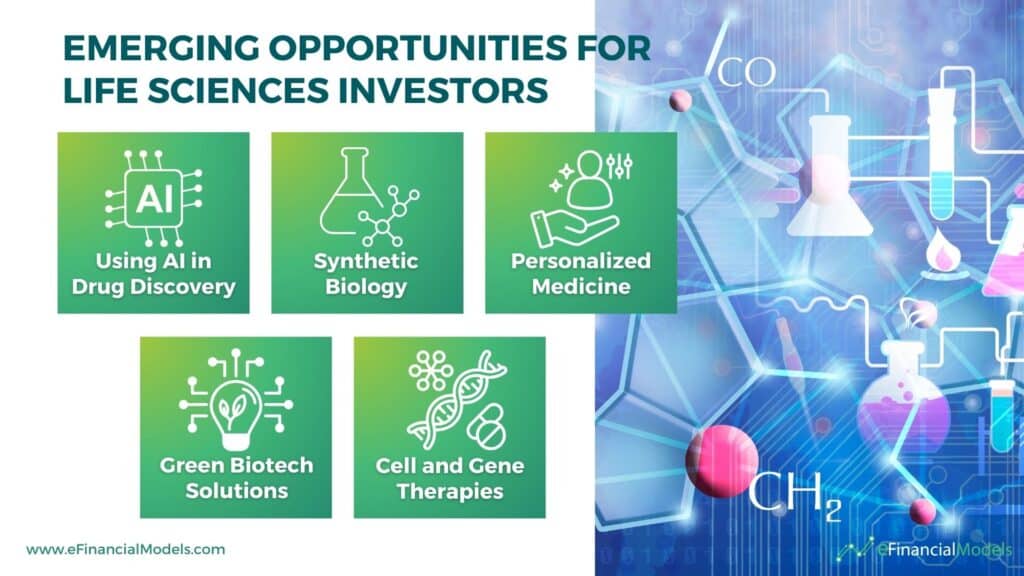
Here's the life science industry overview. It is evolving fast, driven by biotech, pharmaceuticals, and medical technology breakthroughs. Investors see growing potential as innovations like AI-driven drug discovery, gene therapy, and personalized medicine reshape healthcare. The aging populations, demand for new treatments, and global health challenges fuel rapid expansion. Startups and established firms compete to push the boundaries of science, creating new market opportunities. Venture capital and private equity flow into cutting-edge research, aiming for high returns. As technology and healthcare merge, the life sciences sector presents a dynamic landscape for investors seeking growth and impact.
Using AI in Drug Discovery
AI transforms drug discovery by speeding up research, reducing costs, and improving accuracy. Machine learning analyzes massive datasets to identify promising drug candidates faster than traditional methods. AI models predict molecular interactions, optimize clinical trials and help develop precision treatments. This technology increases success rates, making drug development more efficient and cost-effective for investors.
Investing in AI-driven drug discovery offers huge potential. AI speeds up research, cuts costs, and improves accuracy in finding new drugs. Startups use machine learning to analyze vast data, identify drug candidates, and predict their success. Pharma giants partner with AI firms to enhance development pipelines. Key opportunities include AI-powered biotech startups, software platforms for drug modeling, and companies focused on personalized medicine. As demand for faster, cost-effective drug development grows, AI-driven solutions attract strong investor interest.
Synthetic Biology
Synthetic biology combines engineering and biology to design new biological systems. Scientists reprogram cells to create biofuels, sustainable materials, and life-saving drugs. This field opens doors for breakthrough medicine, agriculture, and industry innovations. Investors can tap into its vast potential for high-impact, scalable solutions.
Synthetic biology offers exciting investment opportunities. It engineers living cells to create new materials, medicines, and sustainable products. Startups develop lab-grown meat, biofuels, and custom microbes for agriculture. Pharma companies use synthetic DNA to speed up drug production. Investors can back biotech firms, DNA synthesis platforms, or bio-manufacturing startups. As demand for sustainable solutions grows, synthetic biology attracts strong funding and market potential.
Personalized Medicine
Personalized medicine tailors treatments based on a patient’s genetics, lifestyle, and environment. Advanced diagnostics and AI-driven insights help doctors prescribe precise therapies, improving effectiveness and reducing side effects. This shift from a one-size-fits-all approach increases demand for genetic testing, targeted drugs, and AI-powered healthcare solutions.
Personalized medicine is transforming healthcare. It tailors treatments to a patient’s genes, lifestyle, and environment. Biotech firms develop custom therapies, AI-driven diagnostics, and precision drug delivery systems. Investors can fund genetic testing startups, data-driven treatment platforms, or companies creating targeted drugs. Pharma giants seek partnerships to advance precision medicine. As demand for better, more effective treatments grows, personalized medicine offers strong investment potential.
Green Biotech Solutions
Green biotech focuses on sustainable innovations in agriculture, energy, and manufacturing. It enhances crop yields, reduces chemical use, and develops eco-friendly bio-based products. Investors can support companies creating climate-friendly solutions like biodegradable plastics and alternative proteins, positioning themselves in a fast-growing market.
Green biotech solutions drive sustainable innovation. Companies use biotechnology to improve crops, reduce chemical use, and create eco-friendly materials. Startups develop bio-based fertilizers, pest-resistant plants, and carbon-capturing microbes. Investors can fund agricultural biotech firms, biodegradable packaging companies, or clean biofuel producers. Governments push for green alternatives, boosting market demand. As industries shift to sustainability, green biotech offers strong growth potential.
Cell and Gene Therapies
Cell and gene therapies offer groundbreaking treatments for genetic disorders, cancer, and rare diseases. These therapies repair, replace, or modify genes at the cellular level, providing long-term solutions. With increasing FDA approvals and growing market demand, this sector presents significant opportunities for investors seeking high-impact biotech innovations.
Cell and gene therapies are revolutionizing medicine. These treatments repair or replace faulty genes and restore damaged cells. Startups develop breakthrough therapies for cancer, rare diseases, and genetic disorders. Investors can back biotech firms, gene editing platforms, or cell therapy manufacturing. Pharma giants seek partnerships to expand their pipelines. Cell and gene therapies offer strong investment potential as demand for curative treatments rises.
Why Invest in Life Sciences?
The life sciences industry offers strong investment potential due to constant innovation and global demand for healthcare solutions. Governments and private sectors pour billions into research, creating opportunities for long-term returns. With steady revenue streams from pharmaceuticals, biotech, and medical technology, life sciences remain a resilient and profitable industry.
- Strong Market Growth Potential: The life sciences sector, encompassing biotechnology, pharmaceuticals, medical devices, and diagnostics, has steadily grown. Market reports estimate that the global biotechnology industry alone will exceed $3.8 trillion by 2030, fueled by advancements in gene therapy, personalized medicine, and artificial intelligence applications in healthcare.
- Resilience During Economic Downturns: Unlike many industries, life sciences demonstrate resilience during economic downturns, as healthcare remains a priority. Investors benefit from relatively stable demand, even during periods of financial instability.
- Government and Institutional Support: Governments worldwide are increasing investments in healthcare research, providing funding and regulatory incentives that support life sciences companies. Grants, subsidies, and public-private partnerships enhance the industry’s attractiveness to investors.
- Breakthrough Innovations and Disruptive Technologies: Life sciences continue to revolutionize healthcare through groundbreaking discoveries such as CRISPR gene editing, mRNA vaccine technology, and AI-driven drug discovery. These advancements create new investment frontiers with the potential for high returns.

Maximizing Life Sciences Investments with Financial Modeling
The life science industry overview presents exciting investment opportunities driven by continuous innovation, global healthcare demand, and technological advancements. From AI-driven drug discovery and personalized medicine to synthetic biology and cell and gene therapies, breakthroughs are reshaping the sector. Investors benefit from strong market growth, resilience during economic downturns, and increasing government support. As biotech, pharmaceuticals, and medical technology evolve, life sciences remain a dynamic and profitable industry for those seeking high-impact investments with long-term potential.
Financial modeling helps life sciences investors see the true potential of emerging opportunities. It breaks down market size, revenue forecasts, and risk factors. Investors use financial models to evaluate biotech startups, drug development costs, and potential returns. By analyzing funding needs and projected returns, investors can spot high-growth areas. Clear financial projections build confidence in investment decisions. With data-driven insights, investors can identify high-growth opportunities and minimize risks. Financial modeling turns complex investments into clear, actionable plans for success.
You might also like:
- 10 Ideas to Increase Average Revenue Per User
- 10 Main Elements of a Business Plan
- 10 Tips to Develop a First Class Business Valuation Report
- 5 Practical Tips to Help Raise Funds For Startups
- Financial Modeling for Startups and Small Businesses
- Understanding What is Yield to Maturity and Why It Matters
- Financial Statements – Definition, Uses, Contents and Templates
- How to Value a Business Using a Discounted Cash Flow Model
- Understanding the Debt Service Coverage Ratio: An Essential Metric for Financial Analysis
- Cash Flow Analysis in Excel
- Valuation Services
- Financial Modeling using Excel
- A Step-By-Step Guide to the Merger and Acquisition Process
- Pharma Biotech Valuation Model Template (Risk-Adjusted)
- Financial Modeling for Project Finance
- Financial Modeling with Excel: Fundraising Plan Tactics
- Startup Financial Models
- 10-Step Financial Planning Checklist for Smart Executives
- Forecasting Sales Using Product Life Cycle
- Pricing Analysis