
0 ITEMS

Forestry
Financial models related to forestry projects such as simple tree farms or more complex timberland investments


A dynamic, ready-to-use Excel template for Vertical Farming and Hydroponic…


Comprehensive editable, MS Excel spreadsheets for tracking an Agricultural &…
Comprehensive editable 5-year 3-statement, MS Excel spreadsheets for tracking Garden…

Financial Model presenting a Cash Flow analysis of a Reforestation…
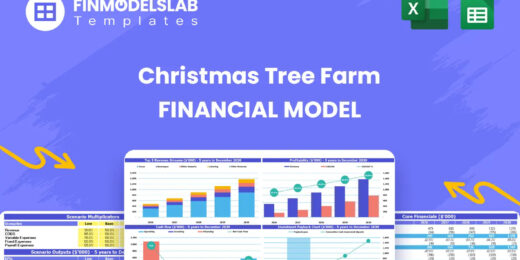

The Christmas Tree Farm Financial Model helps users turn a…


This banana tree plantation financial model serves as a financial…

This is a collection of financial model templates for businesses…
Forecasting Timber Revenues for Sustainable Forestry Planning

The forestry industry plays a pivotal role in global economies, providing a myriad of products essential for various sectors, ranging from construction to manufacturing. It influences economic development, supports livelihoods, and contributes to environmental sustainability. As the world increasingly recognizes the value of forests not only for their economic benefits but also for their ecological importance, sustainable forestry planning becomes paramount. However, financial planning within the forestry sector is uniquely challenging due to the long-term nature of tree growth, dependency on market fluctuations, and the growing emphasis on sustainability. Integrating sustainable practices in forestry operations ensures that forests continue to meet present needs while preserving their potential to serve future generations. Therefore, accurate financial forecasting becomes indispensable, enabling stakeholders to make informed decisions and promote responsible forest management.
With sustainability as a guiding principle, forecasting timber revenues involves a series of complex components, each playing a vital role in the overall financial health of forestry operations. Sustainable forestry planning necessitates accounting for various factors, including the growth rates of trees, market demand for timber products, and the volatility of timber prices. Financial models that consider these elements allow foresters to anticipate revenue flows and devise strategies to mitigate potential risks. Moreover, sustainable practices such as reforestation and responsible harvesting become integral parts of the financial forecasting process, ensuring that forest resources remain productive and viable over the long term.
Key Performance Indicators for Timber Revenue Forecasting
Timber revenue forecasting hinges on identifying and analyzing several key performance indicators that can impact the financial outcomes of forestry operations. Understanding these indicators helps foresters develop more precise and effective financial models tailored to their specific needs and circumstances.
Understanding Timber Yield EstimatesOne of the fundamental aspects of forecasting timber revenues is accurately predicting timber yield. Timber yield estimates consider growth rates and regeneration periods, which vary according to tree species and environmental conditions. Yield forecasting enables foresters to estimate the volume of timber that can be harvested at different intervals, directly influencing revenue projections. Accurate yield estimates provide a foundation for financial planning, ensuring that timber harvests align with market demand and sustainable practices.
Market Demand AnalysisMarket demand analysis is another critical component of timber revenue forecasting. Evaluating trends in timber product markets, including construction materials, paper products, and biomass energy, allows foresters to anticipate shifts in demand. Several factors can influence timber demand, such as the state of the construction industry, export opportunities, and increasing consumer preference for sustainable products. By understanding these trends, foresters can align their operations with market needs and optimize revenue generation through effective market demand evaluation.
Price Volatility and Risk ManagementThe timber market is not immune to price volatility. Fluctuations in timber prices can arise from factors such as supply chain disruptions, changes in production costs, and global economic conditions. Effective risk management strategies are essential to mitigate financial risks associated with price changes. Techniques such as hedging, diversifying timber products, and aligning harvesting schedules with favorable market conditions help safeguard revenues against unexpected price swings.
Cost of Growth and Extent of CoverageForestry operations entail various operational costs, including labor, equipment, maintenance, and land management. Additionally, incorporating sustainable practices like reforestation and habitat conservation can further influence the cost structure. Carefully managing these costs is crucial to maintaining financial viability. Understanding the extent of coverage, which evaluates how operational costs are balanced with revenue, allows foresters to optimize budgets and allocate resources effectively, supporting long-term financial stability through operational cost optimization.
Developing a Financial Model for Sustainable Forestry
An effective financial model for sustainable forestry is a strategic tool that integrates various financial aspects and scenario analyses. It guides decision-making processes and helps foresters navigate uncertainties in the forestry sector.
Choosing the Right Financial Modeling ApproachSelecting the appropriate financial modeling approach is essential in developing accurate forecasts. Deterministic models, which rely on fixed inputs, and stochastic models, which incorporate randomness and variability, are two common approaches. For sustainable forestry, long-term financial modeling is often more relevant than short-term projections, given the prolonged growth cycles of timber. A model that considers both deterministic and stochastic elements can provide a comprehensive outlook on potential financial outcomes.
Key Components of a Forestry Financial Model
A robust forestry financial model incorporates several crucial components. It should account for growth cycles, projecting cash flow across different timber generations and market conditions. Revenue projections based on historical data and market insights, coupled with an analysis of operating and capital expenditures, offer a comprehensive view of financial health. Such modeling helps foresters make informed decisions regarding harvesting schedules, investments, and sustainable practices by utilizing financial model templates.
Scenario Analysis and Sensitivity TestingScenario analysis and sensitivity testing are indispensable tools in financial modeling. By evaluating various ‘best-case’ and ‘worst-case’ scenarios, foresters can understand how different conditions impact financial outcomes. Sensitivity analysis, which tests the model's resilience under varying assumptions, is crucial for anticipating potential risks and adjusting strategies accordingly. These techniques ensure that the financial model remains robust and flexible, even in the face of uncertainties.
Why Excel Spreadsheet Templates are Essential for Forestry Financial Planning
Excel spreadsheet templates offer a practical and accessible solution for forestry financial planning. Leveraging these templates can simplify complex data management and provide valuable insights into forestry operations.
User-Friendly Interface for Complex DataExcel’s user-friendly interface makes it accessible to forestry professionals, even those with limited modeling experience. Its straightforward layout allows users to enter and analyze data efficiently, making complex financial information more manageable using Excel spreadsheet templates.
Customizable and Scalable TemplatesExcel templates are highly customizable, enabling foresters to tailor financial models to their specific operations and requirements. As businesses grow and evolve, these templates can be scaled to accommodate increasing data volumes and changing needs, providing long-term utility.
Advanced Analytics and Visualization ToolsExcel’s advanced analytics and visualization tools facilitate detailed financial analysis and forecasting. Functions like pivot tables, data validation, and what-if scenarios enable comprehensive evaluations and projections. Charts and graphs further enhance communication of complex data to stakeholders, facilitating transparent decision-making.
Integration with Other Financial SystemsExcel’s compatibility with various financial systems and software allows for seamless integration and comprehensive data management. This flexibility facilitates a holistic approach to financial planning, combining Excel’s analytical strengths with other tools for enhanced forecasting and strategic insights.
Conclusion: Empowering Sustainable Forestry through Financial Modeling
Financial forecasting is a cornerstone of sustainable forestry practices, enabling stakeholders to balance economic goals with ecological stewardship. By utilizing sophisticated financial models, foresters can accurately predict timber revenues, manage risks, and implement sustainable practices. Excel spreadsheet templates offer an invaluable resource, providing user-friendly, customizable, and scalable solutions for complex financial planning needs. For forestry professionals seeking to enhance their financial planning processes, specialized financial model templates available at eFinancialModels empower them to make informed, strategic decisions that promote sustainable forestry initiatives. Embracing these tools is a step toward a more resilient and responsible forestry industry, ensuring that our valuable forest resources continue to thrive for generations to come.
FAQ
- What are the key factors in timber revenue forecasting? Timber revenue forecasting considers tree growth rates, market demand, price volatility, and sustainable practices to project future revenues accurately.
- Why is market demand analysis important in forestry? Market demand analysis helps anticipate changes in timber product markets, ensuring forestry operations align with demand and optimize revenue generation.
- How can Excel templates aid forestry financial planning? Excel templates provide a user-friendly, customizable platform for managing complex data, allowing detailed financial analysis, forecasting, and decision-making.
- What is the significance of scenario analysis in financial modeling? Scenario analysis evaluates ‘best-case’ and ‘worst-case’ scenarios to understand how different conditions impact financial outcomes, helping foresters adjust strategies for potential risks.
You might also like: