0 ITEMS

Financial Modeling: DIY Templates vs Custom Solutions

The gap between a $200 template and a $20,000 custom model isn’t just price — it’s the difference between a spreadsheet that answers your question and one that raises more questions than it resolves.
Key Takeaways
- DIY financial model templates cost $50–$500; freelance consultants charge $1,500–$15,000; enterprise custom builds start at $25,000 and climb from there.
- Competent Excel users spend 15–40 hours customizing a pre-built template — beginners often spend 60+ hours and still produce unreliable outputs.
- Businesses with a single revenue stream, fewer than 50 model assumptions, and internal planning needs can almost always succeed with a quality template.
- Fundraising models for institutional investors, complex debt structures, and multi-unit businesses typically require custom work to pass investor scrutiny.
- A hybrid approach — start with a template, then hire a consultant to audit and refine — cuts total cost by 30–50% compared to going custom from day one.
- Investors consistently apply more scrutiny to template-based models during due diligence; a consultant-built model signals financial sophistication to Series A and later-stage investors.
- Ongoing model maintenance runs 2–5 hours per month for templates and 1–3 hours per month for well-structured custom models, because custom models are built for your specific update workflow.
The Real Cost Breakdown: Templates vs Custom Financial Models
The price you pay for a financial model reflects the specificity of the logic inside it, not just the hours someone spent building it. Here’s what each tier actually delivers.
DIY templates: $50–$500. Template marketplaces offer pre-built Excel models covering SaaS, e-commerce, real estate, restaurants, and dozens of other business types. At the low end ($50–$150), you get a generic structure with placeholder assumptions. Mid-range templates ($150–$500) include industry-specific revenue drivers, three-statement integration (meaning the income statement, balance sheet, and cash flow statement are linked so a change in one automatically flows through the others), and basic scenario toggles.
Freelance consultants: $1,500–$15,000. Independent financial modelers on platforms like Upwork or Toptal charge $75–$250 per hour according to market rate surveys, with most startup-stage engagements landing between $1,500 and $8,000. Boutique advisory firms typically charge $5,000–$15,000 for a full three-statement model with integrated forecasting.
Enterprise and Big 4 custom solutions: $25,000+. Large professional services firms charge $25,000–$100,000+ for investor-grade models with full audit trails, sensitivity analysis dashboards, and ongoing support. According to the Association of Chartered Certified Accountants, complex financial modeling engagements at advisory firms routinely exceed $50,000 when they include scenario modeling, debt waterfall structures, and board-ready presentation layers.
Complexity Assessment: Does Your Business Need Custom Modeling?
The single most reliable predictor of whether a template will serve you is the number of distinct revenue streams your business operates. Templates handle simplicity well; custom models handle interdependency.
Templates are sufficient when:
- You have 1–2 revenue streams with predictable pricing
- Your model requires fewer than 50 independent assumptions
- You need internal planning outputs, not investor-facing deliverables
- Your business follows a standard model (subscription SaaS, single-location retail, service agency)
Custom modeling is justified when:
- You operate multiple business units with separate cost structures
- Your financing includes convertible notes, SAFE agreements, or complex debt covenants (a debt covenant is a condition a borrower must meet to avoid triggering a loan default)
- You’re preparing for a Series A raise or later, where investors will stress-test every assumption
- Your revenue recognition follows non-standard rules (long-term contracts, milestone billing, usage-based pricing with tiered rates)
- You need a model that integrates with your accounting software or ERP system
A practical rule: if explaining your business model to a new employee takes more than 10 minutes, a generic template will almost certainly require more customization than it saves.
Time Investment Required for Each Approach
Time cost is the hidden variable most founders underestimate. A $200 template that takes 80 hours to customize has a real cost far exceeding a $3,000 consultant engagement.
According to research published by the CFA Institute, financial modeling proficiency requires a minimum of 200 hours of structured practice before analysts produce reliable outputs independently. Source For founders without that background, template customization time balloons fast.
Here’s a realistic time estimate by skill level:
| Skill Level | Template Customization | Consultant Engagement |
|---|---|---|
| Beginner (Excel basics) | 60–100 hrs | 2–4 weeks review time |
| Intermediate (formulas, pivot tables) | 25–40 hrs | 1–2 weeks review time |
| Advanced (financial modeling experience) | 10–20 hrs | 1 week review time |
| No Excel skills | Not recommended | 3–6 weeks full build |
Consultant engagements run 2–6 weeks from kickoff to delivery for a standard startup model. Your time commitment during that period is 5–15 hours of input sessions, document sharing, and review cycles — not 40+ hours of spreadsheet work.

Founder time is the hidden cost variable — a $200 template requiring 80 hours costs more than a $3,000 consultant engagement.
When DIY Templates Are the Right Choice
Templates work best when the business model is standard, the use case is internal, and the founder has at least intermediate Excel skills. For internal planning, a well-structured template from a reputable marketplace delivers 80–90% of the analytical value of a custom model at 5–10% of the cost.
Specific scenarios where templates win:
- Pre-revenue planning: You’re stress-testing unit economics before committing to a business model. A template forces structured thinking without requiring custom architecture.
- Bank lending for straightforward businesses: Community banks and SBA lenders (the U.S. Small Business Administration guarantees loans to small businesses through approved lenders) review standard financial projections. A clean three-statement model from a quality template meets their requirements in most cases.
- Early-stage fundraising (pre-seed, friends and family): At this stage, investors are betting on the founder and the idea. A coherent template-based model demonstrates financial literacy without requiring institutional-grade polish.
- Annual budgeting for established businesses: Once your business has 12+ months of actuals, a template adapted to your chart of accounts handles annual planning efficiently.
Browse financial model templates organized by business type to find options matched to your industry and complexity level.

For internal planning with 1-2 revenue streams, a quality template delivers 80-90% of the value of a custom model.
When to Hire a Financial Modeling Consultant
Hiring a consultant makes financial sense when the cost of a wrong model exceeds the cost of the engagement. For fundraising, that threshold arrives quickly.
Investors at the Series A stage and beyond scrutinize financial models as a proxy for founder sophistication. A model with circular references (a circular reference occurs when a formula refers back to its own cell, creating an infinite loop that breaks the model), hardcoded numbers where formulas should be, or inconsistent accounting treatment signals inexperience — and can kill a deal. According to the Kauffman Foundation, inadequate financial planning is among the top reasons early-stage companies fail to secure follow-on funding.
Hire a consultant when:
- You’re raising $500,000 or more from institutional investors or angels who conduct formal due diligence
- Your model needs to support a bank loan above $250,000 with covenant tracking
- You’re modeling a physical product business with manufacturing cost allocation, inventory modeling, and working capital cycles
- You need integrated financial statements with full audit trails for board reporting
- Your business has multiple entities, currencies, or intercompany transactions

Institutional investors scrutinize model structure as a proxy for founder financial sophistication.
The Hybrid Strategy: Starting with Templates, Upgrading Strategically
The most cost-effective path for most startups combines both approaches in sequence. Start with a quality template to build your financial intuition and test assumptions, then bring in a consultant to audit, restructure, and investor-proof the model before a fundraise.
This hybrid approach typically costs $500–$2,000 for the template phase and $2,000–$5,000 for the consultant audit — a total of $2,500–$7,000 versus $8,000–$15,000 for a full custom build from scratch. That’s a 30–50% cost reduction while still delivering an investor-ready output.
Transition triggers that signal it’s time to upgrade from template to custom:
- You’ve raised a pre-seed round and are now targeting institutional Series A investors
- Your template requires more than 20 manual workarounds to reflect your actual business
- A potential investor or lender has flagged errors or inconsistencies in your current model
- You’re adding a second revenue stream or business unit that breaks the template’s logic
- Your monthly model update takes more than 4 hours because the structure isn’t built for your workflow
For startup financial models that are designed to scale from early-stage planning to investor-ready outputs, look for templates that include unlocked formulas, documented assumption sheets, and scenario toggle functionality.

The hybrid sequence cuts total cost by 30-50% while still delivering investor-grade output.
Worked Example: Template vs Custom Cost-Benefit for a SaaS Startup
Here’s the math for a SaaS startup preparing a Series A fundraise with $800K ARR (Annual Recurring Revenue, the annualized value of recurring subscription revenue).
Option A: DIY Template
- Template purchase: $350
- Founder time (40 hours at $150/hr opportunity cost): $6,000
- Rework after investor feedback (15 hours): $2,250
- Total: $8,600
- Risk: Model may still fail investor scrutiny, requiring a consultant anyway
Option B: Full Custom Build
- Consultant fee (boutique firm): $12,000
- Founder review time (10 hours): $1,500
- Total: $13,500
- Risk: Scope creep if requirements aren’t locked upfront
Option C: Hybrid (Template + Consultant Audit)
- SaaS template purchase: $350
- Founder customization (20 hours): $3,000
- Consultant audit and restructure: $3,500
- Total: $6,850
- Risk: Lowest, because the consultant works from an existing structure
Option C delivers investor-grade output at roughly half the cost of Option B, provided the founder selects a quality template with unlocked formulas and documented logic.
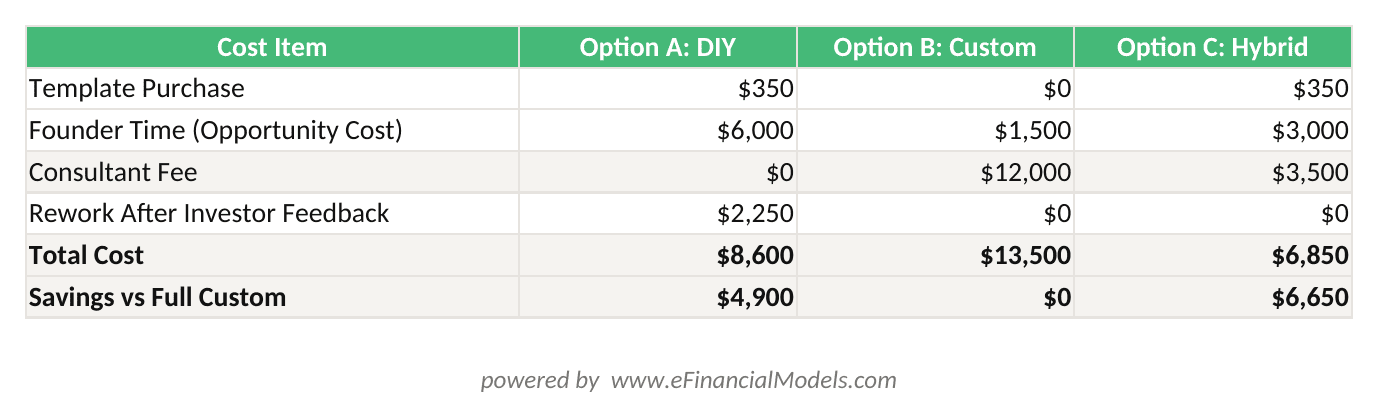
Hybrid approach (Option C) delivers investor-grade output at $6,850 — roughly half the $13,500 cost of a full custom build.
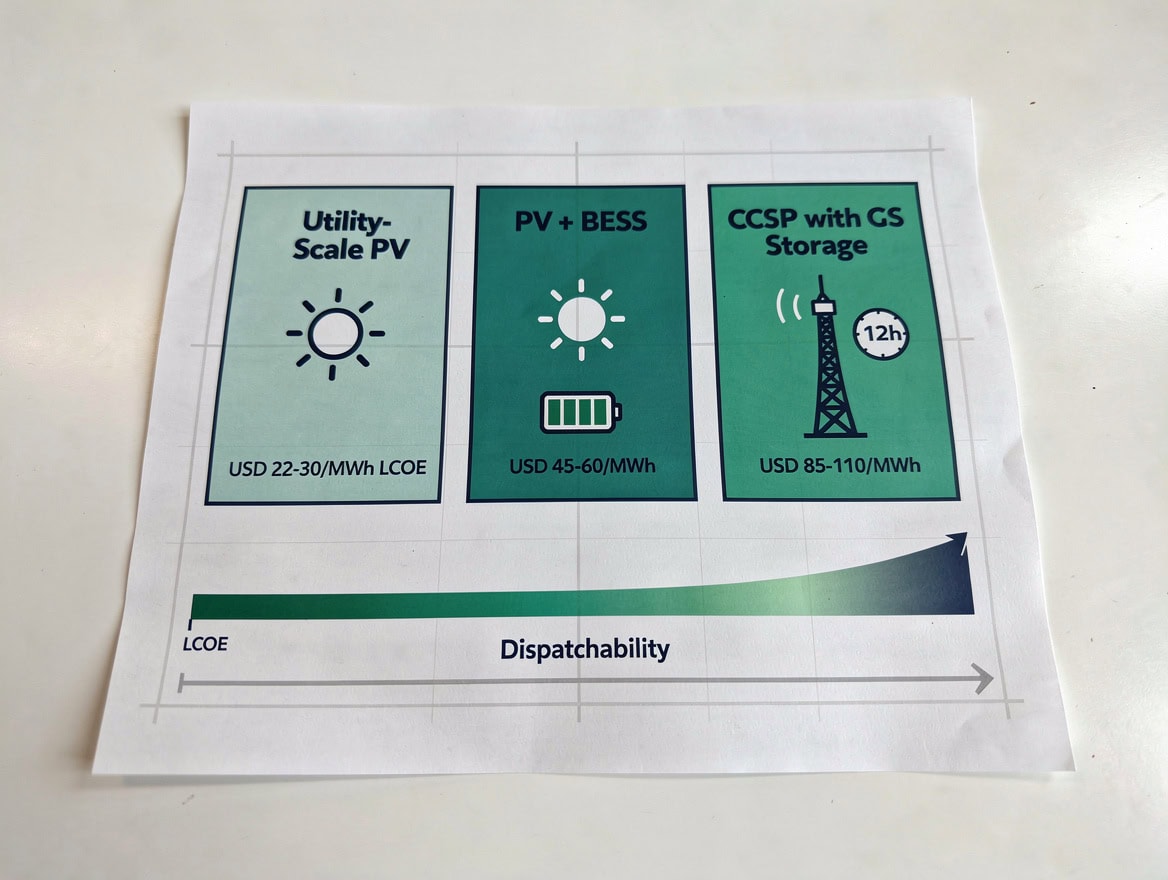
The hybrid approach for a SaaS Series A fundraise costs $6,850 versus $13,500 for a full custom build.
How to Evaluate Template Quality Before Purchase
Not all templates are equal. A low-quality template creates more rework than starting from scratch. Before purchasing, apply these 5 quality checks.
- Formula transparency: Every calculated cell should contain a formula, not a hardcoded number. Hardcoded values (called “magic numbers” in modeling practice) break when assumptions change.
- Three-statement integration: The income statement, balance sheet, and cash flow statement must balance automatically. Test this by changing one revenue assumption and confirming all three statements update.
- Assumption centralization: All inputs should live on a dedicated assumptions sheet, not scattered across tabs. This makes updates faster and reduces errors.
- Scenario functionality: A quality template includes at least a base, upside, and downside scenario toggle — ideally driven by a single dropdown cell.
- Documentation: Each assumption should include a brief note explaining its source or rationale. Undocumented models are impossible to audit.
Explore free financial model templates to test template quality standards before committing to a paid purchase.
Hidden Costs and Long-Term Maintenance Considerations
The purchase price of a template or the fee for a consultant engagement is only the beginning. Both approaches carry ongoing costs that most founders don’t budget for.
Template hidden costs:
- Learning curve time (often 20–30 hours for intermediate users on a new template structure)
- Rework when the template’s logic doesn’t match your business model
- Version control problems when multiple team members edit the same file
- No support when formulas break or assumptions need restructuring
Consultant hidden costs:
- Scope creep: engagements that start at $5,000 frequently reach $8,000–$10,000 when requirements expand mid-project
- Dependency: if the consultant built the model, you may need to rehire them for every major update
- Handoff gaps: models built by consultants often lack documentation, making internal maintenance difficult
Ongoing maintenance reality: A well-structured financial model requires 2–5 hours of monthly updates to stay current with actuals, revised assumptions, and new scenarios. According to the American Institute of CPAs, financial models used for active business management should be reviewed and updated at minimum quarterly to remain decision-relevant. Budget for this time regardless of which approach you choose.
For financial planning resources that include update-ready structures, look for models with clearly labeled input cells and a monthly actuals integration tab.
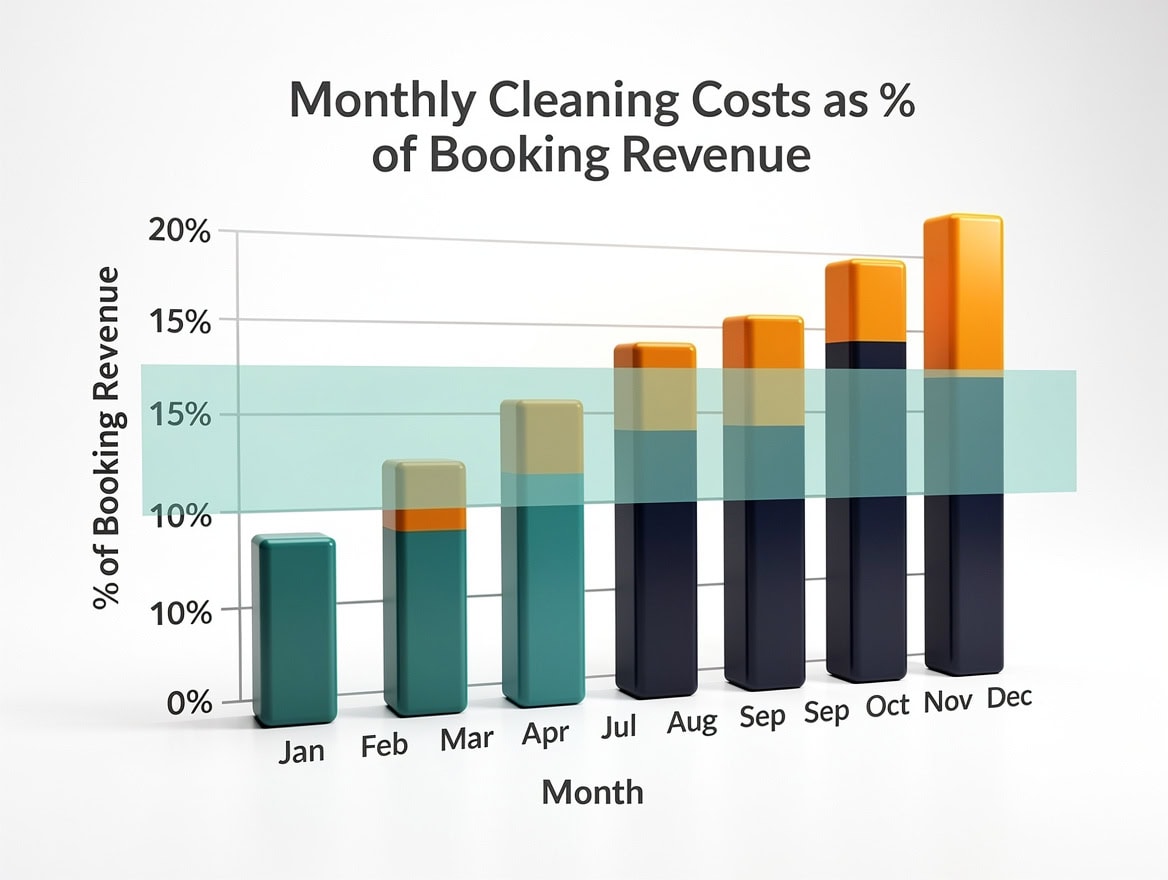
Budget 2-5 hours monthly for template maintenance and 1-3 hours for custom models — regardless of which approach you choose.
Decision Framework: Choosing Your Financial Modeling Approach
Use this framework to match your situation to the right approach. Answer each question and tally your score.
| Decision Factor | Template (1 pt) | Hybrid (2 pts) | Custom (3 pts) |
|---|---|---|---|
| Revenue streams | 1–2 | 3–4 | 5+ |
| Use case | Internal planning | Bank lending | Investor fundraise |
| Excel skill | Intermediate+ | Basic | None |
| Budget | Under $1,000 | $1,000–$5,000 | $5,000+ |
| Timeline | 4+ weeks | 2–4 weeks | Under 2 weeks |
| Model complexity | Under 50 assumptions | 50–150 assumptions | 150+ assumptions |
Score 6–9: A quality template from a reputable marketplace will serve your needs. Invest time in selecting the right industry-specific model.
Score 10–14: The hybrid approach delivers the best risk-adjusted outcome. Start with a template, then budget $2,000–$5,000 for a consultant audit before any high-stakes use.
Score 15–18: Go custom from the start. The cost of a flawed model in your context exceeds the cost of professional modeling.
Frequently Asked Questions
Can I hire someone to build my financial model?
Yes, and it’s often the right call. Independent financial modelers charge $75–$250 per hour, with full startup model engagements typically running $1,500–$8,000 through freelance platforms. Boutique advisory firms charge $5,000–$15,000 for investor-grade three-statement models. To hire well, ask candidates to share 2–3 anonymized model samples, confirm they understand your specific business model (SaaS, physical product, marketplace, etc.), and require a fixed-scope proposal with defined deliverables before signing. Avoid engagements priced purely by the hour without a scope cap, as these are the most common source of cost overruns. For fundraising models specifically, verify that the consultant has experience building models that have passed investor due diligence, not just internal planning tools.
How long does it take to build a financial model from scratch?
A competent financial modeler building from scratch takes 20–60 hours depending on complexity. A simple single-revenue-stream model with 3-year projections takes 20–30 hours. A full three-statement model with scenario analysis, sensitivity tables (a sensitivity table shows how the output changes when you vary one or two key inputs simultaneously), and investor-ready formatting takes 40–80 hours. For founders customizing a template, add 50–100% to those estimates if you’re working without prior financial modeling experience. The CFA Institute’s financial modeling curriculum estimates that analysts need 200+ hours of practice before producing reliable independent outputs, which explains why founder-built models frequently contain structural errors that only surface during investor review.
What’s the minimum Excel skill level needed to use a financial model template?
You need to comfortably use SUM, IF, VLOOKUP or INDEX/MATCH, and basic cell referencing before a template becomes a productive tool rather than a frustration. If you can build a simple budget in Excel without help, you’re at the threshold. If you’ve never written a formula with multiple conditions (for example, =IF(B2>0, B2C2, 0)), plan for a 20–30 hour learning curve before you can customize a template reliably. Founders who lack this baseline are better served by the hybrid approach: purchase a template, then hire a consultant for 5–10 hours of setup and training so you can maintain it independently going forward.
Do investors care whether my financial model was built by a consultant or a template?
At the pre-seed stage, investors care more about the quality of your thinking than the polish of your spreadsheet. At Series A and beyond, model quality becomes a credibility signal. Institutional investors and their analysts will open your Excel file, check formula integrity, test whether the three statements balance, and look for hardcoded numbers — all red flags common in template-based models that weren’t properly customized. According to the Kauffman Foundation, financial planning gaps are a leading cause of failed follow-on fundraises. A consultant-built model signals that you take financial rigor seriously, which matters more as deal size increases. For raises above $1 million, the $5,000–$12,000 cost of a professional model is a small fraction of the capital at stake.
What should I look for when evaluating a financial modeling consultant?
Four criteria matter most: industry experience (a SaaS model requires different logic than a manufacturing model), sample work quality (ask for anonymized examples and check formula integrity yourself), communication style (you’ll spend 5–15 hours in input sessions, so clarity matters), and pricing structure (fixed-fee engagements reduce scope creep risk). Avoid consultants who can’t explain their model structure in plain English — if they can’t teach you how it works, you’ll be dependent on them for every update. Verify that their models include a documented assumptions sheet, because undocumented models become liabilities when team members change or investors ask follow-up questions.
How often does a financial model need to be updated?
A model used for active business management needs monthly updates to incorporate actual results against projections. This typically takes 2–5 hours per month for a well-structured model. Quarterly, you should revisit and revise forward assumptions based on what you’ve learned. Annually, the model architecture itself may need restructuring if your business has changed significantly. The AICPA recommends quarterly reviews at minimum for models used in decision-making contexts. Budget for this time upfront: a model that takes 3 hours per month to maintain costs 36 hours per year — equivalent to nearly a full work week. Custom models built for your specific update workflow typically reduce this to 1–3 hours per month.
When does the hybrid approach make the most sense?
The hybrid approach delivers the best value when you have 4+ weeks before your model needs to be investor-ready, intermediate Excel skills, and a budget of $3,000–$7,000. Start by purchasing a quality industry-specific template from a reputable marketplace (budget $150–$500). Spend 2–3 weeks customizing it to your actual business assumptions. Then hire a consultant for a 10–20 hour audit engagement ($1,500–$4,000) to fix structural issues, add scenario functionality, and investor-proof the output. This sequence works because the consultant spends their hours on high-value restructuring rather than building basic infrastructure from scratch. The result is a model that’s both investor-grade and one you understand well enough to update and defend in due diligence conversations.
Conclusion
The right financial modeling approach depends on three variables: your use case, your Excel skill level, and the stakes attached to the output. Templates win on cost and speed for internal planning and early-stage fundraising. Custom models win on credibility and precision for institutional fundraising and complex business structures. The hybrid approach wins on risk-adjusted value for most startups preparing their first serious investor raise.
I recommend starting with EFM’s financial modeling templates to assess your complexity level and find an industry-matched starting point — then use the decision framework in this article to determine whether a consultant audit makes sense before your next high-stakes use of the model.