
0 ITEMS

Financial Modeling
Financial modeling is the process of creating a summary of a company's expenses and earnings in the form of a spreadsheet that can be used to calculate the impact of future events or decisions. We offer financial model templates that simplify the modeling process, allowing you to create sophisticated financial models with ease.
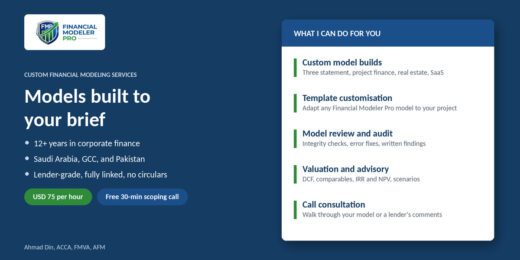

Hire an ACCA, FMVA, and AFM qualified practitioner with 12+…


Excel model for starting an incorporated small business in Canada:…

Excel model for building a laneway house, garden suite, coach…

Annual Excel model for a used lubricating oil re-refinery. Compare…

Excel model for an Airbnb rental arbitrage business: lease apartments…

Monthly 10-year Excel model of a Canadian mortgage investment corporation,…

Monthly Excel model of the BRRRR strategy in Canada: buy…

Monthly Excel model of an invoice factoring company. Six client…

Annual Excel model for a mixed-plastic pyrolysis (chemical recycling) plant:…
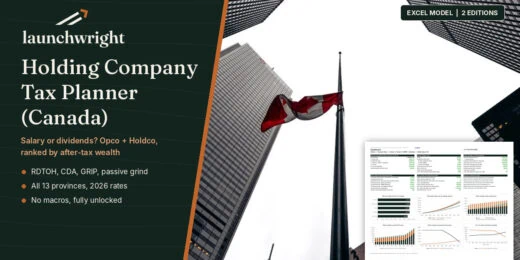
Excel tax planner for Canadian owner-managers with an operating company…

Annual Excel model for a construction and demolition (C&D) waste…

Annual Excel model for an e-waste (WEEE) recycling plant with…

Monthly 5-year Excel model for a self-publishing imprint on Amazon…


22-tab lender-grade solar project finance model: DSCR-sculpted debt with a…
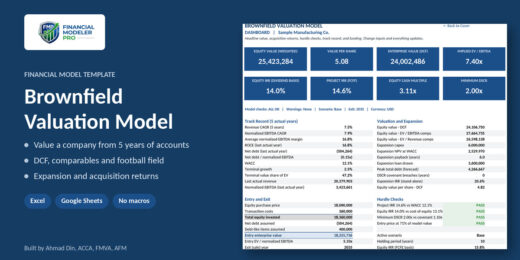
Value an operating manufacturing company from its real accounts. Enter…
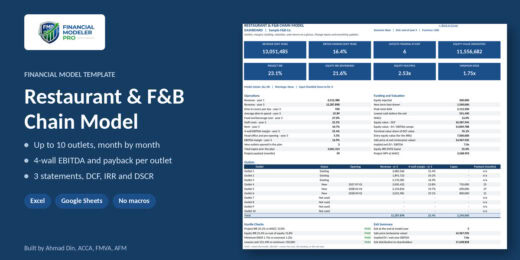
Plan a restaurant, cafe, or quick-service chain of up to…
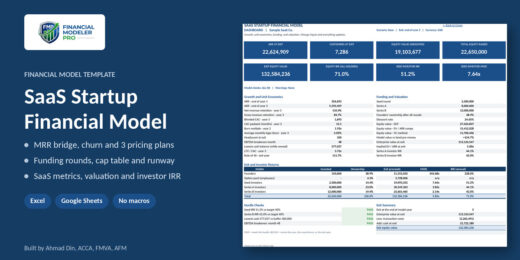
Plan a subscription software company month by month for five…
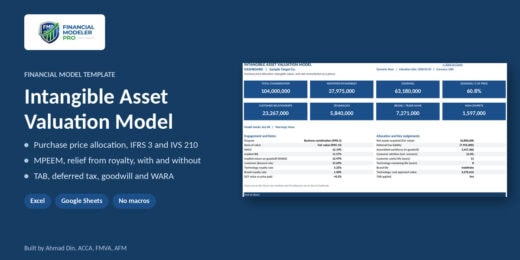
A complete purchase price allocation in one workbook. The model…
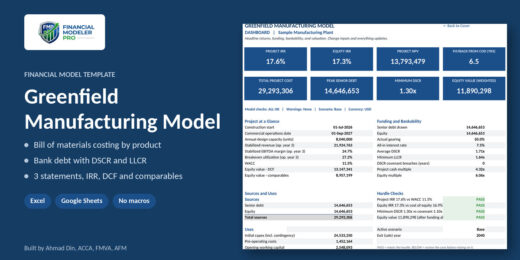
A full feasibility and valuation model for a new manufacturing…
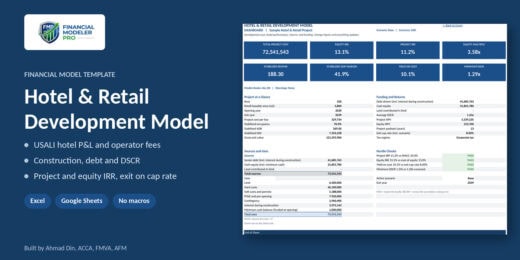
A complete development and operating model for a hotel with…
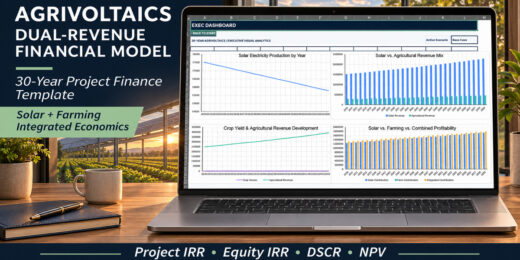

Evaluate dual-revenue agrivoltaics economics with a 30-year Excel model integrating…
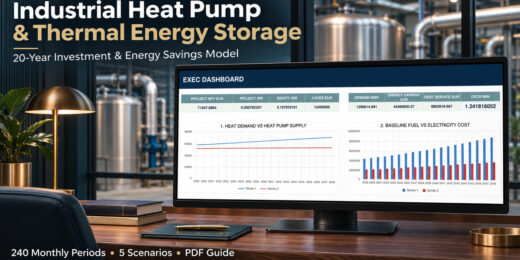
Evaluate industrial heat electrification with a 240-month Excel model linking…
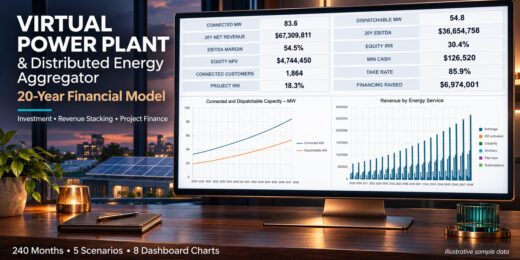
Evaluate a distributed energy aggregator with a 240-month Excel financial…
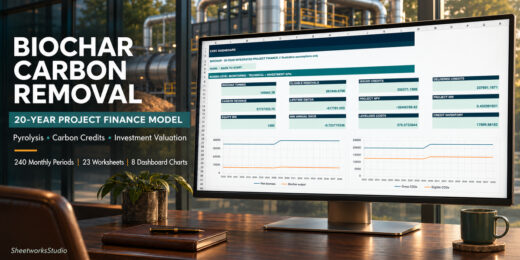
Evaluate biochar pyrolysis and carbon removal economics with a 240-month…

Plan 17 franchise locations over 10 years with store-level P&Ls,…
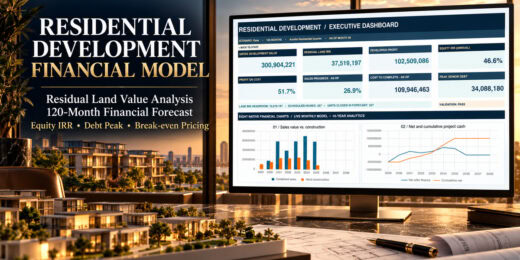
Evaluate residential development feasibility with a 120-month Excel model covering…
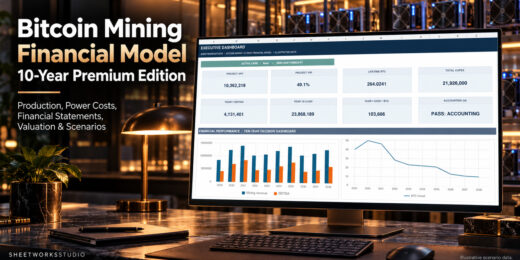
Evaluate Bitcoin mining operations with a 120-month Excel financial model…
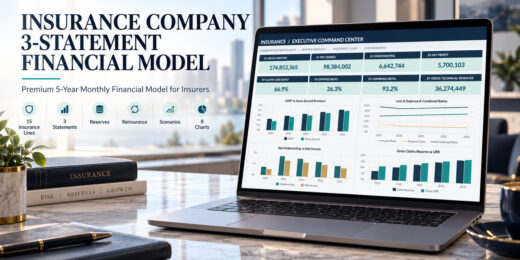
Insurance Company Financial Model Excel | 60-Month 3-Statement Forecast, Claims Reserves & Liquidity
Plan five years of non-life insurance operations in one editable…
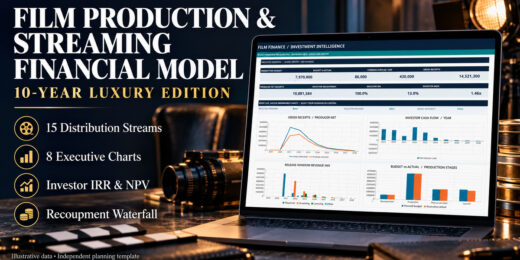
Plan a single film's production budget, financing, release windows and…
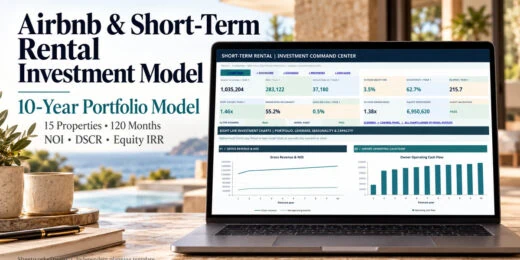
A 10-year short-term rental investment Excel model covering 15 properties,…
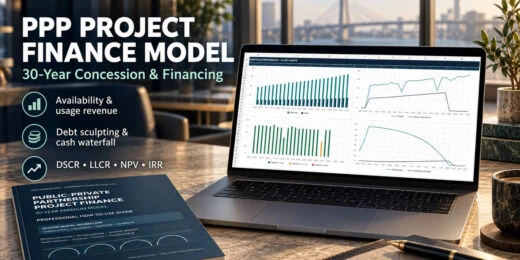
A 30-year availability-based PPP infrastructure Excel model connecting 15 construction…
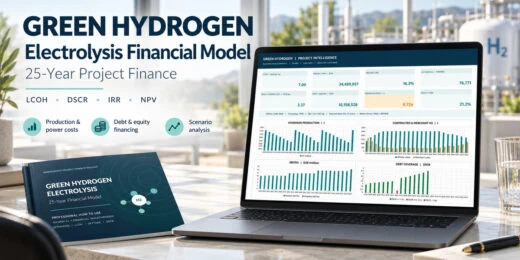
Model 25 years of green hydrogen production, electricity procurement, 15…
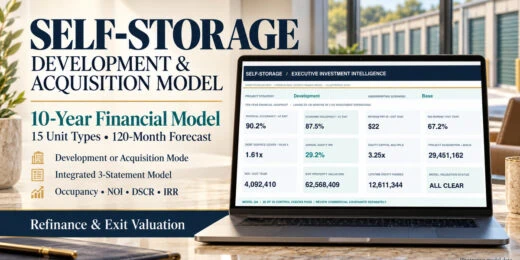
An editable 10-year self-storage financial model integrating Development and Acquisition…
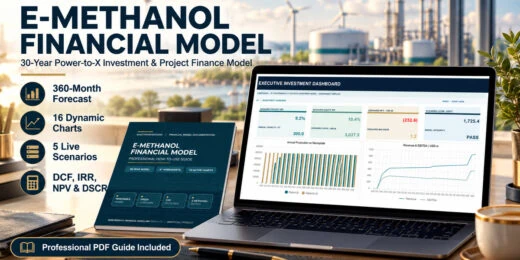
Analyze renewable-power-to-methanol project economics with a 360-month Excel financial model,…
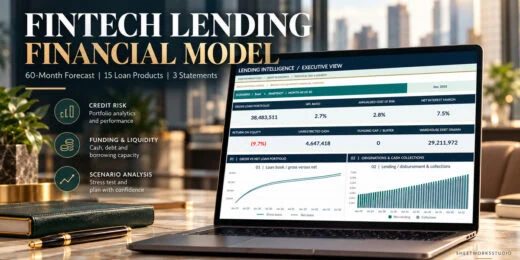
An integrated 60-month Excel financial model for balance-sheet lending businesses…

A premium 25-year onshore wind project finance Excel model with…
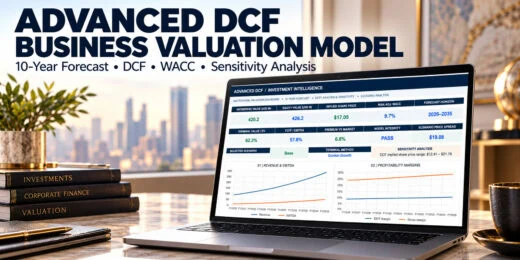
An integrated 10-year Excel DCF valuation model with three years…

A premium 60-month restaurant group financial model with 30 prepared…

An editable 10-year private credit fund model with 40 quarterly…
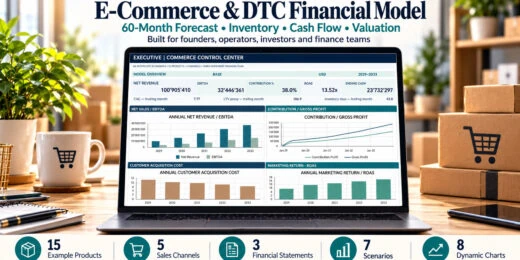
E-Commerce & DTC Financial Model Excel – 60-Month Forecast, Inventory, Cash Flow, 3 Statements & DCF
A premium, editable 60-month e-commerce and DTC financial model connecting…
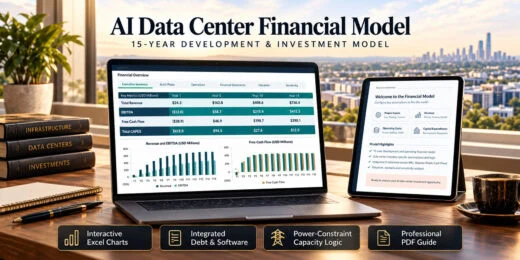
15-year AI data center project finance model with power-constrained IT…
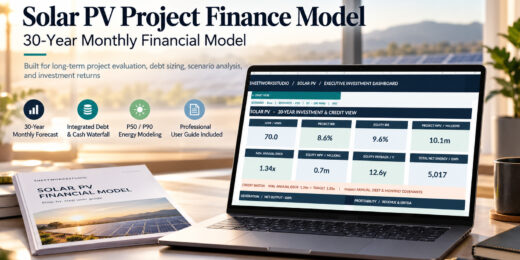
30-year monthly Solar PV project finance model in Excel with…
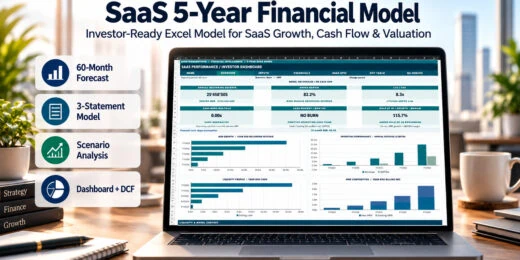
A comprehensive 5-year SaaS financial model with 60 monthly forecasts,…


An institutional-grade 10-year Excel financial model template for AI GPU-as-a-Service…
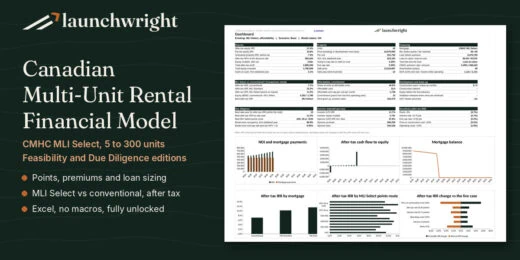
Excel model for a 5 to 300 unit Canadian rental…

Excel model for a 1 to 4 unit rental property…
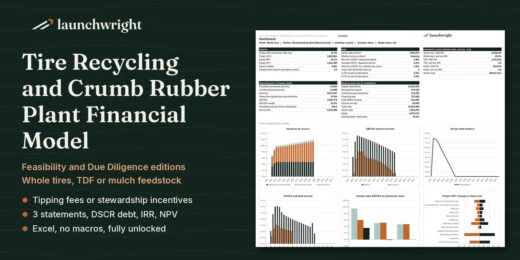
Annual Excel model for a tire recycling and crumb rubber…

Annual Excel model for a tire pyrolysis plant: tipping fees,…
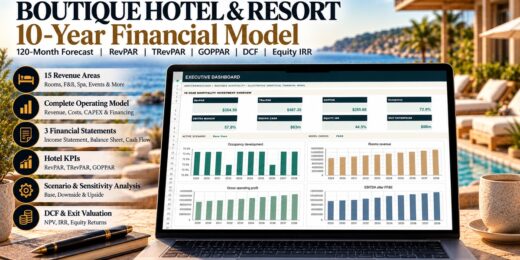
Evaluate boutique hotel and resort economics with an editable 120-month…
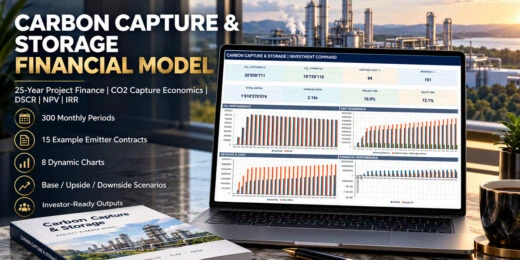
Evaluate carbon capture and geological storage project economics with a…
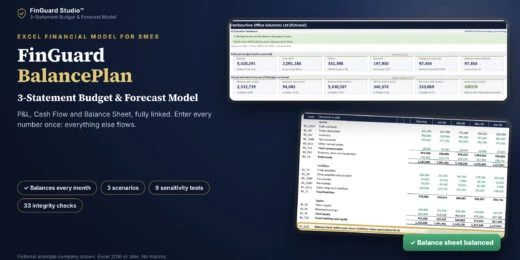

A monthly 3-statement budget and forecast model in Excel for…
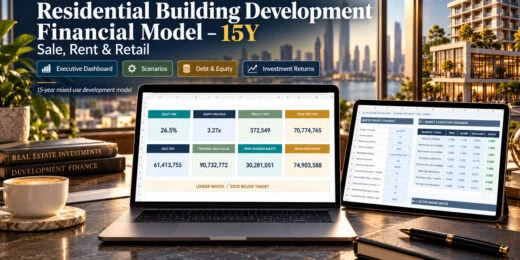
A 180-month residential and mixed-use development financial model combining unit…

A premium 10-year Excel portfolio investment model for up to…
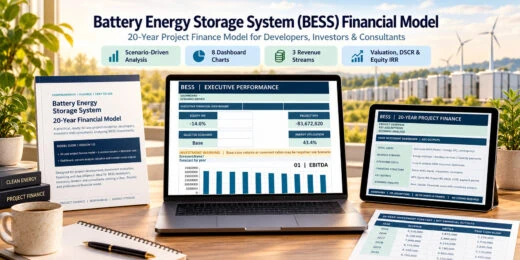
Standalone BESS Excel project finance model with 240 monthly forecasts,…
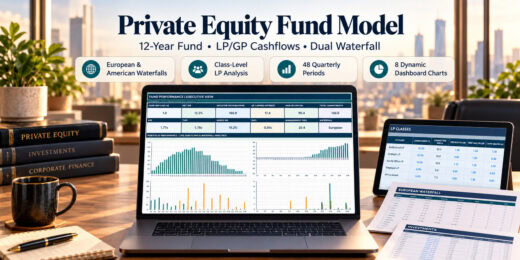
Private Equity Fund Financial Model Excel – 12-Year LP/GP Cash Flows, European & American Waterfalls
12-year private equity fund model with 48 quarterly periods, European…
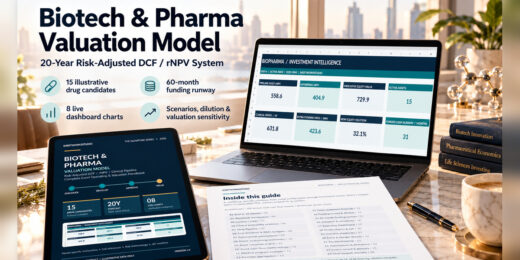
20-year Excel biotech valuation model for 15 drug candidates with…
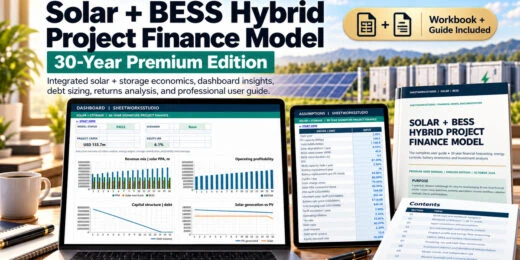
30-year Solar PV + BESS Excel project finance model with…
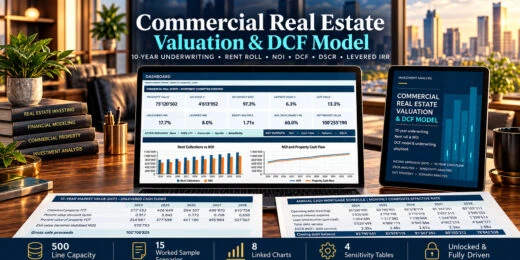
10-year commercial property underwriting model with 500-row rent roll, lease…
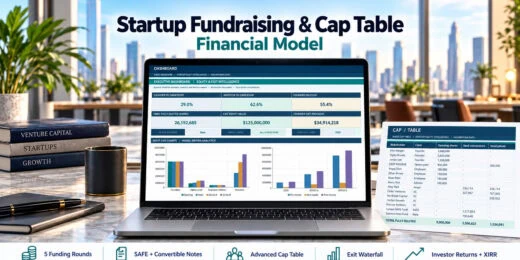
An integrated startup fundraising and capitalization model covering five financing…
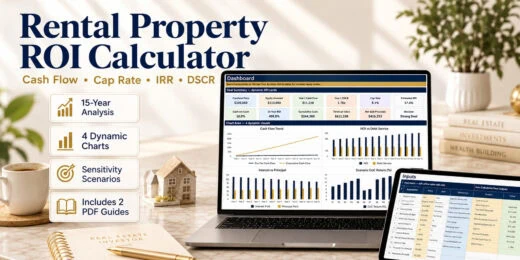
Analyze rental investments with a 15-year Excel cash flow model,…
Crafting a Winning Financial Plan in Financial Modeling

In the dynamic world of financial modeling, crafting a robust financial plan is crucial for businesses and startups aiming to thrive in competitive marketplaces. Effective financial planning not only provides a clear roadmap for future growth but also empowers decision-makers by offering a comprehensive understanding of financial capabilities and constraints. In this article, we explore the significance of financial planning within the financial modeling sector and delve into the methodologies and tools that can enhance financial forecasting accuracy.
The importance of leveraging Excel financial model templates is highlighted as a means to streamline the planning process, ensuring that financial models are both sophisticated and adaptable to various business needs. The advent of new technologies and the evolution of best practices are also transforming the landscape of financial modeling, making it essential for financial professionals to stay abreast of these changes. With this in mind, understanding the interplay between financial planning and modeling is vital for maintaining a competitive edge.
The Significance of Financial Planning in Financial Modeling
Financial planning is the process of creating a strategic pathway for a company’s financial future, encompassing a detailed analysis of cash flow, investment opportunities, potential risks, and growth prospects. Within the financial modeling sector, its significance cannot be overstated. Effective financial planning plays a pivotal role in helping businesses and startups make informed decisions by offering a structured approach to understanding financial health and potential. By accurately projecting revenue streams, controlling costs, and identifying investment opportunities, businesses can steer towards sustainable growth and profitability. The precision in financial planning enables companies to allocate resources judiciously and prioritize initiatives that align with long-term objectives, thereby fostering stability and growth.
Overcoming Challenges in Financial Modeling
Despite its importance, financial modeling presents unique challenges that require careful navigation. Data management is one of the most significant hurdles as it requires meticulous organization, validation, and constant updating to ensure accuracy. Accurate projections also pose a challenge, as they must account for numerous variables and potential market changes. Furthermore, scenario analysis, which involves predicting financial outcomes based on various strategic decisions, demands a high degree of flexibility.
Adaptability in financial models is crucial, as they must cater to diverse stakeholders including investors, management, and regulatory bodies. The dynamic nature of financial environments necessitates models that can easily adjust to new data inputs and external shifts. Building models with this level of flexibility requires a blend of technical expertise and strategic foresight, ensuring that they align with varying organizational goals and stakeholder expectations.
KPIs for Success in Financial Modeling
Measuring Essential KPIs
Key Performance Indicators (KPIs) are critical metrics that gauge the success and efficiency of financial models. In the financial modeling industry, KPIs such as Return on Investment (ROI) of financial projects, accuracy of financial forecasts, scenario analysis flexibility, and user engagement serve as benchmarks for performance. ROI provides insights into the profitability of projects, guiding resource allocation decisions. Accuracy in financial forecasts ensures that businesses are prepared for future economic conditions, while flexibility in scenario analysis allows for the evaluation of different strategic paths. User engagement and feedback loops contribute to continuous model improvement, ensuring relevance and usability.
Continuous Improvement through Benchmarking and Tracking
Benchmarking these KPIs against industry standards is vital for assessing performance and identifying areas for improvement. Continuous tracking and analysis of these metrics facilitate timely adjustments in financial models, ensuring that they remain aligned with business goals and market dynamics. Utilizing industry benchmarks provides an objective perspective on performance and helps to set realistic targets for financial models. Continuous KPI tracking enables businesses to respond proactively to changes in the market, thereby enhancing decision-making and strategic planning.
Creating an Effective Financial Plan Using Excel Templates
Creating an effective financial plan requires a robust financial model, which consists of several key components. Assumptions and inputs form the foundation, providing the necessary data points that drive projections and analyses. Dynamic forecasting, another essential element, enables the model to account for variables and fluctuations, offering a realistic financial outlook. Integrated financial statements, including income statements, balance sheets, and cash flow statements, provide a comprehensive view of the business’s financial health, facilitating informed decision-making.
Leveraging MS Excel Templates for Efficiency
MS Excel financial model templates offer significant advantages in the creation of complex financial models. They enhance speed and efficiency, allowing financial professionals to build intricate models swiftly without sacrificing accuracy. Built-in formulas and functions ensure precision in calculations, reducing the risk of errors and increasing confidence in the model's outputs. Moreover, these templates are customizable, enabling businesses to tailor them to specific industry needs, ensuring that the models are relevant and informative. For a variety of customizable templates, check out our financial model templates collection.
Adopting Best Practices in Financial Planning
Maximizing the effectiveness of financial planning using Excel involves several best practices. Regular updates and revisions based on real data are crucial, as they ensure that the financial model reflects current business realities. Incorporating scenario and sensitivity analysis allows businesses to evaluate different strategic options and assess potential risks. Maintaining clear documentation is essential for transparency and ensures that stakeholders comprehend the model's assumptions and outputs. Following these practices enhances the reliability and utility of financial models, supporting more informed and strategic decision-making.
Future Trends in Financial Modeling and Planning
Harnessing Emerging Technologies
Emerging technologies are reshaping the financial modeling landscape, introducing new tools and methodologies that enhance model efficiency and accuracy. Automation, artificial intelligence (AI), and machine learning are increasingly being integrated into financial models, allowing for the rapid processing of vast datasets and the identification of patterns that inform financial predictions. These technologies enable the creation of more sophisticated models that provide deeper insights and facilitate quicker decision-making, thereby transforming the financial planning process. Stay updated on these trends with our resources on financial planning technologies.
Adapting to Evolving Best Practices
The financial modeling industry is witnessing a shift in best practices, with greater emphasis on adaptability and responsiveness to market shifts. Models that can swiftly adapt to changing business conditions and external environments are increasingly valued. Continuous education and skills development are imperative for financial professionals to keep pace with technological advancements and evolving market demands. Financial modeling is no longer static; it requires a proactive approach to anticipate changes and pivot strategies accordingly, ensuring that businesses remain competitive and resilient. Explore our articles on financial modeling best practices for insights on how to stay ahead.
Embrace the Future of Financial Planning
A robust financial plan serves as the foundation for successful financial modeling, guiding businesses towards strategic growth and informed decision-making. Leveraging sophisticated financial model templates from eFinancialModels enhances this process, offering tools that streamline planning and improve financial forecasting accuracy. As the financial modeling landscape evolves, staying ahead entails embracing new technologies and fostering continuous skill development.
For businesses and startups aiming to maintain competitiveness in the financial modeling industry, exploring eFinancialModels’ range of specialized Excel templates can significantly bolster financial planning efforts, equipping them with the resources necessary to navigate complex financial environments successfully. By prioritizing effective financial planning, businesses can chart a course for sustained success and adaptability in an ever-changing financial landscape.
Frequently Asked Questions about Financial Modeling and Planning
- What is financial modeling? Financial modeling is the process of creating representations of a company's financial performance based on assumptions, forecasts, and historical data. It is used to evaluate financial decisions and predict future performance.
- Why is financial planning important? Financial planning is crucial as it provides a strategic pathway for a company's financial future, helping businesses allocate resources efficiently and make informed decisions that align with long-term objectives.
- How do Excel templates help in financial modeling? Excel templates streamline the creation of financial models by providing customizable and pre-built structures, ensuring accuracy and efficiency while saving time.
- What are Key Performance Indicators (KPIs) in financial modeling? KPIs in financial modeling are metrics like ROI, forecast accuracy, and user engagement that measure the success and efficiency of financial models, guiding performance improvement.
- How can emerging technologies impact financial modeling? Emerging technologies such as AI and machine learning enhance financial modeling by increasing efficiency and accuracy through automation and advanced data analysis.
- What best practices should be followed for effective financial modeling? Best practices include regular updates, scenario analysis, maintaining clear documentation, and adapting to market and technological changes to ensure the reliability of the financial model.
You might also like: