0 ITEMS

Free Business Valuation Matching: Find Vetted Experts Fast
Hiring a qualified business valuation expert doesn’t have to mean weeks of research, surprise invoices, or settling for a generalist who doesn’t know your industry. EFM’s free valuation consultation matching service connects small and mid-sized business owners with vetted, regionally-appropriate valuation professionals in 48 hours or less.
Key Takeaways
- EFM’s free matching tool requires only 4 answers about your business and returns vetted regional expert recommendations within 48 hours, at zero cost or obligation.
- Business valuation fees in the US typically range from $5,000 to $50,000+ depending on revenue size, asset complexity, and valuation purpose, according to the American Society of Appraisers.
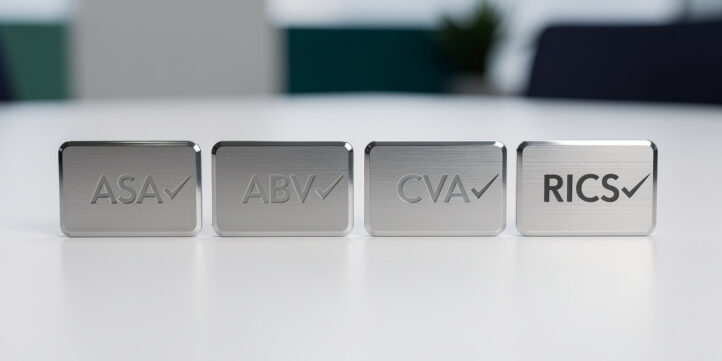
- Certified credentials to look for include ASA (Accredited Senior Appraiser), ABV (Accredited in Business Valuation), and CVA (Certified Valuation Analyst), each requiring rigorous examination and continuing education.
- Regional expertise matters: valuation multiples for the same EBITDA figure can vary by 20–40% across markets due to local buyer pools, regulatory frameworks, and industry clusters.
- SMB owners can reduce valuation costs by 30–50% by choosing an independent certified practitioner over a Big 4 advisory firm when the business has revenues under $10 million and limited asset complexity.
- EFM’s annual benchmark reports give you market intelligence to evaluate and negotiate proposals before you sign any engagement letter.
- The most common mistake business owners make is hiring a generalist accountant instead of a credentialed valuator, which can produce reports that lenders, buyers, or courts reject.
Yes, You Can Hire a Business Valuation Expert—Here’s Exactly How
You can absolutely hire a professional to value your business, and the process is more straightforward than most founders expect. EFM’s free matching service removes the hardest part: identifying which type of expert fits your situation, geography, and budget.
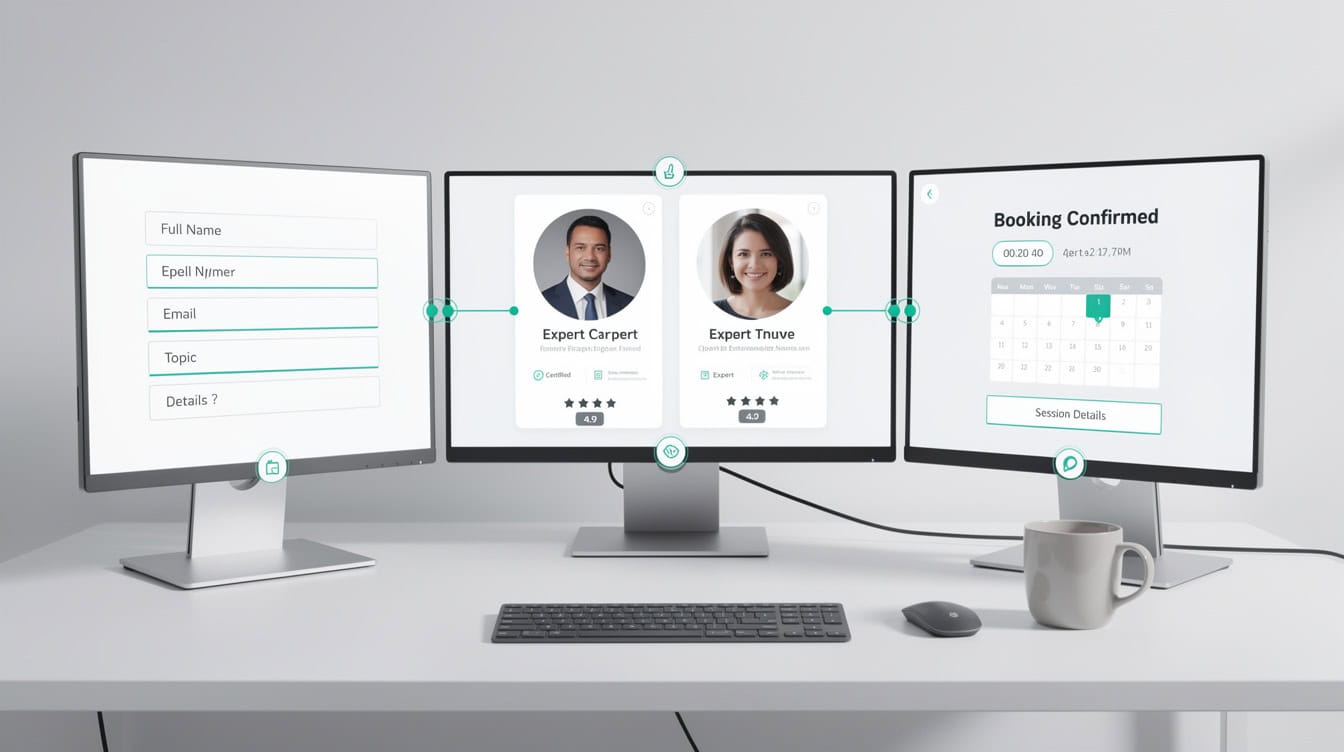
Here’s how the matching process works, step by step:
- Answer 4 questions about your business: industry, annual revenue, valuation purpose (sale, fundraising, estate planning, or litigation), and your country or region.
- EFM’s algorithm filters its vetted expert database by credential type, regional license, industry specialization, and firm size.
- You receive 2–3 matched profiles within 48 hours, each showing credentials, typical fee range, and client reviews.
- Book a free initial consultation directly through the platform with no obligation to engage.
- Compare proposals using EFM’s regional cost benchmarks before you sign anything.
The service costs you nothing. EFM earns a referral fee from the expert only after you engage them, so there’s no pressure and no hidden charges on your side.

What EFM’s Free Valuation Consultation Matching Service Includes
EFM’s matching service goes beyond a simple directory listing. Every expert in the network has been screened against a defined vetting checklist, and the platform provides market intelligence that generic referral services don’t offer.
The service includes:
- Credential verification: EFM confirms each expert holds at least one recognized designation (ASA, ABV, CVA, CFA, or regional equivalent such as RICS in the UK or CA Business Valuation in Australia).
- Industry specialization tagging: Experts are categorized by sector experience, including SaaS, manufacturing, professional services, healthcare, retail, and real estate.
- Regional licensing check: Valuation standards differ by jurisdiction. EFM verifies that matched experts are licensed or accredited under the applicable standards in your market (USPAP in the US, RICS Red Book in the UK, IVS internationally).
- Fee transparency: Each profile shows a typical engagement fee range so you can filter by budget before the first call.
- Annual benchmark data: EFM’s benchmark reports show median valuation multiples and fee ranges by industry and region, giving you a reference point to evaluate any proposal you receive.
Regional Cost Benchmarks: What Business Valuation Actually Costs
Business valuation fees vary significantly by market, business size, and complexity. Knowing the typical range before you talk to any expert puts you in a stronger negotiating position.
According to the American Society of Appraisers, a standard business valuation for a small company in the United States costs between $5,000 and $15,000.
For mid-market businesses with revenues above $10 million or significant asset complexity, fees routinely reach $25,000 to $50,000 or more. In the United Kingdom, the Royal Institution of Chartered Surveyors reports that business valuation engagements for SMBs typically range from £3,000 to £30,000, depending on the purpose and complexity of the report.
Across the Asia-Pacific region, fees for comparable engagements generally fall between AUD 5,000 and AUD 40,000 in Australia, with similar ranges in Singapore and Hong Kong, according to the Australian Valuers Institute.
| Market | Small Business (<$5M revenue) | Mid-Market ($5M–$50M) | Complex / Litigation |
|---|---|---|---|
| United States | $5,000–$15,000 | $15,000–$35,000 | $35,000–$75,000+ |
| United Kingdom | £3,000–£10,000 | £10,000–£25,000 | £25,000–£60,000+ |
| European Union | €4,000–€12,000 | €12,000–€30,000 | €30,000–€70,000+ |
| Australia / APAC | AUD 5,000–AUD 15,000 | AUD 15,000–AUD 40,000 | AUD 40,000–AUD 80,000+ |
What drives cost up:
- Multiple valuation approaches required (income, market, and asset-based methods combined)
- Litigation or tax-court-ready reports with higher documentation standards
- Businesses with complex capital structures, intangible assets, or minority interest disputes
- Tight turnaround deadlines (rush fees of 20–30% are common)
What keeps cost down:
- Single-purpose valuations (e.g., SBA loan only)
- Clean, organized financial records going back 3–5 years
- Businesses with straightforward asset bases and no pending litigation
How EFM Vets and Matches Valuation Professionals
EFM applies a structured vetting process before any expert joins the network. The goal is to ensure that every match is qualified for your specific situation, not just available.
Credential requirements: Every expert must hold at least one of the following designations:
- ASA (Accredited Senior Appraiser): awarded by the American Society of Appraisers after examination, peer review, and 5 or more years of experience.
- ABV (Accredited in Business Valuation): a CPA-specific credential awarded by the AICPA, which requires candidates to pass a comprehensive exam covering 4 major content areas.
- CVA (Certified Valuation Analyst): awarded by the National Association of Certified Valuators and Analysts (NACVA) after examination and continuing education.
- CFA (Chartered Financial Analyst): relevant for investment-context valuations.
- RICS or CA Business Valuation designations for UK and Australian experts respectively.
Industry experience verification: EFM reviews each expert’s completed engagement list and requires a minimum of 10 completed valuations in their stated specialty sectors before they receive that industry tag.
Client feedback loop: After each engagement, EFM collects structured feedback from clients on accuracy, communication, timeliness, and report quality. Experts with ratings below 4.2 out of 5 are reviewed and may be removed from the network.

SMB-Friendly Valuation Options: Finding the Right Fit for Your Budget
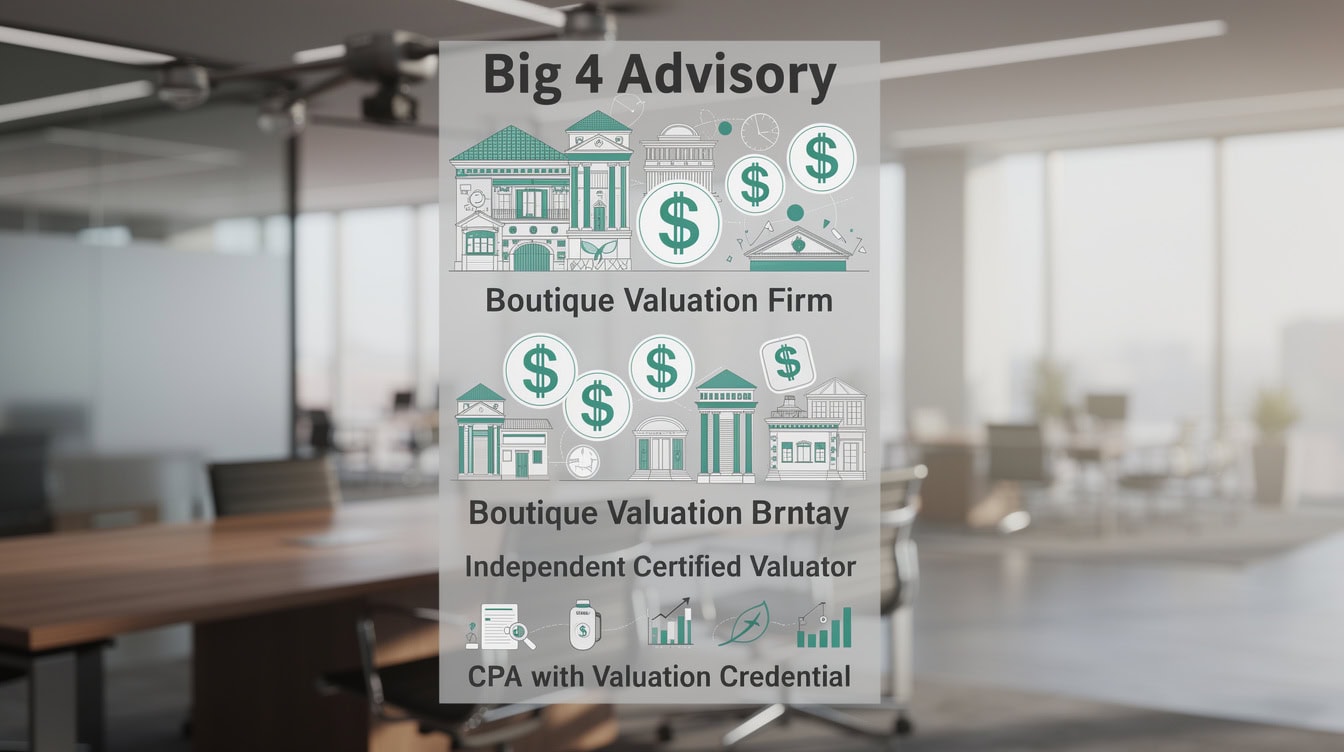
Not every business needs a Big 4 advisory firm. Choosing the right tier of provider for your situation can cut costs by 30–50% without sacrificing report quality.
| Provider Type | Best For | Typical Cost | Credential Level |
|---|---|---|---|
| Big 4 / Large Advisory | Complex M&A, litigation, public co. | $$$$ | Highest |
| Boutique Valuation Firm | Mid-market, industry-specific | $$$ | High |
| Independent Certified Valuator | SMB sale, SBA loan, estate | $$ | Strong |
| CPA with Valuation Credential | Simple businesses, tax purposes | $ | Adequate |
When to choose an independent certified valuator: If your business has revenues under $10 million, a straightforward asset base, and you need the valuation for a sale or SBA financing, an independent CVA or ABV practitioner delivers a credible, lender-accepted report at a fraction of boutique firm rates. The U.S. Small Business Administration requires that appraisals for loans over $250,000 be conducted by a qualified independent source.
When to step up to a boutique firm: SaaS businesses, professional practices with significant goodwill, or any transaction above $5 million in enterprise value benefit from a firm with sector-specific comparable transaction databases and dedicated analyst support.
For founders exploring business valuation options, EFM’s matching tool automatically recommends the appropriate provider tier based on your revenue, complexity, and purpose inputs.

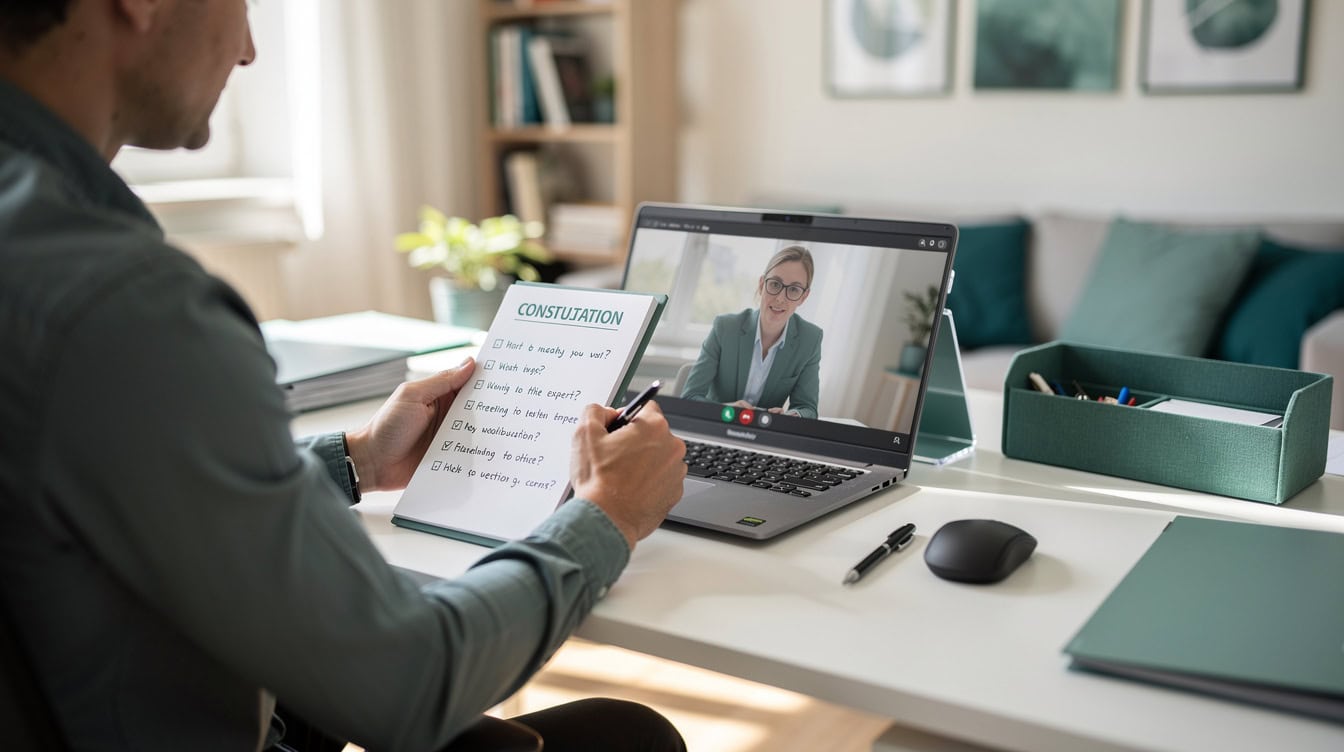
Preparing for Your Free Initial Consultation: Questions to Ask
A free initial consultation is only valuable if you use it to screen the expert, not just listen to their pitch. Come prepared with specific questions and the right documents.
Information to prepare before the call:
- 3 years of financial statements (P&L, balance sheet, cash flow)
- Current ownership structure and any existing shareholder agreements
- A brief description of the valuation purpose (sale, fundraising, estate, litigation)
- Any prior valuations or appraisals, even informal ones
- A list of your top 3–5 competitors or comparable businesses you’re aware of
Questions to ask the expert:
- Which valuation standard will you apply (USPAP, IVS, RICS), and why?
- How many businesses in my industry and revenue range have you valued in the past 2 years?
- Will the report be accepted by the specific buyer / lender / court I’m targeting?
- What is your typical turnaround time from engagement to final report?
- How do you handle disagreements over key assumptions like discount rate or growth projections?
Red flags to watch for:
- The expert can’t name a specific valuation standard they follow.
- They quote a flat fee without asking about your financial complexity.
- They promise a specific valuation outcome before reviewing your financials.
- They have no verifiable credential or won’t share their designation number for verification.
Typical turnaround from signed engagement letter to completed report runs 3–6 weeks for straightforward SMB valuations and 8–12 weeks for complex or litigation-grade reports.
Why Regional Expertise Matters for Business Valuation
A valuation expert who knows your local market produces a more defensible and accurate report than a generalist working from national averages. Regional expertise affects three critical inputs: comparable transaction data, regulatory compliance, and buyer pool intelligence.
Comparable transactions: Valuation multiples for identical EBITDA figures can differ by 20–40% between markets. A manufacturing business in the US Midwest trades at different multiples than the same business in Southeast Asia, because the buyer pool, financing conditions, and industry clusters differ. An expert with local deal flow access uses real regional comps, not national medians.
Regulatory compliance: In the US, USPAP (Uniform Standards of Professional Appraisal Practice) governs most business appraisals and is updated on a 2-year publication cycle.
In the UK, RICS standards apply. In Australia, the Australian Accounting Standards Board (AASB) frameworks shape fair value measurement. A cross-border generalist may produce a report that doesn’t meet the specific standard required by your lender, buyer, or tax authority.
Industry clusters: Certain regions have deep expertise in specific sectors. Silicon Valley experts have unmatched SaaS comparable data. Texas-based valuators understand oil and gas royalty structures. London boutiques lead on financial services firm valuations. EFM’s local service mapping matches you to experts with genuine regional and sector depth, not just geographic proximity.
For businesses considering valuation services as part of a broader exit or M&A process, regional fit is one of the highest-leverage decisions you’ll make.
How EFM’s Annual Benchmark Reports Inform Your Valuation Decision
EFM publishes annual benchmark reports covering valuation multiples, fee ranges, and deal activity across major industries and regions. These reports serve two practical purposes: they help you set realistic expectations before you engage an expert, and they give you data to evaluate and negotiate proposals.
What the benchmark reports cover:
- Median EBITDA multiples by industry (SaaS, manufacturing, professional services, retail, healthcare) and region
- Typical fee ranges for each provider tier and business size category
- Average time-to-completion for different valuation purposes
- Year-over-year changes in buyer appetite and deal volume that affect valuation outcomes
How to use them in practice: If an expert quotes you a fee 40% above the benchmark median for your business size and region, you have a data-backed basis to ask why. If their proposed EBITDA multiple is below the regional median for your sector, you can ask them to justify the discount before you accept the report.
Access to EFM’s benchmark data is included free when you use the matching tool. You don’t need to purchase a separate report.
Getting Started: Access the Matching Tool in 3 Steps
The matching process takes under 5 minutes and requires no financial documents upfront. Here’s exactly what happens:
Step 1: Answer 4 questions. Industry, annual revenue (approximate range is fine), valuation purpose, and your country or region. No email required at this stage.
Step 2: Review your matched profiles. Within 48 hours, you receive 2–3 expert profiles with credentials, industry tags, regional coverage, typical fee ranges, and client ratings. You can compare them side by side using EFM’s benchmark data.
Step 3: Book your free consultation. Select the expert that fits best and book a 30-minute initial consultation directly through the platform. The consultation is free and carries no obligation to engage.
After the consultation, if you decide to proceed, the expert sends a formal engagement letter with a fixed fee or hourly estimate. EFM’s benchmark data stays available to you throughout the negotiation.
For business owners who want to prepare their financials before the consultation, EFM’s library of free financial model templates includes income statement normalizers and EBITDA adjustment worksheets that valuators commonly request.
Frequently Asked Questions
How much does a business valuation cost for a small business?
For a small business with revenues under $5 million in the United States, a professionally certified business valuation typically costs between $5,000 and $15,000, according to the American Society of Appraisers. The exact fee depends on the purpose of the valuation (sale, SBA loan, estate planning, or litigation), the complexity of your financial statements, and the provider tier you choose. An independent CVA or ABV practitioner generally charges less than a boutique firm for the same scope. Using EFM’s matching tool, you can filter experts by fee range before booking any consultation, so you only speak with providers whose pricing fits your budget. Rush turnarounds typically add 20–30% to the base fee.
What credentials should a business valuation expert have?
The most widely recognized credentials in the United States are ASA (Accredited Senior Appraiser, awarded by the American Society of Appraisers), ABV (Accredited in Business Valuation, awarded by the AICPA to CPAs), and CVA (Certified Valuation Analyst, awarded by NACVA). Each requires passing a rigorous examination, submitting a sample valuation report for peer review, and completing ongoing continuing education. In the UK, look for RICS membership. In Australia, CA Business Valuation designation is the standard. A CFA (Chartered Financial Analyst) is relevant for investment-context valuations but is not a substitute for a business appraisal credential in most lender or court contexts. Always verify the credential number directly with the issuing organization before engaging.
How long does a business valuation take from start to finish?
A straightforward SMB valuation for sale or SBA financing purposes typically takes 3 to 6 weeks from the signed engagement letter to the final report. Complex valuations, including those involving litigation, minority interest disputes, or businesses with significant intangible assets like patents or customer lists, generally take 8 to 12 weeks. The timeline depends heavily on how quickly you can provide organized financial records. Experts consistently report that incomplete or disorganized financials are the single biggest cause of delays. Preparing 3 years of clean financial statements, a current balance sheet, and a list of any add-backs or owner benefits before the engagement starts can cut 1 to 2 weeks off the timeline.
Can I use a free online valuation tool instead of hiring an expert?
Free online valuation calculators can give you a rough ballpark, typically applying a simple revenue or EBITDA multiple from a national database. They are useful for a first-pass sanity check but are not accepted by lenders, buyers, courts, or tax authorities as credible evidence of value. The reason is that they can’t account for your specific customer concentration, owner dependency, local market conditions, or off-balance-sheet liabilities. A certified valuation report from a credentialed expert is the only format that holds up in due diligence, SBA loan applications, estate tax filings, or M&A negotiations. If cost is a concern, EFM’s matching tool includes independent practitioners who produce lender-accepted reports starting around $5,000 for simple businesses.
What is the difference between a business valuation and a business appraisal?
The terms are often used interchangeably, but there is a technical distinction in some jurisdictions. A business appraisal typically refers to a formal, standards-compliant report produced under USPAP (in the US) or RICS (in the UK) that meets the evidentiary requirements of courts, lenders, and tax authorities. A business valuation is a broader term that can include less formal analyzes, such as a broker’s opinion of value or a financial model projection. For any purpose involving a third party, such as a buyer, lender, court, or tax authority, you need a formal appraisal from a credentialed expert, not just a valuation estimate. EFM’s matching tool flags each expert’s report type and the standards they follow so you can confirm the output meets your specific requirements.
Why does regional expertise matter when choosing a valuation expert?
Regional expertise affects three critical inputs in any valuation: the comparable transaction database the expert draws from, the regulatory standard they apply, and their understanding of the local buyer pool. Valuation multiples for identical EBITDA figures can vary by 20 to 40 percent between markets, because buyer appetite, financing conditions, and industry clusters differ by geography. An expert who regularly closes deals in your region has access to real local transaction data, not just national medians. They also know which lenders, buyers, and courts in your area accept which valuation standards, which prevents costly report revisions. EFM’s local service mapping matches you to experts with genuine regional depth, not just geographic proximity.
What information do I need to provide to use EFM’s matching tool?
The matching tool requires only 4 inputs to generate your initial matches: your industry, your approximate annual revenue range, the purpose of the valuation (sale, fundraising, estate planning, or litigation), and your country or region. You don’t need to upload any financial documents or provide your email address to see your matched profiles. If you decide to book a free consultation, you’ll create a basic account so the expert can confirm the appointment. The expert may ask you to share financial statements before the consultation call so they can give you a more accurate fee estimate, but sharing documents is optional at that stage. Full financial disclosure happens only after you sign a formal engagement letter.