
0 ITEMS

Solar Energy Financial Model
The Solar Energy Financial Model Spreadsheet Template in Excel assists you in preparing a sophisticated financial forecast for a utility-scale solar power project. The forecast is modeled monthly for a project period of up to 40 years. The model uses a set of assumptions to prepare a comprehensive financial statement forecast over the park’s lifetime. The model addresses essential questions such as the length and time of the Power Purchase Agreement, either via a fixed price or Renewable Energy Certificate (REC), calculates the feasibility metrics and financial ratios of relevance to investors and banks, and depending on the model version provides enhanced analysis for tax credits, investor returns and potential project flipping scenario for developers. The template offers a great way to understand the financial implications of your solar park project, better understand the point of view of banks and investors, and efficiently run alternative scenarios by modifying your base case assumptions. The model has comprehensive tables and charts to allow you deep insights into developing your next photovoltaic solar power plant project.


This Excel spreadsheet template offers a great way to analyze a solar park investment or development opportunity and calculate the relevant financial feasibility metrics and financial ratios investors and banks want to understand. The template has been updated to include the latest know-how in financial modeling for solar parks based on years of experience providing financial modeling solutions to sophisticated developers and investors of solar parks.
Please note that if you are looking to analyze PV + BESS projects, please check out the Solar + Battery Energy Storage System (BESS) Financial Model.
A walkthrough of the model is provided in the explanatory video below:
Financial Modeling of Utility-Scale Solar Power Projects
Analyzing photovoltaic (PV) projects requires careful analysis and diligence to avoid unnecessary mistakes since PV projects are capital-intensive. This is especially relevant for utility-scale solar park projects requiring thorough financial analysis to protect the investment of capital providers.
There are several essential questions to think about when starting such a project:
- Location: The location of your Solar Power Project. Every location receives a different level of solar radiation. Some locations receive 1,000 kWh/kWp, and some obtain up to 1,800 kWh/kWP (same as MWh/MWp), resulting in a significant difference in the harvested solar energy. Therefore, choosing the best location for your PV project significantly impacts the solar yield modeled in a solar power financial model. Please refer to the Global Solar Atlas to check the solar radiation for your selected site.
- Power Purchase Agreement (PPA) via Fixed Price or Renewable Energy Certificate (REC) – What terms do I need to negotiate for my PPA or REC to make my solar park project financially feasible?
- Financial Feasibility – Does the project create economic value beyond its cost of capital, and are the projected returns sufficient to attract investor’s interest?
- Bank Financing – How much bank financing can the project carry? How is the financial debt going to be repaid? Can the project’s cash flow service all its debt financing obligations?
- Levelized Cost of Electricity – What are the resulting costs of the electricity produced, and how do those costs compare to the costs of other electricity generation projects?
- Phasing Plan or Expansion Opportunities – Are there any possibilities to expand the solar park by adding more panels or a battery and generating higher and more consistent electricity output?
- Scenarios – What are the risks of my solar park projects? How would any change in key assumptions affect the financial outcome? How can I mitigate those risks?
- Project Valuation – What will the expected valuation of the project be going forward based on the discounted free cash flow (DCF) analysis?
- Investor Cash Flows – Investor Cash Flows are not necessarily the same as project cash flows as they are dependent on the amount of bank financing received and on how much equity stake each investor gets. Each investor will contribute different parts of the required funding depending on the investment structure.
- Project Flipping – At what valuation can I potentially exit my project by flipping the project to a new developer or buyer who will finish the construction?
Solar PV Project Financial Model Features
This PV template aims to provide sophisticated analysis and rich features to analyze the planned Solar Farm from all angles. The financial model template includes the following features:
- Timeline: The detailed assumptions offered help plan the timeline of construction, commissioning, and the start of the Solar Park’s operations. The solar farm can be built in one or up to three phases. The timeline also separates the initial commissioning phase from the phase where the Power Purchase Agreement (PPA) starts.
- Sources of Revenue: Income from the sale of Electricity through Power Purchase PPA or REC Agreements, electricity sales during the commission period, sale to the market, Carbon Credits (only Premium Model Version), and other income.
- Electricity Production Forecast Model that calculates the expected electricity production dependent on available capacity and monthly solar yield.
- Pricing Model that allows forecasting fixed prices for PPA, REC, electricity market, and carbon credit (only Premium model version) prices and adjusts the forecasted prices for expected price escalation factors.
- Comprehensive Financial Statement Forecast: The template calculates the projected financial statements, such as income statements, balance sheets, and cash flow statements, for a forecast period of 40 years.
- Debt Schedule: A debt schedule is included, which models three layers of financial debt (equipment finance, senior and junior debt). A set of assumptions determines debt drawdown, interest rate, accrued interest, grace period, debt repayment period, and repayment model. Repayments and interest complement the debt schedule. Tables with forecasted yearly financial ratios relevant to banks and investors include debt/EBITDA, LTV, debt service coverage ratio (DSCR), and interest coverage ratios.
- Financial Metrics: The Model calculates financial metrics such as the Internal Rate of Return (IRR), Payback Period, Funding Required, Expected Lifetime Profit, Cash-on-Cash Yield, and NPV, which can be used to evaluate the Financial Feasibility of a Solar Park Investment Project. The metrics are calculated on an unlevered and levered basis for better insights into how the financing structure affects the expected returns.
- Funding Calculations: The template calculates the required funding amount and the corresponding Uses and Sources of Funds.
- Tax Model: Tax Credits can make a significant difference when analyzing the profitability of a Solar Park Project. Therefore, the Solar Energy Financial Model Template has an Advanced Tax Model (Pro and Premium Version only) that allows you to consider the effects of Tax Credits, such as Investment Tax Credits, Production Tax Credits, and Tax Loss Carry Forward. Also, taxes owed at the Municipal or State Level are considered.
- Scenario Analysis: The Model offers inputs to quickly modify key assumptions by increasing or decreasing their value and directly seeing the effects on the Summary Sheet.
- Presentation Worksheets (only Premium Version): A set of worksheets is included that provide a printable report of the Solar Energy Model Template. These can be used to copy tables and graphs to PowerPoint Slides to present the financial analysis of the solar power project.
- Assumption Worksheet: Contains all the key assumptions that define the resulting forecast including timeline assumptions, lifespan of the project and phasing plan, duration of PPA and REC agreement, installed capacity, solar yields, annual capacity degression factor, PPA and or REC Pricing assumptions, income from CO2 Credits (only Pro and Premium Version), capital expenditures (CAPEX), Operations & Maintenance (O&M) Costs, Debt Financing Assumptions, Discount Rate Estimation Model for estimating the Weighted Average Cost of Capital, Net Working Capital, Tax Assumptions and Investor Assumptions.
- Executive Summary and Detailed Summary: Two worksheets that summarize your solar park project in a condensed and more detailed form offer deep insights into all financial aspects of the planned photovoltaic power generation project.
- Free Cash Flow Forecast: Full transparency is offered in the calculation of the unlevered and levered Free Cash Flows of your project. The Free Cash Flow Forecast is the basis for calculating many financial metrics needed to understand your solar farm project.
- Fixed Asset Schedule calculates the expected depreciation expense and keeps track of the projected book value of your fixed assets activated on the balance sheet.
Why do you need this Solar Farm Financial Model?
This financial model template reflects years of experience working with sophisticated developers of solar parks worldwide who have used previous versions of this template to model the financial plans of their Solar Park projects. Therefore, the know-how included in this template offers an in-depth understanding of which aspects of evaluating solar park projects are relevant and what key figures need to be presented to banks and investors in which layout.
The Excel spreadsheet template is a valuable tool for assisting developers and investors of utility-scale solar parks in preparing to fundraise for their photovoltaic power generation projects from banks and investors. It provides a detailed and sophisticated financial plan and model, and it is also fully editable to expand and modify the analysis.
The Solar Energy Financial Model Template has been designed to assist developers and investors of utility-scale solar farm projects with the following use cases:
- Debt Financing
- Equity Financing
- Financial Feasibility Analysis
- DCF Valuation
- Budgeting and Financial Planning
- Investor Return Analysis
- Scenario Analysis
Therefore, the Solar Energy Financial Model Template offers a comprehensive tool that can assist as early as evaluating potential project suggestions for their financial feasibility and can accompany you until the fundraising and financial close takes place. In addition, the monthly financial plan number also provides you with the budget benchmark once you are implementing your solar park project by starting the construction works.
The Photovoltaic (PV) Financial Model – Basic, Pro and Premium Model Versions
The model comes in 3 different model versions. The Basic Model Version provides the essential features if you plan to analyze the financial feasibility of the park and derive a debt schedule to be presented to the banks. A PRO Model version offers additional features, adding a more detailed tax model, DCF valuation, and details about the expected Investor Cash Flows. The PREMIUM Version adds income from Carbon Credits, an Investor Flip Model, Sensitivity Analysis, and Presentation Worksheets. An overview of the included features of this Excel spreadsheet template is provided in the table below.
| Features | BASIC | PRO | PREMIUM |
| Price | USD 99.95 | USD 129.95 | USD 149.95 |
| Construction Phases | 1-3 | 1-3 | 1-3 |
| Monthly Forecast (40Y) | X | X | X |
| Timing and Phasing Plan | 3 | 3 | 3 |
| PPA (Fixed Price) and REC | X | X | X |
| Income during the Commission Period | X | X | X |
| Debt Schedule | 3 | 3 | 3 |
| Detailed Summary | X | X | X |
| Executive Summary | X | X | X |
| WACC Model Discount Rate Estimation | X | X | X |
| Scenarios | X | X | X |
| Tax Model (Simple) | X | ||
| Tax Model (Advanced with Tax Credits) | X | X | |
| DCF Valuation | X | X | |
| Option to link LTV Ratio to forecasted DCF Valuation | X | X | |
| Investor Cash Flows | X | X | |
| Levelized Cost of Electricity | X | X | |
| Carbon Credits | X | ||
| Presentation Worksheets | X | ||
| Sensitivity Analysis | X | ||
| Investor Flip Model | X |
The latest model version is 7.4. The template is fully editable and is provided as a .xlsb file (similar to .xlsx, only faster), which can be opened with any standard MS Excel program. A free Demo Version as a downloadable PDF File (.pdf file format) is also available.
Filetypes:
- .xlsb (Microsoft Excel)
- .pdf (Adobe Acrobat Reader)
This template is also included in the Renewable Energy Financial Model Bundle. If you want to purchase templates related to the Renewable Energy Industry, you can get the Bundle instead.
Similar ProductsOther customers were also interested in...


 eFinancialModels
Green Ammonia from Renewable Energy Financial Mode...
This comprehensive 40-year tool aid investors in evaluating potential risks and returns and assess t... Read more
Renewable Energy Financial Model Bundle
This is a collection of financial model templates for projects or ventures in the Renewable Energy I... Read more

Green Hydrogen (Electrolysis) Production Financial...
This green hydrogen financial model template builds a multi-year financial plan to analyze the finan... Read more
Yellow Hydrogen from Solar Energy Financial Model
Deciding whether to invest or not in producing yellow hydrogen from solar energy, one would require ... Read more
 Giorgos
Solar (PV) Power Plant – Project Finance Mod...
Project Finance Model for a Solar (PV) Power Plant projecting revenue, operating costs, and cash flo... Read more
 Pushkar
Renewable Energy Financial Model Template Bundle
Take this opportunity and get a discount by getting the Renewable Energy Bundle where you get Solar,... Read more
Solar PV Plant 3 Statements Financial Model Templa...
Solar PV Plant 3 Statements Financial Model with Flexible Timeline, NPV, IRR, Debt Covenan... Read more
Solar Farm Development Model
Solar Farm Excel Model Template is an excellent tool to assess the financial feasibility of a propos... Read more
Green Hydrogen Project Financial Model (Electrolys...
A Project-Level Financial Model to assess the financial feasibility of setting up and operating a Gr... Read more
 Andreas
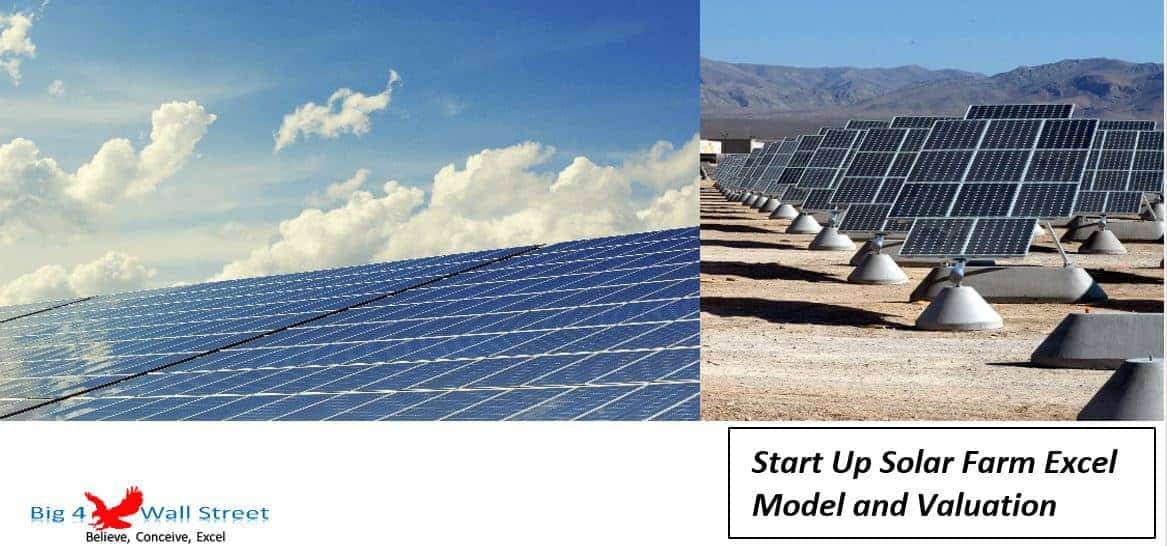
Start Up Solar Farm Excel Model and Valuation
Start Up Solar Farm Excel Model presents the business case of an investment in the construction of a... Read more
Reviews
 Solar PV Project Financial Model_Version 7.4 Premium
This Financial Model is well-structured and thoughtfully put together. It provides a clear, robust framework that captures the essential building blocks of solar project finance — from CAPEX and OPEX planning to funding structure, DSCR-based debt sizing, and equity return analysis. The model’s analytical depth makes it a strong, practical starting point for developers, sponsors, lenders, investors, and advisors to quickly understand project economics and risks.
345 of 678 people found this review helpful.
Help other customers find the most helpful reviews
Did you find this review helpful?
 Mahlatse Mokwatlo
Very helpful model. Versatile. I’d like a hybrid version incorporating batteries and multiple projects for an aggregated asset point of view.
4107 of 8097 people found this review helpful.
Help other customers find the most helpful reviews
Did you find this review helpful?
 Is it possible to insert a few different projects into the model?
In my case, I have 20 projects, and I want to model them all together (according to different assumptions for each model).
4290 of 8527 people found this review helpful.
Help other customers find the most helpful reviews
Did you find this review helpful?
 Unless you are an Excel god.. just buy this
After 16 years in the solar industry and having worked with 10s of financial models, this is the cleanest one I have seen.
Once you find your way around this workbook you’ll find great tools to bring transparency to a project transaction, like using it to reverse engineer a developer fee to match an accepted market return. Want to talk to a bank that’s new to solar: use this template!
Finally, 4/5 because I want to choose which investor exits when, and adjust the Final Buyer’s gearing
5335 of 10590 people found this review helpful.
Help other customers find the most helpful reviews
Did you find this review helpful?
 Missing ITC
You can not have a complete Solar Model in 2019 without including ITC and state incentives. Also I prefer to have all inputs on an Inputs tab and not search for them all
5356 of 10473 people found this review helpful.
Help other customers find the most helpful reviews
Did you find this review helpful?
-

The model has been updated and now also includes a more sophisticated tax model to include the effects of tax incentives and other subsidies to address this comment.
5382 of 10682 people found this review helpful.
Help other customers find the most helpful reviews
Did you find this review helpful?
-
Thank you greatly for your feedback! As for why we didn't include the ITC and State incentives, it's because this template is not only for the USA. Plus, this is only a template which you can easily customize according to your specifications.
5459 of 10590 people found this review helpful.
Help other customers find the most helpful reviews
Did you find this review helpful?


 Solar Energy Financial Model
Can this model be use for an off-grid solar project?
5363 of 10494 people found this review helpful.
Help other customers find the most helpful reviews
Did you find this review helpful?
 Great Support
I had some initial difficulties with the solar model but thanks to some very prompt and helpful email support I got passed the initial issues. Thanks!
5449 of 10673 people found this review helpful.
Help other customers find the most helpful reviews
Did you find this review helpful?
 Question about the type
Great Model .. is this model about : 1- photovoltaic method or 2-
concentrated solar power method ?
5446 of 10740 people found this review helpful.
Help other customers find the most helpful reviews
Did you find this review helpful?
-
Hi there, the solar energy financial model is about the photovoltaic method using solar modules to generate electricity. Normally these are installed on a field or on a rooftop of a building and the energy is fed into the energy grid.
5346 of 10476 people found this review helpful.
Help other customers find the most helpful reviews
Did you find this review helpful?
-
Is it possible to make a model for the mother method ? i.e. : concentrated solar power method ?
5336 of 10571 people found this review helpful.
Help other customers find the most helpful reviews
Did you find this review helpful?
-
Just bought this model and worked through it. It is a very clean, workable model, that I will use as a basis for my project. Easy to follow and critically, zero circular references. Excellent!
5337 of 10581 people found this review helpful.
Help other customers find the most helpful reviews
Did you find this review helpful?
-
-

You must log in to submit a review.