
0 ITEMS

Scenario Analysis
Scenario analysis involves exploring and evaluating possible future events by considering various alternative possible outcomes. Our financial model templates include scenario analysis features, allowing you to assess risks, opportunities, and make robust strategic decisions.


Connect census, payer economics, staffing, revenue cycle, and cash flow…

Build a 60-month operating and financial plan for an ABA…

EU Battery Passport, Recycled Content & Compliance Economics Model 🔋…

AI Data Center Power Procurement & Behind-the-Meter Generation Model ⚡…
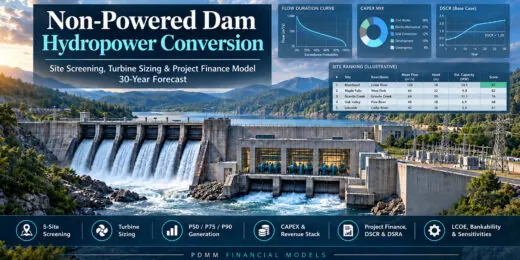
Turn an existing non-powered dam opportunity into a structured investment…

A decision-focused payment-fraud economics model for banks, fintechs, payment processors,…

⚖️ Litigation Finance Portfolio Model Build a portfolio-level underwriting and…
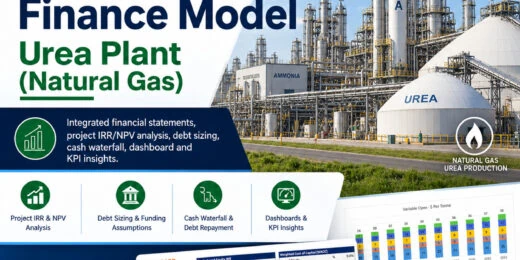

A detailed, institutional-grade urea plant financial model for a natural…
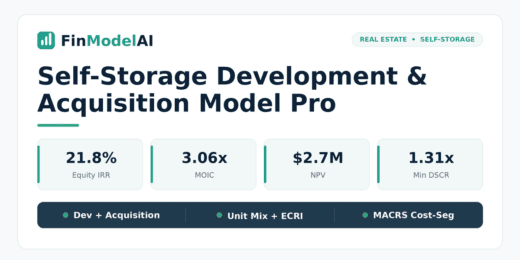

The Self-Storage Development & Acquisition Model Pro is an institutional-grade…


Build accurate, bank-ready financial projections for your Midstream Oil Refinery.…


An institutional, lender grade Excel model for a temperature controlled…

An institutional, lender grade Excel model for a concrete block…

An institutional, lender grade Excel model for a seawater reverse…

An institutional, lender grade Excel model for an urban bus…
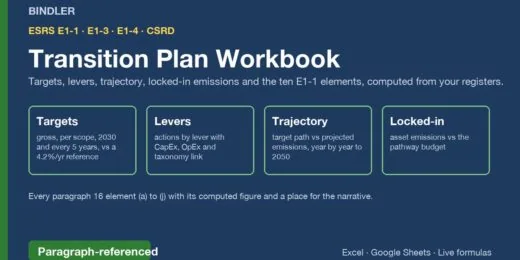

ESRS E1-1, E1-3 and E1-4 in one workbook: gross targets…
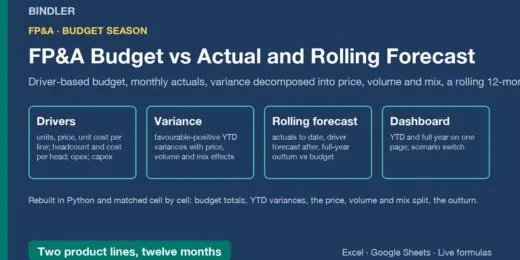
Driver-based 12-month budget, monthly actuals, YTD variance split into price,…
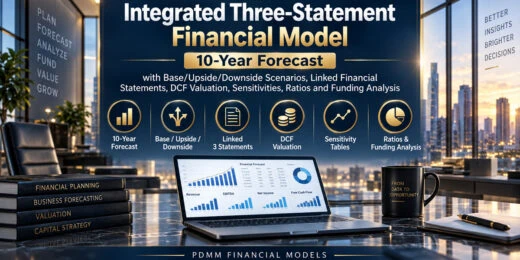
Integrated Three-Statement Financial Model - 10-Year Forecast 📊 What this…
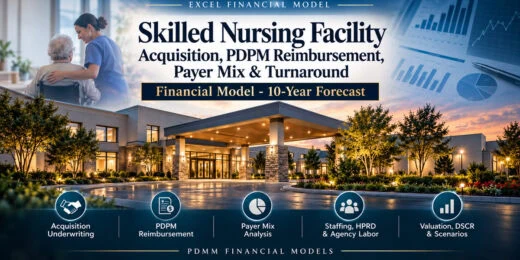
🏥 Skilled Nursing Facility Acquisition & Turnaround Decision Model Underwriting…

🏨 Extended-Stay Hotel Development, Conversion, Length-of-Stay & Debt Financial Model…
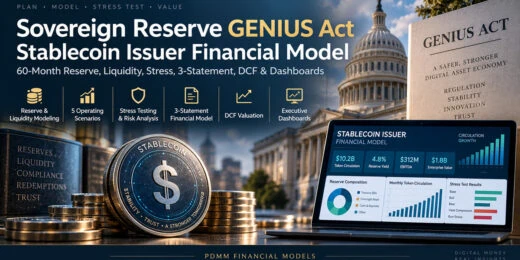
Model the economics, reserve architecture, liquidity resilience, regulatory capital, financial…

Build a complete 60-month operating and financial plan for a…
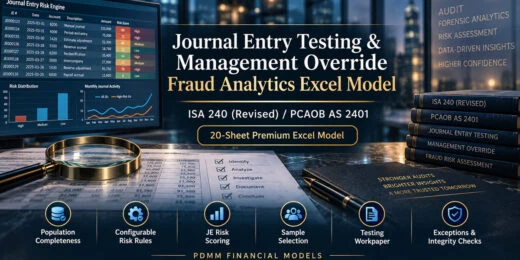
The workbook is designed for external audit, internal audit, forensic…

Build a decision-ready business plan for a roller skating rink…
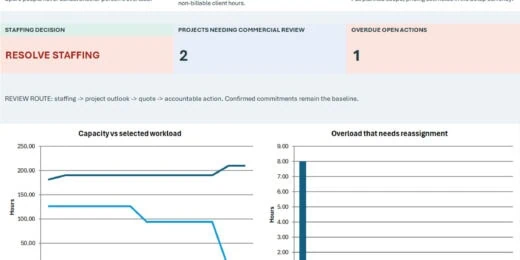

Plan team capacity, test project fees and track delivery margin…
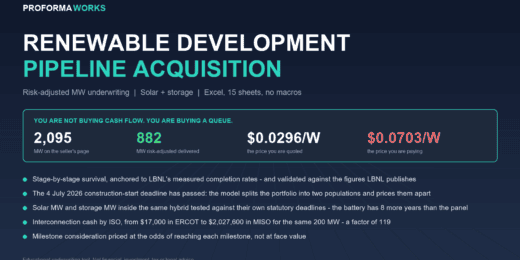

Converts a seller's nameplate megawatts into risk-adjusted delivered megawatts through…
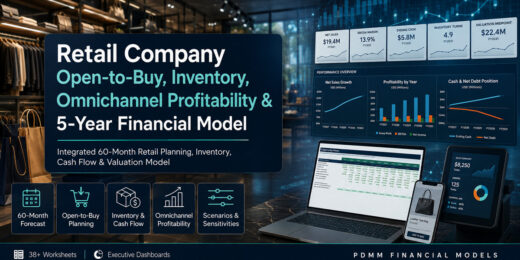
Turn retail planning into one connected operating and financial decision…

Build a complete five-year view of a street-front mobile phone…

🎓 Private Tutoring Center Financial & Operating Model - 5-Year…

🧭 Investment Holding Company NAV, Liquidity, Capital Allocation & Distribution…
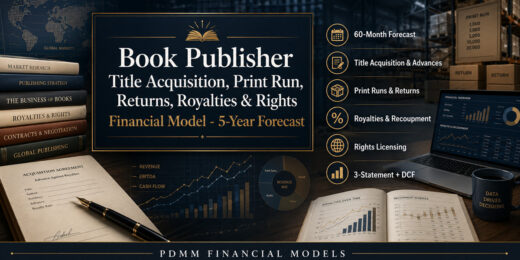
Turn manuscript, print-run and rights decisions into a connected 60-month…

Airbnb / Short-Term Rental Property Management Financial Model - 5-Year…
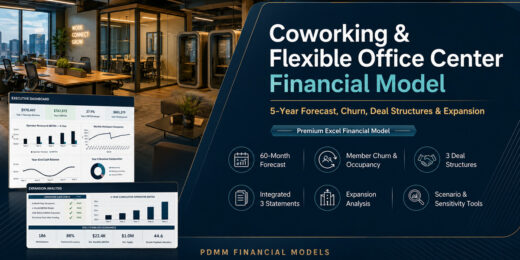
Build a complete five-year operating and financial view of a…

🔥 Premium AI / LLM Company Valuation Financial Model A…
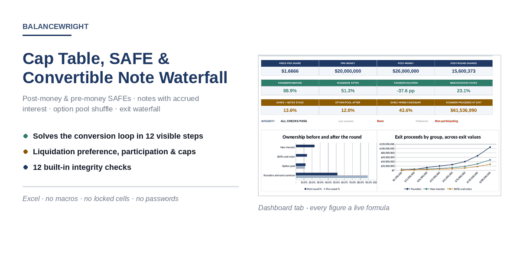

A working Excel model of a priced round: it converts…
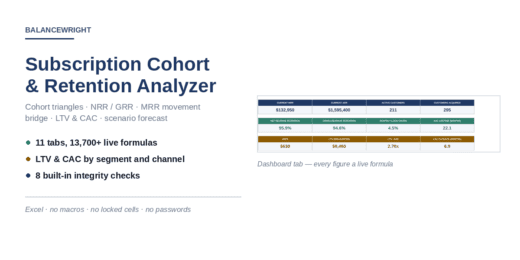
Give this workbook one row per customer per month and…
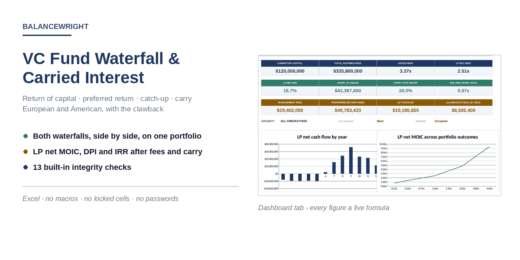
An Excel model of a venture or private equity fund's…
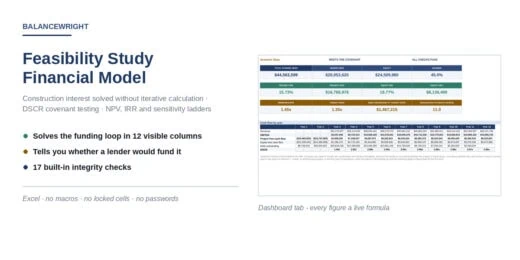
A feasibility study exists to answer two questions, and most…
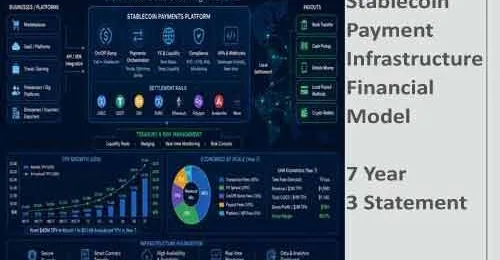
This comprehensive workbook models the intricate flow of funds unique…


10-year financial model for a biomethane RNG plant providing forecasts,…

15-year financial model for a rice farm providing forecasts, profitability…


When a lease expires, most comparisons rank options by rent…


A ready-to-use Battery as a Service (BaaS) Financial Model Template…


Small Hydropower Bankable Financial Model — Summary This is a…
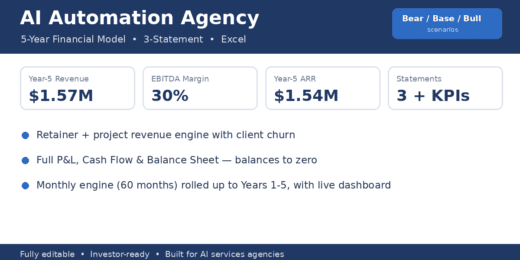

A 5-year, fully editable Excel model built specifically for AI…
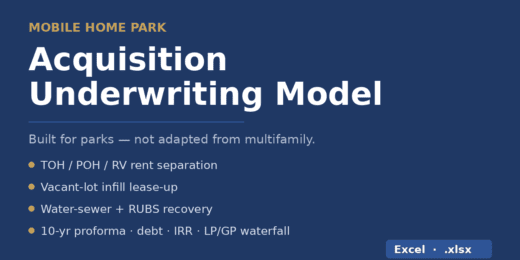

Underwrite a mobile home park deal in minutes: a model…
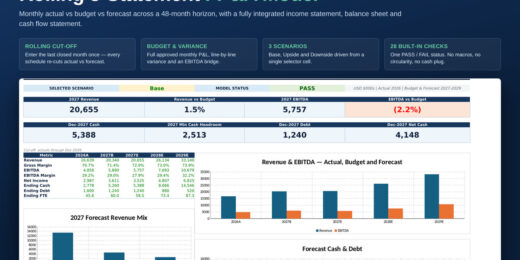

Integrated Base, Upside and Downside scenario framework with a selected-scenario…

Plan and forecast your film production business with a ready…
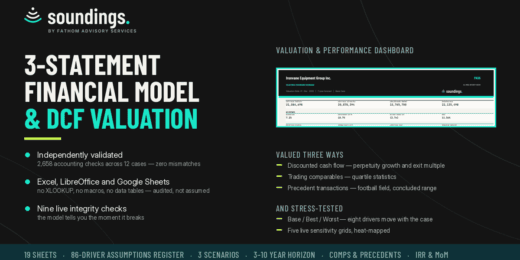

An integrated three-statement operating model valued three ways: discounted cash…
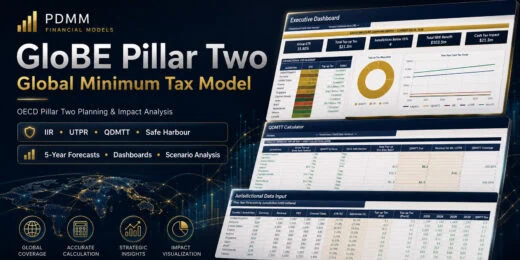
A 30-module editable Excel model for multinational Pillar Two analysis,…
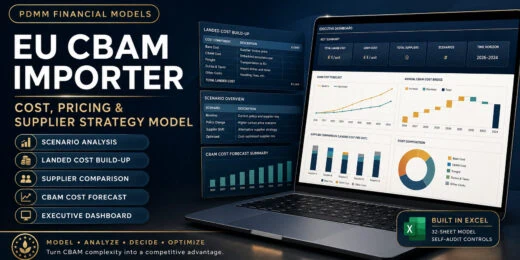
A 32-sheet editable Excel decision model for EU CBAM importers…
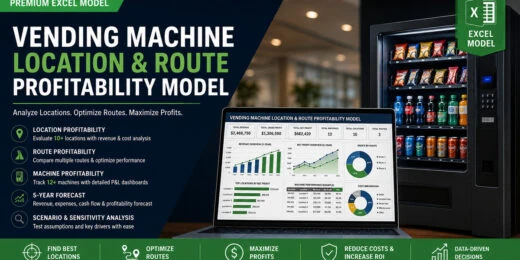
Evaluate a vending-machine business from individual machine economics to location…
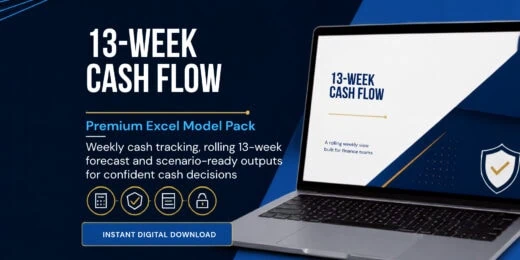

A rolling 13-week cash flow forecast with weekly buffer alerts,…


Whether you're launching a startup, planning business expansion, preparing for…

Download a ready-to-use Tennis Club Financial Model Template built for…

Premium Private School & University Financial Model designed for integrated…

Premium 30-year Oil & Gas Upstream and Downstream Financial Model…

Premium TCFD / ISSB Physical Climate Risk Financial Model designed…

🔥 Premium Tokenomics & Web3 Token Launch Financial Model A…

Premium Green Hydrogen Production Levelized Cost of Hydrogen model for…

🚀 Premium eVTOL / Urban Air Mobility Financial Model A…
Financial Planning for Effective Scenario Analysis Decisions

In the fast-paced world of business, organizations must navigate uncertainties and make informed decisions to thrive. Financial planning becomes an indispensable tool in this journey, with scenario analysis playing a pivotal role in guiding strategic decision-making. Understanding the potential pathways that a business might encounter allows leaders to anticipate challenges and seize opportunities effectively. With this article, we aim to delve into the core concepts of scenario analysis, its significance in financial planning, and the practical tools, like Excel templates, that aid in executing this crucial aspect of financial management.
Scenario analysis is essentially a process used in financial planning to evaluate possible future events by considering alternative possible outcomes (scenarios). This form of analysis encourages businesses to see beyond conventional forecasts and weigh the implications of different situations, such as economic shifts or market changes. By preparing for various potential scenarios, businesses can better manage risks and refine their strategic planning. Financial models are a fundamental element in this process, providing the framework upon which these scenarios can be built and analyzed.
Understanding Scenario Analysis in Financial Planning
Scenario analysis in finance involves constructing a set of plausible future outcomes to identify and mitigate risks and ensure robust strategic planning. For businesses, the importance of this analysis cannot be overstated. It allows them to anticipate potential challenges and adjust strategies accordingly, ultimately transforming uncertainty into an opportunity for advantage. Key motivations for scenario analysis include risk management, where businesses identify vulnerabilities and develop contingency plans, and strategic planning, which helps businesses align their long-term goals with market dynamics. Financial models are critical in these efforts, serving as the blueprint to quantify variables and outcomes across different scenarios.
Financial models enable businesses to translate assumptions into numerical simulations, providing a tangible representation of possible future states. By doing so, they offer insights that guide decision-makers in crafting well-informed strategies, backed by solid data and predictive analysis. Well-constructed financial models facilitate an understanding of how changes in key variables can affect business objectives and thus form the backbone of effective scenario analysis in financial planning.
Key Elements of Financial Planning for Scenario Analysis
In financial planning for scenario analysis, certain elements are crucial to achieve accurate and meaningful outcomes. These include identifying critical assumptions, defining key performance indicators (KPIs), data collection and integration, and building flexible financial models.
Identifying Critical AssumptionsCritical assumptions form the foundational basis of any scenario analysis. The clarity of these assumptions is paramount to ensure the scenarios modeled are realistic and credible. Common assumptions might revolve around economic conditions, market demand, and industry-specific variables unique to a company's operations. Techniques for validating and adjusting assumptions often involve a blend of historical analysis and expert judgment. External data such as macroeconomic indicators and industry reports are frequently used to enhance the credibility of assumptions, ensuring they are backed by factual evidence rather than mere speculation.
Defining Key Performance Indicators (KPIs)Key Performance Indicators (KPIs) act as the compass guiding the assessment of scenario outcomes. Selecting the right KPIs is essential, as they provide measurable benchmarks to evaluate strategic choices. Industry-specific KPIs could include metrics such as market share, the cost of customer acquisition, or return on investment. The process of selecting relevant KPIs involves aligning them with business objectives and ensuring they can accurately reflect the outcomes of each scenario modeled. The choice of KPIs can significantly influence the strategic direction and prioritization of resources.
Data Collection and IntegrationEffective scenario analysis requires a robust data foundation. This involves comprehensive data sourcing, emphasizing the importance of historical data while also integrating real-time data for dynamic scenario analysis. Historical data provides the contextual backdrop necessary for predictive modeling, offering insights into past patterns and trends that can inform future projections. Meanwhile, real-time data integration allows for adaptive scenario analysis, where strategies are continuously refined as new information becomes available. This dynamic approach aids businesses in maintaining relevance in swiftly changing environments.
Building Flexible Financial ModelsFinancial models need to be adaptable, designed to accommodate the evolving nature of business landscapes. Characteristics of flexible models include the ability to evaluate a diverse range of scenarios efficiently and effectively. Structuring these models involves segmenting different components to simplify adjustments, enhancing both the ease and accuracy of scenario evaluations. Sensitivity analysis is a crucial aspect within these models, as it tests how different inputs impact outcomes, helping to identify potential leverage points or risks. This adaptability ensures that financial models remain valuable decision-making tools, regardless of shifting conditions.
The Role of Excel in Scenario Analysis
Excel continues to be an invaluable tool in financial modeling and scenario analysis, owing to its user-friendly interface and powerful computational capabilities. It provides an accessible platform for businesses of all sizes to engage in sophisticated financial planning.
Benefits of Using Excel Spreadsheet TemplatesExcel spreadsheet templates present numerous advantages for financial modeling. Their ease of use and widespread accessibility make them ideal for businesses to develop robust financial models without necessitating specialized software. The flexibility inherent in Excel allows for the customization of templates to suit specific business needs, ensuring relevance and precision in scenario analysis. Additionally, Excel offers powerful functionalities for data visualization, aiding in the projection and communication of complex scenario dynamics in an understandable manner.
Streamlined Collaboration and SharingExcel's compatibility for sharing insights makes it a cornerstone for collaborative planning in scenario analysis. Teams can work together in real-time, leveraging the platform's sharing capabilities to refine assumptions and strategies collectively. Version control and the ability to track changes further enhance Excel's value, ensuring continuity and consistency in the iterative process of scenario evaluation. These features facilitate a cohesive and transparent approach to financial planning, crucial in complex organizations.
Integration with Other ToolsExcel's integration capabilities with other software applications expand its utility in scenario analysis. Automation possibilities through Excel add-ons and plug-ins reduce manual data entry and the potential for errors, streamlining the workflow and enhancing the accuracy of analytical outputs. By leveraging these integrations, businesses can undertake more advanced scenario analysis, incorporating diverse datasets and analytical tools for richer insights and more informed decision-making.
Conclusion: Empower Your Financial Planning with eFinancialModels
In conclusion, structured financial planning is indispensable for effective scenario analysis, enabling businesses to navigate uncertainties with confidence and clarity. The advantages of using Excel templates in this process are numerous, with their ease of use, flexibility, and integrative capabilities enhancing the scenario analysis capabilities of businesses. For those looking to optimize their financial planning decisions, exploring the financial model spreadsheet templates provided by eFinancialModels can prove invaluable. These templates, tailored for specific industry needs, empower businesses to make insightful and strategic decisions critical for future success. Embrace the power of structured financial planning with eFinancialModels and refine your approach to scenario analysis for better-informed and impactful decision-making.
Frequently Asked Questions About Scenario Analysis
- What is scenario analysis in financial planning? Scenario analysis is a process used in financial planning to evaluate possible future events by considering alternative possible outcomes (scenarios). It helps businesses prepare for various potential scenarios to manage risks and refine their strategic planning.
- Why is identifying critical assumptions important in scenario analysis? Identifying critical assumptions is crucial as they form the foundation of any scenario analysis. Clear assumptions ensure that modeled scenarios are realistic and credible, which is essential for effective strategic decision-making.
- How do KPIs influence scenario analysis? Key Performance Indicators (KPIs) guide the assessment of scenario outcomes. Selecting appropriate KPIs ensures that they accurately reflect each scenario's outcomes, significantly influencing strategic direction and resource prioritization.
- Can Excel spreadsheets be used for scenario analysis? Yes, Excel is widely used for scenario analysis in financial modeling due to its user-friendly interface, computational capabilities, and flexibility in developing customized templates for specific business needs.
- What are the benefits of using Excel for financial modeling? Excel offers benefits such as ease of use, accessibility, powerful data visualization functionalities, and integration capabilities with other software, making it an invaluable tool for effective scenario analysis and financial planning.