
0 ITEMS

Cash Flow Statement: Streamline Financial Success

Cash flow is essential for keeping a business operational and financially healthy.
- A cash flow statement tracks cash inflows and outflows from core activities, investments, and financing over a period.
- It reveals liquidity issues that may not be visible on income statements or balance sheets.
- Positive cash flow indicates a company can fund growth and manage debt, while negative cash flow suggests potential financial trouble.
- Understanding the differences between cash and net income helps assess short-term solvency versus long-term profitability.
- Using a cash flow template in Excel streamlines management and improves financial decision-making.
This article covers how cash flow works, why it matters, and how to effectively analyze and optimize it.
What’s in the Cash Flow Statement?
A cash flow statement is a vital financial statement that provides a comprehensive overview of a business’s cash inflows and outflows over a specific period. This statement is one of the three main financial statements, alongside the balance sheet and the income statement. The primary objective of the cash flow statement is to give insights into the company’s liquidity and solvency, demonstrating how well it manages its cash to fund its operations and financial obligations.
A staggering 38% of startups fail due to running out of cash, a critical indicator of the importance of diligent financial management. This statistic underscores the essential role of cash flow statement analysis, as it enables entrepreneurs to track and foresee cash movements, helping to prevent such financial pitfalls by informing strategic and sustainable decision-making. Cash flow statement analysis is critical for assessing a company’s financial health and a strategy for financial success. This analysis examines the patterns, trends, and sources of cash flows to evaluate the company’s liquidity, solvency, and overall financial stability. It helps understand how effectively a company generates cash to meet its debt obligations and fund its operating expenses.
A healthy cash flow indicates that a company can sustain operations, invest in new opportunities, and withstand financial downturns. This analysis is particularly important for business owners, creditors, and investors, as it provides a realistic view of the company’s financial viability beyond what income or balance sheets can reveal. By understanding the nuances of cash flow, businesses can make informed decisions, manage financial risks better, and strategize for long-term financial success.
Why Cash Is Not the Same as Net Income?
Cash and net income are two distinct concepts in financial accounting, and understanding their differences is crucial for entrepreneurs, investors, and finance professionals. Both are vital for analyzing a company’s financial health but serve different purposes and are calculated differently.
Cash refers to the amount of money a company has on hand or in its bank accounts. It’s the real money the company can use immediately for transactions. The focus here is liquidity – the ability to meet short-term obligations and fund operations. Net income, on the other hand, is a measure of profitability. It’s calculated as the revenues minus the expenses, taxes, and costs over a specific period, typically a quarter or a year. This figure is more about measuring performance than liquidity.
Key Differences
- Cash flow in accounting is recorded when actual cash transactions occur. Net income uses the accrual method, recognizing revenue when earned and expenses when incurred, regardless of when cash transactions occur.
- Cash is essential for understanding the company’s liquidity and ability to fund day-to-day operations. Net income offers insights into the company’s profitability and long-term viability.
- When it comes to timing, cash reflects the immediate financial position. Net income provides a view of profitability over a period.
Can Cash Flow Statement Be Negative?
Yes, a cash flow statement can indeed show a negative figure. It occurs when the cash outflows from a business or project exceed the cash inflows over a given period. The cash flow statement, a critical financial document, delineates how much cash enters and leaves a business, revealing its liquidity position. A negative cash flow might arise, indicating that the company is spending more cash than it’s generating.
- A negative cash flow from operating activities is a potential red flag. It may suggest issues like declining sales, high expenses, or problems with working capital management, like slow collection of receivables or high inventory levels.
- A negative cash flow from investing activities can be less alarming, often indicating strategic investments in long-term assets like property, plant, equipment, or acquisitions. These are typically aimed at future growth but consume significant cash in the present.
- Negative cash flow from financing activities could be due to repayment of debt, equity buybacks, or dividend payments. While this might indicate a strong enough financial position to return capital to shareholders or reduce leverage, it can also lead to a net cash outflow.
Negative cash flow statements are not uncommon and can be observed in various scenarios like cyclical and seasonal businesses, startups and growth phase companies, recessions, and turnaround situations.


























































The Three Types of Cash Flows
The Cash Flow Statement offers a detailed overview of cash movements within an organization. It is divided into three types and presented in this order:
- Cash Flow from Operating Activities
- Cash Flow from Investing Activities
- Cash Flow from Financing Activities
Each section provides insights into a company’s financial health and operations.

Cash Flow from Operating Activities
Cash flow from operating activities provides a detailed breakdown of the cash generated or used in the company’s core business operations. This section of the cash flow statement is crucial for understanding a company’s operational efficiency and financial health. Some examples of cash flow from operating activities are:
- Receipts from Customers: This is the primary source of cash inflows for most businesses. It represents the cash received from the sale of goods or services. For enterprises that sell on credit, this includes cash collected from accounts receivable. Efficiently converting sales into cash is a critical indicator of a company’s liquidity and operational health.
- Payments to Suppliers and Employees: These represent cash outflows for purchasing inventory, raw materials, and services necessary for producing goods or providing services. It also includes payments for salaries, wages, and other employee benefits. Effectively managing these outflows is essential for maintaining a healthy cash balance and ensuring smooth operations.
- Interest Paid: This includes payments of interest on loans and borrowings. While interest expense is reported on the income statement, the actual cash payment for interest is considered an operating activity because it is a cost directly related to the core business operations.
- Income Taxes Paid: This represents cash paid to the government for income taxes. It’s a critical outflow and varies depending on the profitability of the company and the applicable tax rates and regulations. Efficient tax management can significantly impact the cash flows from operations.
- Adjustments for Non-Cash Items: This involves adjusting the net income for items that affected reported net income but didn’t involve actual cash transactions. Common examples include depreciation and amortization, changes in accounts receivable and payable, and provisions for losses or gains. These adjustments are crucial to convert the accrual basis accounting figures to cash basis, providing a more accurate picture of the cash generated or used in operating activities.
Cash Flow from Investing Activities
Cash flow from investing activities is a section of the cash flow statement that shows the cash spent on and generated from various investment-related activities in a specific period. This part of the cash flow statement is vital for understanding how a company allocates its capital resources and how these investments impact its financial position. Some examples of cash flow from investing activities are:
- Purchase of Property, Plant, and Equipment (PPE): This includes cash outflows for acquiring physical assets like buildings, machinery, and vehicles. Such investments are often essential for long-term growth but require significant capital outlay. Monitoring these expenses helps assess a company’s investment in its operational capacity.
- Proceeds from the Sale of PPE: Refer to cash inflows from selling physical assets. Companies might sell assets that are no longer needed or as part of a strategy to liquidate assets for cash. The gain or loss on these sales also provides insight into the company’s asset management efficiency.
- Investment in Securities: Includes cash used to purchase stocks, bonds, or other financial instruments for investment purposes. Such investments can be either short-term or long-term and are a way for companies to manage excess cash and earn a return.
- Proceeds from the Sale of Securities: This represents cash inflows from selling investment securities. The sale could be part of a strategic move to reallocate assets, respond to market conditions, or raise cash for other purposes.
- Loans Made to Other Entities or Repayment of Loan Principal: This includes cash outflows for loans made by the company to other entities and inflows from the repayment of these loans. It reflects a company’s involvement in financing activities outside its primary business operations.
Cash Flow from Financing Activities
Cash flow from financing activities shows the cash flow related to funding the company. It includes transactions with shareholders and creditors, such as debt, equity, and dividends, highlighting how a company finances its operations and growth. Understanding this aspect of a company’s cash flow is crucial as it provides insight into how it finances its operations and growth and manages its capital structure. Some examples of cash flow from financing activities are:
- Issuance of Equity: This refers to the cash inflows a company receives from issuing new shares of stock to investors. It’s a way for companies to raise capital without incurring debt. Equity issuance can significantly influence a company’s capital structure and shareholder composition.
- Buyback of Equity: This includes cash outflows when a company repurchases its own shares from the market. Share buybacks can be a method for a company to return value to shareholders and impact the company’s earnings per share and stock price.
- Issuance of Debt: This represents cash inflows when a company borrows money through bank loans or bonds. Raising funds through financial debt is crucial for financing operations and growth, especially for companies that do not wish to dilute existing shareholders’ equity.
- Repayment of Debt: This includes cash outflows for paying back principal amounts on loans or bonds. The management of debt repayments is a crucial aspect of a company’s financial strategy and liquidity management.
- Payment of Dividends: This refers to cash outflows when a company distributes a portion of its earnings to shareholders as dividends. Regular dividend payments can signify a company’s financial health and profitability, representing a return on investment for shareholders.


























Why Are Cash Flow Statements Important?
Cash flow statements are crucial in financial analysis and decision-making. Understanding the importance of cash flow statements involves recognizing their role in providing a comprehensive picture of a company’s financial health. Here are several vital reasons why cash flow statements are important:
- Assessment of Liquidity and Solvency: Cash flow statements are essential for assessing a company’s ability to generate cash and meet its financial obligations. Liquidity, the ability to convert assets into cash quickly, is vital for maintaining day-to-day operations. Conversely, solvency refers to a company’s capacity to meet its long-term debts and financial commitments. A healthy cash flow indicates that a company can survive in the short term and thrive and grow in the long run. By analyzing the cash flow from operating activities, investors and business owners can gauge whether the core business operations generate sufficient cash to sustain the business.
- Complementing Other Financial Statements: While income statements provide an overview of revenue and expenses, and balance sheets offer a snapshot of assets, liabilities, and equity at a specific point in time, cash flow statements complete the picture by showing how changes in the balance sheet and income affect cash and cash equivalents. This triad of financial statements gives a holistic view of a company’s financial health, enabling more accurate analysis and decision-making.
- Evaluating the Quality of Earnings: Cash flow statements help assess the quality of a company’s earnings. High earnings do not sometimes indicate financial health if they do notate into cash. For instance, a company might show a profit on the income statement, but if its cash flow is negative, it might need external financing to maintain operations. Positive cash flow, however, suggests that a company’s earnings are robust and sustainable.
- Investment and Financing Decisions: Understanding how a company spends its cash is crucial for investors and lenders. Cash flow statements provide detailed information on investing activities (like equipment purchases or investments in other companies) and financing activities (like raising capital through debt or equity). This information helps assess how well a company manages its investments and whether it generates a sufficient return. It also shows how a company finances its operations and growth and whether it relies heavily on external financing or generates enough cash internally.
- Understanding Cash Flow Trends: By examining cash flow statements over multiple periods, stakeholders can identify cash generation and usage trends. This insight is invaluable for strategic planning, budgeting, and forecasting. It helps understand how a business generates cash and where it spends the most, revealing patterns that might be obscure from just looking at income statements or balance sheets. For instance, a consistent increase in cash flow from operations might indicate a growing demand for the company’s products or services.
In conclusion, cash flow statements are vital for comprehensive financial analysis. They offer invaluable insights into a company’s operational efficiency, financial stability, and overall financial health, which are critical for making informed, strategic decisions in the dynamic world of business and finance.

How Cash Flow Is Calculated
Cash flow is vital for assessing a business’s liquidity and financial flexibility. It is a critical aspect of financial analysis. There are two primary methods for calculating cash flow: the Direct Method and the Indirect Method.
Direct Cash Flow Method
The direct method of calculating cash flow involves recording cash transactions as they occur. This method provides a clearer picture of how cash moves in and out of a business. The direct cash flow method is a straightforward approach but can be more labor-intensive, as it requires detailed tracking of all cash transactions.
The direct cash flow method is particularly effective when a detailed and accurate representation of actual cash inflows and outflows is necessary, making it an ideal choice for businesses with complex cash management or those undergoing scrutiny by investors or lenders. It directly reports major classes of gross cash receipts and payments, offering a clearer insight into a company’s liquidity and solvency than the indirect method.
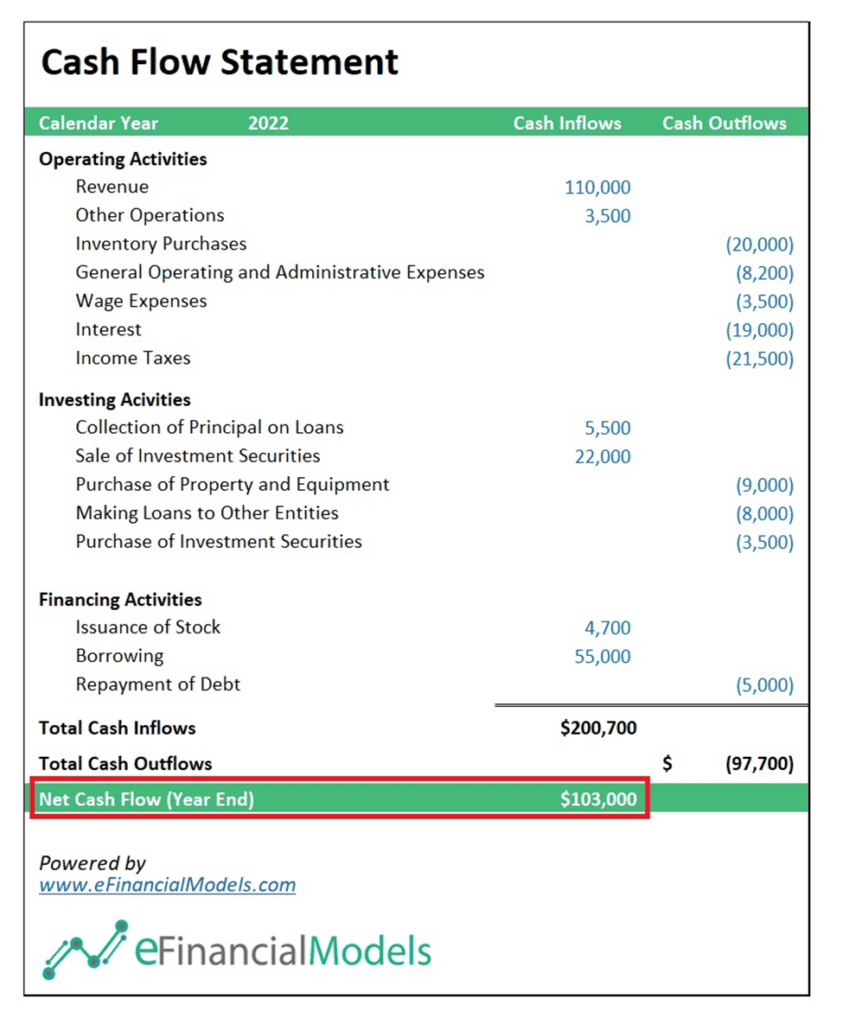
Steps in the Direct Cash Flow Method:
- Record all cash inflows from operating, investing, and financing activities for a specified period. Calculate the sum of all total cash inflows.
- Record all cash outflows from operating, investing, and financing activities for a specified period. Calculate the sum of all total cash outflows.
- Subtract the total cash outflows from the total cash inflows to get the net cash flow during the specific period.
Sample Cash Flow Statement Using the Direct Method
Indirect Cash Flow Method
The Indirect Method is more commonly used, especially in larger organizations, because it starts with net income and adjusts for non-cash transactions and changes in working capital. direct cash flow method is often easier to prepare since it leverages income statement and balance sheet data.
The indirect cash flow method is particularly advantageous for internal financial analysis, primarily used by businesses to gain insights into their operational performance by adjusting net income for non-cash transactions. This method is preferred when focusing on the relationship between a company’s net income and operating cash flow, making it suitable for routine financial reporting and budgeting.
Steps in the Indirect Cash Flow Method:
- Start with net income. This starting point is taken from the income statement and treated as a cash outflow in the indirect cash flow calculation.
- Record all cash inflows from operating, investing, and financing activities for a specified period. Calculate the sum of all total cash inflows.
- Record all cash outflows from operating, investing, and financing activities for a specified period. Calculate the sum of all total cash outflows.
- Subtract the total cash outflows from the total cash inflows to get the net cash flow during the specific period.
Sample Cash Flow Statement Using the Indirect Method

| Disclaimer: The provided examples are solely intended for illustrative purposes to demonstrate a basic cash flow statement calculation. While we strive for accuracy, eFinancialModels.com does not guarantee the applicability or accuracy of the examples in specific situations. Users are advised to consult with professional financial advisors for advice tailored to their circumstances and to perform their due diligence before making any financial commitments based on these examples. |
Optimize Cash Flow Management Using a Cash Flow Statement Template Excel
A cash flow statement is an indispensable tool for mapping a business’s financial health and liquidity. It serves as a vital compass for business owners, investors, and finance professionals, guiding them through the complexities of financial management. Accurately tracking the inflow and outflow of cash allows for a precise evaluation of a company’s operational efficiency, investment acumen, and financing strategy.
Unlock the full potential of your financial analysis and decision-making process with our expertly designed Cash Flow Statement Template Excel. Our Cash Flow Statement Template Excel is crafted to cater to specific industry needs, offering a straightforward yet comprehensive approach to understanding and managing your business’s cash flows. Don’t let complex financial data overwhelm you. Embrace clarity and precision today by downloading our Cash Flow Statement Template and take a significant step towards streamlined financial success.


















You might also like:
- Cash Flow Analysis
- 10 Main Elements of a Business Plan
- 7 Key Tips: How to Best Work With a Financial Model Template
- How to Make Smart Decisions with 6 Key Financial Metrics?
- Financial Planning for Small Business Owners – Taking an SBA Loan
- Financial Modeling for Startups and Small Businesses
- Financial Ratios Analysis and Its Importance
- Airbnb
- Agriculture
- Cash Flow Projections
- Financial Modeling
- How to Create a Budget Plan – Using the Best Excel Budget Template
- Financial Model Templates Easy to Use
- An Easy Beginner’s Guide to Solar Power Plants
- Real Estate
- Financial Statements
- Performance Tracking
- Hospitality
- How to Use Excel for Financial Analysis?
- Why Financial Forecasting Models Are Vital for Your Business
Tags: Financial Statements