
0 ITEMS

Stock Market
The stock market is where investors buy and sell pieces of companies. It's fast-paced, full of risk, and packed with opportunity. Every day, billions of dollars move as traders react to news, trends, and data. Prices change in seconds, driven by confidence, fear, or hope. Whether it's Wall Street or global exchanges, the market reflects how the world views the future.
Stock market financial models help investors make smarter choices. They analyze trends, forecast prices, and reveal value. These tools strip away the guesswork by turning raw data into clear insights. Each model shows a different angle, from discounted cash flow to technical analysis. With the right model, you can spot risks early and grab chances others miss.


Excel stock analysis & valuation model with automated data links,…


This is a great tool if you need to understand…
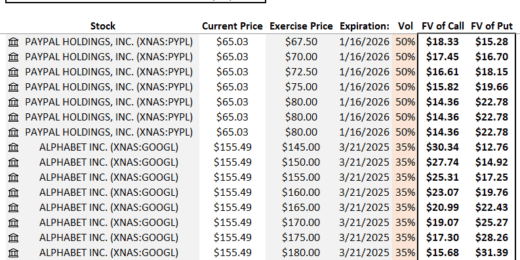

The Equity Options Fair Value Calculator (Black-Scholes) is your go-to…



Pro Forma Models created this financial model to calculate and analyze…


The model is designed to evaluate a make-whole calculator for…
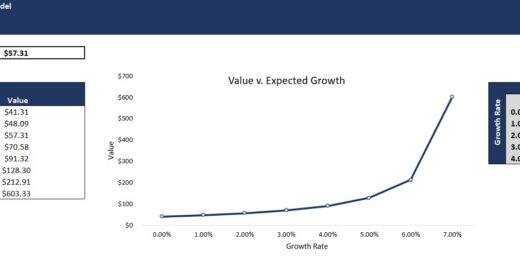

A fund management tool to track many positions over time…
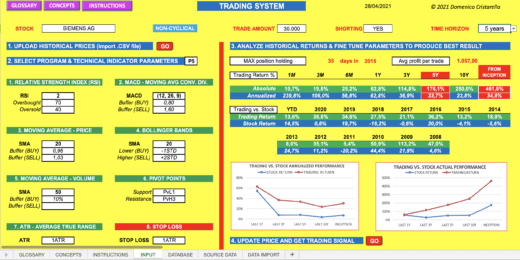

Providing trading signals using mix of technical indicators and historical…


Alternative Investment Company Valuation: All-In-One Model for Private Equity, Asset…
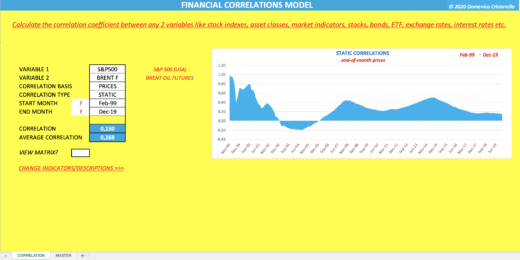
Calculate the correlation coefficient between any two variables, whether they…
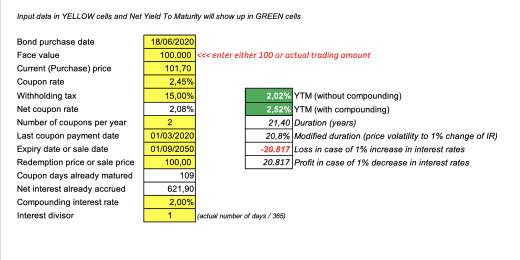
CALCULATE THE EFFECTIVE NET YIELD-TO-MATURITY (OR TO SALE DATE) OF…

A general set of models that come with explainers on…
Financial Models to Analyze Stock Market Investments

Investing in the stock market can grow your wealth. But it also carries risks. That’s why smart investors use financial models. Stock market investing is like running a business. You wouldn’t pour money into a company without knowing its numbers, right? The same logic applies to stocks. Financial models help traders and investors break down a company’s performance, forecast future returns, and avoid costly mistakes. In a market full of noise, using models brings clarity—just like a sharp business plan guides a smart CEO.
Unlock smarter stock market decisions with the right financial tools. This blog offers a streamlined guide to:
- Understand Stock Market Investment Basics: Buy Stocks, Build Wealth, and Manage Risks
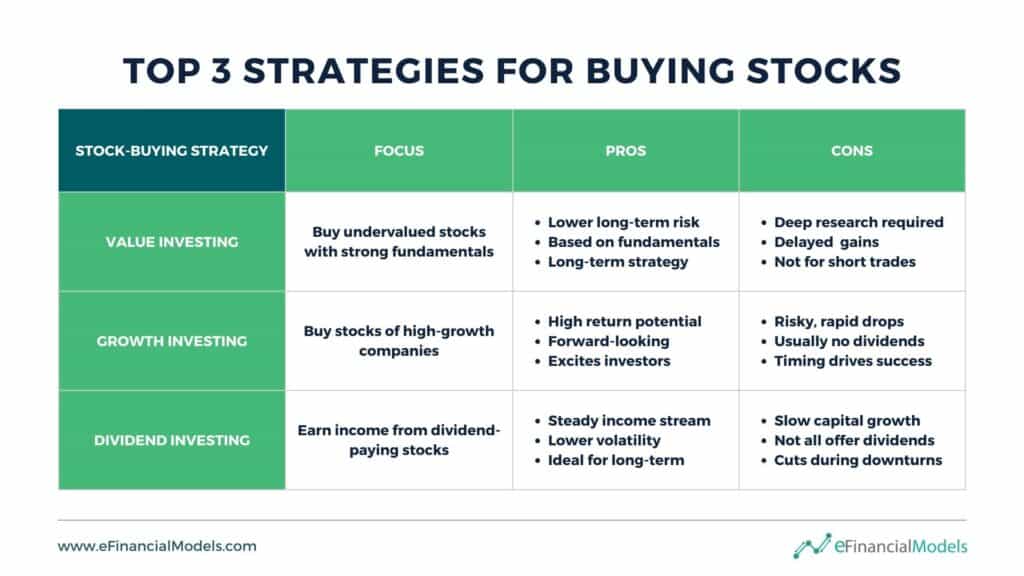
- Explore the Top 3 Strategies for Buying Stocks: Value Investing, Growth Investing, and Dividend Investing
- Discover the Top Financial Models to support your investment strategy, including: Investment Funds, Portfolio, Investment Trackers, Valuation Models for Public Companies, Bond Yield Calculators, Trading Systems, and Financial Correlation Calculators.
Understanding Stock Market Investment Basics
Stock market investing means investing your money into company shares to grow wealth. You buy stocks, hoping their value will rise over time. If the company does well, your shares can increase in price, and you might earn dividends, too. You might also earn dividends. Investing builds wealth over time. It's a way to build money by owning part of a business and benefiting from its success. But it's not without risk. Stock prices go up and down. Economic changes or company news can impact your return on investment. That's why a plan matters.

The stock market investment basics also cover how stock investing works. When you buy a stock, you own a small piece of that business. If the company grows and makes money, the value of your shares can go up. You may also earn dividends—your share of the profits. But if the company struggles, your investment can lose value, too. You make money by selling your shares at a higher price than you paid. This is called capital gain. The market moves based on company performance, economic news, and investor emotions. That's why it's important to study the company before investing. Smart investors treat stock picking like business decisions, not guesses.
Top 3 Strategies for Buying Stocks
Buying stocks isn't just about picking names you like—it's about making smart moves with your money. Every investor needs a game plan to decide what, when, and how to buy. It isn't one-size-fits-all. Investors use different strategies for buying stocks based on their goals and risk tolerance.
Value Investing
Value investing is one of the most common strategies for buying stock. It focuses on buying undervalued shares. Investors look for companies whose stock prices are lower than their true worth. To find these deals, they study financial statements, earnings, and market trends. The goal is to buy low, hold long-term, and profit when the market recognizes the company’s real value. This approach avoids hype and focuses on solid fundamentals.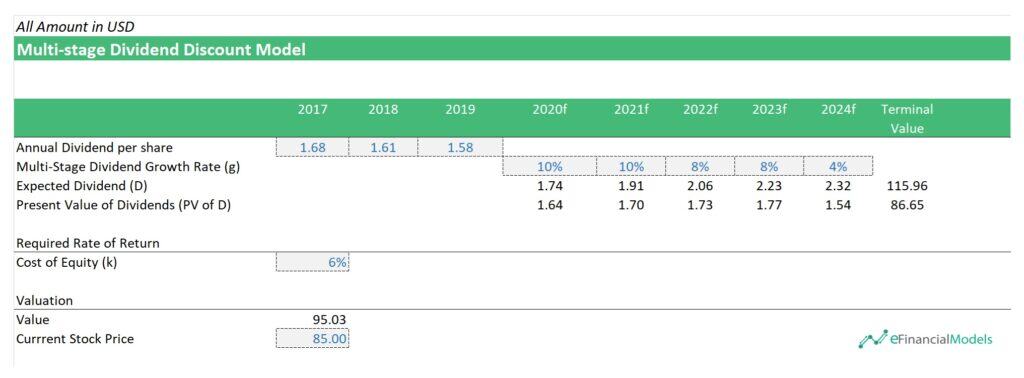
A common example of value investing is buying shares of Coca-Cola during a market dip. Value investors see an opportunity when the stock price falls due to short-term news, but the company’s profits and brand remain strong. They buy the stock at a discount, confident its true value will shine over time. As the market recovers, the price usually rises, rewarding patient investors.
Value investing offers strong long-term gains by buying stocks at low prices. It relies on facts, not market hype. This strategy builds wealth steadily and lowers risk. But it takes time, research, and patience. Stocks may stay undervalued for a while. Short-term gains are rare, and emotional investors may lose focus.
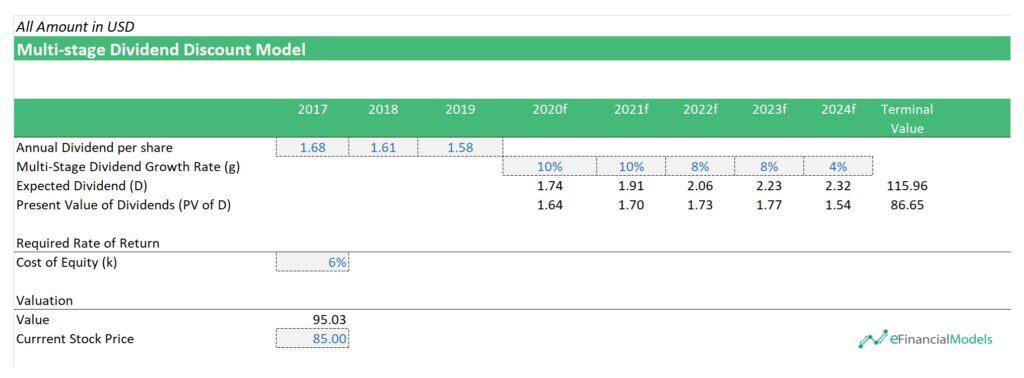
The above Dividend Discount Model (DDM) helps value investors determine the fair value of a stock based on its future dividend payments. By forecasting expected dividends, applying realistic growth rates, and discounting them at a required rate of return, this model calculates what the stock should be worth today. If the model’s valuation is higher than the current stock price, like in this example ($95.03 vs. $85.00), it signals a potentially undervalued opportunity. This approach aligns perfectly with value investing—buying strong dividend-paying stocks at a discount and profiting as the market corrects their price over time.
Growth Investing
Growth investing is a strategy focused on buying stocks of companies expected to grow faster than the market. These businesses often reinvest profits to fuel expansion, so they may not pay dividends. Investors look for rising sales, strong earnings, and big future potential. The goal is to buy early and sell when the stock price climbs with the company’s success.A common example of growth investing is buying shares of Tesla in its early years. Investors saw its potential to change the auto industry with electric cars. The company focused on innovation and rapid growth instead of profits or dividends. As Tesla grew and its stock soared, early investors made huge gains. This shows how growth investing can pay off when a company delivers strong results.
Growth investing is one of the best strategies for buying stocks. It offers big rewards if the company succeeds. You can earn high returns as stock prices rise fast. It’s exciting and forward-looking. But it comes with risks. These stocks can be pricey and may drop quickly if growth slows. Many don’t pay dividends, so gains depend on selling at the right time.
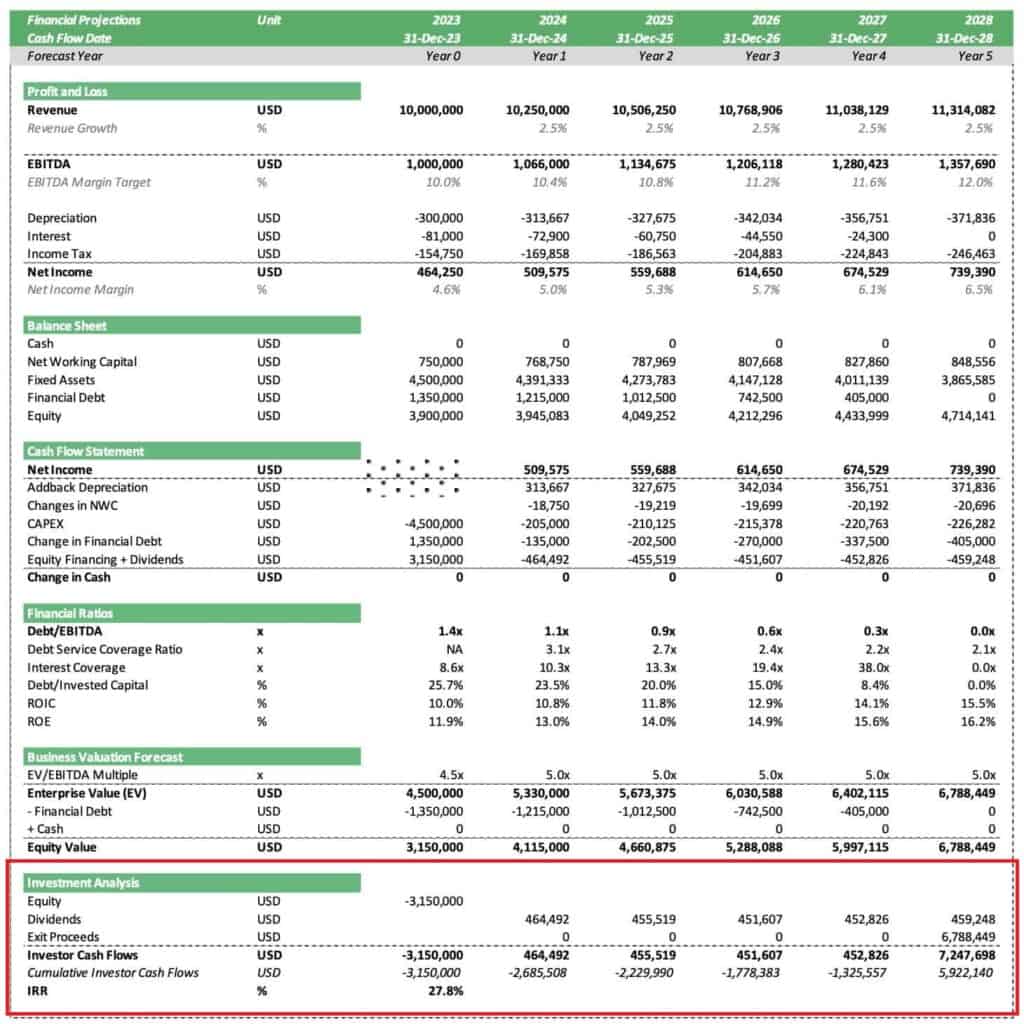
The above chart shows an investment analysis section of our Simple Private Equity Deal Template. It helps growth investors see how their money performs over time. It tracks equity invested, annual cash returns, and the final exit proceeds. The model also shows total investor cash flows and calculates the internal rate of return (IRR), which in this case is 27.8%. This helps investors measure the potential reward of buying into high-growth companies. It focuses on long-term gains rather than short-term dividends—exactly what growth investing is about.
Dividend Investing
Dividend investing is a stock-buying strategy focused on earning regular income. Investors choose companies that pay consistent dividends—cash payments made from profits. These stocks are often from stable, mature businesses with a history of rewarding shareholders. Investors use dividends to build wealth over time instead of relying solely on stock price growth. It's a steady, income-focused approach to investing in the stock market.A common example of dividend investing is buying shares of Johnson & Johnson. This healthcare giant has a long history of paying and raising yearly dividends. Investors value its stable earnings, diverse products, and strong market position. It's a pick for those seeking reliable income and long-term growth in a defensive sector.
Dividend investing offers steady income and lower risk. It's great for building wealth slowly and suits long-term investors. You can reinvest dividends to grow your money faster. But not all companies pay dividends. Growth may be slower compared to high-growth stocks. Also, dividend payments can drop if the company faces trouble.
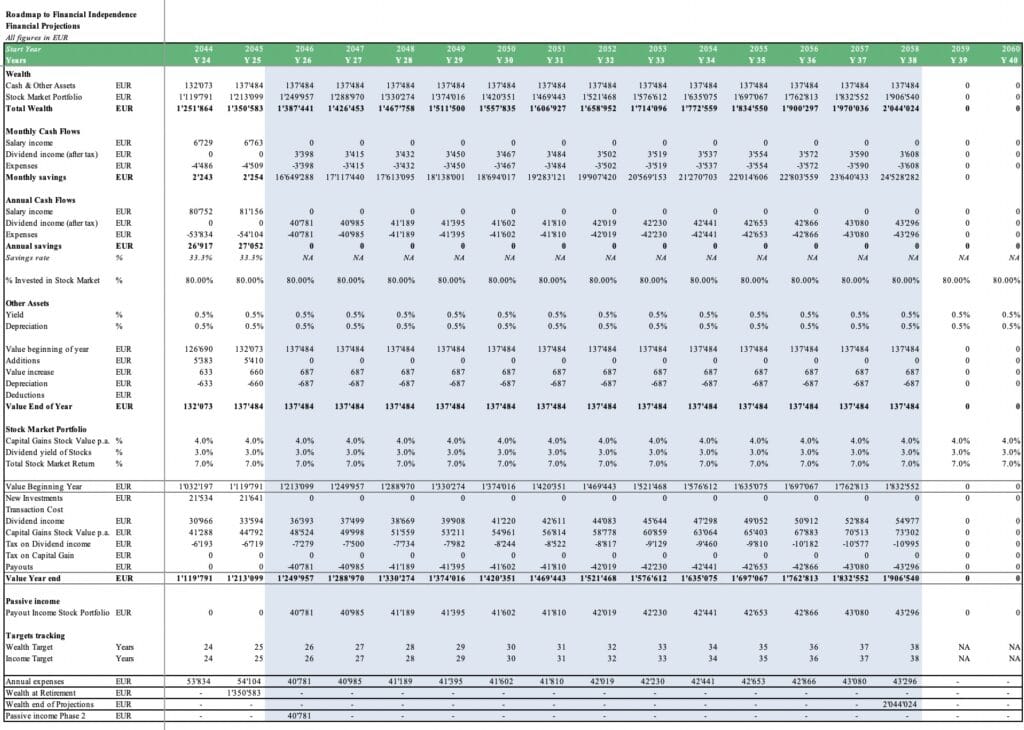
The Dividends Passive Income Model above helps dividend investors forecast long-term returns from a stock portfolio focused on income. It tracks annual savings, investment growth, dividend yield, and reinvestment performance. The model projects how consistent contributions and dividend payouts compound over time, showing when passive income from dividends can cover living expenses. This allows investors to plan realistic stock purchases based on yield expectations, stock market return assumptions, and personal income goals—making it a powerful financial planning tool for income-focused strategies.
Top Financial Models to Power Your Stock Market Investing Strategy
Unlock the best stock market investing strategy with powerful financial models built to sharpen your investing edge. These tools help you break down complex numbers, spot trends, and confidently make clearer calls. Whether you aim to grow your portfolio or minimize risks, the right model quickly turns raw data into actionable insights. Get ready to boost your strategy with models designed for real results.
Investment Funds Financial Models
An Investment Funds Model is a powerful tool for stock market investors. It helps you track fund performance, compare portfolios, and make smart buy-or-sell decisions. With built-in formulas, you can quickly forecast returns, measure risk, and spot trends. This model simplifies complex fund data, giving you a clear view of where to invest. Use it to manage ETFs, mutual funds, or hedge funds confidently. It turns raw market data into insights you can act on. This model is a game-changer for any investor aiming to grow wealth through funds.eFinancialModels.com offers a variety of financial model templates tailored for investment funds and stock market investing. Here are some notable examples:
- Simple Cap Table Template
- Discounted Cash Flow Valuation Model
- Private Equity – Leveraged Buyout Model
- Mergers & Acquisitions (M&A) Model
- Initial Public Offering (IPO) Financial Projection Model
Stock Portfolio Financial Models
Stock portfolio financial models track gains, forecast returns, and balance risk. They let you test “what-if” scenarios before you invest. You can compare stocks, tweak allocations, and watch how changes impact overall performance. With these tools, you stay ahead of the market, build confidence, and grow wealth.eFinancialModels offers a variety of Excel templates designed to enhance your stock market investing strategy. Here are some notable examples:
- Stock Portfolio Optimization Template
- Equity Portfolio Investment Return Calculator
- Simple Asset Allocation Model
Stock Investment Trackers
Stock investment trackers are essential tools for smart investors. These financial models help you monitor your portfolio, track stock performance, and compare returns over time. They make it easy to spot winning stocks and adjust your strategy fast. With clear dashboards and real-time updates, these models give you control and clarity. Whether you're a beginner or a pro, using a stock investment tracker sharpens your decisions and boosts confidence in every trade.eFinancialModels offers a selection of financial models designed to enhance your stock market investing strategy. Here are some top examples:
- Asset Portfolio Rebalancing Tool
- Compounded Investment Returns Tracker
- Equity Options Fair Value Calculator
Valuation Models for Public Companies
Boost your stock market investing strategy with top financial models that value public companies. Use the Discounted Cash Flow (DCF) model to estimate a stock's true worth based on future cash flow. Try the Dividend Discount Model (DDM) if you invest in dividend-paying stocks. Price-to-earnings (P/E) and Enterprise Value to EBITDA (EV/EBITDA) ratios offer fast comparisons across similar firms. These models cut through market noise, helping you spot underpriced stocks and make smarter, data-driven decisions. eFinancialModels offers a variety of financial model templates and guides that can enhance your stock market investing strategy by providing tools to value public companies effectively. Here are some of the top resources available:
- Alternative Investment Company Valuation Template
- Discounted Cash Flow (DCF) Financial Model
- Investment Metrics to Compare Multiple Stocks
Bond Yield Calculators
Bond Yield Calculators are powerful tools that help you make smarter stock market decisions by showing how much return you’ll earn from bonds. They let you compare yields, spot underpriced opportunities, and decide if holding a bond beats buying a stock. With just a few inputs—like price, interest rate, and time to maturity—you get clear, fast answers. These models remove the guesswork and sharpen your investing strategy, especially when markets shift. They provide precise insights into bond yields and associated risks, aiding investors in making informed decisions within the stock market.eFinancialModels offers specialized tools to enhance your stock market investing strategy, particularly in evaluating bond yields. Notable examples include:
Stock Market Trading Systems
Stock market trading systems financial models help you invest with clarity and control. Based on price trends, data, and strategy, these tools show when to buy or sell. For example, breakout models trigger trades when prices cross key levels, while portfolio trackers help manage gains and risks across assets. Some models test different market scenarios, so you’re ready for anything. With these systems, your decisions rely on logic—not guesswork—giving your investing strategy a real edge.eFinancialModels offers a selection of financial model templates designed to enhance stock market investing strategies. Notable examples include:
Financial Correlation Calculators
A financial correlation calculator helps you make smarter stock market moves by showing how two assets move about each other. If two stocks rise and fall together, they’re positively correlated; if one goes up when the other goes down, they’re negatively correlated. This tool helps you spot those patterns fast. You can build a more balanced portfolio, reduce risk, and make data-driven choices. Instead of guessing, you act on clear relationships between your investments—boosting confidence and strategy.eFinancialModels offers several tools to assist investors in analyzing financial data and making informed decisions:
Capitalize on Stocks with Model-Driven Insights
To analyze stock market investments effectively, financial models offer powerful tools that turn data into decisions. Whether managing an investment fund, building a stock portfolio, or tracking returns, these models simplify complex processes with accuracy and speed. They help optimize fund strategies, reduce risks, and automate trades for sharper market insight. Valuation models and bond yield calculators clarify returns and company worth, while correlation tools reveal hidden market links. With the right models, investors gain control, boost returns, and confidently navigate the stock market.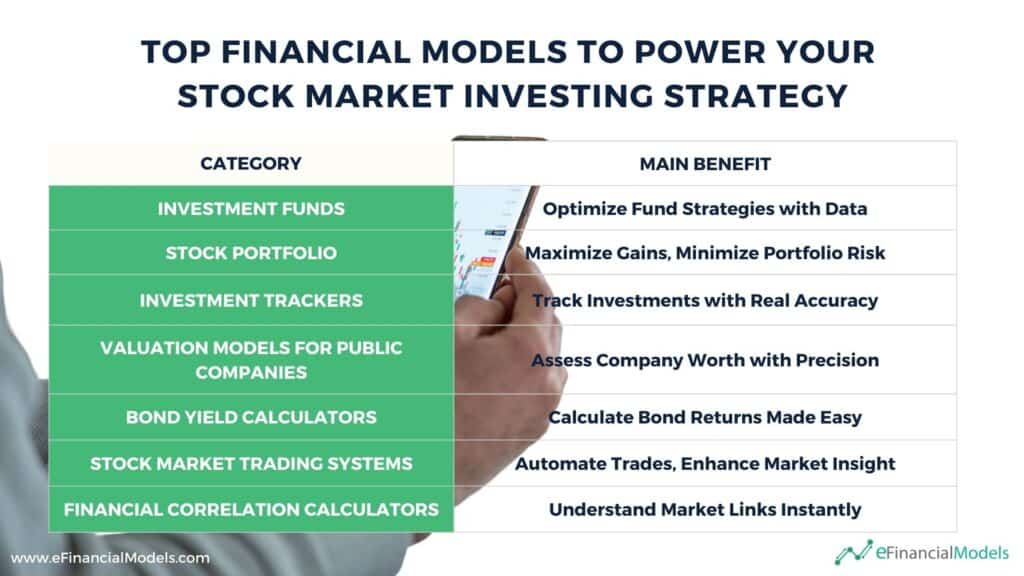
Capitalize on stocks by using model-driven insights that cut through the noise. These tools help you see trends, spot value, and act fast. They guide every decision with clear data, not guesswork. From picking stocks to tracking gains, each model sharpens your strategy. Stay focused, move smarter, and let the numbers lead you to stronger returns.
Start using smart financial models today and take control of your stock market success.
You might also like:
- 10 Tips to Develop a First Class Business Valuation Report
- 10 Main Elements of a Business Plan
- 5 Practical Tips to Help Raise Funds For Startups
- Financial Planning for Small Business Owners - Taking an SBA Loan
- Financial Ratios Analysis and Its Importance
- Financial Forecasting Models by eFinancialModels
- How to Calculate Net Present Value (NPV)?
- How to Value a Business Using a Discounted Cash Flow Model
- Revenue Model Templates and their Characteristics
- Investing
- Business Valuation
- Financial Ratios
- Financial Feasibility
- Stock Market
- 10-Step Financial Planning Checklist for Smart Executives
- 12 BUSINESS VALUATION METHODS
- Achieve Financial Success By Knowing Your Business Plan Model
- Financial Modeling for Startups and Small Businesses
- Financial Modeling using Excel
- What is a business valuation model?
- Financial Planning for Gym Startups