
0 ITEMS

Improving Days Payable Outstanding for Better Cash Flow
Managing cash flow effectively depends on understanding your Days Payable Outstanding (DPO), a key metric that shows how long your business takes to pay suppliers after receiving goods or services.
- A higher DPO allows you to hold onto cash longer and can serve as a source of cheap, short-term financing from suppliers.
- A low DPO might improve supplier relationships and secure early payment discounts but can strain your cash reserves.
- Calculating DPO involves dividing accounts payable by annual purchase costs and multiplying by 365 days, with seasonal and contractual factors affecting the number.
- Balancing DPO helps optimize working capital, reduce costs, and maintain trust with suppliers.
- Using financial models to simulate different payment strategies can improve cash flow while keeping supplier relationships strong.
Continued focus on DPO management builds a clearer picture of your company’s liquidity and financial health.
What Are Days Payable Outstanding?
DPO (Days Payable Outstanding) is a crucial financial metric that counts how long a business typically pays its suppliers after receiving an invoice. It is essential to the working capital ratio that significantly impacts a company’s cash flow management. The working capital ratio, also known as the current ratio, measures a company’s ability to pay off its short-term liabilities with its short-term assets. DPO is directly related to accounts payable, a component of current liabilities in the working capital ratio. If a company can increase its DPO (within reasonable limits), it can reduce its immediate cash outflow, improving its working capital position.
DPO (Days Payable Outstanding) will indicate how long it takes for your company to pay off its outstanding invoices. The longer your DPO, the more time you have to hold onto your cash before paying your suppliers. A high DPO can be advantageous for your business as it allows you to extend your payment terms with suppliers and improve your cash flow. This extra time can be used to invest in growth opportunities, reduce debt, or build an emergency fund. However, balancing maximizing cash flow and maintaining positive supplier relationships is important.
On the other hand, a low DPO may indicate that your company needs to pay its suppliers more quickly, which can strain your cash flow. It may be worth reviewing your payment terms and negotiating for more favorable terms with your suppliers to optimize your DPO. By understanding and actively managing your DPO, you can make informed decisions about your payment practices to maximize cash flow and improve your company’s financial position. Regularly monitoring your DPO and comparing it to industry benchmarks can provide valuable insights for optimizing your working capital ratio and strengthening your overall financial health.













































Formula for Days Payable Outstanding
The formula for Days Payable Outstanding is simple: Divide your accounts payable by the cost of your annual purchase costs and multiply by the days of the year. Mathematically, the formula for Days Payable Outstanding is expressed as:
Days Payables = (Accounts Payables / Annual Purchase Cost) * 365
Where:
- Accounts Payables is the amount of money the company owes to its suppliers.
- Annual Purchase Cost is the total cost of purchases made by the company over a year.
Sample Calculation
Suppose a company has an Accounts Payable of $100,000 and an Annual Purchase Cost of $1,200,000. Plugging in the formula for days payable outstanding, we will use 365 as the number of days for that year.

The table above shows that the DPO (Days Payable Outstanding) for the company is 30.42. It means, on average, the company takes approximately 30.42 days to pay its payables.
The number of days your account payables balance is calculated significantly matters when calculating Days Payables. Normally, it will be the end of the financial year since many companies only prepare an annual balance sheet. Important to note here is to be aware that the Account Payable Balance can significantly vary during the year due to seasonality effects, supplier agreements, and payment terms. Sometimes, suppliers will give you a discount if the invoice is paid within a short period of time (e.g., 10 days).
For example, suppose you order your inventory during the holidays, significantly increasing accounts payable. In that case, your DPO will be higher than average, negatively affecting your cash flows. Additionally, supplier agreements that require prompt payments may lead to lower days payables, which can harm your business’s financial health. Therefore, it’s essential to take a deeper dive into calculating DPO to identify areas for improvement. By factoring in any variables affecting your DPO calculation, you’ll have a more accurate representation of your business’s payment timeline.
With a High DPO, Accounts Payable Means Free Financing from Suppliers
A business obtains funding from different sources. Advance customer payments, lenders, shareholders, and suppliers are the most common. The last source – suppliers offer accounts payable or trade credits. They are a form of short-term financing where suppliers allow businesses to purchase goods or services on credit. Instead of paying immediately, businesses can pay their suppliers later, typically within 30 to 90 days.
With a high DPO, payables can be a cheap source of financing where you don’t have to pay interest. For instance, if you have a business with an annual purchasing volume of USD 1,000,000 and you increase Days Payables from 30 to 60 days, we can compare the effect of basically receiving free financing without any interest costs from suppliers:
You must first determine the daily purchasing volume to calculate payables using the given assumptions. It is done by dividing the annual purchasing volume by the number of days a year. Again, for simplicity purposes, we will use 365 days. Then, to calculate Accounts Payable, multiply the daily purchasing volume by the Days Payable Outstanding.
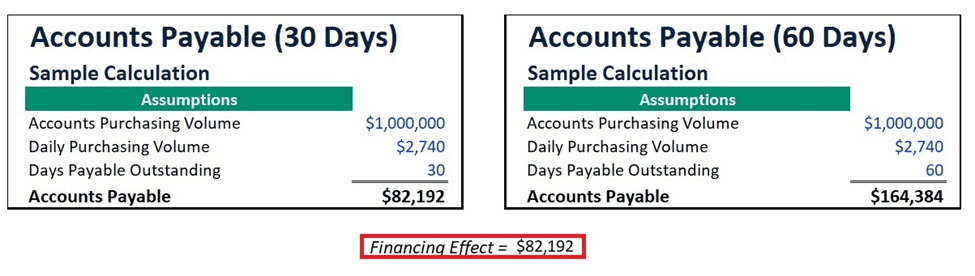
As you can see, the business could obtain an extra free financing of $82,192 by increasing the Days Payables from 30 to 60 Days. The alternative would be to obtain bank financing for which a business normally would have to pay interest. Please note that this is only possible if the suppliers let you do this and still believe the invoices will be paid.
In case the business should slide into insolvency or damages its reputation as a trusted payer, what happens then is that the suppliers will lose faith in you and will enforce straighter payment terms. They might even ask you to pay upfront, reducing your DPO (Days Payable Outstanding) from 60 to zero. Based on the example above, the business immediately loses $164,384 in financing sources, which capital providers – banks or shareholders must fund. It can put into place a downward spiral.
Interpreting DPO
DPO gives insights into a company’s cash flow management and its efficiency in managing its payables.
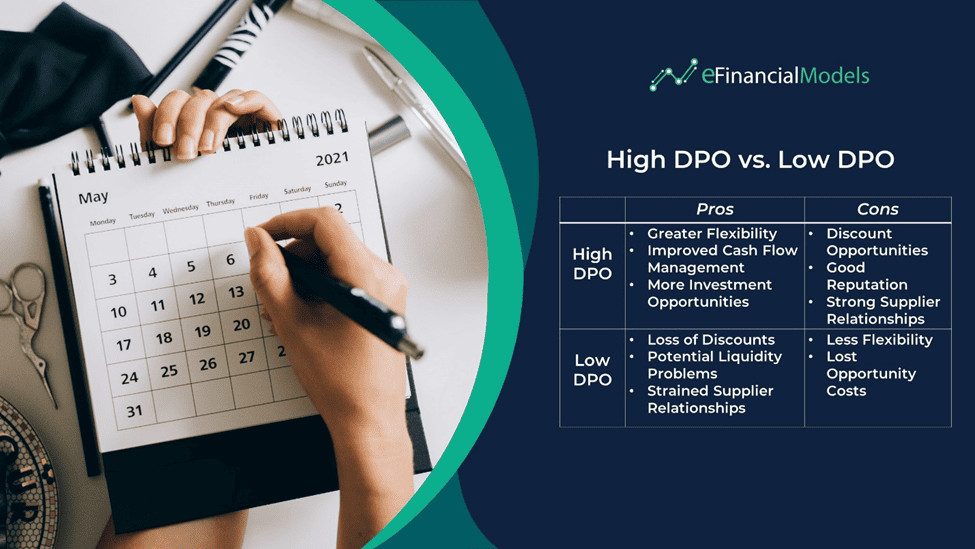
High DPO
A high DPO indicates the company is taking longer to pay off its suppliers. A high DPO gives a company greater flexibility in managing its cash. It can be especially beneficial during times of cash crunch or when there are uncertainties in cash inflows. By delaying supplier payments, a company can retain its cash for longer to improve its cash flow. A company can invest in short-term opportunities or earn interest on its cash reserves with more cash.
Many suppliers offer early payment discounts. A high DPO means the company is likely missing out on these discounts, leading to higher costs. A consistently high DPO might indicate potential liquidity problems, suggesting the company might struggle to generate enough cash to pay its bills. Delaying payments can strain relationships with suppliers. They might become reluctant to offer favorable terms or even refuse to do business with the company.
Low DPO
A low DPO indicates that the company pays its suppliers relatively quickly. Some suppliers offer discounts for early payments. A low DPO can allow a company to take advantage of these discounts, reducing costs. A company that promptly pays its bills can earn a reputation for being reliable and trustworthy, which can be beneficial in negotiations and when seeking new suppliers. Furthermore, promptly paying suppliers can strengthen relationships, leading to better terms and priority treatment.
While a low DPO might seem like a good thing, several potential disadvantages are associated with it, paying suppliers quickly can lead to reduced cash flow for the company. In times of financial strain or unexpected expenses, having a low DPO might reduce a company’s flexibility to manage its cash flow effectively. The cash used to pay suppliers early could be invested elsewhere in the business or used to earn interest. Moreover, investors and analysts might perceive a low DPO as a sign that a company needs to manage its cash efficiently or that it needs negotiation power with its suppliers.















































Tips for Managing DPO to Improve Cash Flow
Managing DPO (Days Payable Outstanding) effectively optimizes cash flow. Businesses may want high days payable whenever possible because that’s free financing. It helps obtain a maximum healthy amount of free financing from suppliers. However, having a solid balance sheet and avoiding dependence on a single supplier is also important.
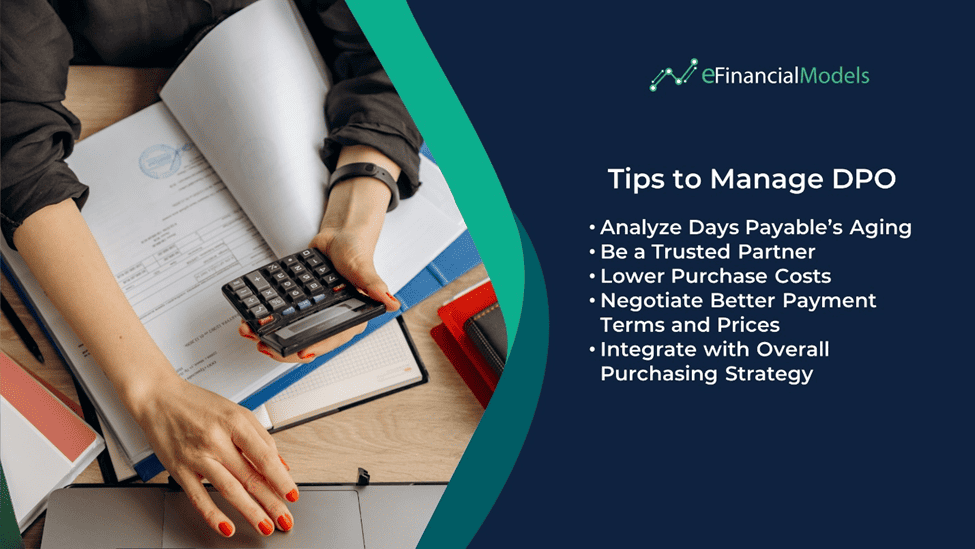
Here are some detailed tips for managing DPO:
Analyze the Aging of Days Payables
Evaluate past invoices and payment records to understand your current DPO trend. Examine if specific times of the year or certain suppliers consistently have shorter or longer DPOs. Understand the reasons behind early or late payments. It could be due to supplier incentives, cash flow constraints, or administrative inefficiencies.
Aging analysis breaks down payables into different time buckets based on the length of time an invoice has been outstanding. It helps businesses understand their payment patterns and identify any consistent delays or early payments. By understanding the aging of payables, companies can make strategic decisions about extending or reducing DPO to optimize cash flow.
Be a Trusted Partner
Consistency builds trust. While you might aim for a higher DPO, ensure you pay within the agreed terms. Maintain transparent communication with suppliers. If you anticipate delays, inform them in advance. Look for opportunities to benefit you and the supplier, such as joint marketing efforts or collaborative product development.
Suppliers are more likely to offer extended payment terms to businesses they trust, allowing the company more time to pay without incurring penalties or interest. A strong and trusting relationship with suppliers ensures a more resilient supply chain. Suppliers are likelier to go the extra mile for trusted partners, ensuring timely deliveries and consistent quality. It can indirectly lead to better payment terms and an improved DPO.
Lower Purchase Costs
Consider buying in bulk if storage and usage allow. It often results in lower per-unit costs. Review and consider alternative suppliers who might offer better prices or terms. Streamline your procurement process to reduce administrative costs and avoid rush orders which might be costlier.
With lower purchase costs, the accounts payable balance might be lower. If the company maintains its payment habits, this can result in a higher DPO because the average accounts payable in the DPO formula would be lower, leading to a higher ratio.
Negotiate Better Payment Terms and Prices
Cultivate a good relationship with suppliers. They’re more likely to offer favorable terms to businesses they trust and value. Ensure you’re aware of the standard payment terms in your industry. This knowledge will give you a better position during negotiations. If you’re a significant customer for a supplier, use that as leverage to negotiate better terms.
Negotiating longer payment terms with suppliers can give a company more time to pay its bills. For instance, moving from a net-30 to a net-60 payment term gives the company 30 days to hold onto its cash before making a payment. It increases the DPO, improving the company’s short-term liquidity.
Integrate with Overall Purchasing Strategy
DPO shouldn’t be viewed in isolation. It should align with your overall purchasing and inventory management strategy. Ensure that extending DPO doesn’t result in stockouts. Balance the benefits of longer DPO with the need to maintain optimal inventory levels.
Integrating DPO with an overall purchasing strategy provides a holistic view of a company’s financial health and operational efficiency. It allows companies to make informed decisions, improving cash flow, better supplier relationships, and enhanced profitability. Furthermore, it aids in more accurate budgeting and forecasting. By understanding when cash will leave the business, finance teams can better plan for future expenses and investments.
Remember, while a higher DPO can improve cash flow, it’s essential to maintain a balance. Always aim for a beneficial and sustainable strategy for your business and your suppliers.
DPO (Days Payable Outstanding) & Financial Analysis
Days Payable Outstanding is a crucial metric in financial analysis. It provides insights into a company’s cash management practices and supplier relationships.
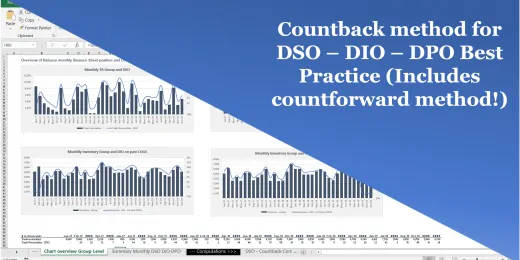
When used with other liquidity metrics like DSO (Days Sales Outstanding) and DIO (Days Inventory Outstanding), DPO (Days Payable Outstanding) provides a comprehensive view of a company’s working capital management. The Cash Conversion Cycle (CCC) combines these metrics to show how efficiently a company converts its operations into cash.
DPO is a measure of how quickly a business pays its suppliers. A higher DPO means the company is holding onto its cash longer, which can benefit cash flow management. By delaying payments, a company can use the cash for other operational needs or investments. Yet, consistently delaying payments (i.e., having a very high DPO) can strain supplier relationships. It’s essential to strike a balance to maintain supplier relationships while optimizing cash flow.
Financial modeling is a powerful tool for analyzing and forecasting a company’s financial performance, like DPO. It allows businesses to run various scenarios to see how changes in payment terms, supplier negotiations, or procurement processes can impact DPO. By modeling different scenarios, companies can identify the most effective strategies to extend their DPO without harming supplier relationships.
It’s essential to note that while DPO provides valuable insights, it should be analyzed in conjunction with other financial metrics and the industry average to get a comprehensive view of a company’s financial health and cash management strategies.
























You might also like:
- 5 Best Practices for Managing Days Receivables
- Cash Flow Analysis
- Cash Flow Projections
- Financial Planning
- Understanding the Debt Service Coverage Ratio: An Essential Metric for Financial Analysis
- 10-Step Financial Planning Checklist for Smart Executives
- Master the Free Cash Flow Formula for Smarter Financial Decisions
- Cash Flow Statement: Streamline Financial Success
- Financial Ratios Analysis and Its Importance
- How to Calculate Net Present Value (NPV)?
- Improving Days Payable Outstanding for Better Cash Flow
- A Step-By-Step Guide to the Merger and Acquisition Process
- Top 10 Mistakes in DCF Valuation Models
- Mastering the Art of IRR Calculation: A Comprehensive Guide for Investors
- 10 Main Elements of a Business Plan
- Finding Fair Market Value: A Quick Guide to Real Estate Valuation
- Developing a 5 Year Financial Projection Template
- Financial Forecasting Models by eFinancialModels
- Fundraising Project Plan Template in Excel
- Top 5 Risks of Wind Energy Parks