
0 ITEMS

5 Best Practices for Managing Days Receivables

“Never take your eyes off the cash flow because it’s the lifeblood of business.“
— Sir Richard Branson, British business magnate.
Efficient accounts receivable management is crucial for any business, regardless of size or industry. The timely collection of payments is essential to maintain a healthy cash flow and ensure the smooth operation of the business. New businesses may come and go, but whether or not you stay in business long enough to see them succeed depends on your cash flow. Since 82% of firms fail because of cash flow problems, running out of money or using it too soon can be fatal.
Efficient management of accounts receivable directly impacts your cash flow and overall business health.
- The days receivables metric shows how long it takes to collect customer payments after a sale.
- High days’ sales outstanding can lead to cash flow issues and tie up working capital.
- Managing credit terms, automating invoicing, and offering multiple payment options improve collection speed.
- Regular review of receivables helps identify late payments and improve payment collection strategies.
- Proactive collection processes and clear communication reduce overdue invoices and bad debts.
Understanding and optimizing your days receivables can help maintain a strong financial position and support growth.
What Are Days Receivables?
Days receivables, days sales outstanding (DSO), or accounts receivable days outstanding show how long it typically takes a company to get money from a client after a transaction. Days sales outstanding measures how efficiently a business manages its accounts receivable and can be calculated by dividing its total receivables by its total revenue. This figure is then multiplied by the number of days a year to determine the average number of days it takes for a business to collect customer payments.
Collecting days’ receivables on time is essential for a business’s financial health. When a company fails to collect payment on time, it can decrease cash flow and, in turn, affect its ability to meet its financial obligations. In addition, late payments can hurt a business’s reputation, as customers may view the company as unreliable.
The days accounts receivable ratio is a financial metric used to assess the efficiency of a company’s credit and collection management. It is an essential part of the net working capital equation. The net working capital equation represents the difference between a company’s assets and liabilities. It measures a company’s ability to meet its short-term obligations. The days’ accounts receivable ratio is significant in the net working capital equation because it directly impacts a company’s cash flow and liquidity.
A high days’ sales outstanding means that the company is taking a long time to collect its accounts receivable, which can lead to cash flow issues and hinder its ability to meet its short-term obligations. On the other hand, a low days’ sales outstanding indicates that the company is efficient in collecting its receivables, which can positively impact its net working capital and overall financial health.
Why is Accounts Receivable Management Important?
Accounts receivable management is crucial for a business’s financial health and success. It involves tracking and collecting payments from customers who owe money for products or services they have received. Here are some reasons why accounts receivable management is important:
- Cash Flow Optimization: Effective accounts receivable management ensures a steady and predictable cash flow that affects the net working capital equation. Timely collection of payments allows businesses to meet their financial obligations, pay their bills, invest in growth opportunities, and maintain a healthy working capital position.
- Enhanced Forecasting and Planning: Accurate accounts receivable tracking allows businesses better to forecast future cash flows, sales, and revenue. This information helps in making informed business decisions and setting realistic financial goals.
- Improved Customer Relationships: A well-managed accounts receivable process fosters positive customer relationships. Businesses can enhance customer satisfaction and loyalty by sending timely and accurate invoices, offering flexible payment terms, and providing excellent customer service.
- Increased Operational Efficiency: Streamlining the accounts receivable process can improve operational efficiency. Automation and technology tools can help businesses reduce manual tasks, decrease errors, and allocate resources more effectively.
- Lower Financing Costs: A healthy day’s accounts receivable ratio (the rate at which receivables are converted to cash) can positively influence a company’s creditworthiness. It may lead to better borrowing terms and lower financing costs when seeking loans or credit from financial institutions.
- Reduced Bad Debts and Delinquencies: Businesses can identify and address delinquent accounts early by monitoring and tracking accounts receivable. It reduces the risk of bad debts and increases the likelihood of recovering outstanding payments.
In summary, accounts receivable management is vital in maintaining a stable financial position, supporting growth, and ensuring smooth business operations. It is an essential component of effective financial management for any organization.






















































How to Calculate Days Sales Outstanding (DSO)?
As mentioned earlier, the days’ sales outstanding calculation divides the accounts receivable balance by the total revenue, multiplying the result by the number of days in the period under review. Mathematically, the accounts receivable days formula is:
Days Sales Outstanding = (Accounts Receivable / Total Revenue) x Number of Days
Sample Calculation
The accounts receivable days formula is:
Days Receivable = (Accounts Receivable/Total Revenue) * Number of Days
Where:
- Accounts Receivable: This is the total amount of money customers owe to the company for goods or services already delivered but still need to be paid for.
- Total Revenue: This is the total income generated by the company from its primary operations, often referred to as “sales.”
- Number of Days: This is the number of days the period covers. The period may either be yearly, monthly, etc.
Let’s say Company XYZ has an annual Accounts Receivable of $500,000 and a Total Revenue of $6,500,000 as of December 2022.
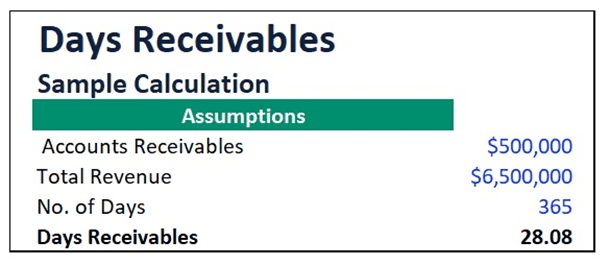
In this example, it takes Company XYZ an average of 28 days to collect its accounts receivable.
Days Receivables is a valuable metric for assessing how efficiently a company manages its credit and collection processes. Lower Days Receivables generally indicate that the company is collecting payments more quickly. In comparison, higher Days Receivables might indicate that the company is experiencing difficulties collecting customer payments. Keep in mind that industry norms and company-specific factors can influence what is considered a “good” or “bad” Days Receivables value.































What’s a Good Accounts Receivable Days Outstanding?
A good value for accounts receivable days outstanding varies greatly depending on the industry. Only a comparison with businesses in the same sector is advised if a company wants to determine whether its values are too high or too low. It can then determine how one stacks up against the competition and whether action is required to shorten the days an account is past due.
Furthermore, it’s a red flag that something is wrong if a company’s days receivables is rising. A company may experience severe cash flow issues due to a sudden rise in days receivables. A business might have to make significant modifications if its capacity to punctually make its payments is compromised.
As days receivables increase, the net working capital equation is affected. The working capital requirements of the company also rise. Working capital differs between current assets (including accounts receivables) and liabilities. When receivables take longer to convert into cash, more working capital is tied up, making it difficult for the company to finance its day-to-day operations.
What Causes Accounts Receivable Days to Increase?
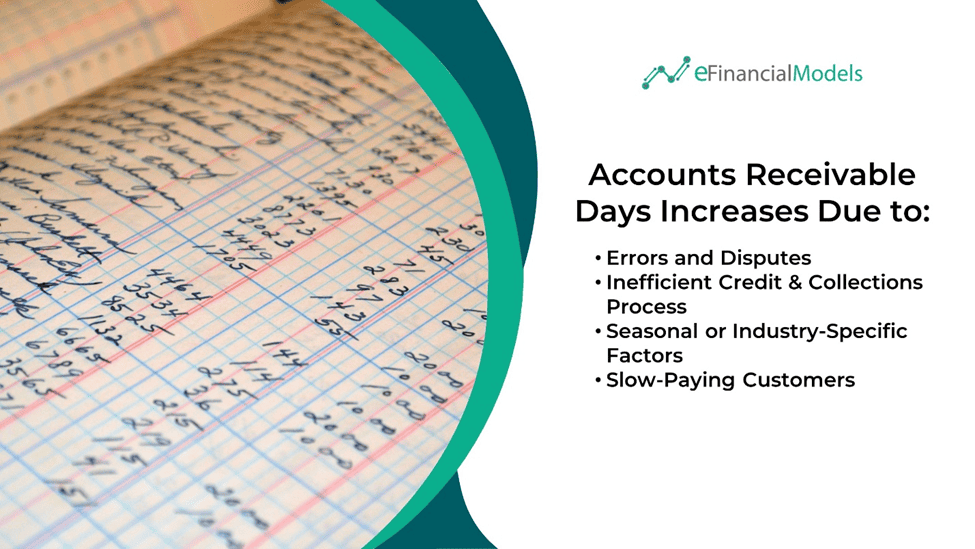
An increase in the value of days receivables indicates that it is taking the company longer to collect its outstanding receivables, which can have several underlying causes:
- Errors and Disputes: Inaccuracies in invoices or disputes between the company and its customers can delay payment and increase the collection period.
- Inefficient Credit and Collections Process: If the company’s credit and collections process is well-organized and needs adequate follow-up, it can result in delayed customer payments.
- Seasonal or Industry-Specific Factors: Some businesses may experience fluctuations in sales and collection cycles due to seasonal demand patterns or industry-specific factors that affect customer payment behavior.
- Slow-Paying Customers: If customers take longer to pay their invoices, it will increase days receivables. It may happen due to financial difficulties on the customer’s end, poor payment habits, or disputes over invoices.
It’s essential for businesses to closely monitor their days’ receivables to ensure timely collection and maintain healthy cash flow.
Five Tips for Managing Days Receivables
Managing days receivables is crucial for maintaining a healthy cash flow and ensuring timely customer payments. Here are some tips to help you effectively manage days receivables:
1. Set Clear Credit Terms and Payment Policies
One of the key factors in efficient accounts receivable management is setting clear credit terms and payment policies. By establishing and communicating your credit terms upfront, you ensure that your customers understand your expectations regarding payment. The clarity helps prevent misunderstandings and late payments.
- Firstly, ensure your credit terms are clearly stated on all invoices and contracts. Include details such as the accepted payment methods, due date, how much credit you will offer, and late fees or penalties for delayed payments. This transparency sets the foundation for a smooth payment process.
- Second, consider implementing a credit application process for new customers. Conduct credit checks and set credit limits accordingly to reduce the risk of bad debts. It allows you to assess their creditworthiness before extending them credit. Ask for references and review their financial statements to make informed decisions.
- Third, it is crucial to establish a consistent payment policy. Define your expectations for when payments should be made and enforce these policies consistently. For instance, you may require payment within 30 days of the invoice date or offer a discount for early payments.
- Lastly, maintain open lines of communication with your customers. Regularly remind them of upcoming payment dates, send out friendly reminders for overdue payments, and promptly address any payment inquiries or disputes.
2. Invoice Accurately and Promptly
Send out invoices as soon as the goods or services are delivered. Delayed invoicing can lead to delayed payments. Ensure that your invoices are accurate, include all necessary details, and are addressed to the correct person or department responsible for payments.
Implementing an automated invoicing system is crucial for efficient accounts receivable management. Manual invoicing processes can be time-consuming, prone to errors, and lead to payment delays. Automating this process can streamline your invoicing workflow and improve cash flow.
An automated invoicing system allows you to generate and send invoices electronically, reducing the need for paper-based invoices. It saves time and reduces the risk of lost or misplaced invoices. Additionally, you can schedule automated reminders for clients with outstanding payments, ensuring timely follow-ups and reducing the possibility of missed payments.
Furthermore, an automated invoicing system can provide detailed insights into your receivables. You can generate reports and analytics showing your outstanding invoices, average payment times, and invoice aging. This data helps you identify patterns, spot potential issues, and make informed decisions to optimize your accounts receivable processes.
3. Facilitate Multiple Payment Options
Provide customers with various payment methods. This flexibility makes it easier for customers to pay promptly. To facilitate multiple payment options for your business, you can implement various payment methods to cater to your customer’s preferences. Here are some popular and effective ways to achieve this:
- Cash on Delivery (COD): Customers can pay in cash when their orders are delivered to their doorstep. COD is a popular option in some regions, especially for online retail businesses.
- Bank Transfers: Enable customers to make direct transfers or use Internet banking to pay for products or services. This method can be particularly useful for larger transactions.
- Credit and Debit Cards: Accept major credit and debit cards such as Visa, MasterCard, American Express, and Discover. It is a standard payment option that most customers are familiar with and prefer.
- Cryptocurrency: Consider accepting cryptocurrencies like Bitcoin, Ethereum, or other altcoins if your business aligns with the crypto community.
- Digital Currencies for Online Services: Consider allowing customers to pay with digital currencies like in-game credits or virtual tokens for digital products and services.
- E-Wallets: Offer electronic wallets where customers can store funds and make payments directly from their digital accounts. Examples include Venmo, Skrill, and Paytm.
- Gift Cards and Vouchers: Offer to use gift cards or vouchers as payment. It can boost customer loyalty and encourage repeat purchases.
- In-Store Payments: For brick-and-mortar businesses, equip your stores with Point of Sale (POS) systems that accept various payment methods.
- Mobile Payment Apps: Integrate popular mobile payment apps like Apple Pay, Google Pay, Samsung Pay, or other region-specific options. These apps allow customers to make payments quickly and securely using their smartphones.
- Online Payment Gateways: Set up online payment gateways like PayPal, Stripe, Square, or other reliable options. These gateways facilitate secure transactions and give your customers an extra layer of trust.
- Subscription Billing: If your business offers subscription-based services, allow customers to choose automatic recurring payments through their preferred payment methods.
Remember, while offering multiple payment options can improve customer satisfaction, it’s essential to prioritize security and compliance. Implement robust security measures to protect your customers’ sensitive information during transactions. Regularly update your payment systems to stay current with evolving technologies and industry standards.


























4. Establish a Proactive Collections Process
Establishing a proactive collections process is essential to reducing accounts receivable days outstanding. By taking a proactive approach, you can ensure that your business receives timely payments and minimize the risk of overdue or unpaid invoices.
- To encourage prompt payment, follow up with customers when an invoice becomes overdue. Sending friendly reminders or making courtesy calls can prompt action and resolve any issues or disputes causing delays. Maintaining a good business relationship is important to maintain open communication lines and promptly address any concerns.
- Implementing a system for tracking and monitoring accounts receivable is also essential. Regularly review aging reports to identify overdue accounts and prioritize follow-ups. Consider implementing collections or accounting software that provides insights into outstanding invoices and payment histories.
- Lastly, consider offering incentives for early or on-time payment. It can be in discounts, rewards, or favorable payment terms. Incentives can encourage customers to prioritize their invoices and pay promptly, improving your cash flow and reducing the need for extensive collection efforts.
Establishing a proactive collections process can significantly reduce your accounts receivable days outstanding. Timely and consistent follow-ups, clear communication, effective tracking, and incentivizing prompt payment can all contribute to a more efficient and successful collections process, ultimately benefiting your business’s financial health.
5. Analyze and Review Your Days Receivables Regularly
Regularly reviewing and analyzing your accounts receivable is crucial for efficient accounts receivable management. Doing so lets you identify potential issues or bottlenecks in your payment processes and take necessary actions to improve cash flow.
One of the best ways to review your accounts receivable is by generating aging reports. These reports categorize your outstanding invoices by their due dates, allowing you to see which invoices are overdue and need immediate attention. It gives you a clear picture of your cash flow position and lets you prioritize collections efforts.
Analyzing your accounts receivable data can provide valuable insights into customer payment patterns and trends. You can better tailor your collection strategies and payment terms by understanding which customers pay on time and which ones are consistently late. This analysis can also help you identify any customers with recurring payment issues and allow you to address the underlying problems proactively.
In addition to reviewing aging reports and analyzing payment patterns, it is important to regularly reconcile your accounts receivable with your sales and billing records. It ensures that all transactions are accurately recorded and promptly addresses discrepancies or errors. Reconciliation also helps identify any outstanding or unresolved issues, such as unapplied payments or misapplied credits, that may impact your accounts receivable balance.

Conclusion
In conclusion, effectively managing days receivables is crucial for maintaining a healthy cash flow and ensuring the financial stability of your business. Implementing the five best practices outlined in this blog can significantly reduce your day’s receivables and enhance your bottom line.
If you’re looking for a solid starting point to optimize your days’ receivable management, consider delving into financial modeling. By creating comprehensive financial models, you gain a deeper understanding of your business’s cash flow patterns, identify potential risks, and make well-informed decisions to improve receivables management. So, take the leap, embrace financial modeling, and set your business toward better days receivable management and financial success. Start managing your days’ receivables more effectively today, and watch as your business flourishes with improved cash flow and a stronger financial foundation.
You might also like:
- 5 Best Practices for Managing Days Receivables
- 10 Tips to Develop a First Class Business Valuation Report
- Financial Ratios Analysis and Its Importance
- 10-Step Financial Planning Checklist for Smart Executives
- Cash Flow Analysis
- Financial Modeling
- Accounting
- Financial Services
- Achieve Financial Success By Knowing Your Business Plan Model
- Business Plan Models – Using Business Models as Examples
- The Valuation of a Business
- Business Valuation
- Accounts Receivable
- Understanding the Debt Service Coverage Ratio: An Essential Metric for Financial Analysis
- Why Financial Forecasting Models Are Vital for Your Business
- Potential Benefits of a Financial Model in Your Business
- Financial Ratios Cheat Sheet
- How to Build a Thriving Taxi Company?
- Minimize Your Net Working Capital With Invoice Factoring
- Getting the Best Out of Financial Modeling Benefits
Tags: financial modeling