
0 ITEMS

How Can an Excel Budget Template Enhance Your Finances?

Managing small business finances can be challenging without a clear system in place.
- An Excel budget template helps track income, expenses, and cash flow in real-time, making financial management easier.
- Budgeting improves financial visibility, control, and risk management, which supports strategic decision-making.
- Using a monthly budget spreadsheet allows for goal setting, expense control, and better cash flow management.
- Customizing a budget helps align spending with specific business priorities and growth plans.
- Regular updates and adjustments ensure your business stays on track and adjusts to changing market conditions.
A practical budgeting process helps small business owners build a strong financial foundation and plan for future success.
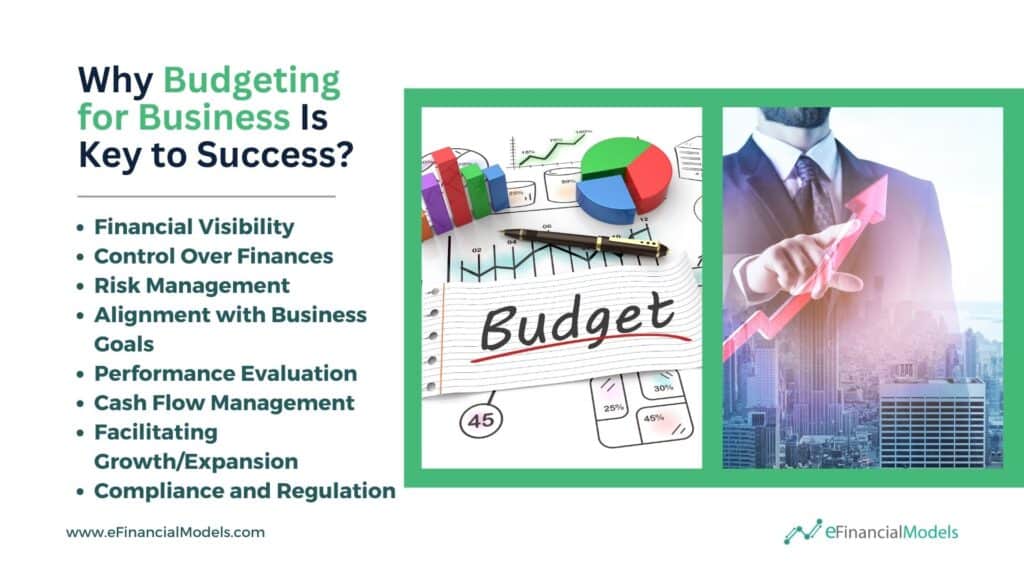
Why Budgeting for Business Is Key to Success?
Budgeting for business involves planning how to allocate financial resources to meet operational goals. It helps businesses set realistic goals, spend money wisely, and make smart choices. Like planning a trip, budgeting for business guides the financial journey, helping them avoid getting lost or running out of money. It’s a way to be smart with money and ensure everything adds up. Budgeting for business ensures that it operates within its means and allocates funds to key priorities by setting clear financial goals and guidelines. Moreover, budgeting provides:
- A framework for evaluating performance.
- Identifying deviations from planned targets.
- Implementing necessary adjustments.
This process fosters financial discipline, supports strategic decision-making, and enhances transparency in resource allocation, ultimately contributing to the business’s overall financial health and long-term sustainability. Here’s a more detailed overview of why budgeting for business is key to success:
- Financial Visibility: Budgeting offers transparency into financial performance by creating a structured framework to track income and expenses. This visibility empowers decision-makers to understand the company’s financial status comprehensively. It allows for early detection of potential issues, enabling timely corrective actions. When financial information is readily available and organized through budgeting, the management team can make well-informed decisions that align with the company’s financial goals.
- Control Over Finances: Budgeting provides a clear snapshot of a company’s financial health, including revenue streams and expenditure patterns. This clarity facilitates better control over finances. Businesses can streamline operations by identifying where funds are allocated and pinpointing unnecessary expenses. It ensures efficient cash flow management and minimizes wasteful spending, improving profitability.
- Risk Management: Budgeting involves forecasting revenue and expenses, allowing companies to anticipate potential financial risks. With this foresight, businesses can develop strategies to mitigate risks and maintain financial stability. Whether a potential revenue shortfall or an unexpected expense, a well-structured budget enables proactive planning and adaptation to changing financial circumstances.
- Alignment with Business Goals: A meticulously crafted budget is a roadmap that aligns financial decisions with the company’s broader objectives. The budget allocates resources according to strategic priorities and ensures financial resources are directed toward projects and initiatives supporting the company’s vision. This alignment enhances the overall coherence of the organization’s activities and financial plans.
- Performance Evaluation: Budgeting allows for continuous monitoring and evaluation of performance against projected figures. By comparing actual financial results to the budgeted amounts, businesses can identify areas of success and areas that require improvement. These insights enable data-driven decision-making, as management can allocate resources to the most effective strategies and make necessary adjustments to underperforming areas.
- Cash Flow Management: Effective budgeting is crucial in managing cash flow. Companies can anticipate high or low liquidity periods by forecasting income and expenses. It enables proactive management of cash reserves and short-term financing, ensuring enough liquidity to cover essential expenses and operational needs, even during challenging financial times.
- Facilitating Growth and Expansion: Budgeting is instrumental in assessing the feasibility of new projects and expansion initiatives. Before committing resources to these endeavors, businesses can evaluate whether the projected returns align with the company’s growth objectives. Budgeting helps make informed decisions about resource allocation and understand the potential financial impact of growth strategies.
- Compliance and Regulation: Proper budgeting includes adhering to legal and regulatory requirements. Companies can ensure that their financial practices align with relevant laws by accurately accounting for expenses and revenues. It reduces the risk of legal issues, fines, and reputational damage arising from non-compliance.
How to Do Budgeting for a Company
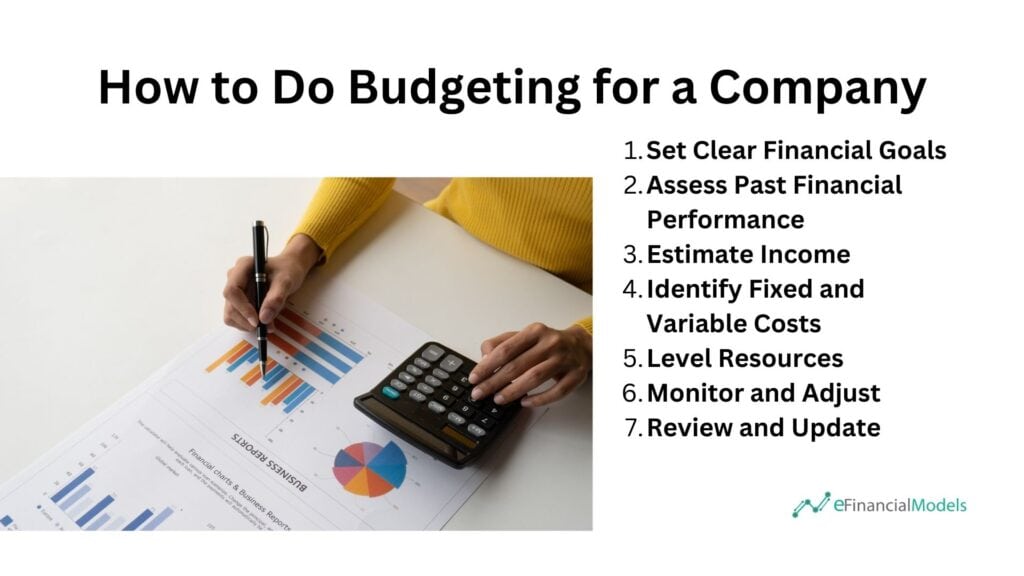
Budgeting involves estimating future income and expenses, allowing a business to allocate resources wisely. A well-structured budget helps monitor cash flow, control costs, and make informed decisions. By tracking spending and adjusting plans as needed, companies can stay on track to meet their financial goals. Proper budgeting also provides valuable insights that support growth, investment, and overall financial stability. Here are the basic steps on how to do budgeting for a company:
- Set Clear Financial Goals: how to do budgeting for a company starts by defining specific financial goals for the company. These should be measurable and achievable. For example, set a target for revenue, profit margin, or cost reduction. Clear goals provide direction and help track progress throughout the budgeting process.
- Assess Past Financial Performance: Review previous financial statements to understand the company’s financial history. Look at revenue trends, expenses, and profits. It will help identify patterns and areas for improvement, guiding future budgeting decisions.
- Estimate Income: Estimate the company’s potential income for the upcoming period. Base this on past performance, market trends, and sales forecasts. Be realistic, but also consider growth opportunities.
- Identify Fixed and Variable Costs: Categorize the company’s expenses into fixed and variable costs. Fixed costs stay the same regardless of sales, like rent or salaries. Variable costs, such as materials and commissions, change with production or sales volume. Understanding these costs is crucial for managing cash flow.
- Level Resources: Ensure resources are allocated efficiently. Match income projections with the necessary expenses. It involves balancing spending on operations, marketing, and other areas to avoid overspending or underspending in critical areas.
- Monitor and Adjust: Regularly monitor the budget’s performance. Track income and expenses to make sure the company stays on course. If necessary, adjust the budget to address unforeseen challenges or new opportunities.
- Review and Update: Lastly, how to do budgeting for a company involves periodically reviewing and updating the budget. As business conditions change, so should the budget. Regular updates ensure the company remains aligned with its financial goals and can adapt to market changes.
How to do budgeting for a company can be easier to use a monthly budget spreadsheet because it provides a clear, organized framework to track income, expenses, and cash flow, making it simpler to manage finances and make informed decisions.
































Benefits of Using a Monthly Budget Spreadsheet
A monthly budget spreadsheet is essential in budgeting for business because it helps organize income and expenses. It allows you to track cash flow, set spending limits, and identify areas where costs can be cut. With a template, you can easily adjust for unexpected changes and make data-driven decisions. It ensures that your business stays on track financially, helping you avoid overspending and stay within budget each month. Ultimately, it brings structure and discipline to your financial planning.
Improved Financial Tracking
A monthly budget spreadsheet helps you track your finances more easily. You gain a clear picture of your financial health by recording all income and expenses. It allows you to monitor cash flow, detect issues early, and make informed adjustments.

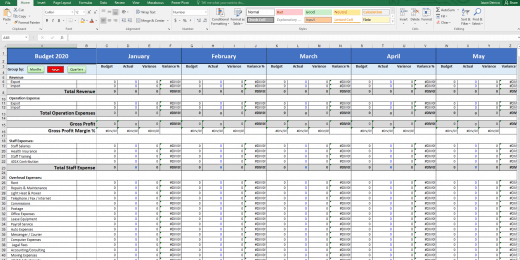
The above Monthly Budget Templat with Financial Statements simplifies financial tracking by providing a comprehensive tool to monitor your income and expenses in one centralized location. This template allows you to categorize and record all transactions, helping you visualize your monthly financial flow. By regularly updating the spreadsheet, you can easily identify spending patterns or inconsistencies, giving you the ability to make informed decisions about your finances. This proactive approach helps ensure that you stay organized and in control of your financial situation, preventing unexpected shortfalls or missed opportunities for savings.
Goal Setting
Using a monthly budget spreadsheet lets you set financial goals. Whether saving for expansion or cutting costs, you can track your progress monthly. It keeps you focused and motivated to reach your targets.
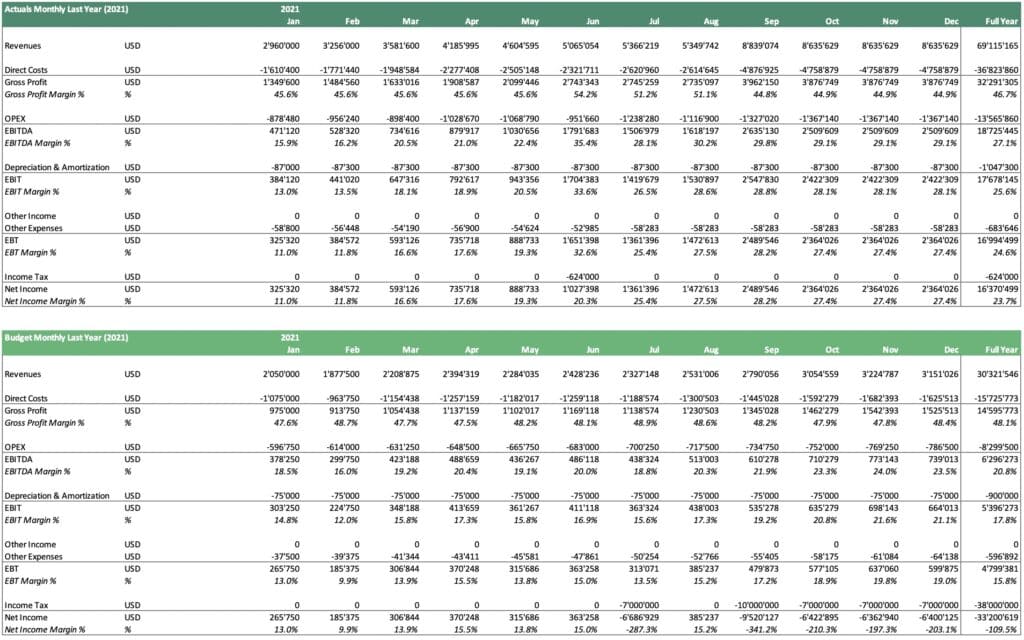
As shown above, a Budget Template in Excel helps you set clear financial goals by allowing you to track your progress each month. Whether saving for expansion or aiming to cut costs, it gives you a simple way to monitor your spending and savings. This monthly tracking keeps you focused, motivated, and on track to meet your targets.
Expense Control
A budget spreadsheet lets you control your spending by categorizing your expenses. You can set limits for each category, such as marketing or growth. It provides a clear picture of where you may be overspending and helps you adjust to stay within your budget.
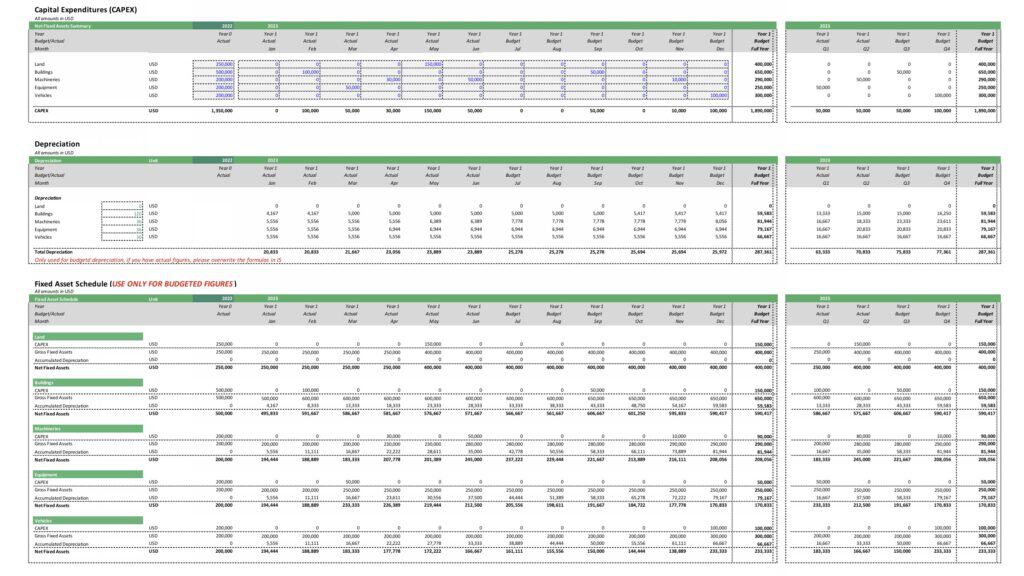
Look at the monthly budget spreadsheet above. It helps with expense control by providing a structured way to track spending across different categories. It allows you to set budget limits for specific areas, such as marketing or equipment costs. By comparing actual spending with the budgeted amounts, you can easily identify where overspending is happening. This visibility allows for quick adjustments, ensuring that you stay within your financial goals and maintain better control over your overall expenses.
Customization
With a monthly budget spreadsheet, you can tailor it to fit your business’s specific needs. You can create categories that reflect your unique expenses and revenue streams. This makes budgeting more relevant and effective.
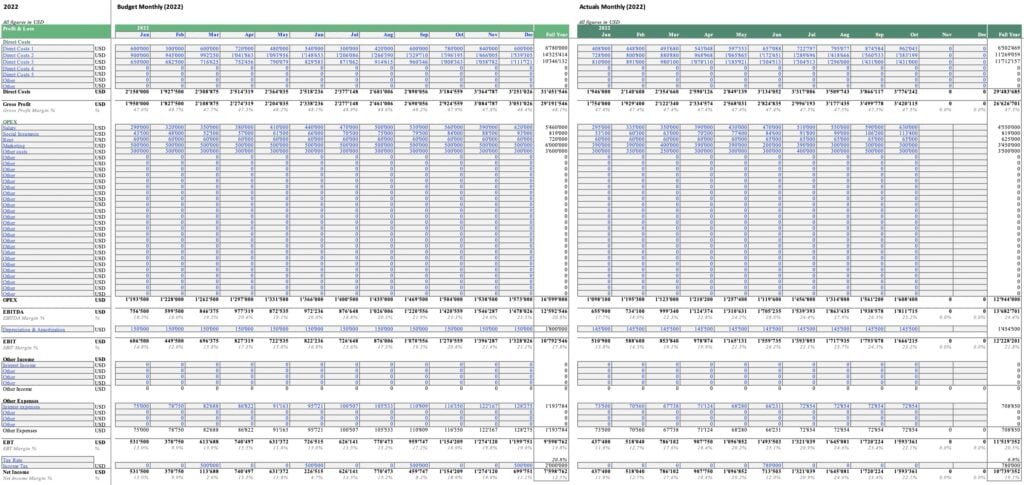
The above monthly budget spreadsheet allows easy customization to suit your business’s unique financial needs. You can modify the categories to match your specific expenses and revenue streams, ensuring the budget is relevant and accurate. This customization helps you better track financial performance and make informed decisions based on your business’s actual financial situation.
Better Decision Making
Making decisions becomes easier when you have all your financial data in one place. A clear overview of your financial situation helps you choose better strategies. Whether cutting costs or investing, you can base decisions on accurate data. A monthly budget spreadsheet helps improve business finances by providing clear insights into income and expenses. With a well-organized budget, you can easily identify trends, track cash flow, and spot areas where adjustments are needed. This clarity allows you to make informed decisions, such as cutting unnecessary costs or reallocating resources to more profitable areas. As a result, you can make smarter financial choices that support business growth and stability.

Take Control of Your Finances with a Monthly Budget
An Excel budget template for small business is invaluable for small business owners looking to optimize their finances. By consolidating income and expenses in one place, it provides a clear overview of cash flow, making it easier to track and manage finances. The template offers real-time tracking, allowing businesses to make quick adjustments to avoid surprises. Additionally, it supports goal-setting, expense control, and better decision-making, helping businesses stay within their budget and plan for growth. Ultimately, using an Excel budget template simplifies financial management, improves organization, and boosts long-term financial success.
Take control of your finances by tracking income and expenses in one place using a monthly budget spreadsheet. It makes managing cash flow easier and ensures you stay on track with your financial goals. With regular updates, you can adjust spending as needed and avoid overspending. A monthly budget brings structure and discipline to your finances, helping you make informed decisions for long-term success. Start managing your finances today!





















You might also like:
- 10 Tips to Develop a First Class Business Valuation Report
- 10 Main Elements of a Business Plan
- 5 Smart Ways To Manage Personal Finances In A Pandemic
- 5 Practical Tips to Help Raise Funds For Startups
- Creating a Budget Plan – Using the Best Excel Budget Template
- Building a Monthly Budget – Using Monthly Budget Templates
- Monthly Google Sheets Budget (with Financial Statements)
- Financial Planning for Small Business Owners – Taking an SBA Loan
- Why Should You Use Excel for Financial Modeling?
- 10-Step Financial Planning Checklist for Smart Executives
- 5 Best Practices for Managing Days Receivables
- Financial Modeling for Startups and Small Businesses
- Cash Flow Analysis in Excel
- Understanding the Debt Service Coverage Ratio: An Essential Metric for Financial Analysis
- Business Plan Models – Using Business Models as Examples
- Free Online Budget Planner Excel Template for Goods Company
- Budget Template in Excel – Analysis in 4 Steps
- Financial Ratios Analysis and Its Importance
- Why Financial Forecasting Models Are Vital for Your Business
- Budgeting