0 ITEMS

Freelance vs. Firm Financial Modeling: Rates, Risks, ROI

Choosing between a freelance financial modeler and a professional services firm is one of the highest-leverage sourcing decisions a CFO or founder makes, because the wrong choice costs far more than the invoice.
Key Takeaways
- Freelance financial modelers typically charge $75–250 per hour, while boutique and mid-market firms charge $200–500+ per hour for equivalent deliverables.
- A three-statement startup model costs roughly $1,500–5,000 from a skilled freelancer versus $5,000–15,000 from a boutique firm.
- LBO and merger models from top-tier firms can exceed $50,000 once revision cycles, project management, and QA time are included.
- Firms carry professional indemnity insurance (errors and omissions coverage), which most individual freelancers do not, shifting liability risk to the client.
- Hybrid engagements, where a freelancer builds the initial model and a firm audits it, can cut total cost by 30–50% versus a full-firm engagement on mid-complexity projects.
- Specialized freelancer networks (Toptal, Expert360) vet candidates rigorously, narrowing the quality gap versus boutique firms for standard deliverables.
- Your optimal provider depends on five factors: budget, deadline, model complexity, risk tolerance, and whether you need ongoing support.
Understanding the Financial Modeling Services Landscape
The market for financial modeling services spans three distinct tiers: independent freelancers, boutique advisory firms, and large professional services organizations including Big 4 accounting firms and bulge-bracket investment banks. Each tier serves different project profiles, and quality variance within each tier is as wide as the variance between tiers.
Financial modeling, for readers new to the term, is the process of building a quantitative representation of a business’s financial performance, typically in Excel or a comparable tool. Outputs range from a simple three-statement model (income statement, balance sheet, cash flow statement linked together) to complex leveraged buyout (LBO) models used in private equity transactions. The modeler’s job is to translate business assumptions into numbers that drive decisions. Excel supports up to 64 levels of nested functions (Microsoft), a structural ceiling that experienced modelers must plan around when building deeply layered logic in complex financial models.
The global financial modeling market was valued at approximately $1.2 billion in 2023 and is projected to grow at a compound annual growth rate of roughly 9% through 2030, according to industry research firm Grand View Research. Demand is driven by rising M&A activity, increased venture fundraising, and the growing expectation among lenders and investors that borrowers and portfolio companies maintain dynamic, audit-ready financial models.
Cost Structure Breakdown: Freelancers vs. Firms
The headline rate difference between freelancers and firms is real, but the total cost of engagement often narrows the gap significantly once you account for revision cycles, project management overhead, and quality assurance time.
Freelancer Rate Drivers
Freelancer rates for financial modeling work vary by experience level, geography, and platform. According to data published by Toptal, a curated freelancer network, senior financial modelers on their platform command $150–250 per hour. On broader platforms like Upwork, rates range from $40 per hour for offshore modelers to $200 per hour for US-based CFA charterholders or ex-investment banking analysts. The Bureau of Labor Statistics reports that the median annual wage for financial analysts in the United States was $99,890 in May 2023 (Bureau of Labor Statistics), implying a fully loaded hourly cost of roughly $48–65 for an in-house analyst, which gives useful context for evaluating freelancer premiums.
Project-based pricing is common for defined deliverables:
- Three-statement startup model: $1,500–5,000
- DCF valuation model: $2,500–8,000
- LBO model (standard): $5,000–15,000
- Merger/acquisition model: $8,000–25,000
- Ongoing FP&A support (monthly retainer): $2,000–6,000/month
Firm Rate Drivers
Boutique advisory firms typically bill at $200–350 per hour for associate-level work and $400–600 per hour for director or partner involvement. Big 4 firms (Deloitte, PwC, EY, KPMG) and bulge-bracket banks charge $500–1,000+ per hour for senior practitioners on complex transactions. These rates reflect overhead costs including office infrastructure, compliance functions, professional indemnity insurance, and the firm’s brand premium.
The same deliverables from a boutique firm cost:
- Three-statement startup model: $5,000–15,000
- DCF valuation model: $10,000–30,000
- LBO model (standard): $20,000–60,000
- Merger/acquisition model: $35,000–100,000+
- Ongoing FP&A support (monthly retainer): $8,000–20,000/month
Hidden Costs That Narrow the Gap
Freelancer engagements carry hidden costs that buyers routinely underestimate. Revision cycles on freelancer projects average 2–4 rounds versus 1–2 rounds for firm engagements, according to project management research published by the Project Management Institute. Each revision round on a complex model can consume 8–20 hours of the client’s internal time for review, feedback, and coordination. At a CFO’s fully loaded cost of $150–300 per hour, three revision rounds add $3,600–18,000 in internal labor cost to a freelancer project that appeared cheaper on the invoice.
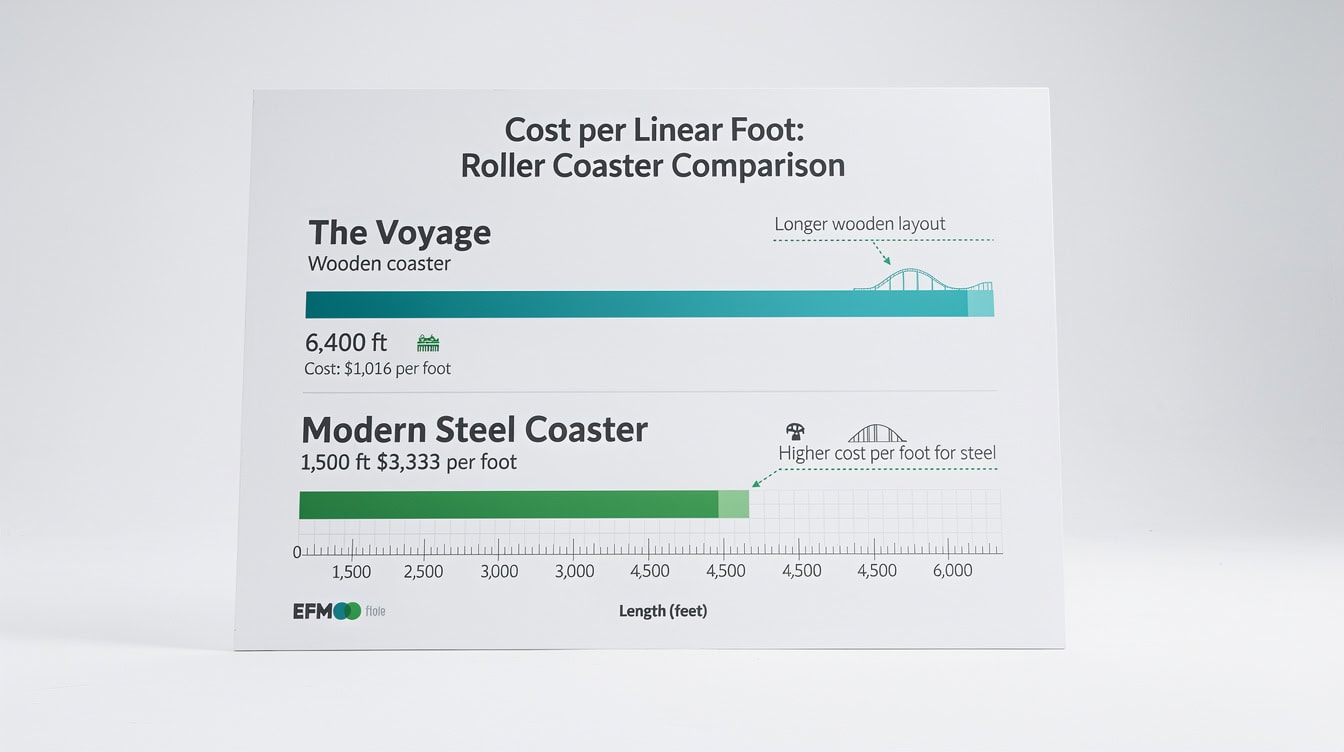
Hidden costs including revision cycles and internal review time can add $3,600–$18,000 to a freelancer engagement that appeared cheaper on the invoice.
Project Complexity and Provider Matching Framework
The right provider depends on the complexity of the deliverable, not just the budget. Match your project type to the provider tier using the framework below.
| Project Type | Complexity | Best Provider | Rationale |
|---|---|---|---|
| 3-Statement Startup Model | Low | Freelancer | Standard structure; portfolio vetting sufficient |
| DCF Valuation | Medium | Freelancer or Boutique | Depends on transaction stakes |
| SaaS Unit Economics Model | Low-Medium | Freelancer | Specialized freelancers often outperform generalist firms |
| LBO Model | High | Boutique Firm | Requires PE-grade methodology and QA |
| Merger/Accretion-Dilution | High | Boutique or Big 4 | Liability exposure justifies firm premium |
| Ongoing FP&A Support | Ongoing | Freelancer or In-House | Relationship continuity matters more than brand |
| Regulatory/Audit-Ready Model | High | Big 4 or Specialist | Signatory accountability required |
| Fundraising Deck + Model | Medium | Specialized Freelancer | Investor-narrative alignment is key skill |
Venture-backed tech startups raising a Series A typically benefit most from specialized freelancers who have built dozens of SaaS models and understand investor expectations for cohort analysis, CAC payback periods, and net revenue retention metrics. Private equity firms running simultaneous deal processes, by contrast, need firm infrastructure: bench depth to handle parallel workstreams, version control protocols, and the institutional credibility that supports due diligence scrutiny.
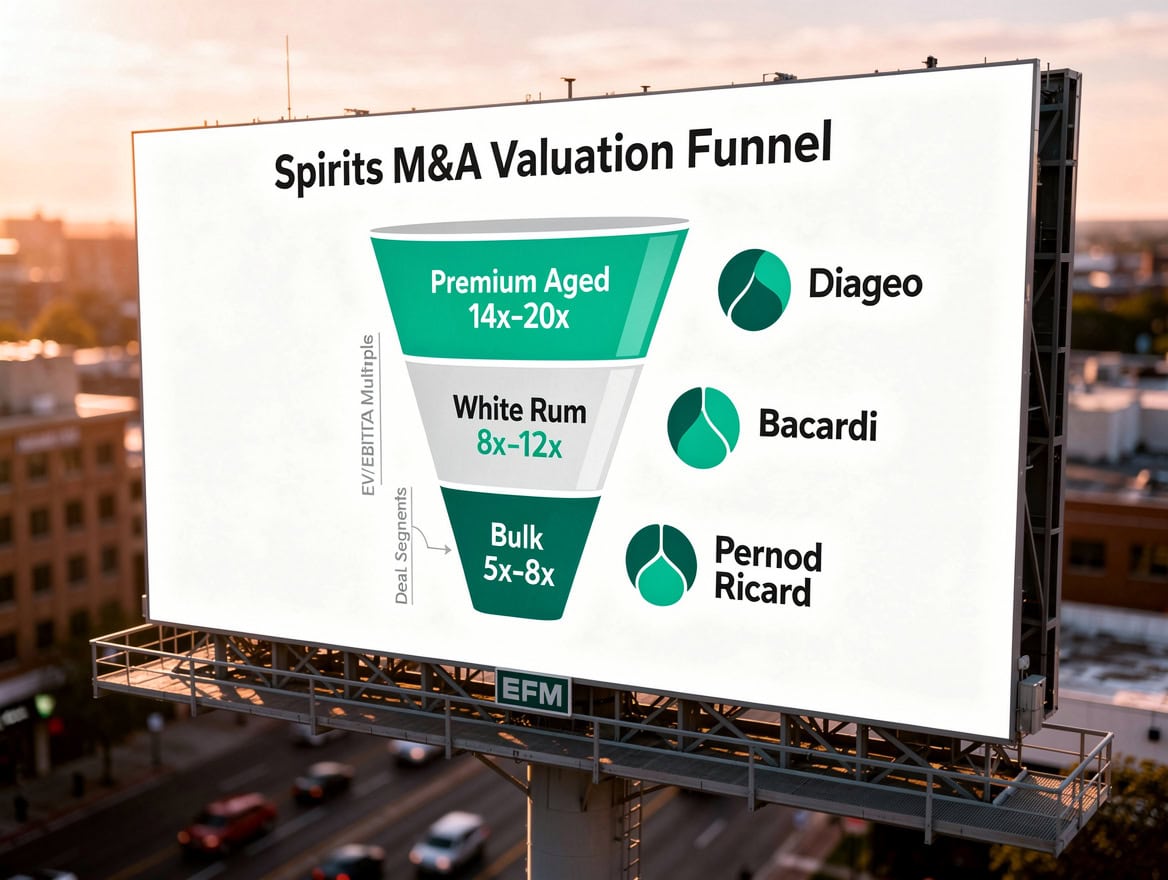
LBO and merger models sit in the high-complexity zone where firm infrastructure and professional indemnity coverage justify the premium.
Quality Assurance, Liability, and Risk Considerations
Firms provide structural quality assurance that most freelancers cannot replicate, but that advantage is narrowing as specialized freelancer networks raise their vetting standards.
Professional indemnity insurance (also called errors and omissions insurance) covers financial losses caused by mistakes in professional advice or deliverables. Most boutique and large advisory firms carry $1–10 million in professional indemnity coverage as a standard business requirement. Individual freelancers rarely carry this coverage. The Small Business Administration notes that professional liability insurance for financial consultants typically costs $500–2,000 per year (Small Business Administration), which is affordable, but most freelancers skip it, leaving clients exposed if a modeling error drives a bad investment decision.
Firm engagements also include internal peer review, where a second analyst checks the model before delivery. This catches formula errors, circular reference issues (a circular reference occurs when a cell’s formula refers back to itself, directly or indirectly, creating a calculation loop — Excel can handle iterative calculations when this setting is enabled (Microsoft), but unintentional circular references are a common source of model errors), and assumption inconsistencies that a solo freelancer working under deadline pressure may miss.
That said, a credentialed freelancer with a CFA charter, a CPA license, or a Chartered Financial Analyst designation and a verifiable track record of 50+ completed models can deliver quality that matches or exceeds a junior associate at a mid-tier firm. The key is vetting, not the channel.
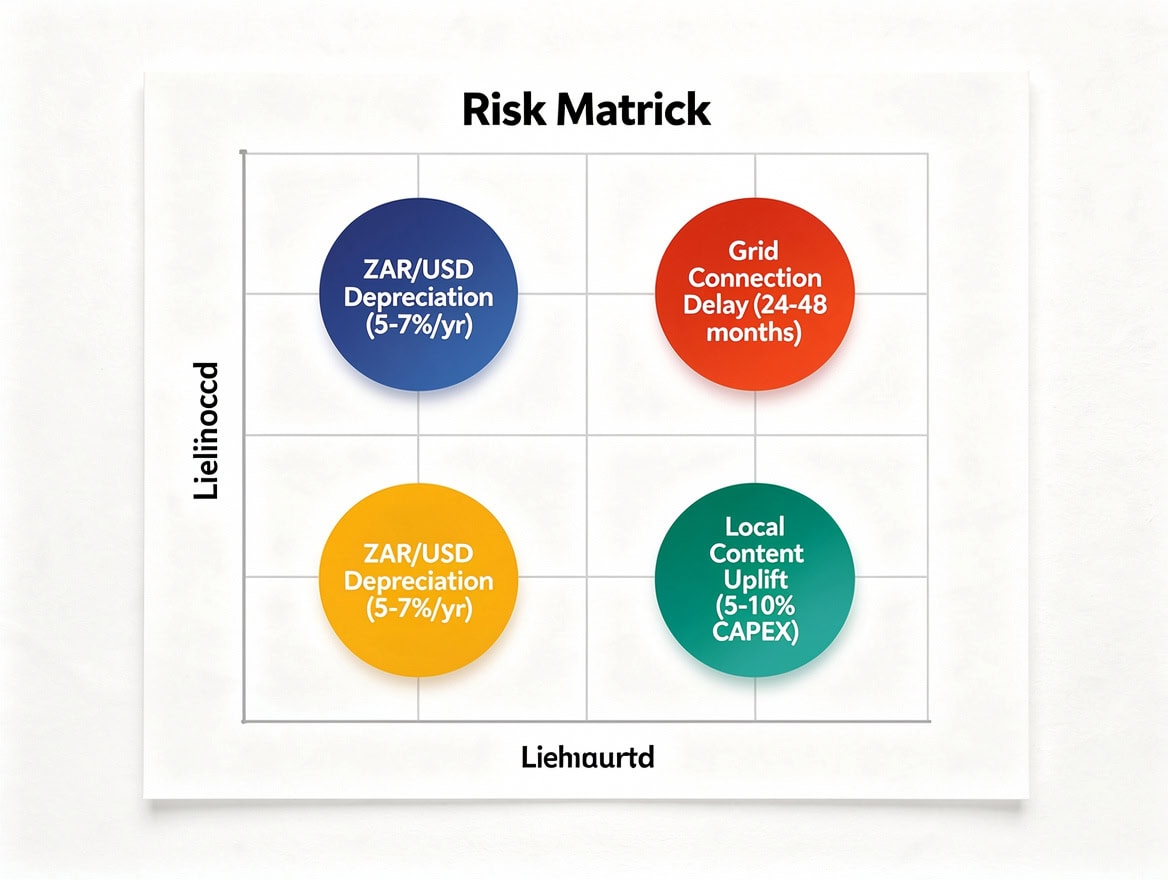
Firms carry $1–10 million in professional indemnity coverage as standard; most individual freelancers carry none.
Vetting Process: How to Evaluate Freelancers vs. Firms
Vetting a freelancer and vetting a firm require different approaches, but both require more rigor than most buyers apply.
Vetting a Freelancer
- Request 2–3 anonymized work samples in the same model category as your project. A DCF model sample tells you nothing about LBO capability.
- Verify credentials independently. CFA Institute’s public directory confirms charter status. CPA license verification is available through state boards.
- Ask for a paid test task: a 2–4 hour mini-model using your actual business data. Budget $200–500 for this step. It is the single most reliable quality signal.
- Check platform ratings and client feedback on Upwork, Toptal, or Expert360. Look for patterns in negative reviews, not just the star rating.
- Confirm availability for your full project timeline before signing. Freelancer capacity is the most common cause of timeline overruns.
Red flags: Reluctance to share work samples, inability to explain model logic verbally, rates that are 50%+ below market (often signals offshore quality mismatch), and no professional references.
Vetting a Firm
- Request case studies in your specific industry and transaction type. A firm’s M&A track record in retail is not evidence of capability in healthcare.
- Confirm who will actually work on your project. Firms often pitch senior partners and deliver junior associates.
- Ask for the firm’s model review protocol in writing: who reviews, at what stage, and what the error escalation process looks like.
- Verify professional indemnity coverage and request a certificate of insurance.
- Negotiate a fixed-fee or capped-fee structure to control scope creep, which is the tendency for project scope to expand beyond the original brief, driving up billable hours.
Red flags: Vague methodology descriptions, inability to name the lead analyst, no fixed-fee option for defined deliverables, and reluctance to provide client references.

A paid test task costing $200–500 is the single most reliable quality signal when vetting a freelance financial modeler.
Industry-Specific Considerations and Use Cases
Provider choice should reflect the norms and risk profile of your industry, not just your budget.
Venture capital and startup fundraising projects favor specialized freelancers because investor expectations for model structure are well-documented and a skilled freelancer who has built 30 seed-stage models knows the format cold. The startup financial models available through EFM give founders a professional framework that reduces the freelancer’s build time and your cost.
Private equity and M&A transactions favor boutique or large firms because the model underpins a transaction where errors carry legal and financial consequences. The firm’s professional indemnity coverage and institutional review process are worth the premium when a $50 million deal is at stake.
Real estate and construction projects often use specialized boutique firms that combine financial modeling with appraisal expertise. Generic freelancers frequently lack the asset-class knowledge to model debt service coverage ratios, cap rate sensitivity, or construction draw schedules correctly.
FP&A and ongoing budgeting support is the category where freelancers on retainer most consistently outperform firms on value. A senior FP&A freelancer at $4,000/month delivers more responsive, relationship-driven support than a firm billing $15,000/month for the same hours spread across multiple junior staff. You can explore financial projections templates to support your FP&A freelancer with pre-built frameworks.
Hybrid and Alternative Engagement Models
Hybrid engagements combine the cost efficiency of freelancers with the quality assurance of firms, and they are underused by most buyers.
The most effective hybrid structure works as follows: a specialized freelancer builds the initial model (saving 40–60% versus a firm build), then a boutique firm or a second senior freelancer conducts a structured model audit. A model audit (a systematic review of formula logic, assumption documentation, and output integrity) typically costs $2,000–8,000 from a boutique firm, compared to $20,000–60,000 for the firm to build the same model from scratch.
A second hybrid model uses a firm for the initial strategic framework and a freelancer for ongoing maintenance and scenario updates. This works well when the model will be used repeatedly over 12–24 months and the firm’s upfront rigor is worth paying for once.
Template-first is a third alternative that many buyers overlook. Starting with a professional-grade financial model template and hiring a freelancer to customize it can cut total project cost by 50–70% versus a build-from-scratch engagement with either a freelancer or a firm. The template handles structural integrity; the freelancer handles customization.
Decision Framework: Choosing Your Optimal Path
Score your project on the five dimensions below. Each dimension scores 1–3 points. A total score of 5–8 points favors a freelancer or hybrid approach; 9–15 points favors a firm.
| Dimension | 1 Point | 2 Points | 3 Points |
|---|---|---|---|
| Budget | Under $5K | $5K–$25K | Over $25K |
| Deadline | 4+ weeks | 2–4 weeks | Under 2 weeks |
| Complexity | 3-statement/DCF | LBO/merger model | Multi-entity/regulatory |
| Risk Tolerance | Low stakes | Moderate stakes | High stakes/transaction |
| Ongoing Need | One-time | Occasional updates | Continuous FP&A |
A startup founder building a seed-round model with a 3-week timeline, a $3,000 budget, and low transaction stakes scores 1+1+1+1+1 = 5 points: a strong freelancer is the right call. A PE firm modeling a $75 million acquisition with a 10-day deadline scores 3+3+3+3+2 = 14 points: a boutique or large firm is justified.
Cost-Benefit Analysis: Real-World Scenarios
Two worked scenarios show when the firm premium pays off and when it does not.
Scenario A: Seed-Stage SaaS Startup, Series A Fundraising Model
A founder needs a three-statement model with SaaS unit economics for a $3 million Series A raise. Here’s the math:
- Freelancer (specialized, Toptal-vetted): $4,500 fixed fee + 2 revision rounds at 6 internal hours each = $4,500 + $1,800 internal cost (at $150/hr CFO time) = $6,300 total
- Boutique firm: $12,000 fixed fee + 1 revision round at 4 internal hours = $12,000 + $600 = $12,600 total
- Cost saving with freelancer: $6,300 (50% reduction)
- Risk: If the model has errors that delay the raise by 2 weeks, the opportunity cost is the 2 weeks of runway burned, not the modeling fee. At a $150,000/month burn rate, 2 weeks costs $75,000. This is why vetting matters more than channel.
Scenario B: Mid-Market M&A, $40 Million Target Acquisition
A corporate development team needs an LBO model and merger accretion/dilution analysis for a $40 million acquisition.
- Freelancer (senior, direct hire): $18,000 fixed fee + 3 revision rounds at 12 internal hours each = $18,000 + $10,800 internal cost (at $300/hr VP Finance time) = $28,800 total. No professional indemnity coverage.
- Boutique firm: $45,000 fixed fee + 1 revision round at 6 internal hours = $45,000 + $1,800 = $46,800 total. Includes $2M professional indemnity coverage and peer review.
- Cost saving with freelancer: $18,000 (38% reduction)
- Risk-adjusted comparison: If a modeling error in the LBO causes the acquirer to overpay by 5% on a $40 million deal, the cost is $2 million. The firm’s $18,000 premium buys institutional review and insurance coverage. The ROI on the firm premium is positive if it prevents even a 0.1% pricing error.
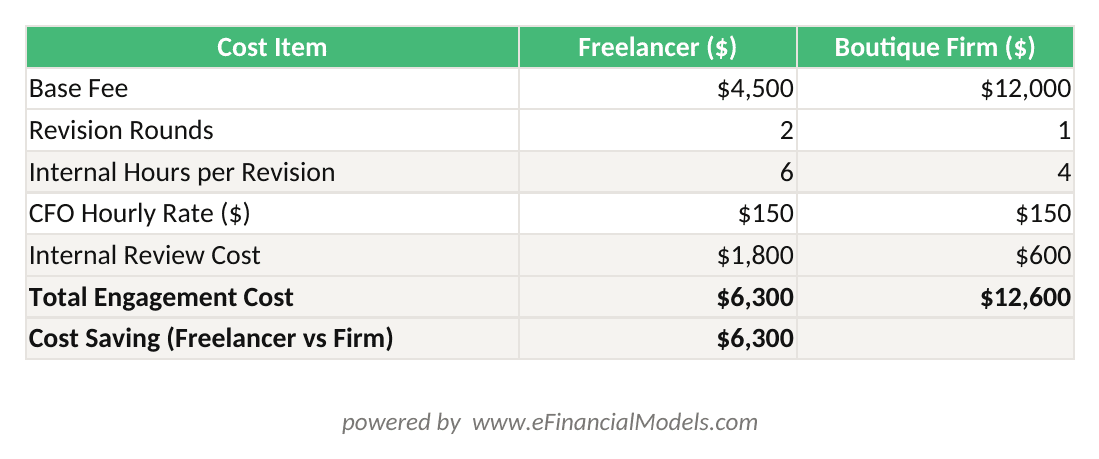
Total cost = Base Fee + (Revision Rounds × Internal Hours × CFO Hourly Rate). Freelancer saves $6,300 on a seed-stage model; firm premium is justified at $40M+ transaction values.
On a $40M acquisition, the firm’s $18,000 premium buys institutional review and insurance that pays back if it prevents even a 0.1% pricing error.
Frequently Asked Questions
How much does a financial modeler cost per hour in 2024?
Freelance financial modelers charge $40–250 per hour depending on experience, geography, and platform. US-based modelers with CFA credentials or investment banking backgrounds typically charge $150–250 per hour on curated platforms like Toptal. Offshore modelers on Upwork charge $40–80 per hour. Boutique advisory firms bill $200–400 per hour for associate-level work, rising to $500–800 per hour for director involvement. Big 4 firms charge $600–1,200 per hour for senior practitioners. The Bureau of Labor Statistics reports the median annual wage for US financial analysts was $99,890 in May 2023, giving useful context for evaluating whether a freelancer’s rate reflects genuine expertise or a race to the bottom.
What is the difference between a three-statement model and an LBO model?
A three-statement model links a company’s income statement, balance sheet, and cash flow statement so that changes in one flow automatically through the others. It is the foundation of most financial analysis. An LBO model (leveraged buyout model) is a more complex structure that layers acquisition debt onto the three-statement foundation, models debt repayment schedules, calculates investor returns (IRR and MOIC, meaning internal rate of return and multiple on invested capital), and stress-tests the deal under multiple scenarios. LBO models require PE-grade methodology and typically take 40–120 hours to build correctly. A freelancer who claims to build LBO models in 10 hours is a red flag worth investigating before you sign.
Is it safe to share confidential financial data with a freelancer?
Sharing confidential data with a freelancer carries real risk, but it is manageable with the right protections. Always execute a non-disclosure agreement (NDA) before sharing any data. Use anonymized or indexed data for test tasks during the vetting phase. Verify the freelancer’s identity through the platform or directly. Firms carry additional protections through their institutional compliance frameworks, data security policies, and the reputational consequences of a breach. For highly sensitive transactions (M&A, fundraising), consider sharing only the structural assumptions with a freelancer and keeping revenue and customer data internal until the NDA is signed and the freelancer is confirmed.
How do I know if a freelancer’s financial model is accurate?
Accuracy verification requires a structured model audit. At minimum, check that all three statements balance (assets equal liabilities plus equity), that cash flow from operations reconciles to net income after working capital adjustments, and that no circular references exist without intentional iteration settings enabled. Ask the freelancer to provide a model documentation sheet explaining every key assumption and its source. For high-stakes projects, commission a second-opinion review from a different modeler or a boutique firm. A model audit costs $2,000–8,000 and is the most cost-effective quality assurance step for freelancer-built models used in transactions or fundraising.
When should I use a financial modeling template instead of hiring anyone?
A professional-grade template is the right starting point when your model type is standard (three-statement, DCF, SaaS unit economics), your timeline is tight, and your budget is under $3,000. Templates from reputable sources provide pre-built formula logic, error-checked structures, and professional formatting that would take a freelancer 20–40 hours to replicate from scratch. You then hire a freelancer for 5–15 hours of customization rather than 40–80 hours of build time, cutting total cost by 50–70%. The free financial model templates available through EFM cover the most common use cases and give you a firm-quality starting point at zero cost.
Do financial modeling firms guarantee their work?
Most boutique and large firms offer revision rounds within the agreed scope but do not guarantee specific business outcomes. What firms do provide that freelancers typically cannot is professional indemnity insurance, which covers financial losses caused by errors in their professional work. This coverage typically ranges from $1 million to $10 million per claim for boutique firms. If a firm’s model error causes you to make a provably bad investment decision, you have a legal avenue for recovery. With a freelancer who carries no insurance, your recovery options are limited to contract damages, which are difficult and expensive to pursue for modeling errors.
What is the best platform to find a qualified financial modeler?
The best platform depends on your quality requirements and budget. Toptal and Expert360 vet the top 3–5% of applicants through skills tests and portfolio reviews, making them the closest freelancer equivalent to a boutique firm for standard deliverables. Upwork offers the widest range of rates and experience levels but requires more rigorous client-side vetting. Direct referrals from your network or from investment banks and PE firms you work with produce the highest-quality hires but take longer to source. For ongoing FP&A support, a direct relationship with a vetted freelancer on a monthly retainer consistently outperforms platform-mediated engagements on responsiveness and institutional knowledge retention.
Conclusion
The freelancer-versus-firm decision is not a cost question. It is a risk-adjusted sourcing decision that depends on your project’s complexity, the stakes attached to the output, your internal capacity to manage and review the work, and whether you need a one-time deliverable or an ongoing relationship. Freelancers win on cost and specialization for standard deliverables with moderate stakes. Firms win on accountability, bench depth, and insurance coverage for high-stakes transactions. Hybrid models and template-first approaches close the gap for most mid-complexity projects.
I recommend starting with EFM’s library of professional financial model templates before engaging any external provider. A pre-built, error-checked template cuts your freelancer’s build time in half, gives you a quality benchmark to evaluate their work against, and ensures you retain full control of the model after the engagement ends. It is the most cost-effective first step regardless of which provider path you ultimately choose.