
0 ITEMS

Financial Analysis
Financial analysis involves evaluating a company's financial data to understand its performance and make future projections. It's essential for investment decisions, budgeting, and strategic planning. Our financial model templates offer robust tools for comprehensive financial analysis, allowing you to derive actionable insights.


Excel model for starting an incorporated small business in Canada:…

Excel model for building a laneway house, garden suite, coach…

Annual Excel model for a used lubricating oil re-refinery. Compare…

Excel model for an Airbnb rental arbitrage business: lease apartments…

Monthly 10-year Excel model of a Canadian mortgage investment corporation,…

Monthly Excel model of the BRRRR strategy in Canada: buy…

Monthly Excel model of an invoice factoring company. Six client…

Annual Excel model for a mixed-plastic pyrolysis (chemical recycling) plant:…
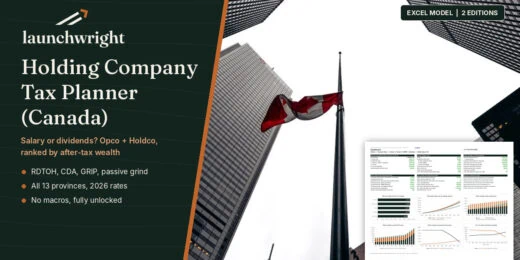
Excel tax planner for Canadian owner-managers with an operating company…

Annual Excel model for a construction and demolition (C&D) waste…

Monthly 5-year Excel model for a self-publishing imprint on Amazon…
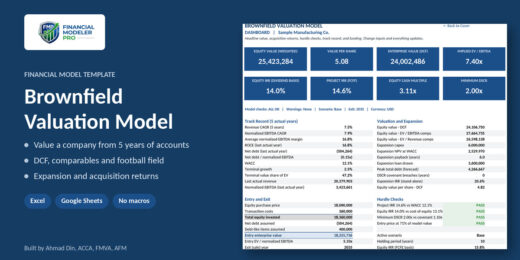

Value an operating manufacturing company from its real accounts. Enter…
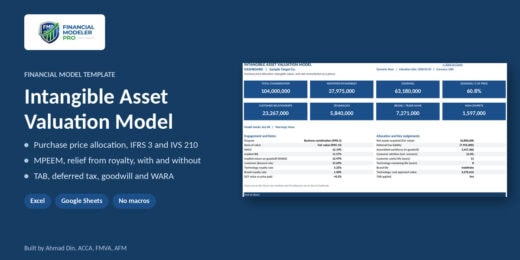
A complete purchase price allocation in one workbook. The model…
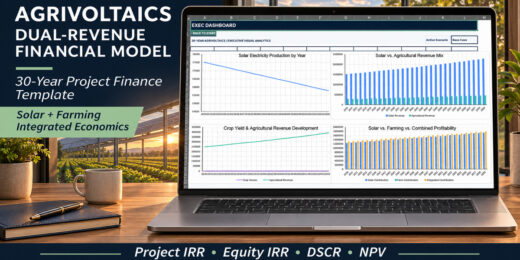

Evaluate dual-revenue agrivoltaics economics with a 30-year Excel model integrating…
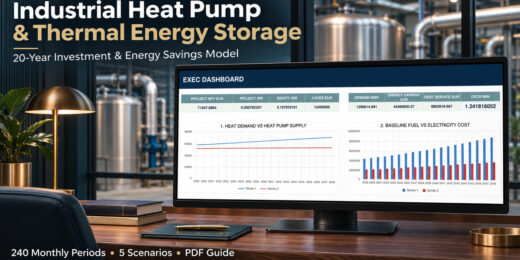
Evaluate industrial heat electrification with a 240-month Excel model linking…
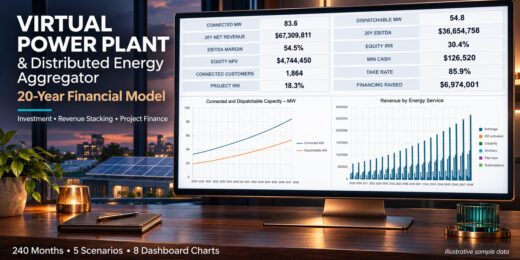
Evaluate a distributed energy aggregator with a 240-month Excel financial…
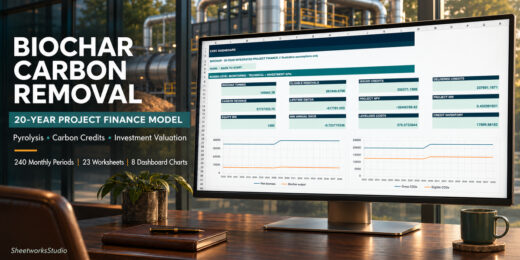
Evaluate biochar pyrolysis and carbon removal economics with a 240-month…

Plan 17 franchise locations over 10 years with store-level P&Ls,…
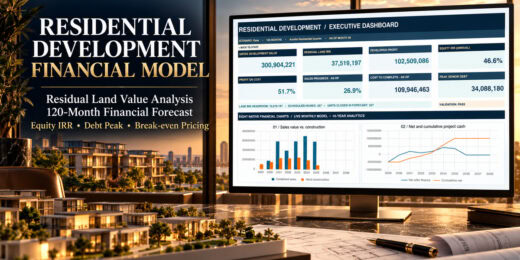
Evaluate residential development feasibility with a 120-month Excel model covering…

Insurance Company Financial Model Excel | 60-Month 3-Statement Forecast, Claims Reserves & Liquidity
Plan five years of non-life insurance operations in one editable…

Plan a single film's production budget, financing, release windows and…
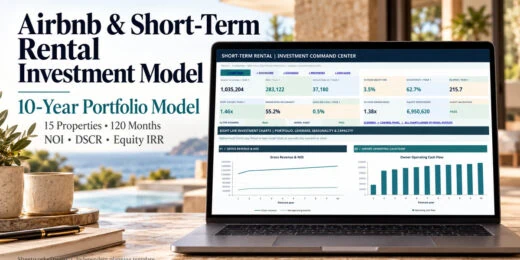
A 10-year short-term rental investment Excel model covering 15 properties,…
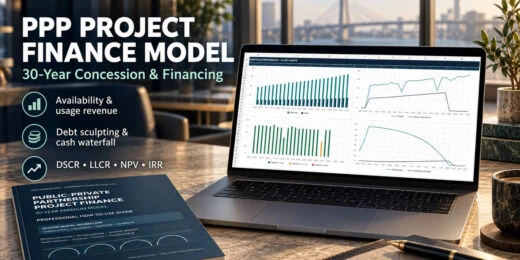
A 30-year availability-based PPP infrastructure Excel model connecting 15 construction…
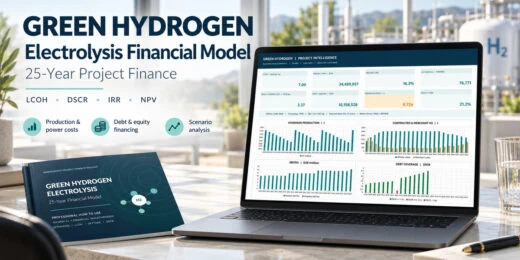
Model 25 years of green hydrogen production, electricity procurement, 15…
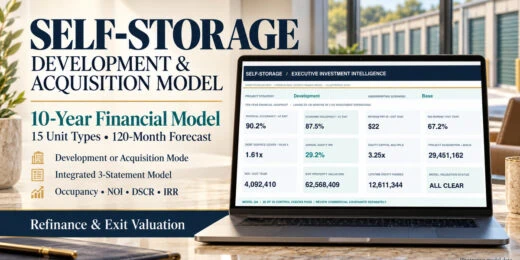
An editable 10-year self-storage financial model integrating Development and Acquisition…
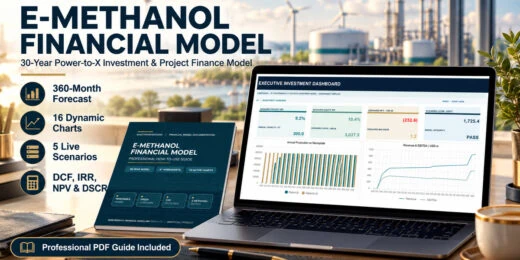
Analyze renewable-power-to-methanol project economics with a 360-month Excel financial model,…

An integrated 60-month Excel financial model for balance-sheet lending businesses…

A premium 25-year onshore wind project finance Excel model with…
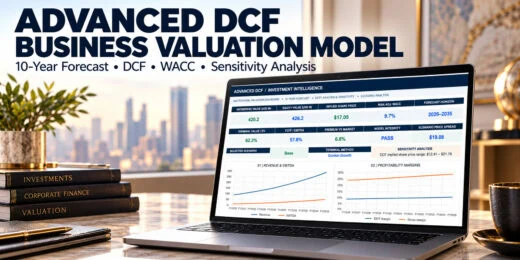
An integrated 10-year Excel DCF valuation model with three years…

A premium 60-month restaurant group financial model with 30 prepared…

E-Commerce & DTC Financial Model Excel – 60-Month Forecast, Inventory, Cash Flow, 3 Statements & DCF
A premium, editable 60-month e-commerce and DTC financial model connecting…
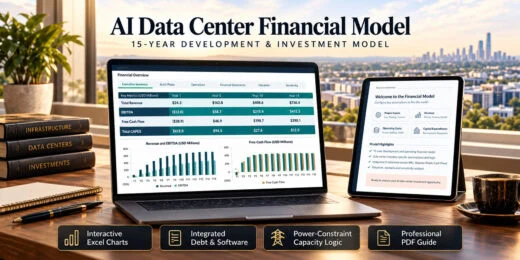
15-year AI data center project finance model with power-constrained IT…

30-year monthly Solar PV project finance model in Excel with…
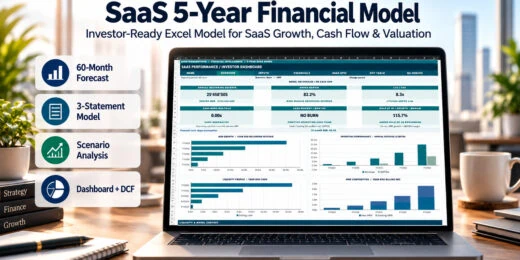
A comprehensive 5-year SaaS financial model with 60 monthly forecasts,…


An institutional-grade 10-year Excel financial model template for AI GPU-as-a-Service…
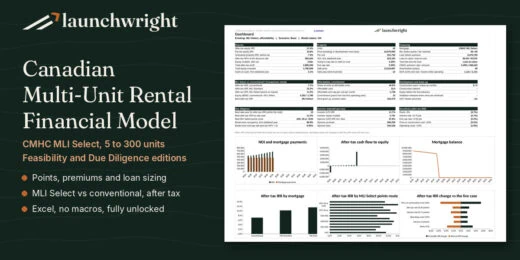
Excel model for a 5 to 300 unit Canadian rental…

Excel model for a 1 to 4 unit rental property…
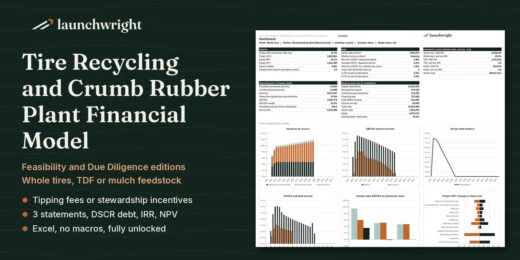
Annual Excel model for a tire recycling and crumb rubber…

Annual Excel model for a tire pyrolysis plant: tipping fees,…

Evaluate boutique hotel and resort economics with an editable 120-month…
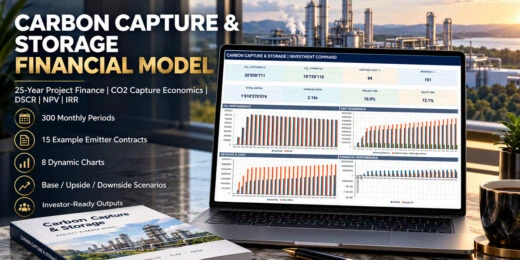
Evaluate carbon capture and geological storage project economics with a…

A 180-month residential and mixed-use development financial model combining unit…

A premium 10-year Excel portfolio investment model for up to…
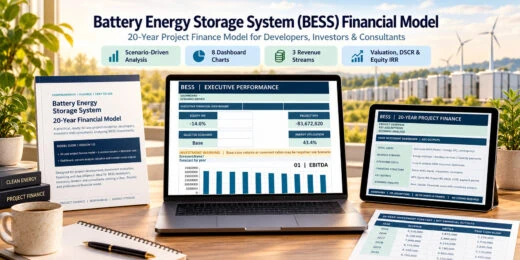
Standalone BESS Excel project finance model with 240 monthly forecasts,…

Private Equity Fund Financial Model Excel – 12-Year LP/GP Cash Flows, European & American Waterfalls
12-year private equity fund model with 48 quarterly periods, European…

20-year Excel biotech valuation model for 15 drug candidates with…
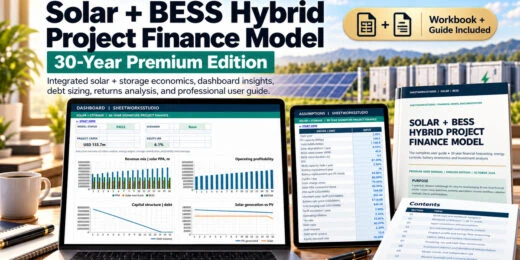
30-year Solar PV + BESS Excel project finance model with…

10-year commercial property underwriting model with 500-row rent roll, lease…

An integrated startup fundraising and capitalization model covering five financing…
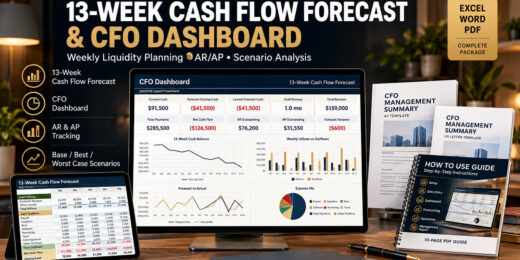
Professional 13-week cash flow forecasting and CFO management system for…
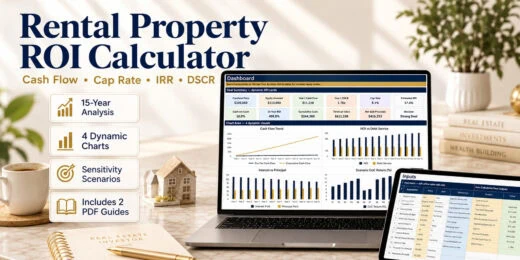
Analyze rental investments with a 15-year Excel cash flow model,…


Cash Flow Analyzer Pro is a rental property analysis tool…


Running a consulting firm is not only a revenue-growth problem.…

🚚☕ Build a five-year operating and financial plan for a…
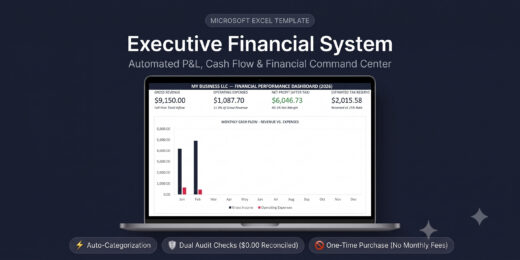

A commercial-grade P&L and expense management system built natively for…

🚀 Evaluate a launch-services and satellite-constellation business with an integrated…

🧠 Evaluate a psychedelic-therapeutics company with an integrated 32-sheet, 12-year…

Evaluate a vertical farm from canopy design to enterprise value…

Build and evaluate the full economics of an Insurance MGA…
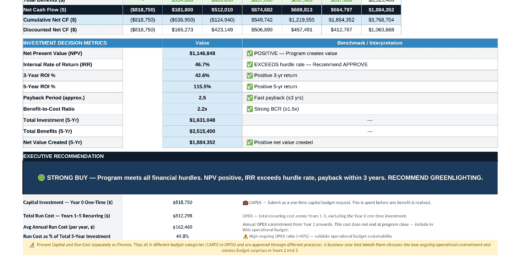

Ten-tab Excel model that appraises an AI investment using the…
Crafting a Robust Financial Plan for Financial Analysis Success

In today's dynamic and ever-evolving business environment, financial analysis plays a crucial role in guiding the strategic direction of companies. The financial analysis industry, while rich in opportunities, is also fraught with complexities ranging from volatile market dynamics to varying regulatory landscapes. Within this intricate ecosystem, crafting a robust financial plan stands as a fundamental element for achieving success. A well-structured financial plan not only serves as a roadmap for financial analysts but also lays the foundation for informed decision-making and risk management. To ensure the efficacy of financial planning, tools like financial modeling templates and the ubiquitous Microsoft Excel become indispensable. These resources enhance the accuracy, efficiency, and effectiveness of financial planning processes and provide analysts with the flexibility to adapt to industry-specific demands.
Identifying and Utilizing Key Performance Indicators for Strategic Financial Decisions
Key Performance Indicators (KPIs) are valuable metrics that offer insights into an organization's financial health and operational efficiency. In the realm of financial analysis, KPIs serve as navigational aids, guiding strategic decision-making and helping businesses align their activities with overarching goals. By keeping track of performance metrics, companies can easily pinpoint areas needing improvement and capitalize on growth opportunities. Industry-specific KPIs are particularly critical as they vary across sectors; choosing the right KPIs can distinguish successful financial plans from ineffective ones. Notable metrics include Return on Investment (ROI), which evaluates the profitability of investments, and Economic Value Added (EVA), a measure of a company's economic profit. Additionally, understanding the Cost of Capital helps in assessing the cost of financing investments, while various financial ratios—such as liquidity, profitability, and solvency ratios—offer insights into specific areas of financial performance. In industries like retail or SaaS, metrics like Customer Acquisition Cost (CAC) and Customer Lifetime Value (CLTV) provide crucial data on the economic efficiency of marketing strategies.
Fundamental Components for Developing a Comprehensive Financial Plan
A comprehensive financial plan is built on several critical components tailored to meet the specific needs of financial analysis. Accurate revenue projections are essential for understanding potential income streams and modeling market trends, thus enabling effective resource allocation. Cost management, another crucial element, involves distinguishing between fixed and variable costs to comprehend their respective impacts on the financial landscape. Fixed costs remain constant regardless of business activity levels, while variable costs fluctuate based on operational dynamics. Planning for capital expenditures is vital as well, ensuring that future investments are strategically prioritized. Another indispensable building block is working capital management. Effective strategies to optimize cash flow enable a business to meet its short-term obligations, maintain operational efficiency, and unlock growth potential. By attending to these key aspects, financial analysts can construct a solid financial plan that drives business success.
Integrating Sensitivity and Scenario Analysis for Proactive Financial Planning
Sensitivity and scenario analysis are essential tools in a financial analyst's toolkit. Sensitivity analysis examines how changes in one variable can influence the overall outcomes of a financial model, such as assessing the impact of fluctuating interest rates on loan payments. This type of analysis reveals potential vulnerabilities and helps in stress-testing financial plans under varying conditions. Scenario analysis, on the other hand, involves modeling different hypothetical situations—best-case, worst-case, and most likely scenarios—to evaluate how each could impact the organization. This approach aids in comprehensively understanding potential risks and opportunities, thereby fortifying financial plans against uncertainty. By integrating sensitivity and scenario analysis, financial analysts can develop a robust financial planning strategy that anticipates fluctuations and allows for informed, proactive decision-making.
Enhancing Financial Planning Efficiency with Excel Templates
The utility of MS Excel in financial planning is unparalleled, and incorporating well-designed templates can significantly enhance the financial planning process. Excel templates offer several advantages, notably standardization, which ensures consistency across different financial models and simplifies maintenance. These templates allow for seamless visual representation through charts and graphs, providing clearer insights into financial data. Additionally, the flexibility of Excel templates cannot be overstated—they can be customized to reflect the specific requirements of any financial analysis, making them highly adaptable tools. Efficiency is another key benefit, as pre-built templates save time and reduce the potential for human error in calculations. For these reasons, financial analysts often turn to resources like eFinancialModels, which offer a range of specialized Excel templates tailored for various financial analysis needs, streamlining the creation of effective and robust financial plans.
Conclusion: Achieving Financial Analysis Excellence through Strategic Planning
In conclusion, a well-crafted financial plan is paramount to successful financial analysis. It serves as the backbone of strategic decision-making, risk management, and operational efficiency. By employing tools such as MS Excel spreadsheet templates, financial analysts can augment their planning with improved accuracy and efficiency. With the added benefits of standardization, visual representation, flexibility, and efficiency, these templates prove invaluable in navigating the complexities of financial analysis. As you embark on your journey towards refining your financial planning strategy, consider exploring the wide array of Excel templates available at eFinancialModels. These tools are designed to streamline your planning processes, enabling you to achieve optimal analysis results and position your organization for sustained success.
Frequently Asked Questions (FAQ)
- What is the role of KPIs in financial planning? KPIs are crucial in financial planning as they provide metrics that measure an organization's financial health and operational efficiency. They guide strategic decisions to align business activities with goals and identify areas for improvement.
- Why is sensitivity analysis important in financial planning? Sensitivity analysis is vital because it reveals how changes in certain variables impact financial outcomes, helping to identify potential vulnerabilities and test the robustness of financial plans under various conditions.
- How do Excel templates enhance financial planning? Excel templates enhance financial planning by offering standardization, efficiency, and flexibility. They reduce errors in calculations, expedite planning processes, and can be customized to meet specific financial analysis needs.
- What are the key components of a solid financial plan? A solid financial plan includes accurate revenue projections, cost management, capital expenditure planning, and working capital management to ensure effective resource allocation and operational efficiency.
- How can scenario analysis aid in financial planning? Scenario analysis aids in financial planning by evaluating potential risks and opportunities through modeling different hypothetical situations, allowing organizations to prepare for various future scenarios.
You might also like: