
0 ITEMS

Stress Test
In financial modeling, sponsors may refer to entities that provide financial support for specific projects or initiatives. Our financial model templates include tools to manage and analyze sponsor relationships and contributions, aiding in fundraising and project financing.

The 13-week cash flow is the standard instrument of a…


An institutional, lender grade Excel model for a temperature controlled…

An institutional, lender grade Excel model for a concrete block…

An institutional, lender grade Excel model for a seawater reverse…

An institutional, lender grade Excel model for an urban bus…


A decision-ready U.S. clean-energy tax-credit model for evaluating post-OBBBA §48E…

Build, compare and stress-test five major Sukuk structures in one…

A professional Excel financial model for residential building development projects…

🏦 Leveraged Buyout Financial Model Bundle — Lite + Pro…

🚀 A professional Private Equity Buy-and-Build Roll-Up M&A Financial Model…

A complete, editable Veterinary Clinic Financial Model Pro built for…

A professional Excel-based IFRS 9 Expected Credit Loss model designed…


Professional AML/KYC Customer Risk Scoring & Onboarding. Onboarding Engine built…


A genuinely complete private equity fund model — and one…

A professional Solar + Battery Energy Storage System (BESS) financial…

A professional Excel financial model suite for airport projects and…

A professional 8-12 MTPA Liquefied Natural Gas (LNG) Financial and…
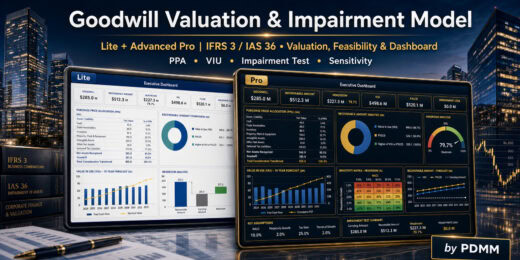
Professional Goodwill Valuation & Impairment Model bundle by PDMM, built…
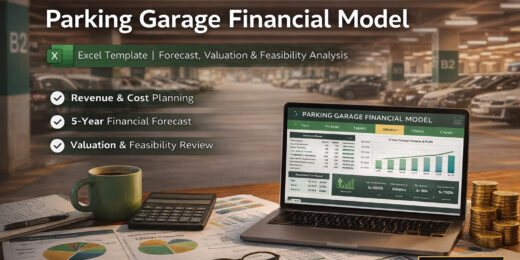
A professional Excel financial model suite for parking garage assets,…

A professional Excel financial model suite for solar energy projects,…


5-year 3-statement business survival model using Monte Carlo simulation to…

A professional Excel financial model suite for commercial banks and…

A professional Excel financial model suite for neo bank and…



A dynamic, ready-to-use Excel template for Hotel Development and Rental…

This is an IC-ready Excel model for structuring and underwriting…

IFRS 9 ECL Excel Model — a turnkey, audit-ready impairment…


The Contingent Consideration Valuation Template (Monte-Carlo) is your go-to tool…



Design your ideal SaaS customer with all relevant terms configurable,…


A fundamental and professional budget / business plan
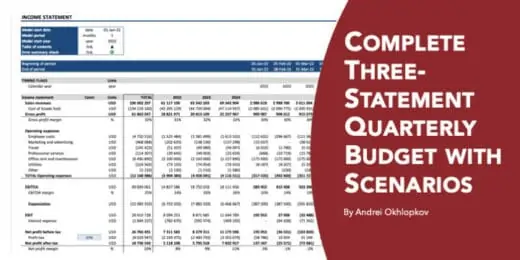
A fundamental and professional budget / business plan


An Excel utility to draw indifference curves for two inputs…


6 different Financial Model Tests with one coming with a…

A self-made Modeling Test with a solution for Onshore Wind…


Our full-fledged financial model in excel format has the functionality…


Automated Financial Ratios, Liquidity Ratios, Leverage Ratios, Efficiency Ratios, Profitability…


Abacus is a bankable, easy-to-use, debt-sculpting financial model for use…



Excel has a powerful set of tools to perform statistical…

This is downloadable for FREE! Traditional sensitivity analysis involves testing…
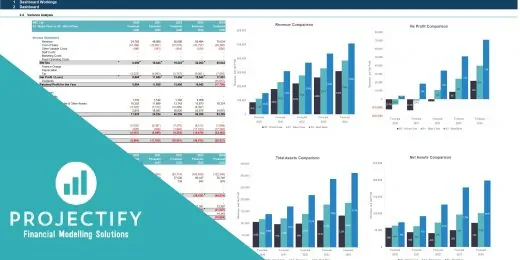
Rolling 3 statement excel projection model across 5 year period…
A 5-year startup financial model template geared toward the revenue…


A simple and straight forward way to forecast growth and…
Financial Planning Essentials for the Stress Test Use Case

In today's dynamic economic environment, stress testing has become an indispensable tool for financial institutions to navigate potential risks and maintain resilience in the face of uncertainty. Stress testing in financial planning refers to a rigorous evaluation method used to assess how specific stressors, particularly economic shocks, could impact a firm's financial position. As a pivotal component of risk management, stress testing allows financial institutions to prepare for, withstand, and recover from potential threats by identifying vulnerabilities within their financial models. This proactive approach not only helps in fortifying a firm's defense mechanisms but also aids in strategic decision-making by providing a comprehensive analysis of areas needing improvement.
Financial institutions are bound by regulatory frameworks that mandate regular stress testing to ensure systemic stability. These regulations are set forth by major regulatory bodies like the Federal Reserve in the U.S. and the European Central Bank. Such regulations often include guidelines like the Comprehensive Capital Analysis and Review (CCAR) and the Dodd-Frank Act Stress Tests (DFAST) in the U.S., which require banks to submit planned capital actions with the intent of maintaining adequate capital during periods of economic stress. Compliance with these rigorous standards underscores the critical role of stress testing in the broader financial regulatory landscape.
Understanding the Stress Test Framework
Stress testing is more than just a regulatory obligation; it is a strategic tool that promotes financial stability. By simulating economic crises, financial institutions can evaluate their ability to endure downturns without significant financial disintegration. The key objectives of stress testing include ensuring financial stability during economic shocks, identifying vulnerabilities within financial models, and enhancing decision-making processes through a forward-looking approach. By identifying potential threats, financial institutions can adjust their strategies and capital buffers to minimize risk exposure and increase resilience.
The understanding and implementation of stress testing involve careful consideration of various stress scenarios and economic conditions. By preparing for baseline, adverse, and severely adverse scenarios, institutions can better appreciate the depth of their vulnerabilities. This preparation allows them to develop actionable insights for maintaining capital adequacy and liquidity, ensuring they remain robust against a spectrum of potential adversities.
Key Performance Indicators for Stress Testing
To effectively evaluate stress testing, financial institutions focus on several key performance indicators:
- Capital Adequacy Ratios: These ratios, such as the Common Equity Tier 1 (CET1) and Total Capital Ratio, assess a bank's capital in relation to its risk-weighted assets, determining its ability to withstand financial losses during stress scenarios. Higher ratios indicate better capital sufficiency, safeguarding the institution during adverse economic conditions.
- Liquidity Coverage Ratio (LCR): The LCR is a critical measure of an entity's short-term liquidity position. It gauges the institution's capacity to meet its short-term obligations using liquid assets without requiring external financial support during stress periods. Maintaining a strong LCR reflects an institution’s preparedness to honor immediate financial commitments, thereby reducing the likelihood of insolvency during market turmoil.
- Scenario Analysis Metrics: Stress testing hinges on constructing a range of scenario analyses, with parameters like baseline, adverse, and severely adverse scenarios. Effective stress tests measure impacts on revenue, costs, and reserves under different conditions, pinpointing areas where financial performance could falter.
- Provisions for Credit Losses: Forecasting potential credit losses during downturns is a fundamental aspect of stress testing. Institutions must model provisions based on economic scenarios to anticipate potential default rates and credit quality deterioration. Robust provisioning helps institutions cushion the impact of loan losses, thus preserving capital in a downturn.
Incorporating Financial Projections in Stress Testing
Incorporating financial projections is essential for effective stress testing. Organizations can utilize various methods to fortify their approach:
- Dynamic Financial Modeling: To conduct effective stress testing, financial models must be dynamic and adaptable. They should incorporate changing variables and capture the complexities of market movements. This requires selecting appropriate assumptions for forecasting, which might involve factors like macroeconomic conditions, interest rate fluctuations, and regulatory changes. Dynamic models provide a nuanced approach to managing financial risks and reinforcing strategic decision-making.
- Sensitivity Analysis: Understanding the impact of varying conditions requires sensitivity analysis. This technique evaluates how changes in key variables, such as unemployment rates or loan default rates, impact financial performance. By identifying which variables impose the greatest threats, institutions can better prepare for potential fluctuations and optimize their risk management strategies.
- Integration with Business Strategy: Effective stress testing aligns financial projections with corporate strategy and risk appetite. The outcomes of stress tests should feed back into strategic decisions, enabling firms to adapt their strategies based on anticipated risks and opportunities. This integration ensures that financial plans support overarching business objectives while mitigating identified risks.
Benefits of Using Excel Spreadsheet Templates for Stress Testing
Excel spreadsheet templates available on platforms like eFinancialModels.com are invaluable tools for stress testing due to their unparalleled flexibility and customization features. Excel allows users to tailor models to meet specific stress test requirements, providing the ability to adjust assumptions and scenarios with ease. This adaptability ensures that stress testing remains relevant and reflective of current market conditions.
Moreover, Excel's powerful data visualization capabilities make it an ideal choice for generating comprehensive reports. These tools aid in presenting complex data in a way that is accessible to stakeholders, facilitating informed decision-making. Visual representation of stress test results can drive clarity and provide actionable insights into areas needing attention.
When considering cost efficiency, Excel templates offer a compelling alternative to high-cost proprietary software. They save time in model building, enabling institutions to deploy resources more effectively while ensuring compliance and accuracy in stress testing processes. Real-world case studies illustrate how financial institutions have successfully utilized Excel templates to streamline stress testing, demonstrating their practical value and effectiveness in real-life scenarios.
Conclusion: Enhancing Stress Testing with eFinancialModels
In conclusion, stress testing remains a cornerstone of financial risk management, enabling institutions to understand, measure, and project risks with precision. By focusing on key performance indicators and leveraging financial projections, financial institutions can fortify themselves against economic shocks while aligning strategies to mitigate risks. Excel spreadsheet templates offer a versatile, cost-effective means to enhance stress testing processes, providing flexibility, visualization, and reporting capabilities tailored to individual needs.
We encourage you to explore the comprehensive templates available on eFinancialModels.com, specifically designed to optimize your stress testing endeavors. These templates enhance accuracy, efficiency, and compliance in your financial planning processes, empowering you to anticipate and address challenges with confidence. Engage with eFinancialModels to streamline your stress testing process, ensuring your institution remains robust and resilient in an ever-evolving financial landscape.
Frequently Asked Questions on Stress Testing for Financial Planning
- What is the primary purpose of stress testing in financial institutions? Stress testing is used to simulate economic shocks to evaluate a financial institution's ability to endure downturns and identify vulnerabilities within their financial models.
- Which regulatory bodies mandate stress testing? In the U.S., bodies like the Federal Reserve require stress testing, with guidelines such as the Comprehensive Capital Analysis and Review (CCAR) and the Dodd-Frank Act Stress Tests (DFAST).
- What are the key performance indicators in stress testing? Key indicators include Capital Adequacy Ratios, Liquidity Coverage Ratio, Scenario Analysis Metrics, and Provisions for Credit Losses.
- How does stress testing benefit strategic decision-making? Stress testing provides insights into financial vulnerabilities and helps in adjusting strategies to minimize risk exposure and enhance financial stability.
- Why use Excel templates for stress testing? Excel templates are favored for their customization, flexibility, cost efficiency, and powerful data visualization capabilities to support stress testing processes.