
0 ITEMS

Income Statement
The income statement, also known as the profit and loss statement, shows a company's revenues, expenses, and profits over a specific period. It's essential for understanding a company's profitability. We offer financial model templates that simplify the creation and analysis of income statements, providing insights into your business's financial performance.
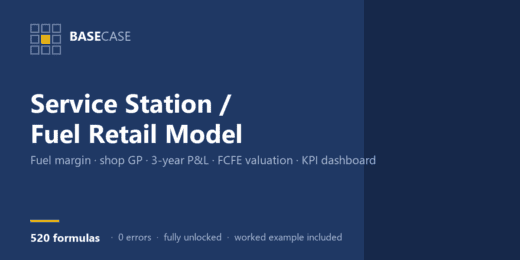

Model a service station the way the industry thinks about…


Bankable Financial Model for Utility-Scale Solar PV Project Finance This…


AI Data Center Power Procurement & Behind-the-Meter Generation Model ⚡…

⚡ Model the grid-connection decision before delay, network upgrades, deposits,…
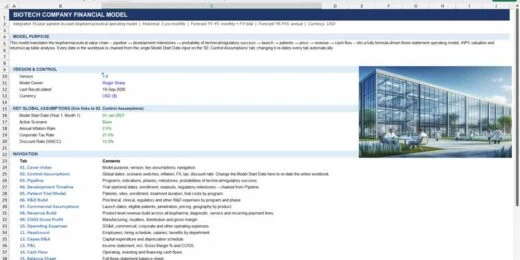

Model the entire drug development lifecycle, from preclinical research through…
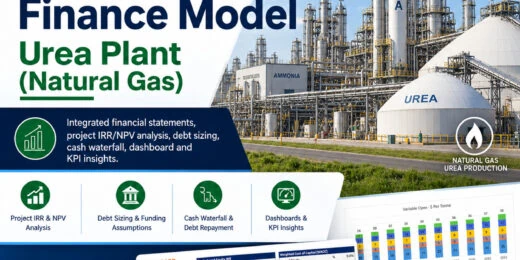

A detailed, institutional-grade urea plant financial model for a natural…

Build accurate, bank-ready financial projections for your Midstream Oil Refinery.…

Excel system for agencies and consultants: client profitability, team utilization,…
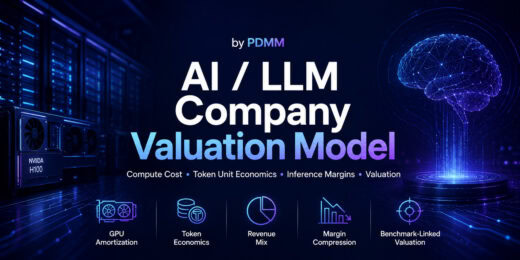
🔥 Premium AI / LLM Company Valuation Financial Model A…

This comprehensive workbook models the intricate flow of funds unique…

Small Hydropower Bankable Financial Model — Summary This is a…

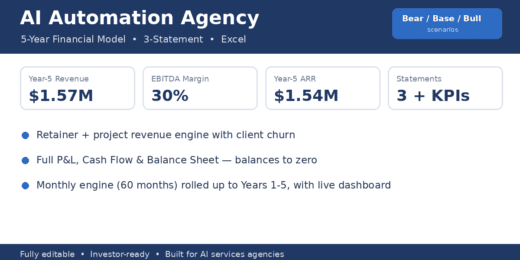

A 5-year, fully editable Excel model built specifically for AI…
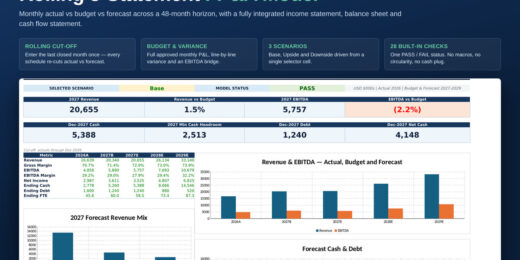

Integrated Base, Upside and Downside scenario framework with a selected-scenario…


Plan and forecast your film production business with a ready…
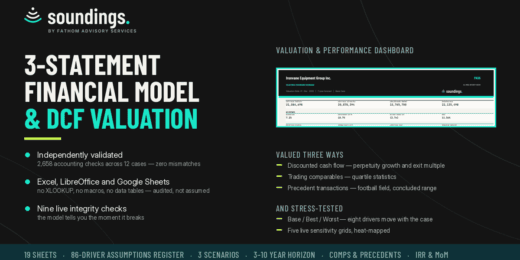

An integrated three-statement operating model valued three ways: discounted cash…


Whether you're launching a startup, planning business expansion, preparing for…

Premium Private School & University Financial Model designed for integrated…

Premium 30-year Oil & Gas Upstream and Downstream Financial Model…

Premium TCFD / ISSB Physical Climate Risk Financial Model designed…

🔥 Premium Tokenomics & Web3 Token Launch Financial Model A…

Premium Green Hydrogen Production Levelized Cost of Hydrogen model for…

🚀 Premium eVTOL / Urban Air Mobility Financial Model A…

🚘 Premium Autonomous Vehicle / Robotaxi Fleet Operations Financial Model…

Evaluate a Buy Now Pay Later platform from transaction growth…

A specialized Excel valuation model for longevity and anti-aging biotechnology…

Download our fully automated 2026 Semiconductor fab Excel model. Includes…

Build, compare and stress-test five major Sukuk structures in one…


This financial model provides a complete investment framework for a…


Restaurant Menu Engineering & Financial Optimizer is a professional Excel…

Build accurate, bank-ready financial projections for your Mining Company. Download…


Versatile 3-Statement financial model to project and analyse fundraising strategies,…

The Data Center Development Financial Model by PDMM is a…

🏦 Leveraged Buyout Financial Model Bundle — Lite + Pro…

This Excel model is built for a hybrid P2P +…

A complete, editable Veterinary Clinic Financial Model Pro built for…

Plan, forecast and value a full-service events company with this…

Very comprehensive 20 Year 169-tab Excel template for a Battery…
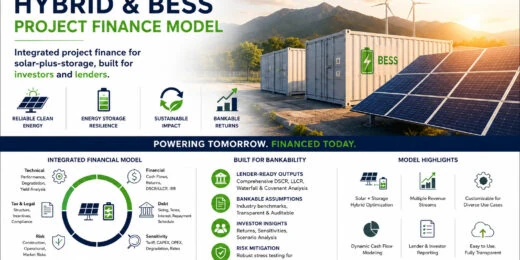
Fin-Wiser’s Solar Off-Grid Hybrid & BESS Financial Model helps users…

🚀 Premium Creator Economy Multi-Platform Revenue Financial Model, A professional…

Poultry Farm Financial Model – 10-Year Forecast, Valuation, Feasibility &…

🚀 AI GPU-as-a-Service / AI Compute Data Center Financial Model…


The main objective of this model is to develop a…

A premium Excel financial model bundle created by PDMM for…

Plan, finance, and optimize an EV fleet depot charging project…

A professional PFAS Water Treatment & Remediation Financial Model created…

Direct Air Capture Financial Model – Carbon Removal Credits, MRV, Offtake, Storage & Project Finance
A professional Direct Air Capture financial model built for durable…

A professional Excel financial model for planning, forecasting, valuing, and…

A professional Excel financial model for commercial airline planning, aircraft…

A professional Solar + Battery Energy Storage System (BESS) financial…

A professional 5-year integrated financial statements Excel model designed for…

The Manufacturing Startup Feasibility Financial Model by PDMM is a…

This professional Excel template helps users evaluate a microfinance, digital…

A professional biotech and pharma startup financial model package built…

A ready-to-use Equipment Rental Marketplace Financial Model Template delivering dynamic…

A professional 8-12 MTPA Liquefied Natural Gas (LNG) Financial and…

A professional Excel financial model suite for M&A merger analysis,…


Professional Excel budget planner developed for small businesses. Includes 5…


Build a tailored financial model and estimate your company value.
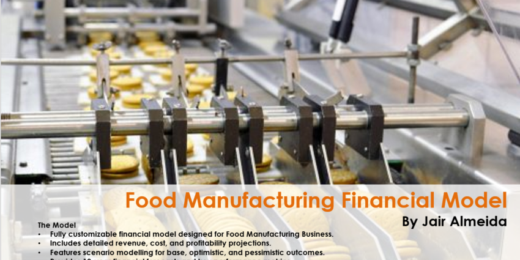

Model your food manufacturing business with confidence. This 20-sheet Excel…
Crafting Your Income Statement for Smart Financial Planning

Navigating the complexities of financial planning involves more than just understanding numbers—it's about painting a picture of your business's economic health and operational efficiencies. Central to this financial narrative is crafting an income statement, a cornerstone document that reveals the lifeblood of your company's financial performance. While a well-designed income statement guides strategic decisions, fostering a seamless connection with your business goals elevates financial planning into a strategic tool. This article explores the intricacies of building an effective income statement, the nuances of industry-specific performance indicators, and the technological advantages of using Excel templates to enhance financial clarity and precision.
Understanding the Importance of an Income Statement in Financial Planning
An income statement, often referred to as a profit and loss statement, is a financial document that encapsulates a company’s revenues, costs, and expenses over a specific period, ultimately reflecting its operational performance. It acts as a financial report card that tracks the company's ability to generate profit by increasing revenue, reducing costs, or both. This snapshot of financial health allows stakeholders to understand where the business stands in terms of profitability, efficiency, and potential areas for improvement.
In the realm of financial planning, an income statement is not merely a reflection of past performance, but a critical instrument for future strategy. Aligning the income statement with broader financial goals—such as budgeting, forecasting, and strategic planning—ensures that decision-making is informed by a holistic view of the company's financial operations. It involves the meticulous integration of financial data with strategic objectives, allowing companies to visualize trends, allocate resources effectively, and pave the way for sustainable growth. Thus, understanding and deftly managing the income statement is a pivotal step in crafting a robust financial planning process.
Key Industry-Specific Performance Indicators
When analyzing an income statement, certain performance indicators stand out due to their relevance across different industries. These metrics not only help assess a company’s financial health but also offer benchmarks for operational refinement. The following key indicators are critical for evaluating performance:
Gross Profit Margin
Gross profit margin stands as an indispensable measure of operational efficiency, indicating what proportion of revenue exceeds the cost of goods sold (COGS). It is a direct reflection of a company’s ability to convert sales into actual profit. In various industries, this metric assists in benchmarking against peers—analyzing how effectively a company is optimizing its production costs relative to revenue generation. High gross profit margins suggest a company is efficiently managing its production costs, leading to greater profitability potential.
Operating Income
Operating income showcases the profit realized from core business functions after deducting operating expenses such as wages, depreciation, and cost of goods sold. This metric is crucial for understanding sustainable growth potential, devoid of extraneous or volatile non-operating factors. Observing trends in operating income over time enables stakeholders to make informed decisions regarding efficiency improvements and resource allocation. A clear analysis provides insight into whether a business can maintain growth through its standard operations without reliance on external funding.
Net Income
As the quintessential bottom-line measure of profitability, net income captures all financial transactions, including taxes and non-operating items, providing a comprehensive view of a company's financial standing. By comparing net income with projections, companies can assess whether they are on track to achieve their financial goals, making adjustments as necessary. This rigorous analysis not only aids in identifying gaps but also underlines areas with potential for enhancement.
Earnings Before Interest and Taxes (EBIT)
EBIT is a vital indicator of a company’s profitability, focusing on earnings generated from core business operations before interest and taxes are deducted. It provides a lens to view operational performance without the distorting effects of the capital structure and tax laws. By leveraging industry-specific examples of EBIT calculations, companies can benchmark their profitability and identify strengths and weaknesses in core operations—essential for strategic adjustments and long-term financial health.
Crafting the Income Statement: Steps and Considerations
Creating an accurate and insightful income statement demands a methodical approach, starting with data collection and ending with strategic analysis. The process begins by identifying all income sources, followed by listing expenses, meticulously ensuring that every financial facet is accounted for—be it operating or non-operating, fixed or variable.
Gathering accurate data is paramount; inaccuracies can lead to misguided strategic decisions. Therefore, leveraging robust accounting systems and cross-verifying figures can avoid common pitfalls like double entry or omission. Moreover, the income statement must be tailored to meet the specific needs of the industry—whether this means focusing more on production efficiencies or service revenues—to provide nuanced insights aligned with financial goals.
Incorporating Non-Operating Income and Expenses
Including non-operating income and expenses is crucial for an in-depth financial overview, as items such as interest income, asset sales, or restructuring costs can significantly impact the bottom line. This comprehensive approach allows businesses to account for all factors affecting profitability, ensuring that planning and analysis consider every financial facet.
The Case for Using MS Excel Spreadsheet Templates
In the modern financial landscape, Excel spreadsheet templates offer substantial advantages over the manual preparation of income statements. They enhance accuracy and efficiency, reducing preparation time while offering the flexibility to adjust quickly to market conditions. Customizable templates, designed for specific industries, ensure the relevance of the income statement, catering to unique industry benchmarks and norms.
Scalability and Flexibility
One of Excel’s greatest advantages is its scalability—templates can grow alongside a business, adapting to increased complexity or changes in market conditions. This adaptability allows businesses to model various scenarios and understand their potential impact, making Excel an invaluable tool for robust financial planning.
Ease of Collaboration
Excel also facilitates collaboration, enabling finance teams and stakeholders to work seamlessly across different locations and functions. Through cloud-based solutions, real-time updates and feedback can be shared effectively, ensuring that all stakeholders are aligned and informed.
Unlocking Financial Success Through a Well-Crafted Income Statement
A well-structured income statement is more than a requirement—it is a gateway to financial clarity and operational efficiency. By effectively monitoring key industry-specific performance indicators, businesses can sharpen their strategic edge, applying insights to improve profitability and growth. As the time-tested adage suggests, planning is the precursor to success. By employing sophisticated Excel templates from eFinancialModels, companies can revolutionize their approach to financial planning—ensuring that their income statements are accurate, insightful, and perfectly aligned with industry-specific needs. Engage with our expert solutions to unlock the true potential of your financial planning endeavors, crafting income statements that narrate success in every number.
Frequently Asked Questions
- What is an income statement used for in financial planning? An income statement is used to provide a snapshot of a company’s financial performance over a specific period. It helps track profitability, analyze operational efficiencies, and make informed strategic decisions.
- How does gross profit margin differ from net income? Gross profit margin measures the efficiency of production costs relative to revenue, while net income represents the total profitability after all expenses, taxes, and non-operating items are deducted.
- Why is operating income important for business growth? Operating income is important as it highlights the profitability of core business activities, excluding non-operating factors, thus indicating sustainable growth potential.
- What are the benefits of using Excel templates for income statements? Excel templates enhance accuracy and efficiency, are scalable, adaptable to market conditions, and facilitate seamless collaboration among financial teams.
- How can industry-specific benchmarks improve financial analysis? Industry-specific benchmarks provide context for performance metrics, helping companies compare against peers and identify areas for operational improvement.
You might also like: