
0 ITEMS

Forecast
A forecast is a prediction or estimation of future trends in a particular area, such as sales, revenue, or other financial aspects. Forecasts are essential for planning, budgeting, and decision-making. Our financial model templates include forecasting tools that allow you to make accurate predictions based on historical data and market trends.
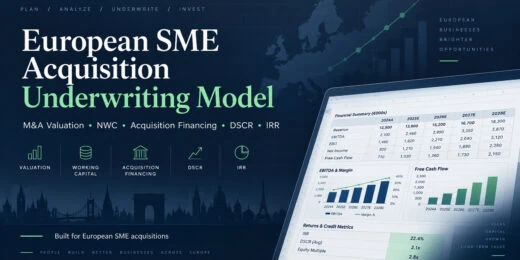

A practical Excel-based acquisition underwriting model designed for European SME…
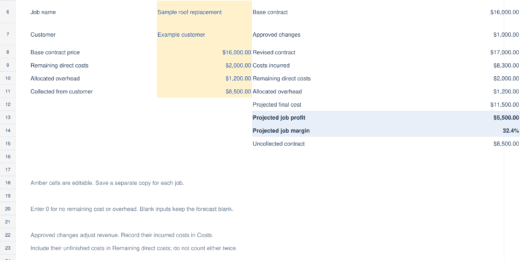

Plan estimates, track job expenses and approved changes, review projected…

The 13-week cash flow is the standard instrument of a…
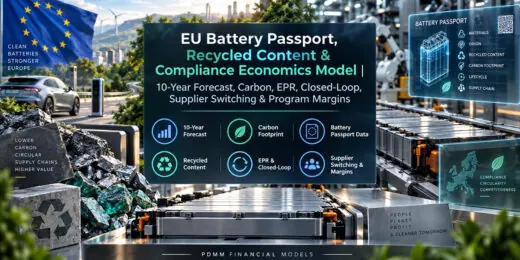

EU Battery Passport, Recycled Content & Compliance Economics Model 🔋…
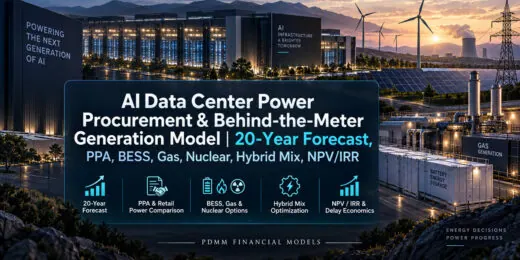
AI Data Center Power Procurement & Behind-the-Meter Generation Model ⚡…
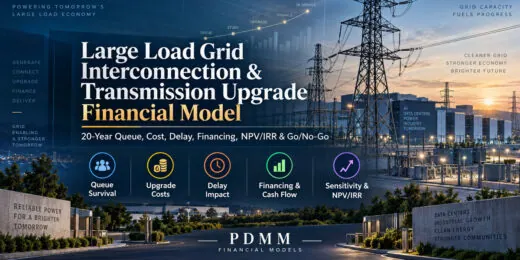
⚡ Model the grid-connection decision before delay, network upgrades, deposits,…
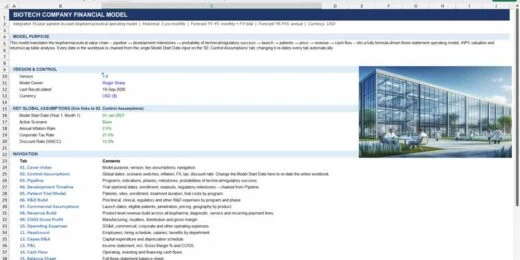

Model the entire drug development lifecycle, from preclinical research through…

Build accurate, bank-ready financial projections for your Midstream Oil Refinery.…
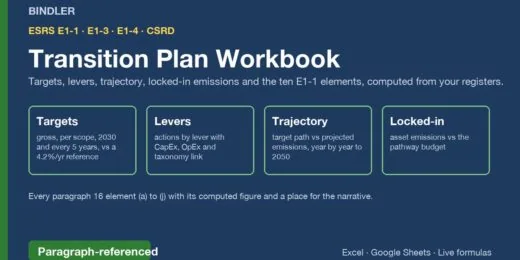

ESRS E1-1, E1-3 and E1-4 in one workbook: gross targets…
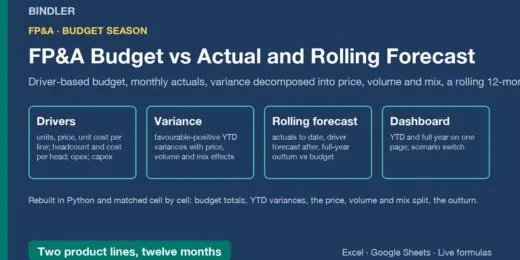
Driver-based 12-month budget, monthly actuals, YTD variance split into price,…
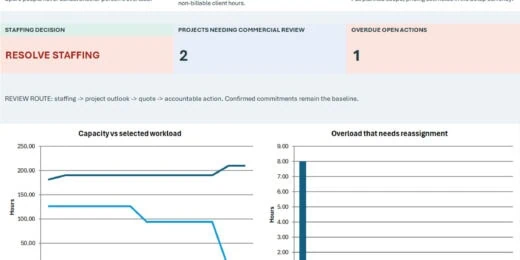

Plan team capacity, test project fees and track delivery margin…
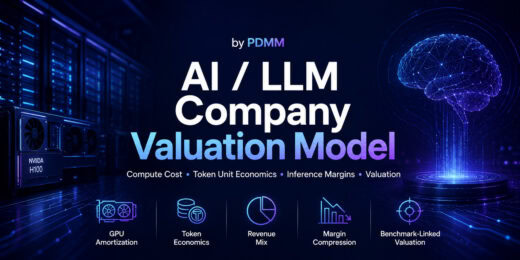
🔥 Premium AI / LLM Company Valuation Financial Model A…
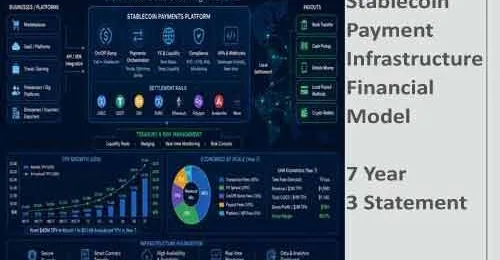
This comprehensive workbook models the intricate flow of funds unique…
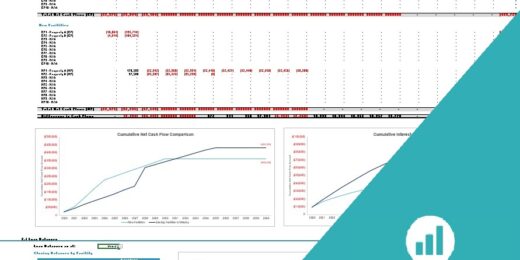


A ready-to-use Battery as a Service (BaaS) Financial Model Template…
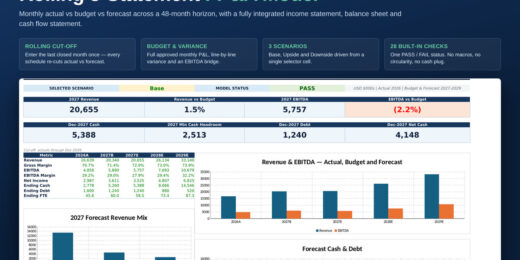

Integrated Base, Upside and Downside scenario framework with a selected-scenario…

Plan and forecast your film production business with a ready…
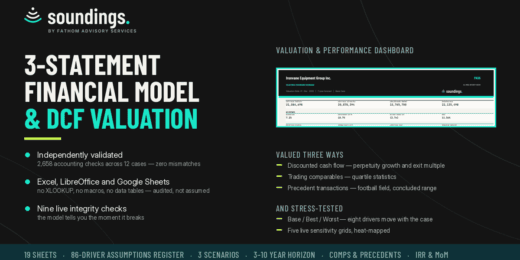

An integrated three-statement operating model valued three ways: discounted cash…
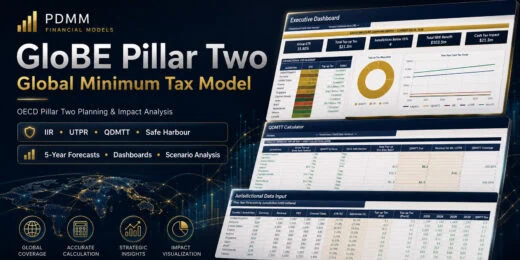
A 30-module editable Excel model for multinational Pillar Two analysis,…
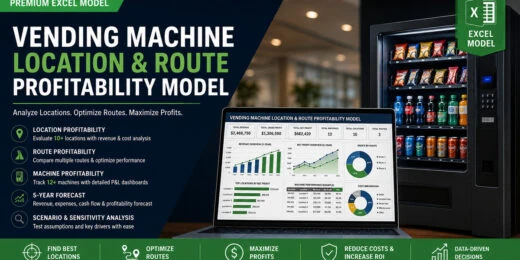
Evaluate a vending-machine business from individual machine economics to location…

A rolling 13-week cash flow forecast with weekly buffer alerts,…


Whether you're launching a startup, planning business expansion, preparing for…

Premium Private School & University Financial Model designed for integrated…
Premium 30-year Oil & Gas Upstream and Downstream Financial Model…

Premium TCFD / ISSB Physical Climate Risk Financial Model designed…

🔥 Premium Tokenomics & Web3 Token Launch Financial Model A…

Premium Green Hydrogen Production Levelized Cost of Hydrogen model for…

🚀 Premium eVTOL / Urban Air Mobility Financial Model A…

A premium Nuclear Fusion Project Finance Model designed for evaluating…

🚘 Premium Autonomous Vehicle / Robotaxi Fleet Operations Financial Model…

Evaluate a Buy Now Pay Later platform from transaction growth…

A specialized Excel valuation model for longevity and anti-aging biotechnology…

Download our fully automated 2026 Semiconductor fab Excel model. Includes…

An integrated IFRS 16 lessee model for lease-level measurement, portfolio…

An integrated 10-year real estate portfolio model for underwriting and…

An institutional-style, fully editable model for probability-adjusted pharmaceutical valuation, commercial…

A decision-ready U.S. clean-energy tax-credit model for evaluating post-OBBBA §48E…

Build, compare and stress-test five major Sukuk structures in one…


Bank-ready EV charging station financial model built for European projects.…


Restaurant Menu Engineering & Financial Optimizer is a professional Excel…

Build accurate, bank-ready financial projections for your Mining Company. Download…

Get a fully customized, professional Excel financial model built around…


Versatile 3-Statement financial model to project and analyse fundraising strategies,…

Professional oil and gas modeling bundle with two fully editable…

A professional Excel financial model for residential building development projects…

The Data Center Development Financial Model by PDMM is a…

🏦 Leveraged Buyout Financial Model Bundle — Lite + Pro…

🚀 A professional Private Equity Buy-and-Build Roll-Up M&A Financial Model…

This Excel model is built for a hybrid P2P +…

A complete, editable Veterinary Clinic Financial Model Pro built for…
Plan, forecast and value a full-service events company with this…

A professional Excel-based IFRS 9 Expected Credit Loss model designed…

Very comprehensive 20 Year 169-tab Excel template for a Battery…

🚀 Premium Creator Economy Multi-Platform Revenue Financial Model, A professional…
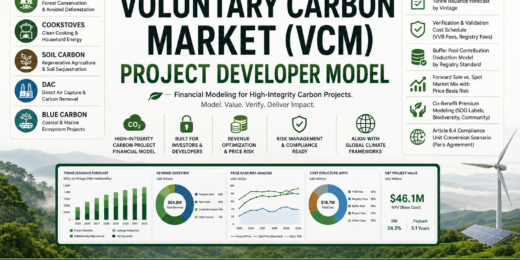
⚡ Premium Voluntary Carbon Market (VCM) Project Developer Financial Model,…

Poultry Farm Financial Model – 10-Year Forecast, Valuation, Feasibility &…

🚀 AI GPU-as-a-Service / AI Compute Data Center Financial Model…


The main objective of this model is to develop a…
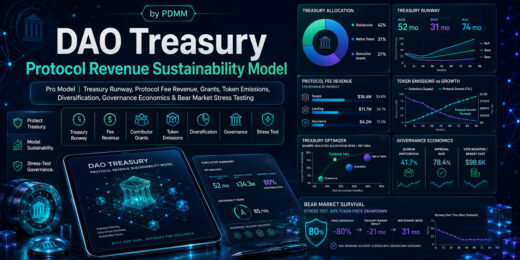
🚀 Premium DAO Treasury & Protocol Revenue Sustainability Financial Model.…
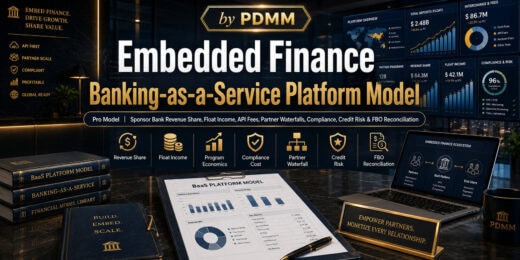
🚀 Premium Embedded Finance / Banking-as-a-Service Platform Financial Model. A…
Crafting a Robust Financial Plan for Your Forecast Success

In today’s fast-evolving business landscape, forecasting plays a pivotal role in guiding strategic decisions, measuring performance, and ensuring sustainable growth. The ability to predict future trends, consumer behavior, and economic shifts defines a company’s agility and resilience. With robust financial planning, businesses can transform their forecasts into actionable insights, driving their operations towards sustained success. This article explores the fundamentals of crafting a comprehensive financial plan within the forecast industry, emphasizing the significance of precision and foresight in economic planning.
Understanding the Dynamics of the Forecast Industry
The forecast industry is a sophisticated and dynamic sector that demands precision, continuous learning, and adaptability. It encompasses a range of activities that attempt to predict future business conditions and trends, making it integral for strategic planning across various sectors. Dominated by key players such as global financial institutions, specialized consulting firms, and technology-driven analytics companies, these entities use a variety of tools and methodologies to segment markets, analyze data, and generate forecasts that help businesses stay ahead of their competition. Accurate forecasting empowers businesses and investors to allocate resources more effectively, reduce uncertainties, and develop long-term strategies that drive growth and innovation.
Examining Trends that Impact Forecasting Accuracy
Several transformational trends are reshaping the forecasting industry. The rise of artificial intelligence (AI) and big data is revolutionizing the way data is collected, processed, and interpreted, enabling more precise and reliable forecasts. AI algorithms can identify patterns and correlations that were previously invisible, thus enhancing the accuracy of predictions. Economic factors, such as global trade tensions, fluctuating commodity prices, and changing consumer preferences, also heavily influence market demands and forecasting needs. Additionally, regulatory changes, whether in terms of environmental policies or financial regulations, impose new compliance requirements and strategic considerations, compelling businesses to adapt their forecasting models quickly to remain competitive.
Measuring Forecasting Efficiency with Key Performance Indicators
Effective forecast planning necessitates the meticulous tracking of key performance indicators (KPIs) that reflect various aspects of forecast reliability and relevance. Accuracy metrics are paramount, serving as benchmarks for evaluating the reliability of forecasts. These metrics assess how closely forecasts align with actual outcomes, thus gauging their credibility. Frequency of corrections offers insights into how often predictions need adjustment, revealing underlying issues in the forecasting process and helping identify areas for improvement. Customer satisfaction scores provide a qualitative measure of how forecasts meet client expectations, indicating the perceived value and usability of the forecasts delivered. Revenue variance analysis examines discrepancies between projected and actual revenue, highlighting unanticipated changes and providing direction for corrective actions to enhance forecasting practices.
Implementing KPI Tracking Systems for Enhanced Forecast Planning
To implement these KPIs effectively, a robust tracking system is essential. Real-time data tracking allows for immediate insights into forecast performance, ensuring that businesses can promptly respond to variances and trends. Utilizing dashboards presents a powerful tool for visualizing key data points and trends, making it easier for stakeholders to comprehend complex data sets and derive actionable insights. Addressing variances promptly is critical for maintaining forecasting accuracy and reliability, enabling businesses to refine their approaches and optimize outcomes continually. For detailed insights into effective financial modeling, consider exploring our financial model templates.
Building Financial Models Tailored to the Forecast Industry
A tailored financial model is crucial for the forecast industry, reflecting its unique economic realities and operational needs. Revenue modeling is a critical component, focusing on the financial inflows generated by forecasting services or product sales. These models must account for the nuances of subscription-based services, consultancy fees, and product sales, providing a clear picture of expected revenues under varied scenarios. Equally important are the cost structures that elucidate both variable and fixed costs inherent in the forecasting business. These structures determine the financial viability and profit margins achievable within the industry. Investment needs and ROI analysis bring attention to the capital requirements necessary for enhancing forecasting efficacy. From advanced software tools to skilled personnel, investment decisions are grounded in a nuanced understanding of potential returns and strategic value.
Evaluating Outcomes through Scenario Analysis and Sensitivity Testing
Scenario analysis is indispensable in financial modeling, permitting businesses to assess various potential outcomes and associated risks. By modeling best-case, worst-case, and expected scenarios, organizations can anticipate how different variables impact their forecasts and finances, thereby informing strategic decision-making. For practical applications, our scenario analysis templates can serve as valuable tools. Sensitivity testing complements this by examining how changes in specific parameters influence forecast outcomes, empowering businesses to identify key risk factors and develop contingency plans.
Leveraging MS Excel for Effective Financial Planning
Microsoft Excel remains a favored tool for financial modeling due to its unparalleled flexibility and customization capabilities. It allows users to tailor financial models to their specific forecasting needs, creating an individualized approach to planning and analysis. The user-friendly interface of Excel also enhances collaboration, making it easier for teams to share information and work together towards common financial goals. With advanced formulas and tools, such as pivot tables and sophisticated chart options, Excel simplifies complex data analysis, providing robust insights that guide strategic decision-making. To learn more about enhancing your Excel skills, check out our Excel tips for financial modeling.
Explore eFinancialModels for Template-Based Financial Solutions
At eFinancialModels, we offer expertly crafted Excel templates designed specifically for the forecasting industry. These templates facilitate comprehensive financial planning and forecasting, enabling businesses to achieve greater accuracy and effectiveness. Our customers have shared testimonials and case studies showcasing the successful implementation of our models, highlighting improvements in efficiency and decision-making capabilities. We invite you to explore the resources and tools available on eFinancialModels that can elevate your decision-making processes and enhance your financial planning strategies.
Taking Action Towards Proficient Forecasting
In conclusion, robust financial planning underpins successful forecasting by providing structured, data-driven insights that guide decision-making and strategic resource allocation. The integration of advanced technologies and custom financial models is essential for thriving in today’s competitive market landscape. We encourage you to leverage eFinancialModels’ tailored financial planning templates to enhance your forecasting accuracy and financial planning effectiveness. Visit our website to explore a range of modeling templates designed to meet your forecasting needs and schedule a consultation to learn more about how we can support your journey towards forecasting excellence.
FAQ: Frequently Asked Questions about Financial Planning in Forecasting
- What is the importance of financial planning in forecasting? Financial planning in forecasting is crucial as it provides structured insights into potential future trends, allowing businesses to allocate resources strategically, navigate economic shifts, and achieve long-term sustainability.
- How do artificial intelligence and big data impact the forecasting industry? AI and big data enhance the precision of forecasts by identifying patterns and correlations in vast data sets, thereby improving prediction accuracy and enabling informed decision-making.
- What are the key performance indicators (KPIs) used in forecasting? Key KPIs in forecasting include accuracy metrics, frequency of corrections, customer satisfaction scores, and revenue variance analysis; these metrics help assess and optimize forecast reliability and relevance.
- Why is Excel a preferred tool for financial modeling in forecasting? Excel is favored for its flexibility and customizable features, enabling tailored financial model creation and collaborative data analysis to meet specific forecasting needs.
- How can eFinancialModels support my forecasting needs? eFinancialModels offers expertly crafted Excel templates tailored for the forecast industry, enhancing accuracy and efficiency in financial planning and decision-making processes.
You might also like: