
0 ITEMS

Debt Service Coverage
The Debt Service Coverage Ratio (DSCR) is a financial metric used to measure a company's ability to cover its debt obligations, including both principal and interest payments, with its operating income. It's calculated by dividing the company's net operating income by its total debt service. A DSCR greater than 1 indicates that the company generates sufficient income to cover its debt obligations, while a ratio below 1 suggests potential difficulties in meeting those obligations. Our financial model templates include tools to compute and analyze DSCR, allowing businesses and lenders to assess the financial health and creditworthiness of an entity. Whether you're a company aiming to secure financing or a lender evaluating the risk of a loan, our templates provide a clear framework for understanding and monitoring debt service coverage, ensuring informed financial decisions.
The debt service coverage ratio (DSCR) defines how many times a company's free cash flow can cover the debt service (repayments + interest)


A practical Excel-based acquisition underwriting model designed for European SME…
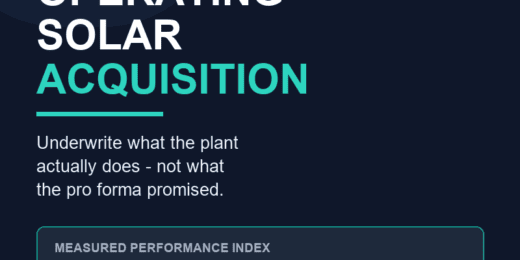

Buy-side underwriting for a US utility-scale solar plant that is…
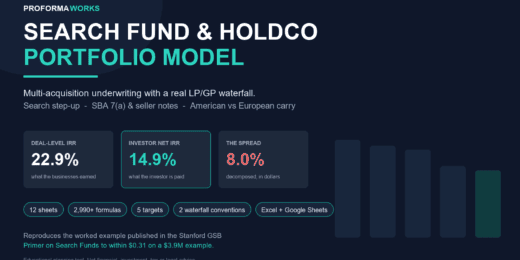
A portfolio of acquisitions is not the sum of five…
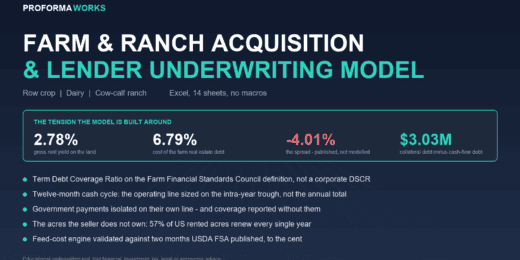
The collateral will support a loan this big - can…
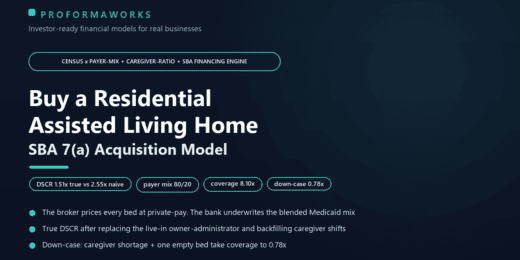
Acquisition & SBA underwriting model for a single residential assisted…
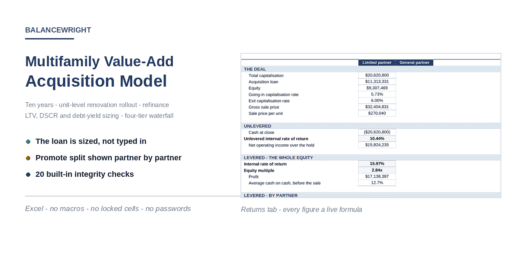

Underwrite an apartment value-add deal end to end. The loan…
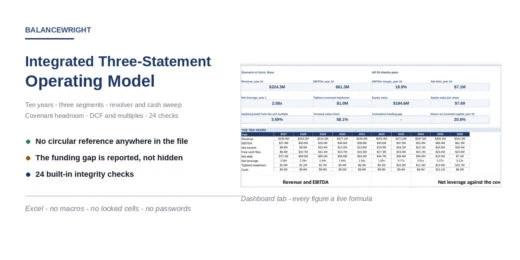
A ten-year three-statement operating model whose revolver, cash sweep and…

Underwrite a small-business acquisition the way a lender will: SBA…


Bankable Financial Model for Utility-Scale Solar PV Project Finance This…


AI Data Center Power Procurement & Behind-the-Meter Generation Model ⚡…

⚡ Model the grid-connection decision before delay, network upgrades, deposits,…
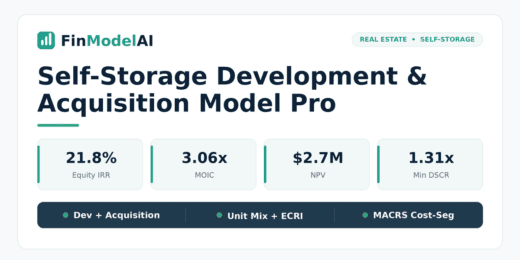

The Self-Storage Development & Acquisition Model Pro is an institutional-grade…
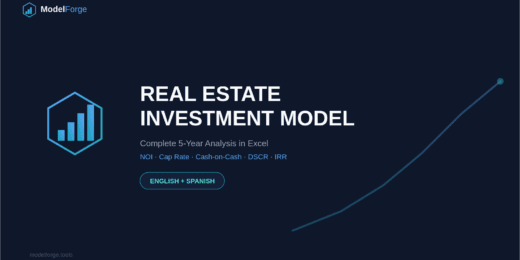

Excel model to analyze real estate investment deals — NOI,…


An institutional, lender grade Excel model for a temperature controlled…

An institutional, lender grade Excel model for a concrete block…

An institutional, lender grade Excel model for a seawater reverse…

An institutional, lender grade Excel model for an urban bus…


A financial model built specifically for whole-body cryotherapy and recovery…
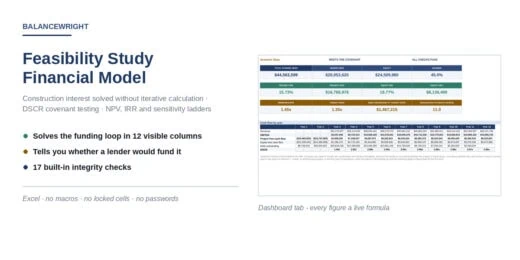
A feasibility study exists to answer two questions, and most…
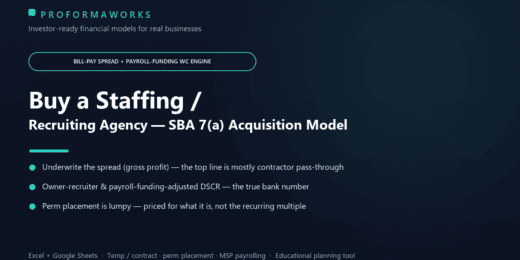
A lender-ready 5-year model for buying an independent staffing /…
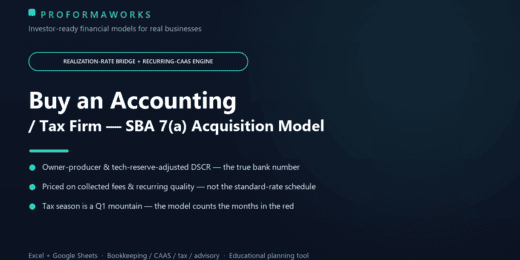
A 5-year, SBA-lender-ready model for buying an independent accounting /…
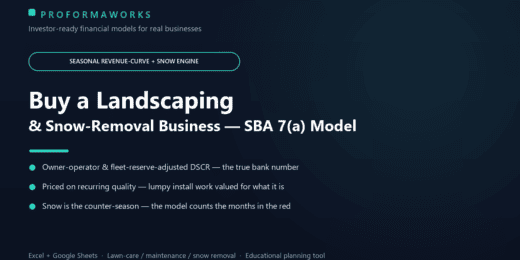
A 5-year, SBA-lender-ready model for buying a single-branch landscaping /…

Buying a wealth-management book or RIA? Underwrite it the way…
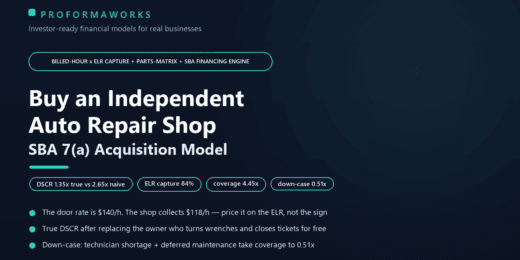
Underwrite the acquisition of a single independent auto repair shop…
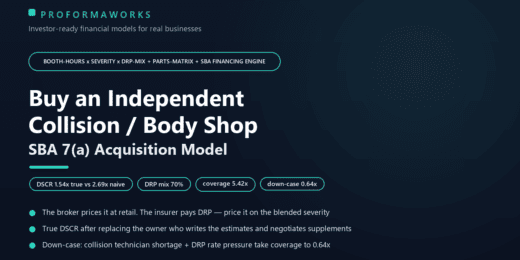
Underwrite a collision / auto body shop acquisition the way…
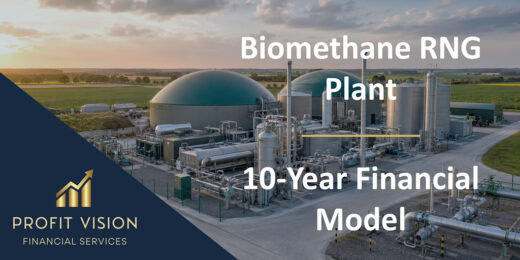

10-year financial model for a biomethane RNG plant providing forecasts,…

15-year financial model for a rice farm providing forecasts, profitability…



A ready-to-use Battery as a Service (BaaS) Financial Model Template…
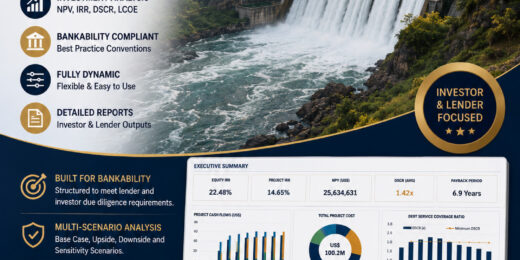
Small Hydropower Bankable Financial Model — Summary This is a…



Underwrite a mobile home park deal in minutes: a model…
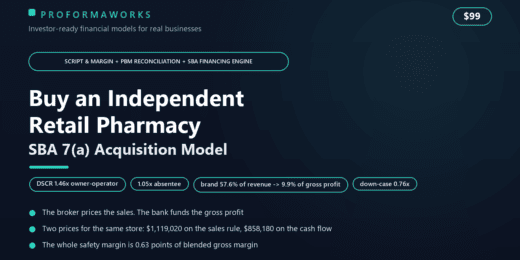
Underwrite the purchase of an independent retail pharmacy the way…
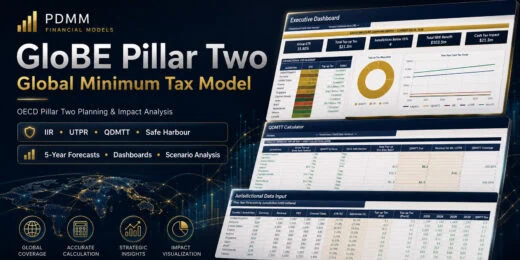
A 30-module editable Excel model for multinational Pillar Two analysis,…
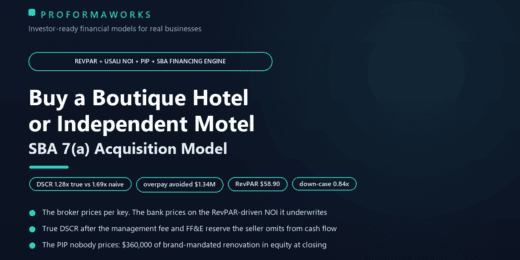
Underwrite a hotel/motel acquisition the way an SBA lender does:…


Underwrite multifamily deals the way institutional buyers do — without…

Premium Private School & University Financial Model designed for integrated…

Premium 30-year Oil & Gas Upstream and Downstream Financial Model…

Premium Green Hydrogen Production Levelized Cost of Hydrogen model for…

🚀 Premium eVTOL / Urban Air Mobility Financial Model A…

🚘 Premium Autonomous Vehicle / Robotaxi Fleet Operations Financial Model…
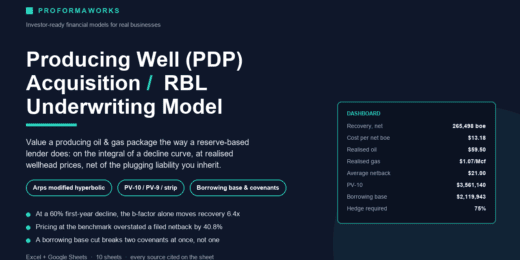
Underwrite a producing oil and gas package the way a…

10-year financial model for a farmland investment fund providing forecasts,…

Price a hybrid solar-plus-storage project twice: as the developer presents…
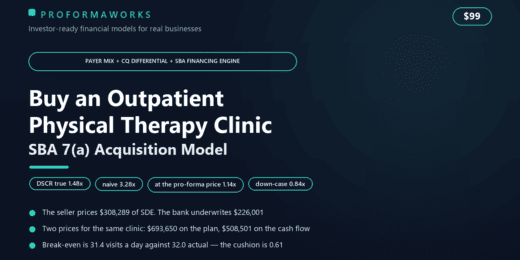
Underwrite the purchase of an outpatient physical therapy clinic the…
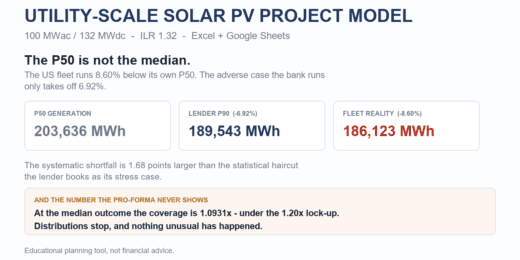
Excel financial model for solar developers, IPPs and lenders, to…

Build, compare and stress-test five major Sukuk structures in one…

A professional Excel and Google Sheets financial model for battery…
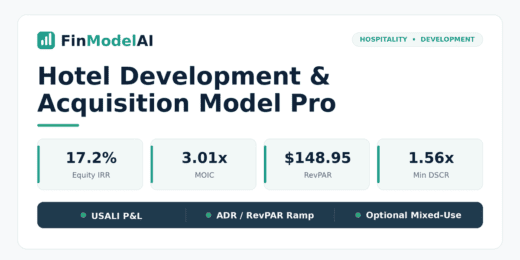
The Hotel Development & Acquisition Model Pro is an institutional-grade…


A Solar + BESS template is a pre-built Excel financial…

FinModelAI Multifamily Development Model Pro is an institutional-grade Excel template…

A professional Excel and Google Sheets financial model built for…

A professional Excel and Google Sheets financial model built for…

A professional Excel and Google Sheets financial model built for…
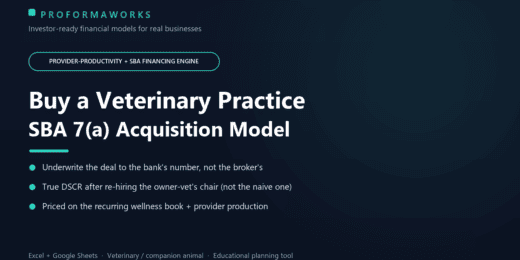
A professional Excel and Google Sheets financial model built for…

A professional Excel and Google Sheets financial model built for…

A professional Excel and Google Sheets financial model built for…
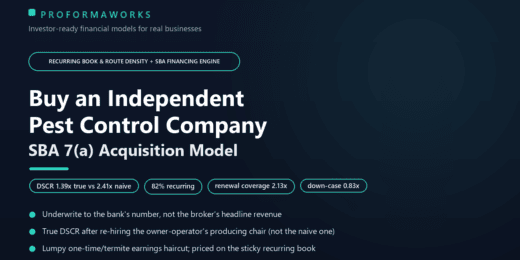
A professional Excel and Google Sheets financial model built for…

A professional Excel and Google Sheets financial model built for…

A professional Excel and Google Sheets financial model built for…
Crucial Steps for Effective Financial Planning in Debt Service Coverage

In the world of business finance, understanding and managing debt service coverage is crucial for maintaining an organization's financial health. Effective financial planning for debt service requires not only a thorough grasp of Debt Service Coverage Ratios (DSCR) but also the use of sophisticated tools and key performance indicators (KPIs) to ensure financial stability and growth. This article provides a comprehensive guide to the essential steps involved in financial planning for debt service coverage, emphasizing the importance of cash flow forecasting techniques and Excel financial modeling templates.
Definition of DSCR
The Debt Service Coverage Ratio (DSCR) is a critical financial metric used to assess an organization's ability to service its debt. It is calculated by dividing net operating income by the total debt service, which includes both the principal and interest payments on outstanding loans. The DSCR is a key indicator of financial health and plays a significant role in lending decisions. Lenders often use this ratio to determine whether a business can handle additional debt or if it poses a potential risk.Having a healthy DSCR is essential for businesses seeking loans or credit. A DSCR greater than 1 indicates that a company has sufficient income to cover its debt obligations, while a ratio below 1 suggests potential difficulties in meeting these obligations. Therefore, understanding and maintaining an appropriate DSCR is vital for both sustaining operations and achieving long-term growth.
Key DSCR Metrics
DSCR metrics can vary based on industry-specific standards and financial strategies. Two commonly used types of DSCR are the Cash DSCR and EBITDA DSCR. Cash DSCR focuses on cash flow available for debt servicing, while EBITDA DSCR measures earnings before interest, taxes, depreciation, and amortization relative to debt obligations. Each metric offers unique insights into a company's capacity to manage its debt effectively.Ideal DSCR ratios differ across industries. For instance, industries with stable cash flows, such as utilities, might have lower DSCR thresholds compared to industries with higher volatility, like technology startups. Recognizing the appropriate DSCR for your industry is crucial for effective financial planning.
Interpreting DSCR Data
Interpreting DSCR data requires understanding what constitutes a "healthy" DSCR. Generally, a DSCR of 1.2 to 1.5 is considered robust, providing a cushion against unforeseen financial challenges. However, excessively high ratios might indicate under-leveraging and an opportunity for optimal reassessment and capital allocation.On the other hand, low DSCRs can result in limited borrowing capacity and increased financial risk. Companies with low DSCRs must prioritize improving their financial strategies, reducing expenses, or boosting revenue to ensure long-term viability.
Cash Flow Analysis for Accurate Forecasting
Cash flow analysis is a fundamental aspect of debt service planning. Comprehensive cash flow forecasting allows businesses to anticipate financial needs and align debt servicing with strategic goals. Accurate forecasts enable businesses to manage resources efficiently, mitigating the risk of cash shortfalls.Numerous tools, such as Excel-based financial models, facilitate detailed cash flow modeling. These tools offer customizable templates that cater to various business needs, enabling companies to project cash flows accurately and adapt to changing market conditions.
Balancing Operating Income with Debt Obligations
Balancing operating income with debt obligations is critical for financial sustainability. Businesses must track operating income meticulously and ensure it consistently meets or exceeds debt servicing requirements. Calculating operating income accurately involves analyzing revenue streams, managing expenses, and identifying potential areas for financial improvement.Maintaining a strong operating income to debt obligation ratio is pivotal in securing lender confidence and fostering a stable financial environment. This balance prevents financial strain and promotes long-term growth.
Incorporating Contingency Planning
Effective debt service planning necessitates the incorporation of contingency plans. Businesses should prepare for potential cash shortfalls by establishing financial reserves and exploring alternative funding options. Stress-testing financial scenarios is a practical technique to evaluate potential risks and devise robust mitigation strategies.Proactive contingency planning provides businesses with the flexibility to navigate uncertainties and maintain financial stability. It ensures that companies are well-equipped to handle unexpected disruptions, safeguarding their financial health.
Utilizing Key Performance Indicators (KPIs) in Financial Planning
This section focuses on the significance of KPIs in financial planning, covering aspects such as revenue diversification and monitoring debt levels.
Implementing Revenue Diversification Strategies
Revenue diversification is a strategic approach to improving income stability. Businesses can enhance their financial resilience by diversifying revenue streams across different products, services, or markets. Monitoring metrics related to diverse revenue sources ensures a balanced approach to financial growth and minimizes dependency on a single income stream.Leveraging revenue diversification strategies allows businesses to adapt to evolving market conditions, ensuring a steady flow of income and reducing risks associated with economic fluctuations.
Monitoring and Managing Debt Levels
Monitoring debt levels is crucial for maintaining financial health. Businesses should establish recommended limits for both the type and amount of debt they can responsibly manage. Visualizing debt trends over time with charts and graphs aids in identifying patterns and making informed financial decisions.By consistently monitoring debt levels, companies can optimize their capital structure and avoid over-leveraging, thereby maintaining a robust financial position.
Ensuring Sound Interest Coverage Ratio (ICR)
The Interest Coverage Ratio (ICR) is another vital KPI in financial planning. It measures a company's ability to cover interest expenses with its operating income. ICR is calculated by dividing EBIT (earnings before interest and taxes) by interest expenses. A higher ICR indicates better financial health and a stronger capacity to meet interest obligations. Benchmarking ICR against industry standards provides insights into a company's financial standing and helps identify areas for improvement. Maintaining a healthy ICR is essential for securing favorable lending terms and demonstrating strong fiscal management.The Advantages of Using Excel-Based Financial Modeling Templates
This section examines the benefits of employing Excel-based financial modeling templates, including efficiency, customization, and error reduction.
Improving Efficiency in Financial Planning
Excel-based financial modeling templates offer significant efficiency in financial planning. These templates streamline data input and automate complex calculations, saving time and reducing the risk of errors. By leveraging the time-saving features of Excel templates, businesses can focus on strategic decision-making and core operations.Automation in financial modeling ensures that updates are seamlessly integrated, providing accurate and timely insights into debt service coverage.
Ensuring Customization and Scalability
Excel templates are highly customizable, allowing businesses to adapt them to their unique requirements and scenarios. The scalability of these templates makes them suitable for various stages of a company's growth, ensuring they remain relevant and valuable across different debt service scenarios.The ability to tailor financial models to specific business needs enhances strategic planning and provides a competitive edge.
Promoting Error Reduction and Accuracy
Manual data entry errors can have significant consequences on financial planning. Excel-based templates minimize these risks by utilizing built-in formulas and error-checking features, promoting accuracy and reliability in financial projections.By reducing errors and enhancing data accuracy, businesses can make informed decisions and seamlessly execute their debt service coverage plans.
Conclusion In conclusion, effective financial planning for debt service coverage requires a comprehensive understanding of DSCR metrics, robust cash flow analysis, and strategic utilization of KPIs. By embracing Excel-based financial modeling templates, businesses can enhance their financial accuracy, efficiency, and scalability, ultimately optimizing their debt management strategies. Explore eFinancialModels' vast array of Excel spreadsheet templates to refine your financial planning and secure your company's financial future. These templates provide the tools necessary to improve accuracy, save time, and ensure effective debt service coverage, empowering businesses to thrive in a dynamic economic landscape. Explore Our Financial Modeling Templates
You might also like: