
0 ITEMS

Public-Private Partnership (PPP) Financial Model
Financial Model for a Public-Private Partnership (PPP) project outlining the long-term costs, revenues, and risk-sharing between the public and private sectors.
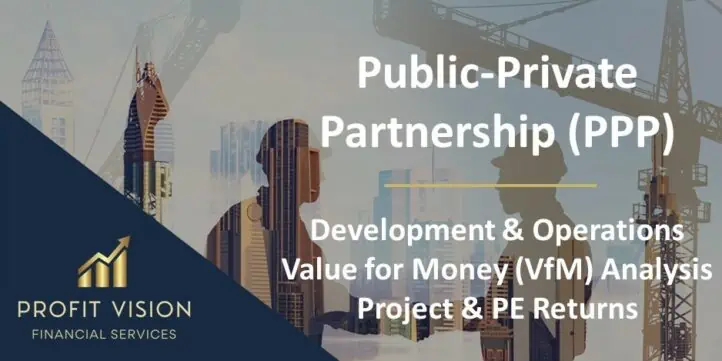


A Public-Private Partnership (PPP) is a collaborative agreement between a government entity and a private-sector company to finance, build, and operate projects that serve the public. These are typically infrastructure-related projects like roads, bridges, airports, water systems, hospitals, schools, and more.
This collaboration typically involves the private sector financing, building, and operating infrastructure or services traditionally provided by the public sector, with the goal of combining the efficiency and innovation of the private sector with the public interest and oversight of the government.
This Financial model is suitable for any type of PPP project and outlines the long-term costs, revenues, and risk-sharing between the public and private sectors. It includes projections for capital investment, operating expenses, financing structure, and potential revenue streams (e.g., user fees or availability payments). The model helps assess project feasibility, ensure value for money, and support negotiations by analyzing returns, payback periods, and risk allocation over the life of the contract.
The model includes the following PPP modes and Revenue Models, allowing the user to select the contract type of the project:
PPP Modes:
• Build-Operate-Transfer (BOT): Under a BOT contract, government grants a concession to a private company to finance, build, and operate a project for a period of 20 to 30 years. After that period, the project is returned to the public entity that originally granted the concession.
• Build-Own-Operate (BOO): Under a BOO contract, the government allows a private company to finance, build, and operate infrastructure over a specified period, and the private company retains ownership of the infrastructure in perpetuity.
Revenue Models:
• User-Pay (Revenue-Risk PPPs): In these models, the private partner recovers its investment through fees paid directly by users of the infrastructure or service. The key modeling concern here is demand risk — future usage and tariff levels must be forecast with precision.
• Availability-Pay (Performance-Based PPPs): These are structured such that the public authority makes regular payments to the private partner, contingent on the infrastructure being available and meeting performance standards. Demand risk is typically retained by the public sector, making this model more predictable in terms of cash flows.
Model Structure:
Project Assumptions:
• PPP Contract: Contract type (BOT or BOO), Revenue Model (User-Pay or Availability-Pay), Contract length (up to 30 years), Development & Operations timing assumptions
• Project Development Budget (Land Costs, Pre-Construction, Hard, Soft costs and Contigencies) including Quarterly Development Charts
• Project Financing (Equity, Debt, and Government Grant)
• Cash Inflows Assumptions for User-Pay (annual revenue) and Availability-Pay (availability payments, performance deduction, Target IRR)
• Annual Operating Expenses and Capital Expenditures Assumptions
• Value for Money Analysis Assumptions (risk adjustments and probability factors, competitive neutrality adjustment, discount rate)
• Debt Financing Assumptions (LTV, Loan terms, Loan Fees, Debt Service Reserves)
• Private Partnership Equity Contribution Assumptions (GP & LP)
Output Reports:
• Monthly and Annual Project Cash Flows incl. before & after Tax Net Cash flows calculations and supporting schedules for PP&E, Debt & Debt Service, Reserve Accounts, Tax Schedule
• Value for Money (VfM) Analysis comparing Public and PPP modes under a User-Pay or Availability Pay revenue model
• Project Returns incl. Unlevered & Levered Cash Flows and Project Return Metrics (NPV, IRR, MOIC)
• Investor Distributions & Returns Waterfall Model
• Project’s Executive Summary
Help & Support
Committed to high quality and customer satisfaction, all our templates follow best-practice financial modeling principles and are thoughtfully and carefully designed, keeping the user’s needs and comfort in mind.
Whether you have no experience or are well-versed in finance, accounting, and the use of Microsoft Excel, our professional financial models are the right tools to boost your business operations!
If you experience any difficulty while using this template and cannot find the appropriate guidance in the provided instructions, please feel free to contact us for assistance.
If you need a template customized for your business requirements, please e-mail us and explain your specific needs briefly.
Similar ProductsOther customers were also interested in...






 SB Consulting
Project Finance Excel Model – 10 Year Projec...
The template creates a financial model for your individual project finance initiative The model is s... Read more
 Giorgos
Senior Living Development – 10 Year Financial Mo...
Senior living apartments are just that – apartments (townhouses and condos may also fall in this c... Read more
Industrial Building Development – 10 Year Fi...
Financial model presenting a development scenario for a Multi-Tenant Industrial Building including c... Read more
 anthony
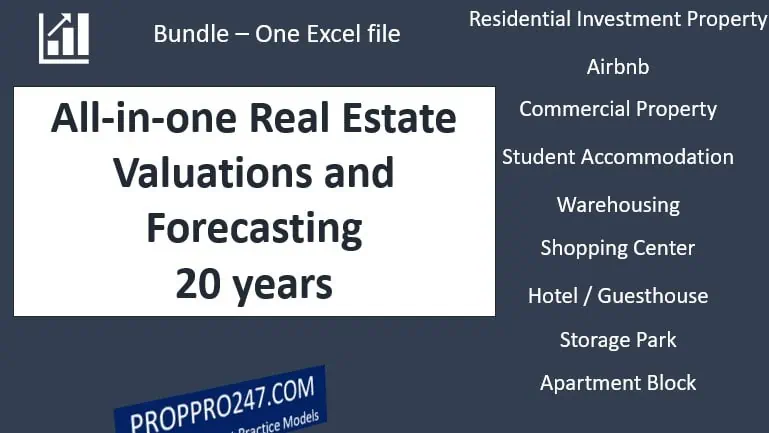
Real Estate Financial Models Excel Template –...
One Excel file for this bundle of Valuation and Financial forecasting models. Storage Parks, Hotels,... Read more
 Andreas
Construction / Development Financial Model
Development & Construction Model presents the case where a property with multiple residential un... Read more
House Flipping – Rehab Financial Model
The house flipping financial model is a comprehensive tool designed to analyze the financial aspects... Read more
 David
David
Student Accommodation Business 10-Year 3 Statement...
10 year rolling financial projection Excel model for a startup or existing business developing and o... Read more
Real Estate Financial Model Template Bundle
This Real Estate Financial Model Template Bundle is best for those who are real estate professionals... Read more
Yacht Marina Acquisition – 10 Year Financial Mod...
10-Year financial model for a yacht marina acquisition projecting revenue, operating expenses, and c... Read more
Multi Sports Complex Financial Model – Dynam...
Financial Model presenting a development and operating scenario of an Indoor Multi-Sports & Fitn... Read more
Reviews
 PPP Financial Model review
This is a foundationally great model template.
Given the fiscal pressures of Governments around the world, it may be helpful to include a Hybrid model where there is both an agreed availability payment to set a price floor combined with user-pay model. However, where revenue from users exceeds a certain threshold, the revenue is shared at an agreed proportion between government and private (e.g. 50/50).
Also having all the hidden rows and columns makes the file a bit unnecessarily laggy.
183 of 364 people found this review helpful.
Help other customers find the most helpful reviews
Did you find this review helpful?
You must log in to submit a review.