
0 ITEMS

Toll Roads
Toll roads are controlled-access highways in which a fee or toll is required from the motorists to access the way. These highways are constructed to provide high-quality roads, which either funded by private organizations or both from public and private sources. The amount of fee might vary depending on the type of car and weight. Tolls are often collected at toll booths while others use electronic toll collection equipment, which automatically communicates with a toll’s payer transponder. Presented here are financial model templates for toll roads.


This Public-Private Partnership (PPP) financial model has been developed to…


Financial Model of a Bridge development project forecasting construction costs,…
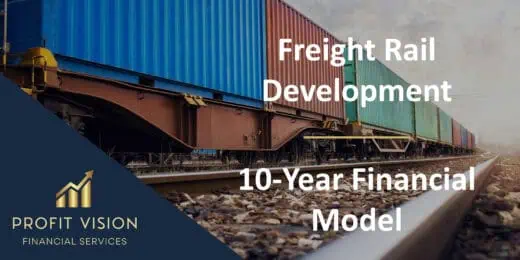
Financial Model providing a dynamic up to 10-year financial forecast…


The template creates a financial model for your individual project…

Financial Model for a Public-Private Partnership (PPP) project outlining the…

Financial Model of a Toll Road development project forecasting construction…


Hydrogen Gas Sales & Tolling Business Plan and Valuation Model…

Toll Road Build and Operate financial model is a project…
Maximizing Revenue Through Smart Toll Roads Financial Planning

In the dynamic world of transportation infrastructure, toll roads stand as critical components, facilitating mobility and driving regional economies. With increasing pressures from traffic congestion and funding challenges, toll road operators must harness the power of rigorous financial planning to optimize their revenue streams. This calls for a deep dive into the financial landscape of toll roads, where precise modeling and tailored strategies can make a significant difference in profitability. Through smart toll roads financial planning, operators can achieve substantial revenue optimization, ensuring that investments yield the desired returns. Smart financial planning is essential to unlock the full potential of toll roads. By focusing on key performance indicators (KPIs) and embracing data-driven models, operators can enhance operational efficiency and secure necessary funding for future expansions. This article explores how these elements come together, examining the toll roads financial landscape, the development of data-driven models, and strategic enhancements for operational efficiency. Additionally, it delves into the role of financial modeling in fundraising and why Excel templates are a valuable tool in toll road financial planning.
Understanding the Toll Roads Financial Landscape
Toll roads are a vital part of the transportation ecosystem, significantly contributing to economic development by reducing travel times and costs for commuters and freight carriers alike. As infrastructure investments increase, understanding the financial dynamics becomes crucial. Several KPIs can provide insights into toll roads' financial performance. Firstly, tracking traffic volume trends is pivotal. This involves analyzing current traffic patterns and forecasting future flows. Accurate traffic forecasts help operators anticipate demand, adjust toll rates, and gauge revenue potential. Alongside traffic volume, toll rate elasticity is a vital KPI. Understanding how small changes in toll prices influence traffic volumes and revenue allows for optimized pricing strategies that maximize income without deterring users. Revenue collection efficiency is another crucial metric. Ensuring that tolls are collected swiftly and accurately not only boosts revenue but also enhances user experience. Inefficient systems can lead to lost revenue and disgruntled customers. Additionally, managing operational costs specific to toll road management, such as maintenance expenses, staffing, and technology investments, is essential. A comprehensive understanding of these KPIs enables operators to fine-tune their strategies for greater financial success.Developing Data-Driven Models for Revenue Optimization
Accurate forecasting plays an indispensable role in financial planning for toll roads. By harnessing data from various sources, operators can construct sophisticated financial models that predict traffic and revenue patterns with greater precision. Historical traffic data serves as a foundation, while integrating demographics and economic indicators provides further context for growth expectations. Beyond historical data, a competitive landscape analysis is necessary. Understanding factors such as alternative routes and public transportation options enables operators to assess potential risks and opportunities. By utilizing advanced financial modeling techniques in Excel, operators can leverage predictive modeling to anticipate traffic trends and optimize revenue. Moreover, scenario analysis for toll pricing strategies allows examination of how different toll rates impact income, enabling operators to select the optimal approach. Sensitivity analysis for external factors like fuel prices and economic downturns is equally critical. By examining how various economic indicators affect traffic flows and revenue, operators can adopt proactive measures to mitigate adverse effects. Developing data-driven models is not merely about number crunching but about devising actionable insights that drive operational and financial success.Strategies for Enhancing Operational Efficiency
Operational efficiency is a cornerstone of financial success in toll road management. By focusing on specific KPIs such as toll collection efficiency and maintenance cost management, operators can significantly boost their revenue streams. Automated toll collection systems minimize human error and speed up transactions, leading to both improved user satisfaction and heightened revenue collection efficiency. Moreover, lifecycle analysis for infrastructure ensures that maintenance costs are optimized over the lifespan of the toll road, preventing unexpected expenses that can strain budgets. Investing in smart tolling systems and technology improvements further enhances efficiency, driving down costs and increasing uptime. The impact of these strategies can be profound. For instance, successful implementations of smart tolling systems have led to dramatic reductions in operational costs and increased revenue for numerous toll operators worldwide. Such innovations not only improve immediate financial performance but also position operators for long-term success by creating resilient and reliable toll infrastructure.The Role of Financial Modeling in Fundraising and Investment Analysis
Robust financial models are indispensable tools in securing funding for toll road projects. By presenting clear cash flow projections and ROI analyses, operators can attract investors who are keen to see evidence of solid financial planning. Effective models showcase the potential returns and financial viability of toll projects, providing investors with insights into the project's financial health. Being aware of common financial modeling pitfalls, such as overly optimistic assumptions and inadequate data validation, helps operators avoid potential missteps. Comprehensive feasibility studies also play a critical role in project initiation and investor relations by demonstrating extensive due diligence and strategic foresight. By integrating these elements, operators can enhance their appeal to investors, ensuring the necessary capital for current and future projects.Why Choose Excel Templates for Toll Roads Financial Planning
Microsoft Excel remains a powerful and versatile tool for financial planning in the toll roads industry. Its flexibility and customizability allow operators to adapt templates to the unique requirements of each toll road project. Excel templates are user-friendly, enabling easy modifications and scenario testing without the need for extensive training or specialized software. Pre-built functionalities within these templates streamline forecasting, budgeting, and analysis processes, ensuring that operators can effectively model traffic flows, revenue projections, and financial outcomes. With the growing complexity of financial planning requirements, Excel templates offered by eFinancialModels are perfectly suited for enhancing efficiency and accuracy. They allow stakeholders to focus on strategy and decision-making rather than being bogged down by cumbersome data management.Conclusion: Unlocking Growth with Smart Financial Planning
In conclusion, maximizing revenue through smart financial planning is pivotal for toll roads. Tailored financial strategies rooted in deep analysis of KPIs, advanced data-driven models, and operational improvements play a vital role in paving the way for revenue optimization. The strategic alignment of operational and financial KPIs is essential for achieving long-term growth and sustainability. As the competitive landscape evolves, embracing Excel templates for toll roads financial planning offers significant advantages. Their flexibility, ease of use, and robust functionalities make them indispensable tools in a financial planner's arsenal. For those looking to improve their toll road management and decision-making capabilities, exploring the comprehensive range of financial model spreadsheet templates available at eFinancialModels.com is a prudent step towards smarter financial planning and enhanced revenue streams.FAQ: Smart Toll Roads Financial Planning
- What are the key performance indicators (KPIs) relevant to toll roads? Traffic volume trends, toll rate elasticity, revenue collection efficiency, and operational cost management are crucial KPIs in toll road financial planning.
- How do data-driven models aid in toll roads financial planning? They enable precise traffic and revenue predictions by integrating historical data, demographics, economic indicators, and competitive landscape analysis. This enhances decision-making and revenue optimization.
- Why is operational efficiency critical in toll road management? It reduces costs, improves user satisfaction, and boosts revenue collection. Strategies like automated toll collection and smart tolling systems greatly enhance operational efficiency.
- What role do financial models play in securing funding? They provide investors with clear cash flow projections and ROI analyses, highlighting the financial viability and potential returns of toll projects, thus attracting necessary investments.
- Why use Excel templates for toll roads financial planning? Excel templates are flexible, customizable, and user-friendly. They streamline the forecasting and budgeting processes and facilitate easy scenario testing without requiring specialized software training.
You might also like: