
0 ITEMS

Project Finance
Project finance is the funding (financing) of long-term infrastructure, industrial projects, and public services using a non-recourse or limited recourse financial structure. Listed here are templates designed for project finance business models.
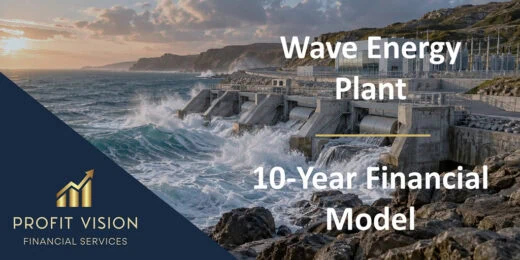

10-year financial model for a Wave Energy plant providing forecasts,…
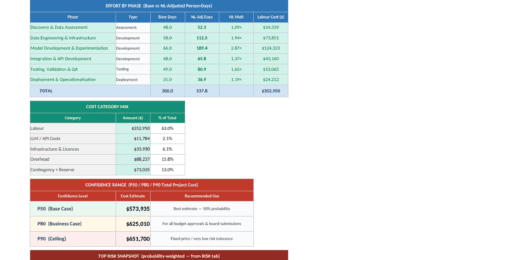

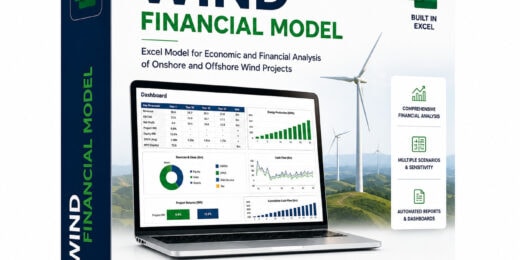

If you develop, advise on or finance utility-scale onshore wind…


Buy-side underwriting for a US utility-scale solar plant that is…


Bankable Financial Model for Utility-Scale Solar PV Project Finance This…
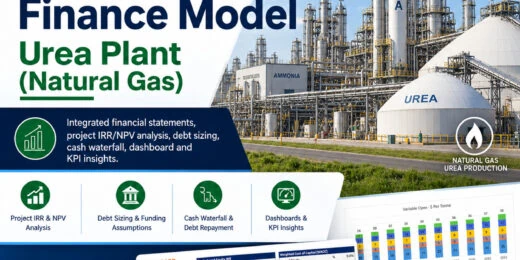

A detailed, institutional-grade urea plant financial model for a natural…
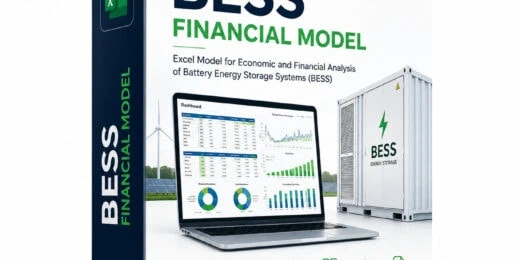
Production-ready Excel financial model for standalone utility-scale BESS projects, bundled…
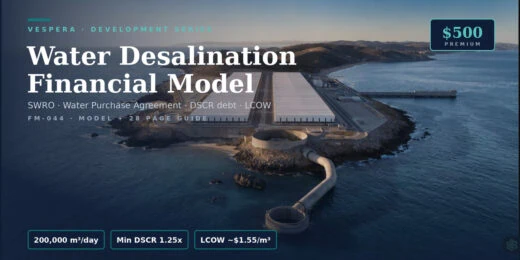

An institutional, lender grade Excel model for a seawater reverse…

An institutional, lender grade Excel model for an urban bus…
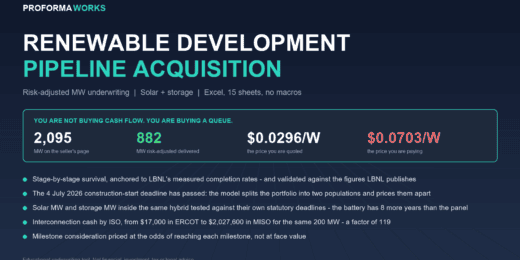
Converts a seller's nameplate megawatts into risk-adjusted delivered megawatts through…
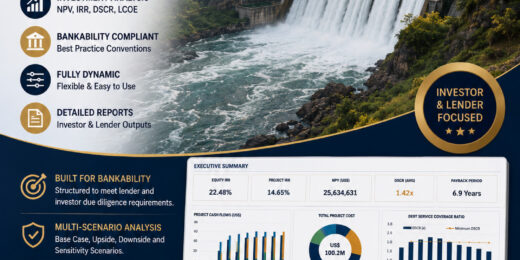
Small Hydropower Bankable Financial Model — Summary This is a…


🔥 Premium Tokenomics & Web3 Token Launch Financial Model A…

Premium Green Hydrogen Production Levelized Cost of Hydrogen model for…

A premium Nuclear Fusion Project Finance Model designed for evaluating…

Price a hybrid solar-plus-storage project twice: as the developer presents…
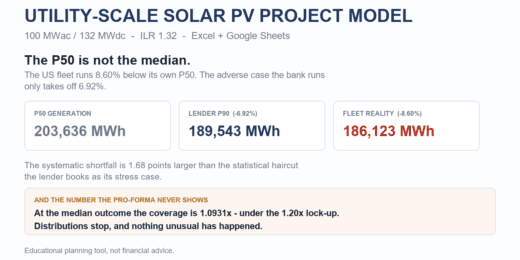
Excel financial model for solar developers, IPPs and lenders, to…

A decision-ready U.S. clean-energy tax-credit model for evaluating post-OBBBA §48E…

Build, compare and stress-test five major Sukuk structures in one…

A professional Excel and Google Sheets financial model for battery…
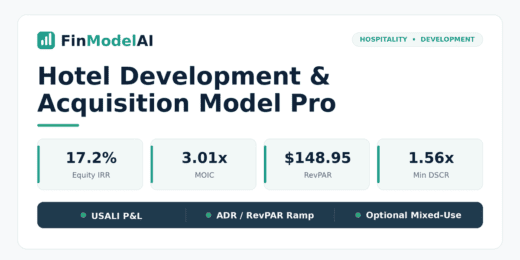

The Hotel Development & Acquisition Model Pro is an institutional-grade…


A Solar + BESS template is a pre-built Excel financial…


Bank-ready EV charging station financial model built for European projects.…

FinModelAI Multifamily Development Model Pro is an institutional-grade Excel template…

Professional oil and gas modeling bundle with two fully editable…

A professional Excel financial model for residential building development projects…

A complete, editable Veterinary Clinic Financial Model Pro built for…

Plan, forecast and value a full-service events company with this…

FinModelAI Solar + BESS Project Finance Model Pro is an…
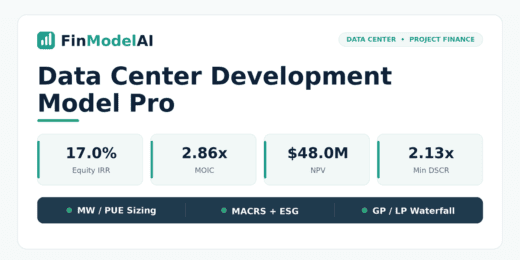
FinModelAI Data Center Development Model Pro is an institutional-grade Excel…

A premium Excel financial model bundle created by PDMM for…
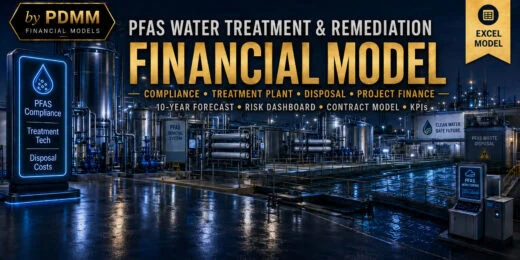
A professional PFAS Water Treatment & Remediation Financial Model created…

Direct Air Capture Financial Model – Carbon Removal Credits, MRV, Offtake, Storage & Project Finance
A professional Direct Air Capture financial model built for durable…


Value a mining company the way the market does -…

A professional Excel financial model for planning, forecasting, valuing, and…

A professional Excel financial model for commercial airline planning, aircraft…

A professional Solar + Battery Energy Storage System (BESS) financial…

The Waterfall Profit Distribution Model – Up to 4 Tiers…

10-year financial model for a casino development providing forecasts, feasibility…

10-year financial model for a parking lot development providing forecasts,…
10-year financial model for a Water-as-a-Service project providing forecasts, valuation,…

A professional Excel financial model suite for airport projects and…

A professional 8-12 MTPA Liquefied Natural Gas (LNG) Financial and…
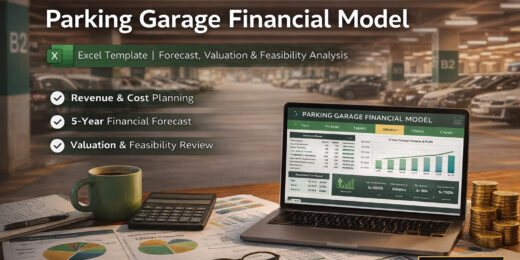
A professional Excel financial model suite for parking garage assets,…

A professional Excel financial model suite for solar energy projects,…


A ready-to-use Excel Solar Farm + BESS Financial Model Template…

Value an upstream E&P company the way the market does…

Investor-ready financial model for a HVDC interconnector development project providing…

A professional Excel financial model suite for neo bank and…


Helios Nexum is a professional Excel-based financial simulation model purpose-built…
A premium capital budgeting model bundle for 10-year forecasting, valuation,…

Professional Solar + Battery Energy Storage System (BESS) financial model…

10-year financial model for a mobile home and RV park…

This Office Building Development & Investment Model provides a full…
10-year financial model for a cold storage facility development providing…


A comprehensive Excel-based financial model designed for pharmaceutical companies involved…
If you plan to invest in or scale a data center,…

15-year financial model for a memory care facility development providing…

A dynamic, ready-to-use Excel template for Hotel Development and Rental…


Highly versatile 20-year BESS financial model for up to 5…


This model assesses the economic feasibility of a 3-5 MTPA…
Crafting Solid Financial Plans for Project Finance Success

In today's ever-evolving financial landscape, project finance has emerged as a vital tool for large-scale infrastructure development and industrial projects globally. Stepping into the complexities of project finance requires a deep understanding of both financial intricacies and sector-specific challenges. Whether you are a project sponsor, a financial analyst, or an investor, crafting solid financial plans is essential for the success of any project finance venture. This article explores the indispensable elements that bolster the financial planning process in project finance, ultimately leading to robust and profitable investment outcomes.
At its core, project finance involves the financing of long-term infrastructure and industrial projects based upon the projected cash flows of the project rather than the balance sheets of its sponsors. This method is prevalent across a range of industries, including energy, transportation, and telecommunications. Unlike corporate finance, which relies heavily on the financial health of a company, project finance focuses on the feasibility and profitability of the project itself. Central to this approach is financial planning, a cornerstone that ensures that projects not only secure funding but also remain sustainable over their lifecycles. It involves meticulous planning, from understanding cash flow patterns to negotiating favorable financing terms, all while mitigating potential risks.
A key feature of project finance agreements includes the use of non-recourse or limited-recourse financing, where lenders are repaid through the cash flow generated by the project. This means that lenders have no or limited claims on the project sponsors' other assets if the project fails to perform. Such arrangements necessitate stringent financial scrutiny and effective risk management, highlighting the importance of comprehensive financial planning. This is why understanding the essential elements of financial planning is crucial for anyone involved in project finance.
Understanding Project Finance: Key Definitions and Concepts
Project finance is a method of funding in which the lender is primarily looking at the project's cash flows for repayment and the project's assets as collateral. This form of financing has become increasingly relevant as it allows the development of capital-intensive projects without leaving a significant financial burden on the sponsoring entities. In many industries, particularly those heavily reliant on infrastructure, project finance serves as an essential instrument for growth and expansion.
Financial planning in project finance is vital as it lays the framework for securing investments and ensures the project's financial sustainability. It involves creating detailed cash flow forecasts, risk assessments, and financing plans that guide decision-making throughout the project's lifecycle. By prioritizing financial planning, stakeholders can align their interests towards the project’s success while effectively managing potential challenges. Key features of project finance agreements, such as non-recourse or limited-recourse financing, fundamentally alter the risk landscape for lenders and investors. In a non-recourse or limited-recourse finance scenario, lenders have limited claims on sponsors' balance sheets. This shifts the focus onto the cash-generating potential of the project itself, emphasizing the need for precise financial forecasting and risk management.
Essential Elements of Financial Planning in Project Finance
One of the cornerstones of successful project finance is the creation of accurate project cash flow forecasts. These forecasts are essential as they provide a detailed projection of a project's income and expenses over time. By understanding the cash flow lifecycle, stakeholders can identify periods of surplus and shortage, allowing for strategic financial planning and decision-making. An accurate cash flow forecast is fundamental to ensuring that the project remains solvent and can meet its financial obligations.
When embarking on financial planning, understanding the project's financing structure is crucial. The decision between equity and debt financing has significant implications for risk distribution and can influence the project's overall cost of capital. Equity financing involves raising capital through the sale of shares, offering investors a stake in the project's future profits. In contrast, debt financing entails borrowing funds to be repaid with interest, which places a fixed financial obligation on the project. An optimal balance between these financing modes is necessary to achieve an efficient capital structure, minimize financial risks, and maximize returns for stakeholders.
Risk distribution in project finance is a pivotal consideration. Financial planning must address the equitable distribution of risks across all stakeholders, ensuring that those shouldering the most risk also stand to gain the most reward. Well-crafted financial plans account for potential risks and offer strategies for mitigation, aligning stakeholder interests with the overall success of the project. Effective risk management not only safeguards investments but also enhances the project's attractiveness to potential lenders and investors.
Industry-Specific Key Performance Indicators (KPIs) for Project Finance
In project finance, industry-specific key performance indicators (KPIs) offer invaluable insights into a project's financial health and sustainability. Among these, the Debt Service Coverage Ratio (DSCR) stands out as a critical measure, evaluating a project's ability to generate sufficient cash flow to meet its debt obligations. A healthy DSCR indicates a project’s sustainability and reassures investors that their financial interests are safeguarded.
Another vital KPI is the Internal Rate of Return (IRR), which reflects the project's efficiency in generating returns. It helps stakeholders assess the profitability of a project by measuring the expected annual rate of return on invested capital. A high IRR signals that a project is likely to be profitable, attracting investment interest and fostering confidence among stakeholders. The Project Net Present Value (NPV) is a fundamental measure of a project’s viability and potential profitability. By assessing the present value of a project’s cash inflows minus its outflows, NPV provides a comprehensive view of the financial benefits over the project’s lifecycle. A positive NPV indicates that a project is likely to add value, making it an attractive investment opportunity.
The Loan Life Coverage Ratio (LLCR) is another crucial KPI that indicates the project's long-term financial health. It compares the net present value of cash flows available for debt service to the total outstanding debt across the life of the loan. A solid LLCR assures lenders of the project’s robustness, indicating that it can sustain its obligations over time. By tracking these KPIs, stakeholders can make informed decisions that keep projects on the path to success.
The Role of Financial Modeling in Project Finance Planning
Financial modeling plays a pivotal role in project finance planning by facilitating informed decision-making. Models allow stakeholders to simulate various financial structures and assess potential outcomes, enhancing the strategic evaluation process. Scenario analysis and sensitivity analysis are powerful tools within financial models, helping stakeholders predict how changing variables can impact a project’s financial health. These analyses enable proactive adjustments to financial plans, improving resilience against unforeseen challenges.
Microsoft Excel's spreadsheet templates are indispensable for project finance modeling, offering ease of use and familiarity for financial analysts. Excel provides the flexibility needed to customize models according to the specific needs of each project, ensuring that all nuances and complexities are captured. Additionally, Excel's ability to integrate real-time data supports accurate forecasting, empowering stakeholders with up-to-date insights. By leveraging Excel’s robust features, financial analysts can create models that are both reliable and adaptable, catering to the unique demands of project finance.
Elevating Financial Planning with eFinancialModels Templates
In conclusion, crafting solid financial plans is paramount for ensuring the success of any project finance endeavor. By understanding project finance’s key concepts and integrating essential financial planning elements, stakeholders can align their strategies for sustained growth and profitability. Accurate cash flow forecasts, well-balanced financing structures, and industry-specific KPIs are vital for assessing a project’s financial health and long-term viability.
The advantages of using financial model spreadsheet templates, particularly those available from eFinancialModels, cannot be overstated. These templates empower stakeholders to create comprehensive and tailored financial plans with precision and efficiency. By exploring eFinancialModels’ extensive library of financial modeling templates, users can enhance their project financing efforts, achieve superior financial planning accuracy, and ultimately drive project success. Embrace the power of financial modeling templates and elevate your financial planning strategies to new heights.
Frequently Asked Questions (FAQs)
- What is project finance? Project finance is a method of financing long-term infrastructure and industrial projects based on the projected cash flows of the project rather than the balance sheets of the sponsors.
- How is project finance different from corporate finance? Unlike corporate finance, which relies on the financial health of a company, project finance focuses on the feasibility and profitability of the project itself.
- What are non-recourse or limited-recourse financing? These are financing arrangements where lenders are repaid through the project’s cash flow and have limited claims on the sponsors' other assets if the project underperforms.
- What are the key performance indicators (KPIs) in project finance? Some important KPIs include Debt Service Coverage Ratio (DSCR), Internal Rate of Return (IRR), Net Present Value (NPV), and Loan Life Coverage Ratio (LLCR).