
0 ITEMS

Upstream Oil and Gas: 7 Steps to Fuel Success

Oil and gas remain among the most valuable commodities, driven by rising global energy demand.
Upstream oil and gas companies focus on exploration, drilling, and reservoir evaluation to identify and extract hydrocarbon reserves.
The industry is capital-intensive and high-risk, influenced by geopolitics, technology, and environmental regulations.
Understanding the four main sectors—upstream, midstream, downstream, and integrated companies—is key for investment and operational decisions.
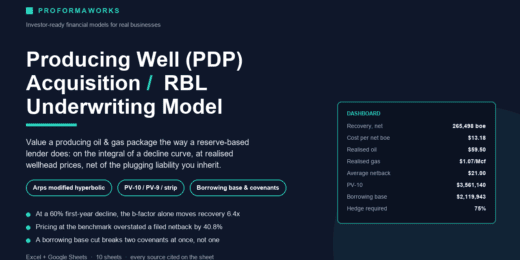
Financial models and templates help industry professionals plan, analyze costs and revenues, and attract funding.
Continuing, this article provides a practical overview of industry worth, market sectors, and steps to start or improve an upstream oil and gas venture.
How Much is the Oil and Gas Industry Worth?
The oil and gas industry is a global powerhouse, with an estimated net worth that fluctuates in response to factors such as oil prices, production levels, and market dynamics. As such, determining how much is the oil and gas industry worth can be a challenge.
To show how much is the oil and gas production worth, we have listed the following global statistics:
- The forecasted worldwide oil and gas demand in 2023 is 101.8 million barrels.
- The total market value of oil and gas production is $7330.8 Billion.
- The wealthiest oil company, Saudi Aramco, has a market cap of $2.138 trillion.
Generally, the answer to how much is the oil and gas industry worth can range from hundreds of billions to trillions of dollars, making it a critical sector in the world economy.
The Four Sectors of the Oil and Gas Industry
Knowing the four sectors of the oil and gas industry provides a sophisticated and reliable overview of the market. Each segment plays a crucial role in producing, transporting, refining, and distributing petroleum products. Understanding these distinctions is vital for investors, entrepreneurs, and professionals in the financial sector to make informed decisions and analyze opportunities in the energy sector. Let’s explore them.
- Upstream oil and gas companies are involved in exploring and producing crude oil and natural gas. Their primary goal is to find and extract hydrocarbons efficiently and safely. This sector deals with locating, drilling, and extracting hydrocarbons from the earth’s subsurface. Some major players in this sector include ExxonMobil, Chevron, and Royal Dutch Shell.
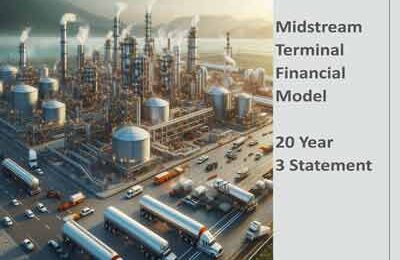
- Midstream oil and gas companies are crucial in transporting and storing the raw materials (crude oil and natural gas) from upstream operations to downstream refineries and end-users. Their activities include pipeline transportation, storage in tanks or terminals, and transporting refined products like gasoline and natural gas liquids (NGLs). Prominent midstream companies include Kinder Morgan, TransCanada, and Enterprise Products Partners.
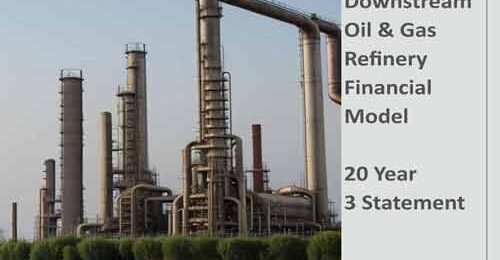
- Downstream oil and gas companies are involved in the refining, processing, and distributing of petroleum products. Their activities include refining crude oil, producing petrochemicals, and distributing finished products to consumers, such as gasoline, diesel, and jet fuel. Notable downstream companies include ExxonMobil’s downstream division, Phillips 66, and Valero Energy.
- Integrated oil and gas companies are engaged in all aspects of the oil and gas industry, from upstream exploration and production to downstream refining and marketing. Their vertically integrated business model allows them to control the entire value chain. Companies like ExxonMobil, Chevron, and BP are examples of integrated oil and gas giants.




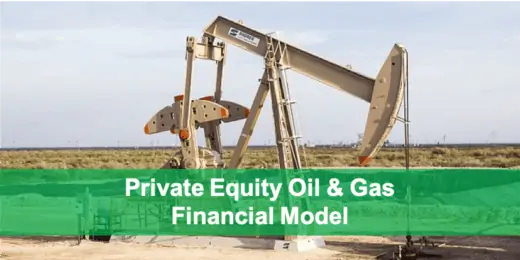

























Charting the Course: Upstream Dominate the Oil and Gas Industry
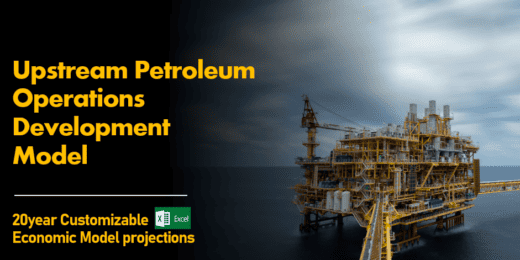
The upstream sector commands a pivotal position as the foremost stage of the energy production process. This sector encompasses exploration and drilling activities that lay the groundwork for extracting crude oil and natural gas reserves beneath the Earth’s surface. Upstream operations involve intricate geological assessments, cutting-edge technologies, and substantial investments, making it a driving force in the industry. It plays a critical role in the supply chain, setting the stage for subsequent midstream and downstream activities, including transportation, refining, and distribution, ultimately shaping the global energy market dynamics.
Upstream oil and gas companies play a crucial role in the energy sector by focusing on exploring and producing hydrocarbon resources. Their primary activities involve the initial stages of the oil and gas supply chain.
- Exploration: Upstream companies begin by identifying potential oil and gas reserves through geological and geophysical surveys. It involves studying the earth’s subsurface to locate areas with the potential for hydrocarbon deposits.
- Drilling: Once a promising location is identified, drilling operations commence. It involves using drilling rigs to bore deep into the earth’s crust to reach oil or natural gas reservoirs. Exploration wells and production wells are drilled to access these resources.
- Reservoir Evaluation: After drilling, reservoir evaluation is conducted to assess the size, quality, and productivity of the hydrocarbon reservoir. This data helps estimate the potential reserves and the economic viability of production.
- Production: Upstream companies extract crude oil, natural gas, and other hydrocarbons from the reservoirs. It involves the operation of production facilities, such as oil rigs and gas wells, to bring these resources to the surface.
- Well Maintenance: Maintaining the integrity and efficiency of wells is crucial for sustained production. It includes regular inspections, repairs, and optimization to maximize output.
Characteristics of Upstream Oil and Gas Companies
Upstream oil and gas companies play a crucial role in the energy sector and possess several distinctive characteristics that set them apart. Let’s delve into these characteristics in detail, emphasizing their importance and impact:
- Capital Intensive: Upstream oil and gas operations require substantial capital investments. It is due to the costs of exploring, drilling, and extracting oil and gas reserves. These companies often need to invest in expensive equipment, such as drilling rigs and production platforms, and engage in long-term projects to realize investment returns.
- High Risk, High Returns: The upstream sector is known for its inherent risks. Exploration and drilling activities involve uncertainty regarding the presence and quantity of oil and gas reserves. Companies can face substantial financial losses if drilling efforts do not yield results. However, successful discoveries can generate significant returns, making it a high-risk, high-reward industry.
- Impacted by Global Politics: The global oil and gas industry is heavily influenced by geopolitics. Companies in this sector must navigate geopolitical challenges, including supply disruptions due to conflicts, sanctions, or trade agreements. Changes in government policies and regulations can also impact operations, making it essential for companies to understand global political dynamics keenly.
- Technology Intensive: Upstream companies rely on advanced exploration, drilling, and production technologies. They invest in cutting-edge tools and techniques to efficiently locate and extract hydrocarbon reserves. Technological innovations like seismic imaging and drilling automation continue to reshape the industry and improve efficiency.
- Tightly Regulated: Due to environmental concerns and safety considerations, upstream oil and gas operations are subject to stringent regulations. These regulations govern everything from drilling practices to emissions control. Companies must invest in compliance efforts and ensure they meet environmental and safety standards, which can be complex and demanding.
In conclusion, upstream oil and gas companies operate in a challenging and dynamic environment characterized by significant capital requirements, risks, global geopolitical influences, technological advancements, and regulatory scrutiny. Successfully navigating these characteristics requires a combination of financial prudence, technical expertise, and a deep understanding of the global energy landscape. Despite the challenges, the potential for substantial returns continues to attract investors and businesses to this sector, making it a pivotal player in the energy industry.

Steps to Start a Successful Upstream Oil and Gas Company
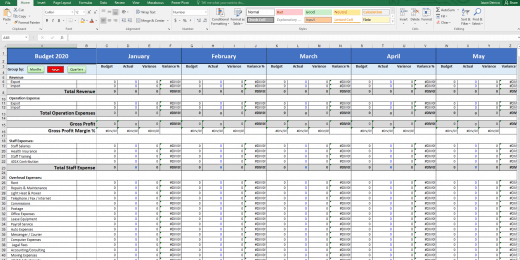
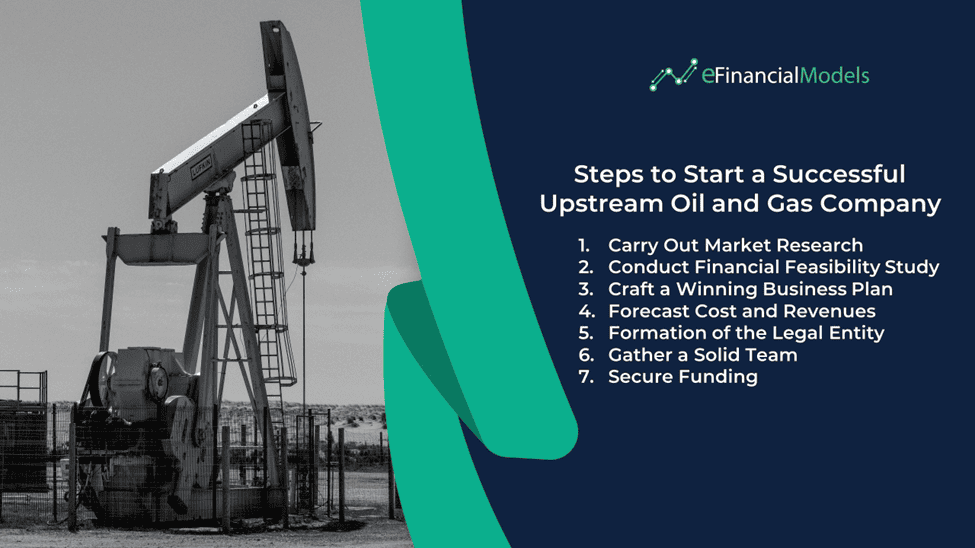
Starting an upstream oil and gas company is a complex venture that requires careful planning and execution. Here are detailed steps to help you establish a successful upstream oil and gas company:
Step 1 – Carry Out Market Research
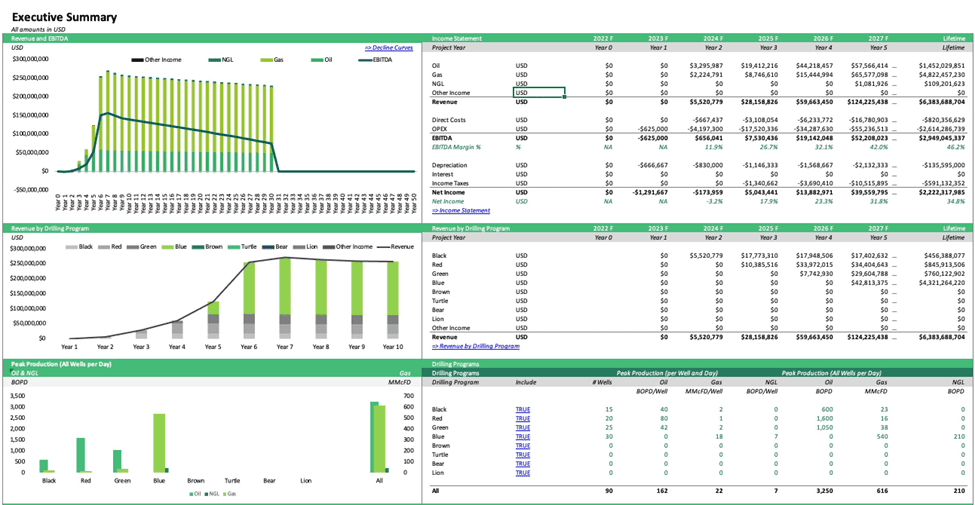
A market research analysis is crucial to understand the demand and competition in the oil and gas industry. Begin by conducting thorough market research to understand the oil and gas industry dynamics. It should include analyzing demand, supply, and pricing trends. Identify potential oil and gas reserves or fields you intend to explore or develop. Consider factors like geological data, existing competitors, and regional regulatory requirements. A revenue-by-drilling program analysis can provide insights into potential revenue streams based on drilling programs. It can help you assess the profitability of different drilling projects and make informed decisions about where to invest.

Step 2 – Conduct Financial Feasibility Study
A financial feasibility study is essential to determine whether your upstream oil and gas venture is economically viable. Assess the risk factors associated with upstream operations, including geological risks, market volatility, and regulatory changes. Hire experts or consultants with experience in the oil and gas sector to perform a comprehensive industry assessment. This study should evaluate the potential return on investment (ROI), considering exploration and extraction costs.
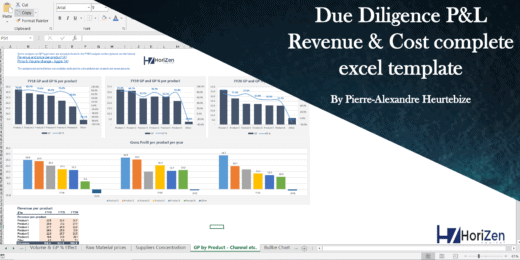
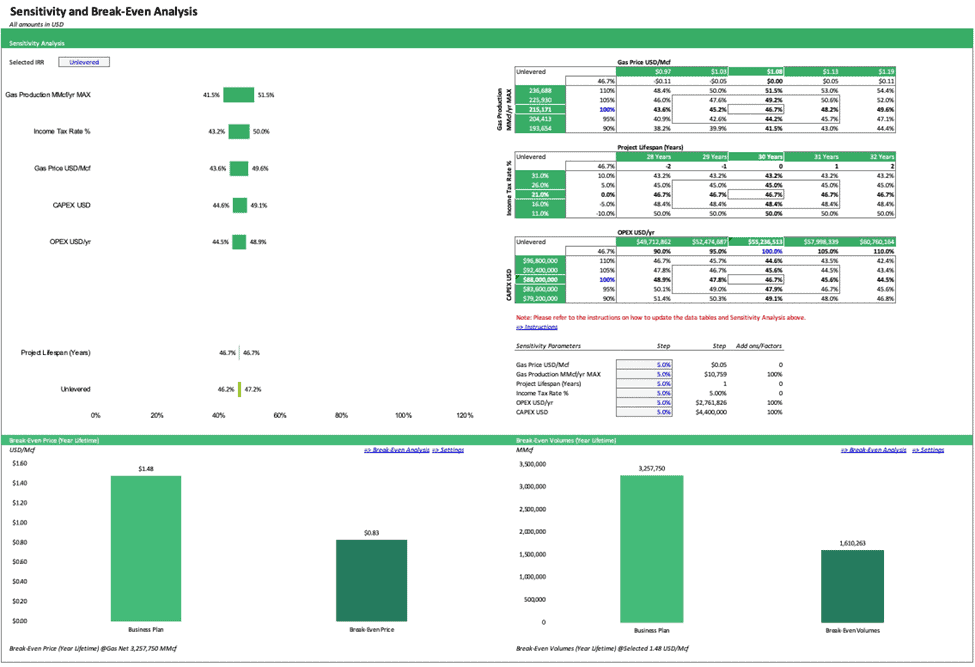
Financial feasibility metrics and sensitivity analysis can assist in this stage. These metrics can include NPV (Net Present Value), IRR (Internal Rate of Return), and payback period. Furthermore, a sensitivity analysis helps assess how changes in critical variables affect project profitability. This information is crucial for attracting investors and lenders.



















































Step 3 – Craft a Winning Business Plan
A comprehensive business plan is essential for attracting investors and guiding your company’s growth. Develop a detailed business plan that outlines your company’s mission, vision, and strategic objectives. Include clearly describing your exploration and production strategy, target markets, and growth projections. Highlight your unique value proposition and competitive advantage. The financial summary template of an oil and gas financial model can be instrumental in presenting your financial projections in a clear and organized manner. It should include revenue projections, cost estimates, funding requirements, and financial performance metrics.
Step 4 – Forecast Costs and Revenues
Forecasting costs and revenues are crucial for starting an upstream oil and gas project. It enables informed decision-making, ensuring that adequate funding is secured, potential risks are assessed, and profitability is maximized in this capital-intensive industry. Create detailed financial models to forecast both costs and revenues over the short and long term. It should include estimates for drilling and production expenses and revenue projections based on oil and gas pricing scenarios.
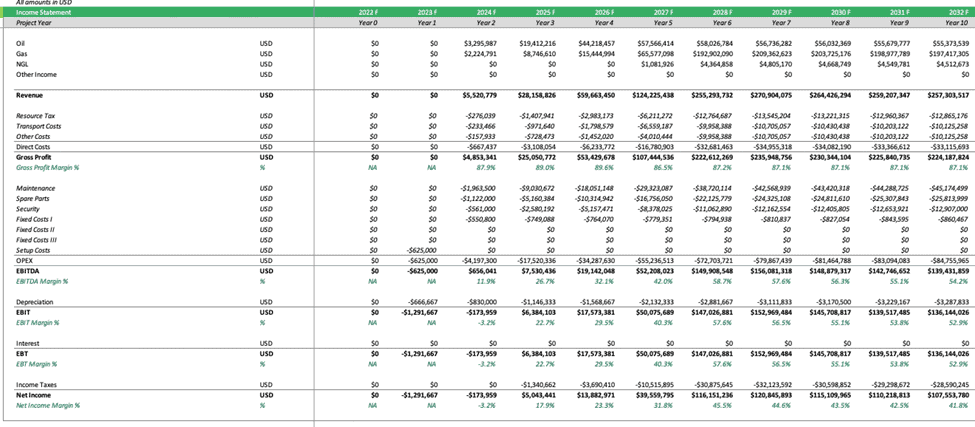
The drilling income statement forecast of an oil and gas financial model can help you accurately project your company’s future revenues and expenses. It allows you to estimate the income generated from drilling operations while considering various cost components like exploration, drilling, production, and operational costs. This detailed forecast is crucial for budgeting and financial planning.
Step 5 – Formation of the Legal Entity
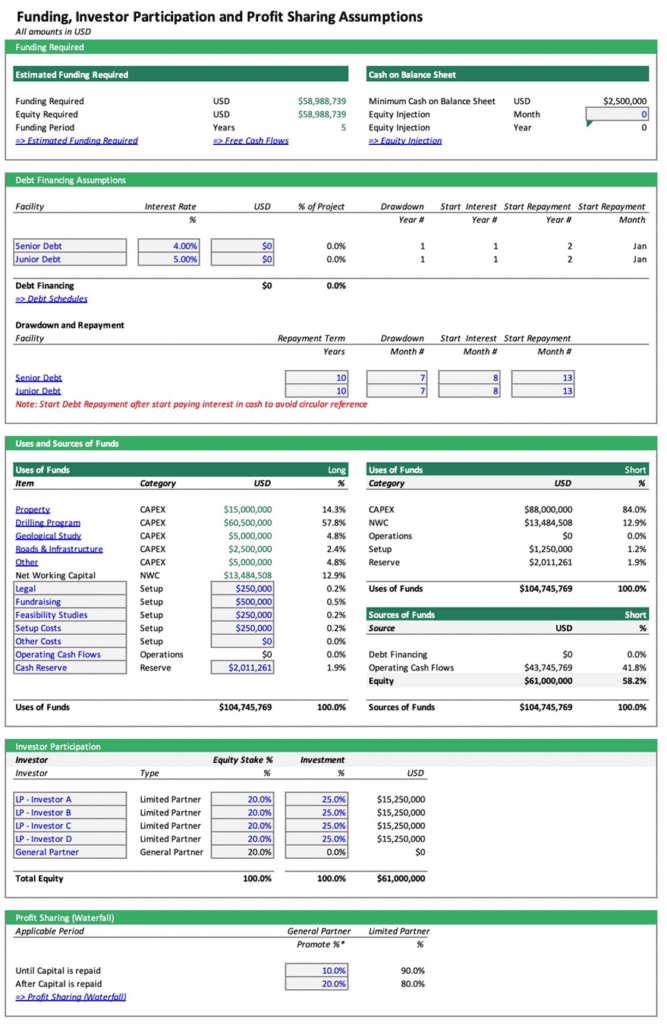
While not directly related to financial modeling, forming a legal entity is crucial in establishing your company. Choose an appropriate legal structure for your company, such as a corporation or a limited liability company (LLC). Consult with legal experts to ensure compliance with industry regulations. Register your company and obtain all necessary permits and licenses to operate in the oil and gas sector. An oil & gas financial model uses funds calculation to help determine how much capital is needed to cover various expenses, including legal and regulatory compliance costs, as part of your startup budget.
Step 6 – Gather a Solid Team
Building a capable team is essential for the success of your oil and gas company. Assemble a highly skilled and experienced team, including geologists, engineers, and operational staff with oil and gas exploration and production expertise. Ensure your team is well-versed in safety protocols and environmental regulations to minimize risks. While financial tools may not directly assist in this step, having a well-structured financial plan and attractive financial projections can help attract top talent to your team.

















Step 7 – Secure Funding
Oil and gas funding is critical due to the industry’s unique challenges and capital-intensive nature. Oil and gas exploration, drilling, and production require substantial upfront capital. Acquiring leases, conducting seismic surveys, drilling wells, and setting up infrastructure can cost millions or even billions of dollars. With adequate oil and gas funding, it’s possible to get operations off the ground.
Well-funded companies have a competitive advantage in negotiations, partnerships, and acquisitions. They can secure valuable contracts and assets that may need to be in reach for undercapitalized competitors. Explore various oil and gas funding options, including private equity, debt financing, and partnerships with established players in the industry. Prepare a compelling pitch to attract investors or secure oil and gas funding. Highlight the potential returns and the strength of your team.
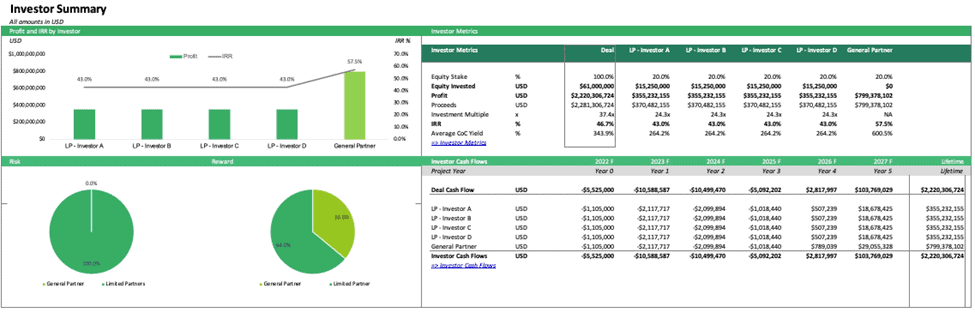
An upstream oil and gas financial model can be pivotal in securing oil and gas funding. It can demonstrate the attractiveness of your investment to potential investors by showcasing investor return metrics and waterfall analysis. It helps investors understand how they can profit from their investment in your company.

In summary, sophisticated financial models and templates are essential tools at various stages of starting an upstream oil and gas company. They provide the data and insights needed to make informed decisions, attract investors, and ensure the financial viability of your venture.
Financial Modeling: The Roadmap to Upstream Oil and Gas Excellence
Whether you’re an investor looking to evaluate potential opportunities, a business owner aiming to optimize operations, or a consultant guiding clients in this sector, an oil and gas financial model is designed to provide comprehensive insights and accurate projections. By harnessing its capabilities, you’ll be better equipped to navigate the complexities of the upstream oil and gas companies, make informed choices, and drive success in your endeavors. Don’t miss out on the opportunity to leverage this invaluable resource – take the first step towards achieving your goals and explore the oil & gas financial model today. Your success awaits!
You might also like:
- 10 Tips to Develop a First Class Business Valuation Report
- 10 Main Elements of a Business Plan
- 5 Practical Tips to Help Raise Funds For Startups
- How to Build a Capitalization Table
- Financial Modeling for Startups and Small Businesses
- Understanding the Levelized Cost of Energy Formula
- Financial Planning for Small Business Owners – Taking an SBA Loan
- How Ship Chartering Companies Sail Towards Success?
- IRR vs NPV in the Context of Financial Decision-Making
- How to Analyze Costs in a Financial Model
- Oversight of Financial Models: Tips and Tricks
- Oil & Gas
- Financial Projections Templates – The Easy Way
- Funding Sources
- Financial Threats to the Oil & Gas Sector
- Upstream Oil & Gas Project Analysis
- Financial Statements – Definition, Uses, Contents and Templates
- Business Valuation
- How to Prepare a Business Plan for Oil & Gas Projects
- Understanding the Debt Service Coverage Ratio: An Essential Metric for Financial Analysis