
0 ITEMS

10 Main Elements of a Business Plan
Table of Content
- Business Plan: A Blueprint for Your Business Success
- Why Is a Business Plant Important?
- Main Elements of a Business Plan
- 1 – Cracking the Problem
- 2 – Discovering the Solution
- 3 – Highlighting Your Products And/or Services
- 4 – Grasping the Market Analysis for a Business Plan
- 5 – Identifying Your Unique Selling Proposition (USP)
- 6 – Lifting Up Your Team
- 7 – Promoting the Products/Services Via a Sales & Marketing Plan
- 8 – Optimize Operations to Streamline Success
- 9 – Profit Maximization with a Financial Plan
- 10 – Unveil Your Winning Investment Story
- The Power of Financial Model Templates to Boost Your Business Plan

Imagine your business plan as the architect of your company, the chef of your success, and the navigator of your journey. Just as an architect designs a building’s structure, your business plan should outline your company’s mission, vision, and objectives. Like a chef, it should blend ingredients such as market analysis, financial projections, and marketing strategies to create a winning formula. Much like a navigator, it should steer you through each stage of your business journey, providing direction and helping you navigate the twists and turns of challenges along the way. So, the main elements of a business plan should be a meticulous blend of a blueprint, a recipe, and a roadmap. Each component plays a critical role in ensuring the success of your venture.
A strong business plan serves as a roadmap for success, covering essential components like market analysis, product differentiation, and financial projections.
- Clear identification of the core problem your business aims to solve helps define its purpose.
- Articulating a unique selling proposition (USP) sets your offerings apart from competitors.
- A detailed market analysis reveals customer needs, industry trends, and market gaps to exploit.
- Financial planning ensures your business can manage resources, reach profitability, and attract investors.
- An effective sales and marketing strategy drives growth by promoting products and building customer loyalty.
Careful planning of these elements improves your chances of building a sustainable, competitive business.
Business Plan: A Blueprint for Your Business Success
A business plan is not just a document; it’s a guiding light for entrepreneurs and business owners. It’s a comprehensive roadmap that outlines a company’s goals and the methods it will use to accomplish them. This narrative description of a new business is a crucial tool that helps entrepreneurs and business owners determine where they want to go and how they will get there. It covers all the essential aspects, from market analysis to financial projections and operational strategies, providing a detailed plan to reach specific business objectives.
Entrepreneurs can present their business plans in various formats when founding a startup. They could include a comprehensive multi-page text document that delves into intricate details and analysis. They could also be a visually appealing and straightforward PowerPoint presentation highlighting key points and data through slides. Or they could be a concise and compelling elevator pitch designed to capture interest quickly. Each format serves a unique purpose, allowing entrepreneurs to adapt their pitch to the needs and preferences of potential investors, partners, or stakeholders, ultimately enhancing their chances of success.
However, whatever the form, the entrepreneurs must cover the main elements of a business plan.
Why Is a Business Plant Important?
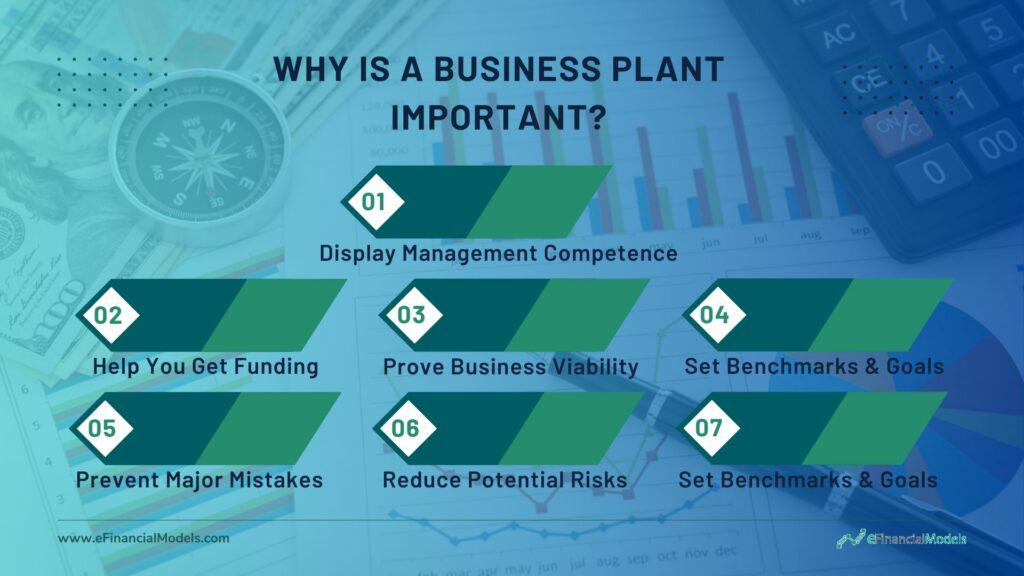
Now comes the question: “Why is a business plan important?” A business plan is a crucial tool for any entrepreneur or business owner, providing a clear roadmap for the company’s future. It helps articulate the vision, mission, and strategic goals, ensuring that all stakeholders are aligned and working towards common objectives. Below are the top answers to the question: “Why is a business plan important?”
Display Management Competence
Why is a business plan important? A business plan is crucial because it is a testament to management’s competence, showcasing their ability to navigate and execute a well-thought-out strategy. By detailing the company’s vision, goals, and operational plans, the business plan illustrates that the management team clearly understands the market, its challenges, and the steps needed to achieve success. This thorough documentation highlights their strategic foresight and reassures investors and stakeholders of the team’s capability to effectively lead and manage the business toward its objectives.
Help You Get Funding
A business plan is essential for securing funding from investors or lenders. It is the basis for persuading them to provide the necessary capital, offering a comprehensive summary of the company’s financial projections, market analysis, and growth strategy. These elements are critical for convincing potential backers of its viability and profitability. Investors will only fund your venture if you can present a compelling case and they are satisfied with your business acumen. A well-prepared business plan assures investors that their money will be managed wisely. It demonstrates that the entrepreneur has thoroughly researched and planned for various aspects of the company, thereby increasing the likelihood of obtaining the funding needed to start or expand operations.
Prove Business Viability
Why is a business plan important? Proving the viability of the business is a fundamental reason. A business plan shows potential by providing evidence that the business idea is feasible and has a strong potential for success. It outlines how the business intends to navigate market challenges, capitalize on opportunities, and leverage its unique strengths. Through detailed market research, financial projections, and strategic planning, the business plan demonstrates that the business can achieve profitability and sustain long-term growth. By highlighting these factors, the plan not only proves the viability of the business but also showcases its future potential. This proof of viability is crucial for gaining the faith and assurance of investors, collaborators, and stakeholders, ensuring the business has the support it needs to thrive.
Prevent Major Mistakes
A business plan helps prevent major mistakes by requiring entrepreneurs to meticulously examine their market, financial projections, operations, and risks. This thorough planning identifies potential pitfalls and challenges, allowing businesses to create backup plans and mitigate risks before they become costly. Additionally, a business plan highlights gaps in resources, skills, or competitive advantage, enabling business owners to address these weaknesses proactively and build a stronger foundation for growth and sustainability.
Reduce Potential Risks
Why is a business plan important? Another significant advantage of having a business plan is reducing risk. By thoroughly analyzing the market, competition, and internal capabilities, a business plan helps identify potential threats and challenges. This proactive approach allows businesses to develop strategies to mitigate risks and navigate uncertainties. A clear plan provides security and preparedness, enabling the company to respond effectively to unforeseen events and minimize potential losses. This risk reduction is essential for maintaining stability and achieving long-term success.
Set Benchmarks & Goals
A business plan is essential because it provides a structured framework to set benchmarks and goals for the business. This document outlines the company’s vision, mission, and strategic steps to achieve its objectives. By defining clear, measurable targets, a business plan ensures all team members are in sync with the company’s long-term aspirations. Regularly referring to these benchmarks helps the business track progress, adjust strategies, and stay on course to meet its goals. With a business plan, it would be easier to maintain focus and motivation, leading to a lack of direction and consistent performance.
Main Elements of a Business Plan
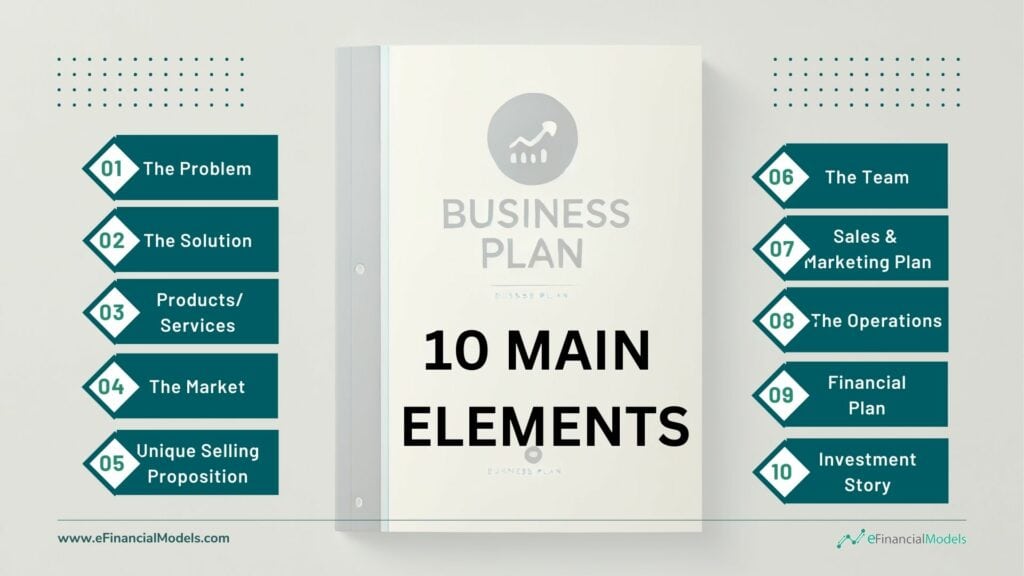
A business plan is a blueprint for success, encompassing ten essential elements: It starts with identifying The Problem, a critical pain point in the market. Then, it articulates The Solution, showcasing innovative offerings designed to address this need. Detailed descriptions of The Products and/or Services highlight how the company will profit from these offerings. The Market analysis delves into target demographics and potential reach. The Unique Selling Proposition (USP) sets the business apart from competitors, emphasizing its distinct advantages. The Team introduces the skilled individuals driving the venture. The Sales & Marketing Plan outlines strategies to attract and retain customers. The Operations section covers the day-to-day processes, ensuring smooth functionality. The Financial Plan projects profitability, cash flow, and funding needs. Finally, The Investment Story appeals to investors, illustrating the business’s potential for growth and return on investment.






















































1 – Cracking the Problem
“If you define the problem correctly, you almost have the solution.” – Steve Jobs
Picture a multitude of entrepreneurs, their determination to bring their visions to life often hindered by the intricacies of modern marketing, operational inefficiencies, and technological advancements. The founders, in their quest to establish a business, must first grasp the fundamental reason for its existence and the problem it aims to resolve. This problem statement, a cornerstone of the business plan, not only defines the purpose of the business but also guides its future direction.
Identifying a problem typically means there is demand. A problem can be obvious or sometimes even a problem we did not even know existed. It is crucial as it sets the stage for your business’s value proposition. It identifies and articulates the specific issue or set of topics that your target market is experiencing.
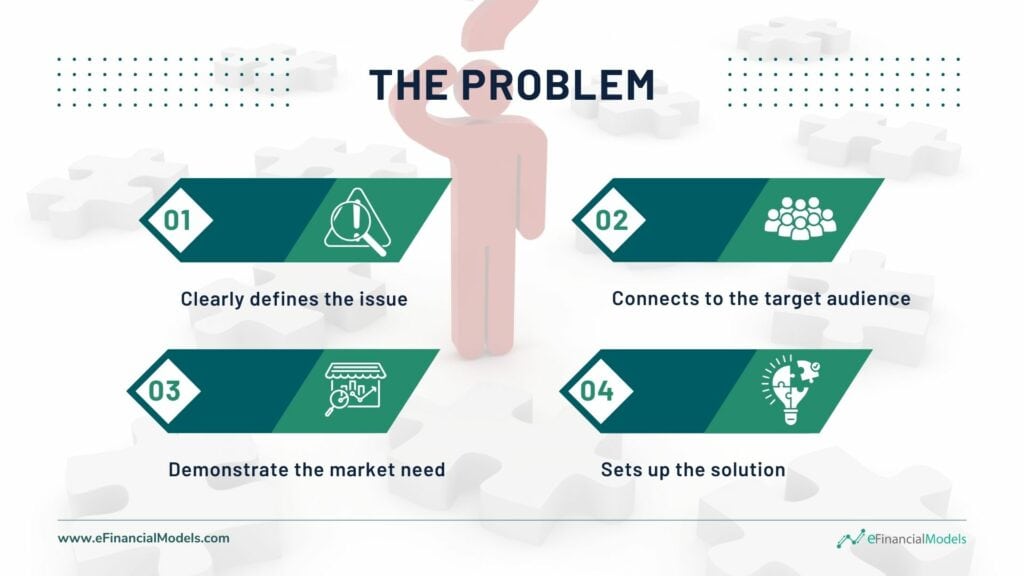
A well-defined problem statement does the following:
- Clearly Defines the Issue: It describes the problem in detail, explaining its nature, scope, and impact on the target audience. It helps potential investors, partners, and stakeholders understand the urgency and significance of the issue you aim to solve.
- Connects to the Target Audience: The problem identifies who is affected by the issue, detailing the demographics and psychographics of your target customers. This connection shows that you understand your audience’s pain points and are positioned to address them effectively.
- Demonstrates Market Need: By highlighting the problem, you illustrate a gap in the market that your business intends to fill. This part of the business plan should include relevant data, statistics, and examples to substantiate the existence and magnitude of the problem.
- Sets Up the Solution: The problem statement naturally leads to the presentation of your business solution. By clearly defining the problem, you create a compelling narrative for why your product or service is needed and how it will resolve the identified issues.
Remember when we had to stand by the sidewalk to get a cab? That was the only way to get from point A to point B fast in those times without your vehicle. Uber identified the core problem for their business plan by recognizing the inefficiencies and inconveniences in the traditional taxi and transportation industry. They saw that consumers faced challenges such as long wait times, unreliable service, and difficulty hailing cabs, especially during peak hours or in less accessible locations. Additionally, Uber identified drivers’ frustration with inconsistent earnings and underutilization of their time and vehicles. By leveraging smartphone technology, GPS, and a user-friendly app, Uber created a solution that provided a seamless and efficient way to connect passengers with drivers, ensuring reliable, on-demand transportation. This innovative approach addressed the pain points of riders and drivers, paving the way for a scalable and disruptive business model.
In essence, the problem section lays the foundation for the rest of the business plan by emphasizing the necessity and relevance of your business idea. It brings you closer to finding the solution.
2 – Discovering the Solution
“We cannot solve our problems with the same level of thinking that created them.” – Albert Einstein
Imagine a bustling city where countless people face minor yet nagging problems daily—a coffee lover waits too long for their morning brew, a commuter struggles with unreliable public transport, and an entrepreneur wrestles with outdated business software. In this dynamic setting, our business emerges as a beacon of innovation and relief, ready to offer solutions that not only ease these daily frustrations but also enhance the overall quality of life.
The solution section of our business plan acts as a blueprint, showcasing our commitment to identifying these challenges through keen observation, market research, and customer feedback. Here, we unveil our thoughtful and impactful responses to these issues, demonstrating our dedication to making life simpler, more efficient, and more enjoyable for everyone. The solution outlines the strategies and methods the business will employ to address the identified problem or need in the market. It should be customer-focused, detailing how the product or service meets their needs effectively and efficiently.
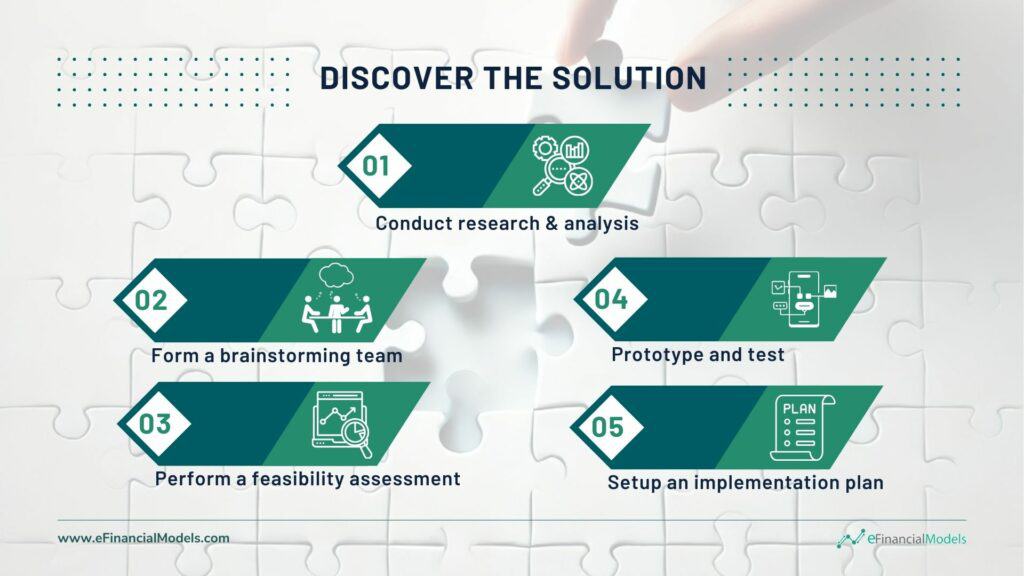
Discovering the solution to a problem in a business plan requires a systematic approach. Here are essential steps to guide you:
- Conduct Research & Analysis: Conduct thorough research to understand the root causes of the problem. Analyze market conditions, industry trends, customer feedback, and competitor strategies. Use tools like SWOT analysis (Strengths, Weaknesses, Opportunities, Threats) for a comprehensive view.
- Form a Brainstorming Team: Gather a diverse team to brainstorm potential solutions. Encourage creative thinking and consider various approaches. List all possible solutions, no matter how unconventional they may seem.
- Perform a Feasibility Assessment: Evaluate each solution’s feasibility. Consider factors like cost, time, resources, and potential impact. Use techniques like cost-benefit analysis, ROI calculations, and risk assessments to prioritize solutions.
- Prototype and Test: Develop prototypes or pilot programs for the most promising solutions. Test them in real-world scenarios to gather data on their effectiveness. Make adjustments based on feedback and performance metrics.
- Setup an Implementation Plan: Once a solution is validated, outline the steps, timelines, resources, and responsibilities required to execute the solution. Ensure there’s a mechanism for monitoring progress and making adjustments as needed. Communicate the solution and its benefits to all stakeholders to ensure buy-in and support. Establishing a continuous feedback loop to monitor the solution’s performance is also crucial.
One of the best examples of a solution to a problem in a business plan is Tesla’s approach to sustainable transportation. Faced with the challenge of reducing dependency on fossil fuels and combating climate change, Tesla’s founder, Elon Musk, envisioned a future dominated by electric vehicles (EVs). Tesla developed advanced battery technology and built a network of Supercharger stations to address the issues of limited range and slow charging times associated with EVs. By integrating innovative design, high performance, and sustainable energy solutions, Tesla not only disrupted the automotive industry but also accelerated the global transition to clean energy, setting a new standard for sustainable transportation.
Following these steps, you can systematically discover and implement effective solutions to problems in your business plan.
3 – Highlighting Your Products And/or Services
“The most successful businesses see customer needs as opportunities to innovate and provide exceptional products and services.” – Richard Branson
This business plan section is crucial because it outlines what the company will sell to generate revenue and how it will profit from these offerings. Every business, regardless of its size or industry, needs a reliable source of income to survive and thrive in the long term. At the core of this necessity is the fundamental task of defining the products and services the business will offer.
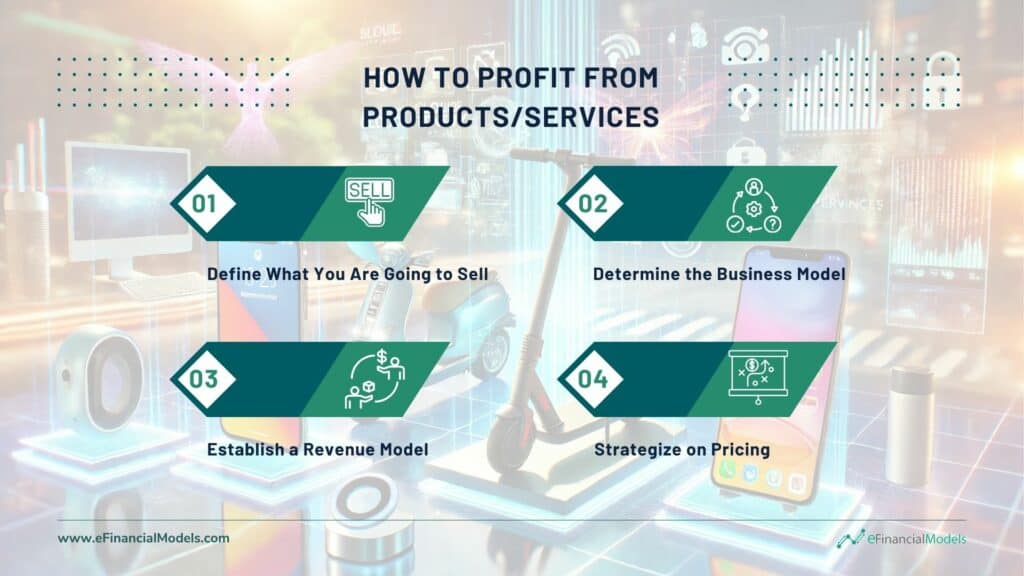
- Define What You Are Going to Sell: The first step in discovering the solution in your business plan is clearly defining what you will sell. It could be a product, service, merchandise, right, or asset. Show a thorough comprehension of the customer’s requirements and how your offering effectively addresses those needs. Highlight the key benefits and value customers will gain from your product or service. It could include cost savings, enhanced experience, improved performance, or time savings. Use market research to back up your claims.
- Determine the Business Model: Once you have defined what you will sell, the next step is to determine the business model. It involves outlining how your business will create, deliver, and capture value. Evaluate different revenue streams and cost structures to ensure the model is sustainable and profitable for your unique business context. The most common business models are B2Bs or B2Cs.
- Establish a Revenue Model: Your revenue model defines how your business will generate income. It is crucial to select a model that is in harmony with your business goals and customer preferences. The most common revenue models are direct sales, freemium offerings, licensing, retailing, subscriptions, and third-party advertising. Ensure your revenue model supports your overall business strategy and growth plans.
- Strategizing on Pricing for Long-term Growth: Pricing strategy is critical for attracting customers and achieving long-term growth. It entails establishing prices that represent the value of your offerings while ensuring profitability. Popular pricing strategies include cost-plus, penetration, skimming, or value-based pricing. Adjust prices based on market demand and economic conditions. Make sure your pricing represents the value and quality of your product or service. Maintain healthy profit margins to support reinvestment and growth. Be prepared to adjust prices as needed to respond to market changes and competitive pressures.
Apple Inc. serves as an exemplary case of discovering products and services to offer. Originally a computer company, Apple identified a significant market need for user-friendly, integrated personal electronics. It led to the development of the iPod, revolutionizing the music industry, followed by the iPhone, which redefined the smartphone market by merging communication, computing, and entertainment into a single device. Apple’s continuous innovation and customer-centric approach have expanded its product line to include the iPad, Apple Watch, and various services like Apple Music and iCloud, consistently addressing consumer demands and enhancing its ecosystem.
Discovering the solution in your business plan underscores the importance of viewing customer needs as opportunities for innovation. It is crucial when defining the products and services in a business plan. By meeting these needs with exceptional offerings, businesses can develop a compelling value proposition that motivates long-term success and growth.
4 – Grasping the Market Analysis for a Business Plan
“Good fortune is what happens when opportunity meets with planning.” – Thomas Edison
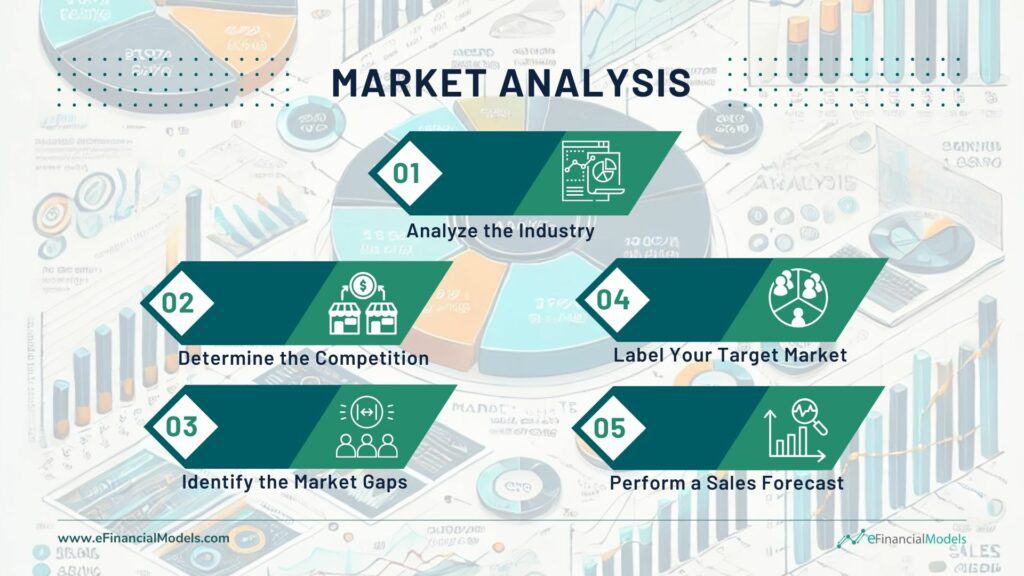
Once the problem has been identified, which the business plan will address, the next question is whether a market exists that the business can service. A market analysis for a business plan delves deeply into understanding the industry dynamics in which the business will operate. This section identifies the target market segments, evaluates their size and growth potential, and analyzes customer demographics, preferences, and behaviors. It also involves a thorough competitive analysis to assess the strengths and weaknesses of both existing and prospective competitors and identify any market gaps that the business can exploit. Additionally, market analysis examines market trends, regulatory environment, and economic conditions that could impact the business.
The essential steps to perform a market analysis for a business plan are:
- Analyze the Industry: To analyze the industry, research its overall size, growth rate, and trends. Look at key metrics like total revenue, number of businesses, and market segments. Understand the factors driving growth or decline, such as technological advancements, regulatory changes, or economic shifts. Use sources like industry reports, market research firms, and trade associations.
- Determine the Competition: Identify your main competitors and evaluate their strengths and weaknesses. Analyze their market share, product offerings, pricing strategies, and marketing tactics. Knowing the big players and their positioning will assist you in distinguishing your brand and uncovering opportunities to stand out. Study customer reviews and feedback to understand their reputation.
- Identify Market Gaps: To uncover unmet needs or pain points, conduct surveys, focus groups, and interviews with potential customers. Look for areas where existing products or services fall short or where there’s a demand for new solutions. This step is crucial for innovation and can lead to discovering a niche market your business can uniquely serve.
- Label Your Target Market: Define your potential customers by dividing the market according to demographics, psychographics, and purchasing behavior. Create detailed customer personas to understand their needs, preferences, and pain points. Analyze their buying habits, including where they shop, what influences their decisions, and how often they purchase. Customizing your products and marketing strategies to suit these insights will improve your likelihood of success.
- Perform a Sales Forecast: Estimate future sales by analyzing historical data, market conditions, and customer behavior. Use methods like trend analysis, market testing, and expert judgment to predict how much customers will pay for your product. Consider different scenarios, including best-case, worst-case, and most likely outcomes. A well-founded sales forecast will guide your pricing strategy, budgeting, and overall business decisions, helping you make confident, data-driven choices.
A prime example of a market analysis for a business plan can be found in Amazon’s early years. When Jeff Bezos pitched Amazon to investors, his market analysis highlighted the exponential increase in internet usage, the convenience of online shopping, and the limited number of online retailers. He projected a future where Amazon could expand beyond books to become the “everything store,” leveraging the scalability of the internet to capture a significant market share. This comprehensive and forward-thinking market analysis helped attract considerable investment and set the stage for Amazon’s growth into a global e-commerce giant.
A comprehensive market analysis, when executed with precision, can lay a robust foundation for your business plan. It results from the intersection of meticulous planning and seizing market opportunities. This not only enhances your understanding of the market dynamics but also significantly increases your chances of success in a competitive market.












































5 – Identifying Your Unique Selling Proposition (USP)
“The heart of your business plan is your unique selling proposition. It’s what sets you apart and drives your success.” – Jim Connolly
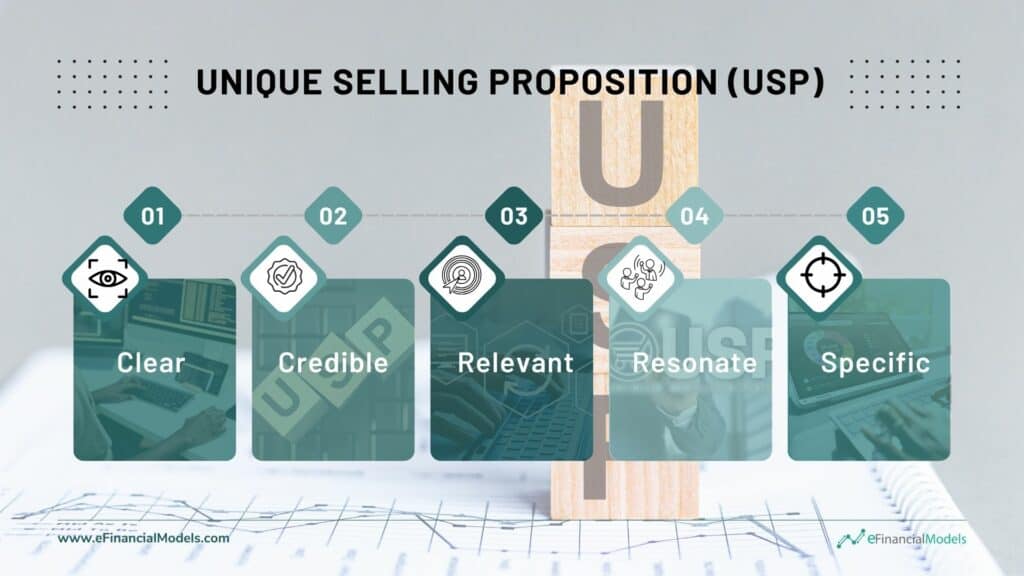
Every business needs a USP to create a solid basis for enduring growth and maintaining a competitive edge. A unique selling proposition (USP) differentiates your company from competitors and defines the unique value you offer customers. It highlights the distinct benefits and qualities that make your product or service superior or more appealing, providing a compelling reason for customers to choose your brand over others. This distinctiveness is crucial for building a solid market position, drawing in and keeping customers, and establishing brand loyalty. With a clear USP, businesses can distinguish themselves in a saturated market, diminishing their chances of long-term survival and success.
To identify your Unique Selling Proposition (USP) in a business plan, conduct thorough market research to analyze competitors and identify unmet market needs. Assess your business’s strengths and gather customer feedback to understand what makes your offerings unique. Identify key differentiators by listing unique features, benefits, and brand values. Develop a clear and concise USP statement focusing on specific customer benefits and supported by proof points. After this, you can test and refine your USP, a process that provides reassurance and confidence in the effectiveness of your USP. Once refined, integrate it into your business plan’s executive summary.
The key characteristics of a compelling USP:
- Clarity: The USP should be concise and easily understood by customers and stakeholders. It should articulate precisely what makes the product or service unique and why it is better than competing offerings.
- Credibility: The claims made in the USP should be believable and backed by evidence. Overstated or exaggerated claims can harm credibility and trust.
- Relevance: The USP should address a genuine need or problem that the target market experiences. It must resonate with the audience’s desires and priorities.
- Resonance: A good USP often connects with customers emotionally, creating a solid bond between the brand and its customers. It can be done by directly addressing their deepest needs and desires, creating a sense of trust, loyalty, and personal relevance.
- Specificity: A USP must focus on specific features, benefits, or values that distinguish the product or service. General claims are less effective than specific, tangible benefits. It must highlight aspects of the product or service that competitors do not offer, ensuring the proposition is genuinely unique in the marketplace.
In its business plan, Nike provides a compelling example of a unique selling proposition (USP). Nike’s USP revolves around its dedication to innovation, quality, and performance in athletic footwear, apparel, and equipment. The brand distinguishes itself through its commitment to technological advancements, such as developing high-performance materials and smart apparel, and its “Just Do It” slogan strongly emphasizes empowering athletes at every level. By clearly articulating what makes their offerings unique and desirable, businesses like Nike can effectively capture market share and build a strong, enduring brand. Thus, the USP serves as the core element that drives the strategic direction and success of the business.
The unique selling proposition (USP) underscores its pivotal role in a business plan. It distinctly differentiates a business, fueling its competitive edge and overall success.
6 – Lifting Up Your Team
“Great things in business are never done by one person. They’re done by a team of people.” – Steve Jobs
A core team is not just essential but also the driving force behind effectively executing the business plan. A well-qualified team adds credibility to the business plan. Investors need to know that the people behind the idea have the expertise and experience to make it a successful venture. Even the best business plan can only succeed with the right team. Highlighting the team’s strengths and track record demonstrates their ability to implement the strategy effectively.
The team section in a business plan underscores the collaborative nature of business success by highlighting the collective expertise, experience, and efforts of the individuals behind the venture. It demonstrates that the strength of the business lies not in a single visionary but in a diverse and skilled team working together towards a common goal. Each team member brings unique skills and perspectives, and their combined efforts drive the company’s innovation, efficiency, and growth. By showcasing a solid team, the business plan reassures stakeholders that the company has the human capital necessary to achieve its ambitious objectives and navigate the challenges ahead.
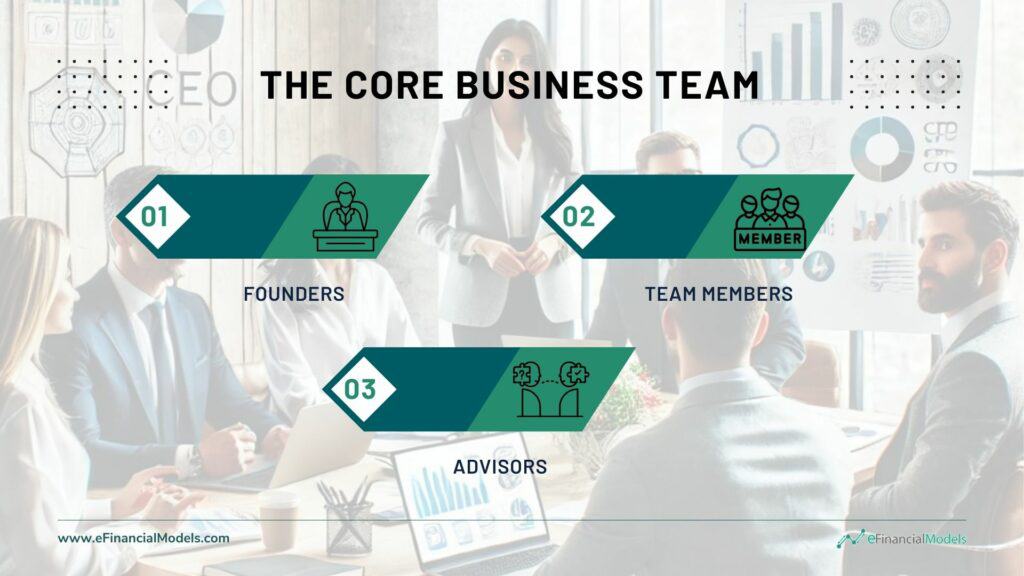
A strong team reduces the risk of failure and increases confidence in the company’s ability to navigate challenges and capitalize on opportunities. Here’s a breakdown of what this section should include:
- Founders: List the founders and their specific roles within the company. Highlight their professional backgrounds, including relevant industry experience, past entrepreneurial endeavors, and significant accomplishments.
- Team Members: Identify key team members, such as the Chief Operating Officer (COO), Chief Technology Officer (CTO), Chief Marketing Officer (CMO), and other essential positions. Detail their qualifications, skills, and relevant experience. It includes educational background, previous roles, and specific expertise that makes them an asset to the company. Describe their contributions to the business plan and their roles in achieving the company’s objectives.
- Advisory Board: Introduce the advisory board members, focusing on their expertise and the value they bring to the company. Highlight their experience, industry connections, and how they will support the business in strategic decision-making and networking.
Warner Bros. Entertainment’s business plan highlighted the exceptional team of four Warner brothers—Harry, Albert, Sam, and Jack Warner—whose collaborative efforts and visionary leadership established the company as a powerhouse in the entertainment industry. Harry Warner, the president, was the strategic force behind the company’s financial and operational framework, while Albert, the treasurer, managed the crucial aspects of studio financing and operations. The technology enthusiast Sam Warner spearheaded the introduction of synchronized sound in films, a groundbreaking advancement that revolutionized the industry. Jack Warner, the studio’s dynamic and charismatic head of production, played a pivotal role in film production and talent acquisition. The brothers’ combined expertise, innovative approach, and cohesive teamwork were instrumental in creating a legacy of cinematic excellence, making Warner Bros. a legendary name in the film and television industry.
7 – Promoting the Products/Services Via a Sales & Marketing Plan
“Good fortune is what happens when opportunity meets with planning.” – Thomas Edison
Promoting products or services through a well-structured sales and marketing plan is not just a part of any business plan, it’s the key to attracting customers. The marketing plan, a comprehensive strategy, is designed to not only promote a company’s products or services but also to attract customers. It’s the roadmap that outlines the strategy and tactics the business will use to attract and retain customers, drive sales, and achieve market penetration.
Understanding its target market deeply is crucial for a company to sell its products effectively. This involves identifying potential customers’ needs and preferences and developing a unique value proposition that sets its offerings apart from competitors. It also entails selecting the proper sales channels, be it direct sales, online platforms, or retail distribution, and using a mix of promotional activities, such as advertising, public relations, social media campaigns, and events.
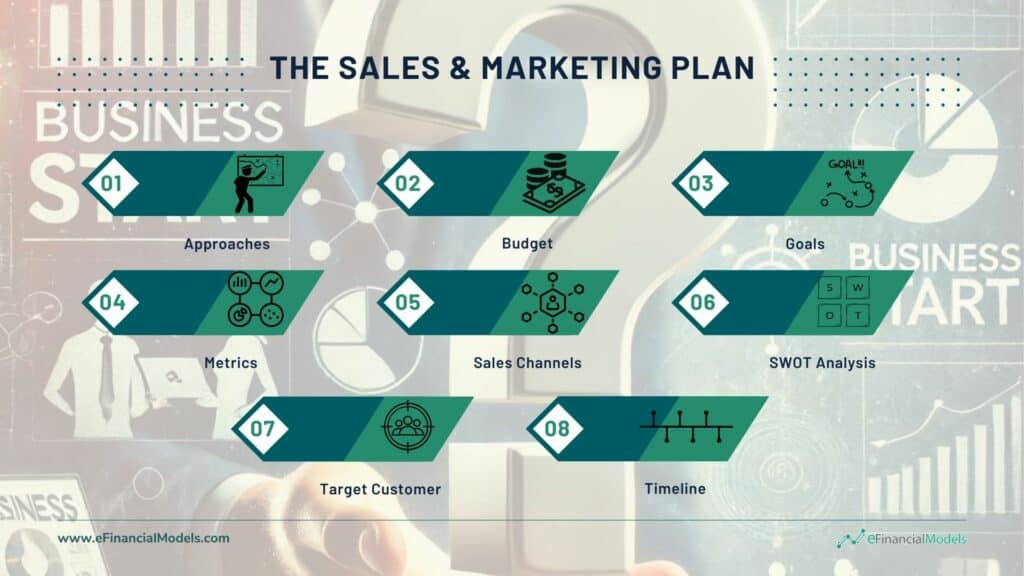
A comprehensive sales and marketing plan is a must for any business. It’s like a safety net that ensures you’re prepared for every step of the marketing journey. It should include the following key components:
- Approaches: Detailed actions to implement the marketing strategies, including specific campaigns, promotions, events, and advertising efforts. It also outlines the sales process, including lead generation, lead nurturing, and conversion strategies.
- Budget: Detailed budget allocation for marketing and sales activities, including costs for advertising, software, events, and personnel. It comes together with a forecasted return on investment (ROI) for each marketing activity.
- Marketing Goals: Specific, measurable, achievable, relevant, and time-bound (SMART) goals that the marketing efforts aim to achieve. Examples include boosting sales, expanding market share, generating leads, or increasing brand awareness.
- Metrics: Metrics to measure the effectiveness of marketing and sales efforts, such as conversion rates, customer acquisition costs, and sales revenue.
- Sales Channels: Identification of sales channels (direct sales, online sales, retail distribution, etc.) and sales team structure.
- SWOT Analysis: This analysis helps businesses understand their internal capabilities and external challenges, enabling them to develop effective strategies for growth and competitiveness.
- Target Customer: Identify the target audience, including customer segments, needs, preferences, and buying behavior.
- Timeline: A timeline outlining when each marketing and sales activity will be executed and an action plan detailing responsibilities, deadlines, and milestones.
Coca-Cola’s sales and marketing plan is a textbook example of effectiveness. A robust global branding initiative is central to their strategy, emphasizing consistency and cultural adaptation. Coca-Cola invests heavily in advertising, utilizing both traditional media and digital platforms to maintain a ubiquitous presence. They leverage iconic branding, memorable slogans, and strategic partnerships with events and influencers to enhance brand loyalty and recognition. Their marketing efforts are complemented by an extensive distribution network, ensuring product availability in diverse markets. By continuously innovating their product lines and engaging in localized marketing campaigns, Coca-Cola sustains its market dominance and drives consistent revenue growth.
Businesses can effectively capitalize on favorable conditions and drive growth by thoroughly researching the market, identifying opportunities, and strategically planning their approach. This proactive and well-prepared strategy positions them to seize opportunities, turning potential advantages into tangible successes.



















8 – Optimize Operations to Streamline Success
“A clear vision, backed by definite plans, gives you a tremendous feeling of confidence and personal power.” – Brian Tracy
The operational plan is a detailed blueprint that outlines the day-to-day activities required to run a business efficiently. It translates the organization’s strategic objectives into specific tasks and projects, assigning responsibilities and timelines to ensure that these tasks are completed effectively. This plan covers production processes, quality assurance, supply chain coordination, and logistics. It also includes resource management, such as staffing, equipment, and technology needs. An operational plan ensures that the company’s daily operations align with its strategic goals, offering a clear guide for accomplishing immediate and long-term goals. It fosters a productive and focused environment, where every action is geared towards the business’s success.
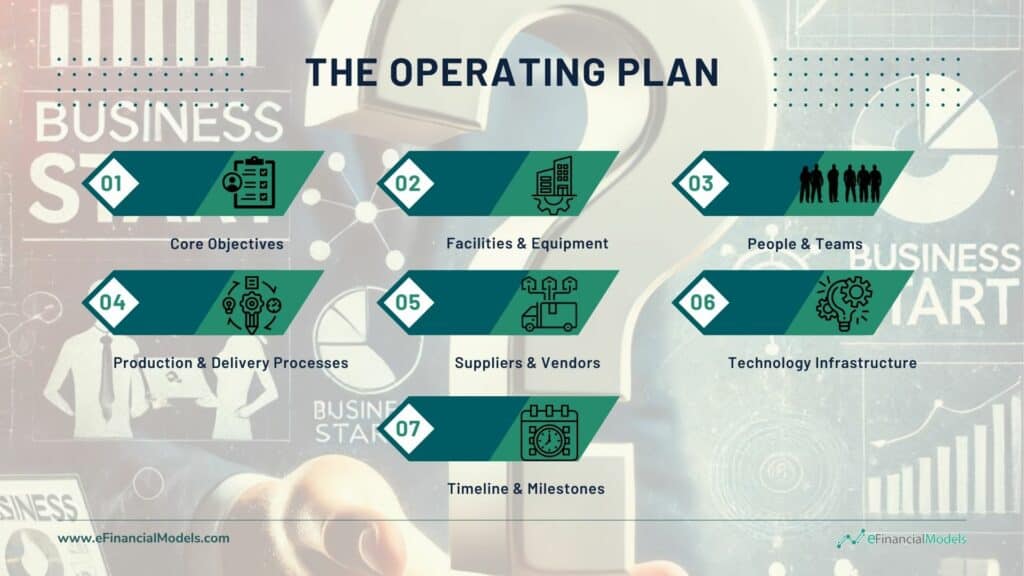
The operating plan is the roadmap for how your business will function daily to achieve the goals you laid out in your business plan. It translates your grand vision into actionable steps. Here’s what a solid operating plan in a business plan should include:
- Core Objectives: What specific goals do you want to achieve through your operations? Align these with the overall business goals you outlined earlier in your plan. For instance, if your main goal is fast and efficient delivery, your operations plan would focus on streamlining order fulfillment processes.
- Facilities and Equipment: Imagine this as your business’s physical footprint. Describe the type of space you’ll need to operate, whether a manufacturing plant, a retail storefront, or office space. Additionally, outline the equipment required for your operations. If any permits or licenses are needed to operate out of your chosen facility, mention those here as well.
- People and Teams: Your business is only as strong as its workforce. This section identifies the staffing needs to run your operations effectively. Specify the roles required, the responsibilities associated with each position, and any specific skillsets you’ll need to look for when hiring.
- Production and Delivery Processes: Here, you’ll detail how to make your product or deliver your service. It could include outlining step-by-step production workflows, how you’ll ensure quality control throughout the process, and, if applicable, how you’ll manage inventory levels to avoid stockouts or overstocking.
- Suppliers and Vendors: No business operates in isolation. You’ll likely depend on suppliers and vendors for raw materials, equipment maintenance, or even outsourced services. In this section, it’s vital to identify your key suppliers and establish robust relationships with them. This will ensure a smooth and reliable supply chain, a critical component of successful operations.
- Technology Infrastructure: In today’s business landscape, technology often serves as the backbone of operations. It’s essential to outline the software programs, hardware, and any other technological needs that will enable you to run your business efficiently. This could range from project management tools to customer relationship management (CRM) software. Investing in the right technology is a key factor in ensuring the smooth operation of your business.
- Timeline and Milestones: A clear roadmap is essential for success. Set realistic deadlines for achieving vital operational goals. This will help you track your progress, identify areas that might need to catch up and make adjustments as needed. By laying out milestones, you can ensure you’re on track to achieve your overall business objective.
Amazon’s operating plan is a quintessential example of efficiency and strategic foresight. At the core of its operations is the seamless integration of its vast supply chain network with cutting-edge technology. The company leverages its sophisticated logistics infrastructure, including a global network of fulfillment centers, advanced inventory management systems, and robust delivery mechanisms, to ensure swift and reliable customer service. Additionally, Amazon’s commitment to innovation is evident in its continuous investment in automation and artificial intelligence, which optimizes processes and reduces operational costs. This holistic approach enhances customer satisfaction and drives scalability and profitability, positioning Amazon as a leader in the e-commerce industry. Amazon’s meticulously crafted operational strategies are designed to support the company’s ambitious vision of becoming the world’s most customer-centric company. These strategies, which encompass advanced logistics, innovative technology, and streamlined processes, empower Amazon to deliver exceptional value to its customers with confidence. This unwavering commitment to customer-centricity, coupled with a clear strategic vision and meticulous execution, instills a sense of control and capability, driving the company’s sustainable success and reinforcing its position as an industry leader.
9 – Profit Maximization with a Financial Plan
“A business plan is a guess at the future and how you intend to exploit it.” – Eric Ries
The financial plan, a critical strategic plan component, outlines the company’s financial goals and strategies. A robust financial plan guarantees that the organization can manage its resources efficiently, meet its financial obligations, and achieve sustainable growth. It also provides a basis for financial decision-making and helps attract investors by demonstrating the company’s financial viability.
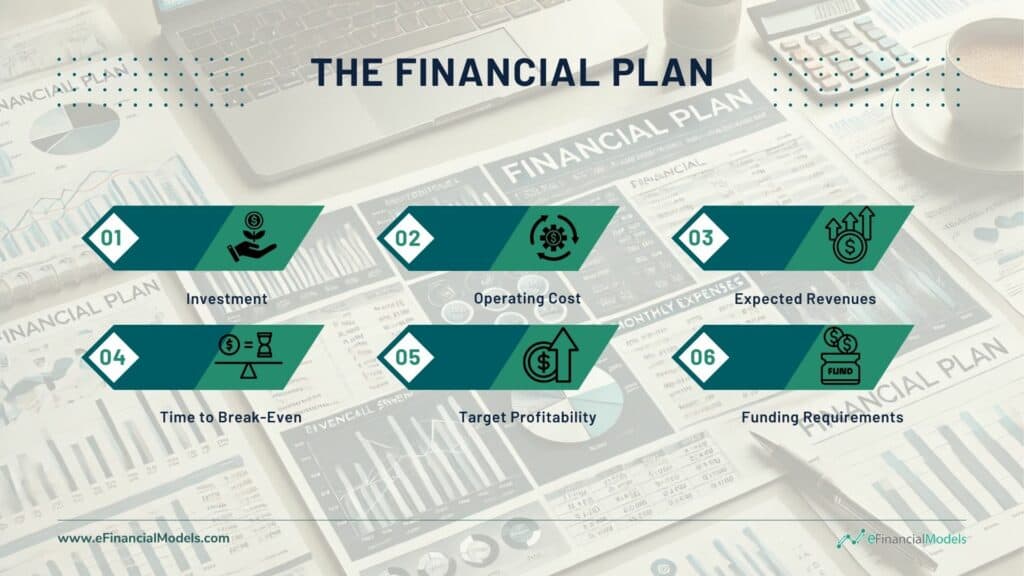
A financial plan provides a comprehensive overview of how the company intends to manage its finances to achieve its goals. The essential components of a financial plan include:
- Investment: This section details the initial capital required to start the business. It includes funds for purchasing equipment, inventory, property, and other startup costs. Investments are often divided into fixed assets (like machinery and buildings) and working capital (funds needed for day-to-day operations). It’s essential to provide a clear breakdown of how these investments will be allocated and the sources of these funds, whether through personal savings, loans, or investor contributions.
- Operating Cost: Operating costs refer to the daily expenses required to run the business. These include fixed costs (rent, salaries, utilities) and variable costs (raw materials, sales commissions). A detailed analysis of operating expenses helps the budget and ensures the business can sustain its operations without financial difficulties. Understanding these costs is also vital for pricing strategies and profitability analysis.
- Expected Revenues: Expected revenues are projections of the income the business anticipates generating from its operations. This section should include sales forecasts based on market analysis, pricing strategies, and anticipated sales volumes. Revenue projections are usually presented monthly, quarterly, and annually, helping stakeholders understand the business’s potential income streams and market viability.
- Time to Break Even: The break-even point is when the business’s revenues equal its total costs, resulting in neither profit nor loss. This metric is crucial for understanding how long it will take the company to generate profit. Calculating the time to break even involves analyzing fixed and variable costs against expected revenues. It helps set realistic financial goals and timelines for the business.
- Target Profitability: Target profitability outlines the financial goals regarding profit margins and net income. This component includes profit forecasts and targets, which help measure the business’s financial performance over time. It involves setting short-term and long-term profitability goals and understanding the necessary strategies to achieve these targets, such as cost reduction, pricing adjustments, and sales growth initiatives. Financial statements show target profitability by detailing projected revenues, expenses, and net income, allowing for analysis of expected profit margins and financial performance against set goals.
- Funding Requirements: Funding requirements specify the capital needed to support the business’s growth and operations. This section should include detailed information about the types and funding sources required, whether from equity investors, loans, grants, or other financial instruments. It should also outline the intended use of these funds, the timeline for securing them, and their associated terms and conditions.
When Tesla Motors was in its early stages, founder Elon Musk aimed to revolutionize the automotive industry with electric vehicles. The feasibility study for their first mass-market car, the Model S, included a detailed manufacturing plan. Tesla analyzed the initial investment needed for their Fremont factory, estimated operating costs for production, and projected revenues from anticipated sales. They assessed the break-even point based on production capacity and sales volume targets, ensuring that future profitability would justify their high initial capital expenditure. This comprehensive feasibility analysis helped secure investor confidence and laid the groundwork for Tesla’s eventual success. Tesla’s financial plan demonstrated a clear path to achieving long-term financial goals, ultimately paving the way for its dominant position in the electric vehicle market.
A financial plan generally involves forecasting future financial conditions and strategies for leveraging opportunities. It is an educated prediction using market analysis, projected revenues, operating costs, and investment needs to chart a course toward profitability. It outlines how the business intends to capitalize on market trends, manage risks, and allocate resources efficiently. By setting financial goals, identifying funding requirements, and establishing a timeline for reaching profitability, the financial plan provides a roadmap for exploiting future opportunities and navigating uncertainties.
10 – Unveil Your Winning Investment Story
“The best way to predict the future is to create it.” – Peter Drucker
The investment story of a business plan is a compelling narrative designed to attract investors by highlighting the business’s unique value proposition, market potential, and strategic vision. It should not only convey the business’s potential for substantial returns and its competitive advantages but also why it stands out in the market with its unique value proposition. The investment story must be engaging, credible, and backed by data to instill confidence in potential investors.
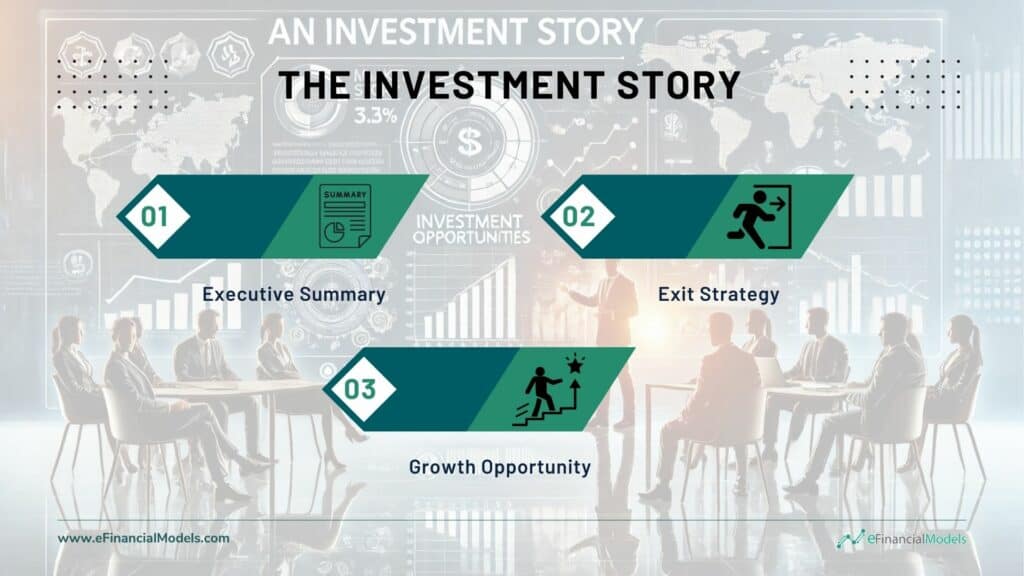
The critical elements of an investment story in a business plan include:
- Executive Summary: The executive summary in a business plan is a concise overview of the investment story. It is the first impression for potential investors, partners, and stakeholders, highlighting key aspects such as the business concept, market opportunity, competitive advantage, financial projections, and the management team’s expertise. An effectively crafted executive summary can engage readers, encouraging them to delve deeper, thereby increasing the likelihood of securing funding, partnerships, and support. It highlights the unique opportunity to be part of a venture with a strong market demand, innovative solutions, and a proven track record of success.
- Exit Strategy: An exit strategy occurs when a business owner or investor exits or liquidates a current investment after achieving a goal or mitigating loss. It could involve transitioning ownership of a company to another company, e.g., through a Merger or Acquisition, another investor through an Initial Public Offering (IPO), or one’s family member. Planning an exit strategy for the business is a crucial aspect of business planning. You first need to define your objectives, understand your reasons for leaving, and determine your financial goals. Next, it’s essential to understand your business’s value. This comprehensive understanding will not only help in setting a realistic price but also in identifying areas that might need improvement before selling. Picking the right exit strategy for a business is pivotal. Consider various types of buyers, such as strategic buyers and companies within your industry looking to expand their market share. Financial buyers, including private equity firms or investors, might also be interested in your profitable business. Internal buyers, like employees or management team members, could also be potential candidates. Each type of buyer will have different expectations and approaches, so understanding your options for a business’s exit strategy will help you target the right audience.
- Growth Opportunity: The investment story should also include the immense growth opportunity of the business. It details how the market is poised to expand at a significant compound annual growth rate (CAGR) over the next few years. The company can capitalize on this growth through its innovative product offerings, customer base, and strategic geographic expansion. By leveraging its core competencies and continually investing in research and development, the business aims to capture a substantial market share. Strategic initiatives such as diversifying product lines, enhancing digital presence, and exploring new market segments are critical drivers for future growth. You can show growth opportunity by projecting increasing revenue streams and expanding profit margins over time, supported by assumptions of market expansion, customer acquisition, and efficiency improvements.
WhatsApp’s compelling investment story in its business plan revolved around its revolutionary approach to messaging, which addressed the global demand for instant, reliable, and accessible communication. WhatsApp’s exit strategy was meticulously planned, focusing on building a massive user base with an easy-to-use, ad-free messaging platform. By prioritizing user growth and engagement over immediate monetization, WhatsApp positioned itself as an attractive acquisition target for larger tech companies looking to expand their user base and integrate seamless communication tools. The culmination of this strategy was Facebook’s acquisition of WhatsApp for $19 billion, marking one of the most significant tech acquisitions and underscoring the importance of strategic user growth and positioning in exit planning.
The investment story of a business embodies the proactive vision and strategic execution required to shape market realities. The company showcases its potential to redefine industry standards and capture emerging opportunities by presenting a clear, innovative roadmap. This forward-thinking approach, underpinned by robust financial projections and a compelling growth strategy, illustrates the company’s commitment to anticipating and actively driving future trends. Investors are thus invited to partake in a journey where the business doesn’t just adapt to the future but strategically crafts it, ensuring sustainable success and substantial returns.
The Power of Financial Model Templates to Boost Your Business Plan
Making a business plan helps the investors understand their investments, and it helps the founders organize and strategically improve the plan upon review. More importantly, the main elements of a business plan gives the founders direction from their vision until the operation on what needs to happen to succeed. Overall, the business plan should answer and address all questions or concerns that might be brought up and, ideally, lead to the business’s success.
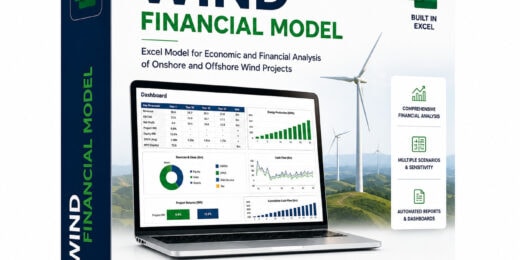
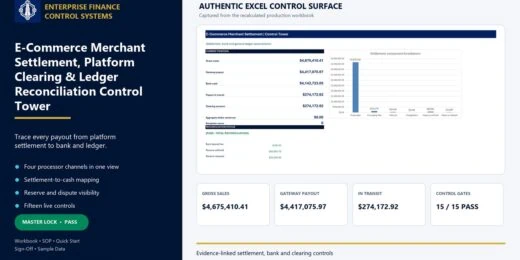
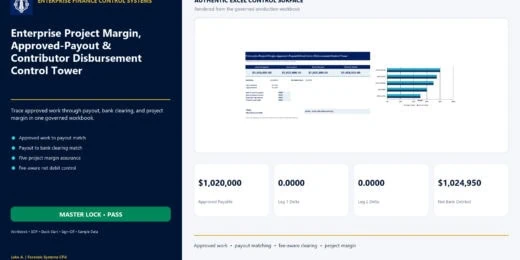
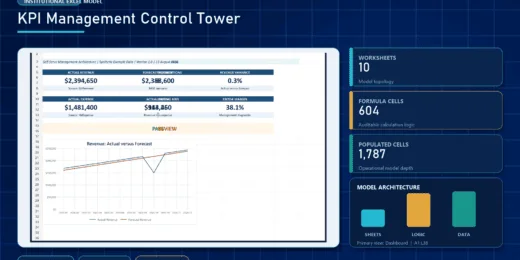
Building a business plan from scratch takes a long time; hence, using a financial model template will help save time and resources. Financial model templates are powerful tools that can significantly enhance your business plan by providing a structured, accurate, and efficient way to forecast financial performance. They streamline the process of creating detailed financial projections, allowing you to easily input critical data and generate comprehensive reports that showcase your business’s potential to investors and stakeholders.
By leveraging pre-built models tailored to various industries, you can ensure consistency, reduce errors, and save valuable time, ultimately leading to more informed decision-making and a more substantial, more convincing business plan.
“
“







You might also like:
- 10 Ideas to Increase Average Revenue Per User
- How to Write a Killer Mobile App Business Plan
- 5 Practical Tips to Help Raise Funds For Startups
- Best in Class Property Appraisal Methods and What to Look Out for
- Boost Your Business’s Financial Management with this Excel Budget Template
- How to Prepare a Financial Feasibility Study for Coffee Farming?
- How to Optimize the Average Selling Price: Strategies for Higher Profits
- Airbnb
- Commercial Real Estate Properties
- Retail
- Business Valuation
- 10-year Financial Projections
- 5-year Financial Projections
- Financial Ratios Cheat Sheet
- Simple Budget Planner Template
- Understanding Debt Sizing & Project Finance Ratios
- Mastering Business Finance: The Three-Statement Financial Model
- Achieve Financial Success By Knowing Your Business Plan Model
- Financial Planning for Small Business Owners – Taking an SBA Loan
- FDI in Services: The Road Ahead
- How to Create a Budget Plan – Using the Best Excel Budget Template
Tags: financial planning