
0 ITEMS

What is the difference between a 12 Month and a Multi-Year Financial Projections Template?
Table of Content

Creating accurate financial projections is a crucial component of running a successful business. Financial projections help you plan for the future and ensure you have the resources to achieve your goals. There are two main types of financial projections templates: a 12-month and a multi-year. Understanding the differences between these two templates is essential to make the best decisions for your business.
What is a 12-Month Financial Projections Template?
A 12-month financial projections template is used to create short-term financial forecasts. This type of template is designed to provide an overview of a company’s financials over the next 12 months. It typically contains income and expense projections, cash flow statements, and balance sheets. This template type is most useful for businesses that are just starting and need an initial sense of their financials.
What is a Multi-Year Financial Projections Template?
A multi-year financial projections template is designed to provide a more detailed and comprehensive look at a company’s financials over a longer period. This type of template typically contains income and expense projections, cash flow statements, balance sheets, and other financial statements for multiple years in the future. This template type is most useful for established businesses planning for the long term and making informed decisions about their future.
The Key Difference Between 12-Month and Multi-Year Financial Projections Templates
The key difference between 12-month and multi-year financial projection templates lies in the time horizon they cover and the level of detail they provide. Furthermore, they also differ in use cases, assumptions, and uncertainties.
Time Horizon
As the name suggests, a 12-month financial projection template covers one year. It typically looks ahead for the next 12 months from the current date. This short-term projection is useful for businesses that want to assess their financial performance and make informed decisions in the immediate future.
In contrast, a multi-year financial projection template covers a longer time horizon, typically two to five years or even more. This template provides a broader view of a company’s financial outlook over an extended period, allowing for strategic planning and long-term decision-making.
Level of Detail
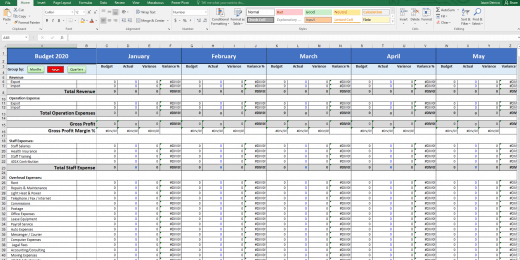
Due to the shorter time frame, 12-month projections focus on more granular details, such as monthly or quarterly projections for revenue, expenses, cash flow, and other financial metrics. These projections may also consider seasonality and short-term fluctuations in the market.
With a longer horizon, multi-year projections are generally less detailed monthly. Instead, they provide an overview of the expected financial performance for each year. These projections might focus on annual revenue growth rates, major capital expenditures, and other high-level financial trends.
Use Cases
The 12-month financial projections templates are particularly useful for short-term planning, budgeting, and monitoring of day-to-day operations. They are often employed by startups, small businesses, and companies facing immediate financial challenges.
Multi-year projections are essential for long-term strategic planning, fundraising efforts, and assessing the financial feasibility of significant projects or investments. Larger, more established businesses and organizations that require long-term planning often use multi-year financial projection templates.
Assumptions and Uncertainty
Due to the shorter time frame, 12-month financial projections might rely more on current market conditions and historical trends. They are generally subject to less uncertainty since the forecast period is relatively near.
Multi-year projections inherently involve more uncertainty as a wider range of potential factors influences them. As a result, they may require additional consideration of potential risks, changing market dynamics, and macroeconomic conditions.
Ultimately, the choice between a 12-month and multi-year financial projection template depends on the specific needs and objectives of the business or organization. Companies often use both types of projections to comprehensively understand their financial outlook, combining short-term tactical planning with long-term strategic vision.




























Creating Accurate Financial Projections
Creating accurate financial projections requires careful consideration and understanding of the company’s financials. A few key steps to consider include:
- Analyze historical financial data to identify trends and develop projections.
- Estimate future revenue and expenses.
- Create realistic assumptions based on past performance and current market conditions.
- Use a multi-year template to create projections for multiple years in the future.
- Monitor the accuracy of projections and make adjustments as necessary.
Understanding the differences between 12-month and multi-year financial projections templates is essential for any business looking to create accurate financial projections. For businesses just starting, a 12-month template can provide a quick overview of their financials. A multi-year template is the better option for established businesses that need to plan for the long term. By taking the time to understand these templates and create accurate projections, businesses can ensure that they have the resources needed to achieve their goals.
Tags: Investment Analysis