
0 ITEMS

Customer Relationship Management (CRM)
CRM refers to the strategies, practices, and technologies that companies use to manage and analyze customer interactions throughout the customer lifecycle. Its primary goal is to enhance customer service, retain customers, and drive sales growth. A CRM system helps companies stay connected to customers, streamline processes, and improve profitability. In the context of financial modeling, understanding the metrics and data from CRM systems can provide insights into sales forecasts, customer acquisition costs, and customer lifetime value. Our financial model templates integrate CRM data, allowing businesses to make informed financial decisions based on customer behavior and trends. Whether you're a small business aiming to understand your customer base better or a larger enterprise looking to optimize customer-centric strategies, our templates offer a comprehensive framework for integrating and analyzing CRM data in your financial models.
A good Customer Relationship Management tool should allow to derive a sales forecast which can be used to substantiate a revenue forecast.


🚀 A professional Private Equity Buy-and-Build Roll-Up M&A Financial Model…


Excel-based tool to analyse customer base development, churn and retention,…


En español - Project Plan: Simple and Advance Gantt Chart…
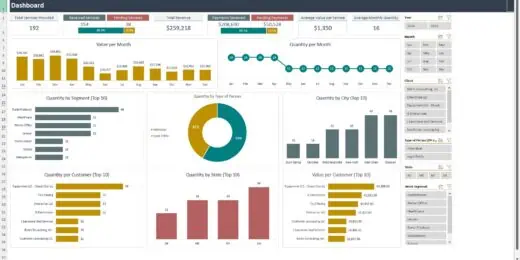

Effectively track and manage your consulting services with this structured…

This Customer Relationship Management (CRM) SaaS Financial Model Template has…


A comprehensive editable, 5-year 3 statement MS Excel spreadsheet for…

Unlock your B2B SaaS venture's full potential with our B2B…

A comprehensive editable, 5-year 3 statement MS Excel spreadsheet for…


Structured database with the right columns to keep track of…

This dashboard will improve the tracking of any general contracting…

Lifetime access to all future templates as well! Here is…

A fund management tool to track many positions over time…

This is a stand-alone-template that is ready for data entry…

This is a tool designed to help car salespeople. The…


This financial model provides a comprehensive financial plan template for…

Fully-Vetted Comprehensive Digital Media Financial Model + Video Series



Build a cohort of enterprise clients with varying probabilities of…
Smart Financial Planning for Customer Relationship Management (CRM)

In today's fast-evolving digital economy, Customer Relationship Management (CRM) systems have become pivotal tools for businesses aiming to enhance customer interactions and streamline operations. The CRM industry is witnessing a robust growth trajectory, driven by technological advancements and the increasing personalization demand of customer experiences. With a market that's projected to expand significantly over the next few years, financial planning becomes indispensable for CRM companies striving for long-term success. Effective financial planning for CRM is not merely an administrative necessity but a strategic imperative. It enables firms to anticipate and manage the distinct financial challenges associated with CRM operations. From capitalizing on recurring revenue streams to optimizing costs associated with customer acquisitions, CRM companies need robust financial strategies to navigate the complexities of the industry. This article explores the unique financial landscape of the CRM market and underscores the importance of developing strategic financial models tailored to the nuances of this sector.
Understanding the Unique Financial Landscape of the CRM Industry
The CRM market has been experiencing exponential growth, fueled by the digital transformation initiatives of companies across various sectors. This transformation is aimed at improving customer interactions and service delivery. The increasing adoption of SaaS (Software as a Service) models has further accentuated this growth, offering scalable and accessible CRM solutions to businesses of all sizes. As the industry continues to evolve, financial planning becomes a core component in addressing the diverse challenges and opportunities present within the domain.Overview of the CRM Market
Globally, the CRM industry is valued in billions, with projections indicating continued expansion. One key reason for this growth is the sector's ability to offer personalized and efficient customer interactions, which are critical in the current business environment. Financial planning plays a significant role in the CRM industry by helping enterprises strategically allocate resources to capitalize on emerging opportunities, respond to competitive pressures, and ensure a sustainable financial future.Key Financial Characteristics
The financial dynamics of the CRM industry are characterized by a recurring revenue model, primarily through subscription-based services, as opposed to one-time sales. This model provides a predictable revenue stream, allowing for more accurate financial forecasting and budgeting. However, CRM companies must also contend with significant customer acquisition costs (CAC) and must optimize these to maintain profitability. Moreover, calculating and maximizing customer lifetime value (CLV) becomes essential to ensure that customers remain with the platform long enough to justify the initial acquisition costs.Market Dynamics
CRM entities must navigate a highly competitive and sometimes saturated market, which increases the importance of financial agility and innovative planning. Technological advancements, such as artificial intelligence and machine learning, are reshaping customer expectations and interactions, making it crucial for CRM companies to adapt and invest wisely. Financial planning models need to incorporate these technological shifts to stay ahead of the curve and leverage new opportunities effectively.Crucial Key Performance Indicators (KPIs) for CRM Financial Planning
Key Performance Indicators (KPIs) are critical in measuring the financial health and potential of CRM businesses. Understanding and optimizing these metrics is vital to achieving financial sustainability and growth within the industry.Customer Acquisition Cost (CAC)
Customer Acquisition Cost measures the expense incurred to attract a new customer. It's a crucial KPI for CRM companies as it directly impacts the return on investment (ROI) calculations. High CAC can strain the business's financial resources, making it imperative for firms to devise strategies that minimize these costs through targeted marketing, efficient sales processes, and customer referrals.Customer Lifetime Value (CLV)
Customer Lifetime Value represents the total revenue expected from a customer over their entire relationship with the company. CLV is pivotal for revenue forecasting and assessing the financial viability of a CRM company. Accurate CLV calculations can be achieved through comprehensive data analysis and customer segmentation, offering insights into customer behavior that drive retention and upsell strategies.Churn Rate
The churn rate, or the rate at which customers stop using the service, significantly impacts financial planning and sustainability. High churn rates can erode revenue streams, making it critical for CRM companies to employ strategies that enhance customer satisfaction and loyalty. Reducing churn involves improving product features, enhancing customer support, and developing value-added services that keep customers engaged.Monthly Recurring Revenue (MRR) and Annual Recurring Revenue (ARR)
MRR and ARR are fundamental in forecasting revenue and planning long-term strategies. These metrics provide a stable financial outlook by highlighting the predictable income from subscription services. Accurate forecasting hinges on analyzing historical data and market trends, ensuring CRM companies remain financially stable and can support future growth initiatives.Effective Budgeting Strategies for CRM Firms
Effective budgeting is the backbone of successful financial planning within CRM firms. Strategic budgeting aligns financial goals with business objectives, allowing CRM companies to allocate resources efficiently and prepare for market changes.Setting Realistic Financial Goals
Setting achievable financial objectives that complement business strategies ensures long-term success. Involving key stakeholders in the budgeting process enhances accuracy and buy-in, particularly when attempting to scale operations or enter new markets. Realistic goals provide a clear path for growth and value creation within the organization.Resource Allocation
Balancing budgets across technology investments, marketing, and customer service is essential for CRM firms to thrive. Prioritizing initiatives based on potential ROI allows companies to focus on projects that offer the greatest value, fostering a culture of innovation and continuous improvement.Scenario Analysis and Contingency Planning
Scenario analysis involves modeling various financial outcomes to prepare for market uncertainties. By examining best-case, worst-case, and average scenarios, CRM firms can develop robust contingency plans that safeguard against unforeseen disruptions and aid in strategic decision-making.The Advantages of Using Financial Model Spreadsheet Templates
Financial model spreadsheet templates, such as those offered by eFinancialModels, provide CRM firms with a valuable resource for streamlined budgeting and financial planning processes. These tools offer a range of benefits essential for maintaining financial accuracy and flexibility. Efficiency and Accuracy Templates can significantly reduce the time spent on financial modeling by offering pre-built frameworks that accommodate complex calculations. Excel plays a critical role in ensuring precision and minimizing errors, leveraging its powerful computational capabilities. Customization and Flexibility Customizable templates cater to the specific needs of CRM companies, enabling them to adapt quickly to changing market conditions. The flexibility of these models ensures that businesses can tailor their financial strategies to support specific operational goals and external dynamics. Visualization and Reporting The visualization tools within Excel facilitate enhanced insights, allowing stakeholders to comprehend financial data through intuitive charts and graphs. Well-structured templates assist in effectively communicating financial performance to relevant parties, fostering transparency and informed decision-making.Conclusion: Taking the Next Step in Financial Planning for CRM
Financial planning is a critical component for thriving in the competitive CRM industry. By understanding the distinct financial characteristics and key performance indicators, CRM companies can develop strategies that align with their objectives and market dynamics. The use of advanced financial models, like those from eFinancialModels, can further streamline this process, providing the tools necessary for accurate forecasting and strategic planning. For CRM businesses looking to enhance their financial decision-making, adopting sophisticated financial models is a wise course of action. eFinancialModels offers a selection of financial model spreadsheet templates specifically designed to meet the needs of the CRM industry, empowering firms to make informed, strategic choices that drive longevity and growth.FAQ
- What is the significance of financial planning in the CRM industry? Financial planning is crucial in the CRM industry because it helps businesses anticipate and manage financial challenges, optimize customer acquisition costs, and capitalize on recurring revenue models for long-term success.
- How does Customer Lifetime Value (CLV) impact CRM companies? CLV is essential for revenue forecasting and assessing financial viability. Accurate CLV calculations enable firms to understand customer behavior and implement effective retention strategies.
- Why is Customer Acquisition Cost (CAC) important? CAC is tightly connected to
You might also like: