
0 ITEMS

KPI Dashboard: Quote vs Actual Gross Profit Margins
This dashboard will improve the tracking of any general contracting business that must provide quotes / estimates.


Video Overview:
This KPI dashboard template focuses on the quoted gross profit vs actual gross profits of each job. There are slicers for up to four high-level job types and ten subtypes. The dashboard makes it easy to see how your average job is performing for any defined date range.
The default wordage is set up for the construction business, but you can easily change this to match any general contracting business. Visualizations include bar charts to show average gross profit per job by job type and speedometer gauges for the percentage of jobs that beat your gross margin and gross profit targets per job.
There are also inputs for customer satisfaction, accidents, and employee satisfaction.
A monthly detail dashboard shows for 24 months and will display year-over-year changes by month for all high-level metrics for the company. Visuals are included in this section as well.
A Google Sheet version is included (the link is in the file), and if you use that, just make sure to hit File and make a Copy, so you have your own editable version. The G Sheet version has some additional features.
First, the speedometer gauges on the KPI dashboard area have a native template to go off of, so they look cleaner than on Excel. Second, there is a dynamic job filter tab that lets the user filter jobs by up to three criteria (JobID, Job Type, and Job Type 2). Each has the option to show ‘All’ as well.
The data entry is easy, and all take place on a single tab with conditional formatting that will change the row color depending on the job type selected. The main data entries include date completed, job type 1 and 2, quoted price, estimated costs, actual price, actual costs, customer satisfied, accidents, employees satisfied, and notes.
At the heart of this template is a focus on improving your quoting and resulting gross margins per job.
Quoting well is important for a general contractor business for several reasons:
Accurate quotes are essential for building trust with clients: Clients rely on contractors to provide accurate estimates of the cost and time needed to complete a project. If a contractor consistently provides accurate quotes, it can help build trust and credibility with clients.
Accurate quotes can help you win more business: If you are able to provide accurate quotes that are competitively priced, it can increase your chances of winning business.
Accurate quotes can help you manage your margins: By accurately quoting for your projects, you can ensure that you are able to cover your costs and make a profit. This is especially important in a competitive market where it can be challenging to win business.
Accurate quotes can help you avoid disputes: If a quote is inaccurate, it can lead to misunderstandings and disputes with clients. This can be time-consuming and costly to resolve and can damage your reputation.
Overall, quoting well is essential for the success of a general contractor business as it can help you build trust with clients, win more business, manage your margins, and avoid disputes.
Similar ProductsOther customers were also interested in...


 Giorgos
Public-Private Partnership (PPP) Financial Model
Financial Model for a Public-Private Partnership (PPP) project outlining the long-term costs, revenu... Read more
 City Finance
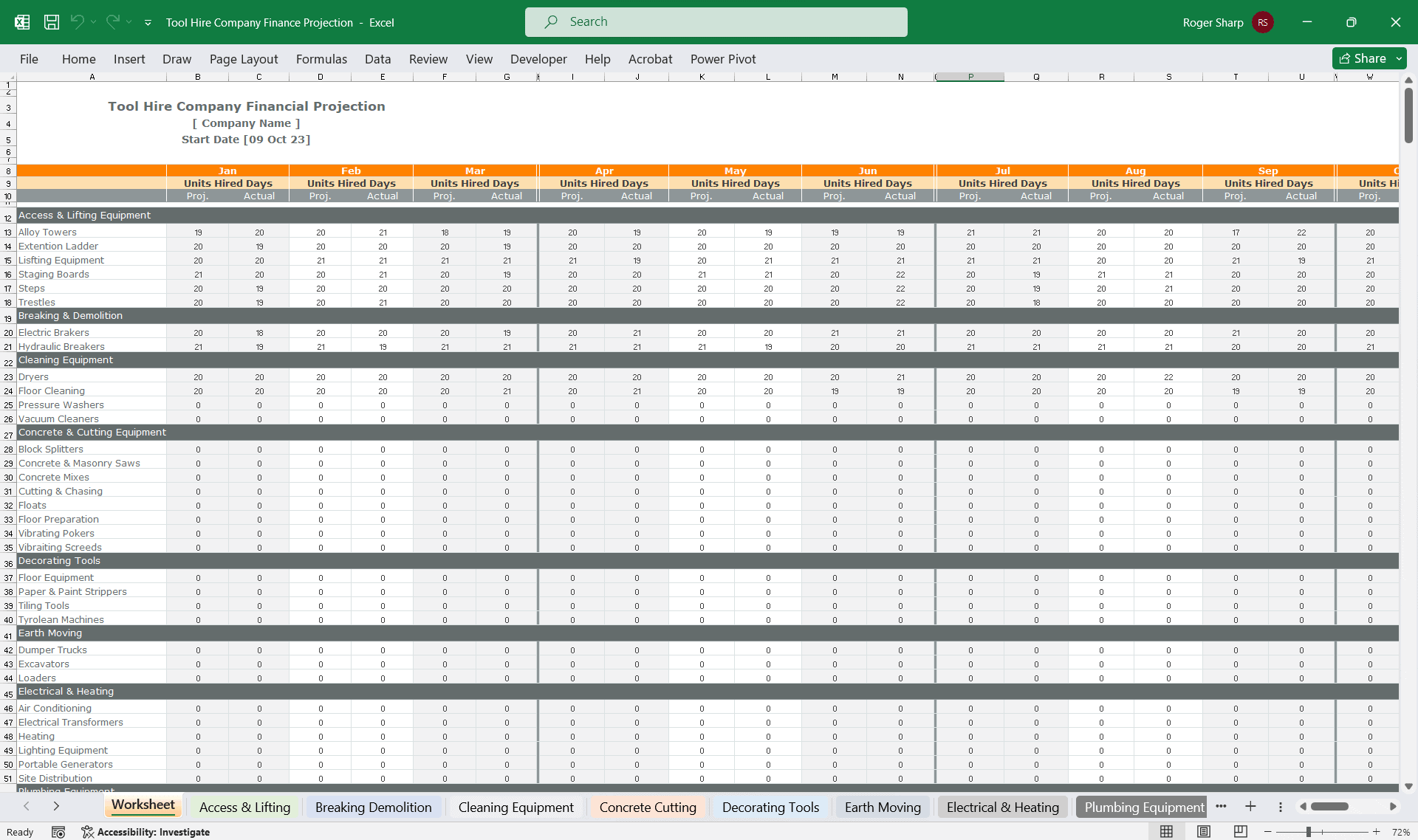
Tool Hire Company Finance Model
A very comprehensive editable Excel spreadsheet for tracking your tool hire financials throughout th... Read more

 David
David
Construction/Engineering Project Business Financia...
3 statement 5 year rolling financial projection Excel model for a startup /existing business engaged... Read more

 anthony
Quantity Surveyor / Architect – Project Fina...
This Project Feasibility Model is purpose-built to assist Quantity Surveyors, Architects, Developers... Read more

 SB Consulting
Project Finance Excel Model – 10 Year Projec...
The template creates a financial model for your individual project finance initiative The model is s... Read more

Industrial Building Development – 10 Year Fi...
Financial model presenting a development scenario for a Multi-Tenant Industrial Building including c... Read more

 Andreas
House Flipping – Rehab Financial Model
The house flipping financial model is a comprehensive tool designed to analyze the financial aspects... Read more

20 Year 3 Statement Architect Company Finance Mode...
A comprehensive 20 Year 3 Statement editable, MS Excel spreadsheet for tracking Architect Company fi... Read more
Pre Sold Apartments Real Estate Model Template
Pre-Sold Apartments Real Estate Model presents the case where a land plot is purchased and an apartm... Read more

Construction / Development Financial Model
Development & Construction Model presents the case where a property with multiple residential un... Read more
You must log in to submit a review.