
0 ITEMS

20 Year 3 Statement Architect Company Finance Model Excel Template
A comprehensive 20 Year 3 Statement editable, MS Excel spreadsheet for tracking Architect Company finances, including Income Statements, Balance Sheets, Cash Flow Statements, provides a comprehensive view of financial performance.


This 20-Year Architect financial model provides a structured framework for evaluating the financial performance and viability of your architectural practice. It includes an Income Statement, Cash Flow Statement, and Balance Sheet, all interconnected.
20x Income Statements, Cash Flow Statements, Balance Sheets, CAPEX Sheets, OPEX Sheets, Statement Summary Sheets, and Revenue Forecasting Charts with the specified revenue streams, BEA charts, sales summary charts, employee salary tabs, and expenses sheets. 120 spreadsheet Architect financial model.
1. Income Statement
The Income Statement provides a snapshot of profitability over a specific period, typically monthly, quarterly, or annually.
Key Components:
-
Revenue:
- Project Fees: Income from design and architectural projects.
- Consultation Fees: Revenue from advisory or consultancy services.
- Other Revenue Streams: Income from workshops, publications, or teaching.
-
Cost of Goods Sold (COGS):
- Direct Project Costs: Costs directly tied to projects (e.g., subcontractors, software for project-specific needs, travel for client visits).
-
Gross Profit:
- Revenue−COGS{Revenue} – {COGS}
-
Operating Expenses:
- Salaries and Wages: For architects, draftsmen, and administrative staff.
- Office Rent and Utilities: Costs of maintaining office space.
- Software Subscriptions: For CAD, BIM, or other architectural tools.
- Marketing and Advertising: For portfolio showcases and client acquisition.
- Professional Development: Training, workshops, and certifications.
- Depreciation and Amortization: For office equipment and software.
-
Operating Profit (EBIT):
- Gross Profit−Operating Expenses{Gross Profit} – {Operating Expenses}
-
Other Income and Expenses:
- Interest Income or Expense: On loans or investments.
- Taxes: Corporate taxes or self-employment taxes.
-
Net Profit:
- Operating Profit+Other Income and Expenses{Operating Profit} + {Other Income and Expenses}
2. Cash Flow Statement
The Cash Flow Statement focuses on the cash inflows and outflows, segmented into three activities: operating, investing, and financing.
Key Components:
-
Cash Flow from Operating Activities:
- Cash Inflows: Payments received from clients.
- Cash Outflows: Payments for project expenses, salaries, rent, utilities, and taxes.
-
Cash Flow from Investing Activities:
- Outflows: Purchase of office equipment, software licenses, or office renovations.
- Inflows: Sale of unused equipment or real estate.
-
Cash Flow from Financing Activities:
- Inflows: Loans or external investments.
- Outflows: Loan repayments, interest payments, or dividend distributions (if any).
-
Net Cash Flow:
- Operating Cash Flow+Investing Cash Flow+Financing Cash Flow{Operating Cash Flow} + {Investing Cash Flow} + {Financing Cash Flow}
-
Opening and Closing Cash Balance:
- Links the beginning cash position to the end cash position after factoring in net cash flows.
3. Balance Sheet
The Balance Sheet provides a snapshot of the architect’s financial position at a specific date, detailing assets, liabilities, and equity.
Key Components:
-
Assets:
-
Current Assets:
- Cash and Cash Equivalents: Bank account balances, petty cash.
- Accounts Receivable: Unpaid invoices from clients.
- Prepaid Expenses: Software licenses or rent paid in advance.
-
Non-Current Assets:
- Equipment: Computers, printers, and office furniture.
- Software: Architectural software like Revit or AutoCAD.
- Real Estate: Owned office space.
-
-
Liabilities:
-
Current Liabilities:
- Accounts Payable: Outstanding payments for subcontractors or suppliers.
- Short-Term Debt: Loan instalments due within a year.
- Accrued Expenses: Salaries or taxes owed but not yet paid.
-
Long-Term Liabilities:
- Loans: Long-term business loans or mortgages.
-
- Equity:
- Owner’s Capital: Initial investment or retained earnings.
- Retained Earnings: Cumulative profits reinvested into the business.
Balance Sheet Equation:
Assets=Liabilities+Equity{Assets} = {Liabilities} + {Equity}
Interlinkages Between Statements:
- Net Profit from the Income Statement flows into the Cash Flow Statement (Operating Activities) and increases Retained Earnings in the Balance Sheet.
- Changes in Assets and Liabilities affect the Cash Flow Statement under Operating or Investing Activities.
- Financing activities in the Cash Flow Statement update Liabilities and Equity on the Balance Sheet.
Additional Considerations:
- Scenario Planning: The model can incorporate different assumptions, such as variations in project volume, payment delays, or cost overruns.
- KPIs: Key Performance Indicators (e.g., profit margins, receivables turnover, utilization rates) can be integrated for better insights.
- Automation: Use tools like Excel software to streamline calculations and forecasts.
This model helps architects manage profitability, cash flow, and financial stability, ensuring informed decision-making and sustainable growth.
Similar ProductsOther customers were also interested in...


 City Finance
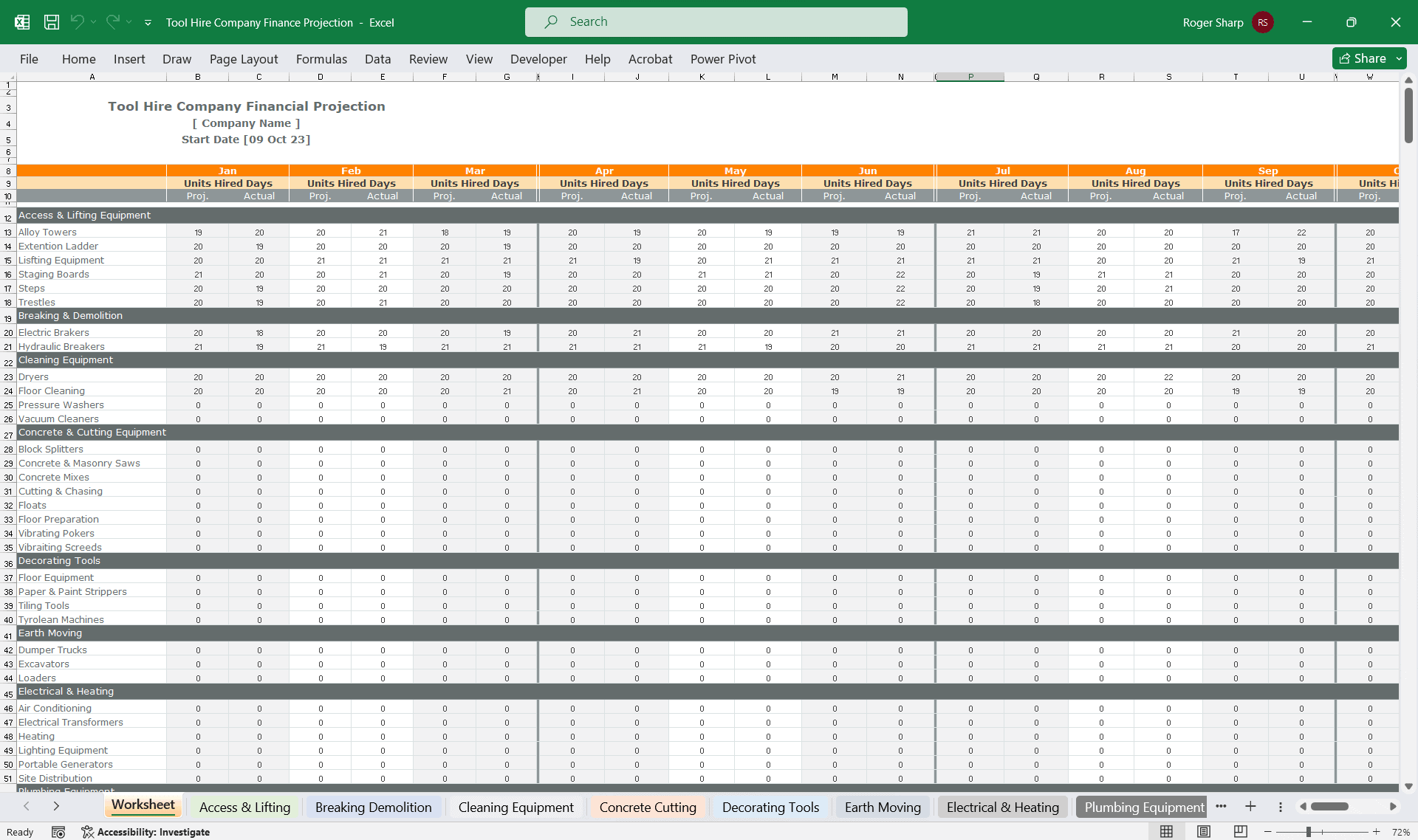
Tool Hire Company Finance Model
A very comprehensive editable Excel spreadsheet for tracking your tool hire financials throughout th... Read more

 Giorgos
Industrial Building Development – 10 Year Fi...
Financial model presenting a development scenario for a Multi-Tenant Industrial Building including c... Read more

Short Term Rentals (Airbnb) Financial Model –...
A short-term rental is a furnished living space available for short periods of time, from a few days... Read more

 eFinancialModels
Crane Truck Rental Company Financial Model
Step into the world of crane rental business success with our Crane Truck Rental Company Financial M... Read more

Dance Studio Financial Model – 5 Year Financial ...
Provides an advanced 5-year financial plan for a startup or operating Dance Studio and is a flexible... Read more
 HenrySheykin
Real Estate Agency Financial Model Excel Template
The Real Estate Brokerage Financial Model Financial Model Template helps users build a structured fo... Read more

Public-Private Partnership (PPP) Financial Model
Financial Model for a Public-Private Partnership (PPP) project outlining the long-term costs, revenu... Read more
 Andreas
Construction / Development Financial Model
Development & Construction Model presents the case where a property with multiple residential un... Read more

Agricultural (Farming) & Forestry Machinery Ma...
Comprehensive editable, MS Excel spreadsheets for tracking an Agricultural & Forestry Machinery ... Read more

EV Charging Station Finance Model
Provides a comprehensive analysis of the financial viability and potential returns on investment for... Read more
You must log in to submit a review.