
0 ITEMS

Subscriptions
Financial model templates for subscription-based businesses are essential tools for planning and forecasting. These templates typically include detailed revenue projections, customer acquisition and churn rates, and lifetime value calculations. They help businesses estimate recurring revenue, understand cash flow patterns, and assess profitability over time. By incorporating various scenarios and sensitivity analyses, these templates enable companies to make informed decisions, optimize pricing strategies, and allocate resources effectively. Overall, they provide a structured approach to financial planning, ensuring that subscription-based businesses can sustainably grow and adapt to market changes.


🔥 Premium AI / LLM Company Valuation Financial Model A…
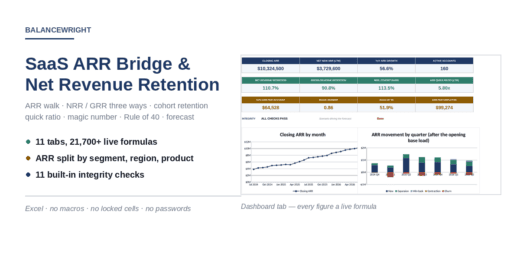

Unlock growth with this SaaS ARR Bridge & NRR model!…
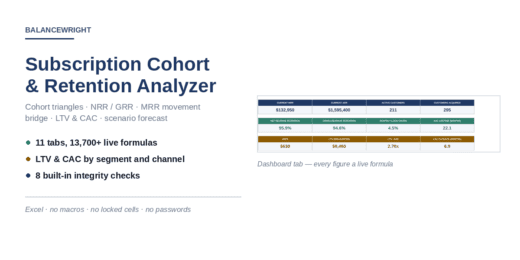
Give this workbook one row per customer per month and…

🚀 Premium Creator Economy Multi-Platform Revenue Financial Model, A professional…
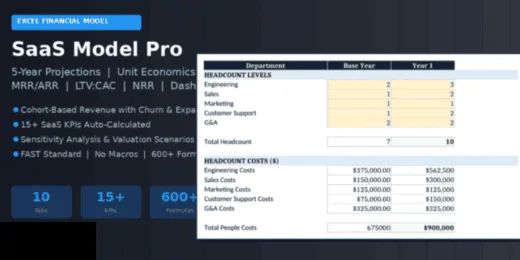

Professional 10-tab Excel SaaS financial model with 547 formulas, covering…

Professional Vertical AI SaaS Financial Model Template for B2B businesses…

A premium, investor-ready SaaS Financial Model (Excel) built for founders,…


Model up to 10 years of ramping and stabilized operation.…


AI SaaS companies represent the future of scalable software –…


A comprehensive editable, 5-year 3 statement MS Excel spreadsheet for…

Comprehensive editable, 5 Year 3 statement MS Excel spreadsheets for…

A comprehensive, editable, 5-year 3 statement MS Excel spreadsheet for…

A simple startup model for agent-based SaaS businesses. Includes fundraising…


Financial Model providing a dynamic up to 10-year financial forecast…


This dynamic Early Stage Startup SaaS Financial Model, built by…


AIaaS (AI as a Service) Fundraising Financial Model provides a…


The Data Center Financial Model with a 10-Year DCF (Discounted…

The Online Community Business Financial Model with a 10-Year DCF…

Comprehensive editable, 5-year 3 statement MS Excel spreadsheets for tracking…

A comprehensive editable, 5-year 3 statement MS Excel spreadsheet for…

The Video Streaming Financial Model Template is a comprehensive tool…


A comprehensive editable, MS Excel spreadsheet for tracking Data Center…


This 10-year monthly Gym Fitness Center financial model is designed…

A 10-year financial model to account for the startup costs…

The Home Maintenance and Repair Subscription Model with a 10+…

The Car Subscription Service Financial Model with a 10+ Years…

The SaaS B2C Business Financial Model for Irregular Renewal Periods…

The P2P Equipment Rental Platform Financial Model with a 10+…

Very comprehensive 5-Year 3 Statement Excel Financial Model bundle for…


Highly versatile SAAS 5-Year financial projection model offering subscription and/or…


Human Resource Management (HR / HRM) SaaS Financial Model Template…

This Payment Gateway and Billing Solutions SaaS Financial Model Template…

This Communication Platform SaaS Financial Model Template has been built…

This Customer Relationship Management (CRM) SaaS Financial Model Template has…

A comprehensive editable, MS Excel spreadsheet for tracking Dog Grooming…

This SaaS Startup Financial Model Template (Income Statement, Balance Sheet,…

This SaaS Financial Model Template has been built for use…

The Drone Delivery Services Financial Model with a 10+ Years…

Comprehensive editable, MS Excel spreadsheets for tracking consulting firm finances.…

The Subscription Box Business Financial Model with 10+ Years DCF…

A comprehensive editable, 5-year 3 statement MS Excel spreadsheet for…

Provides a comprehensive analysis of the financial viability and potential…

A comprehensive editable, 5-year 3 statement MS Excel spreadsheet for…

A comprehensive editable, 5-year 3 statement MS Excel spreadsheet for…

A comprehensive editable, 5-year 3-statement MS Excel spreadsheet for tracking…

A comprehensive editable, MS Excel spreadsheet for tracking private Medical…

A comprehensive editable, MS Excel spreadsheet for tracking Physiotherapy Clinic…

A comprehensive editable 5 Year 3 Statement, MS Excel spreadsheet…

A comprehensive editable, 5-year 3 statement MS Excel spreadsheet for…

A comprehensive editable, MS Excel spreadsheet for tracking Virtualization Software…

Very comprehensive editable, MS Excel spreadsheets for tracking Digital Education…

A comprehensive editable, 5-year 3 statement MS Excel spreadsheet for…

A comprehensive editable, MS Excel spreadsheet for tracking private Mental…

A comprehensive editable, 5-year 3 statement MS Excel spreadsheet for…

This is a comprehensive editable, 5-year 3-statement MS Excel spreadsheet…

Comprehensive, editable, 5-year 3-statement MS Excel spreadsheets for tracking CRM…
Unleashing the Potential of a Subscription Business Model
 The subscription business model is revolutionizing the way businesses and consumers interact, offering a dynamic and sustainable approach to revenue generation. Imagine a world where customers continuously enjoy the benefits of a service or product without the hassle of repeated transactions. This is the promise of the subscription model, where recurring fees ensure ongoing access and value. By shifting the focus from one-time sales to long-term customer relationships, businesses can build lasting connections and steady income streams.
In today’s fast-paced and competitive market, the allure of subscription models is undeniable. For businesses, the predictability of recurring revenue simplifies cash flow management and enhances strategic planning. This financial stability is a game-changer, allowing companies to invest confidently in innovation and growth. On the consumer side, the subscription model offers unparalleled convenience and often significant cost savings.
What makes subscriptions truly powerful is their ability to foster deep customer loyalty and satisfaction. When customers consistently find value in a service, they’re more likely to stick around, creating a virtuous cycle of retention and revenue. This ongoing engagement opens up vast opportunities for upselling and cross-selling, further boosting profitability. In a world where customer experience is king, the subscription model stands out as a robust framework for sustainable growth and long-term success. As we delve deeper into this article, we will explore the key components, advantages, successful examples, and strategies to maximize the potential of subscription business models, providing a comprehensive understanding of why they are a game-changer in the business landscape.
The subscription business model is revolutionizing the way businesses and consumers interact, offering a dynamic and sustainable approach to revenue generation. Imagine a world where customers continuously enjoy the benefits of a service or product without the hassle of repeated transactions. This is the promise of the subscription model, where recurring fees ensure ongoing access and value. By shifting the focus from one-time sales to long-term customer relationships, businesses can build lasting connections and steady income streams.
In today’s fast-paced and competitive market, the allure of subscription models is undeniable. For businesses, the predictability of recurring revenue simplifies cash flow management and enhances strategic planning. This financial stability is a game-changer, allowing companies to invest confidently in innovation and growth. On the consumer side, the subscription model offers unparalleled convenience and often significant cost savings.
What makes subscriptions truly powerful is their ability to foster deep customer loyalty and satisfaction. When customers consistently find value in a service, they’re more likely to stick around, creating a virtuous cycle of retention and revenue. This ongoing engagement opens up vast opportunities for upselling and cross-selling, further boosting profitability. In a world where customer experience is king, the subscription model stands out as a robust framework for sustainable growth and long-term success. As we delve deeper into this article, we will explore the key components, advantages, successful examples, and strategies to maximize the potential of subscription business models, providing a comprehensive understanding of why they are a game-changer in the business landscape.
What is a Subscription Business Model?
Subscription business model is a revenue model that allows a company to charge customers a recurring fee at regular intervals in exchange for product access or services. These intervals can be daily, weekly, monthly, or annually, depending on the nature of the service and the preferences of both the provider and the customer. Unlike one-time purchase models, the subscription model focuses on maintaining long-term relationships with customers, ensuring a consistent revenue stream by facilitating regular usage of products or services. The subscription business model is distinguished by its inherent ability to create predictable revenue and foster ongoing customer engagement. It emphasizes continued value delivery, ensuring that customers find enough value to justify repeat payments. Companies adopting this model generally focus on providing continuous improvements and updates, enhancing user experience, and adding new features or products. The recurring revenue aspect mitigates the risk of having fluctuating sales figures and allows companies to better manage long-term planning and operational costs, making it an attractive option for many modern businesses.What are Practical Applications of Subscription Business Models?
The practical applications of subscription business models are diverse and widespread, crossing numerous industries and sectors. In the entertainment sector, platforms like Netflix and Spotify offer users unlimited access to content for a fixed monthly fee. This not only improves user retention but also provides reliable revenue streams to fund the creation of new content. In the software industry, companies such as Microsoft with its Office 365, and Adobe with its Creative Cloud, employ subscription models to deliver continuous software updates and customer support, ensuring their users always have access to the latest technology and features. Moreover, retail and service-based industries have also embraced subscription models. Amazon Prime, for instance, combines e-commerce with media services, providing premium shipping options, exclusive deals, and access to streaming content, creating an all-encompassing value proposition for its subscribers. Subscription boxes, like those offered by Birchbox or Blue Apron, deliver curated products directly to consumers’ doors, touting convenience and personalization. The subscription business model has proven to be highly versatile, offering opportunities for businesses to sustainably increase their revenue while fostering stronger relationships with their customer base. It has shifted the traditional business paradigms towards value-added services and continuous customer engagement, ensuring long-term business viability and growth.The Crucial Role of Subscription Models in Today's Business Environment
 In the modern business landscape, subscription business models have risen to prominence as a reliable and sustainable method of generating revenue. This growth has been driven by several factors, including advancements in technology, evolving consumer preferences, and the inherent benefits that subscription services offer to both businesses and consumers. Companies employing subscription models can provide continuous value to their customers, ensuring a steady revenue stream and fostering long-term relationships. Unlike one-time purchase models, subscriptions allow businesses to predict earnings with more precision, enabling better financial planning and resource allocation. Furthermore, they facilitate the development of ongoing customer relationships, encouraging recurring revenue through enhanced engagement and personalized experiences.
The significance of subscription business models extends beyond revenue generation. In today's competitive market, establishing customer loyalty and building a strong brand identity is more crucial than ever. Subscription services allow businesses to gather extensive data on customer behavior, preferences, and purchasing patterns. This data can be leveraged to create targeted marketing strategies, develop new products that meet customer needs, and continuously improve service offerings. By understanding the unique preferences of their subscriber base, companies can tailor their offerings to enhance customer satisfaction, reduce churn rates, and increase Customer Lifetime Value (CLV). These insights also help businesses stay ahead of market trends, ensuring they remain relevant and competitive in a rapidly evolving landscape.
Through strategic implementation and execution, subscription business models have the potential to transform traditional businesses and propel them toward sustainable, long-term success. By leveraging data analytics, fostering customer engagement, and continuously innovating, companies can maximize the benefits of subscription models, creating a solid foundation for enduring growth and profitability.
In the modern business landscape, subscription business models have risen to prominence as a reliable and sustainable method of generating revenue. This growth has been driven by several factors, including advancements in technology, evolving consumer preferences, and the inherent benefits that subscription services offer to both businesses and consumers. Companies employing subscription models can provide continuous value to their customers, ensuring a steady revenue stream and fostering long-term relationships. Unlike one-time purchase models, subscriptions allow businesses to predict earnings with more precision, enabling better financial planning and resource allocation. Furthermore, they facilitate the development of ongoing customer relationships, encouraging recurring revenue through enhanced engagement and personalized experiences.
The significance of subscription business models extends beyond revenue generation. In today's competitive market, establishing customer loyalty and building a strong brand identity is more crucial than ever. Subscription services allow businesses to gather extensive data on customer behavior, preferences, and purchasing patterns. This data can be leveraged to create targeted marketing strategies, develop new products that meet customer needs, and continuously improve service offerings. By understanding the unique preferences of their subscriber base, companies can tailor their offerings to enhance customer satisfaction, reduce churn rates, and increase Customer Lifetime Value (CLV). These insights also help businesses stay ahead of market trends, ensuring they remain relevant and competitive in a rapidly evolving landscape.
Through strategic implementation and execution, subscription business models have the potential to transform traditional businesses and propel them toward sustainable, long-term success. By leveraging data analytics, fostering customer engagement, and continuously innovating, companies can maximize the benefits of subscription models, creating a solid foundation for enduring growth and profitability.
Understanding the Dynamics of Subscription Revenue
Subscriptions revenue represents the continuous income generated from recurring billing cycles in subscription-based business models. This type of revenue stream is fundamentally different from traditional sales models, where businesses earn one-time income from individual sales transactions. In a subscription model, customers pay a recurring fee—usually monthly, quarterly, or annually—for ongoing access to a product or service. This recurring nature of subscriptions revenue is one of the key elements that make subscription business models particularly attractive, providing businesses with a reliable and predictable financial foundation. The predictability of subscriptions revenue allows businesses to better plan and allocate resources, ensuring more stable cash flows compared to traditional business models. For instance, companies like Netflix and Amazon Prime generate consistent income from their vast subscription bases, enabling them to invest in content creation and additional services without the uncertainty that accompanies irregular sales spikes. This financial predictability aids in long-term strategic planning and helps businesses manage operational costs more efficiently. Additionally, the recurring nature of subscriptions revenue fosters sustained customer relationships, contributing to customer loyalty and reducing churn over time. A successful subscription business model hinges on several critical components that work in tandem to ensure seamless operation, customer satisfaction, and sustained revenue growth. Each component requires meticulous planning and execution to build a subscription ecosystem that not only attracts customers but also retains them in the long run. Let's delve deeper into these key components.
Customer Acquisition and Retention Strategies
The bedrock of any subscription business model is an effective customer acquisition and retention strategy. Acquiring new customers usually involves a multifaceted approach that includes targeted marketing campaigns, free trials, influencer partnerships, and compelling outreach programs. For instance, offering a limited-time discount or a trial period can entice potential subscribers to experience the service without a long-term commitment, thereby reducing the initial entry barrier.
However, acquiring customers is just one part of the puzzle; retaining them is equally, if not more, crucial. Retention strategies often focus on delivering consistent value and maintaining strong customer relationships. Personalized communication, regular updates, loyalty programs, and outstanding customer support can significantly enhance customer satisfaction and reduce churn rates. By continually engaging with subscribers and exceeding their expectations, companies can foster long-term loyalty and customer advocacy.
Pricing Models and Subscription Tiers
Pricing is a pivotal element in a subscription business model. It needs to reflect the value provided and align with customer expectations. There are various pricing models that subscription-based businesses can adopt, including flat-rate pricing, usage-based pricing, and tiered pricing. Each model has its own advantages and is suited to different types of products and services.
Tiered subscription models, for example, offer multiple levels of service, each with its own set of features and price points. This approach caters to a diverse audience, allowing customers to choose a plan that best fits their needs and budget. For instance, a basic tier might offer essential features at a lower cost, while a premium tier provides advanced features and personalized services at a higher price. This not only enhances the value proposition for different customer segments but also provides opportunities for upselling as customers' needs evolve over time.
Value Proposition and Benefits for Customers
The value proposition is the cornerstone of a subscription business model, encapsulating the unique benefits and advantages that subscribers gain. It’s what sets a service apart from the competition and convinces customers of its worth. A strong value proposition should directly address the pain points of the target audience and clearly communicate the benefits of subscribing.
For instance, a software-as-a-service (SaaS) company might highlight time-saving features, ease of use, and comprehensive support as key aspects of its value proposition. On the other hand, a subscription box service might focus on the quality and exclusivity of its products, along with the convenience of home delivery. By effectively communicating these benefits, businesses can attract and retain customers who see genuine value in remaining subscribed.
Subscription Management and Billing Systems
Efficient subscription management and billing systems are vital for the smooth operation of a subscription-based business. These systems must handle the complexity of recurring billing cycles, account upgrades or downgrades, and payment processing with high accuracy and reliability. An advanced subscription management system can automate many of these processes, reducing administrative burden and minimizing errors.
Furthermore, these systems often come with robust analytics features that provide insights into subscriber behavior, payment trends, and revenue metrics. Utilizing these insights can help businesses optimize their pricing strategies, identify areas for improvement, and make data-driven decisions that enhance overall efficiency. Reliable billing systems, combined with transparent and straightforward invoicing, also contribute significantly to building trust and satisfaction among customers.
Subscription management and billing systems are pivotal components of the subscription business model. They ensure operational efficiency, enhance customer satisfaction, and provide critical insights that help businesses optimize their subscription strategies. For entrepreneurs and business owners looking to implement or refine a subscription-based model, investing in reliable and scalable subscription management and billing systems is an essential step towards achieving sustainable growth and success.
Advantages of Subscription Models for Businesses
Subscription business models offer numerous advantages for businesses, making them an increasingly popular choice across diverse industries. One of the most significant benefits is the ability to generate predictable and recurring revenue streams. Unlike traditional sales models, where revenue is often irregular and dependent on volatile sales cycles, a subscription model ensures a consistent influx of funds. This regularity simplifies financial planning, cash flow management, and long-term strategic planning. Businesses can rely on a stable customer base that generates continuous income, reducing the uncertainty typically associated with conventional business operations. Another substantial advantage is the enhancement of customer loyalty and engagement. Subscription models naturally create ongoing relationships between businesses and their customers, promoting brand loyalty over time. With consistent interaction, companies can gather valuable insights into customer preferences and behavior, allowing for personalized service and a better overall customer experience. This ongoing relationship also provides multiple touchpoints for businesses to introduce new products, services, or improvements, maintaining customer interest and satisfaction. By fostering a deeper connection, businesses can significantly reduce customer churn and build a more dedicated customer base.
Predictable and Recurring Revenue Streams
One of the most compelling advantages of the subscription business model is the creation of predictable and recurring revenue streams. Unlike traditional sales models that depend on one-time purchases, subscription-based approaches generate consistent income over time through regular, often monthly or yearly, fees. This predictability is transformative for financial planning and forecasting, enabling businesses to allocate resources more efficiently, manage cash flow effectively, and plan for future growth with greater accuracy.
Predictable and recurring revenue provides a stable financial foundation. Businesses can confidently invest in research and development, customer acquisition strategies, or infrastructure improvements, knowing there is a steady income stream to support these ventures. This financial stability also makes companies more attractive to investors and banks, as the lower inherent risk compared to fluctuating sales models enhances their appeal. Additionally, recurring revenue allows for more flexible pricing strategies and offers customers long-term value, thereby increasing customer loyalty and reducing churn rates.
Clear metrics such as Monthly Recurring Revenue (MRR) and Annual Recurring Revenue (ARR) are invaluable for evaluating a company's financial health. Investors and financial analysts favor subscription-based models because these metrics provide a transparent view of current performance and are critical for projecting future growth. For example, a SaaS (Software as a Service) company like Salesforce can leverage its recurring revenue data to secure investments or justify launching new products and services.
Subscription models also enable businesses to capitalize on upselling and cross-selling opportunities more effectively. By analyzing subscription revenue patterns, companies can identify popular products or services and develop complementary offerings to increase the average revenue per user (ARPU). This strategy maximizes revenue potential and deepens customer relationships by providing tailored solutions that meet evolving needs.
In summary, predictable and recurring revenue streams are a fundamental advantage of the subscription business model. They offer financial stability, attract investment, and provide a solid foundation for strategic business planning and execution. By understanding and leveraging these benefits, businesses can ensure sustainable growth and long-term success.
Improved Customer Loyalty and Engagement
The capacity of subscription business models to greatly increase consumer involvement and loyalty is one of their greatest draws. By offering a recurring, value-driven service or product, businesses create consistent touchpoints with their customers, fostering relationships that go beyond one-time transactions. Subscribers are often more committed to a brand due to their initial investment in the subscription, which ties them to the brand and incentivizes them to derive maximum value from their subscription, encouraging frequent use and interaction.
Improved customer loyalty and engagement manifest in several ways. Subscription models naturally provide opportunities to gather rich data on customer preferences and behaviors. Businesses can leverage this data to personalize their offerings, making the service or product more relevant to individual subscribers. Strategies like personalized emails, exclusive offers, and tailored recommendations keep subscribers engaged. Additionally, well-designed subscription services often include community-building elements such as forums, webinars, and exclusive events, enhancing loyalty and engagement by making customers feel part of a larger community. These efforts ensure that subscribers feel valued and understood, making them less likely to churn and more likely to advocate for the brand.
Effective use of data analytics is crucial in fostering customer loyalty and engagement in subscription business models. Subscription businesses can track customer journeys in real-time, gaining deep insights into customer needs and preferences through meticulous analysis of usage patterns, feedback, and engagement metrics. This data allows continuous refinement and enhancement of the customer experience. For instance, streaming services like Netflix use viewer data to recommend content that aligns with user preferences, keeping them engaged and satisfied. Similarly, e-commerce subscriptions like Amazon Prime analyze purchase behaviors to offer personalized shopping suggestions and exclusive deals. By proactively predicting and satisfying customer needs, businesses not only improve customer loyalty but also increase the perceived value of the subscription, ensuring long-term customer retention and higher lifetime value.
In conclusion, the structure of the subscription business model inherently supports enhanced customer loyalty and engagement through repeated interactions, personalized experiences, and community-building efforts. These elements collectively create a strong foundation for lasting customer relationships, driving sustained business success in a highly competitive market.
Opportunities for Upselling and Cross-Selling
In the realm of subscription business models, upselling and cross-selling present significant opportunities to enhance revenue streams and deepen customer relationships. These strategies involve offering customers additional products or services that complement their existing subscriptions. By leveraging data analytics and customer insights, businesses can identify relevant upsell and cross-sell opportunities tailored to individual customer needs and preferences, thereby increasing their overall value proposition.
Upselling in Subscription Models
Upselling typically involves encouraging existing subscribers to upgrade to a higher tier or premium version of their current plan. This could mean offering additional features, enhanced services, or exclusive content that adds more value to the customer experience. For instance, a music streaming service like Spotify might offer a premium tier with no ads, higher sound quality, and offline listening capabilities. By presenting these benefits in a compelling manner, businesses can incentivize customers to spend more, effectively increasing their average revenue per user (ARPU).
Moreover, upselling can be seamlessly integrated into the customer journey through personalized marketing and timely notifications. For example, businesses can use behavioral data to identify when a user might benefit from an upgrade—perhaps when they frequently hit usage limits on their current plan or show interest in premium features. By offering a trial period for higher-tier services, companies allow customers to experience the added value firsthand, making them more likely to commit to an upgrade.
Cross-Selling for Enhanced Customer Value
Cross-selling involves offering related products or services that complement what the customer is already subscribed to. This strategy not only enhances the customer experience by providing comprehensive solutions but also increases the business's overall revenue without acquiring new customers. Consider a subscription box service like Dollar Shave Club, which can cross-sell complementary grooming products such as skincare items or accessories alongside their primary offerings.
Effective cross-selling relies on understanding customer preferences and purchase history. By utilizing customer data, businesses can suggest relevant add-ons that meet the customer's specific needs. For instance, if a customer is subscribed to a basic internet plan, a telecom company might cross-sell additional services like streaming subscriptions or cybersecurity products. This approach not only meets the customer's broader needs but also solidifies the company's position as a comprehensive service provider.
Implementing strategic upselling and cross-selling within a subscription business model requires a deep understanding of the customer journey and an ability to deliver personalized, relevant offers. By doing so, companies can maximize their subscriptions revenue and foster stronger, more loyal customer relationships, ultimately driving sustainable business growth.
Enhanced Customer Lifetime Value
One of the paramount advantages of subscription business models is the enhanced customer lifetime value (CLV). CLV represents the total revenue a business can reasonably expect from a single customer account throughout its relationship with the company. Subscription models inherently foster long-term relationships by ensuring consistent engagement with customers through regular interactions. This continuous interaction provides businesses with opportunities to build loyalty, better understand customer needs, and offer personalized experiences that keep customers satisfied and coming back for more.
For businesses, an increased CLV means more predictable revenue streams and greater profitability over the lifetime of the customer. When customers subscribe to a service, they commit to recurring payments, creating a steady flow of income. This predictability allows businesses to plan and allocate resources more effectively, ensuring they can continually provide high-quality products or services. Additionally, the data collected from subscription interactions helps refine marketing strategies, develop new products, and create targeted offerings that further drive customer satisfaction and loyalty. Subscription models also open avenues for upselling and cross-selling, significantly boosting the average revenue per user (ARPU). For example, a customer subscribed to a basic streaming service might be enticed to upgrade to a premium package offering additional features like exclusive content or higher streaming quality. Similarly, a user with a basic personal care product subscription could be prompted to add complementary products to their plan, increasing their monthly expenditure. By continuously delivering value and innovating to meet customer expectations, businesses can maximize CLV, ensuring sustained growth and a competitive edge in the market.
Focusing on CLV within subscription business models is strategically important. It not only aids in retaining customers but also amplifies the overall value each customer brings to the business over time. Enhanced customer lifetime value is a key driver for sustained success in the subscription economy, enabling businesses to thrive amidst increasing competition and changing consumer preferences. This focus on CLV underscores the importance of long-term customer relationships and highlights the potential for ongoing revenue growth and customer loyalty.
Subscription business models provide a robust framework for achieving sustainable growth and long-term success. The predictable and recurring revenue streams inherent in these models offer financial stability, facilitating better planning and resource allocation. Additionally, the emphasis on building and maintaining customer relationships through regular interactions enhances loyalty and engagement, creating a loyal customer base that is more likely to continue using and advocating for the service. By leveraging the insights gained from ongoing customer interactions, businesses can continuously refine and personalize their offerings, ensuring they meet evolving customer needs and preferences. As a result, subscription models not only drive profitability but also foster an environment of continuous improvement and innovation, making them a strategic choice for businesses aiming to thrive in today's competitive landscape.Successful Subscription Based Business Model Examples
Subscription-based business models have demonstrated incredible versatility and efficacy across various industries. Let's delve into some prominent examples of successful subscription-based business models to understand how they have harnessed this approach to generate substantial subscriptions revenue and foster long-term customer loyalty.Netflix: Entertainment Streaming Subscription
Netflix stands as a quintessential example of the entertainment streaming subscription model, having entirely transformed the media consumption landscape. Launched in 1997 as a DVD rental service, Netflix pivoted in 2007 to streaming media, and this strategic move has been pivotal in its ascension to market dominance. At its core, Netflix operates on a subscription business model where users pay a recurring monthly fee to access a vast library of movies, TV shows, documentaries, and original content. This shift not only created a predictable subscriptions revenue stream for Netflix but also significantly influenced the broader entertainment industry.
Netflix's value proposition lies in its unparalleled content variety and user experience. By offering tiered subscription plans, ranging from basic to premium, Netflix caters to different customer needs and budgets. The basic plan provides standard definition streaming, whereas the premium plan offers ultra-high-definition viewing and multiple simultaneous streams. This tiered pricing model not only maximizes customer acquisition but also encourages upgrades, thereby boosting overall subscriptions revenue. Moreover, Netflix invests heavily in data analytics to provide personalized content recommendations, enhancing user satisfaction and retention. Practical applications of their model can be seen in how they constantly innovate their content library, producing original content like "Stranger Things" and "The Crown," which become significant value drivers for their subscription base.
Furthermore, Netflix's approach to customer retention is methodical. Subscriber engagement is heightened through original and exclusive content, regular updates to the content library, and an ad-free experience. Through comprehensive data analysis, Netflix constantly tweaks its offerings and recommendations, ensuring that subscribers find something new and appealing at every log-in. This deep understanding of user preferences fuels Netflix's ability to minimize churn rates and maintain a loyal subscriber base. Additionally, by expanding into international markets and producing localized content, Netflix continues to grow its global footprint, demonstrating the scalability and versatility of a well-executed subscription business model.
Amazon Prime: E-commerce and Media Services Subscription
Amazon Prime stands as a quintessential example of the power of a well-executed subscription business model, combining e-commerce and media services into a single, compelling package. Launched in 2005, Amazon Prime initially focused on offering expedited shipping services to its subscribers, but it has since evolved into a comprehensive suite of benefits, including access to streaming video and music, exclusive shopping deals, and much more. This multifaceted approach has significantly broadened its appeal, catering to a wide range of customer needs and preferences, thereby driving sustained subscriptions revenue.
The success of Amazon Prime can be attributed to its robust value proposition. Subscribers are not merely paying for faster shipping; they gain access to a host of other benefits such as Prime Video, which offers a vast library of movies and TV shows, and Prime Music, which provides millions of songs for streaming. Additionally, Amazon Prime members enjoy exclusive access to certain sales events like Prime Day, as well as early access to lightning deals. This bundling of services creates a highly persuasive offer that enhances customer loyalty and discourages membership cancellations. By continuously adding new features and services, Amazon ensures that Prime remains attractive and valuable to its subscribers, exemplifying the critical role of innovation in the subscription business model.
From a practical applications standpoint, Amazon Prime demonstrates how a well-managed subscription service can create an integrated ecosystem that meets diverse customer needs. Through data analytics, Amazon can personalize recommendations and target marketing efforts, further increasing customer satisfaction and retention. The integration of various services under one umbrella amplifies the convenience factor for consumers, making Amazon Prime indispensable to its users. For businesses aiming to replicate this success, the key takeaway is the importance of continually enhancing the value proposition while leveraging cross-service synergies to maximize subscriptions revenue. This strategic approach not only drives customer acquisition but also fortifies long-term engagement and loyalty.
Spotify: Music Streaming Subscription
Spotify exemplifies a highly successful subscription-based business model within the music streaming industry. Founded in Sweden in 2006, Spotify has since grown to become a global leader, boasting hundreds of millions of users across various markets. The core of Spotify's business model hinges on providing customers with access to an extensive library of music, podcasts, and other audio content through its app and web platform. By offering both free, ad-supported access and tiered premium subscriptions, Spotify caters to diverse consumer preferences, driving subscriptions revenue and enhancing user loyalty.
Spotify’s business model is rooted in offering immense value to its users by allowing them to explore, discover, and enjoy music with unparalleled ease. For its premium subscribers, Spotify provides a host of benefits, including ad-free streaming, higher quality audio, offline listening, and exclusive content. These features are not only attractive to music enthusiasts but also serve to enhance the overall user experience, thereby promoting customer retention. Through personalized playlists and recommendations powered by sophisticated algorithms, Spotify adds a unique and personal touch, making its subscribers feel understood and valued.
Spotify’s success story offers valuable lessons for entrepreneurs and businesses looking to adopt or optimize a subscription business model. By focusing on user experience, leveraging data for personalized offerings, and maintaining a flexible pricing strategy, businesses can significantly boost customer acquisition and retention, ultimately driving sustainable growth and profitability.
Dollar Shave Club: Personal Care Product Subscription
Dollar Shave Club (DSC) stands as a quintessential example of how the subscription business model can revolutionize a traditional industry—in this case, personal care products. Founded in 2011, DSC disrupted the razor and shaving market by offering a more convenient and cost-effective alternative to purchasing razors and grooming products in-store. Through a simple subscription model, customers receive a curated selection of razors, blades, and additional personal care items delivered directly to their doorsteps, cutting out the need to navigate store aisles filled with myriad options.
At the heart of DSC’s success is its ability to combine convenience with affordability. By allowing consumers to customize their subscription to suit their individual needs, whether that's monthly or bi-monthly deliveries, DSC caters to a highly personalized shaving experience. This flexibility not only enhances customer satisfaction but also encourages long-term loyalty and engagement. The value proposition is clear: superior grooming products delivered with minimal effort at a competitive price, illustrating the power of a well-executed subscription business model.
For businesses looking to emulate Dollar Shave Club's success, there are several key insights to consider. First, a straightforward and transparent pricing model is essential. DSC’s simple subscription tiers—ranging from basic razors to premium grooming kits—make it easy for customers to choose a plan that fits their budget and grooming habits. This clarity in pricing fosters trust and reduces purchase friction, directly impacting customer acquisition and retention.
Moreover, DSC has effectively leveraged content marketing to build and sustain its brand. Their initial marketing campaign featuring a humorous and relatable video quickly went viral, significantly boosting brand visibility and customer acquisition. This strategy underscores the importance of creating engaging and shareable content to drive awareness and attract subscribers.
Finally, continuous product innovation and customer feedback integration keep the subscription offering fresh and relevant. Dollar Shave Club frequently introduces new products based on customer preferences and market trends, ensuring that they stay ahead of competitors. This approach not only enhances customer lifetime value but also opens up avenues for upselling and cross-selling—a cornerstone of sustainable subscriptions revenue.
Dollar Shave Club’s journey illustrates how a subscription business model, when executed with a focus on customer-centric strategies and continuous innovation, can transform an industry. Its success story serves as a powerful example for entrepreneurs and businesses looking to capitalize on the benefits of subscription models in their respective fields.
Strategies to Maximize Subscription Business Model Revenue
To effectively maximize subscriptions revenue, businesses must adopt a multifaceted approach encompassing data analytics, targeted marketing, enhanced customer experience, and continuous innovation. These strategies are vital to staying competitive and ensuring a steady stream of predictable, recurring revenue in a subscription-based business model.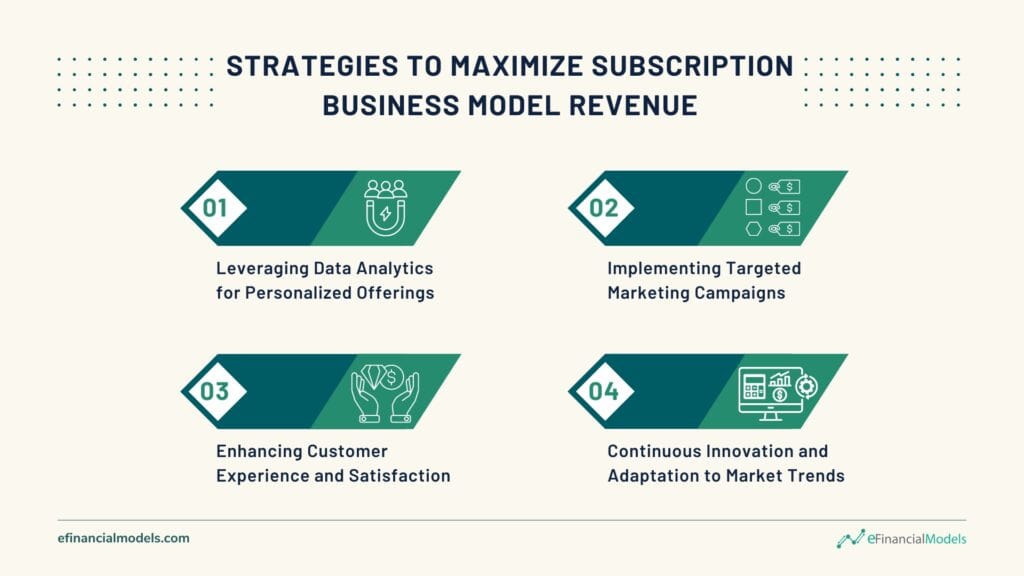
Leveraging Data Analytics for Personalized Offerings
Data analytics plays a pivotal role in understanding customer behavior and preferences, which is essential for tailoring personalized offerings. By analyzing subscription data, businesses can identify patterns and trends that inform the development of customized packages and services. For instance, a music streaming service like Spotify uses data analytics to recommend playlists and songs tailored to individual listening habits, thus increasing user engagement and satisfaction. Personalized experiences not only enhance the overall value proposition but also contribute significantly to reducing churn rates and increasing customer lifetime value.
Moreover, in subscription business models, segmenting customers based on their engagement levels, purchase history, and preferences allows for more targeted upselling and cross-selling opportunities. This segmentation helps in creating specific marketing campaigns that resonate with different customer groups, ultimately driving higher conversion rates and revenue growth. Using data analytics, businesses can make informed decisions, optimize their offerings, and foresee potential market shifts, ensuring that their subscription services remain relevant and competitive.
Implementing Targeted Marketing Campaigns
Targeted marketing is essential for reaching the right audience with the right message at the right time. Businesses should utilize multiple channels—email, social media, content marketing, and more—to attract and retain subscribers. Implementing targeted campaigns based on customer insights ensures that marketing efforts are efficient and effective. For example, a subscription box service could execute targeted online ads that highlight new and popular products, specifically addressing potential customers' needs and interests identified through data analysis.
Additionally, businesses can leverage retargeting strategies to re-engage lapsed subscribers. Offering special promotions, discounts, or limited-time offers can incentivize previous customers to renew their subscriptions. By continuously analyzing the performance of these campaigns and adjusting them based on real-time feedback, businesses can optimize their marketing spend and achieve higher returns on investment.
Enhancing Customer Experience and Satisfaction
The quality of the customer experience is directly correlated with subscription retention rates. Enhancing customer support, ensuring seamless and intuitive interfaces, and providing high-quality service are integral to maintaining a satisfied subscriber base. Implementing self-service options, chatbots, and comprehensive FAQs can help resolve common issues quickly, enhancing overall satisfaction.
Furthermore, regular communication with subscribers through newsletters, updates, and personalized messages keeps them engaged and informed about new offerings and improvements. Encouraging customer feedback and acting on it demonstrates that a company values its subscribers, fostering loyalty and trust. By consistently exceeding customer expectations, businesses can build a strong, loyal community that contributes to long-term revenue growth.
Continuous Innovation and Adaptation to Market Trends
In the dynamic landscape of subscription-based business models, continuous innovation and adaptation are key to staying relevant and competitive. Companies must keep abreast of market trends and consumer demands, ensuring that their offerings evolve accordingly. For instance, a video streaming service might introduce new content genres or features, such as interactive viewing experiences, to cater to changing viewer preferences.
Innovation also involves exploring new markets and demographics, thereby expanding the subscriber base. Businesses should actively seek feedback and conduct market research to identify opportunities for improvement and expansion. By embracing a culture of continuous innovation and being responsive to market trends, companies can sustain growth, attract new subscribers, and maximize their subscriptions revenue.
Maximizing subscriptions revenue requires a strategic approach that integrates data-driven insights, targeted marketing, superior customer experience, and relentless innovation. By implementing these strategies, businesses can enhance their value proposition, foster customer loyalty, and achieve sustained growth in a competitive subscription-based market.
Continuous innovation and adaptation to market trends are indispensable elements of a successful subscription business model. By staying ahead of market changes and continuously offering new value to subscribers, businesses can retain customer loyalty, optimize subscriptions revenue, and ensure sustained growth in a competitive marketplace.
Challenges and Considerations in Subscription Business Models
Understanding the intricacies and potential hurdles of subscription business models is crucial for businesses aiming to harness the power of these revenue streams. Among the most pressing issues are churn rate management, pricing strategy optimization, competition and market saturation, and regulatory compliance and data privacy concerns. Each of these challenges requires a strategic approach to ensure sustainable growth and customer satisfaction.
Churn Rate Management
One of the primary challenges in a subscription business model is managing churn rates. Churn rate refers to the percentage of subscribers who cancel their subscriptions within a given period. High churn rates can significantly impact the stability of recurring revenue, making it difficult to predict future financial performance. To mitigate this, businesses must focus on enhancing customer satisfaction and loyalty. This can be achieved through continuous engagement, personalized experiences, and delivering consistent value. Employing advanced data analytics can help identify at-risk customers and implement retention strategies such as offering special incentives, improving customer support, and addressing feedback promptly.
Pricing Strategy Optimization
Optimizing pricing strategies is another critical consideration for subscription businesses. Setting the right price requires a deep understanding of the target market, competitive landscape, and perceived value of the offering. Businesses often employ various pricing models, such as tiered subscriptions, usage-based pricing, or freemium models, to cater to different customer segments. Regularly reviewing and adjusting pricing strategies based on market trends and customer feedback is essential to remain competitive and maximize subscriptions revenue. Additionally, transitioning between different pricing strategies should be handled carefully to avoid alienating existing customers or devaluing the service.
Competition and Market Saturation
Market saturation and increasing competition are inherent challenges of the subscription business model. As more companies adopt this model, standing out in a crowded marketplace becomes increasingly difficult. To combat these challenges, businesses need to continuously innovate and enhance their offerings. Differentiation through unique value propositions, superior customer service, and maintaining a strong brand identity are key elements for success. Additionally, leveraging technology and data analytics can provide insights into emerging market trends, helping businesses stay ahead of competitors and adapt their strategies accordingly.
Regulatory Compliance and Data Privacy Concerns
In today's digital age, regulatory compliance and data privacy have become paramount considerations for subscription businesses. Data security breaches can lead to significant financial penalties and damage to a company’s reputation. Compliance with regulations such as GDPR, CCPA, and other local data protection laws is essential. Implementing robust data security measures, including encryption, regular security audits, and employing data protection officers, can mitigate risks associated with data breaches. Additionally, transparency in data handling practices and clear communication with customers regarding their data rights and usage can build trust and reinforce customer loyalty.
In conclusion, while the subscription business model offers numerous advantages and opportunities for growth, it also presents significant challenges that need to be strategically managed. Addressing issues such as churn rate, pricing strategy optimization, competition, and regulatory compliance is essential for ensuring long-term sustainability and success in the competitive subscription-based marketplace. By adopting a proactive and informed approach to these challenges, businesses can maximize their potential and achieve a stable, recurring revenue stream.Harnessing the Potential of Subscription Models
Subscription business models have transformed the way businesses operate, offering predictable and recurring revenue streams, enhanced customer loyalty, and continuous innovation. These models ensure a consistent influx of funds, simplifying financial planning and allowing businesses to allocate resources effectively. By fostering ongoing relationships with customers, companies can gather valuable insights, personalize services, and maintain high levels of customer satisfaction. This continuous interaction not only reduces churn but also provides opportunities for upselling and cross-selling, thereby increasing the average revenue per user (ARPU) and overall customer lifetime value (CLV). Implementing a subscription strategy enables businesses to remain competitive and adapt to market trends. The model's predictability provides financial stability, allowing for confident investments in growth initiatives. Companies like Netflix and Spotify exemplify the success of subscription models, consistently innovating and enhancing customer experiences based on data-driven insights. By adopting these strategies, businesses can secure a future marked by consistent revenue, strong customer loyalty, and sustained growth. Embracing the subscription model is not just about capitalizing on a trend but about building a resilient and prosperous business in today's dynamic market environment.You might also like: