
0 ITEMS

OPEX vs. CAPEX: What is the Difference?

Understanding the difference between operating expenses (OPEX) and capital expenditures (CAPEX) is essential for effective financial management and strategic planning.
- OPEX covers daily costs like salaries, rent, and utilities that are fully deducted in the period they are incurred.
- CAPEX involves long-term investments in assets such as buildings, machinery, and technology, which are capitalized and depreciated over time.
- Proper classification impacts cash flow analysis, tax treatment, and how expenses influence profitability.
- Industry-specific assets, like factory equipment or software licenses, determine whether a cost is classified as OPEX or CAPEX.
- Accurate accounting and financial modeling of these expenses help optimize budgets, improve ROI forecasts, and support growth strategies.
Continue reading to see how these expense types shape financial decisions and business outcomes.
Capital Expenditure: Meaning and Examples
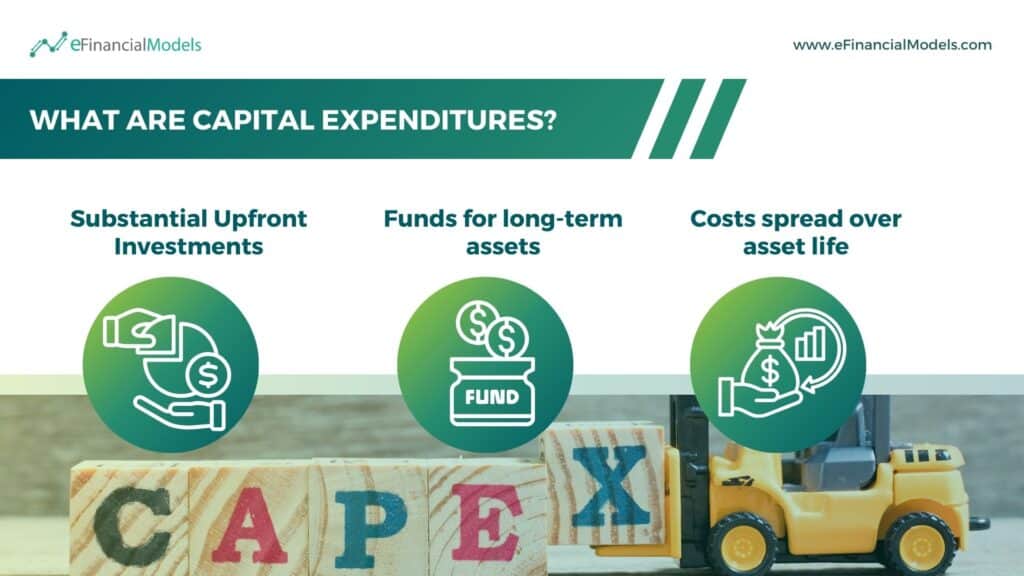
Capital Expenditure, commonly called CAPEX, represents the funds a company uses to acquire, upgrade, or maintain long-term assets. These assets, such as buildings, equipment, or software systems, are expected to benefit the company over several years. Capital expenditure meaning extends to strategic investment decisions. Businesses often plan CAPEX as part of long-term growth initiatives, including expanding production capacity or modernizing operations with new technologies. As such, capital expenditure meaning covers investments made for future growth and efficiency.
Substantial upfront investment always follows the capital expenditure meaning because they often generate long-term operational or financial benefits. Furthermore, they are capitalized—meaning the cost is spread out over the asset’s useful life—rather than expensed in the period they are incurred. Among financial statements, CAPEX typically appears in cash flows from investing activities of the cash flow statement. It is usually shown as a negative amount, indicating cash outflow.
Examples of Capital Expenses
The examples of capital expenses can be categorized into different types based on their purpose and impact on the business.
Building and facility construction are costs for constructing new facilities or major renovations. Some examples of capital expenses under this category are:
- Building a manufacturing plant
- Renovating an office floor or production facility
- Constructing research laboratories
Equipment purchases are investment in machinery and equipment required for operations or production. Some examples of capital expenses under this category are:
- Buying new machinery for a factory
- Investing in commercial kitchen appliances for a restaurant
- Purchasing medical equipment for a hospital
Furniture and fixtures are office or store furnishings with a long-term utility. These may include:
- Office desks and chairs
- Store display racks and lighting fixtures
- Conference tables and waiting room sofas
Infrastructure investments are capital put into foundational systems needed for business operations. These may include:
- Internal roads and drainage systems on company property.
- Power generators and electrical systems
- Security systems (e.g., surveillance and access control)
Intangible capital expenditures are non-physical long-term assets that provide strategic advantages. Some examples of capital expenses under this category are:
- Franchise fees.
- Licensing rights
- Patent purchases
Leasehold improvements are enhancements made to the leased property that benefit the business. Some examples of capital expenses under this category are:
- Adding air conditioning systems in leased space
- Customizing retail space for branding
- Installing partitions in a leased office
Property acquisitions are investments made to purchase land or buildings for business use. These may include:
- Acquiring office buildings
- Buying a warehouse for storage
- Purchasing land for future development
Technology and software expenditures for software or IT infrastructure are expected to provide long-term benefits. Some examples of capital expenses under this category are:
- Installing fiber-optic networks in office buildings
- Purchasing enterprise-level software (e.g., ERP systems)
- Upgrading computer hardware or servers
Vehicles are the acquisition of transport vehicles for business use. Some examples of capital expenses under this category are:
- Company cars for sales teams
- Delivery trucks for a logistics company
- Forklifts for warehouse operations

Capital expenditures (CapEx) differ across business types because each industry needs unique assets to operate. A factory might invest heavily in machines, while a tech startup spends more on computers and servers. Restaurants need kitchens and furniture, while airlines buy planes. The nature of the business drives what it must buy to stay competitive and grow. So, CapEx isn’t one-size-fits-all—it depends on what the business does and what it needs to succeed.

































Operating Expenses: Meaning and Examples
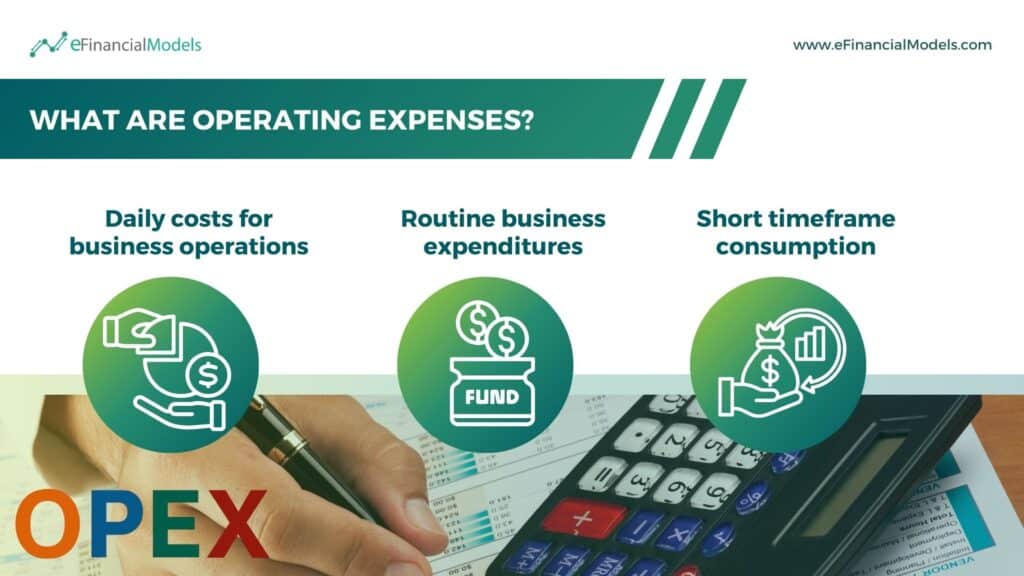
Operating expenses, or OPEX, refer to the ongoing costs incurred to run the day-to-day operations of a business. These short-term expenses appear directly on the income statement, affecting the company’s net profit for that accounting period. The operating expenses meaning encompasses all regular and necessary expenditures required to keep the business functioning. They are not associated with asset acquisition but with consumption or service use within a short timeframe. These costs are fully deducted in the accounting period they are incurred, which means they directly affect the company’s profitability.
The operating expenses meaning include all routine costs a business must pay to stay open and serve customers. This covers basically anything that keeps the lights on and operations smooth. Every dollar spent on operating expenses reduces profit for that period, making it crucial to monitor and manage them well. Understanding operating expenses helps businesses control spending and improve overall efficiency.
Examples of Operating Expenses
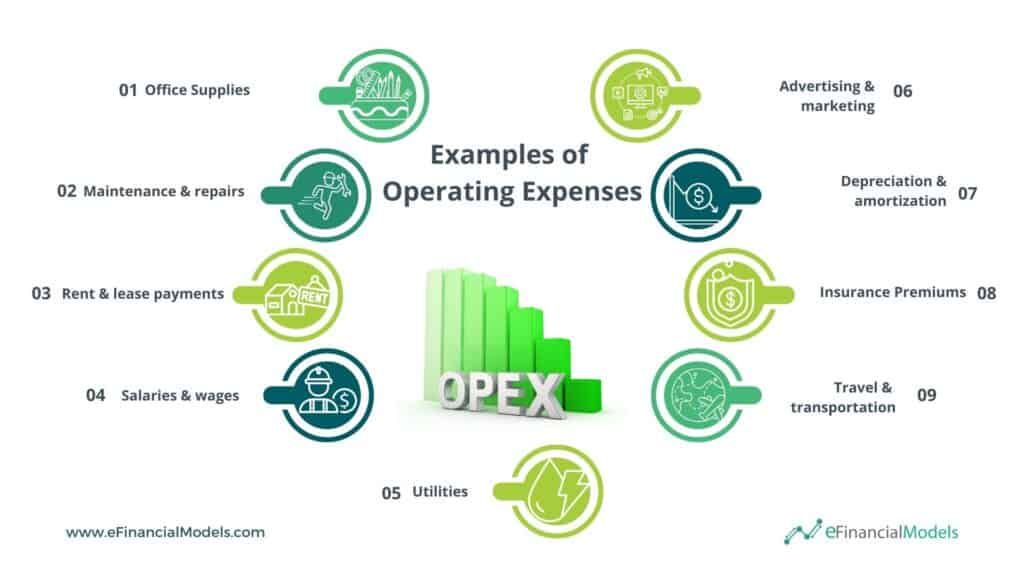
The examples of operating expenses are essential for day-to-day functionality but do not result in long-term asset acquisition. They are fully deducted in the accounting period in which they are incurred.
Maintenance and repairs are routine services to keep equipment or facilities in working condition. Some examples of operating expenses under this category are:
- Elevator maintenance
- HVAC system servicing
- IT support and minor hardware fixes
Office Supplies are consumables and materials used in daily operations. These may include:
- Cleaning supplies
- Coffee and kitchen provisions
- Printer paper, pens, and folders
Rent and lease payments are costs for using space or equipment not owned by the business. Some examples of operating expenses under this category are:
- Equipment leasing fees
- Office or store rent
- Warehouse rentals
Salaries and wages are compensation paid to employees for services rendered. These may include:
- Hourly wages for part-time employees
- Monthly staff salaries.
- Overtime and bonuses
Utilities are regular service costs necessary to run a facility or equipment. Some examples of operating expenses under this category are:
- Electricity bills
- Internet and phone services
- Water and sewage
Advertising and marketing are costs associated with promoting the business. Some examples of operating expenses under this category are:
- Event sponsorships and promotional materials
- Online and social media ads
- Print and radio campaigns
Depreciation and amortization are non-cash expenses that allocate the cost of tangible and intangible assets over time. These may include:
- Amortization of software licenses
- Annual depreciation of office equipment
Insurance premiums are recurring payments for business-related insurance coverage. These may include:
- Liability insurance
- Property insurance
- Workers’ compensation insurance
Travel and transportation are business-related commuting or travel expenses. Some examples of operating expenses under this category are:
- Employee travel tickets and lodging
- Mileage reimbursements
- Taxi or ride-share services for meetings


























Key Differences Between OPEX vs. CAPEX
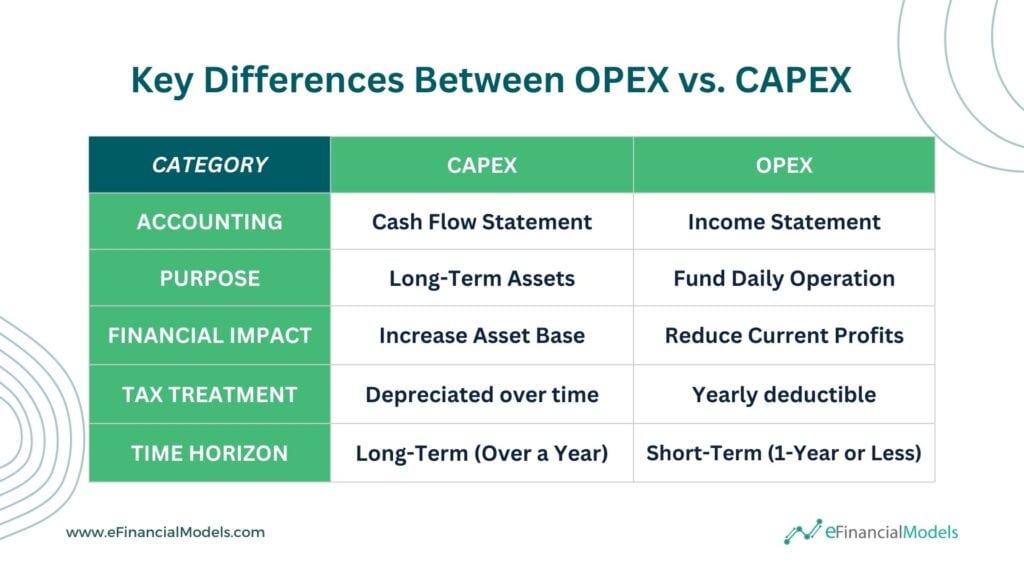
Understanding how a business spends its money is crucial for smart decision-making. OPEX vs. CAPEX are two major types of business expenses that are often confused. These financial terms play very different roles in managing and growing a company. The difference between OPEX vs. CAPEX is crucial for accurate accounting and strategic financial planning. Here are the primary distinctions:
Accounting
CAPEX, or capital expenditures, appears in the cash flow statement because it involves spending on long-term assets like equipment or buildings. These costs aren’t fully expensed right away. Instead, they’re capitalized and spread over time. On the other hand, OPEX, or operating expenses, shows up in the income statement. These cover day-to-day business costs like rent, salaries, and utilities. So, OPEX vs. CAPEX in accounting hits means OPEX immediately affects net income, and CAPEX affects cash but not net income immediately.
See the following table from our Three Statement Model:
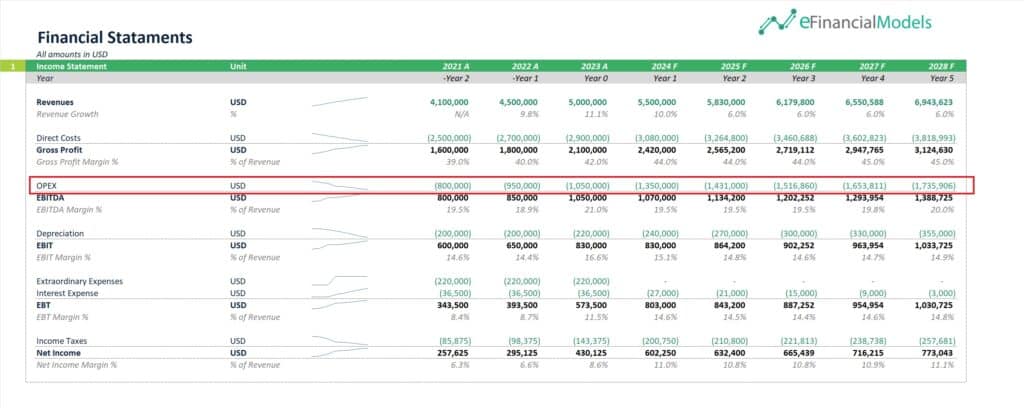
In the income statement above, OPEX (Operating Expenses) is treated as a direct deduction from Gross Profit to calculate the earnings before interest, taxes, depreciation, and amortization (EBITDA). The OPEX line increases steadily year by year, which slightly compresses the EBITDA margin over time. Even though revenues and gross profit grow consistently, higher OPEX limits the pace at which EBITDA improves. This highlights the importance of controlling operating expenses to maintain profitability and margin strength as the business scales.

In the cash flow statement above, CAPEX (Capital Expenditures) is shown as a negative value under the investing cash flow, meaning it’s treated as a cash outflow. Each year, CAPEX reduces the total cash available as the company invests in long-term assets like equipment or property. While these investments don’t hit the income statement immediately, they impact cash balances. For example, in 2023, a large CAPEX of $620,000 significantly cut cash flow despite healthy operating inflows. This shows how CAPEX drains liquidity in the short term but supports future growth.
Purpose
CAPEX aims to grow the business by acquiring or upgrading long-term assets like buildings, machinery, or vehicles. These investments help improve future performance and are not used up right away. Instead, they bring value over many years. In contrast, OPEX focuses on keeping the business running smoothly every day. It includes regular expenses like salaries, rent, utilities, and office supplies. These costs are necessary to maintain daily operations but do not create lasting value. While CAPEX builds the foundation for future growth, OPEX ensures the company stays functional and efficient in the present. Clearly, OPEX vs. CAPEX plays a key but very different role.
Financial Impact
CAPEX boosts a company’s asset base by investing in long-term items like buildings, vehicles, or equipment. These purchases don’t hit the income statement right away. Instead, the costs are spread out over time through depreciation. This approach allows companies to grow and improve operations without affecting short-term profit. In contrast, OPEX directly reduces current profits because it covers everyday business costs. These include salaries, rent, utilities, and repairs. The bottom line is immediately lower since OPEX is fully expensed during the period it occurs. While CAPEX focuses on building future value, OPEX supports the company’s daily survival and efficiency.
Tax Treatment
CAPEX vs. OPEX differ greatly in how they’re treated for taxes. Companies cannot deduct CAPEX all at once. Instead, they spread the cost over several years through depreciation since these expenses relate to long-term assets like equipment or buildings. This means the tax benefit comes slowly, year by year. On the other hand, OPEX provides immediate tax relief. Since it covers everyday costs like rent, salaries, and supplies, businesses can fully deduct it in the same year the expense happens. This direct impact on taxable income makes OPEX useful for managing short-term tax burdens, while CAPEX supports long-term financial planning.
Time Horizon
CAPEX focuses on the long-term by funding assets that provide value for many years, such as buildings, machines, or vehicles. These investments are meant to support future growth and are not used up quickly. Instead, they stay on the balance sheet and depreciate over time. OPEX, however, is all about the short term. It covers the business’s regular costs, like rent, wages, and utilities. These expenses happen frequently and are used up within the year. While CAPEX builds future capacity, OPEX keeps daily operations running smoothly. The key difference between OPEX vs. CAPEX lies in how long each type of spending delivers value.
Real-World Examples of Operating vs. Capital Expenses
Understanding the distinction between operating vs. capital expenses is crucial for making informed business decisions, and real-world examples can clarify how these concepts manifest in everyday operations.
Example 1: Technology Investments
Consider a company looking to upgrade its IT infrastructure. If it decides to purchase new servers or networking equipment, this would fall under CAPEX, as these assets are long-term investments that depreciate over time. Conversely, if the company opts for a cloud service subscription to host its applications, the monthly fees paid for the service would be classified as OPEX. This distinction between operating vs. capital expenses is significant because it affects cash flow management and tax implications—CAPEX typically provides depreciation benefits over the asset’s useful life, while OPEX can often be deducted in full during the tax year incurred.
Example 2: Office Space
A business might choose to buy a commercial property to establish its headquarters; this purchase represents CAPEX, as it involves a substantial investment aimed at long-term use. However, if the same business leases office space instead, the monthly rental payments are categorized as OPEX. Leases often provide flexibility, allowing companies to scale operations without the burden of ownership, but they can also lead to higher long-term costs as rental payments accumulate.
Example 3: Employee Training Programs
Investing in employee training can also illustrate the difference between operating vs. capital expenses when it comes to the decision-making process. If a company decides to purchase new software for its employees to improve productivity, this may initially appear to be a CAPEX investment. However, if the software is provided through a subscription model that requires ongoing payments, it shifts into the OPEX category. The choice between upfront costs versus recurring expenses can impact budget planning and resource allocation.
These examples highlight the practical implications of operating vs. capital expenses in various business scenarios. By understanding the nuances between the two, companies can better strategize their financial planning, optimize cash flow, and align their investments with long-term goals.
How Financial Modeling Breaks Down OPEX vs. CAPEX
OPEX vs. CAPEX serves different but vital roles in business spending. OPEX (Operating Expenses) covers short-term costs like rent, salaries, and utilities—expenses needed to keep the business running daily. These are deducted from the income statement and reduce current profits but are fully deductible yearly. In contrast, CAPEX (Capital Expenditures) is used to acquire or upgrade long-term assets such as equipment or property. CAPEX is recorded on the cash flow statement and gradually depreciated over time. It boosts the company’s asset base but doesn’t affect profits immediately. In short, OPEX keeps operations alive now, while CAPEX builds the future.
Financial modeling breaks down OPEX vs. CAPEX to show how each affects a business’s financial health. It separates daily operating costs from long-term investments to clarify cash flow, taxes, and profitability. Financial models flag misclassifications that could skew EBITDA, net margins, and asset returns. By categorizing expenses correctly, businesses manage budgets more efficiently—tracking short-term spending while planning big asset purchases. This helps align investment timing with strategic goals. It also improves ROI forecasts and tax planning, as CAPEX depreciates over time while OPEX is deducted yearly—the result is smarter decisions, cleaner reports, and stronger financial control.
Use financial modeling to clearly separate OPEX vs. CAPEX, sharpen your strategy, and drive smarter decisions!












You might also like:
- 10 Main Elements of a Business Plan
- 10-Step Financial Planning Checklist for Smart Executives
- 14 Best Practices in Financial Modeling
- Cash Flow Analysis in Excel
- Financial Modeling for Startups and Small Businesses
- How to Build a Capitalization Table
- Understanding the Debt Service Coverage Ratio: An Essential Metric for Financial Analysis
- Funding Sources
- Business Valuation
- Achieve Financial Success By Knowing Your Business Plan Model
- Funding Rounds: How to Raise Series A Funding?
- 5 Steps to Create a Drop Down List Using Data Validation in Excel
- Financial Statements – Definition, Uses, Contents and Templates
- Top 10 Mistakes in DCF Valuation Models
- IRR vs NPV in the Context of Financial Decision-Making
- Investment
- Financial Modeling with Excel: Fundraising Plan Tactics
- 10 Tips to Develop a First Class Business Valuation Report
- Business Valuation Service