
0 ITEMS

The Essential Guide to Personal Finance 101

Managing personal finance involves key principles that help you build a secure financial future.
- Budgeting ensures your income covers expenses while saving for goals and emergencies.
- Saving an emergency fund of three to six months of expenses provides financial stability during unexpected events.
- Borrowing smart means choosing low-interest debt, avoiding unnecessary loans, and developing clear repayment strategies.
- Tax planning includes maximizing deductions and credits, and investing in tax-efficient accounts to lower liabilities.
- Selecting the right insurance coverage protects against financial risks without overspending.
Mastering these fundamentals helps you take control of your money and plan for long-term financial success.
Mastering Personal Finance: What It Is and Why It Matters
Personal finance is a comprehensive term for managing an individual’s or a family’s financial activities and decisions. It includes managing individual or household financial activities, including income generation, saving, investing, and spending. At its core, Personal Finance 101 aims to help individuals make effective and informed financial decisions, ensuring that resources are allocated efficiently to meet current needs while planning for future stability and growth.
Personal finance encompasses planning, overseeing, directing, and controlling monetary resources. It includes budgeting, savings, debt management, tax planning, insurance, and retirement planning. Effective personal finance management ensures one can achieve financial goals and maintain financial stability throughout different phases of life. It is crucial in today’s complex economic environment, where financial challenges and opportunities are ever-present.
Financial literacy plays a pivotal role in personal finance. It involves understanding financial principles and concepts, such as budgeting, investment, credit management, and risk mitigation. Being financially literate allows individuals to make informed and effective decisions with all their financial resources. It is a crucial life skill that directly impacts one’s overall well-being. Individuals who are financially literate can navigate through financial crises, make sound investments, and plan for future financial stability. Therefore, advancing one’s financial literacy is indispensable to mastering personal finance. In brief, personal finance is not merely about dollars and cents; it’s about equipping oneself with the knowledge and skills to make sound financial decisions that enhance quality of life and promote economic well-being.

Why Does Personal Finance Planning Matter?
Personal finance planning is crucial because it empowers individuals to take control of their financial future. It involves managing your money effectively, making informed decisions, and setting financial goals. Here are some key reasons why personal finance matters:
- Achieving Financial Goals: Effective planning helps individuals set and achieve financial goals, whether buying a home, saving for retirement, or funding education. Creating a structured plan allows you to allocate resources effectively to meet these objectives. You can work towards these goals more effectively by creating a budget and tracking your progress.
- Debt Management: Managing debt is crucial because it directly impacts financial stability and overall well-being. With effective debt management, individuals can avoid falling into a cycle of mounting interest, late fees, and worsening credit scores, which can limit future financial opportunities and increase stress. Personal finance planning is essential in debt management because it provides a structured approach to understanding and controlling one’s financial situation. Effective planning helps individuals create a clear budget, prioritize expenses, and set realistic financial goals.
- Financial Independence: Personal finance planning builds a safety net, ensuring you have resources for emergencies, unexpected expenses, or future needs. It is pivotal to achieving true financial independence. It equips you with the tools to gain control over your economic future, enabling you to make informed decisions that align with your long-term goals. By creating a well-structured budget, investing wisely, and building a robust savings strategy, you can gradually reduce reliance on external sources of income or support.
- Retirement Preparation: Retirement preparation matters as it ensures financial stability and independence in one’s later years, allowing individuals to maintain their desired lifestyle without reliance on external support. Personal finance planning is crucial for retirement preparation because it provides a structured approach to achieving financial security in one’s later years. By creating a comprehensive plan, individuals can set specific retirement goals, develop a savings strategy, and choose appropriate investment vehicles to grow their funds. This planning process involves assessing current financial status, estimating future needs, and making informed asset allocation and risk management decisions.
- Wealth Building: Wealth building is crucial for individuals as it lays the foundation for long-term financial security and independence. It also offers the potential for financial growth through compounding returns, which can significantly enhance one’s quality of life and provide opportunities for future generations. Personal finance planning is vital in wealth building, providing a strategic approach to managing resources and achieving financial goals. By creating a detailed plan, individuals can set clear objectives, allocate funds effectively, and prioritize investments that contribute to long-term growth. This structured approach ensures that spending is controlled, savings are maximized, and investments are well-diversified.

Essential Principles of Personal Finance
Navigating the world of personal finance can seem daunting, but mastering a few essential principles can set you on the path to financial stability and growth. Understanding these key concepts is crucial for building a secure financial future:
- Allocating a Budget
- Banking an Emergency Fund
- Borrowing Smart
- Reducing Tax Liability
- Smart Insurance Selection
- Targeting Retirement Investments

By adhering to these foundational principles, you can create a roadmap for achieving your financial goals, make informed decisions, and ultimately gain control over your financial well-being. Whether you’re just starting or looking to refine your strategy, grasping these core principles is the first step toward financial empowerment.







































I. Allocating a Budget
Budgeting means creating a plan to manage your income and expenses, ensuring you allocate funds effectively to cover essential needs and achieve financial goals. It involves tracking your spending, setting limits for various categories, and adjusting as needed to stay within your financial means.
Allocating a budget is one of the essential principles of personal finance that ensures individuals can manage their financial resources effectively and achieve their financial goals. Systematically dividing income into categories such as savings, investments, necessities, and discretionary spending provides a clear framework for tracking expenses and making informed financial decisions. This disciplined approach helps avoid overspending and accumulating debt and fosters long-term economic stability and growth. Effective budget allocation empowers individuals to prioritize their spending, prepare for unexpected expenses, and build a solid foundation for future financial success.
Smart Budgeting Techniques
Mastering smart budgeting techniques can transform your approach to personal finance 101. Effective budgeting isn’t just about tracking expenses; it’s about strategic allocation that aligns with your goals, optimizing savings, and ensuring that every dollar works toward your long-term financial health.
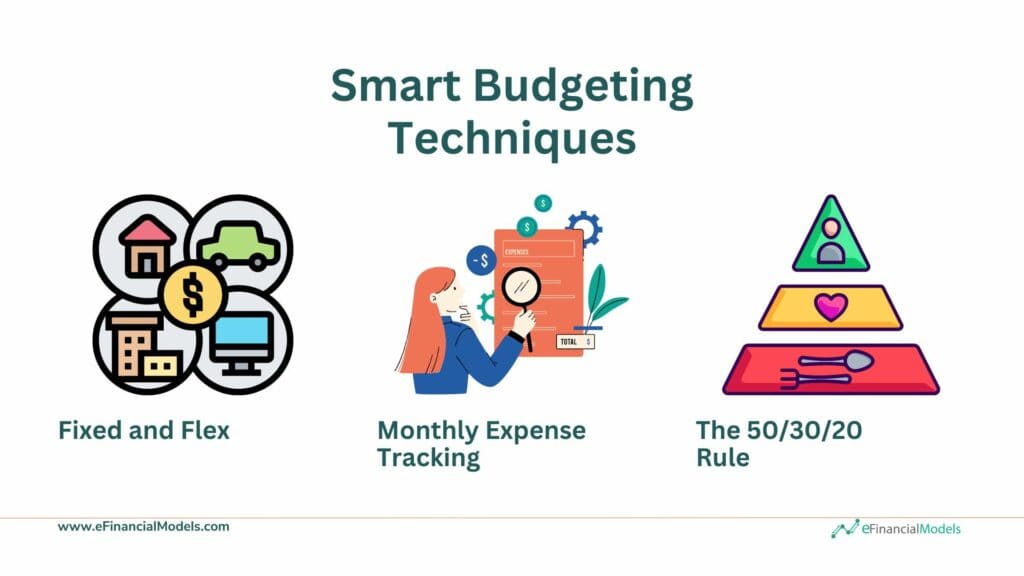
- Fixed and Flex: When crafting a budget, it’s essential to distinguish between fixed and flexible expenses. Fixed expenses, such as utilities, rent, mortgage payments, and car loans, remain constant monthly. These costs are predictable and necessary, making them easier to plan for. In contrast, flexible expenses, such as groceries, dining out, or entertainment, are variable and can fluctuate monthly. By categorizing your expenses into fixed and flexible, you gain a clearer understanding of where your money goes, which helps manage discretionary spending and adjust your budget as needed. This approach ensures that you cover your essential obligations while having the flexibility to make informed decisions about non-essential expenditures.
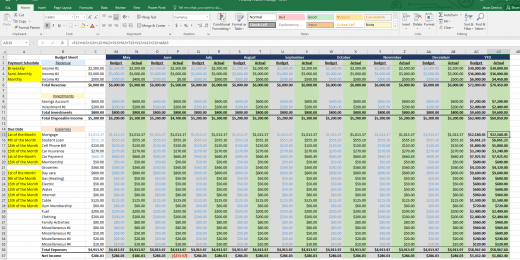
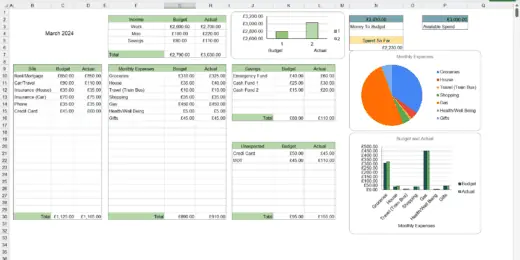
- Monthly Expense Tracking: Tracking monthly expenses is a fundamental aspect of smart budgeting that allows you to monitor and control your spending habits. By keeping a detailed record of all costs, you gain insights into your spending patterns, identify areas where you may be overspending, and make necessary adjustments to stay within your budget. Tools such as budgeting apps, Excel budgeting templates, or even simple ledger entries can be used to keep track of every expenditure. Regularly reviewing these records helps set realistic financial goals, improve financial discipline, and ultimately achieve greater financial stability and growth.
- The 50/30/20 Rule: The 50/30/20 rule is a widely recognized budgeting principle that allocates your after-tax income into three main categories: needs, wants, and savings. According to this rule, 50% of your income should be dedicated to needs—essential expenses like housing, utilities, and groceries. 30% should be reserved for wants, which are non-essential items such as dining out, entertainment, and hobbies. The remaining 20% should be allocated towards savings and debt repayment. This simple yet effective framework provides a balanced approach to budgeting, ensuring that you meet your essential obligations, enjoy discretionary spending, and build a solid financial foundation for the future. Having a clear financial plan can bring peace of mind and a sense of security, knowing that you are in control of your finances.
Budgeting Pro Tip: Prioritize evaluating big-ticket items significantly impacting your overall budget. Small, frequent expenses can add up, but they pale compared to the long-term financial strain of larger commitments.
II. Banking an Emergency Fund
Saving money is a cornerstone of personal finance that cannot be overstated. Whether you are planning for short-term needs or long-term goals, maintaining an effective savings strategy is crucial. The significance of saving money extends beyond just accumulating wealth; it aids in managing debt, provides a financial cushion for emergencies, and offers peace of mind. In times of economic uncertainty, having savings can be a lifeline, helping you avoid financial distress when unexpected expenses arise. Furthermore, diligent saving habits contribute to achieving larger financial goals, such as buying a home, funding education, or enjoying a comfortable retirement.
Building an emergency fund is one of the most essential principles of personal finance. Experts recommend setting aside three to six months of monthly living expenses to cover unexpected financial setbacks. This reserve is a financial safety net, providing security and peace of mind during job loss, medical emergencies, or urgent repairs. With this cushion, individuals can navigate life’s uncertainties without derailing their long-term financial goals, ensuring stability and reducing the need to rely on high-interest credit or loans. Moreover, maintaining an emergency fund promotes better financial discipline and helps individuals stay on track with their overall budget and savings plan.
Best Ways to Bank an Emergency Fund
When choosing a savings account for banking an emergency fund, you’ll want to consider accessibility, interest rates, and fees. Here are some of the best types of savings accounts for building an emergency fund:
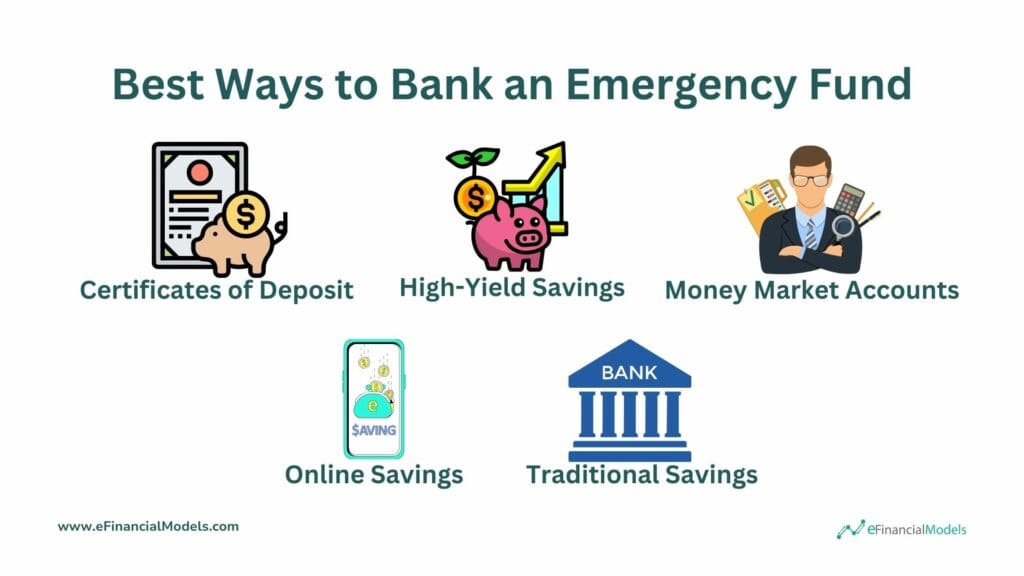
- Certificates of Deposit (CDs): CDs provide a fixed interest rate for a specified term, ranging from a few months to several years. Fixed interest rates can offer higher returns if you can commit to locking up your money for a set period. They are suitable for savers who can commit to leaving their money untouched for a set period in exchange for higher returns. Penalties for early withdrawal can be a downside, so choosing a CD with a term that aligns with your emergency fund needs is essential.
- High-Yield Savings Accounts: These accounts offer significantly higher interest rates than traditional ones. They can maximize interest earnings on your emergency fund. They are ideal for those looking to grow their savings more quickly while maintaining easy access to their funds. Look for high-yield savings accounts with no monthly fees or minimum balance requirements.
- Money Market Accounts (MMAs): MMAs combine features of savings and checking accounts, often offering higher interest rates and the ability to write checks or use a debit card. They allow interest to be earned while retaining easy access to funds. Although, they may require a higher minimum deposit and may have withdrawal limits.
- Online Savings Accounts: Online savings accounts are digital savings accounts offered by banks or financial institutions that provide higher interest rates and greater convenience, as they operate exclusively online without physical branches. They are ideal for banking an emergency fund due to their higher interest rates and easy access to funds while avoiding the overhead costs associated with traditional brick-and-mortar banks. Ensure the account is FDIC-insured and check for fees or minimum balance requirements.
- Traditional Savings Accounts: These are standard savings accounts with lower interest rates but offer easy access to funds. Some conventional savings accounts provide flexible terms, and features might include higher interest rates or limited-time promotions. They work best if you want to tailor your savings strategy to your specific needs. Carefully review the terms and conditions to avoid potential fees or restrictions.
When selecting an account, prioritize interest rates, accessibility, and fees. An ideal emergency fund account should offer a balance between earning interest and providing quick access to your funds in case of an emergency.
Savings Pro Tip: The earlier you start saving, the more time your money has to grow. Even modest contributions made early on can compound into substantial gains by retirement.
III. Borrowing Smart
Borrowing smart is one of the most critical principles of personal finance because it ensures that debt is used as a tool for growth rather than a source of financial strain. By carefully evaluating loan terms, interest rates, and repayment plans, individuals can make strategic borrowing decisions that support their long-term financial goals while minimizing the risk of overextension. Effective management of borrowed funds involves avoiding unnecessary debt, maintaining a balanced budget, and selecting the most advantageous credit options. This disciplined approach fosters financial stability and builds a strong credit history, paving the way for future financial opportunities and success.
How to Borrow Smart
Borrowing smart is not just about securing a loan—it’s about making strategic financial decisions that align with your long-term goals. The principle of smart borrowing involves understanding your financial needs, evaluating your repayment capabilities, and choosing the right type of credit to maximize benefits while minimizing risks. By adopting a thoughtful approach to borrowing, you can leverage credit as a tool for growth and stability rather than a burden that hampers your financial health.
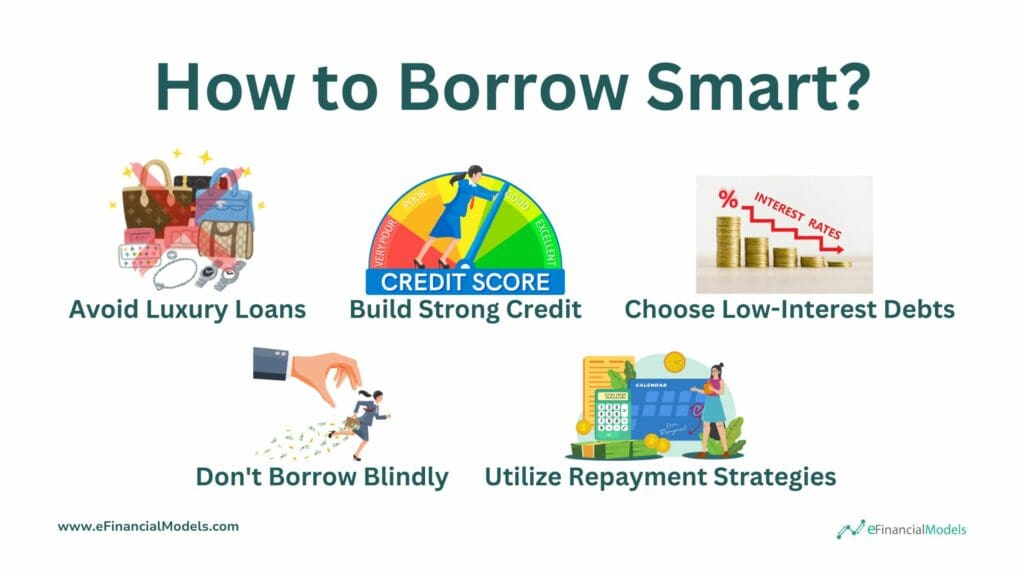
Avoid Luxury Loans: When considering borrowing money, remember that you are in control. It’s crucial to avoid using loans for luxury items or non-essential purchases. Luxury goods, such as high-end electronics, designer clothing, or extravagant vacations, may seem appealing, but they do not provide long-term value and can lead to unnecessary financial strain. Instead, focus on borrowing for essential needs, such as a home, education, or business investments, which can offer lasting benefits and contribute to your financial stability. Using credit responsibly ensures that borrowed funds are directed towards investments that enhance your long-term financial health rather than fleeting indulgences.
- Build Strong Credit: A strong credit history is vital for securing favorable loan terms and interest rates. Your credit history reflects your ability to manage debt and repay loans on time. To build a robust credit history, make timely payments on existing debts, maintain a low credit utilization ratio, and avoid taking on excessive credit inquiries. Regularly reviewing your credit report for accuracy and promptly addressing any discrepancies can further strengthen your credit profile. A solid credit history can lead to better borrowing options and lower interest rates in the future.
- Choose Low-Interest Debts: When borrowing money, opting for low-interest debt can significantly reduce the total cost of borrowing. Compare interest rates from different lenders and choose loans with the lowest possible rates. Lower interest rates mean less of your money goes toward paying interest, allowing you to pay off the principal more quickly. Additionally, fixed-rate loans should be considered for predictable payments and protection against future rate increases. Determining the best rates ensures that you minimize the financial impact of borrowing.
- Don’t Borrow Blindly: One of the fundamental principles of smart borrowing is never to take on debt you cannot afford to repay. Before borrowing, carefully evaluate your budget and financial situation to ensure you can comfortably make the required payments without jeopardizing your financial stability. Calculate the total cost of the loan, including interest and fees, and assess whether your income and expenses can accommodate these payments. Borrowing within your means helps prevent financial stress and potential debt accumulation.
- Utilize Repayment Strategies: Effective debt repayment strategies are essential for managing and reducing debt efficiently. Start by prioritizing high-interest debts to minimize the overall cost of borrowing. Consider methods such as the snowball approach, where you pay off smaller debts first to gain momentum, or the avalanche method, where you focus on paying off the highest-interest debts first. Additionally, explore options for consolidating debt to lower interest rates and simplify payments. Developing a structured repayment plan ensures you systematically reduce debt and achieve financial freedom.
Debt Management Pro Tip: Ensure timely repayments to safeguard and enhance your financial well-being, and regularly review your credit profile to maintain a strong financial foundation.













































IV. Reducing Tax Liability
Reducing tax liability is a cornerstone of effective personal finance management, serving as a vital strategy for optimizing financial health and maximizing wealth. By implementing tax-efficient strategies, individuals can significantly lower their taxable income, thereby minimizing the amount of taxes owed and freeing up more resources for investment and savings. Understanding different tax brackets and how they apply to one’s income can inform better financial decisions throughout the year. Strategies for tax-efficient investments, such as contributing to retirement accounts or utilizing tax-loss harvesting, can reduce taxable income and increase savings.
How to Reduce Tax Liability?
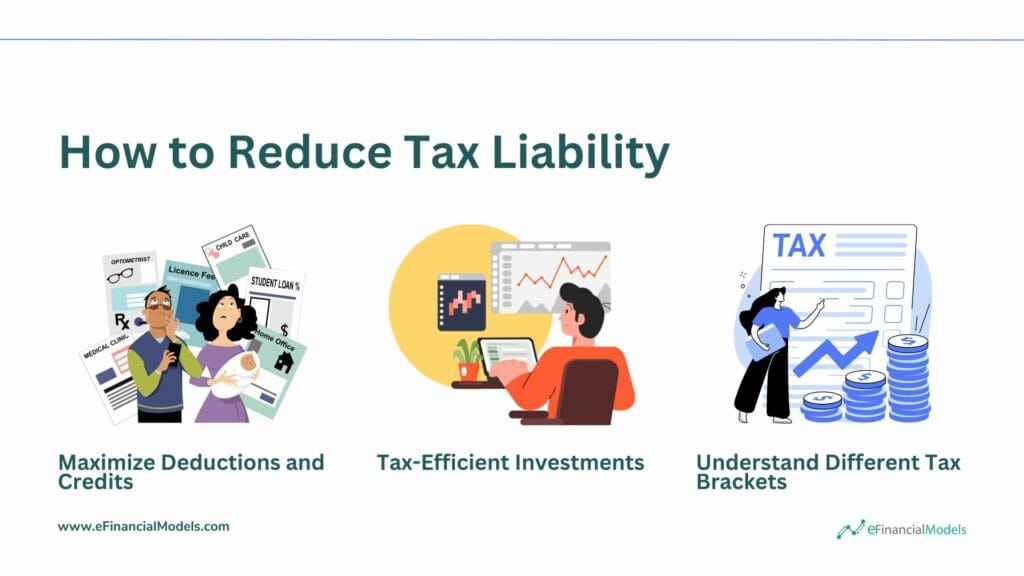
With the right strategies, you can effectively reduce your tax liability and keep more of your hard-earned money. Understanding and leveraging deductions, credits, and tax-efficient investment strategies can make a significant difference. Here are three practical steps that can help you minimize your tax burden:
- Maximize Deductions and Credits: A crucial aspect of tax planning is maximizing available deductions and credits, which can significantly reduce taxable income. Deductions such as mortgage interest, charitable donations, and medical expenses can be itemized to lower taxable income. In contrast, standard deductions may offer a simpler method for those who do not have itemizable significant expenditures. Tax credits, on the other hand, directly reduce the amount of tax owed and can be more valuable than deductions. Credits like the Earned Income Tax Credit (EITC), Child Tax Credit, and education-related credits can substantially mitigate tax burdens for eligible individuals. Understanding and applying these deductions and credits effectively requires thorough knowledge and careful record-keeping, but the financial benefits are well worth the effort.
- Tax-Efficient Investments: Investments play a pivotal role in tax planning as they can offer advantages for tax deferral, tax-exempt income, and capital gains. Tax-efficient investment strategies include investing in retirement accounts such as 401(k)s and IRAs, which allow for tax-deferred growth. Utilizing tax-advantaged accounts like Roth IRAs offers the benefit of tax-free withdrawals and can be particularly beneficial in retirement. Furthermore, individuals might consider capitalizing on investments that provide favorable capital gains treatment or dividends taxed at a lower rate than ordinary income. By strategically choosing investments with tax implications in mind, individuals can optimize their portfolios for greater financial gains.
- Understand Different Tax Brackets: One of the foundational elements of tax planning involves understanding the different tax brackets and how they impact taxable income. Tax brackets determine the rate at which income is taxed, which can vary significantly depending on income level. Awareness of these brackets allows individuals to make informed decisions about their annual earnings and deductions. For instance, if an individual is nearing the threshold of a higher tax bracket, they might consider deferring some income to the following year or accelerating deductions to keep their taxable income within a lower bracket. This proactive approach enables individuals to minimize their tax liabilities legally and efficiently.
Tax Planning Pro Tip: To reduce taxable income, focus on strategies that lower your tax bill without cutting your earnings. It means finding effective ways to minimize taxes on the money you already make.
V. Smart Insurance Selection
Insurance plays a crucial role in protecting against financial risks and ensuring overall financial security. Adequate insurance coverage provides financial protection against unforeseen events, such as illness, accidents, or property damage, helping individuals avoid significant economic losses. Understanding premiums, deductibles, and the extent of coverage is vital in selecting the right insurance policies. Regularly reviewing and updating insurance policies ensures they align with changing needs and circumstances.
Smart insurance selection, as one of the essential principles of personal finance, is a strategic approach that allows you to opt out of insurance for expenses you can afford to cover yourself. This approach enables you to allocate resources more efficiently by avoiding premiums for manageable risks within your financial means. It emphasizes a personalized strategy where you assume responsibility for smaller, predictable expenses, reserving insurance for more significant, unforeseen risks. By self-insuring for lower-cost liabilities, you can potentially invest savings from avoided premiums into growth opportunities or other financial goals, balancing protection with cost-effectiveness.
Types of Insurance Coverage to Consider
Various insurance coverages, including health insurance, life insurance, and property and casualty insurance, should be considered.
- Health Insurance: Health insurance is arguably the most critical type of insurance. It provides a safety net, ensuring that medical emergencies or chronic illnesses don’t lead to financial strain. Policies range from basic coverage to comprehensive plans that include preventive care and specialist visits. Understanding the details of what your health plan covers and the network of healthcare providers available is essential for making informed decisions.
- Life Insurance: Life insurance is essential for those dependent on their income. The primary function is to provide financial security to your beneficiaries during your untimely death. Two main types of life insurance to consider are term life insurance, which provides coverage for a specific period, and whole life insurance, which covers the insured for their entire lifetime and can include a savings component. Evaluating the appropriate coverage amount and type ensures your loved ones are financially protected.
- Property and Casualty Insurance: Property and casualty insurance, which includes homeowners, renters, and auto insurance, is a shield against damages to your property and potential liabilities. Homeowners insurance covers damages to your home and belongings due to incidents like fires or theft, whereas renters insurance protects personal property within a rented dwelling. Auto insurance safeguards against financial losses from accidents, theft, and other vehicle-related incidents. Adequate coverage in this category prevents devastating financial impacts from unexpected property-related events.

Insurance Pro Tip: Prioritize insurance for significant risks and self-insure for smaller, manageable expenses to optimize your financial strategy.
VI. Targeting Retirement Investments
Retirement planning is a cornerstone of personal finance, often dictating the quality of life one will enjoy later. It means determining how much money you need to invest and save to maintain your desired lifestyle after you stop working. The process involves assessing current income, expenses, savings, and future financial needs to create a strategy ensuring retirement financial security.
Targeting retirement investments is one of the most essential principles of personal finance. It emphasizes not just saving for retirement but actively investing to grow your wealth over time. Unlike traditional savings accounts that offer modest interest, investing in assets such as bonds, real estate, or stocks can significantly increase your returns through compound growth. This approach leverages the power of investment returns to build a larger nest egg, ensuring that your money works harder for you as you approach retirement. By strategically allocating your investments and taking advantage of market growth, you can enhance your financial security and achieve a more comfortable and financially stable retirement.
Best Retirement Investments to Target
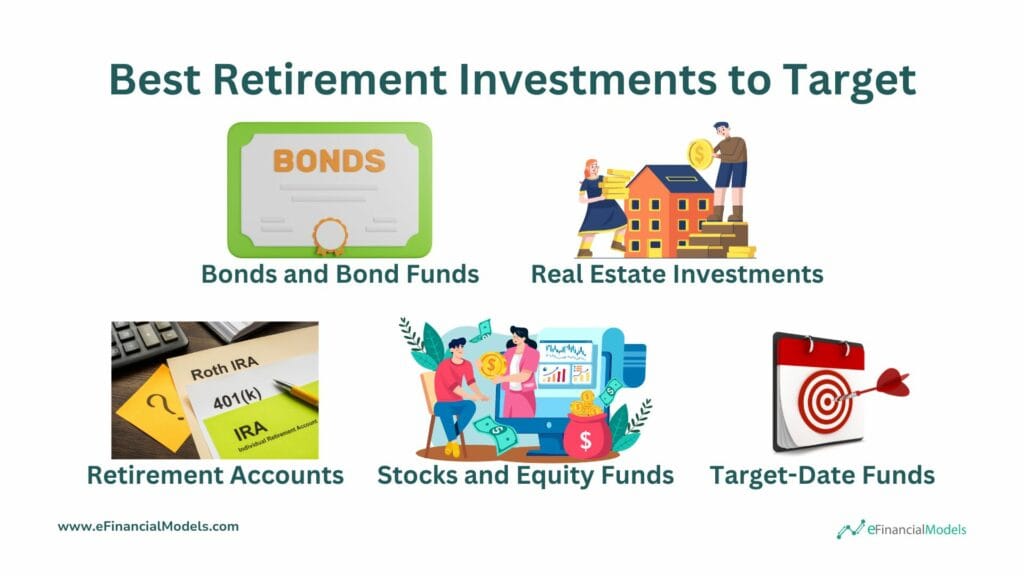
The best retirement investment to target often depends on individual financial goals, risk tolerance, and time horizon. However, a diversified portfolio typically includes:
- Bonds and Bond Funds: These provide more stability and income. Government or corporate bonds and bond funds can offer regular interest payments and lower risk than stocks.
- Real Estate: Real estate investments, whether through direct property ownership or real estate investment trusts (REITs), can provide both income through rents and potential appreciation.
- Retirement Accounts: Contributing to tax-advantaged accounts like 401(k)s, IRAs or Roth IRAs can offer significant tax benefits and facilitate disciplined saving.
- Stocks and Equity Funds: Investing in individual stocks or equity mutual funds offers the potential for high returns, which is crucial for long-term growth. Consider broad-market index funds or exchange-traded funds (ETFs) for diversified exposure.
- Target-Date Funds: These automatically adjust their asset allocation based on your retirement date, providing a balanced approach that becomes more conservative as you near retirement.
Balancing these investments based on risk tolerance and time frame can help build a robust retirement portfolio. Consulting with a financial advisor can also tailor these strategies to your needs and goals.
Retirement Planning Pro Tip: Starting early and staying consistent with retirement savings can provide a substantial financial cushion, allowing individuals to maintain their lifestyle, cover healthcare costs, and pursue personal interests without financial stress.
Personal Finance Excel Template: Your Ultimate Tool
In summary, Personal Finance 102 means mastering the principles of personal finance, including budgeting, savings, debt management, tax planning, insurance, and retirement planning. It is essential for achieving financial stability and long-term security. By understanding and applying these principles, individuals can make informed decisions, effectively manage their finances, and work towards a secure and prosperous future. The foundational principles of personal finance are evident that achieving financial stability is far more than just crunching numbers—it’s about adopting a proactive approach to managing one’s financial resources.
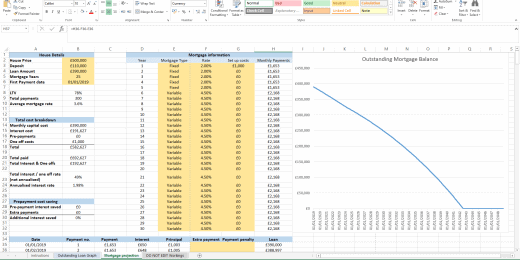
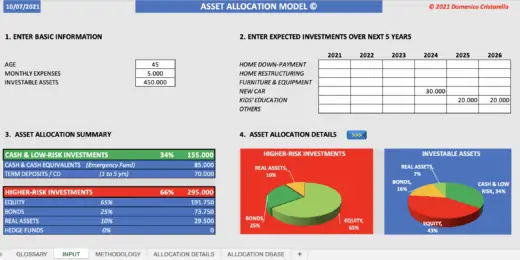
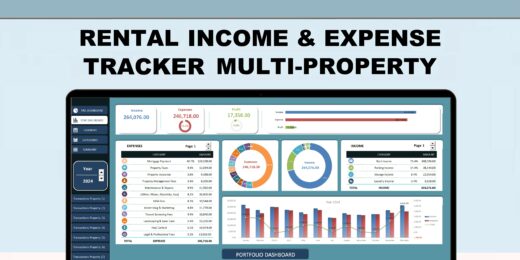
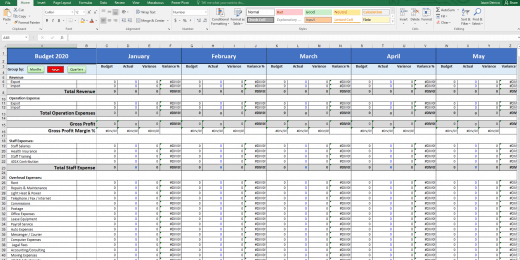
A personal finance Excel template serves as your ultimate tool for mastering the fundamentals of budgeting and financial management. It is an essential ally in navigating Personal Finance 101. A personal finance Excel template provides a clear, organized structure for tracking income, expenses, and savings goals, helping users build a solid foundation for financial management. Offering real-time insights and easy-to-use features simplifies the process of budgeting and financial planning.
The versatility of a personal finance Excel template in accommodating various financial scenarios makes it an invaluable asset for both beginners and seasoned budgeters. Embracing this tool enhances your understanding of financial principles and sets the stage for more informed, effective financial decisions as you embark on your journey to financial literacy. Take control of your financial future with confidence!





















You might also like:
- 10 Tips to Develop a First Class Business Valuation Report
- 10-Step Financial Planning Checklist for Smart Executives
- 5 Practical Tips to Help Raise Funds For Startups
- A Deep Dive Into Understanding 10K Reports
- Achieve Financial Success By Knowing Your Business Plan Model
- Building a Monthly Budget – Using Monthly Budget Templates
- Financial Forecasting Models by eFinancialModels
- Financial Modeling for Startups and Small Businesses
- Personal Budgets
- Investing
- Loans and Debt
- 12 Funding Sources for Businesses and Startups
- How to Make Smart Decisions with 6 Key Financial Metrics?
- 7 Key Tips: How to Best Work With a Financial Model Template
- Master the Free Cash Flow Formula for Smarter Financial Decisions
- Startup Model Templates in Excel that can help your Business Grow
- Top 5 Tips For a Good Financial Due Diligence
- Simple Budget Planner Template
- Free Budget Planner Template in Excel for Services Businesses