
0 ITEMS

Financial Planning for Gym Startups

Financial planning is essential for turning a gym startup into a profitable business.
- A detailed budget covers startup costs like equipment, leasing, and staff, helping prevent overspending.
- Understanding market demand, customer demographics, and competitor pricing guides realistic revenue targets.
- Key financial metrics like customer acquisition cost, retention, and cash flow influence long-term success.
- Securing funding through loans, investors, or crowdfunding depends on clear financial projections and strategic planning.
- Regularly refining financial models ensures your gym remains adaptable and financially healthy.
This article offers practical steps to develop a robust financial plan and boost your gym’s profitability.
Gym & Fitness Center Explained
A gym and fitness center is more than just a space filled with exercise equipment; it’s a hub for achieving personal health and wellness goals. These facilities typically offer various services, including strength training, cardiovascular workouts, group fitness classes, and sometimes even specialized amenities like swimming pools and spa treatments. A gym and fitness center caters to diverse fitness levels and interests, from beginners seeking to improve their overall health to seasoned athletes training for specific goals. It plays a crucial role in helping individuals lead healthier and more active lives by providing access to professional trainers, state-of-the-art equipment, and a motivating environment.
Among the best gym memberships worldwide in Forbes’ list are:
- Anytime Fitness offers a 24/7 access model, allowing members to work out on their schedule. With over 4,000 locations globally, it’s known for its convenient, well-equipped facilities and a strong community feel.
- Crunch Fitness is celebrated for its diverse group fitness classes and vibrant, inclusive atmosphere. It combines high-quality equipment with innovative workout options, appealing to a broad audience.
- Gold’s Gym has a long-standing reputation for being a pioneer in the fitness industry, renowned for its robust strength training facilities and a heritage of supporting bodybuilders and fitness enthusiasts alike. Its iconic locations continue to attract serious fitness devotees worldwide.
- LA Fitness provides a comprehensive range of workout options, including pools, basketball courts, and extensive group classes. Its vast network of gyms across the U.S. and beyond makes it popular for diverse fitness needs.
Planet Fitness, known for its judgment-free and affordable fitness experience, is a great choice for beginners and those seeking a no-frills workout. Its unique ‘Black Card’ membership offers access to all locations and additional perks, making it an attractive option for budget-conscious.

The Profitability of Gym Startups Today
In today’s competitive fitness landscape, the profitability of gym startups hinges on more than just a passion for health and wellness. The global gym & fitness center market has grown significantly and shows no signs of slowing down. In the United States, the sector was projected to expand at a yearly growth rate of 7.81% from 2018 to 2024, with the industry anticipated to reach a value exceeding $147 billion by 2024.
Around 70% of people are becoming more health-conscious, driving higher gym & fitness center membership rates and creating a favorable environment for new gym startups. New gym startups are seeing an average return on investment of 20% within the first year due to growing consumer interest in health and wellness. As the industry evolves, emerging gym startup owners must navigate a complex web of consumer preferences, innovative business models, and market trends to achieve financial success. With an increasing emphasis on personalized fitness experiences, technological advancements in workout equipment, and the rise of boutique fitness studios, the potential for profitability of gym startups is substantial. However, it’s crucial to understand the current dynamics and leverage strategic insights, as they can be the difference between a thriving gym and one that struggles to stay afloat. That’s where financial planning for gym startups comes in!

The Importance of Financial Planning for a Gym & Fitness Center
Financial planning steps are pivotal to launching and sustaining a successful gym & fitness center. A robust gym startup financial plan can make the difference between short-lived operations and a thriving, sustainable business. It provides a clear roadmap, helping gym startup owners to allocate resources effectively, anticipate revenue streams, manage expenses, and strategize for growth. The gym & fitness center industry, while lucrative, presents unique challenges. High startup costs for a gym, fluctuating membership trends, and market saturation are some obstacles gym startups face. Understanding these challenges and embedding them into the financial planning process is crucial.
- Attract Potential Investors: Effective financial planning is crucial for attracting potential investors to a gym & fitness center. Investors seek to understand their investments’ financial health and potential returns before committing. A well-structured financial plan demonstrates the business model’s viability, outlines projected revenue streams, and highlights the strategies for growth. This transparency helps build investor confidence and shows that the business is prepared and has a clear roadmap for success.
- Better Resource Allocation: Financial planning is the key to unlocking the full potential of a gym & fitness center. It provides a clear picture of where funds are most needed, empowering management to prioritize expenditures on essential areas such as equipment upgrades, facility maintenance, or marketing campaigns. By effectively identifying and allocating resources, a gym startup can maximize its operational efficiency, improve member satisfaction, and achieve higher returns on investment, giving the management team a sense of control and empowerment.
- Develop Strategies to Mitigate Risk: Financial planning is vital for developing strategies to mitigate risks in the competitive gym & fitness center industry. By analyzing financial data and trends, a gym startup can identify potential risks, such as fluctuations in membership numbers or unexpected maintenance costs. With this information, management can create contingency plans, set aside emergency funds, and implement strategies to address and minimize these risks, ensuring the stability and continuity of the business.
- Facilitate Better Cash Flow Management: Effective cash flow analysis and management is essential for the smooth operation of a gym or fitness center. Financial planning helps forecast cash flow needs and manage income and expenses efficiently. By tracking cash inflows from memberships, classes, and other services against outflows such as salaries, utilities, and rent, a gym can maintain adequate liquidity to meet its obligations and invest in growth opportunities without financial strain.
Set Realistic Financial Goals: Setting realistic financial goals is not just a task but a journey toward success in financial planning for a gym startup. By establishing clear, achievable objectives such as target revenue, membership growth, or profit margins, the management can create actionable plans to reach these goals. Financial planning provides the framework for monitoring progress, making necessary adjustments, and ensuring that the gym remains on track to achieve its long-term financial aspirations, inspiring and motivating the management team.























































Financial Planning Steps for a Gym Startup
Starting a gym & fitness center involves more than just securing the right equipment and finding a suitable location; it requires meticulous financial planning to ensure sustainability and profitability. Before the first client enters the door, an entrepreneur must establish a clear financial strategy aligning with their business goals. Additionally, regular financial reviews are crucial to adapting to the dynamic market conditions and customer preferences, ensuring the gym opens successfully and thrives in the competitive fitness industry.
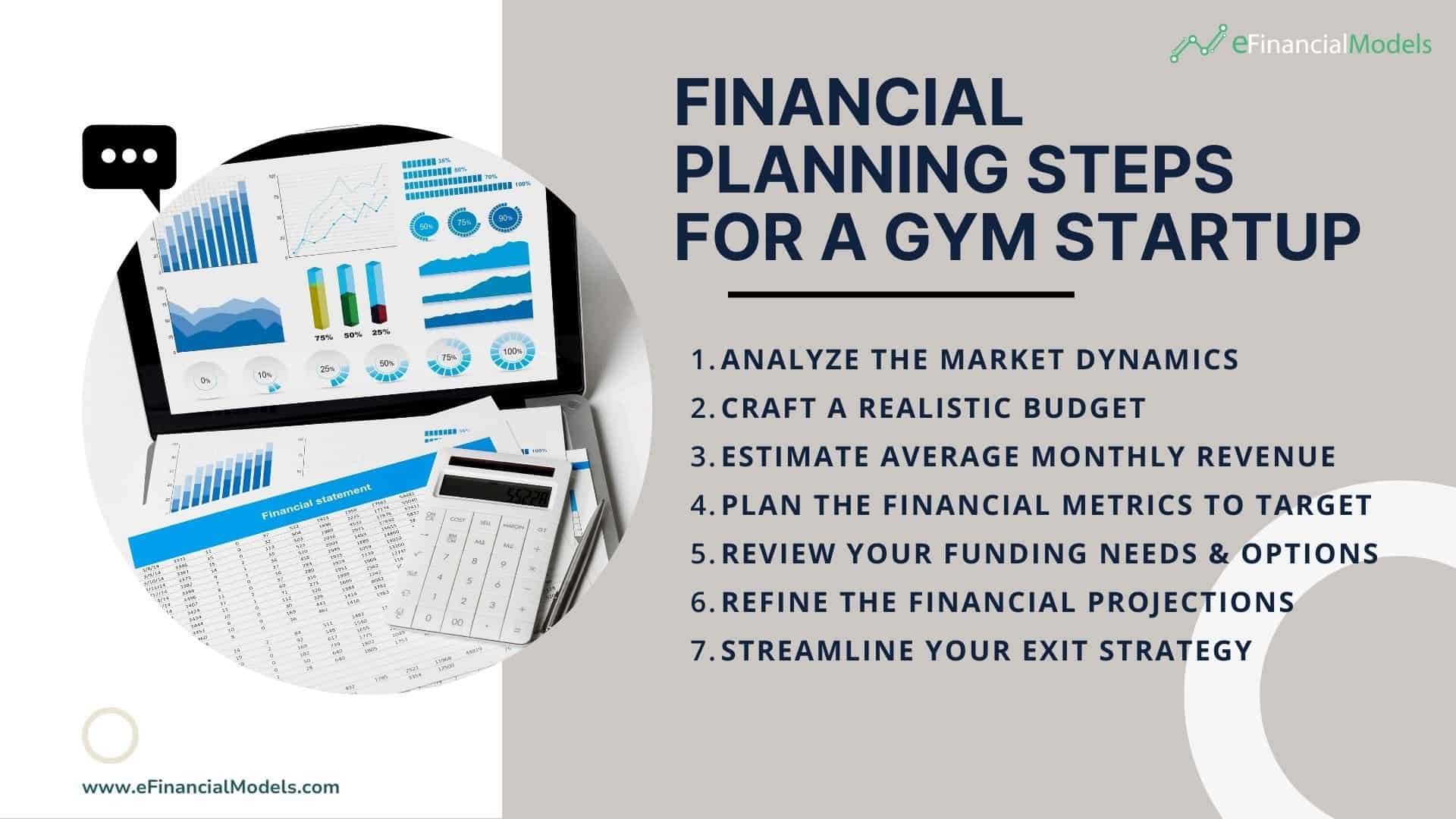
Launching a gym startup requires a meticulous approach to financial planning, beginning with a thorough analysis of market dynamics to understand competitive pricing, customer preferences, and potential demand. Crafting a realistic budget is crucial, factoring in initial setup costs, ongoing operational expenses, and possible revenue streams. Estimating average monthly revenue by examining local demographic data and comparable businesses will inform your financial targets and help set achievable goals. Planning key financial metrics such as Customer Acquisition Cost (CAC), Customer Lifetime Value (CLV), churn rate, EBITDA (Earnings Before Interest, Taxes, Depreciation, and Amortization), and metrics related to revenue and subscriber growth is essential. Reviewing funding needs and options—from bank loans to investor pitches—ensures the financial foundation is secure. Refining these financial projections regularly in response to market changes and business performance helps maintain fiscal health. Finally, a well-thought-out exit strategy, whether selling the business or expanding through franchises, will position the gym for long-term success and potential profitability.
1. Analyze the Market Dynamics
Starting a gym requires understanding the market dynamics specific to the fitness industry and the geographic area in which you plan to operate. This step involves conducting a comprehensive market analysis to determine the competitive landscape, the demand for gym services, and potential customer demographics. Researching existing gyms in the area helps identify what services they offer, their pricing structures, and any gaps in the market that your gym could fill. Additionally, understanding trends in health and fitness can guide the type of gym equipment, classes, and amenities that attract members. This phase is crucial for defining your gym’s unique value proposition and ensuring it aligns with customer needs and preferences.
As the first among the financial planning steps for a gym startup, its goal is to gather data that informs strategic decisions, tailors the gym’s offerings to meet local demands, and ensures its long-term viability. Here are some key questions that the research should aim to answer:
- Who is the target demographic?
- What is the age, gender, income level, and fitness level of the potential customers in the area?
- What are their fitness goals and preferences (e.g., weight loss, bodybuilding, wellness)?
- What is the competitive landscape?
- How many gyms are currently operating in the area?
- What types of gyms are they (boutique fitness centers, large chains, specialty studios)?
- What services and amenities do these competitors offer?
- What are the local fitness trends?
- Are there emerging fitness trends in the area that still needing to be addressed by existing gyms?
- How have fitness preferences changed in this community over the last few years?
- What pricing models are most effective in this market?
- What are the current pricing strategies of local competitors?
- What is the average monthly fee customers are willing to pay?
- What membership models (e.g., monthly, yearly, pay-per-visit) are popular?
- What location factors should be considered?
- What are the most strategic locations for visibility and accessibility?
- How do parking, public transportation access, and convenience affect member retention and acquisition?
- What marketing strategies resonate with the target audience?
- Which advertising channels are most effective in reaching potential customers (e.g., social media, local newspapers, online advertising)?
- What key messages motivate the local population to join a gym?
- What potential barriers to entry might the business face?
- Are there regulatory issues specific to the area that could affect the opening or operation of a gym?
- What are the capital requirements and potential financial risks?
- What are the community’s health and wellness needs?
- Is there a demand for additional services like nutrition counseling, physical therapy, or wellness workshops?
- How can the gym align itself with local health initiatives?

2. Draft a Realistic Budget
Drafting a realistic budget is one of the most crucial financial planning steps for a gym startup. It provides a roadmap for managing financial resources and expectations effectively. A well-constructed budget helps in outlining anticipated revenues and expenses, allowing gym owners to allocate funds appropriately to critical areas such as equipment acquisition, facility maintenance, and marketing campaigns. A sound budget prevents financial overextensions and strategizes for growth and stability in a competitive market.
Startup Costs for a Gym
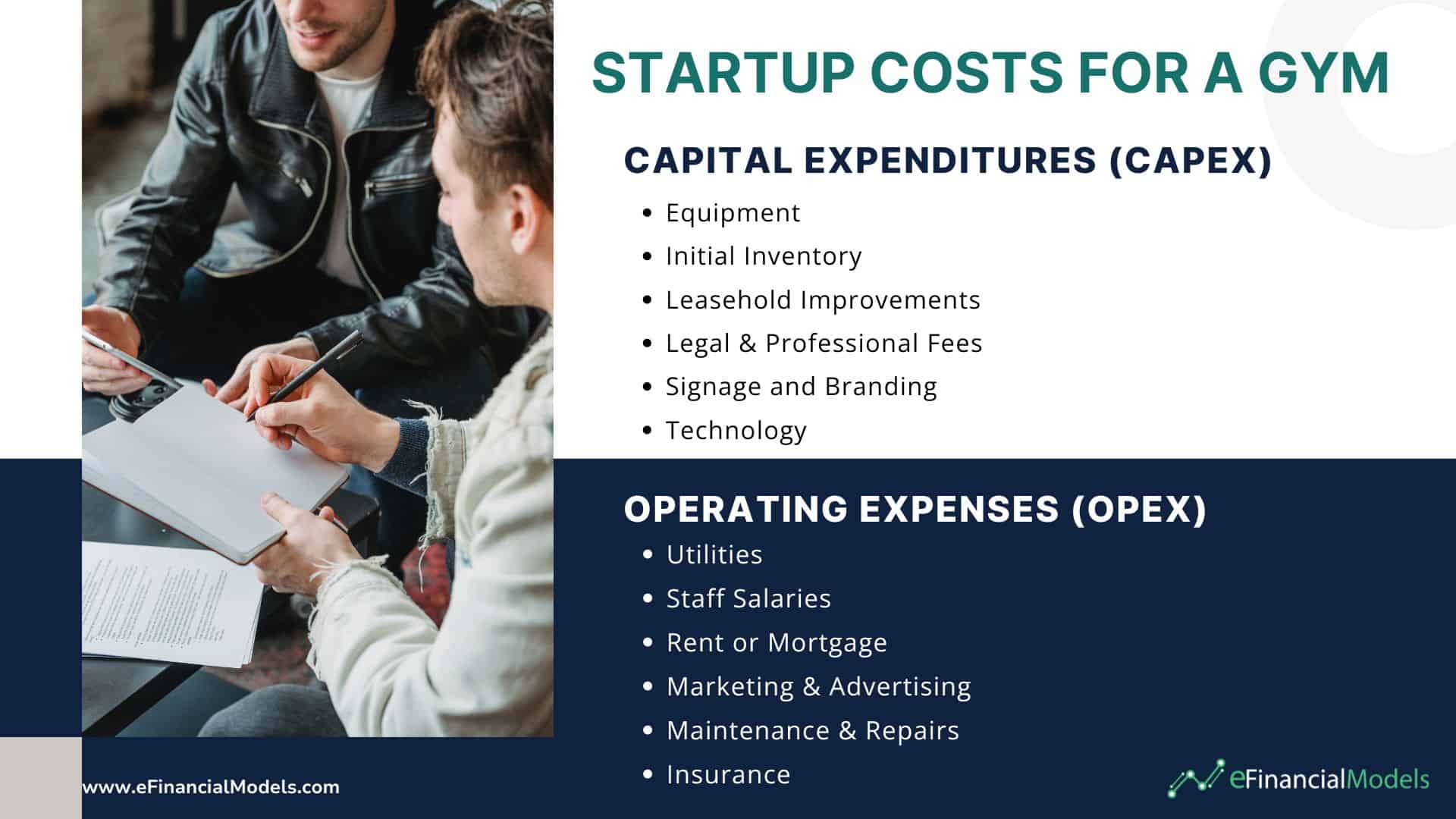
Drafting a realistic budget involves identifying the startup costs for a gym, including both capital expenditures (CAPEX) and operational expenditures (OPEX).
CAPEX is the initial startup costs for a gym. They typically include:
- Equipment: This includes weight machines, free weights, cardio machines like treadmills and ellipticals, mats, and other fitness accessories.
- Initial Inventory: This might include merchandise like supplements, gym apparel, and other retail items you plan to sell.
- Leasehold Improvements: Modifying or renovating a rented space to suit your gym needs costs, including flooring suitable for gym activities, painting, electrical work, plumbing, and HVAC systems.
- Legal and Professional Fees: While they seem like additional costs, they are crucial for ensuring your business is on the right track. These costs cover legal advice, accounting services, and business consulting.
- Signage and Branding: Exterior and interior signage, as well as initial marketing materials like business cards, flyers, and digital assets.
- Technology: It is an essential part of any modern gym and includes point-of-sale systems, computer systems, security systems, and software for membership management.
OPEX are the ongoing startup costs for a gym. To run the gym, you may need to pay for the following:
- Utilities: Electricity, water, heating, and air conditioning costs.
- Staff Salaries: Salaries for trainers, receptionists, cleaning staff, and other employees.
- Rent or Mortgage Payments: Ongoing lease payments or the mortgage for the property.
- Marketing and Advertising: Ongoing costs to attract new members, including social media advertising, email marketing, and local community events.
- Maintenance and Repairs: Regular maintenance of gym equipment and facilities.
- Insurance: Liability insurance, property insurance, and worker’s compensation.
It’s vital to be realistic and comprehensive in your budgeting to avoid financial shortfalls. Additionally, considering cost-saving measures without compromising quality, such as leasing equipment or utilizing energy-efficient utilities, can help manage expenses effectively.
The total startup costs for a gym can vary significantly based on location, size, and the type of gym you plan to open. Here’s a rough estimate of the total startup costs for a gym:
- Small gym: $50,000 to $100,000
- Medium-sized gym: $100,000 to $500,000
- Large gym or full-service facility: $500,000 to $1 million or more
For a detailed and accurate financial plan, it’s advisable to consult with a financial advisor or use a detailed business planning tool that can tailor costs to your specific situation and location.























3. Estimate Average Monthly Revenue
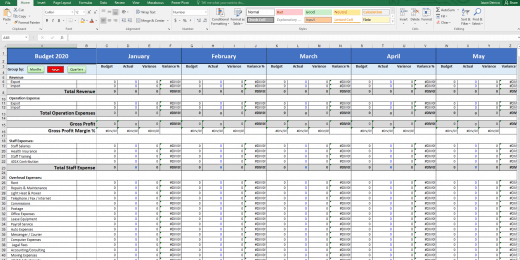
Estimating average monthly revenue is also one of the most critical financial planning steps for a gym startup, as it forms the backbone of the business’s financial health and sustainability. By accurately projecting this figure, entrepreneurs can determine expected cash flows, which are essential for managing operational costs, setting membership fees, and planning expansions or enhancements. Moreover, this estimate helps secure funding or loans by demonstrating the venture’s potential profitability to investors or financial institutions.
Estimating average monthly revenue also assists in devising marketing strategies and promotional activities tailored to achieve revenue targets, ensuring the gym remains competitive and financially viable in a bustling fitness industry. To project these revenues accurately:
- Analyze the pricing models of nearby competitors.
- Consider factors such as peak and off-peak membership rates, discounts for long-term memberships, and the potential for upselling personal training packages or health-related products.
- Understanding the local market’s spending capacity and fitness habits will aid in setting realistic pricing and sales targets.
Primary Revenue Sources for Gym Startups
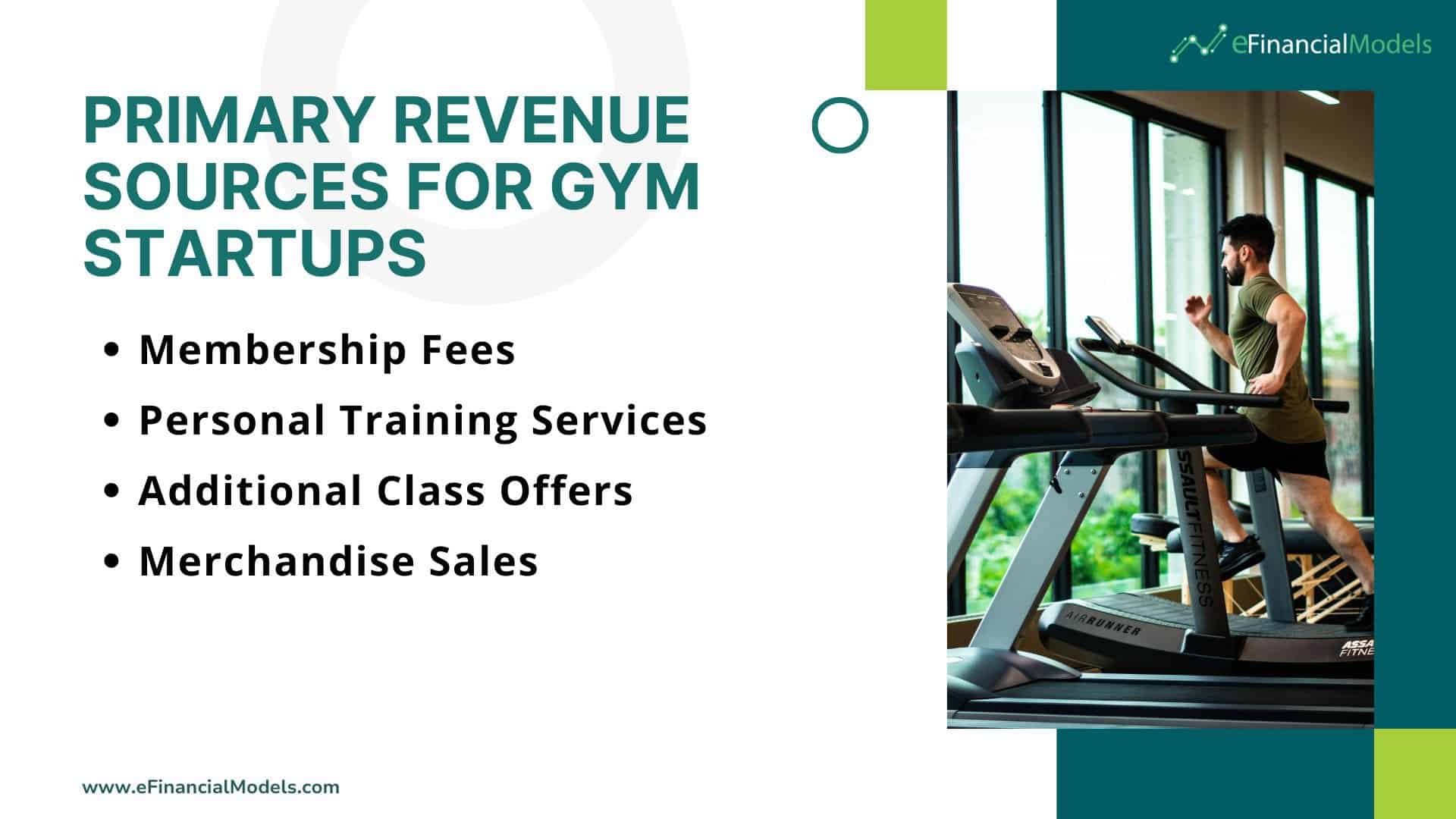
- Membership fees are the primary and most consistent source of revenue for gym startups, as they provide a stable and predictable income stream from regular client subscriptions. This recurring revenue model allows gym owners to forecast future earnings and manage business operations more efficiently.
- For gym startups, the additional class offers become a primary source of income. Offering specialized fitness classes can appeal to a wider range of clients and create a consistent revenue stream. Classes such as yoga, Pilates, HIIT, spinning, and dance workouts attract different demographics and provide opportunities for tiered pricing, such as class packages or pay-per-class models. Hosting specialty workshops or seasonal boot camps can further diversify offerings and drive client engagement, helping gyms generate steady income beyond standard membership fees.
- Personal training services offer a significant supplementary revenue stream, leveraging the expertise of trainers to provide personalized fitness plans and one-on-one coaching. These services typically command higher prices than standard memberships, enhancing overall profitability while fostering client loyalty and satisfaction.
- Merchandise sales, such as selling fitness apparel, equipment, and nutritional supplements, represent an additional revenue avenue that can increase overall earnings and enhance brand visibility. By offering branded products, gyms not only boost their income but also promote their identity outside the gym environment, creating further marketing opportunities.
4. Plan the Financial Metrics to Target
Planning the financial metrics to target is an essential step in the financial planning process for a gym startup because it sets clear benchmarks for success and guides strategic decision-making. By defining key financial indicators, gym startups can track performance against their business goals, identify improvement areas, and adjust their strategies accordingly. This foresight helps manage day-to-day operations efficiently and proves crucial in securing investments and loans, as it demonstrates a well-thought-out business model and potential for profitability to stakeholders. Ultimately, having a robust plan for financial metrics enables gym startups to navigate the competitive fitness industry more effectively, ensuring sustainable growth and long-term success.
Key Financial Metrics for Gym Startups
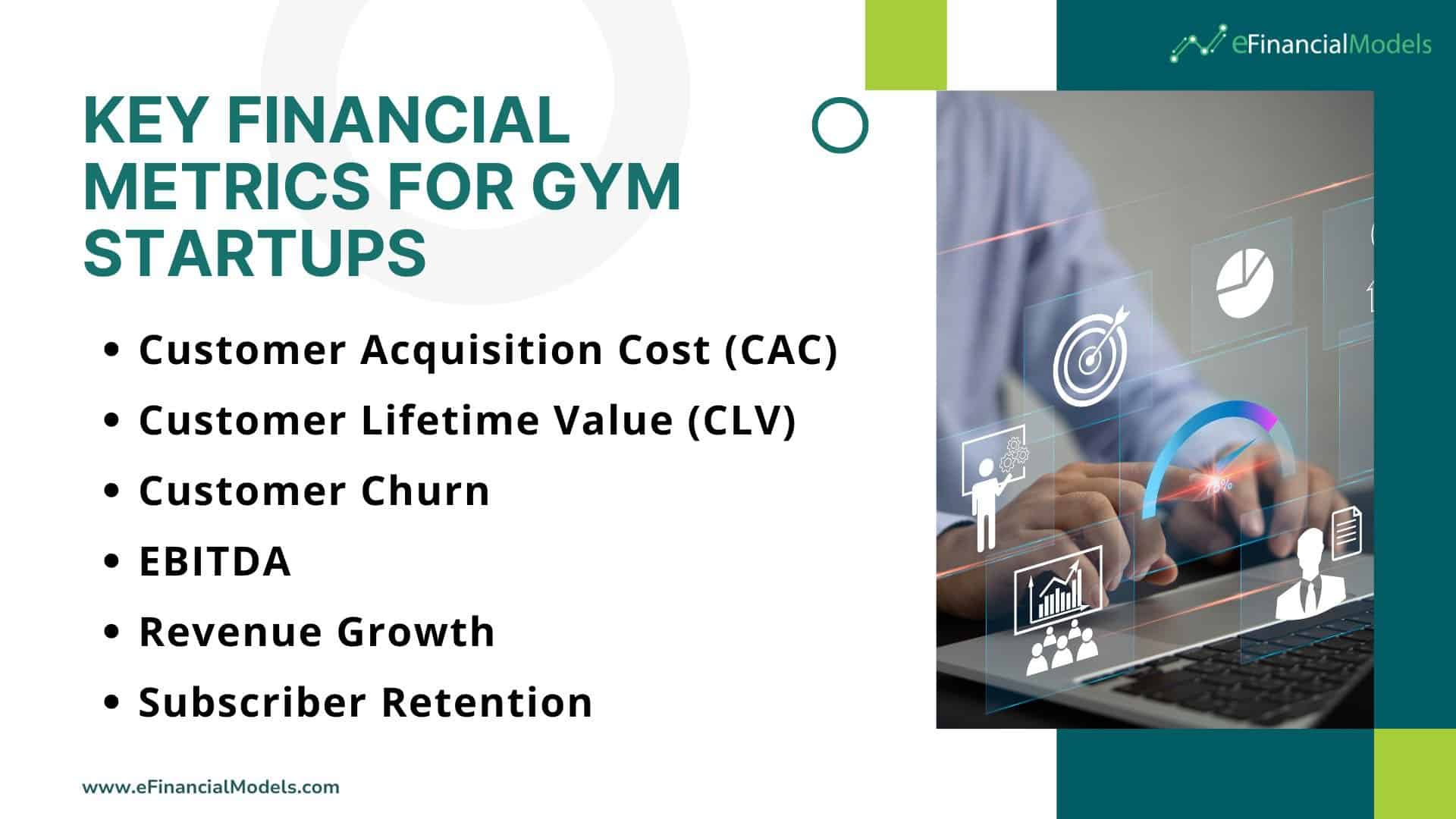
Understanding key financial metrics is crucial for gym startups aiming to establish a solid footing in the competitive fitness industry. These metrics provide vital insights into operational effectiveness, customer retention, and overall financial health, guiding strategic decisions and growth trajectories.
- Customer Acquisition Cost (CAC) plays a pivotal role in the journey of gym startups. It represents the total cost of acquiring a new customer, including marketing and sales expenses. Monitoring CAC is not just a task, but a necessity for gym startups, ensuring that their marketing strategies are not just cost-effective, but also sustainable in the long run.
- Customer Lifetime Value (CLV) estimates the total revenue a business can expect from a single customer throughout its relationship with the company. For gym startups, a higher CLV compared to CAC indicates a profitable customer base and effective customer management strategies.
- Customer Churn measures the rate customers stop using the gym’s services. A low churn rate is vital for long-term success as it signifies customer satisfaction and loyalty, essential for sustained revenue.
- Earnings Before Interest, Taxes, Depreciation, and Amortization (EBITDA) is not just another financial metric for gym startups. It’s a powerful tool that provides a clear insight into the gym’s operational profitability before the impact of financial, tax, and accounting decisions. It’s a key figure that helps investors and owners gauge the core financial health of the business, devoid of any external factors.
- Revenue Growth tracks a gym’s revenue increase over a specific period and is a critical indicator of business expansion and market acceptance. Continuous revenue growth suggests successful marketing, customer satisfaction, and effective scaling of operations.
Subscriber Retention measures the ability of the gym to keep its members over a period, directly influencing recurring revenue and stability. High retention rates are often a result of excellent customer service, engaging membership benefits, and effective communication strategies.
5. Review Your Funding Needs & Options
Once you understand the capital required to start and operate your gym, the next crucial step in financial planning for a gym startup is to thoroughly review your funding needs and explore available funding options. This comprehensive evaluation ensures that you have a clear understanding of the necessary capital to cover initial costs such as equipment, leasing, and marketing, as well as ongoing expenses like staff salaries and maintenance. By having a firm grasp of your funding requirements, you can confidently determine the scale at which you can realistically start and operate your business. Exploring diverse funding sources enables you to secure the most favorable terms and support, ensuring that your business opens its doors and thrives in a competitive market.
Top Funding Sources for Gym Startups
Here are the top funding sources available to gym entrepreneurs:
- Angel investors are affluent individuals who provide capital for startups, often in exchange for equity ownership. This type of funding benefits gym startups due to the potential for mentorship and networking opportunities that angel investors can offer.
- Bank loans provide gym startups with traditional financing, where funds are borrowed and repaid with interest over time. They are a reliable source of capital, though they require a solid business plan and often collateral to secure the loan.
- Bootstrapping involves starting a business using only personal finances and revenue generated by the company. This approach minimizes debt and gives the gym owner complete control but can limit growth due to restricted funding.
- Crowdfunding, a method that allows gym startups to raise small amounts of money from a large number of people, typically via online platforms, fosters a sense of community. It not only raises funds but also builds a network of supporters and potential customers, making gym entrepreneurs feel connected and supported.
- Friends, Family, & Fools involves investments from friends, family, and others within your network who believe in your business vision. While this can be a quicker funding source, it may also carry personal risks if the business does not succeed.
- Venture Capital, funding provided by firms or funds to small, early-stage, emerging companies that are deemed to have high growth potential, offers gym startups the potential for significant growth. While it requires giving up a portion of ownership and often involves high expectations, it also instills a sense of optimism and ambition in the gym entrepreneur.

6. Refine the Financial Projections
Refining financial projections is another critical financial planning step for a gym startup, offering a clear blueprint for sustainability and growth. Accurately forecasting expenses and predicting revenue streams can set realistic benchmarks for profitability. This process helps secure funding by demonstrating fiscal responsibility to potential investors and allows for effective risk management by identifying potential financial pitfalls before they occur. Furthermore, refined projections aid in strategic decision-making, enabling owners to adjust their business model in response to market demands or operational challenges, thus optimizing financial health and ensuring long-term success.
Refining your financial projections involves creating detailed forecasted financial statements, including the following:
- Profit and Loss Statements summarize the revenues, costs, and expenses incurred during a specific period, typically a quarter or year. This financial statement is crucial for showing a company’s ability to generate profit by increasing revenue, reducing costs, or both.
- Balance Sheets provide a snapshot of a company’s financial condition at a specific time, detailing assets, liabilities, and shareholders’ equity. It helps stakeholders assess the business’s net worth and understand how effectively resources are managed.
- Cash Flow Statements document the cash inflows and outflows from a company’s operating, investing, and financing activities over a period. This statement is vital for determining the short-term viability of a company, particularly its ability to pay bills and finance its operations without additional cash inflows.

7. Streamline Your Exit Strategy
Developing and streamlining an exit strategy is a crucial step in financial planning for a gym startup because it provides a clear roadmap for realizing the investment’s return, which is vital for attracting investors and securing funding. An effective exit strategy outlines the conditions under which the business owners might sell or otherwise divest their interest in the gym and sets forth the methodologies to enhance the business’s valuation over time. This foresight into potential liquidity events—such as selling to a larger fitness chain, merging with a competitor, or even going public—enables gym owners to make informed decisions that align with long-term financial goals, ensuring they can capitalize on the business’s growth and potentially yield substantial financial gains when the time to exit arrives. By having a well-defined exit strategy, gym startups can focus on growth with an understanding of the end game, thus better navigating the competitive fitness industry landscape.
Unlock Your Gym’s Financial Success: Financial Modeling for Gym Startups
Successfully navigating the financial landscape of a gym startup demands meticulous planning and robust financial modeling. Strategic financial planning empowers gym owners to make informed decisions, anticipate market fluctuations, and secure the necessary funding to fuel growth. Start with a deep understanding of the market to set competitive prices and identify customer demand. Creating a comprehensive budget that covers initial costs, ongoing expenses, and revenue projections is crucial. Gym startups can establish realistic financial goals by analyzing local demographics and similar businesses. Planning key financial metrics is vital for tracking progress and adjusting strategies. Exploring various funding options ensures a solid financial base, while regular updates to financial plans in response to market shifts keep the business adaptable. Finally, a strategic exit plan, whether through sale or franchising, is critical in securing long-term profitability and success.
Unlocking the financial success of a gym startup hinges on effective financial modeling and strategic planning. By meticulously analyzing projected revenue streams from memberships and additional services against anticipated operational costs, gym owners can establish a solid foundation for financial stability. This approach helps set realistic financial targets and enables entrepreneurs to adapt to market changes and optimize profitability. Regular updates to the financial model ensure responsiveness to industry dynamics, securing the gym’s growth and long-term success in a competitive market. Plan Your Gym’s Success Now!





You might also like:
- 10 Ideas to Increase Average Revenue Per User
- 10 Main Elements of a Business Plan
- 10-Step Financial Planning Checklist for Smart Executives
- 5 Practical Tips to Help Raise Funds For Startups
- Creating a Business Plan for your Food Truck Business
- Financial Planning Retirement Tips
- Financial Modeling for Startups and Small Businesses
- Startup Model Templates in Excel that can help your Business Grow
- Gyms & Fitness Centers
- Fitness & Health Industry
- Custody of Personal Finances
- Simple Budget Planner Template
- Financial Model Templates Easy to Use
- Financial Projections Templates – The Easy Way
- Financial Spreadsheet – A Key Tool for Entrepreneurs
- Financial Statements – Definition, Uses, Contents and Templates
- Business Valuation
- 5 Steps to Create a Drop Down List Using Data Validation in Excel
- Gym Fitness Center Financial Model