
0 ITEMS

Short-Term Loan vs. Long-Term Loan

Choosing the right type of loan depends on your specific business needs and financial situation.
- Short-term loans are typically repaid within a year and are ideal for immediate cash flow needs or emergencies.
- Long-term loans are spread over several years and are suitable for major investments like property or equipment.
- Interest rates are influenced more by the borrower’s risk profile than the loan duration, so they can vary widely.
- Repayment terms differ significantly, with short-term loans demanding quicker payments and long-term loans offering more breathing room.
- The application process for each loan type varies in complexity, with short-term loans often requiring less collateral and documentation.
Understanding these distinctions helps ensure that your financing aligns with your growth plans.

Explore how choosing between a short-term loan vs. long-term loan can impact cash flow, investor confidence, and long-term growth.
What Is a Short-Term Loan?
A short-term loan is a quick financing option to meet urgent cash needs. It provides fast access to funds, often within days. These loans are usually repaid in a year or less, making them ideal for covering temporary gaps in cash flow. Businesses use them to manage working capital, while individuals rely on them for emergencies or unexpected expenses. Since approval is fast and the process simple, short-term loans offer convenience, though they may come with higher fees or stricter repayment terms.
What is a short-term loan? It usually involve smaller loan amounts, making them more accessible to borrowers with limited credit history. They often feature lower interest rates than long-term alternatives, especially when the repayment period is very short. These loans are designed for fast repayment—ranging from a few weeks to 12 months. Because of their speed and simplicity, short-term loans are best suited for short-lived financial needs or sudden expenses.
Common Types of Short-Term Loans
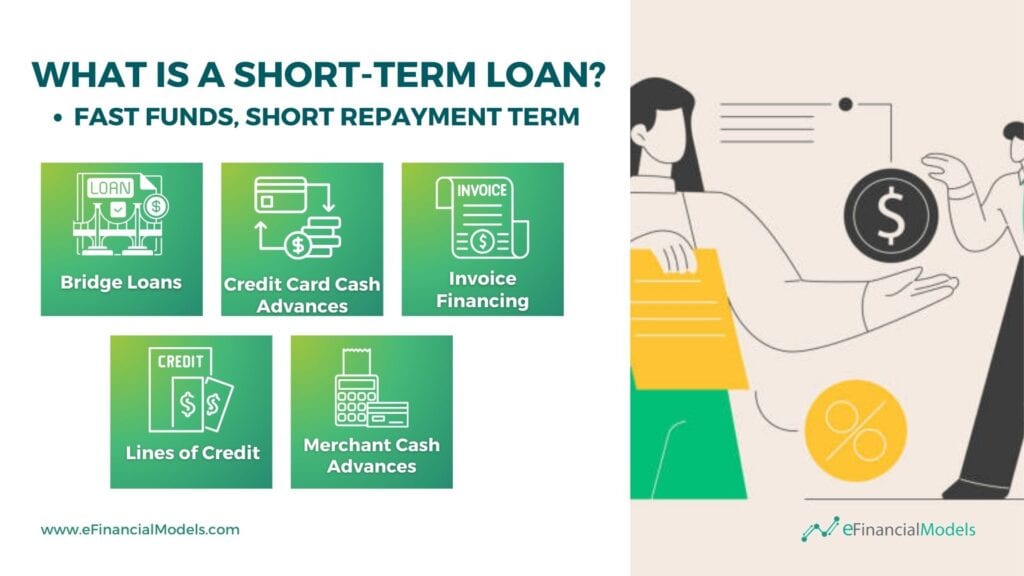
Short-term loans come in various forms, each tailored to different financial needs. Popular types include:
- Bridge Loans – Temporary funding until permanent financing is secured.
- Credit Card Cash Advances – Quick cash borrowed against your card’s limit.
- Invoice Financing – Loans secured against unpaid business invoices.
- Lines of Credit – Flexible access to funds up to a set limit.
- Merchant Cash Advances – Advances based on future credit card sales.
Each option serves different needs but shares the trait of fast, short-term funding.
What Is a Long-Term Loan?
A long-term loan is a debt financing option for big goals or major investments. It gives borrowers more money and more time to pay it back—often several years or even decades—this type of loan suits large purchases like buildings, vehicles, or business expansions. Monthly amortization are usually lower because they’re spread over time. Long-term loans help build credit and stability but also mean a longer financial commitment.
What is a long-term loan? Long-term loans offer higher loan amounts to cover big expenses. They usually come with higher interest costs since repayment can last many years. Terms can last from 3 to 30 years or more. Lenders may also require more paperwork, stronger credit, or collateral. These loans work best for planned projects where a long repayment period makes budgeting easier.
Common Types of Long-Term Loans
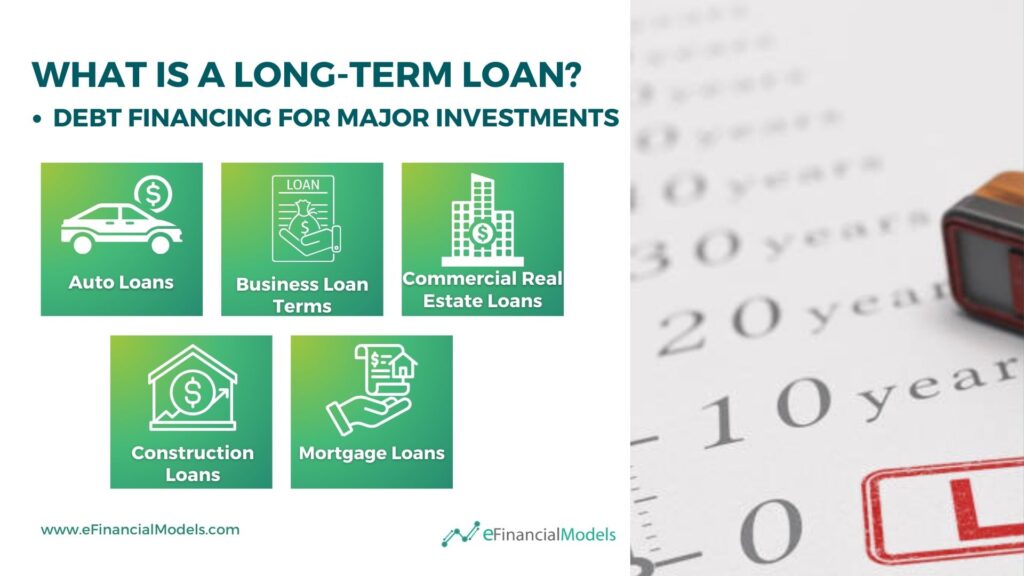
Long-term loans come in several forms, depending on the need:
- Auto Loans – Loans for purchasing vehicles, often 3 to 7 years.
- Business Term Loans – For expansion, equipment, or long-term business needs.
- Commercial Real Estate Loans – Used to buy, build, or renovate business property.
- Construction Loans – Funds to build property with longer payback plans.
- Mortgage Loans – Long loans for buying or refinancing a home.
Each loan supports major business plans with extended repayment flexibility.
Short-Term vs. Long-Term Loans: Key Differences
Short-term vs. long-term loans serve different needs and impact your finances differently. Choosing the right loan or debt depends on your financial goals and how urgently you need the money.
Loan Amount
Short-term vs. long-term loans differ greatly in how much money you can borrow. Short-term loans usually offer smaller amounts ($5,000 to $100,000) because lenders expect repayment within a few months to a year. They’re ideal for urgent cash needs or covering temporary gaps, not big investments. In contrast, long-term loans often allow you to borrow much more, making them better for large purchases like buildings, vehicles, or business expansions. The extended repayment period gives lenders more security to lend higher amounts. This core difference affects how borrowers plan, budget, and commit to repayment. The loan amount you qualify for often depends on the time you’ll take to pay it back, which directly ties to the loan’s term.
For instance, a coffee shop owner needs $10,000 to buy extra supplies for a seasonal rush. She picked up a short-term loan and plans to repay it in four months using holiday profits. The small amount fits her short-term needs and quick repayment plan. Meanwhile, a hotel chain seeks $2 million to build a new location. It chooses a long-term loan with a 15-year term, spreading the cost over time. The larger amount supports long-term growth and requires stable revenue to repay slowly. This example shows how loan size often matches the goal—short-term loans for quick fixes and long-term loans for big investments.
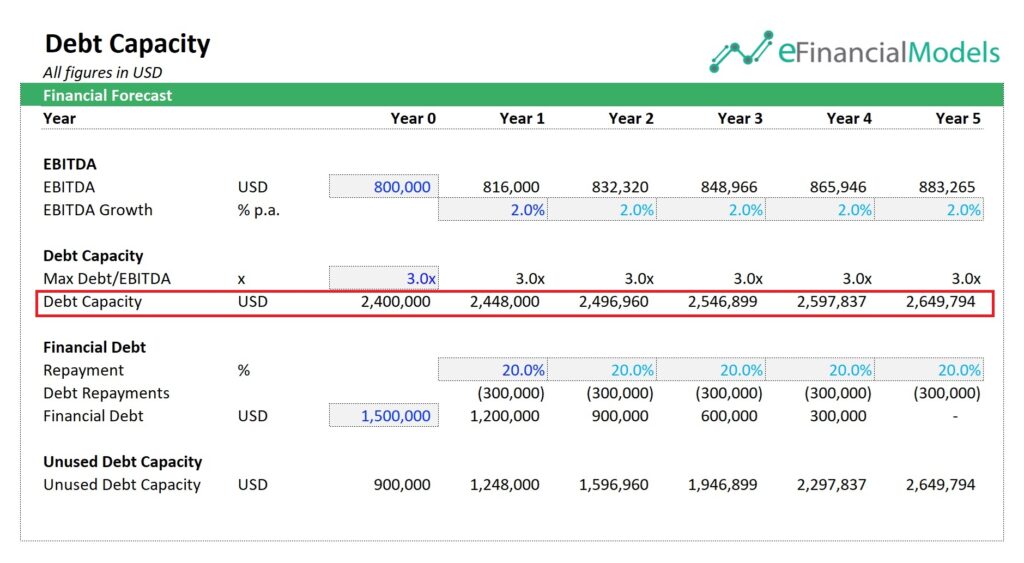
Debt capacity calculation, like the example above, helps a business quickly see how much it can safely borrow each year based on expected EBITDA and repayment schedules. With growing debt capacity and a clear repayment plan, the business can match loan size with financial strength. Lower debt may suffice if only a small amount is needed in the short term. However, the rising unused capacity—reaching over $2.6 million by Year 5- for long-term projects needing larger sums—shows room for long-term borrowing. This lets the business choose loan types based on how much funding is needed now versus what they can carry over time.










































Interest Rates
Interest rates on short-term and long-term loans don’t always depend on how long the loan lasts—especially for businesses. What really matters is the risk the lender sees in the borrower. A short-term loan can still have a higher interest rate if the lender thinks the business might struggle to repay quickly. On the other hand, a long-term loan could have a lower rate if the business has stable cash flow and strong credit. Lenders look at risk first, not just the loan’s length. So, while many assume longer loans always cost more in interest, that’s not always true in business. The risk tied to the borrower’s ability to pay back matters more than the timeline.
Let’s say a startup fashion brand takes a short-term loan to fund a new marketing campaign. Even though the loan is small and only lasts six months, the interest rate is high because the business has limited credit history and unpredictable cash flow. At the same time, a well-established logistics company secures a long-term loan to upgrade its fleet. The loan runs for ten years, but the interest rate is low because the company has a steady income and strong financials. This shows that in business, lenders focus more on risk than time. A short loan isn’t always cheaper, and a long loan isn’t always costly—risk drives the rate.
Repayment Terms
Short-term vs. long-term loans differ most clearly in how repayment works. A short-term loan demands quick repayment, often in a few months to a year. Payments are frequent and can feel heavy on cash flow, especially for small businesses. It’s a fast cycle—borrow, use, repay. In contrast, a long-term loan stretches repayment over several years, sometimes even decades. This spreads out the cost, making monthly payments lower and more manageable. Businesses use long-term loans when they need time to see returns, like for big projects or assets. The key difference lies in how fast you must pay back and how that pace fits your financial rhythm.
For example, a bakery takes a short-term loan to fix a broken oven. The lender gives six months to repay, with weekly payments that strain the bakery’s cash flow. The business feels the pressure to earn quickly and cover the debt fast. On the other hand, a real estate company secures a long-term loan to develop a new property. It repays the loan over 15 years with small monthly payments matching the rent income’s slow return. This shows how short-term loans demand speed, while long-term loans give room to breathe and grow.
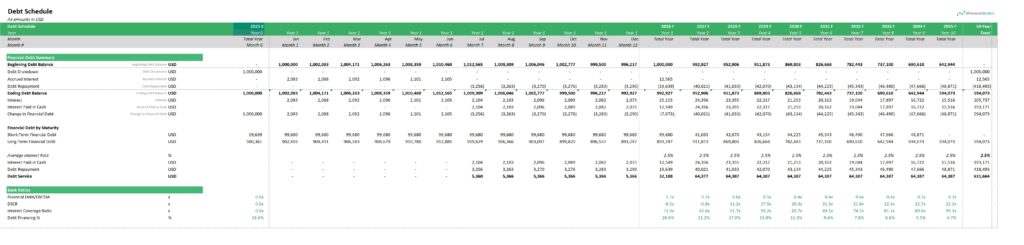
The Debt Schedule above is from our Liquor Distillery Financial Plan. It helps a liquor distillery weigh short-term versus long-term loans by clearly showing when repayments and interest hit the business. The monthly breakdown exposes how small early repayments (like $3,256 to $3,276) grow into large annual commitments over time, with interest adding significantly to the cost. Short-term debt shows up as smaller, quicker hits, while long-term loans stretch repayment and interest over the years, impacting cash flow less in the short term but increasing total interest paid. With this schedule, the distillery can compare loan durations, interest costs, and repayment impact on EBITDA, helping decide which loan type best matches its cash cycle and expansion plans.
Requirements
Short-term avs. long-term loans also differ in what lenders require before approval. Short-term loans rely less on hard collateral and more on recent cash flow or credit activity, especially for smaller amounts. They move fast so lenders may accept personal guarantees or business revenue as proof. In contrast, long-term loans usually involve stricter checks and larger demands. Lenders ask for solid collateral—like property, equipment, or other assets—to reduce risk over the extended term. They dig deeper into financial statements and business plans. The longer the loan lasts and the higher the amount, the more security the lender wants. So, loan requirements grow heavier with time and size.
Let’s say a catering business needs quick funds to cover event costs. It takes a short-term loan based on its steady cash flow and signs a personal guarantee. No physical collateral is needed, and the loan is approved fast. In contrast, a construction firm applies for a long-term loan to buy heavy equipment. The lender demands the equipment itself as collateral, plus detailed financial records. Approval takes longer but unlocks a much larger amount. This shows how short-term loans often need less paperwork and fewer assets, while long-term loans require stronger guarantees to protect the lender over time.
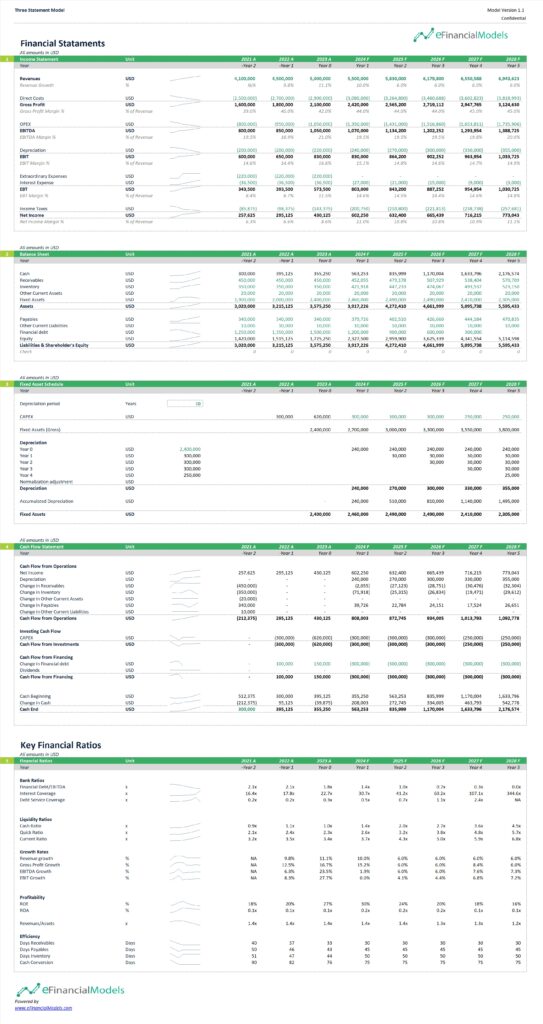
Our Three Statement Model helps businesses align loan choices with actual financial needs by linking data from the cash flow statement, income statement, and balance sheet. If cash flow gaps appear short and temporary—like in early years with negative operating cash or capex spikes—a short-term loan can fill that gap quickly. But if growth plans stretch across years with consistent asset investments and rising fixed costs, a long-term loan spreads repayments over time and preserves cash. By tracking ratios, profitability, and future funding gaps, the model shows if the business can handle large loans now or should borrow smaller amounts to stay flexible.
Time to Access Funds
Short-term vs. long-term loans vary in how fast you can get the money. It usually takes just a few hours to a few days to process. Short-term loans move quickly. Lenders focus on speed because the amounts are smaller and the terms are simpler. Many businesses use them when they need cash now—for emergencies, short projects, or sudden opportunities. In contrast, long-term loans take more time. It can take several weeks to a few months to finalize. Lenders review credit, assets, and business plans in detail. The process can stretch for weeks or even months before funds arrive. But that’s because the money is bigger, and the commitment is longer. So, if time is critical, a short-term loan often wins. If planning, a long-term loan may fit better.
For instance, a retail store’s cooling system breaks down before summer. The owner applies for a short-term loan and gets approved in two days, using recent sales reports to qualify. The quick funding helps fix the issue before losing customers. Meanwhile, a SaaS tech company wants a long-term loan to build a new office. It submits a detailed business plan, financial records, and property documents. The approval takes eight weeks, but the loan covers a large amount. This shows how short-term loans move fast for urgent needs, while long-term loans take time but support bigger plans.

Which Is Better, a Long Term or a Short Term Loan?
Choosing between a short-term loan vs. long-term loan depends on your needs. Go for a short-term loan if you need quick cash and can repay fast—it’s great for emergencies and smaller amounts. But if you’re planning big moves like expanding a business or buying property, a long-term loan offers more money and manageable monthly payments. One isn’t better than the other; the best loan is the one that fits your situation, budget, and goals. Always match the loan’s term with how long you’ll benefit from the money.
Financial models help you see the big picture. They let you test different loan options, compare costs, and forecast cash flow. With clear numbers, you can spot risks and pick the best fit—short-term or long-term. Instead of guessing, you decide based on data. That makes your loan choice smarter and more aligned with your goals.
















You might also like:
- 10 Main Elements of a Business Plan
- How to Build a Capitalization Table
- 5 Practical Tips to Help Raise Funds For Startups
- How to Start a Distillery Business: What You Need to Know?
- Funding Sources – 12 Types of Funding
- Mastering the Art of IRR Calculation: A Comprehensive Guide for Investors
- Financial Forecasting Models by eFinancialModels
- Business Valuation
- Why Financial Forecasting Models Are Vital for Your Business
- Financial Services
- Choosing the Right Loan for Your Business
- Top 5 Risks of Wind Energy Parks
- Loans
- How to Prepare a Financial Feasibility Study?
- Banks
- Building a Monthly Budget – Using Monthly Budget Templates
- Financial Planning
- Boost Your Business’s Financial Management with this Excel Budget Template
- Free Budget Planner Template in Excel for Services Businesses
- Creating a Business Plan for your Food Truck Business