
0 ITEMS

What is a Short-Term Loan?

Access to short-term financing can be a business game-changer during cash flow gaps or urgent expenses.
- Short-term loans are typically repaid within 3 to 18 months and include options like lines of credit, invoice factoring, and equipment financing.
- They offer quick approval, fewer qualification hurdles, and flexible fund use, making them ideal for urgent needs.
- Larger loan amounts often come with higher interest rates, and short repayment periods increase default risks for cash-strapped businesses.
- A solid financial model helps identify funding needs, compare loan options, and prepare a strong application.
- Careful review of loan terms ensures understanding of fees, interest, and repayment obligations before signing.
Knowing how to secure and model short-term loans effectively keeps your business agile and ready for growth.
What Is a Short-Term Loan?
A short-term loan is a financing option designed to meet immediate business needs. Unlike long-term loans that fund major investments, what is a short-term loan means fast access to working capital with a defined, relatively brief repayment period. These loans are ideal for resolving short-lived financial gaps or covering urgent expenditures. What is a short-term loan can range from a few hundred to several thousand dollars, depending on the lender and the specific requirements of the business. The shorter repayment period and the increased risk that lenders take on result in higher interest rates than long-term financing options. However, the trade-off is often worth it for business owners who need immediate funding to seize opportunities or address urgent financial challenges.
The key characteristics of short-term loans are:
- Loan Amount: Typically ranges from $5,000 to $500,000, depending on the lender and credit profile.
- Interest Rates: Short-term loans usually have lower interest rates than long-term loans. In fact, long-term loans like 30-year mortgages often come with higher interest rates than shorter-term options.
- Repayment Period: Repayment periods typically range from 3 to 18 months, sometimes extending to 24 months.
Sometimes, short-term loans have higher interest rates than long-term ones. This happens during an inverse yield curve. It’s a rare situation where lenders see more risk in the near future than the long term. They raise short-term rates to protect themselves. It’s not about the loan’s length—it’s about economic uncertainty ahead.
In essence, what is a short-term loan serves as a lifeline, enabling businesses to maintain operations, adapt to market changes, and pursue growth initiatives without the long-term commitment that comes with traditional loans. Understanding this financial product is essential for any business owner looking to unlock capital and drive their success forward.

How Long Is a Short-Term Loan?
If your business needs quick cash and can repay soon, a short-term loan can be a smart, flexible option. A short-term loan typically lasts from a few months up to one year. Some may extend to 18 months, but anything longer usually falls into medium or long-term lending. These loans meet quick funding needs, like covering cash flow gaps or urgent expenses. However, lenders want faster repayment, so borrowers must plan accordingly.
Where Can I Get a Short-Term Loan?
You can get different types of short-term loans from banks, credit unions, online lenders, SBA-approved vendors, or suppliers. Many online platforms offer fast approvals and flexible terms, making them popular for small businesses. Some lenders specialize in short-term funding, helping you get money within days. Before applying, compare offers from different lenders. Look at interest rates, fees, and repayment terms. Choose a lender that fits your business needs and cash flow. A smart choice today can help you avoid money problems tomorrow.
Different Types of Short-Term Loans for Businesses
Short-term loans help businesses cover urgent needs quickly. There are different types of short-term loans, each with its own purpose. Lines of credit offer flexibility. Each type suits different situations, so knowing your options can help you pick the best one.
- Business Line of Credit: A Business Line of Credit is a flexible short-term loan that gives businesses access to a set amount of money. Unlike a traditional loan, you don’t receive the full amount upfront. Instead, you borrow only what you need when you need it. You can draw funds multiple times if you don’t exceed the credit limit. You only pay interest on the money you use. This loan offers flexibility, quick access to funds, and interest savings. However, it may come with fees and a lower limit than term loans. For example, a retail store might use a line of credit to buy stock ahead of the holiday season and repay it once sales pick up.
- Equipment Financing: Equipment financing is a short-term loan to buy business equipment like machines, vehicles, or tools. The equipment is collateral, so you don’t need other assets to secure the loan. You make regular payments until the loan is paid off. Then, you fully own the equipment. This is one of the most available types of short-term loans for businesses. It helps you get essential tools without using all your cash. It’s fast, simple, and often easier to qualify for. However, interest rates can be high, and the equipment may lose value over time. For example, a construction company might finance a new bulldozer and pay it off with future project earnings.
- Invoice Factoring: Invoice Factoring lets businesses borrow money based on unpaid customer invoices. You get cash upfront instead of waiting 30, 60, or 90 days to get paid. A lender will give you a portion of the invoice value now and collect full payment from your customer later. Technically, invoice factoring is not a loan. Still, it is considered one of the types of short-term loans for businesses because it serves a similar purpose—improving cash flow quickly. This option improves cash flow without needing collateral. It’s fast and ideal for businesses with long payment terms. However, fees can add up, and relying on it too often may hurt profits. For example, a marketing agency might use invoice financing to cover payroll while waiting for clients to pay large invoices.
- Merchant Cash Advance (MCA): A merchant cash advance (MCA) gives businesses quick cash in exchange for a cut in future sales. It’s a cash advance based on expected credit or debit card revenue. You get funds fast, then repay daily or weekly through a percentage of your sales. MCAs are easy to qualify for and work well for businesses with strong daily sales. The downsides? They’re expensive, with high fees and interest. Plus, daily payments can hurt cash flow. For example, a restaurant may use an MCA to cover repairs and then repay it through a portion of daily card sales.
- Online Lenders: Online lenders offer fast, short-term loans through digital platforms. The process is simple—apply online, get approved quickly, and receive funds in as little as 24 hours. These lenders use technology to assess risk, often looking at more than just credit scores. Online loans are easy to access and great for urgent needs. The pros include speed, convenience, and flexible requirements. The cons? Interest rates can be high, and repayment terms may be short. For example, a small retail shop might use an online lender to restock inventory before a big sales weekend.
- Small Business Administration (SBA) Loans: Small Business Administration (SBA) loans are government-backed loans to support small businesses. While not issued directly by the SBA, they are offered through approved lenders. The SBA guarantees part of the loan, making it less risky for lenders and easier for businesses to qualify. These loans offer low interest rates and longer repayment terms. That means lower monthly payments. But approval can take time, and the paperwork is often complex. For example, a startup may use an SBA loan to buy equipment or cover startup costs with less pressure on early cash flow.
- Trade Credit: Trade credit lets businesses buy goods or services now and pay later. Suppliers offer short payment terms—usually 30, 60, or 90 days—so companies can sell products before paying for them. No cash is needed upfront, making it a simple way to manage cash flow. It’s interest-free if paid on time and helps build supplier relationships. However, late payments may lead to fees or loss of credit terms. For example, a clothing store might order inventory today, sell it fast, and pay the supplier 30 days later using the revenue earned.







































Pros and Cons of Short-Term Loans
Short-term loans for businesses can be a vital financial tool to unlock capital quickly and efficiently.
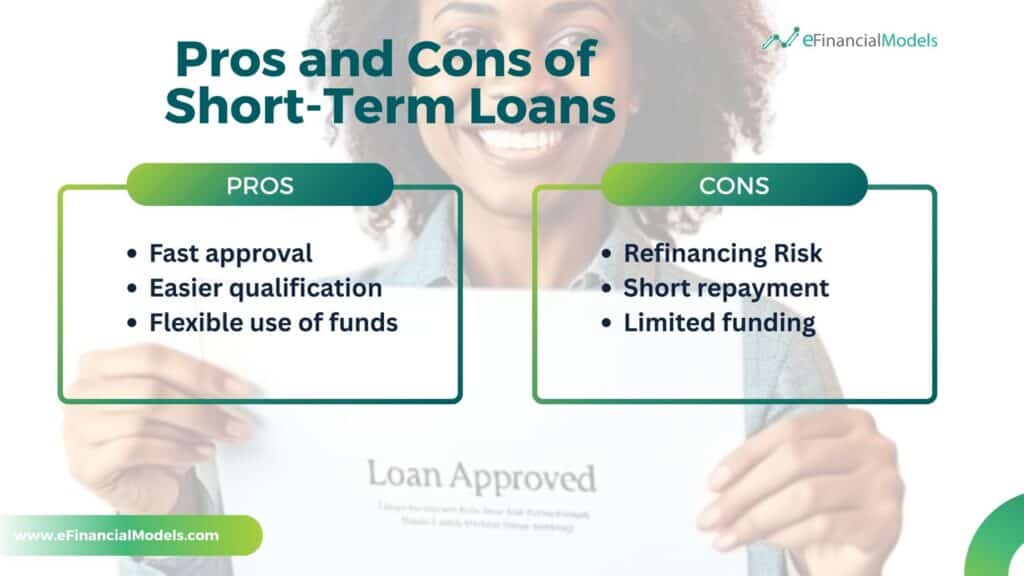
One of the primary advantages of these loans is their rapid approval process. Unlike traditional bank loans that can take weeks or months to secure, they often come with streamlined applications that allow business owners to access funds within days, if not hours. Another significant benefit of short-term loans for businesses is that they have fewer qualification requirements than their long-term counterparts. Typically, short-term loans are unsecured. Most lenders don’t require collateral, especially for small amounts or when dealing with borrowers with strong credit or solid cash flow. Additionally, different types of short-term loans offer flexible use of funds. Businesses can use them to manage cash flow, buy inventory, cover payroll, or handle emergencies.
While different types of short-term loans for businesses can provide essential capital to seize opportunities or manage cash flow, they also come with their fair share of drawbacks that entrepreneurs must carefully evaluate. The real risk with short-term loans is needing to refinance. If lenders say no, you may run out of cash—and shut down fast. Another potential downside is the short repayment period. While this means businesses can quickly clear their debt, it also necessitates a well-structured repayment plan to avoid default. The risk of default is particularly high for businesses that experience fluctuations in revenue, as the tight timeline can exacerbate existing financial challenges. Short-term loans also offer less money. You may not get enough to cover big expenses or long-term needs. This limits your options.
Careful consideration of the different types of short-term loans for businesses can unlock vital capital and propel your business toward success. Choosing the right type hinges on your business needs, repayment capacity, and long-term financial strategy.
Steps on How to Get a Short-Term Loan for a Business
Getting a short-term loan for your business is easier when you know the right steps. You need to know what lenders look for and how to prepare. This section walks you through the key steps so you can move fast and make confident decisions.
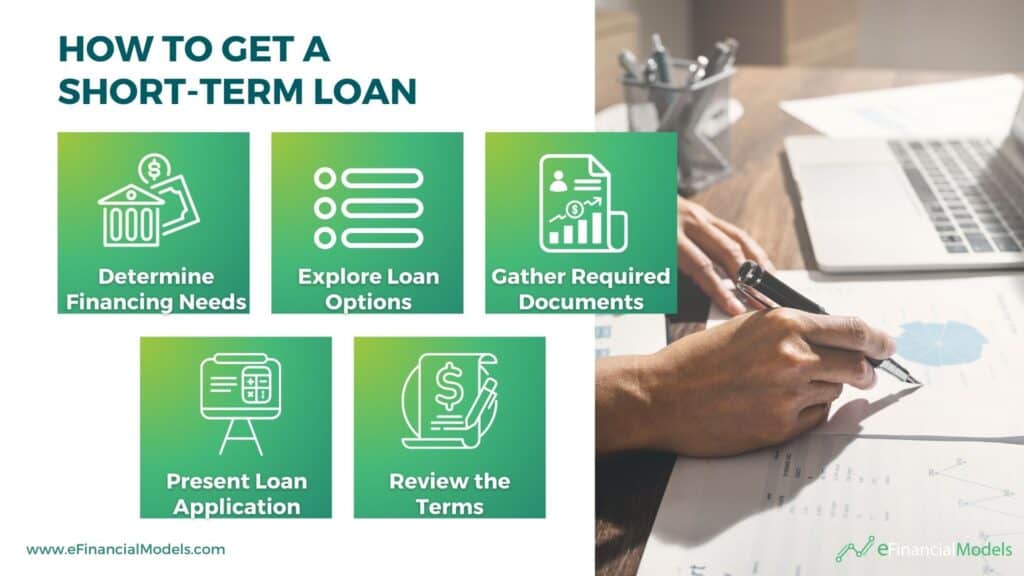
Step 1: Determine Your Financing Needs
Before applying for a short-term loan, you need to know exactly why you need the money. Are you covering payroll, managing seasonal cash flow, or buying inventory? Pinpointing your goal helps you choose the right loan type and avoid borrowing too much—or too little. It also builds lender trust. Clear, focused needs show you’re in control and serious about repayment. To figure this out, build a simple financial model of historical or projected financial statements. It shows your current cash position, expected expenses, and when money comes in. This data-driven approach avoids guesswork, ensures accuracy, and strengthens your loan application.
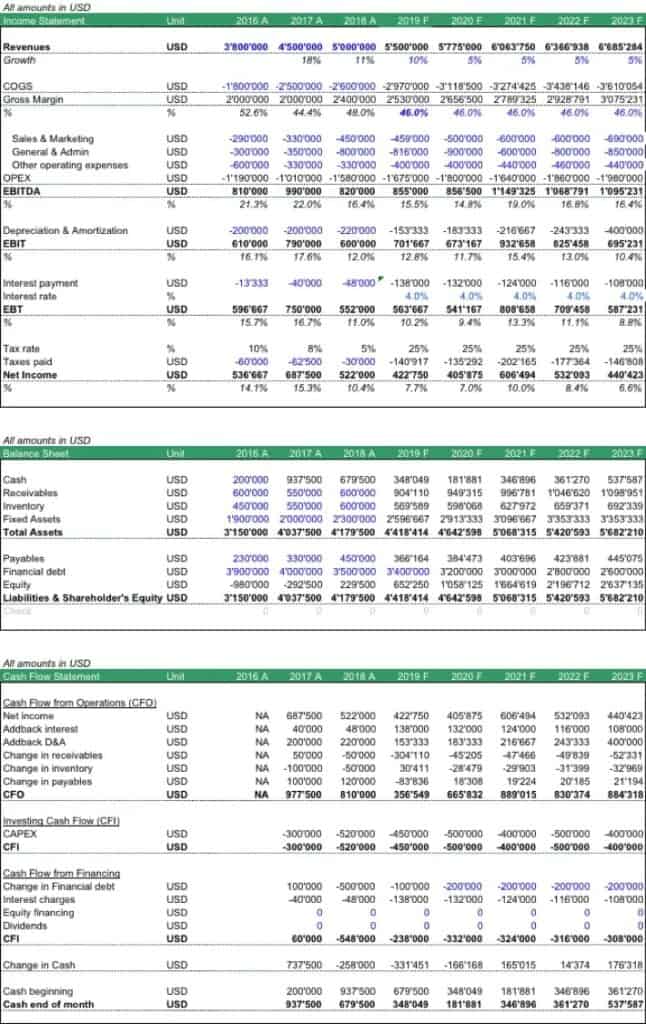
The above financial statement is from our Three Statement Financial Model Template. It helps a business determine its short-term financing needs by clearly showing how much cash it expects to generate, spend, and end up with over time. By comparing cash flow from operations (CFO) with capital expenditures (CAPEX) and loan repayments, the company can assess if its cash reserves are enough to meet obligations. If the cash at the end of the month is dropping or turning negative—like it does between 2018 and 2020—that signals a cash shortfall. This insight helps justify a short-term loan request by showing when and why extra funding is needed to bridge operational gaps or cover investments.
Step 2: Explore Loan Options
Once you know how much money your business needs, the next step is to explore loan options. Not all loans are created equal. Some come with high interest rates. Others offer flexible repayment terms. Choosing the wrong loan can hurt your cash flow. That’s why comparing lenders, loan types, and terms is important. Use a financial model to test how different types of short-term loans affect your finances. Plug in interest rates, fees, and payment terms. See how each option changes your monthly budget, profit margin, and growth plans. This makes it easier to spot the smartest loan for your business.
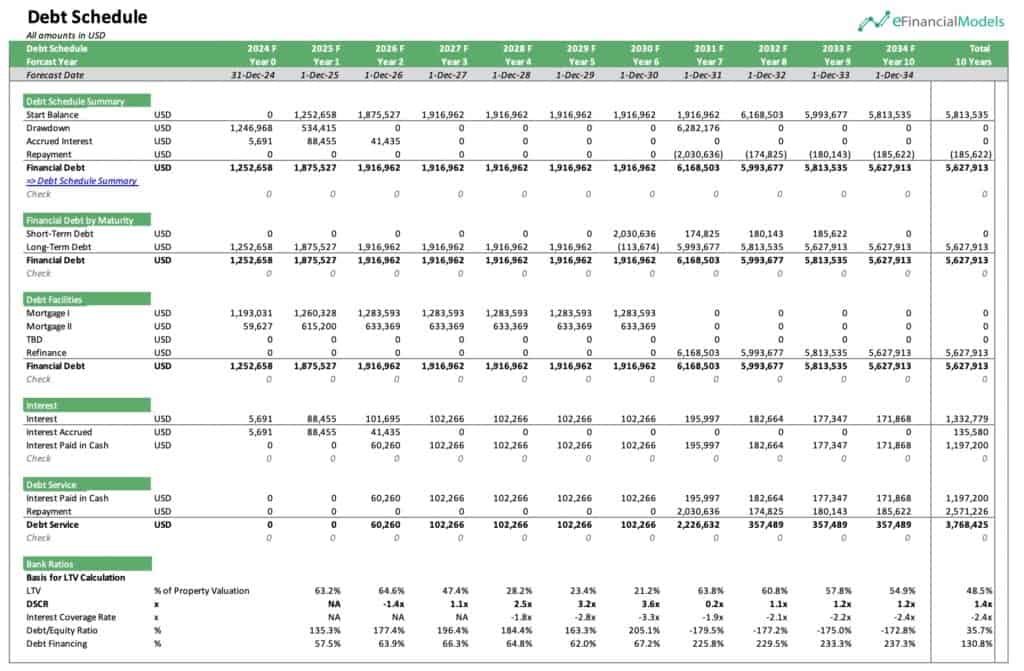
This debt schedule above is from our Mini Storage Financial Model Template. It helps small businesses evaluate short-term loan options by clearly showing how debt evolves year by year—including drawdowns, repayments, and interest. It highlights exactly when and how much cash is needed to service debt, making it easier to spot gaps where short-term loans could fill funding needs. This clarity empowers smarter, faster loan decisions with less guesswork.
Step 3: Gather the Required Documents
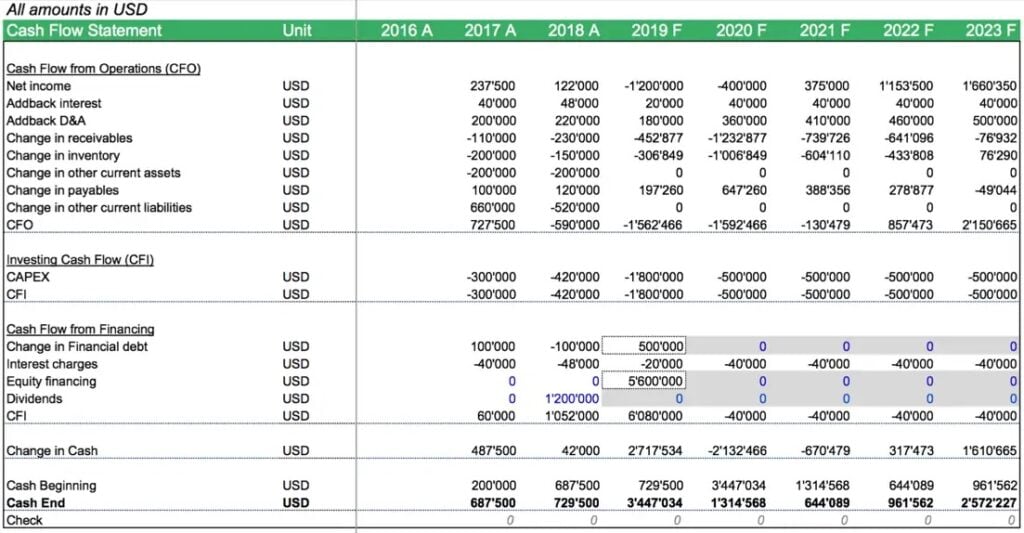
Before lenders give out money, they want proof that your business is trustworthy. That means showing paperwork—like your business license, tax returns, bank statements, and a solid financial model. These documents help lenders determine if your business makes enough money to repay the loan. If anything is missing, the process slows down, or your loan gets denied. A strong financial model shows your income, expenses, and cash flow projections. It helps lenders understand how you plan to repay them. Build this model with clear data and realistic forecasts. It shows you’re serious, organized, and prepared—three things lenders love. Always keep these key documents ready before applying. It speeds up approval and improves your chances.

The above cash flow statement is from our Simple Fundraising Model Template. It supports getting a short-term loan by showing clear, improving cash movement. It highlights strong positive cash flow from operations in 2022 and 2023—$857,473 and $2,150,665—proving the business can repay debt. It also shows growing cash reserves, ending with $2.57 million in 2023. This gives lenders confidence that your business manages money well, generates income, and holds enough cash to cover loan payments without stress.
Step 4: Present Your Loan Application
Once you’ve chosen a lender, it’s time to make your case. Presenting your loan application is your chance to prove your business is worth the risk. Lenders need to see that you understand your numbers and have a plan. This step isn’t just paperwork—it’s your pitch. A well-prepared application shows confidence and builds trust. It increases your chance of approval by showing that you’re serious and capable. Use a financial model to back your application. It clearly shows your revenue, costs, cash flow, and how you’ll repay the loan. A strong model helps lenders see your business’s potential and risk level. Keep it realistic, detailed, and easy to understand. This step turns your financial story into a solid argument. It gives lenders the data they need to say yes.
As shown above, our Fundraising Project Plan Template in Excel gives structure and clarity to the short-term loan process. It breaks down tasks like preparing a financial model, creating an information memo, and reaching out to investors—step by step and week by week. This timeline helps you stay organized and on track. Most importantly, it ensures you complete key lender requirements, like building financial projections and collecting needed documents. With this plan, you can present a complete, professional loan application quickly—boosting your chances of getting approved quickly.
Step 5: Review the Terms Carefully
Before you sign, stop and read everything. This step protects your business. Lenders may include hidden fees, strict repayment rules, or high penalties. A quick decision could cost you later. Reviewing the terms helps you understand exactly what you’re agreeing to. It’s your last chance to walk away if the loan doesn’t fit your needs.
Model Smart, Borrow Fast: Short-Term Loans Unlocked
A short-term loan offers fast, flexible funding to cover urgent business needs like payroll, inventory, or seasonal expenses. It’s typically repaid within 3 to 18 months and is easier to qualify for than long-term loans. The quick access to capital can be a game-changer when time is tight. Whether you choose a line of credit, equipment financing, or another option, the right short-term loan helps bridge financial gaps and keep your business moving forward.
To model smart and borrow fast, start with clear financial projections. Build a simple model that shows your income, expenses, and when cash runs low. Use it to spot funding gaps before they become problems. Test how different loan terms affect your cash flow. This helps you borrow the right amount and avoid overpaying. With solid numbers, lenders see you as prepared and low-risk. That means faster approvals and better terms. Smart modeling turns loan stress into quick, clear, and confident loan success.




































You might also like:
- 10 Main Elements of a Business Plan
- 12 Funding Sources for Businesses and Startups
- 5 Practical Tips to Help Raise Funds For Startups
- Debt Amortization Table
- Financial Model – Valuation of Tax Loss Carryforwards
- Cash Flow Statement: Streamline Financial Success
- Understanding the Levelized Cost of Energy Formula
- How to Prepare a Financial Feasibility Study?
- Top 5 Tips For a Good Financial Due Diligence
- Financial Modeling for Startups and Small Businesses
- Commercial Real Estate Valuation Methods: Helping Investors in Taking Informed Decisions
- Understanding What is Yield to Maturity and Why It Matters
- Finance Terms
- Understanding the Debt Service Coverage Ratio: An Essential Metric for Financial Analysis
- Financial Ratios Analysis and Its Importance
- Different Ways House Flippers Track ROI
- The Valuation of a Business
- Loan Life Coverage Ratio (LLCR)
- Peer to Peer Lending (P2P)
- Financial Model for Mobile App | Mobile App Business Plan