
0 ITEMS

Peer to Peer Lending (P2P)
P2P lending is an alternative financing method that enables individuals to borrow funds from other individuals and cutting out in the process the lending institutions as the middlemen. The P2P lending websites connect the borrowers directly to the lenders. Investors for P2P lending are individuals who want higher returns for their savings compared to letting it sit in the banks. The financial model templates will help you assess the viability of the project if you are interested in this kind of venture.


A fully dynamic, granular banking 5 Years Quarterly financial model…



Tailored for BNPL platform operators, fintech entrepreneurs, and financial analysts,…

Optimize your fintech payment business’s financial planning with our Fintech…


This Student Bundle includes financial model templates from various industries…


It is excel financial model for financial forecasting of a…

Elevate your venture capital strategy with the VC Startup Portfolio…


A comprehensive editable, 3-statement MS Excel spreadsheet for tracking Fintech…






Financial Model providing an advanced 5-year financial plan for a…


Pro Forma Models created this financial model to calculate and analyze…


The model is designed to evaluate a make-whole calculator for…


Lifetime access to all future templates as well! Here is…

Financial Model presenting a business scenario of a corporation engaged…


This Moneylending ( FINANCIERS) 20-year Business Model will allow for…
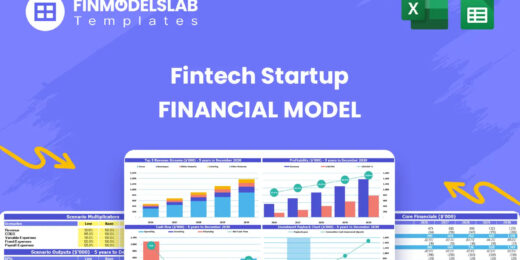

The Fintech Startup Financial Model helps founders, analysts, consultants, and…

Smart Financial Models for Sustainable Growth in Peer to Peer Lending (P2P)

In today’s rapidly evolving financial landscape, Peer to Peer (P2P) lending stands out as a growing sector that offers both borrowers and investors alternatives to traditional banking. With the rise of digital platforms, P2P lending has emerged as a significant player in the world of finance, providing easier access to capital for individuals and small businesses. However, as the industry matures, achieving sustainable growth becomes crucial for P2P platforms. Financial modeling plays a vital role in navigating this complex ecosystem, helping stakeholders identify, analyze, and manage key financial metrics.
In this article, we delve into the intricacies of the P2P lending industry, explore key financial metrics crucial for success, and guide you through building effective financial models. Leveraging MS Excel spreadsheet templates facilitates strategic planning and ensures that P2P lending platforms remain competitive in a dynamic market. Let’s explore how sophisticated and tailored financial models can drive sustainable growth in the P2P lending industry.
Understanding the P2P Lending Landscape
The Peer to Peer (P2P) lending industry redefines how lending and borrowing occur, eliminating the traditional banking intermediary and allowing transactions directly through online platforms. This model significantly benefits borrowers by often providing lower interest rates and lenders by offering potential higher returns than savings accounts. The P2P lending market has seen remarkable growth, fueled by technological advancements and changing consumer preferences. Current trends suggest continued expansion, with many platforms tapping into underserved segments such as personal, student, and small business loans.
Several key players dominate the P2P lending market, including platforms like Prosper, LendingClub, and Zopa. These platforms have paved the way by demonstrating the viability of the P2P model. However, the ecosystem also presents unique challenges. The regulatory landscape varies significantly across regions, posing compliance challenges and requiring platforms to remain adaptive to new laws. Moreover, consumer confidence needs continuous reinforcement to ensure trust in digital lending. Fintech startups and traditional banks entering the digital space create a competitive environment, requiring P2P platforms to innovate continuously.
Essential Financial Metrics for P2P Lending Models
Developing robust financial models for P2P lending requires identifying and tracking key performance indicators (KPIs) specific to the industry. Default rates are a critical KPI, as they directly affect profitability. Monitoring loan origination volume and the total number of active loans provides insights into growth dynamics. Moreover, assessing net borrower and lender retention rates helps gauge platform loyalty.
The balance between customer acquisition cost (CAC) and lifetime value (LTV) remains pivotal in P2P lending. It’s essential to understand the return on investment (ROI) concerning marketing spend. Analyzing break-even points and conducting margin assessments allow platforms to measure profitability effectively. Tools such as scenario planning and sensitivity analysis are invaluable in predicting financial health and sustainability, particularly for P2P platforms navigating fluctuating economic conditions.
Building Effective Financial Models for P2P Lending
A step-by-step approach to constructing a comprehensive financial model begins with forecasting cash flows—considering inflows from lending and outflows from defaults. Accurately estimating interest income versus operational costs is fundamental to understanding net profitability. Sensitivity analyses enable platforms to anticipate risk factors and adjust strategies accordingly.
Customization is crucial when financial models cater to various stakeholders. For investors, models need to provide clear insights into projected returns and associated risks. Lenders seek transparency in fee structures and interest percentages, while borrowers require models to predict repayment capabilities and timelines. A well-structured financial model supports informed decision-making across these diverse groups, fostering trust and enhancing platform credibility.
Advantages of Using MS Excel Spreadsheet Templates for Financial Planning
Microsoft Excel remains a powerful tool for financial modeling, particularly in the P2P lending industry, due to its flexibility and intuitive design. Excel spreadsheets offer extensive support for formulas, data analysis, and visualization—all essential attributes for creating custom templates that cater to the complex needs of P2P platforms. Excel's ability to manage large datasets efficiently makes it an ideal choice for processing and analyzing vast amounts of lending data.
eFinancialModels provides Excel spreadsheet templates specifically tailored for the P2P lending industry. These templates come equipped with pre-built formulas for calculating industry-specific KPIs and feature user-friendly interfaces. Compatibility with market data and analytical tools further enhances their utility, enabling platforms to streamline operations and improve strategic planning processes.
Conclusion: Unlocking Potential with Smart Financial Planning
In conclusion, tailored financial models are critical for sustainable growth in the Peer to Peer lending industry. Strategic financial planning allows platforms to navigate the complexities of the market, reinforcing their competitive edge while ensuring regulatory compliance and consumer trust. Leveraging advanced financial modeling techniques enables P2P platforms to forecast accurately, optimize operations, and achieve long-term success.
To capitalize on these opportunities, explore eFinancialModels' ready-to-use financial model spreadsheet templates. These tools are designed to enhance strategic planning and decision-making processes, empowering your platform to secure its future growth. Embark on this journey of smart financial planning today!
Frequently Asked Questions
- What is Peer to Peer (P2P) lending? Peer to Peer lending is a financial practice where individuals borrow and lend money directly through online platforms, bypassing traditional financial institutions.
- What are the primary benefits of P2P lending for borrowers? Borrowers benefit from potentially lower interest rates and easier access to capital through P2P lending platforms.
- What key performance indicators (KPIs) are essential for P2P lending platforms? Key KPIs include default rates, loan origination volume, active loans, net borrower and lender retention rates, and the balance between customer acquisition cost and lifetime value.
- How can financial modeling support sustainable growth in the P2P lending industry? Financial modeling helps identify, analyze, and manage key financial metrics, supports strategic planning, and fosters trust by providing transparency for stakeholders.
- Why is Microsoft Excel favored for financial modeling in P2P lending? Microsoft Excel offers flexibility, intuitive design, extensive formula support, and strong data management capabilities, making it ideal for creating complex financial models for P2P platforms.