
0 ITEMS

What Is a Private Equity Hurdle Rate?

A private equity hurdle rate sets the minimum return that fund managers must achieve before earning performance fees, aligning incentives for investors and general partners.
- It protects limited partners by ensuring they receive a baseline return before profits are shared.
- Typically, the hurdle rate ranges from 7% to 8%, depending on the fund’s risk and strategy.
- If the fund does not meet the hurdle, managers earn only management fees, not carried interest.
- The rate is calculated by adding a risk-free rate to a risk premium reflecting the specific investment risk.
- Understanding the hurdle rate is essential for constructing financial models and evaluating whether a deal meets return expectations.
This article explains how the hurdle rate works, how it’s calculated, and why it’s a key component of private equity fund structuring.
What Is the Hurdle Rate in Private Equity?
A private equity fund pools money from investors to buy and grow private companies. The goal is to improve these businesses and sell them for a profit. The fund must meet the private equity hurdle rate before general partners or fund managers earn a share of the profits. This hurdle rate guarantees investors get a minimum return first. Managers receive extra earnings and carried interest during a catch-up phase only after hitting that target. This setup keeps managers focused on delivering strong results.
The private equity hurdle rate is the minimum return a fund must generate before the general partners earn carried interest, or their share of the profits. It ensures that investors, or limited partners, get paid first. This rate protects investors by setting a performance benchmark. Only after the private equity hurdle rate is met do fund managers receive a share of the gains, which aligns their interests with those of the investors. This structure rewards strong performance and encourages disciplined investing.

What Is a Typical Hurdle Rate in Private Equity Funds?
In private equity, the minimum rate of return—known as the hurdle rate—is the baseline investors expect before fund managers earn performance fees. This ensures returns are first directed to investors, not just the managers. Typically, private equity funds set the minimum rate of return between 7% to 8%, aligning with the risks involved. The goal is simple: reward only after results.
The hurdle rate in private equity funds varies based on fund type, strategy, and market conditions. Lower-risk funds may offer a smaller minimum return, while high-risk or niche strategies may aim higher. In strong markets, funds might lower the rate to attract more investors. In tougher times, they may raise it to show commitment. Each fund tailors its minimum rate of return to fit its goals and investor expectations.
What Happens if the Fund Does Not Meet the Hurdle Rate?
The fund manager typically earns no performance fee if a fund does not meet the hurdle rate. This means investors get all the returns until the hurdle is cleared. It protects investors by ensuring managers only earn extra when delivering strong results. Without hitting the hurdle, the manager’s reward is limited to the management fee. This setup aligns interests and encourages better fund performance.
Is the Hurdle Rate Guaranteed to Investors?
No, the hurdle rate is not guaranteed to private equity investors. A target return must be achieved before fund managers can earn performance fees, also called carried interest. But if the fund’s investments underperform, investors may get back less than the hurdle rate, or even lose money. The hurdle sets a minimum benchmark; it does not promise profits.
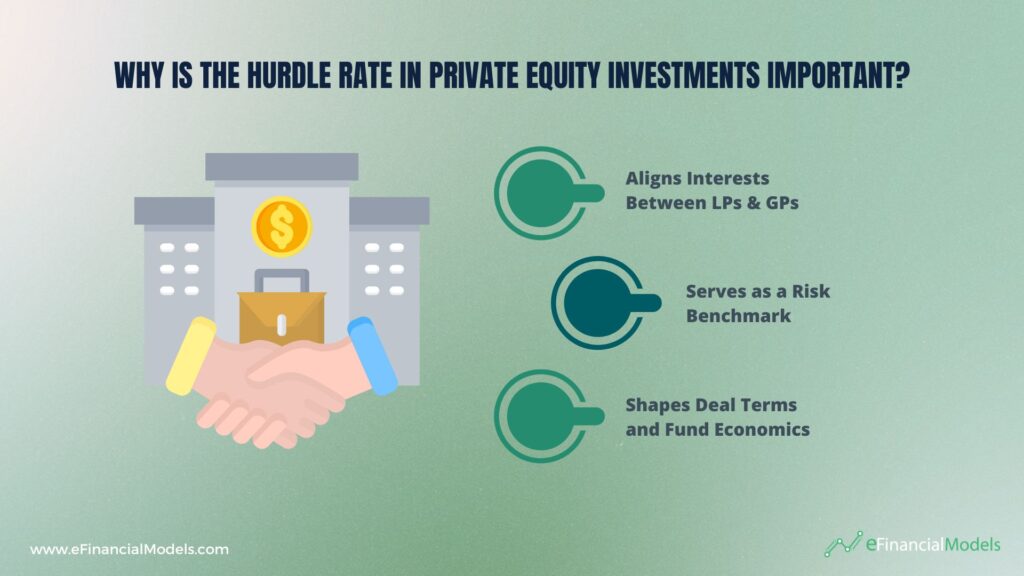
Why Is the Hurdle Rate in Private Equity Investments Important?
The hurdle rate in private equity is key in driving performance and protecting investors. It sets a minimum return that fund managers must beat before earning profit shares, pushing them to deliver real value. Without this benchmark, managers could benefit even when returns fall short. The hurdle rate in private equity also builds trust by ensuring investors see results first, creating a fair and focused investment structure.
- Aligns Interests Between Limited Partners and General Partners: The hurdle rate in private equity ensures that General Partners (GPs) only earn performance-based compensation (carried interest) after Limited Partners (LPs) receive a minimum acceptable return. This fosters alignment of interests, as GPs must deliver strong performance before being rewarded. Without a hurdle rate, GPs could receive a share of profits even when overall returns are mediocre. It incentivizes GPs to pursue high-return investments that benefit all stakeholders.
- Serves as a Risk Benchmark: Private equity investments are inherently illiquid and carry higher risk. The hurdle rate acts as a risk-adjusted benchmark return representing the minimum compensation LPs expect for the capital they lock up over long durations. It helps LPs assess whether a private equity investment meets their return expectations relative to risk. It maintains investment discipline and encourages capital deployment only in high-potential opportunities.
- Shapes Deal Terms and Fund Economics: The hurdle rate directly affects how profits are shared and how deals are structured. It determines when and how carried interest is triggered, impacting fund terms, cash flow projections, and the sequencing of payouts. It shapes the financial mechanics of a fund, influencing investor appetite and GP strategies. It ensures transparency and fairness in performance fee structures, helping attract institutional investors.























































How Is the Hurdle Rate Calculated?
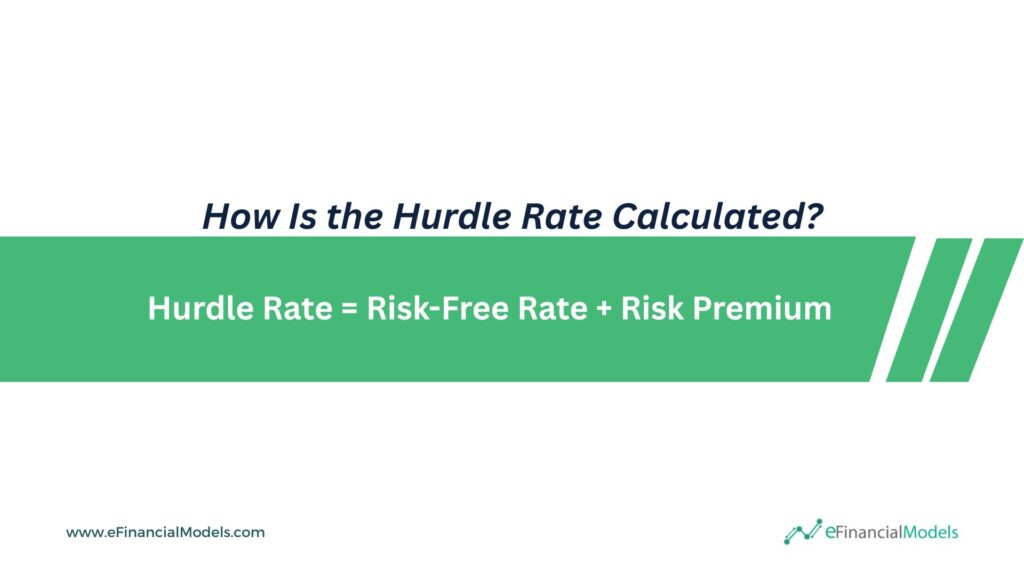
The hurdle rate is calculated by adding the risk-free rate to a risk premium that reflects the investment’s risk level. A common formula is:
Where:
- The risk-free rate shows how much return you can earn without risk. To determine the risk-free rate, look at the yield on government bonds, like 10-year U.S. Treasury notes. The government backs these, so they carry little to no risk. Pick a bond that matches your investment time frame. Use the current yield as your risk-free rate. It gives you a stable base for comparing other investments. It reflects the time value of money and acts as a benchmark for safer returns.
- The risk premium is the extra return investors expect for taking on more risk. It rewards them for choosing investments that could lose value. It helps balance the chance of gain against the chance of loss. To determine the risk premium, subtract the risk-free rate from the expected return of a risky investment. This difference shows how much extra return investors want for taking on more risk. Use market data or historical averages to estimate expected returns. Adjust the premium based on the investment’s volatility and uncertainty. The higher the risk, the larger the premium should be.
Adding the risk-free rate to the risk premium gives the private equity hurdle rate because it combines safety with risk. The risk-free rate covers the basic return for just waiting. The risk premium adds the extra return needed to take a chance. They set the minimum return investors expect before a PE manager earns performance fees. It shows how much return justifies the risk of the investment.
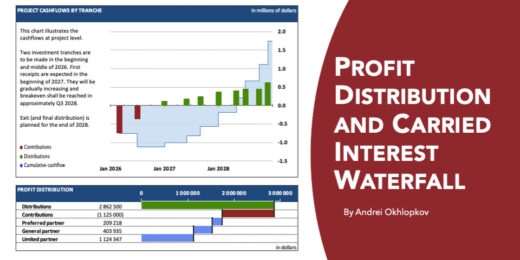
Our Waterfall Profit Distribution Model (up to 4 Tiers) helps pinpoint the private equity hurdle rate by mapping how profits are shared at each tier. Private equity funds create value for shareholders by acquiring undervalued or high-potential companies, improving operations, accelerating growth, and using strategic leverage to boost returns. They streamline costs, upgrade management, expand revenue through new markets or products, and optimize capital structure. Upon exit—via sale or IPO—profits are distributed using a tiered waterfall model that returns capital and preferred returns to Limited Partners, then rewards General Partners with a share of profits, aligning interests and maximizing investor value.
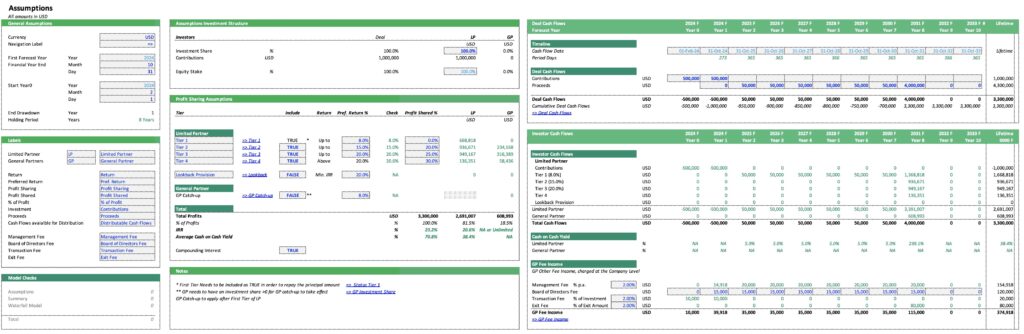
See the above “Assumptions Table.” When we break down how our model handles preferred returns, profit tiers, and split percentages, the private equity hurdle rate becomes clear. Here, the Limited Partner (LP) receives a preferred return of up to 8%, establishing the minimum benchmark for the hurdle rate. Once this threshold is met, the model progresses through four tiers, each allocating profits based on rising return levels: up to 15%, 20%, and above 20%. As profits grow, the LP’s share gradually reduces while the General Partner (GP) gains a larger cut, from 0% at Tier 1 to 30% at Tier 4, clearly revealing the performance-based reward structure. This tiered setup highlights how the hurdle rate acts as a gatekeeper, ensuring the GP only earns more after delivering strong returns.
Financial Modeling: Key to Understanding Private Equity Hurdle Rates
A private equity hurdle rate sets the bar for investor returns before fund managers earn performance fees. It ensures limited partners receive a minimum return, typically around 7% to 8%, before general partners share in the profits. This rate is calculated by adding a risk-free rate (like U.S. Treasury yields) to a risk premium that reflects the investment’s risk level. Used as a benchmark in deal models, it aligns interests, promotes disciplined investing, and helps investors gauge whether a deal’s internal rate of return (IRR) meets their expectations.
Financial modeling makes the private equity hurdle rate easy to understand. It tracks all cash flows, measures risk, and shows if returns beat the benchmark. By using clear inputs—like revenue growth, margins, and exit value—it calculates the internal rate of return (IRR) and compares it to the hurdle. This helps investors see if a deal meets their goals before fund managers earn extra. Modeling brings clarity, builds trust, and supports smart decisions.


















































You might also like:
- 10 Main Elements of a Business Plan
- Understanding the Debt Service Coverage Ratio: An Essential Metric for Financial Analysis
- IRR vs NPV in the Context of Financial Decision-Making
- Top 5 Tips For a Good Financial Due Diligence
- How to Calculate Net Present Value (NPV)?
- Understanding the Levelized Cost of Energy Formula
- Private Equity
- 5 Practical Tips to Help Raise Funds For Startups
- Financial Modeling with Excel: Fundraising Plan Tactics
- How to Raise Series A Funding?
- 10 Tips to Develop a First Class Business Valuation Report
- Calculating Revenue Growth Rate: A Key Metric for Business Success
- Business Valuation
- Financial Model Templates Easy to Use
- How to Use Inflation Projection to Your Advantage
- Private Equity Waterfall Distribution Models
- The 4 Types of Individual Retirement Account (IRA)
- How to Do a Precedent Transaction Valuation?
- Understanding What is Yield to Maturity and Why It Matters