
0 ITEMS

How to Conduct an Arm’s Length Transaction

Understanding how to carry out an arm’s length transaction ensures deals between related parties are fair and compliant.
- An arm’s length transaction involves independent parties acting without pressure or close ties, ensuring fair market prices.
- The arm’s length principle originated from international tax law and is key to transfer pricing and cross-border dealings.
- Steps include identifying independent parties, defining clear terms, gathering market data, and using financial models for fair pricing.
- Proper documentation, third-party validation, and monitoring help maintain transparency and legal compliance.
- Financial models support unbiased decision-making and help prove that transactions reflect true market value.
This guide will walk you through the essential steps for executing and verifying arm’s length deals effectively.
Arm’s Length Transaction Meaning Explained
An arm’s length transaction means two parties act in their best interest without pressure or close ties. They bargain just like strangers would. This ensures prices, risks, and terms are fair to both. Using the arm’s length transaction means you can spot deals that aren’t biased. This is crucial across many industries, especially those subject to regulation, taxation, or where pricing could be manipulated between related parties. Some common examples are:
- Fair property valuations for tax assessments and financing in Real Estate;
- Prevention of profit shifting and tax avoidance among related entities (especially multinationals) in Mergers and Acquisitions (M&A);
- Licensing of patents, IP, or R&D services often occurs between affiliated entities in different tax zones among Pharmaceuticals and Life Sciences;
- Franchise fees, royalties, and services must be priced as if between unrelated parties to meet regulatory and financial disclosure standards;
- In estate planning, divorce settlements, or business valuations in litigation, prices must reflect independent market behavior among Financial Services;
- Prevention of favoritism or inflated prices in contracts involving Public Funds.
Regulators and tax authorities often ask if a deal meets the arm’s length transaction meaning before approving it. It is vital for tax compliance, fairness, and transparency. It prevents issues in audits and legal reviews. Suppose a deal does not meet the arm’s length transaction meaning, regulators and tax authorities may flag it for non-compliance, raising concerns about bias, unfair valuation, and potential audit or legal risks.

Key Characteristics of the Arm’s Length Principle
The arm’s length principle originated from international tax law and contract law. Still, it was formally adopted and promoted in the context of transfer pricing by the League of Nations in the early 20th century. As multinational enterprises grew, countries became concerned about tax avoidance through intra-group transactions. In the 1930s, the League of Nations began developing international tax guidelines and favored the arm’s length principle in different countries. In 1979, the Organization for Economic Cooperation and Development (OECD) solidified the principle in its Transfer Pricing Guidelines, establishing the arm’s length principle as the international standard.
The arm’s length principle says that parties in a transaction should act independently and on equal footing. No one gets special treatment because of relationships. Key characteristics of the arm’s length principle are:
- Independence of Parties: The arm’s length principle assumes both parties act independently. They have no pressure or special relationship that affects their decisions. Each party, such as unrelated buyers and sellers, tries to get the best deal. This ensures transactions reflect real market behavior.
- Fair Market Value: At arm’s length, prices match what the open market would charge. Fair market value prevents underpricing or overpricing caused by close ties. It keeps deals in line with what third parties would agree on. The result is a fair, realistic value for goods or services.
- Compliance-Friendly: Using the arm’s length principle helps meet tax rules. Tax authorities look for this standard in cross-border transactions. Following it reduces the risk of audits, penalties, or disputes. It shows that the company treats related and unrelated parties the same.
- Proper Risk Allocation: This principle ensures that risk goes to the party who actually takes it. If a company bears a financial or operational risk, it should also receive the related reward. This aligns profits with real business activity and avoids unfair shifting of income.
- Transparency: Arm’s length deals are clear and well-documented. They’re easy to explain and defend. This openness builds trust with regulators and partners. It also makes it easier to show that prices are set fairly and follow international standards.

This principle is the backbone of fair pricing in multinational transactions. It protects companies from tax disputes and helps maintain global fairness.


















































How to Perform an Arm’s Length Deal
An arm’s length deal follows strict steps to ensure both sides are treated fairly. The goal is to make a deal that is honest, equal, and free from personal ties. Here’s how you do it:
Step 1: Identify the Parties
Start by clearly identifying who is involved. Make sure all parties are separate, independent, and have no personal ties that could influence the deal. This keeps negotiations fair. Confirm that each party acts in their interest without pressure or bias.
An arm’s length deal usually involves two or more independent parties. These can be individuals, companies, or organizations that act in their interest. They have no family ties, shared ownership, or close personal relationships. Each party negotiates freely, aiming for the best deal. This setup keeps the transaction fair and reflects true and fair market value.
Step 2: Define the Transaction
Describe exactly what the deal involves. Whether it’s goods, services, or property, define what’s being exchanged. Be specific about scope, purpose, and what each party expects to gain. This avoids confusion later.
Typical arm’s length deals include buying or selling real estate, licensing intellectual property, transferring goods or services, and setting prices between related companies. These deals also happen in mergers, acquisitions, and cross-border trade. Each party negotiates to get the best outcome, with no special favors. The terms follow what’s normal in the open market, making the deal fair and transparent.
Step 3: Gather Market Data
Research similar transactions in the open market. Look at prices, terms, and conditions in deals between unrelated parties. Use reliable sources to get a realistic view of current market practices. This helps set fair terms.
Financial models can help by organizing key market data into clear, useful insights. They compare prices, margins, and costs from similar deals. This helps spot market trends and set fair terms. Models also test different scenarios so you can see how changes affect value. With solid numbers, you make better, unbiased decisions for an arm’s length deal.
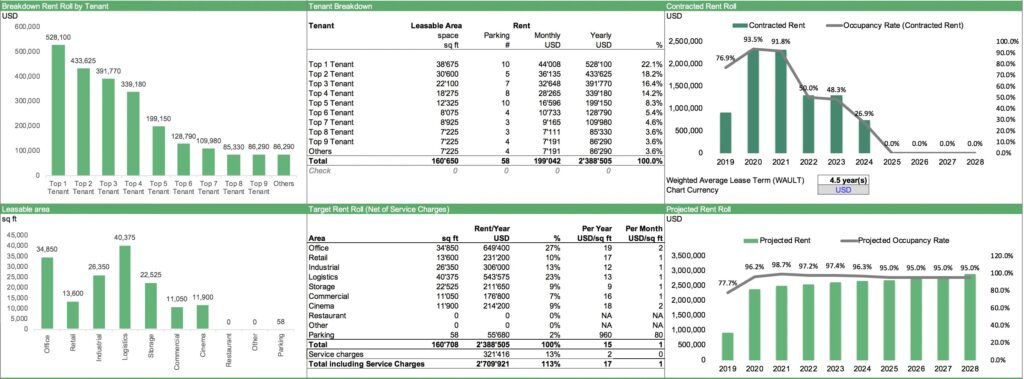
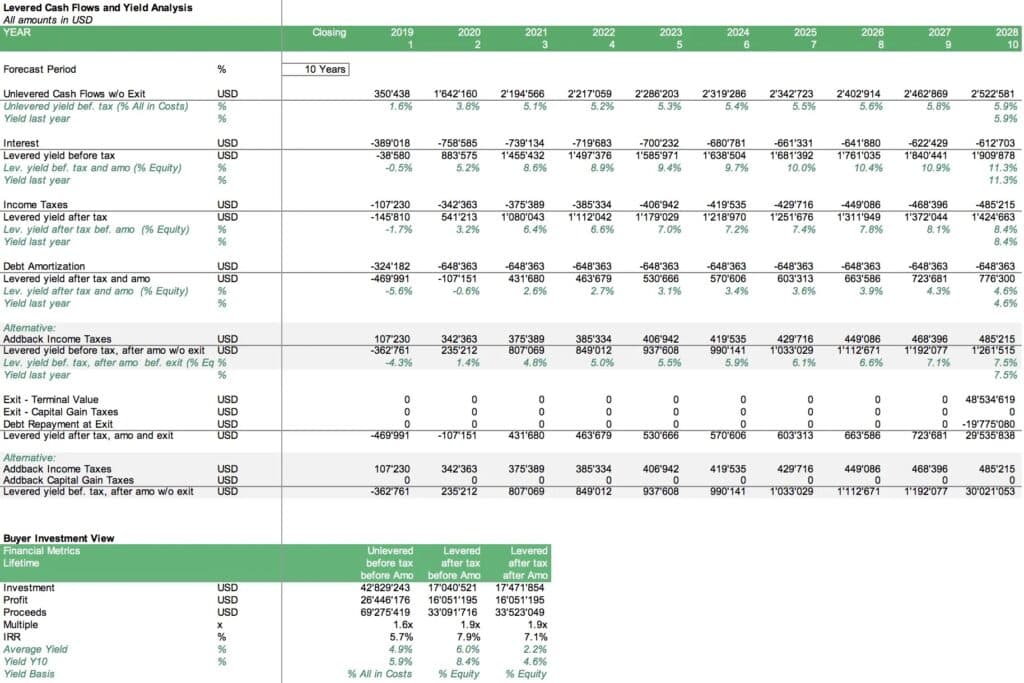
Our Commercial Real Estate Valuation Model simplifies your market data research for arm’s length deals by aligning actual tenant rents, lease terms, and occupancy rates with projected cash flows and net yields. As shown in the visuals, the model dissects rent rolls by tenant, area type, and year, allowing investors to benchmark rent levels and assess market conformity. It even forecasts revenue, expenses, and investment returns based on real leasing data, such as the $2.39M annual contracted rent and a 4.5-year weighted lease term. The model ensures each valuation reflects true market conditions by turning granular lease data into key financial metrics like the internal rate of return (IRR) and equity yields.
Step 4: Use Documentation
Put everything in writing. Include all terms, conditions, and obligations. A clear contract helps prevent misunderstandings and proves the deal was made fairly. Both parties should agree on the final version. Financial modeling serves as clear documentation in an arm’s length deal by showing how both parties reached fair terms based on unbiased data. It outlines assumptions, forecasts, and valuation methods, making decisions transparent. This reduces misunderstandings and proves the deal is free from conflict of interest. With everything in numbers and logic, the model backs the agreed price and conditions.
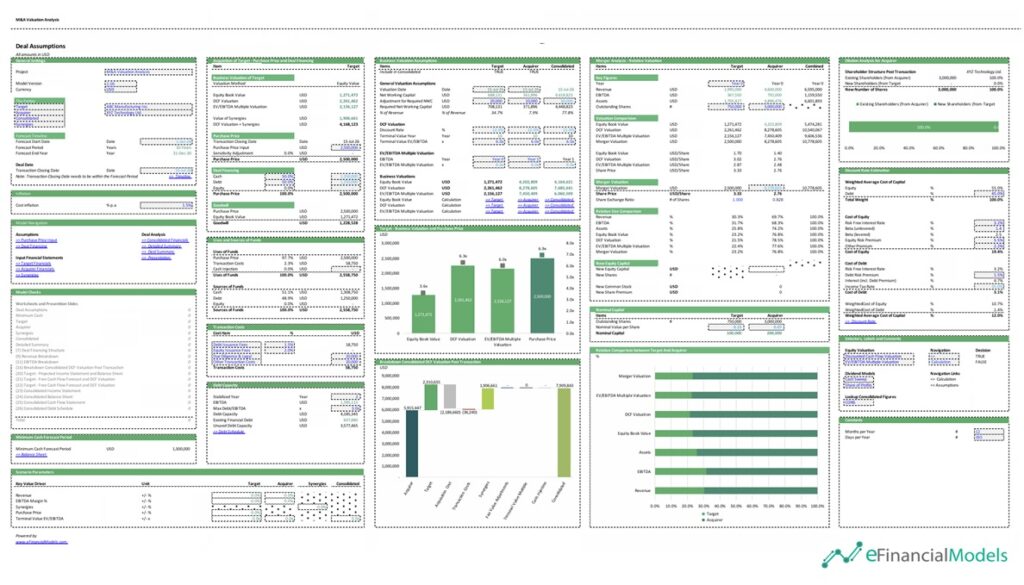
Our Mergers and Acquisitions (M&A) Financial Model can clearly document an arm’s length deal by laying out all assumptions, inputs, and valuation methods in a structured format. It uses standard benchmarks like a DCF Analysis, EV/EBITDA, and book value to determine fair pricing. The model shows both buyer and seller financials separately, supporting independence. The purchase price, funding split, and shareholding changes are detailed and justified using market-based logic. Visual charts and ratios help verify objectivity. This transparency and use of third-party valuation metrics make it a reliable tool for proving fair, arm’s length terms to investors, auditors, or regulators.
Step 5: Set the Right Terms
To set the right terms in an arm’s length deal, match the pricing, delivery terms, warranties, and risk-sharing with what’s typical in the market. Use real-world benchmarks and competitor data to guide your decisions. Ensure the price isn’t too high or too low—keep it in line with industry standards. Set delivery timelines and define product or service warranties reflecting common practice. Spread the risks fairly between both parties. These steps ensure fairness, protect both sides and keep the deal compliant with legal and tax rules.
Setting an Arm’s Length Price
An arm’s length price is the amount two unrelated parties would agree to in an open market. Setting it right is key to staying compliant and avoiding fines.
- Compare Market Prices: Look at recent deals between independent companies. Use the comparable uncontrolled price (CUP), cost plus, or resale minus.
- Adjust for Differences: Factor in product quality, volume, and delivery terms
- Test with Financial Models: Forecast outcomes to see if the price is sustainable
Financial models help you find a realistic, supportable price. They also allow you to run “what if” scenarios to spot risk areas in pricing.
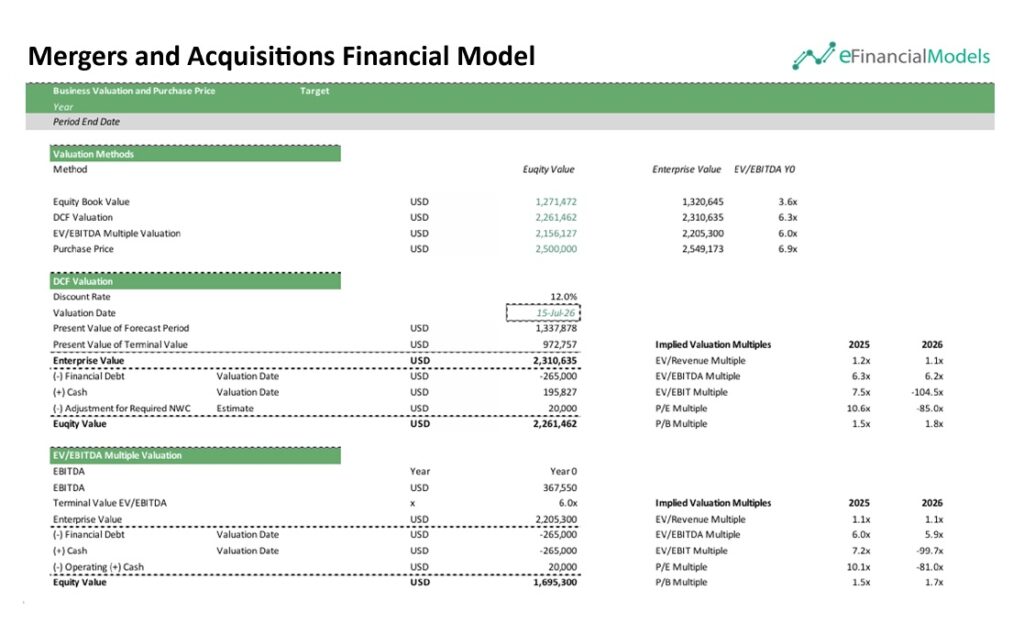
Above is the business valuation and purchase price section of our Mergers and Acquisitions (M&A) Financial Model. It helps set an arm’s length price using objective valuation methods like DCF and EV/EBITDA multiples. It compares results from three approaches—Equity Book Value, Discounted Cash Flow, and market-based EBITDA multiples—against the actual purchase price. This ensures the deal reflects fair market value, not just internal terms. Each method shows whether the price falls within an acceptable range. That way, the final price aligns with what unrelated parties might agree upon, making it easier to prove compliance with arm’s length standards in audits or regulatory reviews.
Step 6: Seek Third Party Review
A third-party review is essential to performing an arm’s length transaction because it adds credibility and objectivity. Independent experts test the assumptions, verify the numbers, and ensure the price reflects true market value. This reduces the risk of bias, especially when related parties are involved. It also strengthens compliance with tax and regulatory rules by showing the deal was not influenced by internal interests. Without an outside review, the transaction may lack transparency and expose both sides to legal or financial scrutiny.
Third parties reviewing an arm’s length transaction are usually independent financial advisors, valuation experts, auditors, or tax consultants. These professionals have no stake in the deal and bring an unbiased perspective. They use industry knowledge and analytical tools to assess whether the transaction terms are fair and market-based. Their involvement helps build trust with regulators, investors, and tax authorities. By validating the price and structure, they reduce risks and ensure the deal holds up under scrutiny.

Our Expert Financial Modeling Services help ensure your arm’s length deal stands up to scrutiny. We offer independent third-party reviews to validate assumptions, check calculations, and confirm fair value. This builds trust with stakeholders and shows you’re playing by the rules. Let us give your deal the credibility it needs.
Step 7: Finalize and Monitor
Once all checks are done, sign the agreement. Make sure both sides follow the terms. Step in quickly if problems arise to protect fairness. To monitor an arm’s length deal, track results against the model. Update the data often to catch issues early. Keep everything transparent to avoid disputes and stay compliant.
Financial modeling helps finalize and monitor arm’s length deals by making numbers clear and decisions easy. It shows if pricing, costs, and profits are fair for both parties. You can test scenarios, spot risks, and adjust terms before signing. After the deal closes, models track performance and flag issues early. This keeps everything transparent and on track.

Financial Modeling: The Key to Strengthens Arm’s Length Deal Integrity
The arm’s length principle means each party in a deal acts independently, without pressure or special treatment. It ensures fair market pricing, especially in deals involving related entities. This principle is widely used in global tax law, transfer pricing, M&A, real estate, and contracts between companies with shared interests. It helps prevent profit shifting, supports transparency, and aligns with international standards. By following this principle, businesses prove that their transactions reflect real market behavior and meet legal and regulatory requirements.
To perform an arm’s length deal, follow clear steps that ensure fairness and compliance from start to finish. Start by confirming that all parties act independently and have no ties that could affect negotiations. Define the deal clearly, gather market data, and use financial modeling to back fair pricing. Document all terms, use real market benchmarks, and match conditions to what’s typical in open deals. Bring in third-party experts to validate assumptions and prove objectivity. Once finalized, keep monitoring the deal using updated models to track performance and spot issues early. This process builds trust, reduces legal risk, and ensures the transaction holds up under audit or regulatory review.
Financial modeling is the backbone of a strong arm’s length deal. It helps set fair prices, test assumptions, and avoid bias before you sign. Once the deal is done, the model tracks results, flags risks, and ensures both sides follow the terms. With clear data and logic, it keeps everything transparent and fair. This builds trust, proves compliance, and protects your deal from costly mistakes.












You might also like:
- 10 Tips to Develop a First Class Business Valuation Report
- 10 Main Elements of a Business Plan
- How to Value a Business Using a Discounted Cash Flow Model
- How to Prepare a Financial Plan for a Chicken Egg Farm?
- Finding Fair Market Value: A Quick Guide to Real Estate Valuation
- Financial Model Templates Easy to Use
- Master the Free Cash Flow Formula for Smarter Financial Decisions
- Understanding the Debt Service Coverage Ratio: An Essential Metric for Financial Analysis
- 5 Practical Tips to Help Raise Funds For Startups
- Cost per Click (CPC)
- Tourism Project Financial Model Template
- Rent Your Brews: How to Start a Coffee Shop
- Business Valuation
- Top 5 Tips For a Good Financial Due Diligence
- 10-Step Financial Planning Checklist for Smart Executives
- Commercial Real Estate Valuation Methods: Helping Investors in Taking Informed Decisions
- Financial Ratios Analysis and Its Importance
- How to Secure Seed Financing?
- Financial Modeling for Startups and Small Businesses