
0 ITEMS

Can Your Solar Energy Project Make Money?
Solar energy projects can be profitable when planning and costs are well managed.
- The Noor Ouarzazate plant in Morocco shows that large-scale solar can deliver significant profits with proper government support and financing.
- Material costs, such as solar panels, mounting structures, and inverters, vary widely depending on technology and project size.
- Including battery storage, grid connections, and tracking systems increases expenses but can improve energy output and reliability.
- A financial model helps predict returns, break-even points, and overall profitability before investing.
- Evaluating costs against expected energy sales and incentives ensures the project’s financial feasibility.
Keep reading for in-depth insights on making solar projects financially successful.
What Is a Solar Power Plant?
A solar power plant is a facility that converts sunlight into electricity using photovoltaic (PV) panels or concentrated solar power (CSP) technology. These plants range from small rooftop installations to large utility-scale projects supplying power to thousands of homes and businesses. A solar energy project converts sunlight into electricity using solar panels. These panels absorb sunlight and turn it into energy. The system then sends this electricity to homes, businesses, or the grid. Unlike fossil fuels, solar power is clean and renewable. It reduces carbon emissions and lowers energy costs over time. A solar power plant can generate reliable power for years with the right setup.
Why Solar Power is Good?
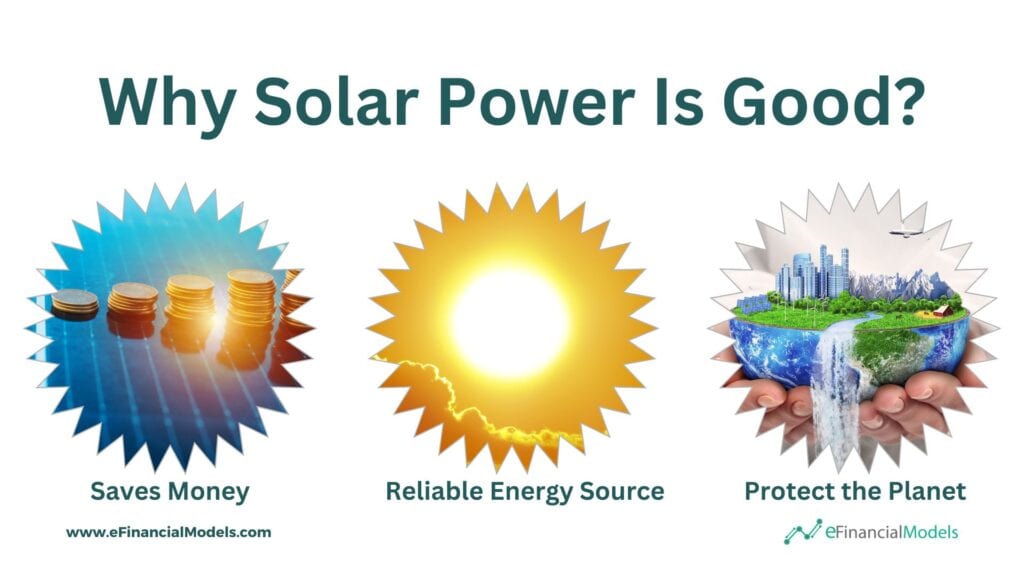
Solar power is a smart way to create electricity using sunlight. It provides clean, renewable energy that reduces dependence on fossil fuels and lowers environmental impact. Below are the top three reasons why solar power is good:
- Saves Money: A solar energy project helps you save money by cutting electricity bills. Once you install solar panels, they use sunlight—free energy—to power your home or business. It means you rely less on expensive electricity from the grid. As solar technology gets cheaper, your savings grow over time. Instead of paying rising electricity prices, you invest in your own energy source and keep more money in your pocket.
- Reliable Energy Source: One main reason why solar power is good is that it is a reliable electricity source. Unlike fossil fuels, which can run out or become expensive, sunlight is free and unlimited. The sun shines every day, making solar power a steady energy source. Solar panels work even on cloudy days, storing extra energy for later use. It means you always have power when you need it. With no fuel shortages or price spikes, solar energy gives you a dependable way to keep the lights on for years to come.
- Protect the Planet: A solar energy project keeps the planet clean. Unlike coal or gas, it doesn’t release harmful gases into the air. It means less pollution and a healthier environment. Using the sun’s energy helps slow climate change by cutting carbon emissions. The more people switch to solar energy, the less we rely on dirty fuels. It’s a simple way to protect the Earth for future generations.
integrate battery storage solutions to store excess electricity, ensuring energy availability even during cloudy periods or at night.
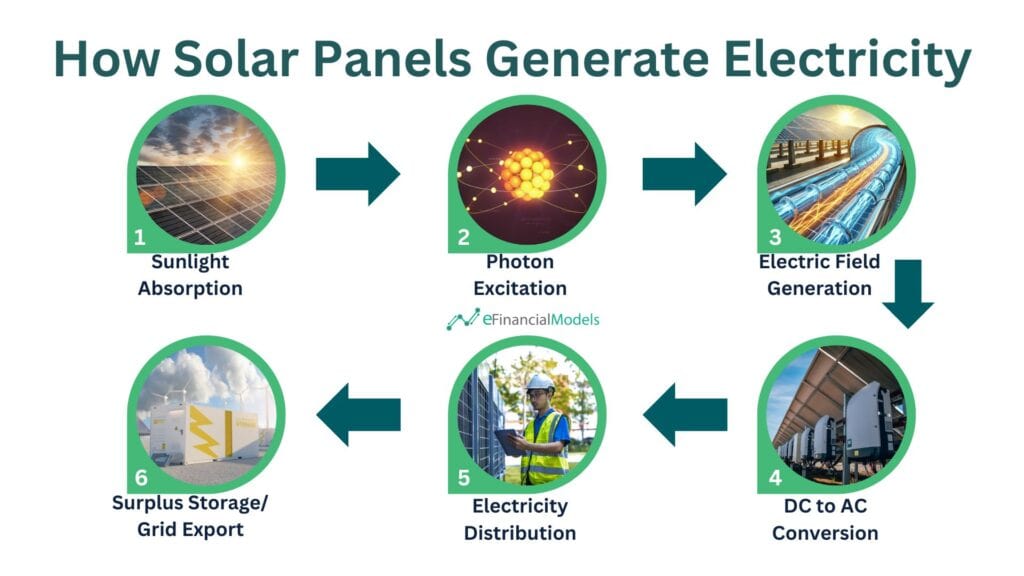
- Sunlight Absorption: Solar panels use sunlight to make electricity with special materials called photovoltaic (PV) cells. When sunlight hits these cells, it knocks tiny particles called electrons loose. These moving electrons create an electric current, which turns into usable power. The more sunlight the panels get, the more electricity they produce. That’s the first step in how solar panels generate electricity.
- Photon Excitation: When sunlight hits a solar panel, it carries tiny energy packets called photons. These photons slam into the photovoltaic (PV) cells and shake things up. Inside the cells, atoms hold onto electrons, but the energy from the photons knocks some of them loose. These freed electrons start moving, creating the first spark of electricity. Solar panels wouldn’t work without this step because electricity needs moving electrons. The more sunlight hits the panel, the more electrons get knocked loose and the more power the panel can generate.
- Electric Field Generation: Once sunlight knocks electrons loose, they need direction to create power. Inside each solar panel, an electric field pushes these electrons along a set path. This movement forms a direct current (DC), like water flowing through a pipe. The stronger the sunlight, the more electrons move and the more electricity the panel produces. It is the most critical step in how solar panels generate electricity.
- DC to AC Conversion: Most homes and businesses use alternating current (AC), so the electricity needs one more step before it’s ready to power lights, appliances, or devices. That’s where the inverter comes in. It takes the DC power from the panels and changes it into AC power. This switch is important because AC electricity flows back and forth, making it easier to send through power lines and use in everyday devices. Solar energy without the inverter wouldn’t work for most appliances, lights, or electronics.
- Electricity Distribution: Once the inverter changes DC to AC, the electricity is ready to use. It flows through wires to power lights, TVs, and other appliances in homes and businesses. The extra power goes into the electrical grid if the panels make more electricity than needed. The grid spreads this energy to other places, helping more people use clean power. This way, solar energy doesn’t go to waste and can even lower electricity bills.
- Surplus Storage or Grid Export: If solar panels make more electricity than needed, the extra energy doesn’t go to waste. It can be stored in batteries later, like at night or on cloudy days. The extra power goes to the utility grid if there’s no battery. The grid sends this energy to other homes and businesses, helping more people use clean electricity. Some homeowners even get credit on their electric bills for sharing their extra power. That’s the last step in how solar panels generate electricity.



































Cost Analysis of Materials for a Solar System Project
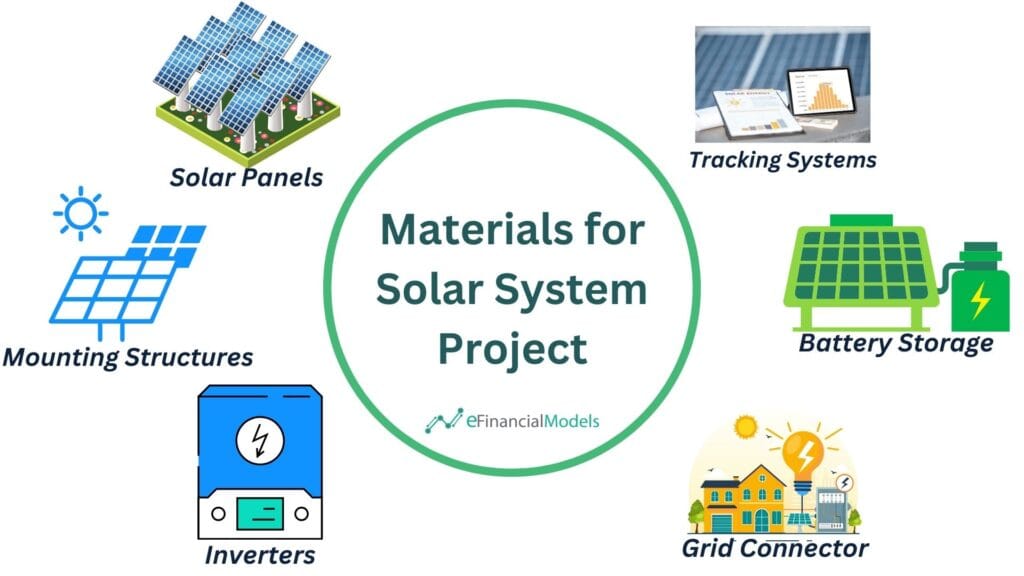
The cost of setting up a solar energy project depends on several factors, including the project size, location, technology used, and regulatory requirements. Below is a breakdown of the materials for a solar system project and their estimated cost ranges.
- Solar panels are a key part of a solar power system. They capture sunlight and turn it into electricity. The cost of these panels depends on their type and efficiency. For example, high-quality monocrystalline panels cost between $0.30 and $0.50 per watt. This means a 400-watt panel would be priced from $120 to $200. The size of the solar system you need affects the total cost. A typical home might use a 6-kilowatt (kW) system. In 2025, installing such a system cost between $14,600 and $21,700 before any tax credits. After applying a 30% federal tax credit, the price drops to about $10,200 to $15,200. While the initial cost of solar panels can be high, they often pay for themselves over time through savings on electricity bills.
- Mounting structures hold solar panels in place. They ensure panels face the sun correctly. They help produce the most electricity. The type of mounting structure you choose affects the cost and efficiency of your solar system. There are different types of mounting structures. Roof-mounted systems attach panels directly to your roof. Ground-mounted systems place panels on the ground using frames. They often cost more than roof-mounted ones. Pole-mounted systems put panels on poles, which can include tracking devices to follow the sun. Each type has its own cost and benefits. The cost of mounting structures varies. Basic mounting hardware typically costs between $1 and $2 per watt of the system’s capacity. For example, for a 6-kilowatt (kW) system, the mounting hardware alone might cost between $6,000 and $12,000. Choosing the right mounting structure depends on your specific situation. Factors like available space, budget, and local regulations play a role. It’s important to consider these aspects to ensure your solar system is both efficient and cost-effective.
- Among the materials for a solar system project, the inverter plays a crucial role. It changes the electricity from the solar panels into a form your home can use. Think of it like a translator, ensuring the energy works with your appliances. There are different types of inverters, and their costs vary. A common type, called a string inverter, connects multiple panels together. For a typical home system, a string inverter usually costs between $1,000 and $3,000. Another option is the microinverter. Instead of one device for many panels, you have a small inverter for each panel. This setup can be more efficient, especially if some panels get shade during the day. Choosing the right inverter depends on your home’s needs and your budget. While microinverters offer advantages in certain situations, string inverters are generally more affordable and suitable for many homes.
- Solar tracking systems help solar panels follow the sun’s path, capturing more sunlight and generating more electricity. This means that they can produce more energy than fixed-position panels. However, adding a tracking system increases the overall cost of a solar project. For example, a standard 4-kilowatt ground-mounted solar system costs about $13,000. Including a single-axis tracking system can raise the total cost to around $20,000, a 57% increase for about 35% more energy output. A dual-axis tracking system would cost even more, totaling around $26,000. In addition to higher upfront costs, tracking systems have moving parts that may require more maintenance over time, leading to increased operating expenses. When deciding whether to include a tracking system in a solar project, weighing the higher costs against the potential for increased energy production is important. In some cases, installing additional fixed panels might be more cost-effective instead of investing in a tracking system.
- Adding battery storage to a solar power system saves extra energy for later use, like keeping leftovers from dinner to eat another time. This stored energy can power your home when the sun isn’t shining, such as during nighttime or cloudy days. However, including battery storage increases the project’s cost. As of recent data, the average cost of a Battery Energy Storage System (BESS) is approximately $400–$600 per kilowatt-hour (kWh). This means that for a battery system capable of storing 10 kWh of energy, the cost would range from $4,000 to $6,000. In addition to the initial purchase price, there are other expenses to consider. These include installation costs, ranging from $50 to $100 per kWh, and ongoing operation and maintenance costs, estimated at $50 to $100 per kWh over 10 years. For a 10 kWh system, installation might add $500 to $1,000, and maintenance could total $500 to $1,000 over a decade. Despite these costs, battery storage can offer significant benefits. It provides backup power during outages and allows you to use stored solar energy when electricity rates are high, potentially saving money in the long run.
- Grid connectors allow you to use solar energy when available and draw power from the grid when it’s not. This setup ensures a steady electricity supply, even during cloudy days or at night. Linking your solar system to the grid involves additional costs. These expenses can vary based on factors like your system’s size and the distance to the nearest power lines. On average, the cost to connect a solar project to the grid ranges from $100 to $300 per kilowatt (kW) capacity. For instance, if your solar system has a capacity of 5 kW, the grid connection might cost between $500 and $1,500. In addition to these connection costs, there are other expenses to consider. These can include fees for permits, inspections, and any necessary upgrades to your local electrical infrastructure to handle the new power source. Despite these additional expenses, connecting your solar system to the grid offers significant benefits. It provides a reliable power supply and allows you to use net metering programs. Net metering lets you earn credits for any extra electricity your system produces and feeds back into the grid, potentially reducing your overall energy costs.
When planning your solar project, it’s essential to factor in the costs of materials for a solar system project and weigh them against the benefits. This approach will help you make an informed decision that best suits your energy needs and budget.
Can Your Solar Project Turn a Profit?
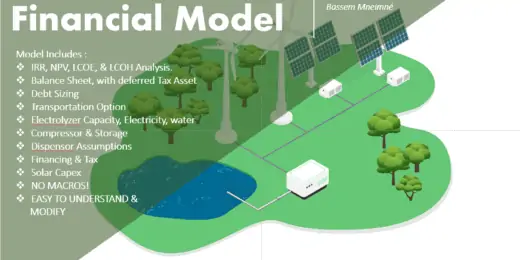
A solar power project financial model helps you see if your project can make money before you invest. It adds up all costs, like buying and installing solar panels, and compares them to your future earnings from selling electricity. The model also shows when you’ll break even and start making a profit. It includes key numbers like energy production, maintenance costs, and tax benefits. Your project is likely a good investment if the model predicts high returns and a short payback period. But if costs stay higher than earnings for too long, it might not be worth it.
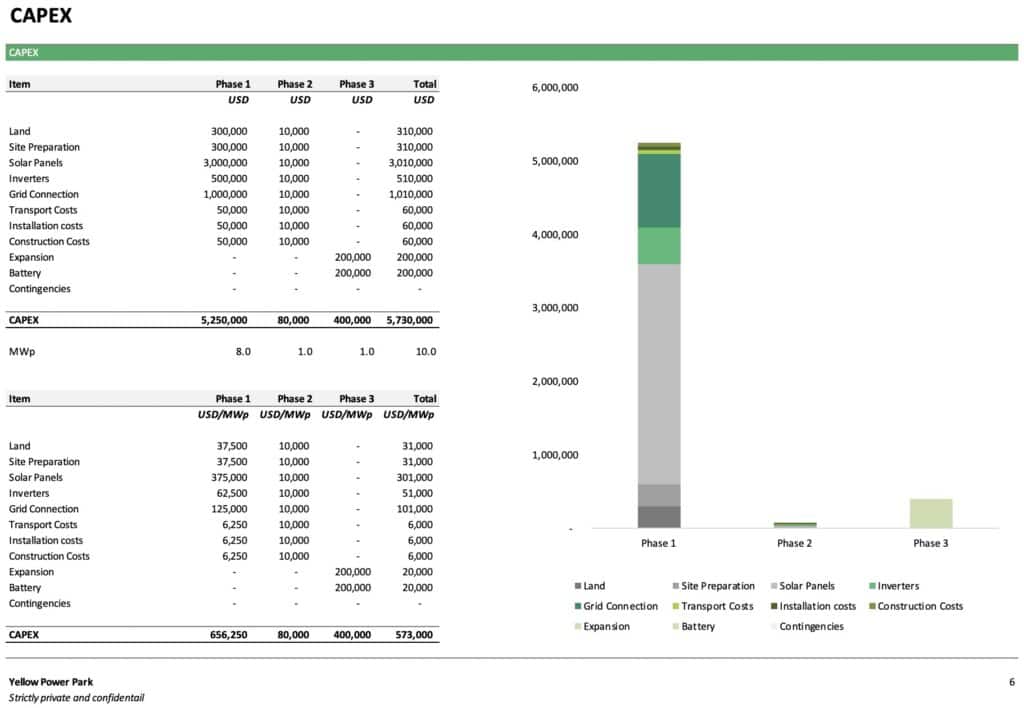
The capital expenditure (CAPEX) chart above shows how much money you need to build your solar project. It breaks down costs like land, solar panels, and connections to the grid. Each project phase has specific costs; the chart shows how they add up. To know if your solar project can make money, compare these costs to how much energy the project will produce and sell. If the revenue is higher than the total costs over time, your project can make a profit. Look closely at large expenses, like solar panels and grid connections, to see if they match your budget and goals.
Maximize Solar Returns with a Solar Power Project Financial Model
A solar energy project can make money if you control costs and plan wisely. Materials like solar panels, batteries, and inverters have upfront costs, but long-term savings on electricity can pay them off. Government incentives and selling extra power back to the grid can boost profits. A detailed cost analysis helps you see if your investment makes sense. Smart planning ensures your solar system is not just good for the planet but also good for your wallet.
A strong solar power project financial model helps you make smart decisions, reduce risks, and improve returns. It breaks down revenue, costs, financing, and taxes so you can see the big picture. Key factors like energy output, tax credits, and power purchase agreements shape your success. Key financial metrics include payback time, return on investment, and the levelized energy cost. Accuracy matters—small mistakes can lead to big losses. You can build a solid solar power project financial model using reliable data, testing different scenarios, and staying updated on regulations. With eFinancialModels, you gain expert tools and insights to navigate the financial side of solar power projects confidently.
Start optimizing your solar investment today!


























You might also like:
- An Easy Beginner’s Guide to Solar Power Plants
- How to Evaluate a New Solar Park for Investment?
- How Does Solar Radiation Affect the Returns of Your Solar Park?
- Renewable Energy
- Solar
- Financial Modeling for Startups and Small Businesses
- 5 Practical Tips to Help Raise Funds For Startups
- Funding Sources
- Understanding the Levelized Cost of Energy Formula
- Understanding Debt Sizing & Project Finance Ratios
- How to Make Smart Decisions with 6 Key Financial Metrics?
- Financial Planning for Small Business Owners – Taking an SBA Loan
- Business Valuation Service
- Project Finance
- Scenario Analysis
- How to Request for Custom Financial Models
- Top 5 Tips For a Good Financial Due Diligence
- 10 Main Elements of a Business Plan
- Free Simple Restaurant Financial Plan Template
- 5 Best Practices for Managing Days Receivables