
0 ITEMS

Is Factoring Right for My Business?

Understanding accounts receivable factoring can help your business access quick cash when customers take too long to pay.
- Factoring involves selling unpaid invoices to a third party at a discount to get immediate cash.
- It is especially useful for small businesses or startups with limited access to traditional bank loans.
- The process includes the factor providing an upfront payment and then collecting full customer payments later.
- Key considerations include the costs and fees involved, potential impact on customer relationships, and your customers’ creditworthiness.
- Evaluating these factors can help determine if invoice factoring fits your cash flow needs and financial strategy.
Keep reading to see how factoring can support your business growth and what to watch out for.
What is Accounts Receivable Factoring?
Accounts receivable factoring, or invoice factoring, is a way for businesses to get cash quickly.
Businesses sell products or services but often wait weeks or months to get paid. This delay can create cash flow problems. Accounts receivable factoring helps by turning unpaid invoices into immediate cash. A company sells its invoices to a factoring company at a discount. The factoring company then collects the full payment from customers. This helps businesses get money faster and keep operations running smoothly.
Some businesses struggle to qualify for traditional loans. Banks may require high credit scores or years of financial history. Factoring offers a different way to get cash without borrowing. Instead of taking on debt, businesses sell their invoices. This makes accounts receivable factoring a good choice for small businesses or startups that need funds but don’t meet strict bank requirements.
Waiting for customers to pay can slow down business growth. Accounts receivable factoring speeds things up. Instead of waiting 30, 60, or 90 days, businesses get paid almost immediately. The factoring company gives them most of the invoice upfront and then collects payment from the customers. This quick access to cash helps cover expenses like payroll, supplies, and new orders.

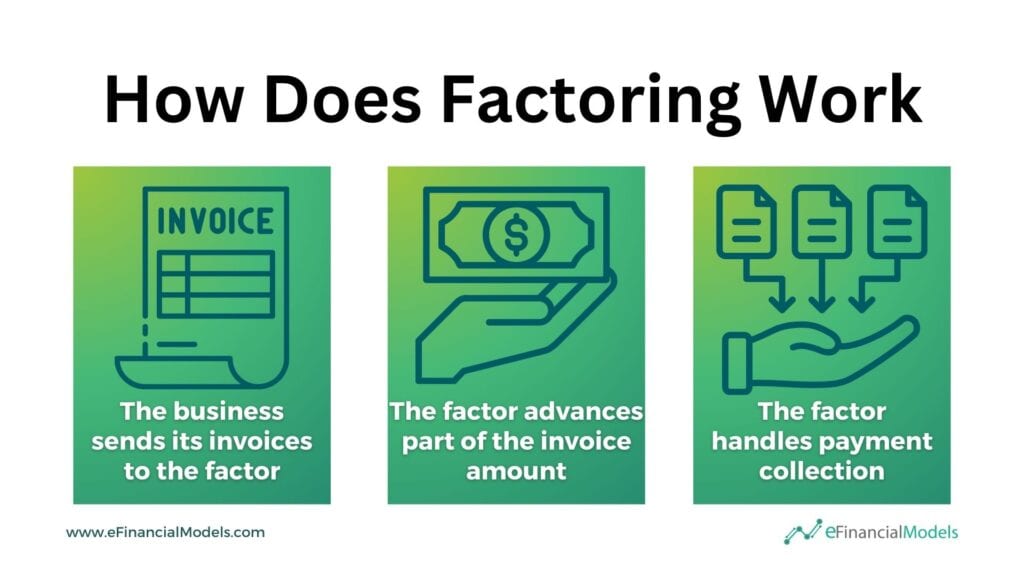
How Does Factoring Work?
Invoice factoring involves three key players: the business, the factor, and the customer. A business needs cash but is waiting for customers to pay their invoices. Instead of waiting, the business makes a deal with a company called a factor. The factor agrees to buy the business’s unpaid invoices at a discount. How does factoring work helps the business get money faster.
- The business sends its invoices to the factor. These are the same invoices that were already sent to customers. Before accepting the invoices, the factor checks the customer’s ability to pay. The factor approves the deal if the customer has a good payment history. If the customer has a bad history, the factor may reject the invoice or offer less money.
- After approval, the factor gives the business a portion of the invoice value upfront. This is usually around 70-90% of the total amount. The business gets immediate cash to use for expenses or growth.
- The factor now takes responsibility for collecting the payments to the customers. This means the business no longer has to wait for customers to pay. The factor collects the full amount when the customer finally pays the invoice. The factor then gives the remaining balance to the business but keeps a small fee, called the discount rate, for their service. This way, the business gets most of its money without waiting months for payment.











































Pros & Cons of Factoring as Alternative Financing Options
Running a business takes money; sometimes, waiting for customers to pay can slow things down. Factoring lets companies sell their unpaid invoices to get cash fast. This helps them cover costs without waiting weeks or months. However, while factoring can solve short-term cash flow problems, it also has trade-offs. It’s not free money—businesses give up a portion of their earnings and may lose some control over customer payments. Understanding how does factoring work and impacts a company’s finances is key to deciding if it’s the right move.
Advantages of Factoring
- Factoring is faster than waiting on bank loans or credit card approvals. You sell your invoices and get cash almost immediately. Banks take weeks or months to approve loans, but factoring moves quickly.
- Suppose you are a startup with a limited credit history. Lenders may reject you, but factoring companies focus on your customer’s ability to pay. This makes it easier for new businesses to get funding.
- Need quick access to cash flow? Waiting for customers to pay can slow your business down. Factoring gives you money now to cover expenses or grow faster.
- Want to avoid taking on traditional debt? Loans add interest and long-term obligations, but factoring is not a loan. You get cash by selling invoices, so there’s no repayment burden.
The Trade-Offs
- Invoice factoring fees can be high, reducing profit margins. Since a portion of the invoice value goes to the factoring company, businesses must generate higher revenues to maintain profitability.
- The factoring company typically takes over the collection process, which may affect customer relationships. Some clients may view third-party involvement as a sign of financial instability. Some investors, suppliers, or customers might interpret invoice factoring as a sign of cash flow struggles or financial distress, potentially impacting business credibility.
- Relying too much on factoring for cash flow can create a cycle of dependency, making it harder to transition to more sustainable financing options like bank loans or retained earnings.
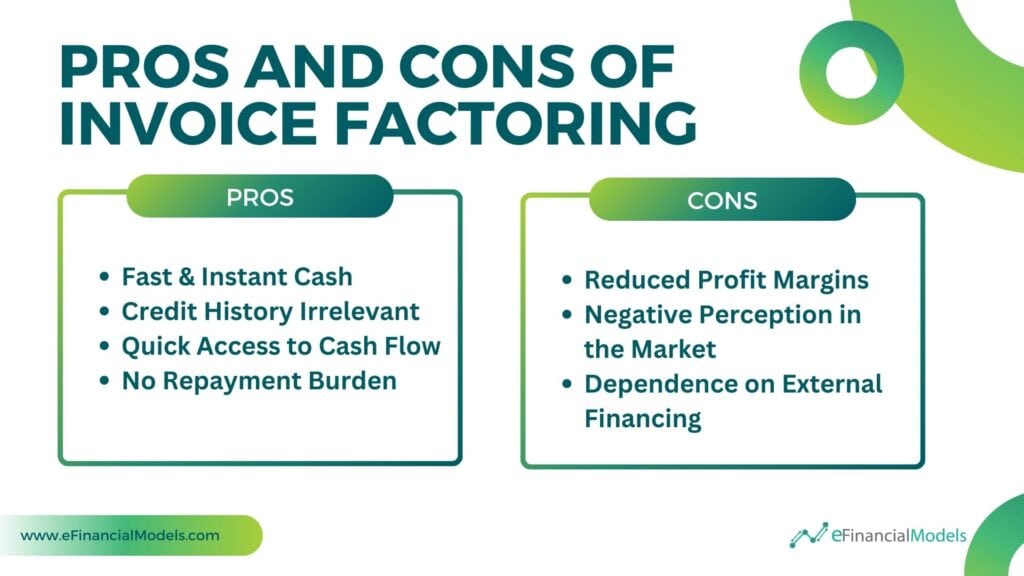
The advantages of factoring include getting quick cash when needed most, skipping the worry about credit history, and avoiding debt repayment, making it a lifesaver for businesses needing immediate cash flow. However, there are trade-offs, like reduced profit margins, a possible negative reputation in the market, and reliance on external financing. Whether the advantages of factoring outweigh the trade-offs depends on your priorities. If fast cash to keep your business running matters more, factoring could be a great choice despite the drawbacks.
How to Determine if Accounts Receivable Factoring is Right for You
For businesses facing cash flow gaps, accounts receivable factoring can be a more powerful financing tool than other alternative financing options. However, while it can be beneficial, it’s not the right fit for every business. Here’s how to determine if it aligns with your financial needs and business model.
Assess Your Cash Flow Needs
Factoring helps when your business needs cash fast. If your customers take too long to pay, you might struggle to cover expenses. Selling invoices to a factoring company gives you money right away. Consider whether quick cash will solve your problem or if a different fix makes more sense.
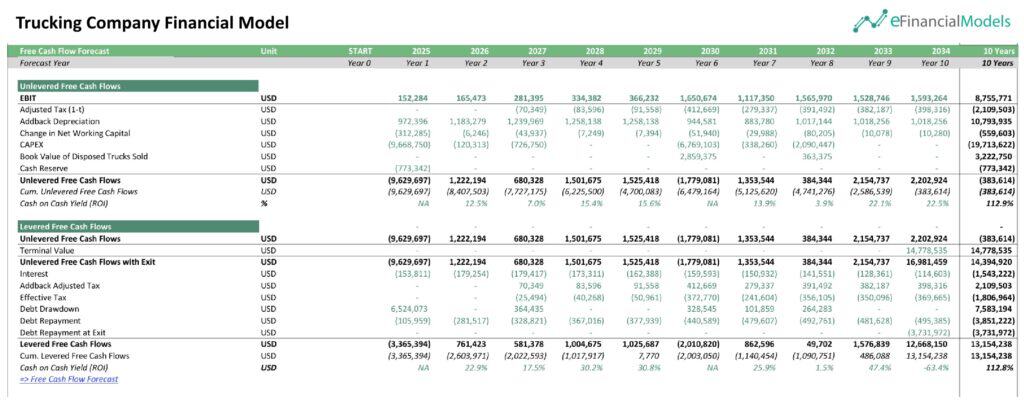
Above is a free cash flow forecast from a Trucking Company Financial Model. It helps you understand how much cash your trucking business has available after paying expenses and investing in trucks and equipment. Showing periods where cash flow is negative, like in early years due to high expenses, highlights times when you might need extra funding. Accounts receivable factoring could be a smart option if customers take a long time to pay. Factoring lets you get cash upfront for invoices, which helps cover costs like fuel, truck maintenance, or driver wages. This forecast gives you a clear picture of your cash flow and helps you decide if factoring is the right solution to keep your operations running smoothly.
Compare the Costs of Factoring
Factoring isn’t free. The company takes a percentage of your invoice as a fee. That means you get less than the full amount. Check if these costs are worth it compared to waiting for customers to pay. If the fees cut into your profits too much, factoring might not be the best choice.
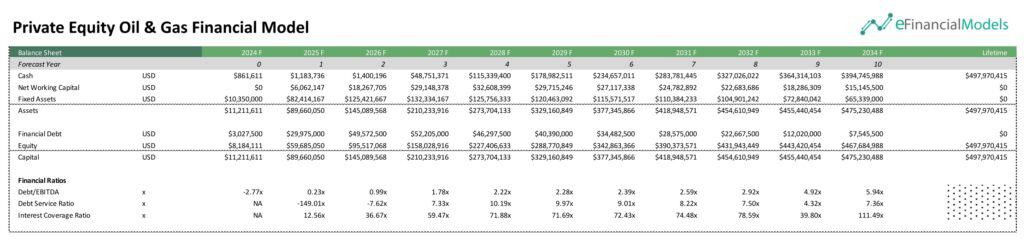
The balance sheet above shows the cash, debt, and equity trends for a Private Equity Oil & Gas company over several years. If you’re considering accounts receivable factoring, compare its costs to these numbers. Factoring helps you get cash faster by selling unpaid invoices, but it comes with fees. For instance, if you need quick cash, check how factoring costs compare to the company’s growing cash reserves or how it might affect financial ratios like the Debt/EBITDA. This way, you can decide if it’s worth it or if other alternative financing options are better.
Determine if You Can Handle the Loss of Control
When you factor in invoices, the company selling your unpaid invoices takes over collecting customer payments. This means you lose control over how those interactions are handled, as the factoring company directly communicates with your customers to collect the money. If maintaining strong customer relationships is a key part of your business, this shift could impact trust, loyalty, or the overall customer experience. For example, if the factoring company is too aggressive in its approach, it might damage your reputation or make customers hesitant to work with you. Before deciding to factor, consider whether this change aligns with your business values and how it could affect long-term relationships.
Evaluate Your Customers’ Creditworthiness
Factoring companies carefully evaluate your customers’ payment history and creditworthiness before agreeing to work with you. They want to ensure that your customers will likely pay their invoices on time since this directly affects their risk of not getting paid. If your customers have poor credit or a history of late payments, it could make it harder for you to qualify for factoring services, or you might face higher fees to compensate for the increased risk. This is why ensuring that your clients are reliable payers is crucial before considering factoring as a financing option. If your customer base has a shaky payment record, factoring may become too costly or unavailable, leaving you to explore alternative financing methods.
Examine Other Alternative Financing Options
Factoring isn’t the only way to get quick cash. Business loans, lines of credit, or merchant cash advances might be better. Look at all options before deciding. If another choice offers lower costs or more flexibility, it might be a smarter move for your business.
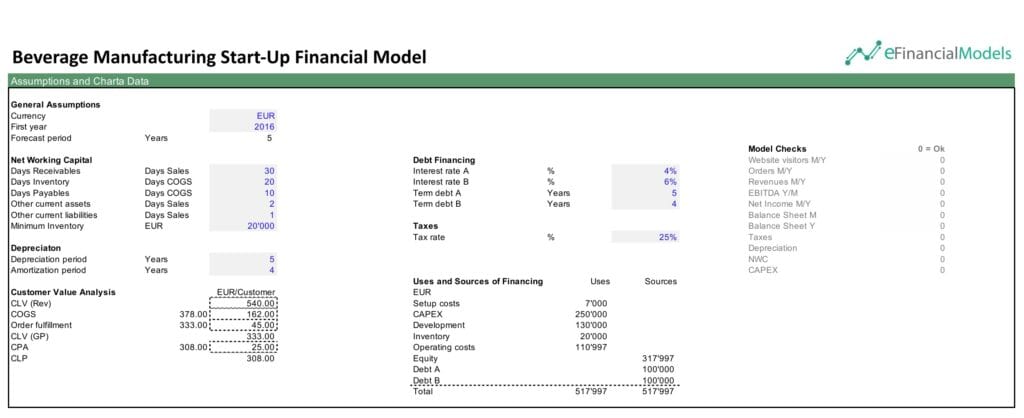
The Debt Financing Assumptions above for a Beverage Manufacturing Start-Up Financial Model help analyze if borrowing money, like a loan, is the best option. Instead of regular loans, businesses can consider accounts receivable factoring, where they sell unpaid customer invoices to get cash quickly. For example, if customers owe money for products but take months to pay, factoring can provide instant funds for new equipment or materials. Comparing the interest rates and repayment terms of loans (like 4% or 6%) to the costs of factoring lets you see what’s cheaper and faster. This way, you can decide which option keeps your business running smoothly without unnecessary expenses.
Financial Modeling: Your Key to Smart Factoring Decisions
Accounts receivable factoring can be a smart way to get cash quickly when customers take too long to pay, but it’s not for everyone. It helps businesses cover expenses without borrowing, yet it comes with fees and less control over customer payments. Before choosing factoring, weigh the costs, check if your customers are reliable payers, and consider how it affects your cash flow. If getting fast cash matters more than the trade-offs, factoring could be a useful tool to keep your business running smoothly. However, exploring other financing options might be better depending on your needs.
Financial modeling helps you see if factoring is the right move. It shows how much cash you’ll get, what fees you’ll pay, and how it affects your profits. For example, when checking your budget before buying something big, modeling helps you plan. It also compares factoring to other alternative financing options so you can pick the best one. You’ll make smarter, more confident financial decisions with the right numbers in front of you.
You might also like:
- 10 Main Elements of a Business Plan
- 10 Tips to Develop a First Class Business Valuation Report
- 12 Funding Sources for Businesses and Startups
- 14 Best Practices in Financial Modeling
- 5 Best Practices for Managing Days Receivables
- 5 Practical Tips to Help Raise Funds For Startups
- Five Steps to Create a Drop Down List Using Data Validation in Excel
- How to Calculate Net Present Value?
- Options for Business Valuation: Which Should You Choose?
- Understanding the Debt Service Coverage Ratio: An Essential Metric for Financial Analysis
- Accounting
- Business Valuation
- Debt Amortization
- Financial Statements – Definition, Uses, Contents and Templates
- Finding a Valuation Model for Your Business
- Understanding What is Yield to Maturity and Why It Matters
- Budgeting
- Cash Flow Projections
- Investor Presentations
- Financial Projections Templates – The Easy Way