
0 ITEMS

How to Create a Distribution Business Plan?

A distribution business plan is essential for outlining how your company will move products, reach customers, and grow sustainably.
- It details the logistics, inventory management, and supply chain strategies needed to ensure reliable delivery and customer satisfaction.
- The plan helps define target markets, competitive advantages, and specific sales channels for your distribution services.
- A clear financial model covers startup costs, ongoing expenses, revenue projections, and funding needs, making it easier to attract investors.
- Developing a distribution strategy involves choosing the right channels—direct, wholesale, or third-party—to maximize efficiency and reduce costs.
- Continual analysis and planning ensure your distribution business remains adaptable and poised for long-term success.
Read on for practical steps to craft a focused, effective distribution business plan that sets you up for lasting growth.
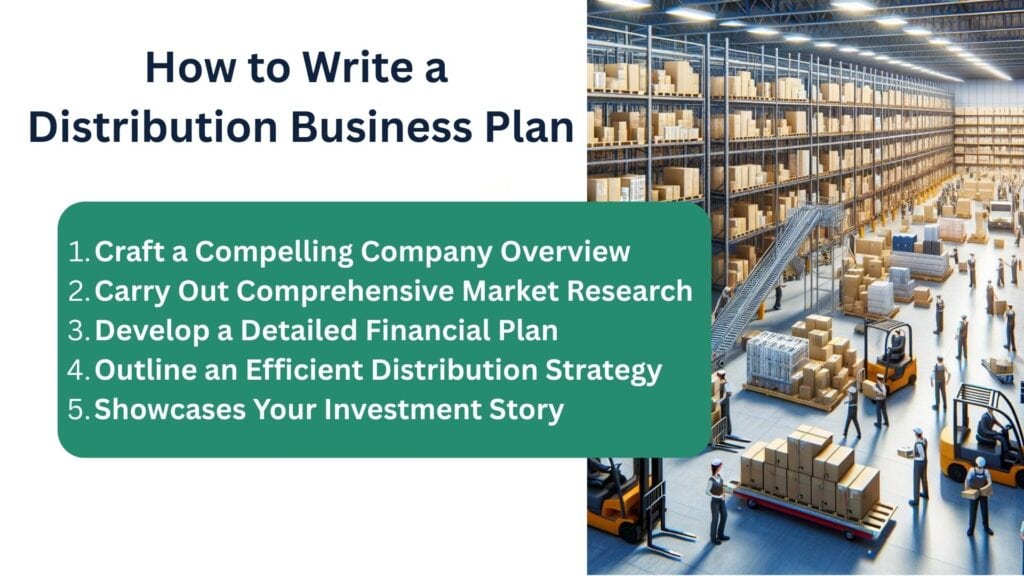
Read on to learn how to build a clear, simple distribution business plan that sets you up for lasting success.
The Distribution Business Model: How Companies Connect Products to Markets
The distribution business model helps companies move products from factories to customers quickly and efficiently. Instead of selling directly, businesses use partners like wholesalers, retailers, or online platforms to reach more people. The distribution business model saves time, cuts costs, and boosts sales by placing products where buyers already shop. It’s smart to build a strong market presence without handling every sale in-house. In short, the distribution business model is all about smart connections that drive growth.
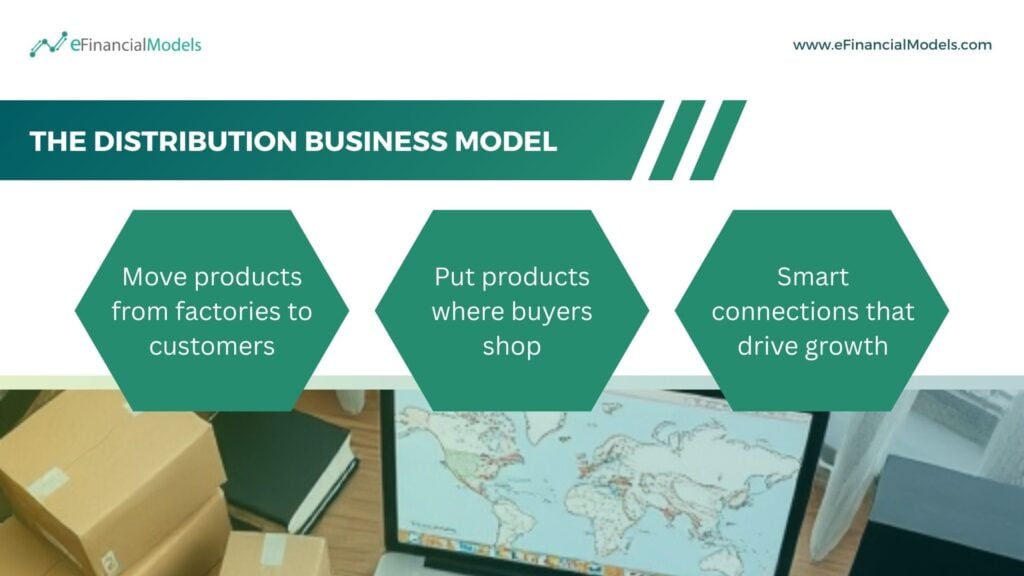
A distribution company acts as the middleman between manufacturers and customers. It buys products in bulk, stores them, and sells them to retailers or directly to consumers. Its main job is to move goods quickly and reliably. A distribution company helps businesses reach more markets without extra work by handling shipping, storage, and delivery. It keeps the supply chain running smoothly and ensures products are always available when and where needed.
Distribution Business Examples
The distribution business covers a wide network that touches almost every product we use. Distributors move goods across cities, countries, and continents, from food and clothing to electronics and medicine. They work behind the scenes, linking factories to stores, online shops, and end users. This vast system keeps products flowing smoothly, ensuring shelves stay stocked and customers quickly get what they need. Without distribution, businesses would struggle to grow, and buyers would face delays and limited choices.
Here are the 10 most common distribution business examples:
- Agricultural Products Distribution: Distribution firms manage seeds, fertilizers, pesticides, and farming equipment, supplying large farms, co-ops, and agricultural retailers. Companies like Cargill are leaders here.
- Alcoholic Beverages Distribution: Alcohol distribution (beer, wine, spirits) is a specialized branch of food and beverage – distilleries, often heavily regulated. Distributors like Southern Glazer’s Wine & Spirits work with brands to get products into restaurants, bars, and liquor stores.
- Automotive Parts Distribution: Firms distribute replacement parts, tires, lubricants, and accessories for cars, trucks, and heavy machinery to mechanics, dealerships, and retail auto stores (e.g., AutoZone, NAPA Auto Parts).
- Clothing and Apparel Distribution: Distributors connect clothing & fashion brands to retail outlets, boutiques, and e-commerce platforms, handling logistics, warehousing, and even marketing support for brands like Nike, Adidas, or emerging designers.
- Consumer Electronics Distribution: Distributors like Ingram Micro handle laptops, phones, TVs, and accessories, connecting major brands (like Apple and Samsung) to retail stores, online shops, and corporate buyers.
- Food and Beverage Distribution: Food and beverage distributors often manage perishable goods, temperature controls, and rapid logistics. They supply products from manufacturers (like PepsiCo or Nestlé) to retailers, restaurants, grocery stores, and hospitality businesses.
- Home Goods and Furniture Distribution: Distributors link furniture, décor, kitchenware, and household products from manufacturers to stores like IKEA, Wayfair, or regional retailers. They often deal with bulkier inventory and longer delivery cycles.
- Industrial Equipment and Supplies Distribution: Businesses distribute machinery, tools, construction materials, and industrial supplies to factories, contractors, and large enterprises. Examples include Grainger and Fastenal.
- Pharmaceutical and Medical Supply Distribution: This sector requires strict regulatory compliance and specialized storage and handling. Companies like McKesson or Cardinal Health distribute pharmaceuticals, medical devices, and healthcare products to hospitals, pharmacies, and clinics.
- Technology Hardware and Software Distribution: Besides consumer electronics, there’s specialized B2B distribution for servers, enterprise software, cloud services, and cybersecurity products — companies like Tech Data or Arrow Electronics dominate this field.
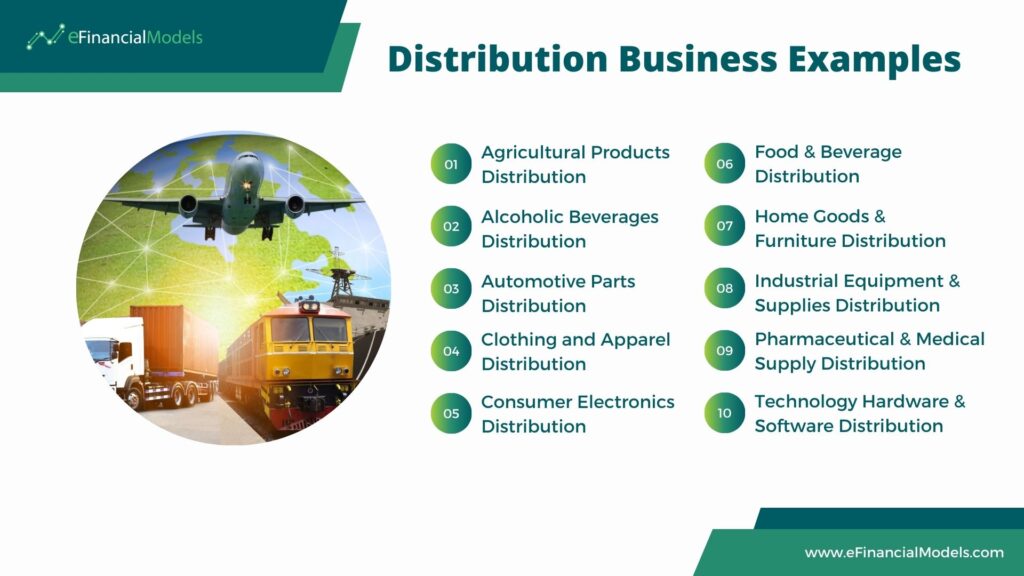
The distribution industry is not limited to the distribution business examples shown above. It offers endless opportunities to sectors needing a steady flow of products to reach customers. The list highlights ten distribution business examples where distribution drives real value. Whether you’re supplying essential goods like medicine or stylish home furniture, smart logistics, and strong networks make all the difference. Explore these areas, find your niche, and build a business that moves the world forward.
A Step-by-Step Guide to Creating a Distribution Business Plan
Starting a distribution business is exciting—but without a winning business plan, it can quickly get off track. A distribution business plan lays the foundation for growth, helping you define your goals, map your operations, and attract investors. Let us break down the process into simple, manageable steps to build your plan with confidence and focus.
Step 1: Craft a Compelling Company Overview
Start strong with a clear picture of your business. The first step in writing a distribution business plan is crafting a compelling company overview.
- Start by clearly stating the problem your business solves. Explain the gap in the market. What need does your distribution business solve? Keep it real and specific.
- Follow up with a strong solution—how your company fixes that problem better than anyone else. Show how your business fills that gap. What makes your approach better, faster, or more reliable?
- Describe your products or services, focusing on what makes them effective or different. List what you distribute. Focus on value—how your products help your customers.
- Then, show your team’s structure—who does what and why they matter. Outline your team. Who runs what? A clear structure builds trust and shows you’re ready to operate.
Keep the company overview short, sharp, and focused. Let readers see your purpose, value, and team at a glance.
Step 2: Carry Out Comprehensive Market Research
To succeed in distribution, you must know your market inside out. Start by identifying who your target customers are.
- Are you serving small retailers, large chains, or direct consumers?
- What are their pain points and buying behaviors?
Study industry trends, competitor strategies, and pricing models. Gather insights through surveys, interviews, or online data. This will help you spot gaps in the market and avoid costly assumptions. Next, narrow down your niche. Don’t try to serve everyone. Focus on a specific product line, customer group, or delivery method that sets you apart. Then, define your Unique Selling Proposition (USP)—the key benefit only your business offers. Whether it’s faster delivery, better pricing, or specialized products, your USP should solve a real customer problem. With this research, your distribution business plan becomes sharper, more realistic, and better positioned for growth.





















































Step 3: Develop a Detailed Financial Plan
Your financial plan is your roadmap to funding and growth. It matters because it shows if your business idea can make money. It outlines your costs, sales targets, and how much profit you expect. It also helps you see how much cash you need to start and run the business. With this plan, you can spot problems early and prepare for them. Investors and lenders also review your numbers to decide if they’ll fund you. A strong financial plan makes your business look serious and ready to grow.
- Capital expenditures for a distribution company include buying inventory, renting a warehouse, getting delivery trucks, and setting up systems for orders and tracking. You’ll also need licenses, insurance, and working capital for the first few months. Startup costs for a distribution company can vary widely based on scale and location. For small-scale operations, expenses range from $3,700 to $9,800, covering essentials like a computer, website, distribution software, and marketing. However, for mid-sized to larger operations, costs can escalate significantly. For instance, establishing a warehousing distribution business may require an investment between $200,000 and $500,000, accounting for warehouse leasing, equipment, staffing, and technology.
- Operating expenses for a distribution company cover day-to-day costs like rent, utilities, fuel, wages, equipment maintenance, and software subscriptions. These keep your business running smoothly. On average, monthly operating costs can range from $10,000 to $50,000, depending on the size and setup of your business. Tracking these expenses helps you avoid overspending and keep profit margins healthy. A clear plan also shows investors you understand the true cost of operations.
- Staffing is a key part of your financial plan. You need the right team to keep things moving. A typical startup distribution company hires a warehouse manager, drivers, and a logistics or operations coordinator. You may also need a sales rep and admin support. In the beginning, keep the team lean to control costs. As the business grows, add more roles. Planning your staffing early helps you budget for wages, benefits, and training—so there are no surprises later.
- Revenue projection shows how much money your distribution company expects to earn. Start by estimating sales volume, average order value, and how often customers will buy. Use simple math to forecast monthly and yearly revenue—factor in seasonality and market trends. Keep your numbers realistic—investors want solid logic, not wild guesses. This step helps you set sales goals and plan for growth. A clear revenue plan shows your startup has profit potential.
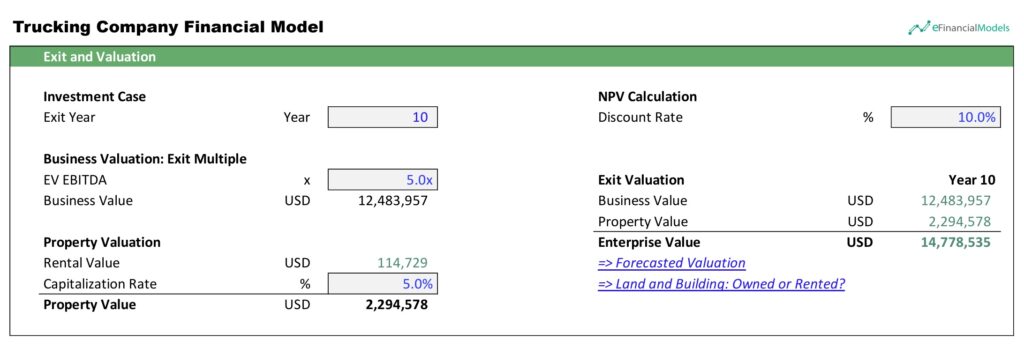
- Business valuation is key when planning your exit strategy. It tells you what your distribution company could be worth in the future. Use earnings, assets, and growth potential to estimate value. Show how profits will grow and what makes your business attractive to buyers. A solid exit plan proves you’re building something valuable—not just running day to day. This helps attract investors who want a return later, not just now.
- Financial planning and analysis help you stay on track and make smart decisions. It means reviewing your income, expenses, and cash flow regularly. Use this data to spot trends, adjust pricing, or cut costs. Build reports, run forecasts, and guide your spending. With solid analysis, you don’t just guess—you plan based on facts. That’s how you grow wisely and avoid surprises.
Trucking Company Financial Plan Example
Our Trucking Company Financial Model outlines how your distribution services will make money and stay on track. It covers startup costs, fuel and maintenance expenses, driver pay, and pricing for delivery routes. You use it to set goals, plan cash flow, and see if your business is profitable. The plan helps you avoid costly mistakes and make smart choices fast. It’s your roadmap to run lean, scale up, and keep goods moving without delays.
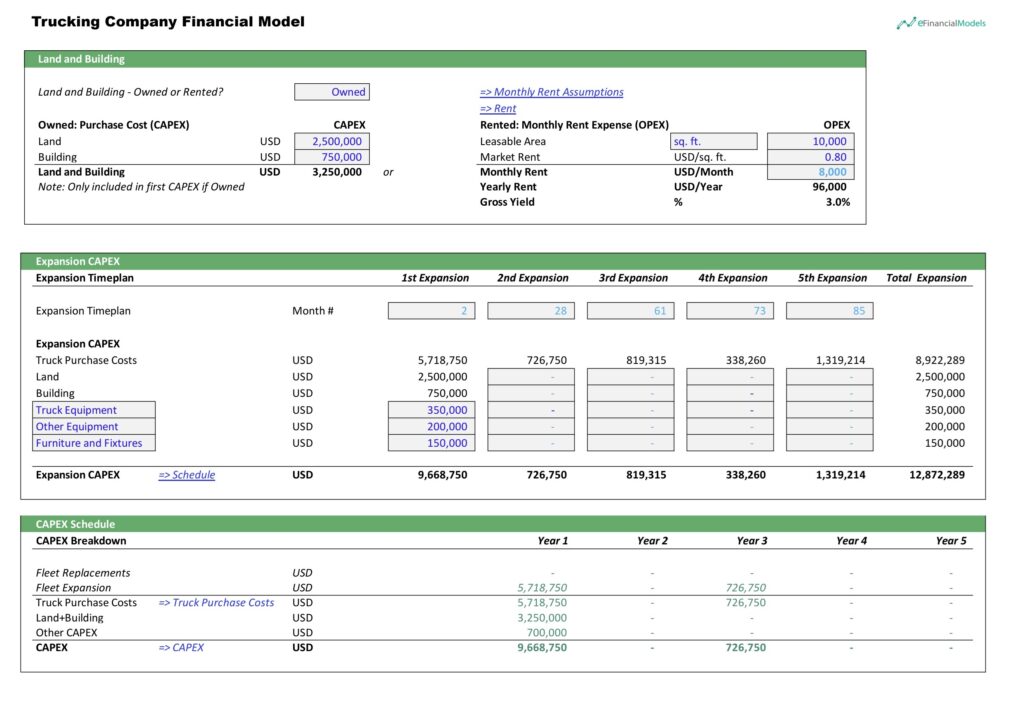
The CAPEX Schedule offers a clear investment roadmap, showing when and how much to spend on trucks, land, buildings, and equipment over five years. Breaking costs into key categories helps track assets, align spending with growth phases, and ensure timely, efficient budgeting—avoiding overextension.
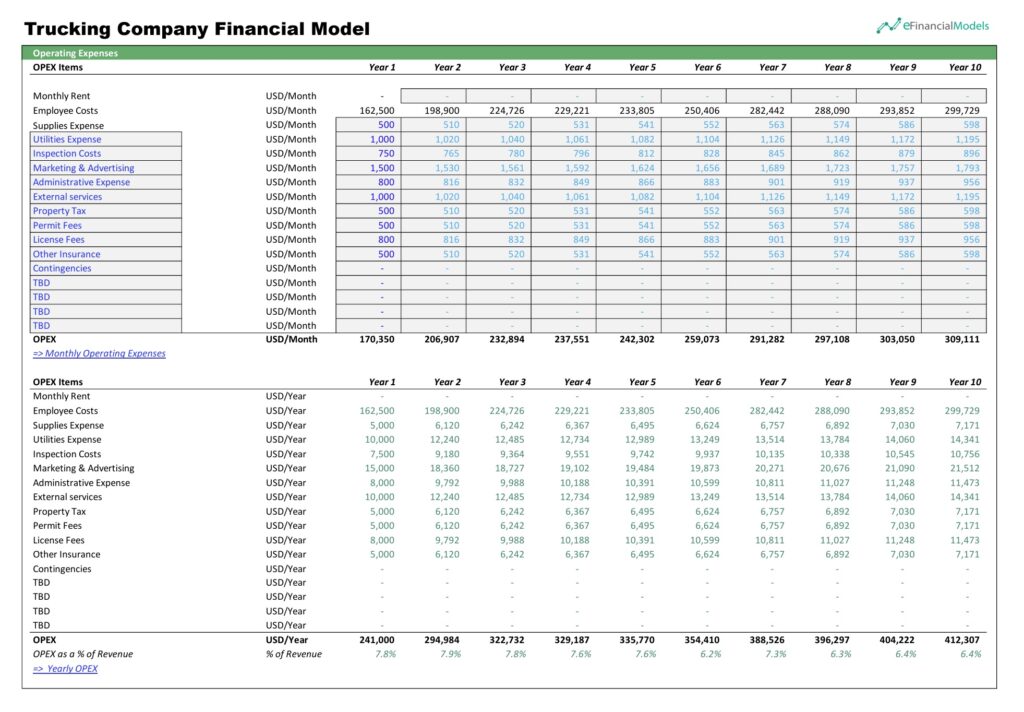
The Operating Expenses table is vital for a distribution company’s business planning because it clearly outlines and forecasts all recurring monthly and yearly costs over 10 years. With detailed breakdowns—such as employee costs, rent, marketing, and utilities—it helps the business estimate cash flow needs, plan budgets, and evaluate profit margins. This visibility ensures better decision-making, whether adjusting pricing strategies, optimizing operations, or preparing for scaling.
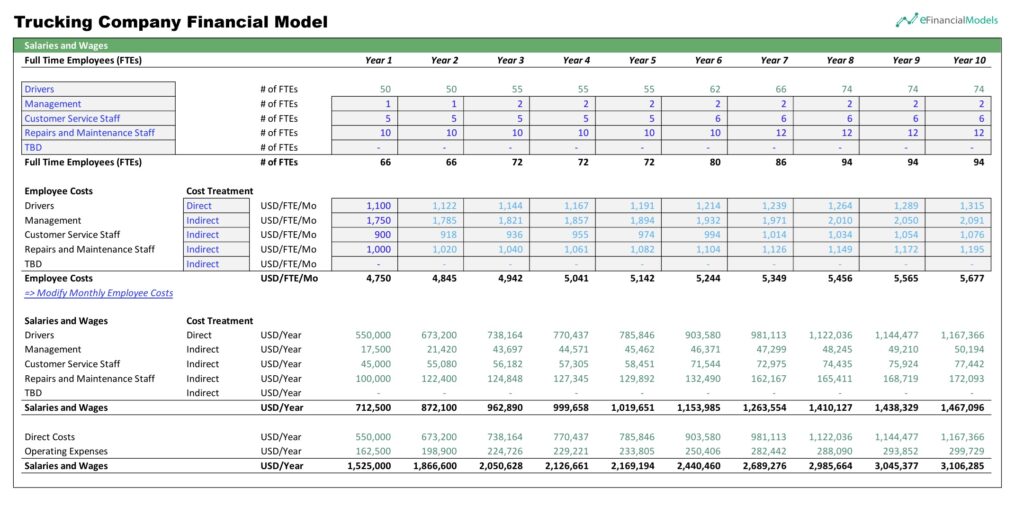
The Salaries & Wages table helps a distribution company build a smart staffing plan by showing how many full-time roles are needed, what each costs, and how payroll grows over time. It separates direct and indirect labor—like drivers vs. admin—so decision-makers can control hiring and budget by role. This clarity supports better workforce planning, cash flow forecasting, and cost control.
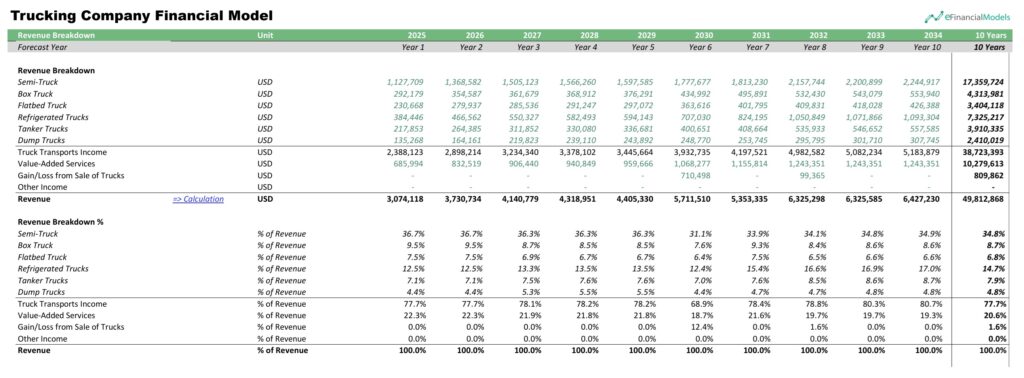
The Revenue Breakdown table gives a distribution company clear insight into what drives income—by truck type and service. It shows how each revenue stream grows over time and its share of total earnings. This helps the company prioritize high-performing services, set realistic sales goals, and plan resource allocation to maximize profits.
The Financial Metrics table helps a distribution company measure returns and plan smart financing. It compares unlevered vs. levered results, showing how debt boosts the Internal Rate of Return (IRR) and cash yields. Key insights—like funding needs, payback period, and Net Present Value (NPV)—guide investment size, risk, and profitability decisions.
Step 4: Outline an Efficient Distribution Strategy
This step is all about outlining your distribution strategy. This part shows how your products will reach customers quickly and cost-effectively. Choose the right channels—direct, wholesale, or third-party—and explain why they fit your business. Mention storage, transport, and delivery methods. Be clear about timelines, partners, and backup plans. A solid strategy builds trust and shows investors you know how to move products efficiently.
To outline an efficient distribution strategy, pick the best way to get your product to customers—direct sales, wholesalers, or delivery partners. Keep it simple and fast. Explain how you’ll store, ship, and track orders. Choose methods that cut costs but keep quality high. Highlight any tools or tech that help speed up delivery. Show how your plan keeps products moving and customers happy.
Step 5: Showcases Your Investment Story
The final step to writing a distribution business plan focuses on showcasing your investment story in the Executive Summary. This is your chance to grab attention fast. Highlight your growth potential, key strengths, and why your business is worth the risk. Mention your market opportunity, competitive edge, and financial goals. Keep it clear, bold, and brief.
The Executive Summary tells investors why your distribution business is worth their money. Include:
- A quick snapshot of your business and what you distribute
- Your target market and how you reach them
- Your unique advantage over competitors
- Sales goals and expected profit
- How much funding do you need, and why
- What investors will gain from backing you
Investors should feel confident and excited after reading this part. It’s your elevator pitch on paper—make it count.
Seal Your Distribution Plan with Financial Precision
Creating a distribution business plan is all about clarity and precision. Start by crafting a strong company overview that instantly builds trust. Dig deep with market research to understand your audience and competitors. Build a solid financial plan that shows exactly how you’ll grow and stay profitable. Map out a smart, efficient distribution strategy to move products fast and cost-effectively. Finally, wrap it all together by showcasing a compelling investment story that excited partners and investors to join your journey.
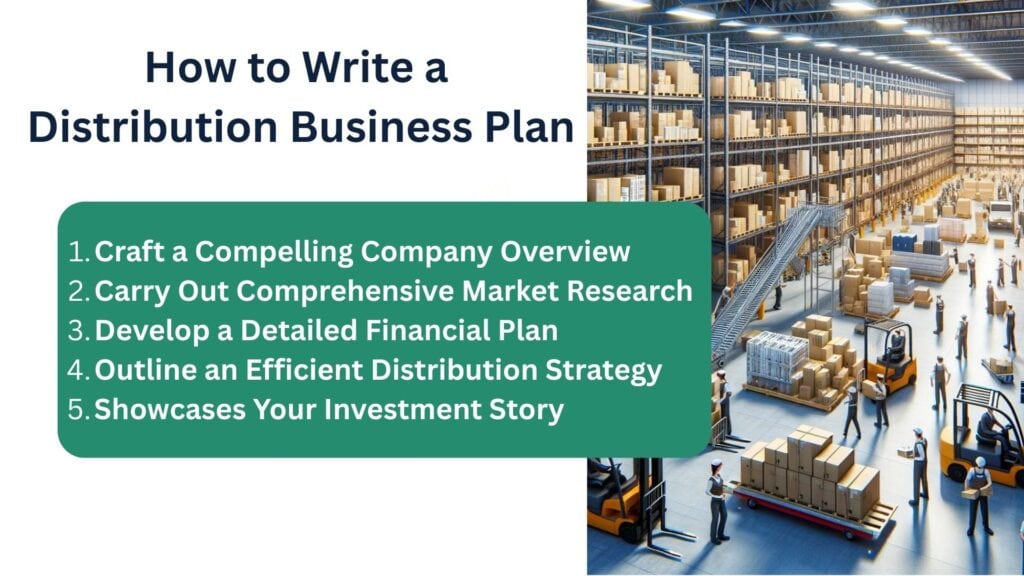
Writing a distribution business plan involves clarity, strategy, and numbers. Start strong with a company overview that hooks interest. Use market research to back your business case with facts. Lay out a clear financial roadmap that shows profits and costs. Then, map out how you’ll move goods efficiently and reliably. Finally, tell a strong investment story—make it obvious why your business is a smart bet. Every section should work together to show that you’re ready to launch and scale.












































You might also like:
- 10 Main Elements of a Business Plan
- 10 Tips to Develop a First Class Business Valuation Report
- 5 Steps to Create a Drop Down List Using Data Validation in Excel
- Financial Planning for Small Business Owners – Taking an SBA Loan
- Financial Modeling for Startups and Small Businesses
- How to Prepare a Financial Plan for a Chicken Egg Farm?
- 10-Step Financial Planning Checklist for Smart Executives
- Mastering Mobile App Success: A Comprehensive Financial Model for Sustainable Growth and Profitability
- Effective Financial Modeling for Business Plans
- How to Write a Business Plan Step-by-Step
- Understanding What is Yield to Maturity and Why It Matters
- Accounting
- Business Valuation
- Distribution
- Funding Sources
- Financial Model
- Financial Planning
- Business Plans
- Financial Projections Templates – The Easy Way
- Distribution Business Plan Templates