
0 ITEMS

Hydrogen Production Plant: Challenges and Solutions

Hydrogen production plants face a range of significant challenges that impact their development and operation.
- Building these plants requires high capital investments, often in the billions, due to expensive land, equipment, and safety systems.
- Regulatory hurdles include strict safety standards and emissions rules that can cause delays and extra costs.
- Safe and efficient hydrogen storage involves costly high-tech tanks and constant monitoring to prevent leaks.
- Water dependency, especially for electrolysis, demands access to large volumes of clean water, complicating location choices.
- Carbon emissions from non-renewable energy sources threaten hydrogen’s environmental benefits and require careful oversight.
Understanding these hurdles is crucial for effective planning, and strategic financial modeling can help turn complexity into opportunity.

How a Hydrogen Production Facility Works
Before going through the challenges, we must understand how a hydrogen production facility works. A hydrogen production facility is a plant that makes hydrogen gas on a large scale. A hydrogen production facility supplies hydrogen for energy, transportation, and manufacturing industries. Building and running a hydrogen production facility requires careful planning, advanced technology, and strong financial strategies. As demand for clean renewable energy grows, these facilities play a key role in helping economies shift toward greener solutions.
Colors label Hydrogen to show how it is made.
- Green hydrogen comes from water using renewable energy, with no carbon emissions.
- Yellow hydrogen also uses water but relies only on solar power.
- White hydrogen is natural hydrogen found underground.
- Blue hydrogen is made from natural gas, capturing and storing carbon emissions.
- Grey hydrogen also comes from natural gas but releases emissions into the air.
- Black or brown hydrogen is produced from coal, making it the most polluting.
- Pink, purple, or red hydrogen comes from nuclear energy, depending on the method and country.
- Turquoise hydrogen is made by heating methane without releasing carbon, creating solid carbon instead of gas.

Each color shows a different path toward energy use and environmental impact. Purple hydrogen is currently the most expensive to produce because it relies on nuclear-powered electrolysis, along with the energy-intensive nature of electrolysis itself. In contrast, grey hydrogen is the cheapest to produce because it uses mature steam methane reforming (SMR) technology fueled by relatively inexpensive natural gas. Furthermore, turquoise hydrogen is special because it’s made through methane pyrolysis, splitting natural gas into hydrogen and solid carbon instead of carbon dioxide, naturally avoiding emissions without costly carbon capture.
Different Ways to Produce Hydrogen
Hydrogen can be made in many ways, and each method affects cost, energy use, and the environment. From clean processes powered by renewables to methods that rely on fossil fuels, the path to producing hydrogen shapes its role in the energy world. Knowing how hydrogen is made helps investors, analysts, and business leaders choose smart strategies as demand grows. The right approach can cut emissions, lower risks, and open doors to long-term value in the hydrogen economy. Below are the typical ways to produce hydrogen:
- Carbon Capture Usage and Storage (CCUS): The carbon capture technology usually involves capturing the gas at the source, transporting it through pipelines, and injecting it into secure storage sites. CCUS helps lower emissions from industries that rely heavily on fossil fuels while supporting cleaner energy goals. When used with natural gas, CCUS creates “blue hydrogen.” This method lowers carbon emissions compared to regular gas-based hydrogen. Blue hydrogen works well for heavy industries like steel, cement, and chemical production because it blends cleaner energy with reliable supply.
- Electrolysis: Electrolysis splits water into hydrogen and oxygen using electricity. If powered by renewable energy, it produces “green hydrogen” without carbon emissions. The process is simple but needs a lot of energy. It is ideal for fueling hydrogen cars, storing renewable energy, and powering industries aiming for zero emissions. As clean power grows cheaper, electrolysis becomes a more popular choice.
- Steam Methane Reformation (SMR): SMR heats methane with steam to release hydrogen. It is the most common method today because it is cheap and fast. However, SMR also produces a lot of carbon dioxide. Without extra steps like CCUS, it is not considered a clean option. Standard SMR without carbon capture makes “gray hydrogen. It is still widely used in refining oil, making ammonia for fertilizer, and producing chemicals like methanol.
- Methane Pyrolysis: Methane pyrolysis breaks methane into hydrogen and solid carbon using heat. It avoids releasing carbon dioxide into the air. Solid carbon can even be used in construction industries. This method promises cleaner hydrogen if done on a large scale. Methane pyrolysis creates “turquoise hydrogen,” which falls between green and blue in carbon impact. It can fuel industries and future hydrogen-powered transport with fewer emissions.

The cheapest among the ways to produce hydrogen is through steam methane reforming (SMR). This method uses natural gas and steam to make hydrogen. It’s affordable because natural gas is cheap, and the process is efficient. However, it creates a lot of carbon emissions, making it less eco-friendly. While the most expensive among the ways to produce hydrogen is electrolysis using renewable energy. In this process, electricity from wind or solar splits water into hydrogen and oxygen. It’s clean and sustainable, but high electricity costs and pricey equipment make it the most expensive option today.


















































Challenges in Hydrogen Production Plants
Building a hydrogen production plant is full of tough challenges. Operators must simultaneously handle high costs, strict safety rules, and complex technology. Every step, from sourcing raw materials to running the final systems, demands precision. Even small errors can cause big delays or safety risks. At the same time, plants must keep improving their processes to stay competitive in a fast-changing market. Finding the right balance between efficiency, safety, and innovation is today’s true test for hydrogen producers.
Below are the common hurdles faced by hydrogen production plants:
High Capital Investment
Building hydrogen production plants demands very high capital expenditure, which creates a major hurdle for new and existing projects. It varies significantly depending on the technology used, the scale of the plant, and the geographical location. It’s challenging to provide a single “average” figure due to these variations and the rapidly evolving nature of the hydrogen industry. Companies must pour millions, sometimes billions, into land, technology, specialized equipment, and safety systems before production begins. This financial pressure often slows project development, limits competition, and scares off smaller investors. Even after construction, long payback periods add more risk, making it hard for businesses to secure funding. High upfront costs are one of the biggest reasons why hydrogen, despite its potential, remains a slow-growing industry.
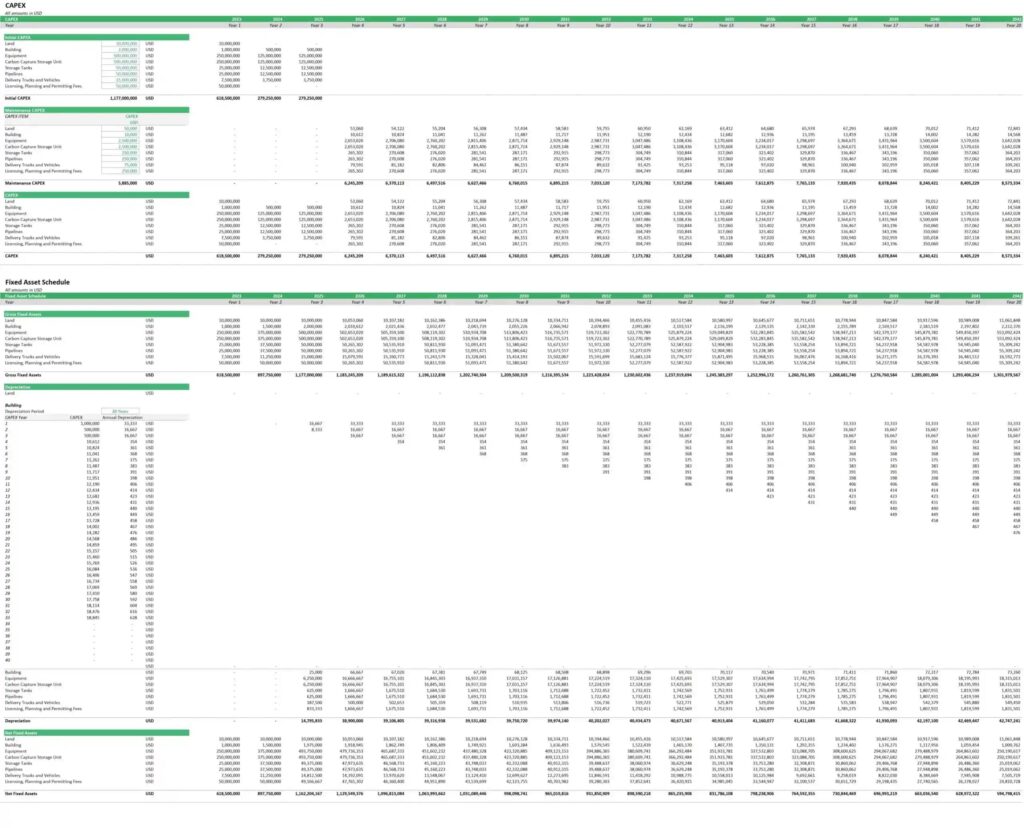
The CAPEX table above is from our Blue Hydrogen Production Financial Model. It shows a major investment totaling over $1.7 billion, with key expenses going into land, equipment, and storage units. By mapping out detailed cost schedules, depreciation, and maintenance CAPEX over time, the table helps investors and operators see exactly how and when capital is used. This clarity supports better financial planning, makes attracting funding easier, and reduces the fear of high upfront costs. It turns a big investment challenge into a manageable, strategic roadmap.
Regulatory Concerns
Regulatory concerns are a major challenge for hydrogen production plants. Strict government rules on safety, emissions, and handling hazardous materials can delay projects or raise costs. Operators must limit emissions and manage waste carefully. Failure to meet environmental rules can halt operations. Each region often has different standards, making it harder for companies to expand across borders. Some areas limit where hydrogen plants can be built. Companies must navigate local land-use laws carefully. Inconsistent regulations can create confusion, forcing operators to spend more time and money on compliance. New laws can also suddenly change project requirements, leading to unexpected setbacks. Because hydrogen is highly flammable, authorities usually demand extra safety checks, adding another layer of complexity. Staying ahead of regulatory changes is critical to keeping projects on track and profitable.
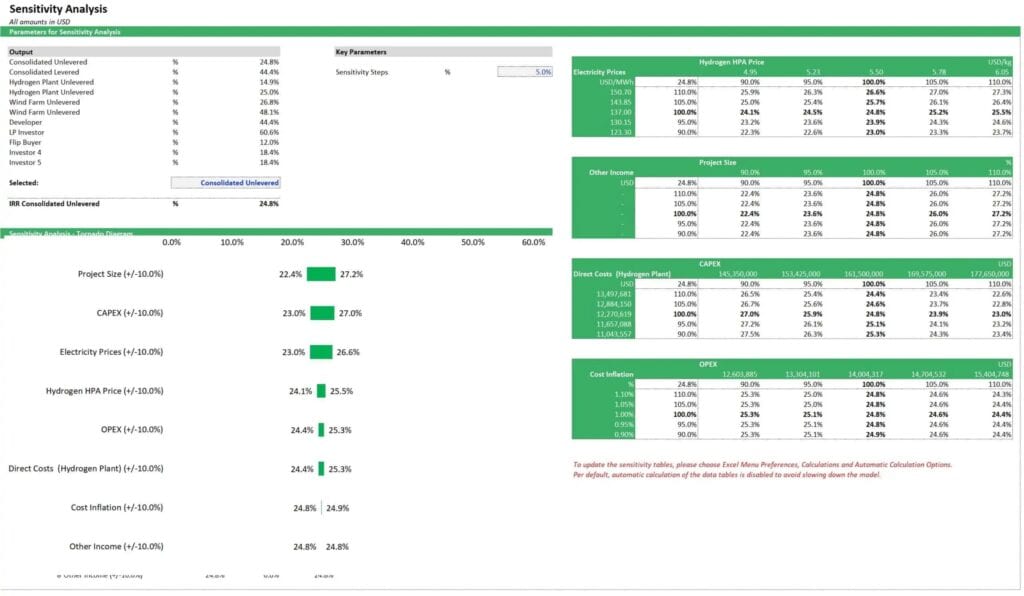
The sensitivity analysis above is from our Green Hydrogen Production from Wind Energy Financial Model. It shows how the project’s Internal Rate of Return (IRR) reacts to changes in key inputs such as project size, CAPEX, electricity, OPEX, and hydrogen prices. The base IRR for the consolidated unlevered scenario stands at 24.8%, and variations of ±10% in input parameters reveal how robust or vulnerable the returns are to market or policy fluctuations. Project size and CAPEX have the most substantial impact on IRR, ranging between 22.4% to 27.2% and 23.0% to 27.0% respectively. Regulatory agencies often scrutinize capital-intensive projects for financial viability under different economic conditions. By demonstrating that the IRR remains resilient—especially to cost inflation, other income, and OPEX variations—this analysis can help satisfy regulatory concerns about economic feasibility, financial risk exposure, and investment stability, facilitating smoother permitting and policy support.
Storage Challenges
Storing hydrogen safely is a big challenge for a hydrogen production plant. Hydrogen is the lightest and smallest molecule, making it easy to leak through tiny cracks. It must also be stored at very high pressure or extremely low temperatures to stay liquid, requiring costly, high-tech tanks. These strict storage needs add extra risks and expenses. Even small leaks can cause safety hazards, and keeping the hydrogen stable over time takes constant monitoring. Solving storage issues is critical for making hydrogen plants more efficient, reliable, and safe.
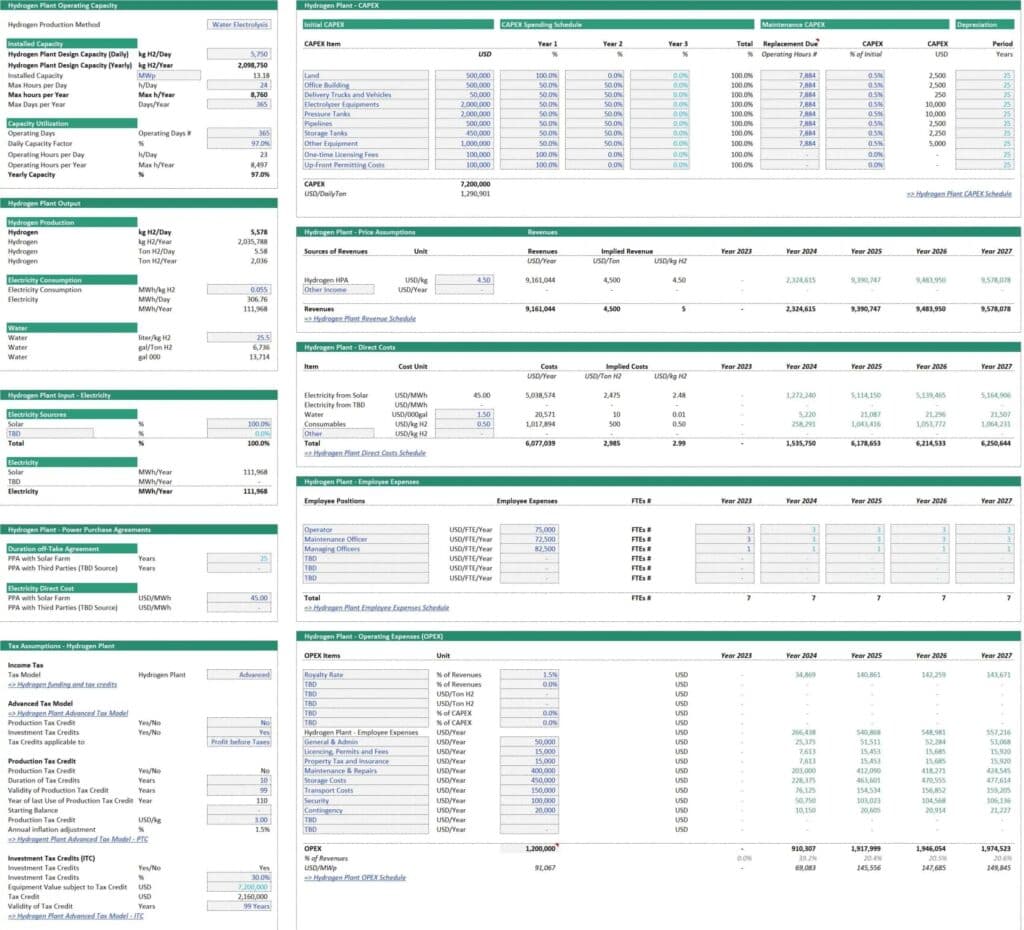
The operating capacity and CAPEX table above is from our Yellow Hydrogen from Solar Energy Financial Model. It can directly help address storage challenges by providing a steady, predictable hydrogen output of 5,378 kg/day, critical for energy systems with fluctuating demand or intermittent renewable sources. With a well-defined investment in infrastructure—$7.2M in initial CAPEX and structured OPEX planning—this setup ensures hydrogen is produced consistently, enabling it to be stored and used when needed, such as during peak grid demand or energy shortages. This reliable production and economic efficiency make hydrogen a viable storage medium, reducing dependency on fossil fuels and helping balance supply and demand in renewable-heavy grids.
Water Dependency
Water dependency is a major challenge for hydrogen production plants because the process needs large volumes of clean water. Electrolysis, used in many plants, splits water into hydrogen and oxygen. Without enough fresh water, the plant can’t operate efficiently. In dry regions, sourcing water adds cost and complexity. Competition with agriculture and local use can cause conflicts even when water is available. This reliance on water makes site selection and long-term sustainability harder. Addressing this issue requires smart water management, recycling systems, or finding alternative water sources like desalination.
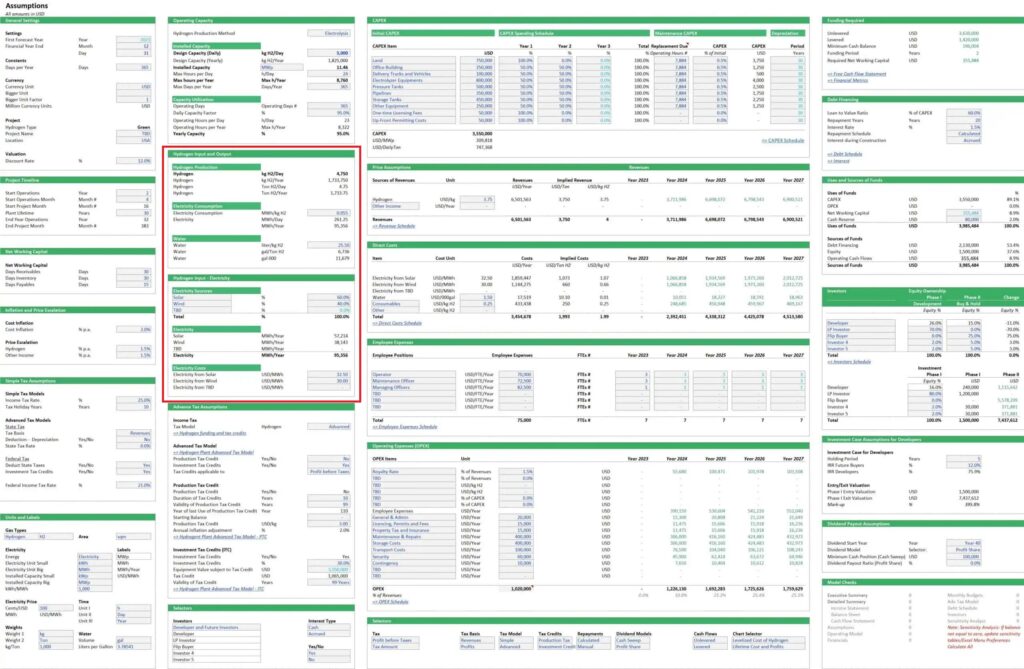
The assumption table above is from our Green Hydrogen (Electrolysis) Production Financial Model. It directly addresses water dependency by including specific water usage and cost inputs. It quantifies how much water is consumed per kilogram of hydrogen and assigns a cost to it, allowing you to assess water’s financial and operational impact. By adjusting these inputs—like switching to treated wastewater, estimating costs for desalination, or projecting price hikes during drought—you can plan and test different water scenarios. This helps minimize risks, optimize water sourcing strategies, and ensure reliable hydrogen output even when the water supply becomes uncertain.
Carbon Emission
Carbon emissions remain a key challenge in hydrogen production, especially when electricity comes from fossil fuels. Even in green hydrogen plants, using non-renewable backup power or carbon-heavy water purification methods can increase emissions. These hidden carbon costs reduce the environmental benefits of hydrogen. Producers must use clean energy across all operations to stay truly green and track every emission source. Without this, hydrogen risks becoming just another polluting fuel in disguise.
The best way to cut carbon emissions in hydrogen production plants is to power every stage with renewable energy. Use solar or wind for electrolysis, and choose clean water treatment and compression methods. Install real-time monitoring tools to track emissions and spot inefficiencies early. Avoid fossil fuel backups and aim for off-grid or hybrid systems. Producers can deliver clean hydrogen by staying fully green from input to output and meeting strict climate goals.
Methane pyrolysis is gaining attention as a breakthrough clean hydrogen technology. Its latest advancement lies in thermal and plasma-based pyrolysis reactors that split methane into hydrogen and solid carbon—without emitting CO₂. Unlike traditional methods, this process doesn’t need water and doesn’t release greenhouse gases. Plasma torches and molten metal reactors allow continuous operation with higher efficiency and less maintenance. Startups and research labs are also exploring modular methane pyrolysis units, making it easier to scale and integrate with existing natural gas infrastructure. This technology offers a low-emission path to hydrogen while producing solid carbon that can be sold for industrial use.
Solving Hydrogen Plant Challenges Through Strategic Financial Modeling
Building hydrogen production plants is tough. High upfront costs make financing hard. Strict regulations slow projects down. Storing hydrogen safely adds extra risks and expenses. Production depends heavily on water, a resource not always easy to secure. Carbon emissions remain a concern, especially for methods that aren’t fully green. These challenges create barriers that developers must overcome to unlock hydrogen’s full potential.
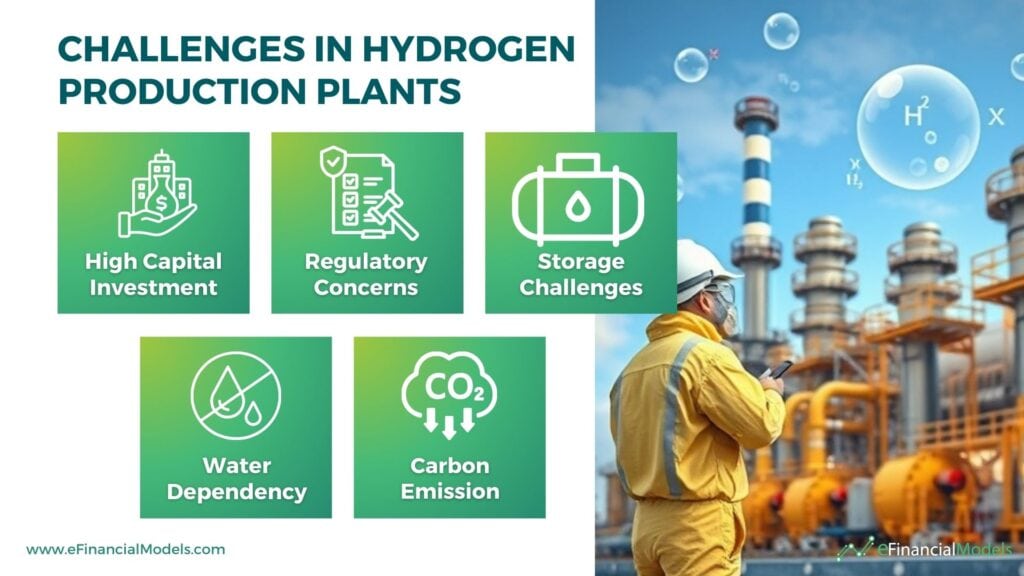
Strategic financial modeling can ease these burdens. It helps plan capital use wisely, evaluate regulatory risks, and design smarter storage solutions. Modeling allows teams to assess water needs and invest in cleaner production methods. With the right financial strategies, companies can turn challenges into opportunities and lead the way in hydrogen innovation.


















Frequently Asked Questions
What are the main challenges in setting up a hydrogen production plant?
The primary challenges include high initial investment costs, the need for advanced technology and infrastructure, ensuring a reliable and sustainable energy source, and addressing safety concerns related to hydrogen storage and transportation.
How can financial modeling help in planning a hydrogen production plant?
Financial models can help assess the economic viability of a project by forecasting costs, revenues, and profitability. They allow for scenario analysis, risk assessment, and informed decision-making regarding investment and operational strategies.
What are some key solutions to the challenges faced by hydrogen production plants?
Solutions include technological advancements to reduce production costs, developing efficient and safe storage and transportation methods, utilizing renewable energy sources, and implementing supportive government policies and incentives.
Where can I find a financial model template for a hydrogen production plant?
eFinancialModels.com offers specialized financial model templates for various industries, including hydrogen production. These templates can be customized to suit specific project requirements.
You might also like:
- How to Successfully Plan a Hydrogen Energy Project
- 10 Tips to Develop a First Class Business Valuation Report
- How to Write a Business Plan Step-by-Step
- 12 Funding Sources for Businesses and Startups
- Achieve Financial Success By Knowing Your Business Plan Model
- Understanding the Levelized Cost of Energy Formula
- Financial Modeling for Startups and Small Businesses
- Cash Flow Analysis in Excel
- Financial Ratios Analysis and Its Importance
- Financial Planning for Small Business Owners – Taking an SBA Loan
- Investing Cash Flows
- Carbon Capture and Sequestration Project Analysis
- Financial Business Plan for Nail Salon
- How to Prepare a Financial Feasibility Study?
- 10 Main Elements of a Business Plan
- Achieve Financial Success By Knowing Your Business Plan Model
- Understanding What is Yield to Maturity and Why It Matters
- Top 10 Mistakes in DCF Valuation Models
- Understanding the Debt Service Coverage Ratio: An Essential Metric for Financial Analysis
- Financial Planning for Gym Startups