
0 ITEMS

How to Successfully Plan a Hydrogen Energy Project

The global energy crisis underscores the importance of hydrogen as a versatile solution for energy security and climate goals.
- Hydrogen can be produced from various sources, including natural gas, nuclear energy, biogas, and renewable options like solar and wind.
- Different hydrogen colors represent various production methods, from eco-friendly green hydrogen to more polluting black or brown hydrogen.
- Financial models are essential for planning hydrogen projects, assessing costs, risks, and investment opportunities.
- Key factors such as production process, cost levels, infrastructure needs, and market conditions influence project feasibility.
- Analyzing these elements helps investors determine the most promising hydrogen technologies and participating regions.
Keep reading to see how detailed financial analysis drives successful hydrogen investment planning.
Hydrogen Colors
Although hydrogen is colorless, it is given color codes depending on the production method performed. Since no standard terminology exists, these color descriptions are subject to alteration throughout time and even between nations.
Arranged from the most eco-friendly type of hydrogen to the least, the following are the different color codes:
- Green Hydrogen is produced when water is electrolyzed and split into oxygen and hydrogen. Hydrogen is used without causing any harm, and oxygen is released into the atmosphere. Electricity and power are necessary to do the electrolysis. Renewable energy sources like the sun or wind are used to fuel this procedure to create green hydrogen. With no carbon dioxide (CO2)produced as a byproduct, green hydrogen is the most environmentally friendly choice.
- Yellow Hydrogen is also produced through electrolysis, but only using sun power (unlike green which could use either wind energy or solar energy, or a combination of both renewable energy sources). Carbon dioxide is also not emitted as a byproduct, making yellow hydrogen an environmentally friendly option.
- White Hydrogen forms naturally underground over millions of years. It comes from chemical reactions between water and certain rocks deep in the Earth’s crust. Some of it escapes through cracks, but large pockets stay trapped beneath the surface. Scientists are now exploring ways to extract it, similar to drilling for oil or gas. Currently, the Bourakebougou White Hydrogen Reservoir in Mali is the world’s only white hydrogen reservoir actively producing electricity. If they can do this without harming the environment, white hydrogen could become a clean energy source. Unlike other types of hydrogen, it doesn’t need factories or power plants to be made—it’s already there, waiting to be found.
- Blue Hydrogen is generated when natural gas is split into hydrogen and CO2 either by steam methane reforming (SMR) or auto thermal reforming (ATR). Through a procedure known as carbon capture usage and storage (CCUS), the greenhouse gas CO2 produced is captured and then stored, mitigating the environmental impact on the planet.
- Grey Hydrogen is currently the most common form of hydrogen. Using steam methane reformation (SMR), grey hydrogen can be produced from natural gas, or methane. Unlike the blue hydrogen, CO2 is not captured, but released to the atmosphere.
- Black or Brown Hydrogens are the absolute opposite of green hydrogen in the hydrogen spectrum and the most environmentally damaging. Using the process of ‘gasification’, these hydrogens are processed from fossil fuels – Black from black coal and Brown from lignite.

There are several other hydrogen colors that are both uncommon and not yet well-known:
- Pink, Purple, or Red Hydrogens are powered by nuclear energy through electrolysis or fossil gas-based steam methane reforming.
- Turquoise Hydrogen is a brand-new addition to the hydrogen color wheel and scaled production has yet to be shown. Methane pyrolysis, a procedure that yields solid carbon and hydrogen, is how turquoise hydrogen is created. If the heating process is fueled by renewable energy and the carbon is either permanently stored or consumed, turquoise hydrogen may one day be recognized as a low-emission hydrogen.
Main Production Processes in Hydrogen
The three common methods in the generation of Hydrogen are differentiated below:
- Electrolysis method uses an electrical current to separate water into hydrogen and oxygen. The electricity is sourced from renewable energies such as solar and wind, producing hydrogen without emitting carbon dioxide into the atmosphere. Although this is the most eco-friendly process, it could also be considered the costliest.
- Steam Methane Reformation (SMR) is a known industrial method that uses high-temperature steam (700°C–1,000°C) and a catalyst to generate a combination of hydrogen and carbon monoxide from a methane source, such as natural gas. SMR is the most used method for producing hydrogen in the energy sector.
- Carbon Capture Usage and Storage or Sequestration (CCUS) is the process of capturing carbon dioxide emissions from sources like coal-fired power plants. The captured CO2 is either reused or stored underground to prevent it from entering the atmosphere. The technology behind CCUS has been around for a while and is used by heavy industries and power generation companies burning fossil fuels. Although the technology isn’t flawless, it is undoubtedly a huge advance because it can absorb up to 90% of the CO2 produced.
Analyzing Hydrogen Energy Projects
Investors want to achieve the following when planning a hydrogen energy project:
- Have a basic understanding of the chosen hydrogen color.
- List the potential opportunities and risks of establishing a hydrogen industry in a particular region.
- Understand the regulatory structure and market conditions in the industry.
- Evaluate the infrastructure and human resource needs of the hydrogen industry.
- Analyze the financial opportunities and requirements of the hydrogen business.
- Identify and understand the investment opportunities in the hydrogen sector.
Potential investors with a firm grasp of the industry can translate and analyze the compiled operational and financial-related research on hydrogen production using financial models.





Using green hydrogen production through electrolysis as an illustration, the following procedures are advised to be taken in planning a hydrogen project using a financial model:
1. Plant assumptions – Identify relevant assumptions such as the plant’s installed capacity, design capacity, and capacity utilization.
2. Hydrogen Input and Output – Since electrolysis is employed, the key inputs are water and electricity. Identify the amount of energy and water consumption required to produce hydrogen.

3. Electricity Sources – Electricity can be sourced from renewable energy such as solar or wind. Indicate the percentage allocation of the electricity sources.

4. Financial Projections – Relevant assumptions in starting a hydrogen project are translated into financial projections based on the project timeline.

The calculations are based on a wide range of inputs, including capital expenditures, revenue, and operating assumptions. Model users are free to modify the assumptions depending on their research.

5. Internal Rate of Return (IRR) – In financial analysis, the internal rate of return (IRR) is one of several well-known metrics used to calculate the profitability of possible investments. It enables you to evaluate the prospective profits of an investment over a specified period and decide whether it is a wise use of your or your company’s finances.
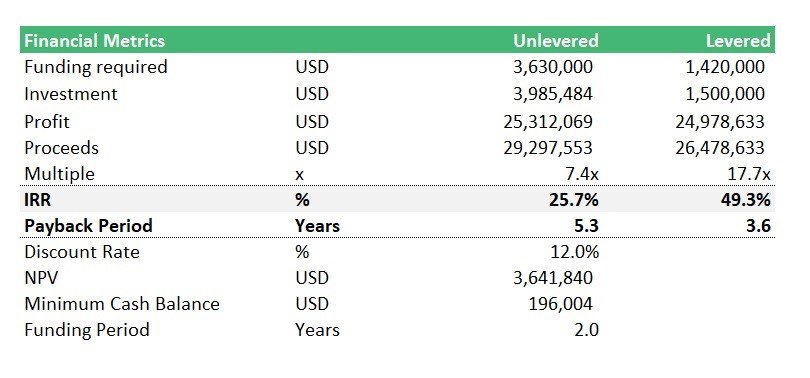
The sensitivity analysis of financial models is a good tool in determining which key drivers affect the IRR the most.

As illustrated in the tornado diagram, the hydrogen price has the most significant impact; hence, in analyzing, the goal of investors is to calculate the required price to reach an acceptable IRR.
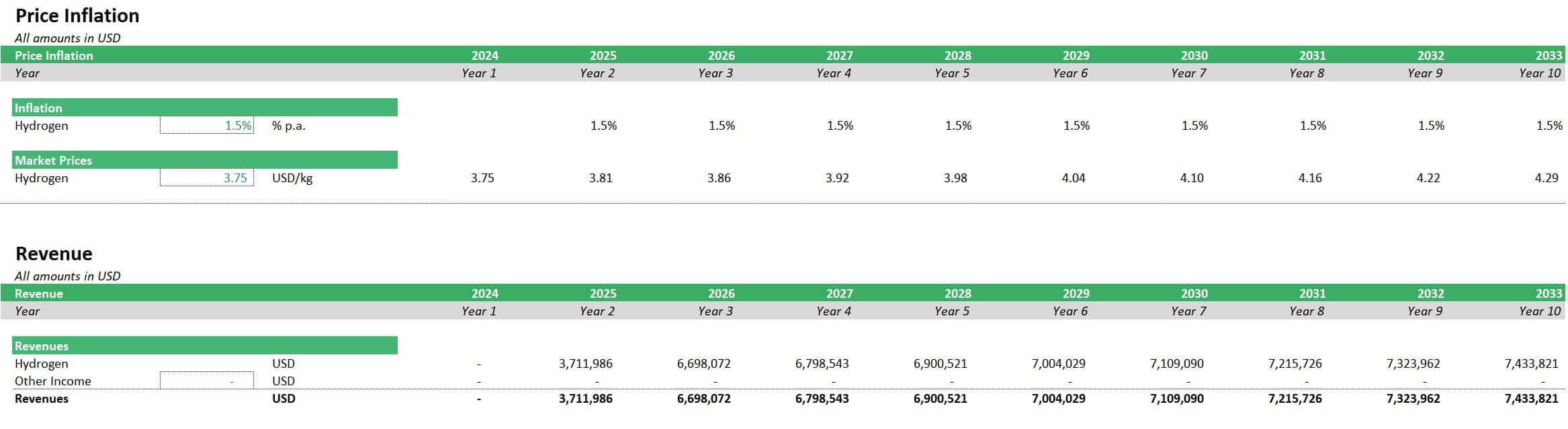
6. Levelized Cost of Hydrogen (LCOH) – LCOH is a variable that measures the cost of producing 1 kg of hydrogen after deducting the expected expenses of the investment required and the cost of operating the assets involved in its production.
Investors can compare which hydrogen project would be the most expensive to launch using the LCOH analysis. They can also determine which costs significantly impact the production of chosen hydrogen color.

7. Investment Opportunities – Due to the processing techniques employed, producing hydrogen is costly. Finding investors or buyers who will participate in an off-take arrangement is crucial throughout the planning stage.
A financial model can be a tool to calculate and summarize the projected IRRs investors and buyers will achieve.

Invest in Hydrogen Financial Models
Hydrogen is envisioned to enhance long-term energy security as it is produced from various energy sources employing a range of processing techniques, including large-scale centralized and small-scale dispersed production. Understanding the current and potential prices of diverse hydrogen production technologies is crucial. The actual costs of manufacturing hydrogen from various pathways would vary from region to region depending on feedstock availability and pricing.
The Hydrogen Financial Model is a tool for analysis that enables transparent understanding and reporting of costs associated with producing hydrogen.
You might also like:
- How to Make a Startup Financial Plan for Fundraising?
- How Does the Full Consolidation Accounting Method Work?
- How to Secure Seed Financing?
- 10 Tips to Develop a First Class Business Valuation Report
- 5 Practical Tips to Help Raise Funds For Startups
- 10 Main Elements of a Business Plan
- How to Build a Capitalization Table
- 10 Awesome Excel Formulas To Use For Your Next Financial Model In Excel
- Developing a 5 Year Financial Projection Template
- Financial Planning for Small Business Owners – Taking an SBA Loan
- Investing
- Hydrogen
- Renewable Energy
- Fundraising Project Plan Template in Excel
- Scenario Analysis
- Financial Projections
- How to Value a Business Using a Discounted Cash Flow Model
- Fuel Cells: How they work in Hydrogen Energy Applications
- How to Forecast the Balance Sheet?
- Steps to Building Financial Models in Excel

