
0 ITEMS

How to Secure Seed Financing?

Seed financing is essential for startups to turn ideas into viable businesses and attract further investment.
- It provides initial capital for product development, market research, and team building.
- Seed funding sources include angel investors, crowdfunding platforms, accelerators, and venture capital firms, each with distinct advantages and drawbacks.
- Effective use of seed money involves creating detailed financial plans, developing prototypes, and building a strong business model.
- Proper documentation, like term sheets and stock purchase agreements, is crucial to protect interests and streamline fundraising.
- Financial modeling helps startups present realistic projections, demonstrate growth potential, and increase investor confidence.
Getting these fundamentals right sets the stage for long-term startup success.
What Is Seed Financing?
Seed financing, at its core, represents the initial funds invested in a startup to support its growth from an idea into a viable business. This critical funding stage is generally sought by early-stage companies that possess innovative concepts but need more financial resources to develop them into market-ready products or services. The funds obtained through seed financing are often used for product development, market research, and initial marketing campaigns, laying the groundwork for future growth and success. The name “seed” aptly describes this stage, providing the initial resources needed to grow the startup into a larger, more sustainable enterprise.
Startup seed investment stands out compared to other startup funding rounds due to its unique characteristics. They usually come in smaller amounts and involve less complex deal structures. Typical seed financing deals can vary widely in size and structure, but they often share several common attributes. For instance, the amounts raised in seed rounds usually range from $500,000 to $2 million, depending on the startup’s needs and the investor‘s appetite for risk.
The terms offered in seed financing are generally more founder-friendly, making it an appealing option for young startups that need flexible yet vital financial support. Seed financing is characterized by its focus on potential; investors are mainly betting on the vision and capability of the founding team rather than concrete financial metrics, which usually need to be developed more at this stage. These agreements often include convertible notes or Simple Agreements for Future Equity (SAFE) arrangements, which defer the valuation question until a more substantial funding round. This form of financing represents a pivotal juncture for startups, as it offers the necessary resources to progress towards more significant and strategic funding rounds, such as Series A and beyond.
Primary Sources of a Startup Seed Investment
When an entrepreneur begins the quest for a startup seed investment, understanding the various sources available is crucial. It is particularly complex because it is often the first round of external funding a startup will acquire. The sources of seed financing can offer different benefits and terms, making it essential for founders to be well-informed about each option. Among the primary sources of a startup seed investment are:
- Angel Investors
- Crowdfunding Platforms
- Startup Accelerators/Incubators
- Venture Capital Firms
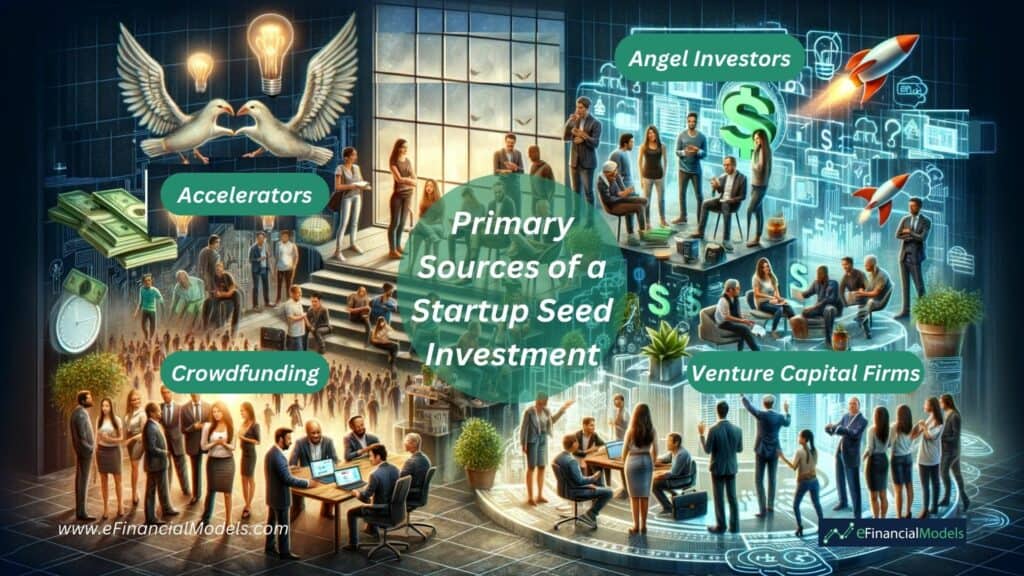
Let’s have an overview of each and tackle their pros and cons:
Angel Investors
Angel investors are affluent individuals offering seed money for startups in return for ownership equity or convertible debt. They are often willing to invest in the very early stages of a startup’s development, focusing not just on the potential for financial returns but also on the passion and vision of the founding team. Angel investors frequently offer more than just capital; they bring mentorship, industry connections, and invaluable business insights, which can be critical for new entrepreneurs. Securing funding from an angel investor usually involves presenting a robust business plan, demonstrating market potential, and showcasing the startup’s unique value proposition.
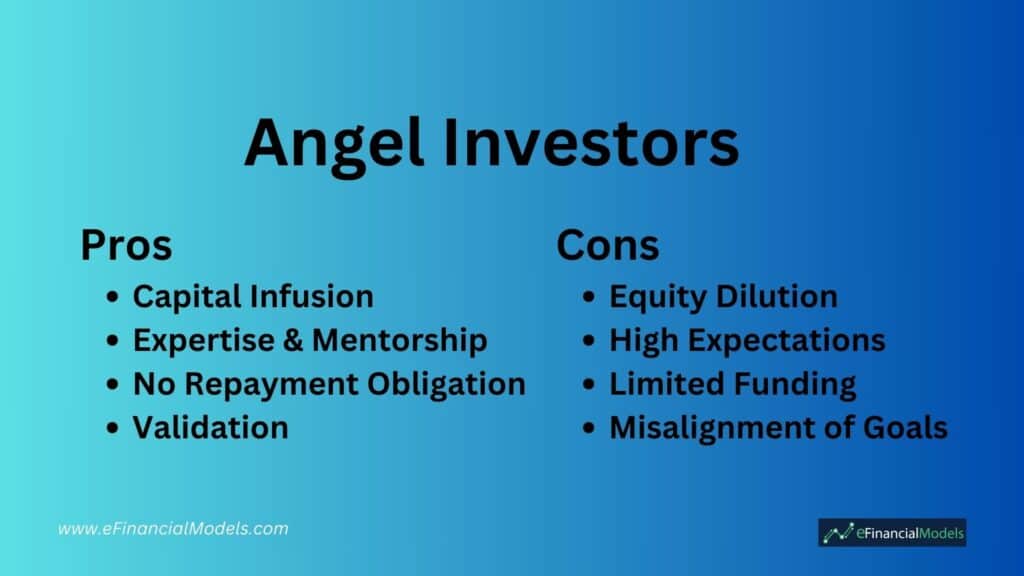
Pros
- Capital Infusion: Angel investors provide essential startup seed investment to help them get off the ground, often at a stage when other sources of funding are not available. They might offer more flexible and favorable terms compared to traditional lenders.
- Expertise and Mentorship: Many angel investors are seasoned entrepreneurs or professionals who can offer valuable insights and advice. They often provide access to a broad network of contacts, including potential customers, partners, and future investors.
- No Repayment Obligation: Unlike bank loans, startup seed investment from angel investors does not need to be repaid. Instead, they take an equity stake in the company. It allows startups to use funds for growth without debt repayment pressure.
- Validation and Credibility: Funding from reputable angel investors can enhance the startup’s credibility and attractiveness to future investors.
Cons
- Equity Dilution: In exchange for their investment, angel investors take a share of the company’s equity, which reduces the founder’s ownership percentage. This can lead to potential conflicts over the company’s direction, especially if the investor wants a say in business decisions.
- High Expectations and Pressure: Angel investors typically expect high returns on their startup seed investment, which can pressure the startup to perform and grow quickly. They may require regular updates and be significantly involved in the company’s operations.
- Limited Funding Capacity: Compared to venture capital firms, angel investors usually provide smaller amounts of capital, which may need to be increased for larger-scale projects or rapid expansion.
- Potential Misalignment of Goals: The investor’s vision for the company may sometimes align with the founder’s vision, leading to possible strategic disagreements. Angel investors often seek a quick exit to realize their returns, which might not align with the startup’s long-term goals.
Crowdfunding Platforms
Crowdfunding has emerged as a modern and inclusive method for startup seed investment. Platforms like Kickstarter, Indiegogo, and Seedrs allow startups to present their ideas directly to the public, raising funds from a large pool of small investors. This method can be particularly effective for consumer-facing products or services that generate excitement and engagement from potential customers. Crowdfunding serves a dual purpose: it provides necessary capital expenditures and acts as a marketing tool, validating the startup’s product or service in the market. However, to be successful, a crowdfunding campaign requires a compelling story, a well-thought-out marketing strategy, and continuous engagement with backers.
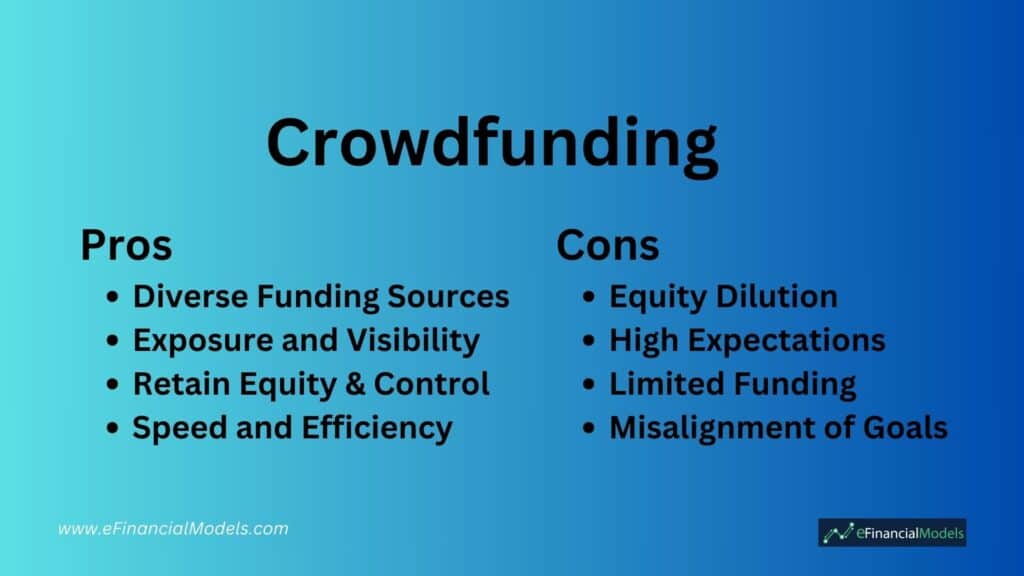
Pros
- Diverse Funding Sources: Crowdfunding platforms allow startups to reach a broad audience beyond traditional investors. Contributions can come from various individuals, reducing reliance on a single investor.
- Exposure and Visibility: Engaging with backers helps build a community of supporters and potential customers. Campaigns can generate media attention and word-of-mouth publicity.
- Retain Equity and Control: Many crowdfunding models, especially reward-based, allow founders to raise funds without giving up equity. Unlike traditional investors, backers typically do not seek control over company decisions.
- Speed and Efficiency: Campaigns can be launched and funded relatively quickly compared to traditional financing methods. The process often incurs lower costs than conventional fundraising (legal fees, intermediary costs).
Cons
- Backer Expectations: Backers in crowdfunding are individuals or entities who financially support a project or venture, typically in exchange for rewards, equity, or early access to the product. Meeting backer expectations regarding timelines and product quality can be demanding. Delivering as promised can protect the startup’s reputation and future funding prospects.
- Public Disclosure: Detailed campaign descriptions can expose the startup’s ideas and business model to competitors. Protecting intellectual property becomes crucial, and some aspects may need to be disclosed.
- Regulatory Issues: Equity crowdfunding involves regulatory requirements for startup seed investment. They can be complex and vary by region. Maintaining transparency and communication with backers requires ongoing effort.
- Uncertain Success: There’s no guarantee a campaign will meet its funding goal, which can result in wasted time and resources. Some platforms operate on an all-or-nothing model, where failing to reach the target means receiving no funds.

















































Startup Accelerators/Incubators
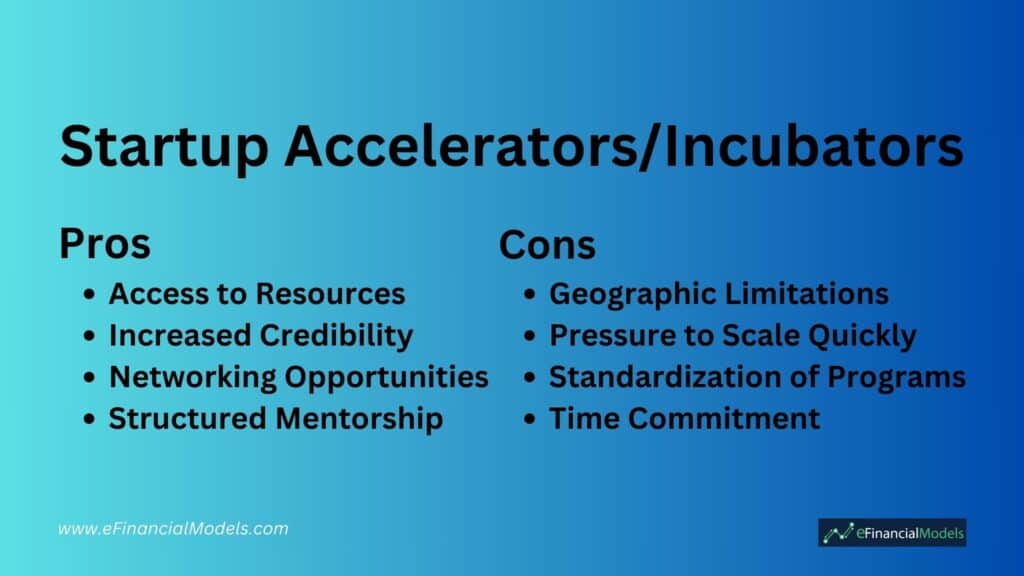
Startup accelerators/incubators are designed to support startup seed investment together with mentorship and educational resources. They offer intensive, time-bound programs culminating in a “Demo Day,” where startups pitch to a room full of potential investors. Most provide extended support, often taking a hands-on approach to help entrepreneurs refine their business models and strategies. Both accelerators and incubators can be invaluable for startups for the initial seed capital they offer and the comprehensive support ecosystem, which can include co-working spaces, legal resources, and networking opportunities.
Pros
- Access to Resources: Startups often gain access to shared office space, legal and accounting services, and other resources that might otherwise be expensive or difficult to obtain.
- Increased Credibility: Being part of a well-known accelerator or incubator can enhance a startup’s credibility and attractiveness to future investors and customers.
- Networking Opportunities: Accelerators and incubators not only help startups get off the ground financially. These programs offer extensive networking opportunities with potential investors, customers, and partners, which can be crucial for business growth.
- Structured Mentorship: Startups receive valuable mentorship from experienced entrepreneurs, investors, and industry experts, which can accelerate their growth and improve their chances of success. They benefit from structured programs that include workshops, seminars, and training sessions on various business aspects, such as marketing, sales, and product development.
Cons
- Geographic Limitations: It’s worth noting that while many programs require startups to be physically present in a specific location, some offer flexibility in this regard. This can be a crucial factor for founders with existing commitments or limited relocation resources, empowering them to make the best decision for their business.
- Pressure to Scale Quickly: Accelerators, in particular, often push startups to scale quickly, leading to premature growth and potential operational challenges.
- Standardization of Programs: Some accelerators and incubators may have standardized programs that might not be tailored to the specific needs and nuances of every startup, limiting the effectiveness of the support provided.
- Time Commitment: Accelerator and incubator programs demand a significant investment of time and effort from founders. This commitment can potentially detract from other crucial business activities, and startups need to be prepared for this.
Venture Capital Firms
Venture capital (VC) firms are another prominent source of startup seed investment. These firms manage pooled funds from various investors and allocate them to high-potential startups. While traditionally associated with later-stage funding rounds, many venture capital firms now have dedicated seed-stage funds. Securing investment from a venture capital firm often requires rigorous due diligence, detailed financial projections, and demonstrating traction or initial market validation. In return, startups benefit from significant capital input, access to a broad network, and strategic guidance. However, venture capital investment typically has stringent terms and expectations regarding governance and potential exit strategies.
Pros
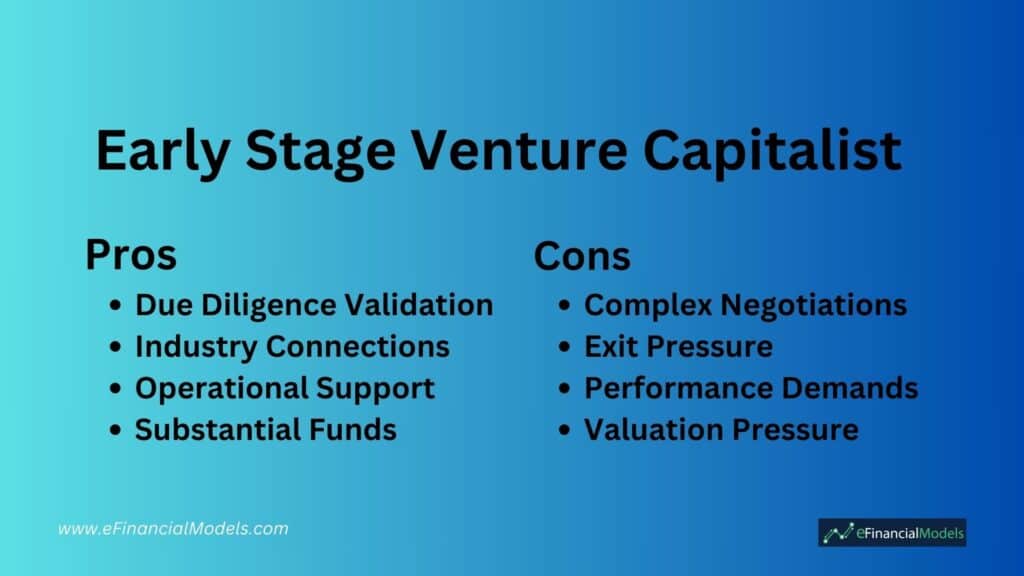
- Due Diligence Validation: Securing VC funding can strongly endorse the startup’s potential, attracting attention from other investors, customers, and talent. VCs typically conduct thorough due diligence, which can help refine the business model and strategy.
- Industry Connections: VCs can offer access to their network of industry contacts, potential partners, customers, and future investors. Furthermore, they often have extensive experience building and scaling startups, providing valuable strategic advice and mentorship.
- Operational Support: Many VCs provide additional resources such as recruitment assistance, marketing support, and access to shared services. VCs often take board seats, providing strategic oversight and governance.
- Substantial Funds: VCs can provide significant capital, enabling startups to accelerate growth, develop products, and scale operations quickly. Securing VC funding early can make it easier to obtain additional funding in future rounds.
Cons
- Complex Negotiations: Negotiating VC deals can be complex and time-consuming, involving detailed term sheets, legal agreements, and due diligence processes. Ensuring alignment of interests between founders and VCs can be challenging, particularly regarding the company’s strategic direction and exit plans.
- Exit Pressure: VCs often seek substantial influence over company decisions, including board representation and veto rights on critical matters. They typically seek an exit within a specific timeframe (e.g., IPO or acquisition), which may not align with the founder’s vision or timeline.
- Performance Demands: VCs have high expectations. They expect startups to achieve high growth and quick returns. This can create significant pressure on the startup to meet aggressive milestones and targets, a factor that startups should consider when planning their growth strategy. The emphasis on growth and scale may sometimes lead to a focus on short-term gains over long-term sustainability.
- Valuation Pressure: Accepting VC funding usually involves giving up a significant equity stake, reducing the founder’s ownership and control.VCs aim for high returns, which can pressure the startup to achieve rapid growth and high valuations.
In conclusion, each primary source of startup seed investment has unique advantages and challenges. Entrepreneurs must carefully consider which source best aligns with their startup’s needs, long-term goals, and the type of support they seek. By understanding these sources, founders can navigate the seed financing landscape more confidently and clearly, setting a solid foundation for future growth.
The Goals of Seed Money for Startups
Seed money for startups plays a critical role by providing financial resources to transform innovative ideas into tangible products or services. By achieving the following objectives, seed money for startups not only validate concepts and gain initial traction but also positions them to attract further investment, ensuring sustainable growth and long-term success.
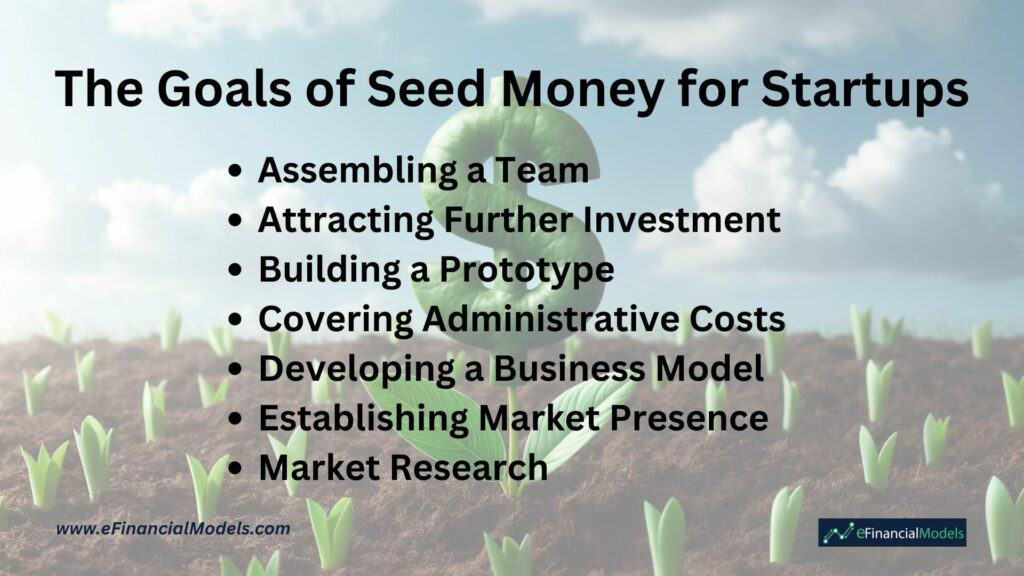
Assembling a Team
Seed money for startups is often used to hire key personnel such as engineers, marketers, and business development professionals to build a skilled and dedicated team to drive the startup’s vision forward. A strong team is crucial for turning an idea into a viable product or service and convincing further investors of the startup’s potential.
Attracting Further Investment
Seed money for startups is a stepping stone to attracting more substantial investment from venture capitalists or other funding sources. By demonstrating progress and potential with the initial seed money, startups can make a stronger case for larger funding rounds. This progress includes achieving milestones, developing prototypes, and gaining market traction.
Building a Prototype
A significant portion of startup seed money is often allocated to developing a working product or service prototype. This prototype is essential for testing the feasibility of the concept, showcasing the idea to potential investors and customers, and refining the product based on feedback. A tangible prototype increases the startup’s credibility and attractiveness to future investors.
Covering Administrative Costs
Startups incur various administrative costs that seed money can help cover. These include legal fees for setting up the business, accounting services, office space, utilities, and other overhead expenses. Managing these costs effectively ensures the startup operates smoothly and focuses on product development and market entry.
Developing a Business Model
Startup seed investment supports the development of a robust business model that outlines how the startup will generate revenue and achieve profitability. It involves market analysis, pricing strategies, sales forecasts, and identifying target customers. A well-defined business model is crucial for guiding the startup’s growth and attracting additional investment.
Establishing Market Presence
With seed money, startups can invest in marketing and branding efforts to establish a market presence. This includes creating a brand identity, launching marketing campaigns, and engaging with potential customers through various channels. Building a market presence early on helps gain customer trust and loyalty, which is vital for long-term success.
Market Research
Thorough market research is essential for understanding the competitive landscape, identifying customer needs, and validating the business idea. Startup seed money can be used to gather data through surveys, focus groups, and industry analysis. Insights from market research guide strategic decisions, product development, and marketing efforts, ensuring the startup meets market demands effectively.
















































Series Seed Financing Documents Checklist
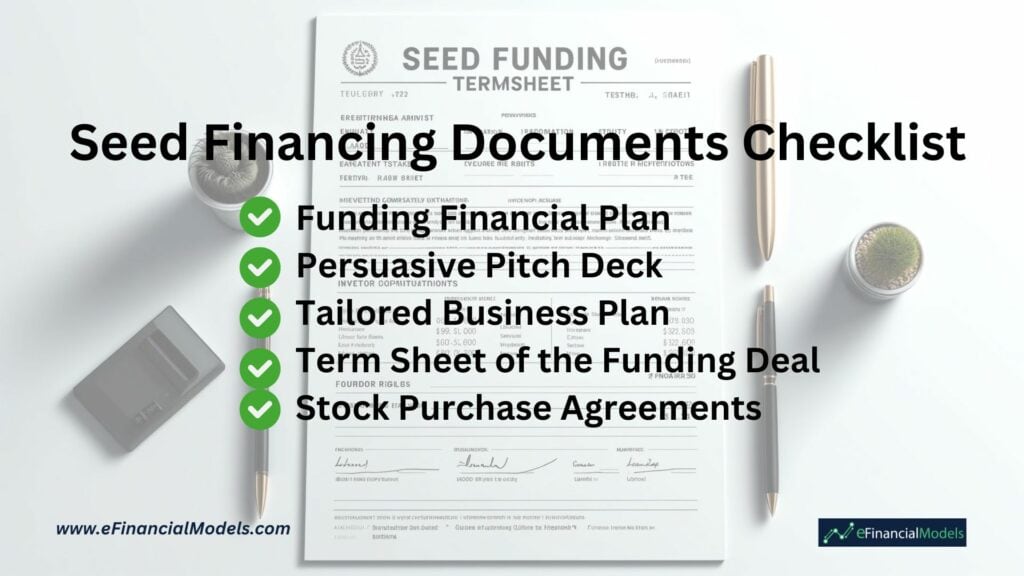
The Series Seed Financing Documents Checklist is essential for startups and early-stage companies aiming to secure capital through seed financing rounds. They offer a detailed summary of the required legal and financial documents required for the process. Utilizing the series seed financing documents checklist ensures that all critical elements are addressed, facilitating a smoother negotiation process and helping to protect both the company and its investors. By adhering to the series seed financing documents checklist, startups can streamline their fundraising efforts, address legal risks and establish a strong foundation for future funding rounds.
Funding Financial Plan
The first of the series seed financing documents is a funding financial plan. It clearly articulates and identifies your funding needs. Creating a funding financial plan involves thoroughly assessing your startup’s economic status and future requirements. Consider your burn rate, which is the speed at which your company is consuming its cash reserves. The plan helps to determine how much capital you need to reach the next critical milestones, such as product development, market entry, or achieving a specific revenue target.
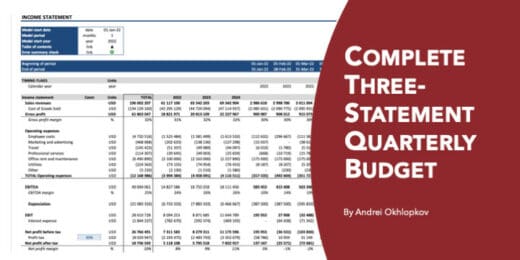
You can use our sophisticated financial model templates to create multi-year forecasts projecting revenue, expenses, and cash flow. These projections will not only give you a clearer picture of your funding needs but will also serve as a foundational element of your pitch to potential investors. The clarity and realism in your financial projections can significantly enhance your credibility and make your startup more attractive to investors.
Persuasive Pitch Deck
Once you clearly understand your funding needs, a persuasive pitch deck is next on the series seed financing documents checklist. A pitch deck is a visual presentation outlining your business plan, including an overview of your company, problem, unique value proposition (UVP), business model, market opportunity, traction, and financial projections. Crafting a compelling pitch deck requires balancing comprehensive information with engaging storytelling. Investors see numerous pitches, so yours must stand out by being clear, concise, and persuasive. Use data-backed claims and concise, impactful visuals that can be easily digested. Your financial projections must be realistic and backed by robust data, further enhanced by oue financial model templates. Remember, the goal is to secure funding, build trust, and convey the potential for significant return on investment.
Tailored Business Plan
After your pitch deck is polished, a tailored business plan is next among the series seed financing documents checklist to help you reach out to potential investors. A well-crafted business plan is crucial for making a persuasive case to potential investors. First, it should start with an engaging executive summary that succinctly captures the essence of the business. This summary should highlight the core problem your startup aims to solve, the target market, and your unique value proposition. Think of it as a mini-pitch designed to grab the attention of someone who may only read part of the document. Next, emphasize the business model, revenue streams, and market analysis. This section must detail how the business intends to generate income and sustain growth. Furthermore, a comprehensive market analysis is a key component that can underline the viability and scalability of your idea. Use data and statistics to back up any claims you make about market size and potential growth. In addition, it’s crucial to outline a clear marketing and sales strategy. This demonstrates your understanding of the market and your plan for reaching and converting customers, which is essential for potential investors to see the potential for customer acquisition.
Term Sheet of the Funding Deal
The term sheet of the funding deal is the fourth item in the series seed document checklist. It supports negotiating the deal terms with potential investors. Creating a term sheet requires understanding seed financing deals’ standard terms and conditions. Some of the critical items to negotiate are:
- The amount of equity you are willing to give up.
- Valuation of the company
- Any rights of the investor, such as board seats or veto power.
To navigate this process, it’s wise to consult a financial advisor or lawyer specializing in startup financing. Overseeing the legal and economic implications of the deal ensures that it aligns with your long-term business goals and protects your interests. Also, consider using our financial models to simulate different financing scenarios and understand their impact on your company’s future financial health.
Stock Purchase Agreements (SPAs)
Stock Purchase Agreements (SPAs) are crucial series seed financing documents. They clearly outline the terms and conditions under which the investor purchases shares, including the number of shares, price per share, and total investment amount. They also define the rights and obligations of both the company and the investor, including voting rights, information rights, and any special rights the investor might have. SPAs provide legal protection for both parties. The agreement also includes warranties and representations from the company and the investor, ensuring that all information disclosed is accurate and that both parties act in good faith. They ensure that the investor gets what they pay for and that the company receives the agreed-upon funding. Overall, a well-drafted Stock Purchase Agreement helps prevent misunderstandings and disputes, provides a clear framework for the investment, and protects the interests of both the startup and the investors.
Financial Modeling: Your Key to Seed Financing Success
Financial projections are the bedrock of a seed financing round. They offer a quantifiable way to communicate your startup’s potential for profitability and growth. II includes detailed revenue forecasts, cost structures, and cash flow statements that span a minimum of three to five years. It’s crucial to present these numbers in a way that is easy to understand yet comprehensive enough to give investors confidence in your financial acumen. Additionally, it incorporates different financial scenarios to account for various risks and opportunities.
Financial modeling is crucial for startups seeking seed financing because it provides a comprehensive and realistic projection of future economic performance. This tool helps entrepreneurs illustrate their business’s viability and potential profitability to investors, demonstrating how initial investments will be utilized and the expected returns. A well-constructed financial model highlights critical metrics such as revenue growth, cost structures, and cash flow, offering investors a clear picture of the startup’s financial health and strategic plans. Effective financial modeling builds credibility, instills investor confidence, and significantly enhances the chances of securing seed funding.
Related Readings:
- How Do Startup Funding Rounds Work?
- How to Raise Series A Funding
- Strategic Insights to Secure Series B Financing
- Steps to Securing Series C Financing


















You might also like:
- 12 Funding Sources for Businesses and Startups
- Bootstrapping vs. Venture Capital Funding: Which is Better?
- 10 Main Elements of a Business Plan
- How to Raise Series A Funding?
- 10 Tips to Develop a First Class Business Valuation Report
- How to Make a Startup Financial Plan for Fundraising?
- 5 Steps to Creating a Drop Down List Using Data Validation in Excel
- 5 Practical Tips to Help Raise Funds For Startups
- Startup Model Templates in Excel that can help your Business Grow
- Financial Modeling for Startups and Small Businesses
- How to Secure Seed Financing?
- Financial Modeling for a Gold Mining Investment
- Understanding the Levelized Cost of Energy Formula
- How Contribution Margin Analysis Can Drive Your Business to Financial Success
- Free Online Budget Planner Excel Template for Goods Company
- Creating a Business Plan for your Food Truck Business
- Blogging for Business: Building Your Brand Through Content
- Commercial Real Estate Valuation Methods: Helping Investors in Taking Informed Decisions
- Online WACC Calculator
- Simple Budget Planner Template
Tags: funding sources