
0 ITEMS

How to Start a Distillery Business: What You Need to Know?
Table of Content
- A Brief Overview of the Distillery Market
- Distilled Liquor List
- The Basic Distillation Setup
- The Key Challenges When Starting a Distillery Business
- How Much Does It Cost to Start a Distillery?
- Studying the Feasibility with a Distillery Financial Plan Template
- Raise Your Spirits with a Thorough Analysis of Your Distillery Project

There’s something special about the process to start a distillery that draws people in. It combines art and science, where the right blend of ingredients and the perfect temperature can create a genuinely one-of-a-kind spirit. And it’s not just about the drink itself – it’s about the people who enjoy it. Spirits bring people together; there’s nothing quite like sharing a good drink with friends and family.
Starting a distillery business is an alluring venture – a blend of artistry in crafting spirits and the science of entrepreneurship. Embarking on such a journey can be financially rewarding and creatively fulfilling. However, like any capital-intensive business, success in the distillery industry requires a deep understanding of the spirits market, comprehensive financial planning, and a smart approach to navigating localized regulations and taxes.
- The global craft spirits market is growing rapidly, reaching over $29 billion in 2023 with a 28.7% CAGR.
- Key costs include equipment, facility, raw materials, permits, licenses, and staffing, totaling around $310,000 to $590,000 for a small operation.
- Compliance with strict federal, state, and local regulations requires careful planning and legal expertise.
- Building a strong brand and distributor relationships is crucial to overcoming market competition and limited distribution channels.
- Financial planning with detailed budgets, cash flow forecasts, and sensitivity analysis helps assess viability and attract funding.
In this comprehensive guide, we will unveil the smart way how to start a distillery, providing you with the essential knowledge and strategic insights to embark on this spirited adventure with confidence and foresight. Whether you’re a passionate homebrewer looking to scale up or an aspiring entrepreneur with a thirst for innovation, the path to distillery success starts here.
A Brief Overview of the Distillery Market
The history of liquor is a long and fascinating journey that spans thousands of years. It has played a significant role in societies’ social, cultural, and economic development worldwide. Chemical examination of jars from Northern China found the presence of mead, a 10 percent alcohol beverage manufactured from honey, as early as 7000 BC. Distillation of higher-proof spirits emerged during the Islamic Golden Age (8th-13th century). Arab alchemists developed the process for medicinal purposes. It spread in the monasteries of Europe during the Middle Ages. Distillation allowed them to create alcoholic beverages such as brandy and liqueurs for consumption and trade with neighboring communities.
During the industrial revolution, the world consumed more alcohol than water. As a more hygienic and medicinal alternative to water, it even became a monetary substitute for trading. That was the time when sewers infiltrated drinking water sources. Whiskey became popular in Ireland and Scotland. Gin originated as a medicinal tonic in the Netherlands during the 17th century. The American Revolution increased demand for domestically produced spirits, including whiskey. Bourbon, a uniquely American whiskey, emerged in Kentucky in the late 18th century.
But from 1920 to 1933, the production, sale, and transportation of alcoholic beverages were banned. In recent decades, interest in craft spirits and locally produced liquors has been resurgent. The global liquor industry has also expanded with the popularity of international brands. Today, at a compound annual growth rate (CAGR) of 28.7%, the worldwide craft spirits market expanded from $22.76 billion in 2022 to $29.29 billion in 2023. The leading whisky exporters were the United Kingdom ($6.46B), the United States ($1.08B), Ireland ($839M), Japan ($442M), and Singapore ($362M).
When it comes to the top 20 countries with the highest per capita consumption of alcohol in the world in 2019, several European countries lead in comparison (Source: Yahoo Finance).
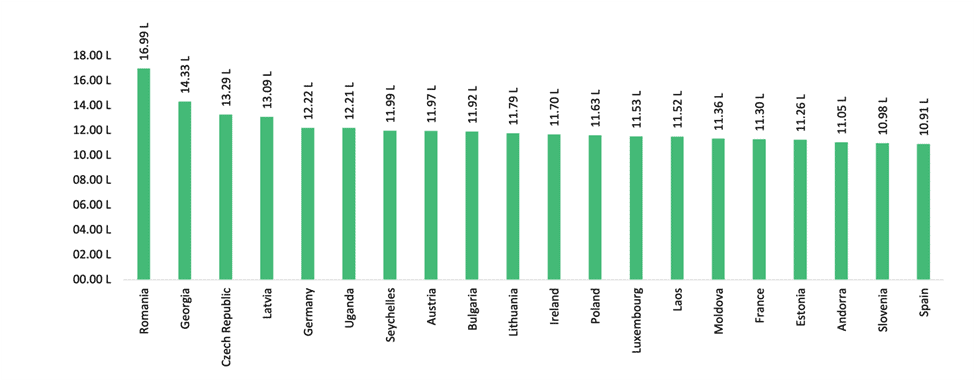
Source: World Capital Consumption per Capita in 2019, Yahoo Finance
As you can see, Europe is the region with the highest alcohol consumption in the world. Cultural, historical, economic, and policy-related factors can be attributed to it. Many European cultures have a long history of alcohol consumption as part of their social and culinary traditions. In many European countries, the legal drinking age is lower than in other parts of the world. Furthermore, drinking alcohol is socially acceptable and often encouraged as part of social interactions in the region.













































Distilled Liquor List
Liquor, also known as spirits or distilled spirits, is an alcoholic beverage made out of distillation. Distillation involves heating a liquid to create vapor and cooling it to condense into liquid form. This process separates alcohol from other components in the original liquid, resulting in a more concentrated alcoholic beverage. So, liquors are regarded as “harder” drinks under the distilled liquor list because they have a higher alcohol content (ethanol) than other alcoholic beverages.
Here’s a breakdown of the most common distilled liquor list, each with unique characteristics, ingredients, and distillation processes.:
| Liquor | Ingredients | Distillation Process |
| Whiskey: A spirit with a distinct flavor. Some popular varieties are Bourbon, Scotch, and Rye. | Whiskey is typically made from barley, corn, rye, or wheat. These grains are mashed and fermented with yeast and water. | The fermented grain mash is distilled in copper or stainless steel stills to concentrate the alcohol. The distillate is then aged in wooden barrels, usually oak, to develop its flavor and color. The aging process can take several years. |
| Vodka: Known for its neutral taste and high alcohol content. | Vodka is usually made from grains, potatoes, or even grapes. The base ingredient is fermented and distilled. | Vodka is distilled multiple times to achieve high purity and a neutral flavor profile. It is typically refined in column stills or pot stills. After distillation, it’s often filtered through charcoal to remove impurities further. |
| Tequila: A spirit with an earthy and often agave-forward taste. It is produced from the fermented juice of the blue agave plant. Some popular types are Añejo, Blanco, and Reposado. | Tequila is made from the blue agave plant. The heart of the agave plant called the “piña,” is harvested, roasted, and mashed to extract its juices. | The extracted juice is fermented and distilled in copper postils or column stills. Tequila can be classified into different types based on aging, such as Blanco (unaged), reposado (aged in oak for 2-12 months), and añejo (aged for at least one year). |
| Rum: Known for its sweet and often tropical flavors. Types of rum include dark, light, and spiced. | Rum is typically made from sugarcane juice, molasses, or both. The fermented sugarcane byproducts are the primary ingredients. | Depending on the desired style, rum is distilled in pot stills or column stills. After distillation, it can be aged in wooden barrels for varying periods to develop its flavor profile. |
| Mead Liquor: It is commonly known as honey wine and can vary in sweetness, flavor, and strength, similar to wine, and may also incorporate various fruits, spices, or herbs for added complexity. | Mead liquor is primarily made from honey, water, and yeast. Additional flavorings and spices can be added for variation. | Mead liquor can be distilled in traditional alembic stills. The distillation concentrates the alcohol from the fermented honey mixture, producing a more potent alcoholic beverage. |
| Liqeuers: These are sweetened spirits often flavored with various herbs, fruits, spices, or other ingredients. Examples include Grand Marnier, Baileys Irish Cream, and Amaretto. | Liqueurs are sweetened and flavored spirits made from a wide range of base spirits, including whiskey, rum, brandy, or vodka. They often contain added sugars, fruits, herbs, or spices for flavor. | The base spirit is typically distilled through standard distillation methods and then infused with various flavorings and sweeteners. Liqueurs can vary widely in terms of ingredients and production methods. |
| Gin: It is known for its juniper berry flavor and is a key ingredient in cocktails like the gin and tonic. | Gin is made from a neutral spirit base (usually from grains) and flavored with botanicals, primarily juniper berries, herbs, spices, and citrus peels. | The neutral spirit is distilled with the botanicals, typically in a pot still or column still. The choice and combination of botanicals are crucial in defining the gin’s flavor profile. |
| Brandy: It is often aged in wooden barrels and can vary in flavor and sweetness. | Brandy is distilled from fermented fruit juice or wine, with grapes being the most common source. Other fruits, like apples or pears, can also be used. | The fruit juice or wine is distilled in pot stills or column stills to create a unique, fruity spirit. Brandy can be aged in wooden barrels to enhance its flavor and complexity. |
The Basic Distillation Setup
The first thing you need to understand on how to start a distillery is the basic distillation setup. Agricultural raw resources like grapes, other fruits, sugar cane, molasses, potatoes, grains, etc., make distilled spirits. They typically undergo fermentation and distillation to become a spirit. All alcohol is produced during fermentation and separated and extracted during distillation. Here’s a step-by-step explanation of the basic distillation setup.
Step 1 – Purification
The process begins with water and grains or other raw materials. Water is purified to remove impurities, and grains are ground to create a mash. Water is a crucial ingredient in the distillery process because it serves as a solvent and is required for various stages of production. High-quality water is essential to ensure the purity of the final product.
Step 2 – Mashing
The process starts by selecting corn, barley, rye, or wheat grains. These grains are mixed with water in a cooker, creating a mash or grain/water slurry. Heat is applied to the cooker to bring the mixture to a specific temperature for a designated period. The heat activates enzymes that convert starches into fermentable sugars, creating a sugary liquid called wort.
Step 3 – Fermenting
The wort is transferred to fermentation vessels, typically wooden or stainless steel tanks, and yeast is added. Yeast consumes the sugars in the wort, producing alcohol and carbon dioxide. This fermentation process can take several days and results in a liquid called “wash” or “mash” with a relatively low alcohol content.
Step 4 – Distilling
Distillation separates alcohol from water and other impurities, concentrating the alcohol content. It means adding and removing heat from the combination to divide a liquid of two or more components into smaller parts of the required purity. The wash or mash is heated in a still, vaporized, and then condensed into liquid form. This step is often repeated multiple times for higher alcohol content and purity. Other substances with lower boiling points will be isolated from the vapors/liquids during distillation.
The resulting distilled spirit, known as “new make spirit” or “white dog,” is typically clear and high in alcohol content. Depending on the type of spirit produced, it may undergo additional processes such as aging in wooden barrels, blending, and flavoring before it is bottled and sold as a finished product.
Step 5 – Aging, Blending, and Flavoring
The choice of aging, blending, and flavoring depends on the type of spirit and the distillery’s desired characteristics for the end product. The specific techniques and ingredients used in this step depend on the kind of spirit being produced and the producer’s desired final product. Aging, blending, and flavoring are crucial aspects of spirit production that can significantly influence the taste and character of the end product.
- Aging: Many may undergo aging to enhance their taste and aroma. These include whiskey, brandy, tequila, cognac, bourbon, etc. The liquid is aged in wooden barrels. During this period, the spirit interacts with the wood, which imparts flavors, colors, and complexity to the final product. The aging process can take several years; the spirit mellows over time.
- Blending: Blending can be a highly skilled and nuanced process. Its goal is to create a consistent and well-balanced product that meets the desired taste and quality standards. Some spirits, like scotch, rum, gin, etc., involve the art of blending different aged batches to achieve a consistent flavor profile. Master blenders combine various whiskey barrels to create a balanced and distinct product.
- Flavoring: For flavored spirits like flavored vodka or liqueurs, flavoring agents (such as fruits, spices, or herbs) are added to the base spirit to infuse it with specific flavors. This step is essential for achieving the desired taste and aroma of the final product.
Step 6 – Bottling
During this step, the finished spirits are transferred into containers, which can be made of glass, ceramic, or other suitable materials. These containers are then sealed using various closure styles, including corks, screw caps, or seals. Additionally, labels containing important product information, branding, and legal requirements are affixed to the bottles. This final step prepares the spirits for distribution and sale to consumers.
Spirits are typically put straight to market after bottling because they generally do not get better with bottle age. Once a bottle is opened, the liquid’s shelf life is substantially longer than beer or wine due to the comparatively high ABV in spirits. The high ABV serves as a natural preservative. As such, the distilled spirit can be enjoyed for a considerable amount of time, or at least as long as you can make them endure.

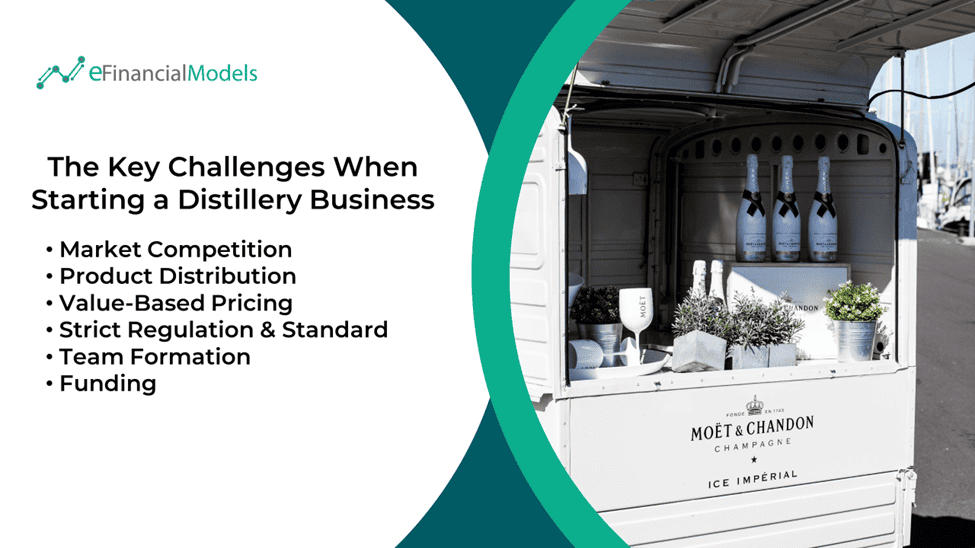
The Key Challenges When Starting a Distillery Business
Starting a distillery business can be rewarding, but it comes with several challenges that entrepreneurs must overcome. Below, please find a list of the key challenges when starting a Distillery Business:
Market Competition
A new distillery faces several challenges when marketing its products, particularly in the context of the alcoholic beverage industry. Well-established and recognized brands dominated the spirits industry, having been around for many years. These brands have built a loyal customer base, which can be challenging for newcomers to penetrate. Consumers often trust and prefer the familiar, making it difficult for new distilleries to gain traction. Marketing is crucial for any new distillery, but it can be an expensive endeavor. Promoting alcoholic beverages often involves various marketing channels, including advertising, events, branding, and more. A new distillery must find a way to market its products while effectively keeping costs in check. It is essential to maintain profitability and avoid financial troubles early on.
Convincing end consumers to try a new and unfamiliar brand in a competitive market can be a significant challenge. Consumer preferences in the spirits industry can change rapidly. New trends and tastes emerge, and it can be challenging for a startup distillery to adapt quickly and meet evolving demands. So, there’s a need to create a strong brand presence to attract individual consumers. It means developing a compelling brand identity, packaging, and marketing campaigns that appeal to the target audience. With limited marketing budgets, a new distillery must determine how to spend its marketing dollars effectively. It means identifying the most relevant marketing channels and strategies for reaching their target audience.
Product Distribution
Established brands have worked hard to control access and distributors. Your company’s success will depend on how you handle this. Building relationships with distributors, wholesalers, and retailers is essential, but finding the right partners willing to carry your products takes time and effort. Different states and countries have their own distribution laws, and these laws can limit how and where a distillery can sell its products. For example, some states have strict control over the sale of alcohol and may require distilleries to use specific distributors or adhere to certain pricing structures.
Value-Based Pricing Approach
Price competition can also be intense for a new distillery. Established brands can often afford lower prices due to economies of scale, while new distilleries may need more money to compete on price. Distillery startups are capital-intensive businesses. They typically involve significant upfront equipment, permits, licensing, and ingredient costs. If you price your products too high to reflect their value, it may deter potential customers who are price-sensitive or unfamiliar with your brand. Besides, competing on value alone can be difficult when consumers have multiple choices at various price points.
A value-based pricing approach relies on customers associating a higher value with your brand, which may not exist initially. Before using the value-based pricing approach, you must build a strong brand image to command premium prices. It includes marketing and promotional efforts, which can be expensive and take time to yield results. At first, you will need to create a pricing strategy that can effectively serve multiple channels – direct sales, retailers, and distributors – while maintaining consistency and profitability is crucial for the long-term success of your business. Establish different pricing tiers for each channel, considering the varying costs and margins associated with each.
Maintain consistent pricing across all channels. It’s essential to avoid situations where one channel can undercut the others. This consistency builds trust among your partners and ensures they are motivated to sell your product. Implement a MAP policy to prevent resellers from discounting your product too heavily, which can undermine other channels. This policy sets a minimum price at which your product can be advertised or sold, protecting your brand’s image and maintaining price consistency.
Strict Regulation & Standard
The alcohol industry is heavily regulated, with various federal, state, and local laws governing the production, distribution, and sale of alcoholic beverages. Navigating these regulations can be complex and time-consuming, requiring a deep understanding of the legal landscape and often legal counsel to ensure compliance. The production and labeling of alcoholic beverages are subject to rigorous quality and safety standards. Complying with these standards is legally required and essential for consumer trust. Quality control, record-keeping, and consistent adherence to production standards are necessary to avoid issues with regulatory bodies and maintain the distillery’s reputation.
You must also abide by rules set forth by the federal, state, and city governments, albeit only some of them make sense and, most of the time, must be clarified. Failure to comply with regulations can result in fines, legal issues, or even the shutdown of the distillery. Keeping up with changing laws and regulations, especially concerning labeling, safety, and environmental standards, is also an ongoing challenge for distillery owners.
Team Formation
The distillery business requires a team with a unique and specialized skill set. Team members need knowledge of distillation, fermentation, chemistry, and quality control. Finding individuals with these skills can be challenging, as searching within a niche industry may require searching. While the core of a distillery business is producing quality spirits, it also involves marketing, sales, distribution, and financial management. Staffing individuals with a balance of distillation expertise and business acumen can be challenging. Retaining talents can also be an issue. The distillery business often requires high passion, commitment, and dedication. Finding people who share this enthusiasm and are willing to work hard in an industry that may face setbacks and challenges is not always easy.
Funding
Distillery is a capital-intensive business or project to finance, primarily due to the cost of equipment, facilities, and inventory needed for ingredients during the aging and distribution processes. Many distilleries operate at a loss for several years before becoming profitable. Most distillers start realizing profits after ten years. That is why securing financing for a distillery can be challenging, and you might have to prepare for several fundraising exercises over the years. Traditional lenders such as banks might be hesitant to invest in a business with an extended return on investment timeline. Because initial profit margins for a distillery business are slim and profits will have to be re-invested right away to grow the business, there is quite some risk involved. Therefore, without solid collateral and guarantees, banks can easily be hesitant to lend to craft distillers. So, distillery entrepreneurs often rely on equity investments, personal savings, or alternative financing methods like angel investors or crowdfunding to get their businesses off the ground.













































How Much Does It Cost to Start a Distillery?
As mentioned, comprehensive financial planning is needed to start a distillery because it is a capital-intensive business. The main costs are equipment, facility, raw materials, permits & licenses, insurance, staffing, website development, and marketing & sales.
Equipment
One of the significant expenditures you’ll need when starting a distillery will be the distilling equipment. A mill, cooker/mash tun, fermenters, still, receiving tank, mash pump, transfer hoses, bottle filler, labeler, and corker are some of the fundamental equipment you could need to establish a distillery. A still can cost between $3,000 and $12,000, a cooker about $11,000, and a fermenter about $6,500. If you want a unique bottle as a new distiller, the price of a bottle mold might range from $20,000 to $70,000. The size, quality, and source of your equipment will all significantly impact these prices. It’s safe to assume that your distillery’s beginning equipment costs will total roughly $150,000 on average.
Facility
An essential factor in a distillery’s success is finding and improving a location. When selecting the site, you must consider several things, but zoning and distilling equipment should be your top priorities. If you plan to custom-build or lease a site, consider your preferred layout, square footage, equipment size, and anticipated foot traffic. Your distillery will require a tasting area if you intend to provide drinks and samples of your products. Anticipate paying between $10 and $30 per square foot per month. Therefore, if you want to build a distillery with 500 square feet, your annual rental may range from $60,000 to $180,000. An expert contractor will be required to estimate the construction cost. The power and water sources need considerable attention since the distillery production requires excessive electricity and water.
Raw Materials
A typical batch of spirits is around 200 liters. In a cost-accounting exercise, a distillery consultant estimates that raw ingredient costs will be roughly $900 for a batch of rum. So, using that as a baseline, estimate approximately $1000 per batch of natural ingredients for your spirits. So, if you plan to produce 10,000 liters of spirits initially, your raw materials will cost around $50,000. Remember that this will be a recurring cost as you operate the business.
Permits & Licenses
The Alcohol and Tobacco Tax and Trade Bureau (TTB) requires distilled spirit plant permits to manufacture alcoholic drinks in the United States. It will also request a certificate of label approval if you’re seeking to create a new product and it’s sufficiently unique. After this federal license, you must get a state license, where the qualifications vary per location and zoning regulations. You should also register your distillery as a food facility with the US Food and Drug Administration (FDA). The local authorities (water, fire marshals, inspectors, etc.) should also be considered. The permits and licenses cost upon starting a distillery will be around $10,000 to $50,000.
Insurance
Distilleries in the United States are typically required to have general liability and workers’ compensation insurance as a business entity. In addition, it may need to secure equipment, commercial property, commercial auto, and liquor liability insurance. A small distillery may spend around $5,000 to $10,000 on annual insurance premiums.
Staffing
The number of people you need to start a small distillery can vary depending on the size and scope of your operation and your level of expertise in distilling. Here are some key roles you may need to consider:
- Head Distiller: This is the person responsible for the actual distillation process. They should have knowledge and experience in distilling spirits.
- Assistant Distillers: Depending on the size of your distillery, you may need around 2 to 5 assistants to help with the distillation process.
- Operations Manager: Oversees day-to-day operations, including scheduling, inventory management, and compliance with regulations.
- Marketing and Sales: Individuals responsible for marketing your products and managing sales, which is crucial for the success of your distillery.
- Accountant/Bookkeeper: To handle financial matters, including taxes, budgeting, and keeping track of expenses.
- Quality Control/Quality Assurance: Ensuring the quality and safety of your products.
- Production Staff: People to help with the bottling, labeling, and packaging of your spirits.
- Administrative Staff: Depending on the administrative workload, you might need someone to handle paperwork, permits, and other administrative tasks.
Keep in mind that in the beginning, you might take on multiple roles yourself to save costs. The specific number of people you need will depend on the scale of your distillery and the legal requirements in your area. A rough estimate for staffing and training costs is around $30,000 to $120,000.
Marketing & Sales
Allocating a marketing and sales budget when starting a distillery is essential to build brand value. The distilled spirits market is highly competitive, and marketing allows you to create recognition among consumers. Promotional events, tastings, trade shows, and other activities will enable you to showcase your products. Effective marketing and sales efforts help you differentiate your products from the competition. You can highlight what makes your spirits unique and attract and retain customers. It would help if you had a distribution network to get your spirits into the hands of consumers. It might involve partnerships with liquor stores, restaurants, bars, and other retailers. In today’s digital age, an online presence is vital. It includes website development, social media marketing, and e-commerce capabilities. You may need to allot $5,000 to $30,000 for your annual marketing budget.
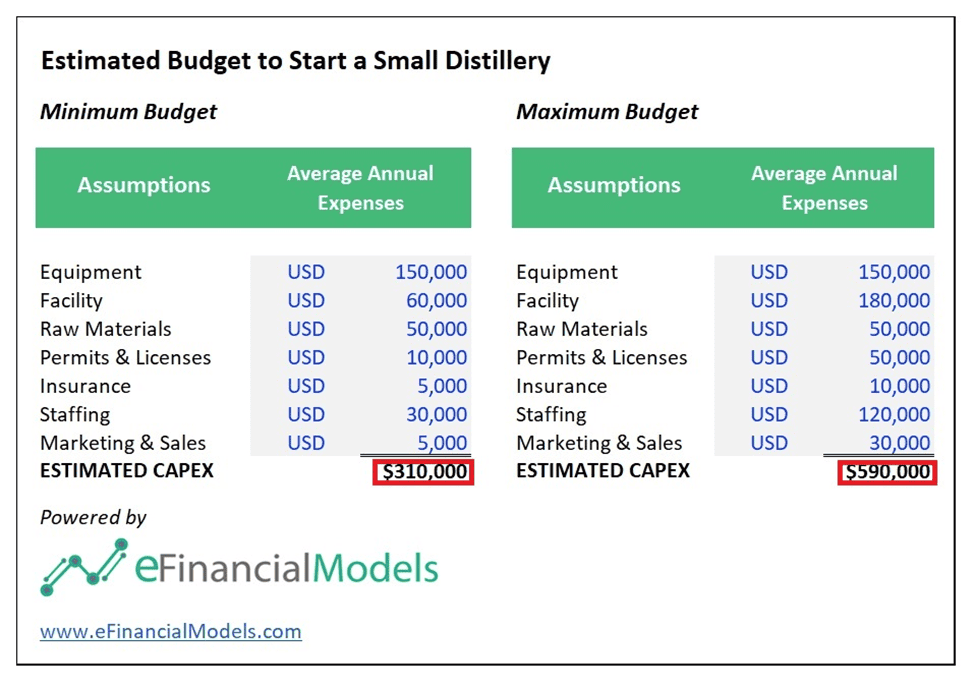
As you can see in the above spreadsheet, our estimate shows that the cost to start a small distillery business is around $310,000 to $590,000.
Disclaimer: The following budget estimate is provided for informational purposes only and is intended to serve as a general guideline for small distilleries. It is crucial to recognize that every distillery is unique, and a wide range of factors can influence the actual budget required. As such, this estimate should not be considered an exhaustive or precise representation of the costs involved in establishing and operating a distillery. It is imperative to conduct thorough research, consult with experts in the distillery industry, and develop a detailed business plan to create a more accurate budget tailored to your specific circumstances.
Studying the Feasibility with a Distillery Financial Plan Template
A Distillery Financial Plan Template can help entrepreneurs and investors navigate the complex financial strategy for a small distillery business that creates various spirits or alcoholic beverages and sells them to numerous marketplaces, including domestic and international ones. It also envisions giving tours to interested tourists, which might serve as an extra revenue stream.
Starting a distillery can be an exciting venture, but it requires careful planning and consideration of various factors to ensure its success. First, you must determine how much capital you’ll need to start and operate your distillery through a budget and multi-year plan. It is to ensure you have the necessary funds.
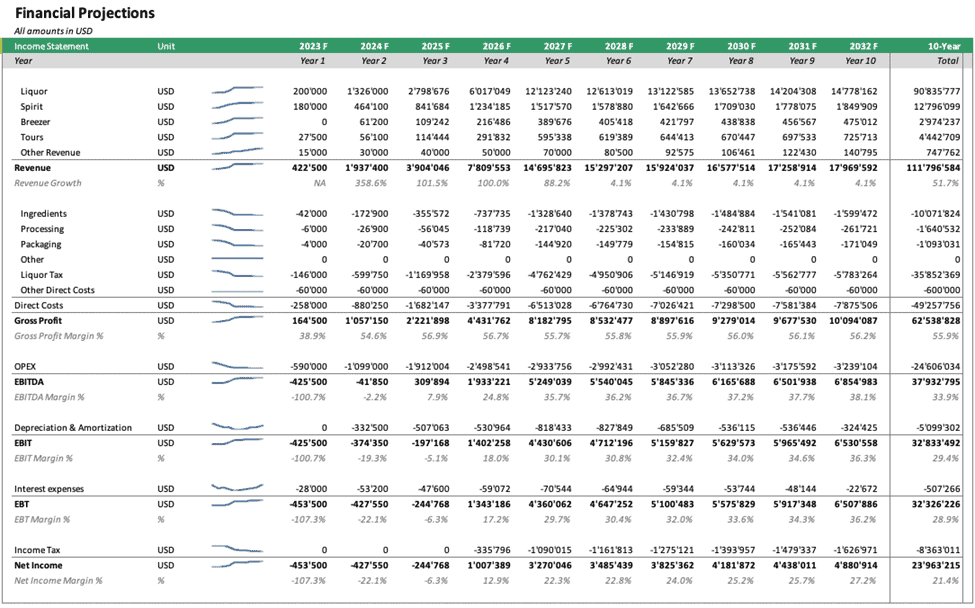
Second, you must assess the profitability of the distillery by conducting market research and identifying the type of spirits you’ll produce where you can set competitive pricing. Consider the size of your target market and assess whether it can support your distillery’s products. Determine the cost of production, distribution, and desired profit margins. Your pricing strategy should enable profitability while remaining competitive in the market.
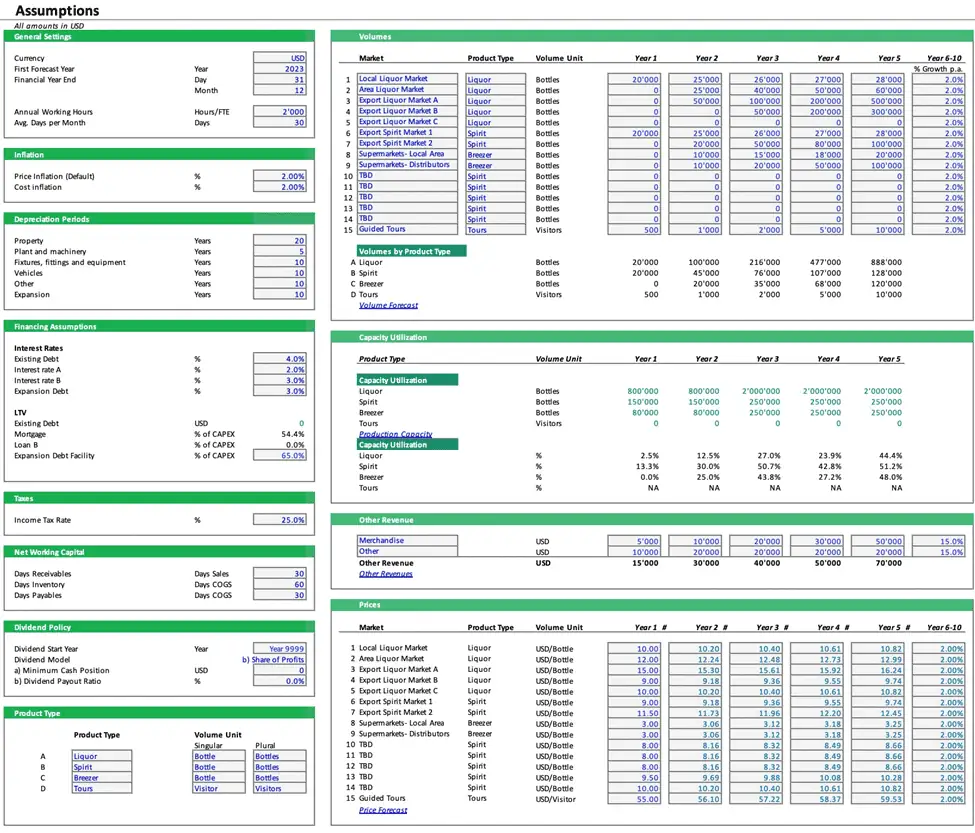
Capacity is also another factor you should focus on when starting a distillery. You need to ensure that the capacity of your distillery aligns with your business plan and market demand. Accurately project the demand for your products. Seasonal variations and trends can impact your production schedule and cash flow.
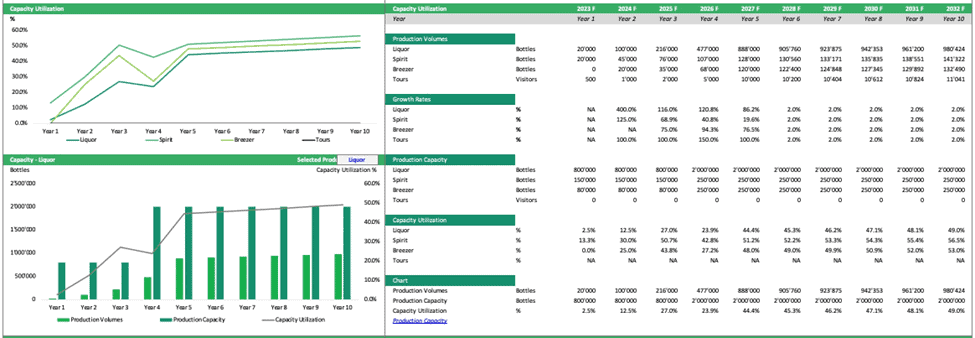
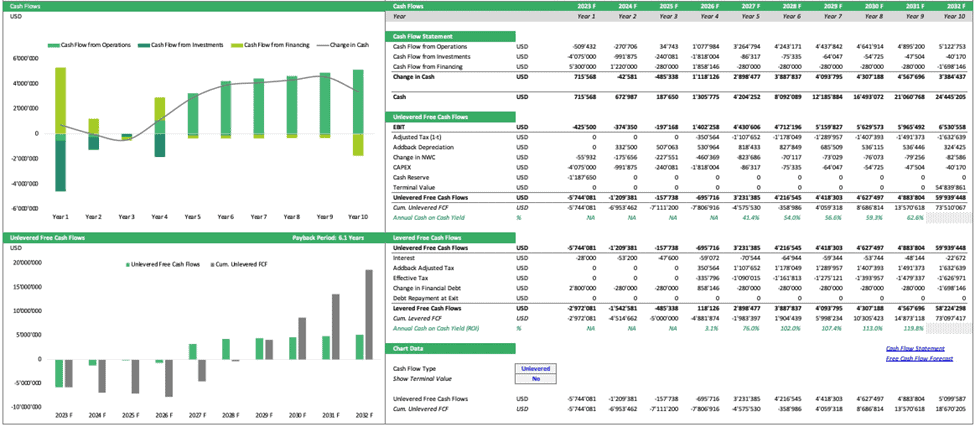
Distilleries often require substantial upfront investments, and it’s vital to have sufficient working capital to cover ongoing expenses. So, before your distillery operates, you must forecast cash flow carefully.
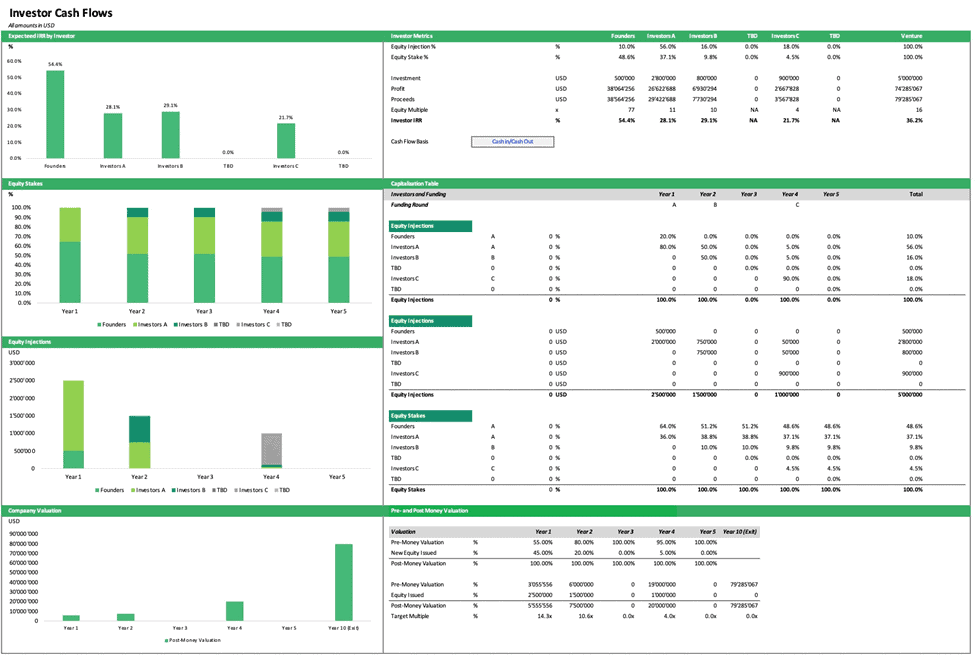
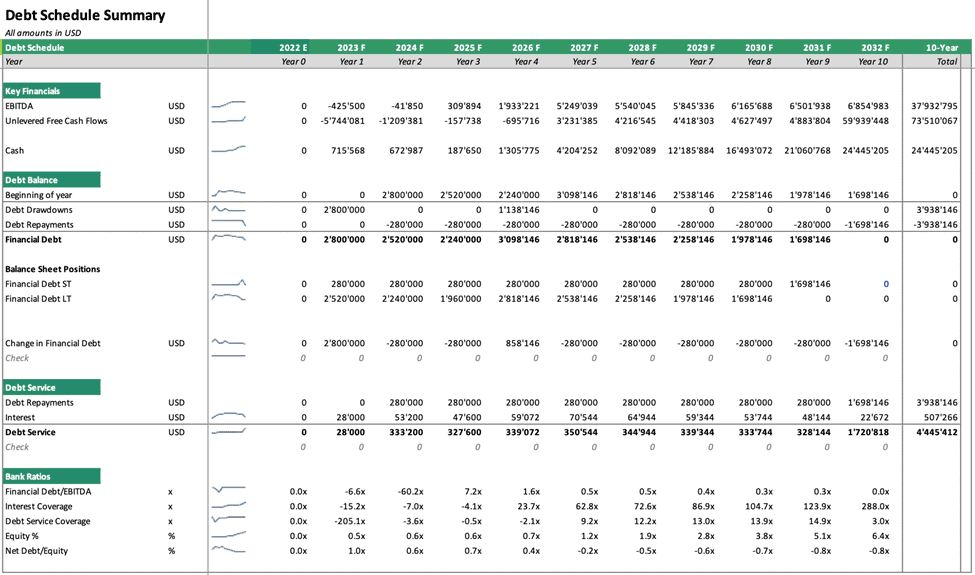
Of course, you must explore financing options such as bank loans, investors (angel investors or venture capitalists), or crowdfunding. Each source has pros and cons, so choose the one that aligns with your business model and growth plans. A capitalization table or debt schedule can help you compare options.
Conducting sensitivity analysis to assess how changes in key variables (e.g., production costs, sales volume) affect your financial performance is also essential. It helps you make informed decisions and adapt your distillery strategy as needed.
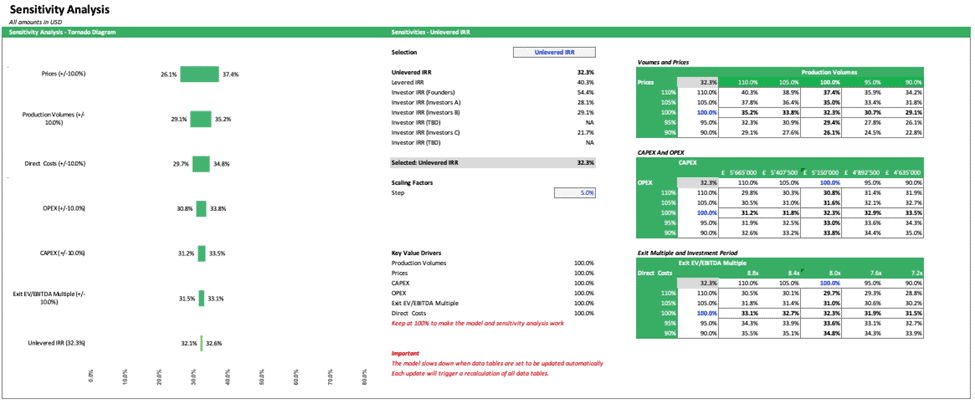
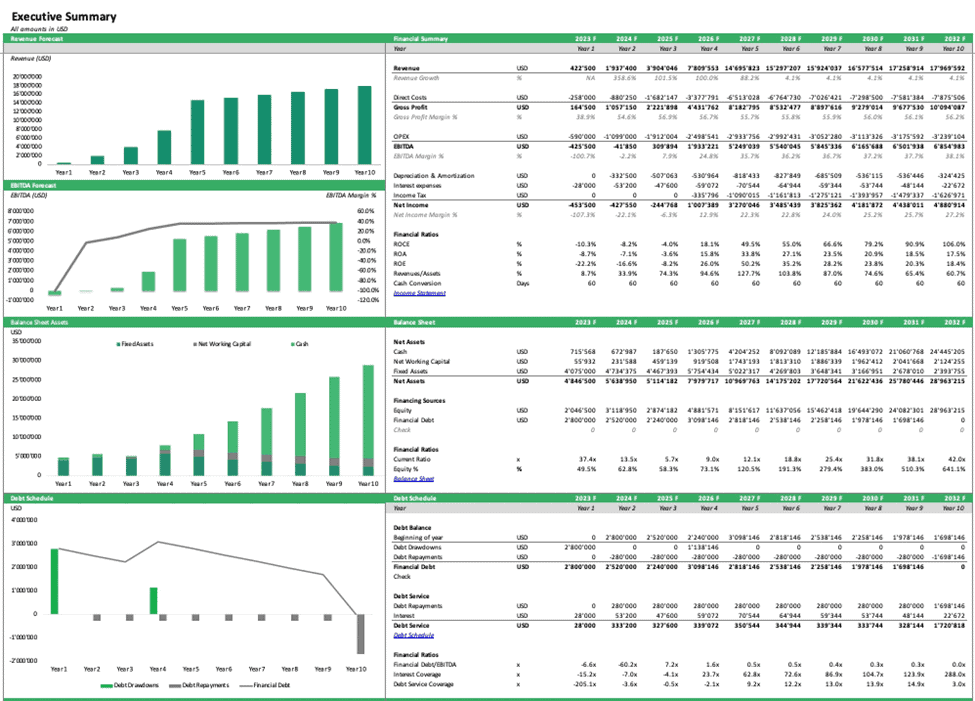
The distillery financial plan template creates a thorough roadmap for a company that makes spirits or liquors. Financial Statements, Cash Flows, Tables, Financial Ratios, and Financial Metrics pertinent to banks and investors are included in the forecasts, which cover ten years. Different alcohol tax rates will be imposed depending on where the alcohol is sold. This distillery financial plan template also anticipates and calculates liquor tax separately.
Raise Your Spirits with a Thorough Analysis of Your Distillery Project
Embarking on starting a distillery business is a challenging yet potentially rewarding endeavor. It’s essential to recognize that distillery businesses are capital-intensive and fraught with pitfalls and risks that must be navigated wisely. Before diving in, studying your project thoroughly and testing the waters to ensure you are making informed decisions is advisable. Careful market analysis, understanding its dynamics, and identifying your niche is critical. Moreover, a clear plan for achieving profitability and a well-prepared investment case are indispensable for success in this industry. By approaching this venture with diligence and a strategic mindset, you can increase your chances of building a thriving distillery business in an ever-evolving and competitive market.
Establishing a distillery is a complex endeavor that involves significant initial investments and ongoing expenses. As the distillery business grows and evolves, a sound financial plan template will prove essential in adapting to changing market dynamics and maintaining profitability. Therefore, anyone embarking on the journey of starting a distillery should prioritize the development of a robust financial plan template to set a strong foundation for their venture and increase the chances of achieving their distilling dreams. Elevate your distillery venture with a comprehensive project analysis today!



















You might also like:
- 10 Main Elements of a Business Plan
- 10 Tips to Develop a First Class Business Valuation Report
- 12 Funding Sources for Businesses and Startups
- 5 Practical Tips to Help Raise Funds For Startups
- Mastering Business Finance: The Three-Statement Financial Model
- Recent Transaction Multiples Analysis for Distilleries
- Financial Ratios Analysis and Its Importance
- Understanding the Levelized Cost of Energy Formula
- Financial Modeling for Startups and Small Businesses
- How to Start a Distillery Business: What You Need to Know?
- Understanding Debt Sizing & Project Finance Ratios
- Boost Your Business’s Financial Management with this Excel Budget Template
- Business Valuation Service
- Financial Planning for Small Business Owners – Taking an SBA Loan
- How to Evaluate a New Solar Park for Investment?
- How to Make Smart Decisions with 6 Key Financial Metrics?
- Cash Flow Analysis in Excel
- How to Prepare a Financial Feasibility Study?
- 5 Steps to Create a Drop Down List Using Data Validation in Excel
- Financial Spreadsheet – A Key Tool for Entrepreneurs
Tags: business valuation