
0 ITEMS

5 Strategies for Investing in Real Estate

Investing in real estate offers multiple pathways to build wealth, each with its own risks and rewards.
- Buy-and-hold strategies generate passive income through rentals and long-term appreciation.
- Quick profit options like buy-and-sell or fix-and-flip rely on market timing and renovation skills.
- Group investments such as REIGs and REITs provide diversification and require less direct management.
- Financial models and templates help evaluate property performance, manage risks, and optimize returns.
- Choosing the right approach depends on your investment goals, risk tolerance, and involvement level.
Understanding these strategies can guide smarter investment decisions and long-term success. Unlike stocks or other financial instruments, real estate is a tangible, long-term asset that isn’t subject to theft or sudden disappearance. Investing in real estate requires smart decisions and careful planning. The following strategies for investing in real estate help build wealth while minimizing risks.
Real Estate Investing 101: An Overview of the Industry
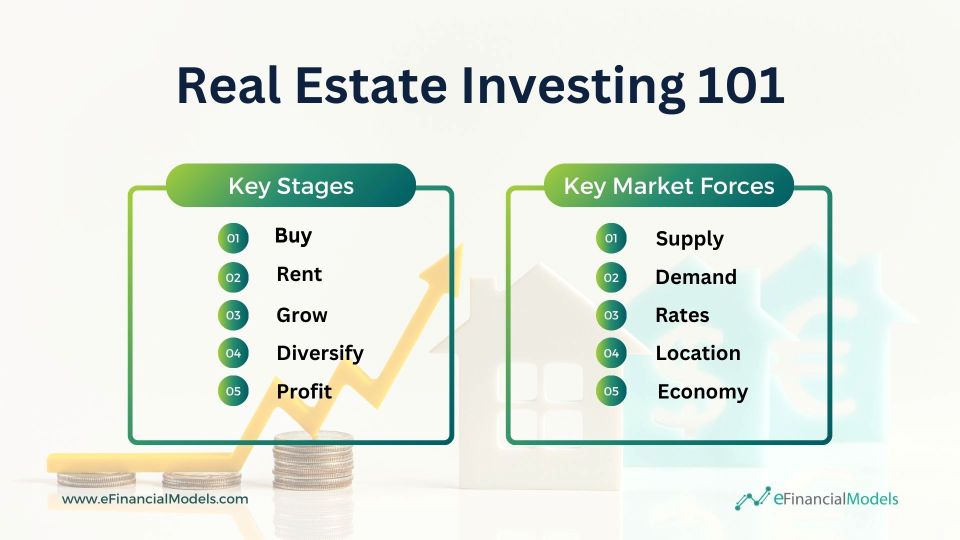
Real estate investing 101 is about buying properties to generate income and build wealth. It’s a popular choice because it offers steady cash flow, long-term value growth, and protection against market swings. It’s a top choice for investors because it offers steady returns and long-term growth. Real estate investing 101 helps you benefit from property value appreciation, diversify your portfolio to reduce risk, and earn passive income from rentals. Unlike stocks, real estate is a tangible asset that holds value over time. It also diversifies a portfolio, reducing overall risk. Many investors see it as a reliable way to build wealth over time. With smart strategies, investors can enjoy financial stability and wealth creation.
Real estate prices rise and fall based on key factors. Supply and demand drive market trends—high demand with low supply pushes prices up, while excess supply lowers them. Interest rates also matter; lower interest rates make borrowing cheaper, boosting demand. Location plays a big role, as desirable areas attract more buyers and investors. Economic trends, like job growth or recessions, influence buyer confidence and affordability. These factors interact, shaping property values in every market. Market research helps investors make smart decisions. It reveals trends, risks, and growth potential before committing money. Understanding demand, competition, and economic conditions reduce uncertainty. It also helps identify profitable opportunities and avoid costly mistakes. A well-researched investment leads to better returns and lower risk.
What Are the Best Strategies for Investing in Real Estate?
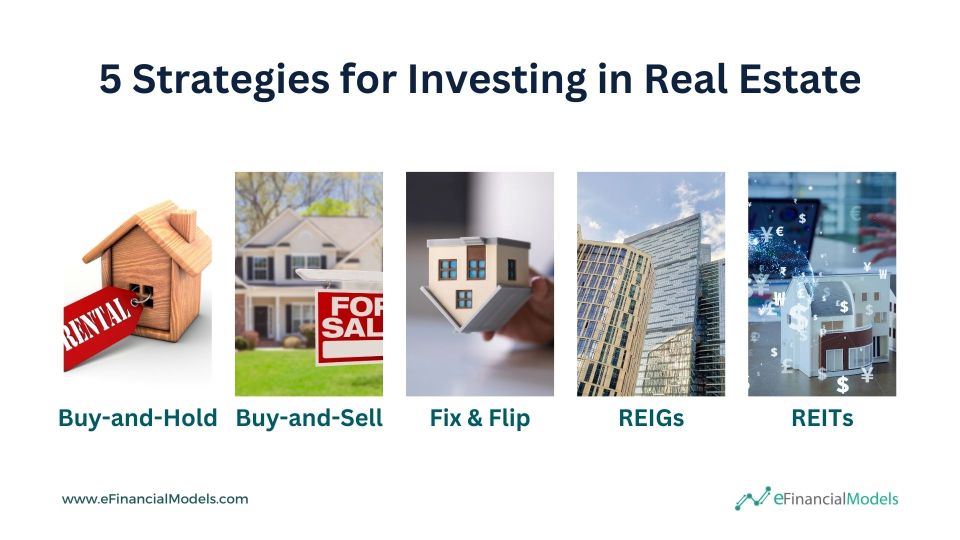
Investing in real estate requires choosing the right strategy to match your goals and risk tolerance. Some investors prefer long-term appreciation, while others focus on quick profits. The top strategies for investing in real estate include buying properties to rent, buying properties to sell, flipping houses, or pooling resources through investment groups and trusts. Each strategy offers unique advantages, from steady income to rapid returns.
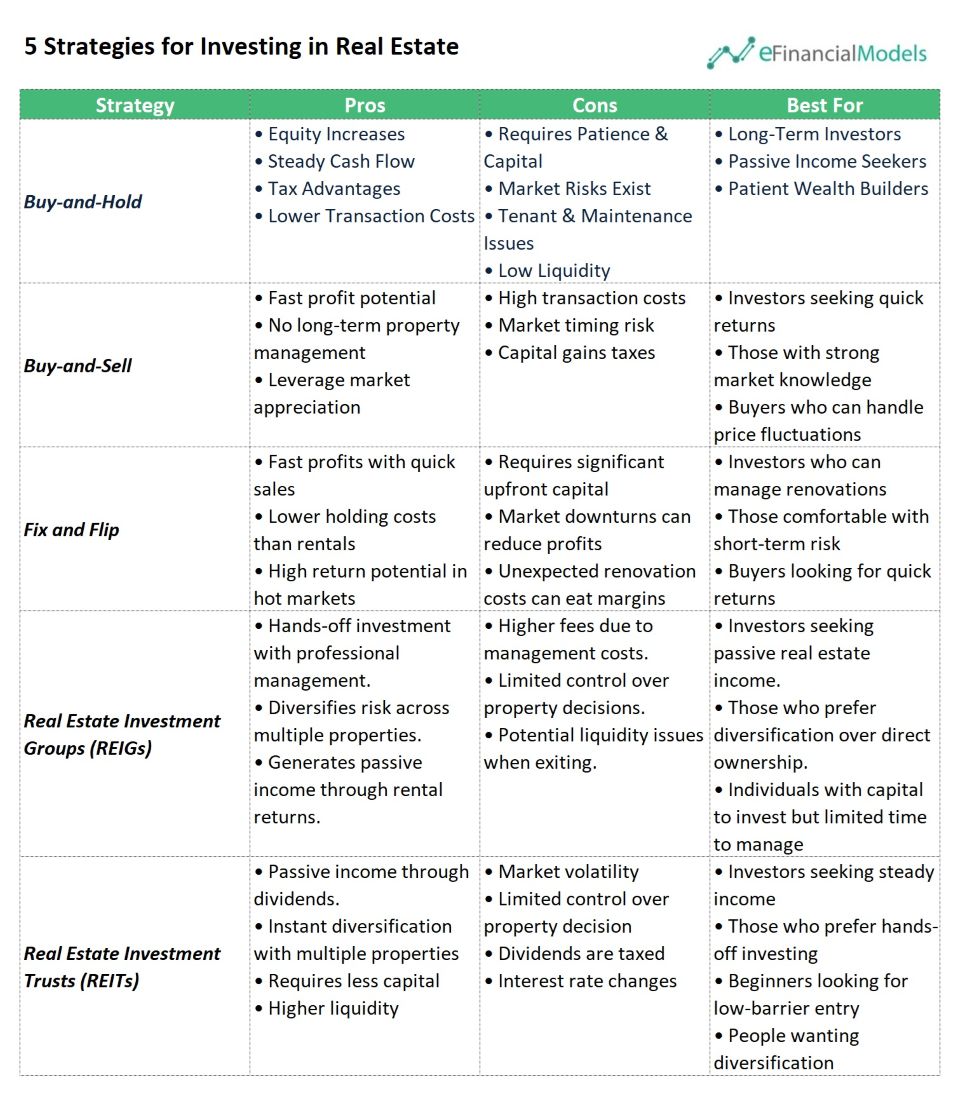
Buy-and-Hold
The buy-and-hold strategy involves purchasing property to generate rental income and long-term appreciation. Investors earn money through rent while the property value increases over time. This method builds equity and provides passive income, making it ideal for long-term wealth creation. Success depends on location, financing, and effective property management.
- Pros: The buy-and-hold strategy builds long-term wealth. Property values appreciate over time, increasing equity. Rental income provides a steady cash flow. Owners benefit from tax advantages like depreciation and mortgage interest deductions. This strategy requires less frequent buying and selling, reducing transaction costs.
- Cons: This approach requires patience and capital. Market downturns can impact property values. Managing tenants and maintenance can be time-consuming. Liquidity is low, as selling takes time. Unexpected expenses, like repairs or vacancies, can affect cash flow.
- Best for: This strategy suits long-term investors seeking passive income and wealth growth. It’s ideal for those who can handle property management or afford professional help. Investors with stable finances and patience benefit the most.
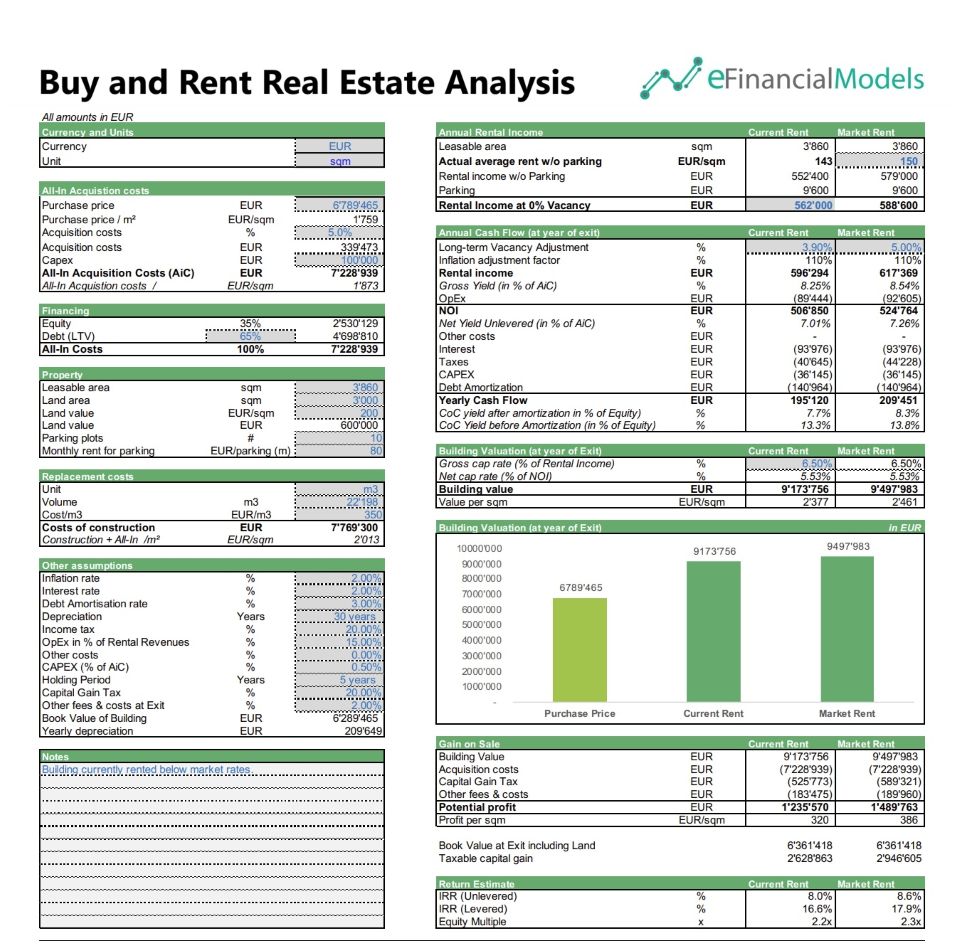
Our Buy and Rent Real Estate Analysis Template simplifies decision-making for investors using a buy-and-hold strategy by breaking down costs, financing, rental income, and potential returns. It helps assess cash flow, property valuation, and ROI, ensuring investors understand the financial impact of rental rates, debt financing, and market trends. With clear profit projections, IRR calculations, and risk factors, investors can optimize pricing, financing, and exit strategies to maximize long-term gains. This analysis ensures data-driven decisions, reducing risk and increasing confidence in real estate investments.
Buy and Sell
Buy-and-sell investing focuses on purchasing properties and reselling them for a profit. Investors purchase properties at a low price and sell them for a higher price. They may hold for a short period, waiting for market appreciation, or improve the property before selling. This strategy requires market timing, negotiation skills, and capital for acquisitions. While it offers quick returns, it also carries higher risks than long-term investing.
- Pros: This approach allows investors to earn profits fast. It voids the long-term work of managing tenants or maintaining properties. Property values can rise quickly if market conditions are right, leading to significant gains. With the right timing, investors can maximize their returns with minimal effort.
- Cons: The market can change unexpectedly, affecting profits, and buying and selling come with high transaction costs, such as agent fees and taxes. Investors must also consider capital gains taxes, which reduce net earnings. Poo timing or misjudging demand can lead to losses instead of gains.
- Best for: This strategy is best for investors who understand market trends. It works well for those who can analyze property values and act quickly. People with strong financial planning skills and risk tolerance benefit the most. It’s ideal for short-term gains rather than long-term property ownership.
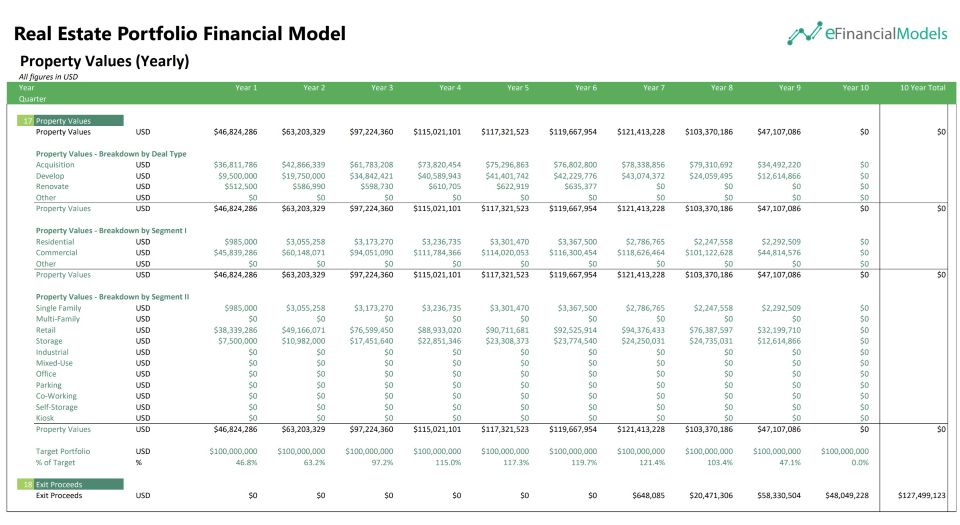
Our Real Estate Portfolio Financial Model helps investors make smart buy-and-sell decisions by tracking property values, deal types, and segment performance over time. It highlights how acquisitions, developments, and renovations impact overall portfolio growth, making it easier to spot profitable trends. The model also compares residential, retail, and storage asset types, ensuring a balanced investment strategy. With clear percentage targets and exit proceeds, investors can time their sales for maximum returns. This tool streamlines decision-making, helping users optimize investments and capitalize on market opportunities.






















































Fix and Flip
Fix-and-flip investors buy undervalued properties, renovate them, and sell them for a profit. This strategy requires knowledge of renovation costs, real estate markets, and efficient project management. Profits depend on buying at the right price, controlling costs, and selling quickly. While high returns are possible, risks include unexpected expenses and market downturns.
- Pros: Fix and Flip offers quick profits by buying, renovating, and reselling properties. Investors can earn high returns, especially in strong markets. Since the goal is a fast sale, holding costs stay low. Smart renovations can greatly increase property value. This strategy works well when demand for homes is high.
- Cons: Fix and flip carries risks, especially if the market slows. Renovation costs can spiral beyond budget, cutting into profits. Selling quickly is not always guaranteed, which can lead to higher holding costs. Investors need cash upfront, and financing can be expensive. Unexpected issues with properties can delay projects and reduce returns.
- Best for: This strategy suits investors who can handle renovations and manage costs. It works well for those who thrive in fast-paced markets and can make quick decisions. Experience in real estate or construction helps reduce risks. It’s best for short-term gains rather than long-term passive income.
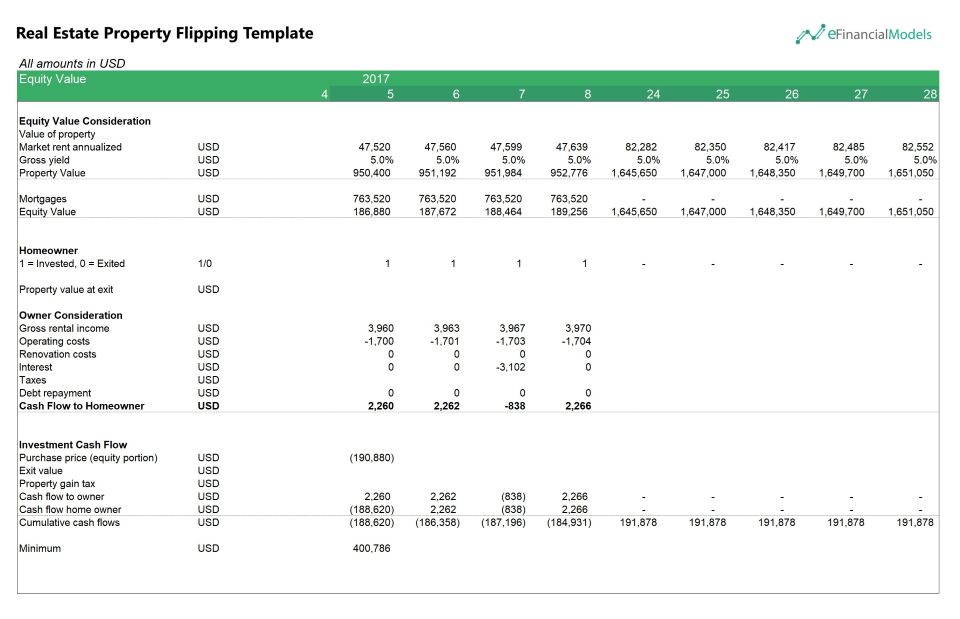
Our Real Estate Property Flipping Template helps investors track key financials for a Fix and Flip strategy by outlining property value, equity, cash flow, and investment returns. It breaks down market rent, operating costs, and debt repayments, making it easy to estimate profits. The template highlights purchase price, renovation costs, and exit value, ensuring clear financial planning. It also calculates cash flow to the homeowner, helping investors determine if a flip is profitable. Organizing these details simplifies decision-making, reduces risks, and maximizes potential returns in property flipping.
Real Estate Investment Groups (REIGs)
Real estate investment groups (REIGs) allow individuals to invest in property without direct ownership responsibilities. Members pool money to buy rental properties managed by the group. Investors earn returns from rental income and appreciation without handling tenants or maintenance. This strategy provides diversification and passive income but requires trust in the group’s management.
- Pros: REIGs offer a simple way to invest in real estate without direct ownership. Professional managers handle property selection, maintenance, and tenant management. Investors earn passive income from rental profits while benefiting from diversification. These groups pool money to buy multiple properties, reducing individual risk. REIGs provide a steady income stream with fewer day-to-day responsibilities.
- Cons: Investors in REIGs pay higher fees for professional management. They have little control over property decisions, including purchases, sales, and rent pricing. Liquidity can be an issue, as selling shares or exiting the group may take time. Market downturns can reduce returns, just like in direct real estate investments. Investors must also trust the group’s leadership to make smart financial choices.
- Best for: REIGs are ideal for investors who want real estate exposure without hands-on management. They suit busy professionals, retirees, and those seeking passive income. Investors with extra capital but limited time benefit the most. Those who prefer diversification over managing a single property will also find REIGs appealing. It’s a great option for those willing to trade control for convenience and steady returns.
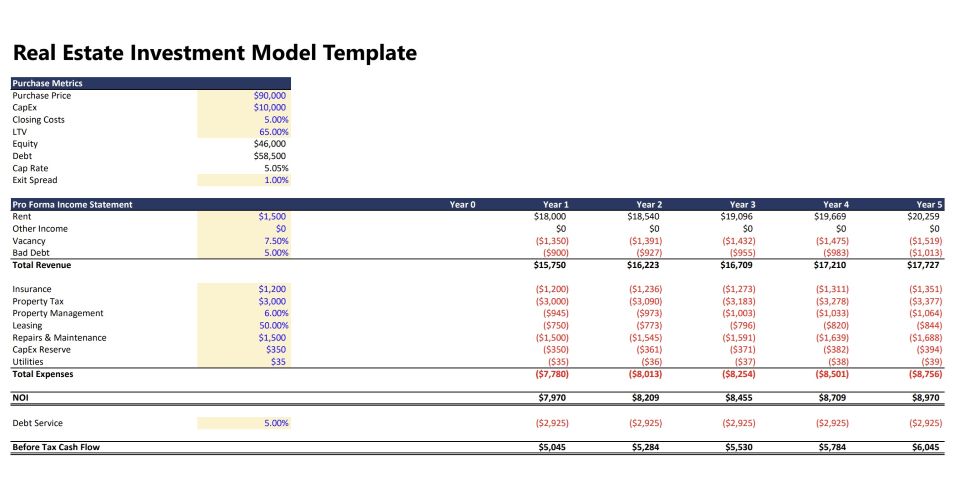
A Real Estate Investment Model Template helps Real Estate Investment Groups (REIGs) build a solid investment strategy by clearly separating purchase metrics, cash flow projections, and key financial indicators. It simplifies decision-making by estimating rental income, expenses, debt service, and NOI, helping investors gauge profitability. With detailed forecasts, REIGs can analyze risks, optimize capital allocation, and refine exit strategies for better returns. This model ensures smarter investments by keeping everything structured, data-driven, and easy to track over time.
Real Estate Investment Trusts (REITs)
Real Estate Investment Trusts or REITs let investors buy shares in companies that own or finance income-generating real estate. These trusts provide regular dividends and portfolio diversification without direct property ownership. Investors can trade REITs like stocks, offering liquidity and accessibility. This strategy is ideal for those seeking passive income and exposure to real estate without large capital commitments.
- Pros: REITs offer an easy way to invest in real estate without owning property. They provide regular income through dividends and let investors diversify across different properties. Unlike traditional real estate, REITs are liquid, meaning you can buy and sell shares quickly. They require less capital, making them accessible to more investors. Professional managers handle the properties, reducing the burden on investors.
- Cons: REITs can be volatile since they trade like stocks. Investors have no direct control over property decisions, as professionals manage them. Dividend income is taxed at ordinary rates, which can reduce overall returns. Interest rate hikes can negatively impact REIT prices. Unlike physical property, REIT values can fluctuate daily, making them less stable in the short term.
- Best for: REITs are ideal for investors looking for passive income without the hassle of property management. They work well for beginners who want exposure to real estate with a low upfront investment. Those seeking diversification and liquidity will benefit from REITs. They are also good for people who prefer professionally managed investments over hands-on property ownership.
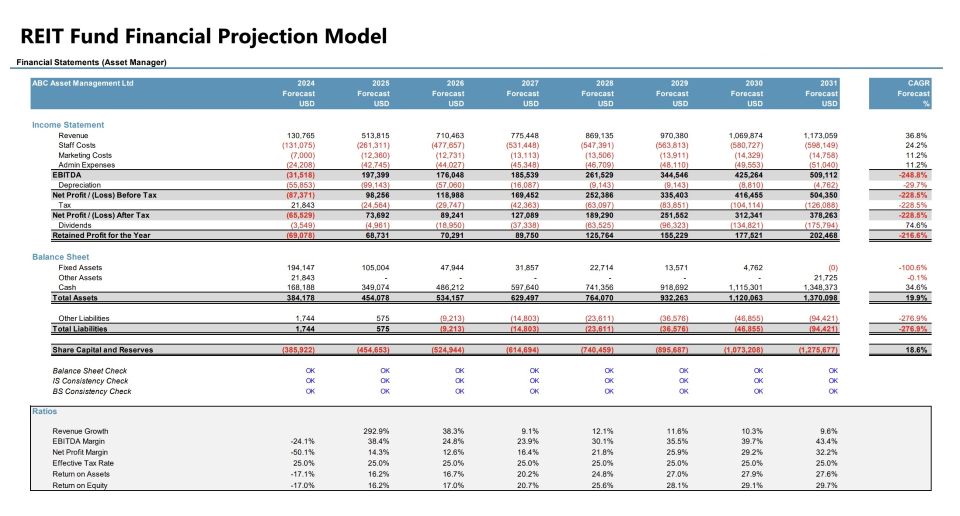
A REIT Fund Financial Projection Model helps real estate investors plan for growth, manage risks, and optimize returns. It provides a detailed forecast of revenue, expenses, profits, and key financial ratios over several years. By analyzing EBITDA, net profit, and return on equity trends, investors can identify cash flow patterns, adjust strategies, and make informed decisions. The balance sheet ensures asset-liability alignment, while consistency checks confirm accuracy. With this model, investors can fine-tune their investment approach, anticipate market shifts, and maximize long-term profitability.
Achieve Success with a Smart Real Estate Investing Plan
Real estate investment offers multiple paths to success, each with risks and rewards. Buy-and-hold builds long-term wealth through equity and rental income, while buy-and-sell focuses on quick profits but comes with market timing risks. Fix-and-flip suits those skilled in renovations but requires significant upfront capital. Real estate investment groups provide passive income but come with management fees. Real estate investment trusts (REITs) offer diversification and dividends but are subject to market volatility. The right strategy depends on your goals, risk tolerance, and level of involvement. Choose wisely to maximize your returns.
Understanding these 5 strategies for investing in real estate helps investors build wealth effectively. However, success starts with a clear real estate investing plan. Choose a strategy that matches your goals, risk tolerance, and involvement level. Focus on long-term gains with buy-and-hold, flip properties for quick profits, or invest passively through REITs and real estate groups. Manage risks, stay informed, and adapt to market changes. A smart strategy leads to steady growth and lasting wealth.
Start your journey with a real estate investing plan that fits your goals and risk tolerance. Take control of your investments and build lasting wealth with a smart strategy today! You may want to explore the Real Estate Industry Template Bundle to streamline your investment planning.


















































- Commercial Real Estate Valuation Methods: Helping Investors in Taking Informed Decisions
- Finding Fair Market Value: A Quick Guide to Real Estate Valuation
- Real Estate Financial Modeling in Excel
- Top 5 Principles of Corporate Finance
- Why Financial Forecasting Models Are Vital for Your Business
- 5 Smart Ways To Manage Personal Finances In A Pandemic
- 10 Steps to Create a Drop Down List Using Data Validation in Excel
- Understanding the Levelized Cost of Energy Formula
- How to Build a Capitalization Table
- Mastering the Art of IRR Calculation: A Comprehensive Guide for Investors
- Investing Cash Flows
- Scenario Analysis
- 10 Main Elements of a Business Plan
- Building a Monthly Budget – Using Monthly Budget Templates
- Financial Planning for Small Business Owners – Taking an SBA Loan
- Real Estate Buy and Develop
- 5 Practical Tips to Help Raise Funds For Startups
- Revenue Model Templates and their Characteristics
- How to Use Excel for Financial Analysis?
- Cash Flow Analysis in Excel