
0 ITEMS

Timing is Everything: Fundraising for a Startup Business

Raising funds at the right time is crucial for startup success and growth.
- Fundraising stages align with specific business milestones, from pre-seed to Series C and beyond.
- The timing depends on factors like cash flow, competition, market opportunity, and economic conditions.
- Early fundraising can dilute equity, while delaying may cause missed opportunities or cash shortages.
- Financial models, such as cash flow and valuation tools, help identify optimal funding moments.
- Strategic timing maximizes investor interest, valuation, and long-term sustainability for startups.
Knowing when to raise funds helps startups build momentum and avoid unnecessary risks.
Rounds of Funding for Startup Businesses
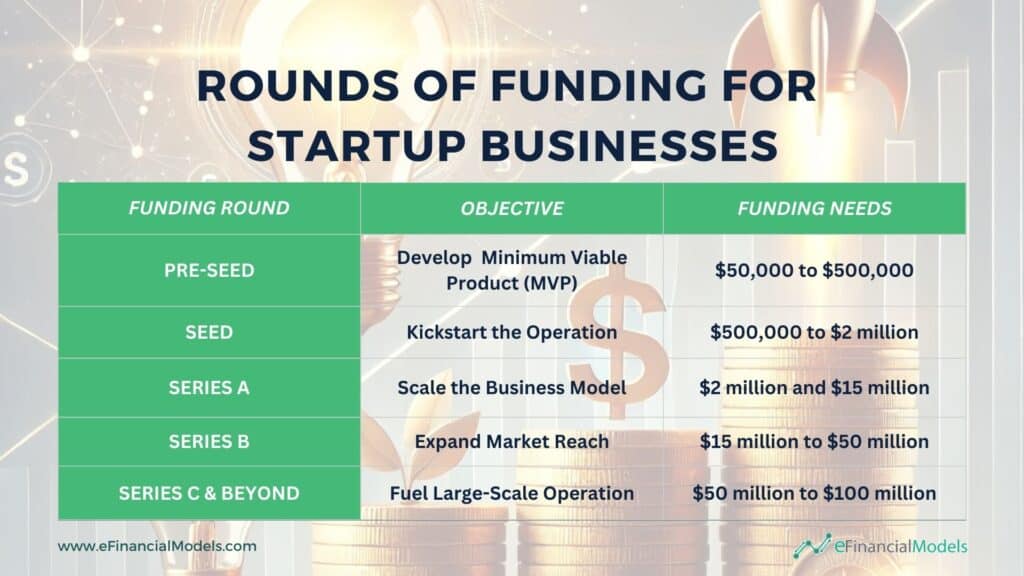
Understanding the rounds of funding for startup businesses is crucial to crafting a successful fundraising plan. Each stage serves a unique purpose, from validating an idea to scaling globally. Knowing how much to raise and where to allocate resources ensures efficient growth and attracts the right investors. Without a clear outline, startups risk mismanaging funds or missing critical milestones. By mastering each funding round, founders can align their vision with financial goals and build a sustainable path to success.
- The pre-seed round is where a startup idea takes shape. Founders validate the concept, prove market demand, and create a prototype. This stage typically raises $50,000 to $500,000 to fund early research and development.
- The seed round is all about launching operations. Startups use this funding to refine their offerings, test the market, and build a capable team. It’s an essential stage for growth, with funding amounts ranging from $500,000 to $2,000,000.
- In Series A, the focus shifts to scaling the business model. Startups invest in expanding their product or service as the market gains traction. With funding between $2,000,000 and $15,000,000, this round helps solidify market presence.
- Series B drives aggressive growth. Startups expand their market reach, enter new territories, and grow their teams significantly. Funding for this stage ranges from $15,000,000 to $50,000,000 to fuel rapid expansion.
- At the Series C & beyond stage, startups focus on dominating their industry. The goal is to diversify offerings and expand globally. Funding typically ranges from $50,000,000 to $100,000,000, preparing the company for large-scale operations. It also prepares the startup for Initial Public Offering (IPO), merger, or sale.
Fundraising for a Startup Business: What It’s All About
Fundraising for a startup business means securing the capital you need to bring your vision to life. It involves pitching your business idea, convincing investors or lenders to believe in your plan, and showcasing its potential. Startups often rely on multiple funding sources, such as angel investors, large institutions, or venture capital. The goal is to raise enough money to cover early-stage expenses, drive growth, and reach profitability. Effective fundraising requires a clear pitch, solid financial projections, and a compelling reason why your business will succeed. It’s the first step to turning ideas into reality.
Timing is critical funding for startup businesses. Raising funds too early can dilute equity unnecessarily, while waiting too long may hinder growth or cause missed opportunities. Fundraising typically takes between two weeks and eight months to close, but an ideal campaign should last one to two weeks. It gives potential contributors enough time to learn about the opportunity and take action while maintaining momentum for your campaign. A fundraising plan outline ensures you secure the right funding at the right time for lasting success.
What is a Fundraising Plan Outline?
A fundraising plan outline is a clear roadmap for achieving your funding goals. Technically, it’s a startup financial plan for fundraising. It breaks down the steps needed to secure financing, including identifying target investors, setting timelines, and preparing key materials like pitch decks. This outline ensures your fundraising efforts stay organized and focused. It helps track progress, anticipate challenges, and align your team on priorities. By detailing actions and deadlines, a fundraising plan outline increases your chances of successfully raising the capital you need.
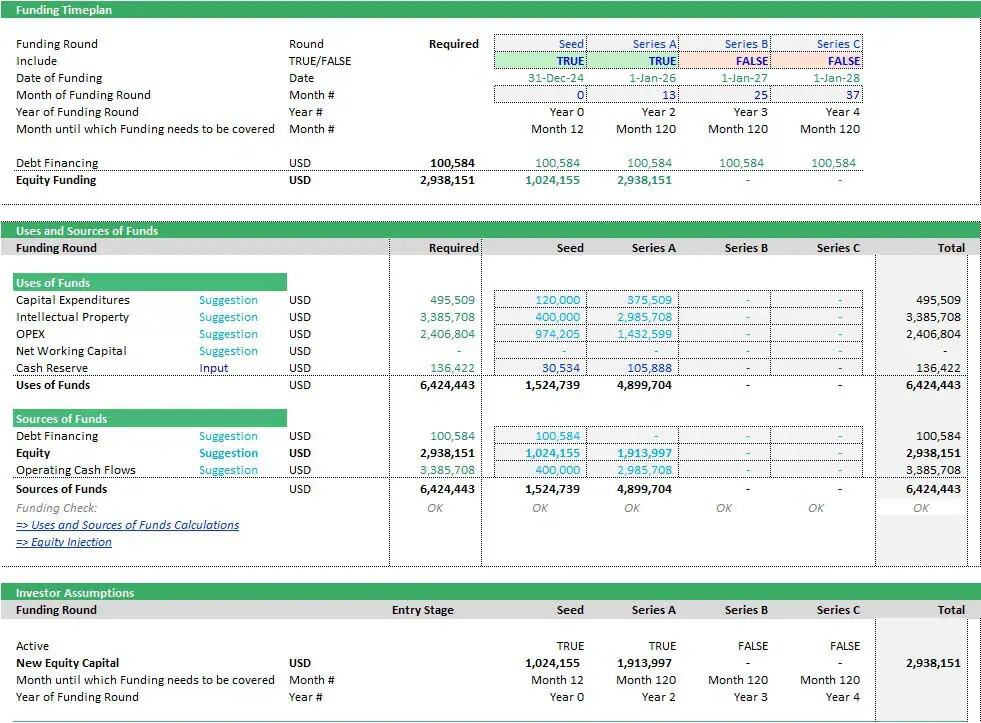
The above fundraising plan outline from a SaaS B2C Financial Model breaks down funding needs across different rounds: Seed, Series A, B, and C. It details the required funding amounts, sources (equity, debt, and operating cash flow), and uses (capital expenditures, intellectual property, OPEX, and working capital). For the Seed round, $1,524,739 covers initial expenses, while Series A adds $4,899,704 for growth. Funding checks confirm the balance between sources and use, ensuring efficient allocation. The model provides clear timelines, including key funding dates and assumptions for equity injections and operational support.














































When to Raise Funds for Your Startup?
Timing is everything when raising funds for your startup. Secure capital too early, and you risk giving away equity before proving your concept. Wait too long, and you might miss growth opportunities or run out of cash. The ideal moment is when your business has clear milestones and a scalable plan and shows strong traction. Investors want to see momentum and a strategy that justifies their backing. By aligning your funding needs with tangible progress, you maximize your chances of success and attract the right partners to fuel your growth.
Cash Flow Matters
Startups must keep a close eye on their cash reserves. If cash runs low, they might need to secure funding to cover expenses and stay operational. On the other hand, startups with enough cash to meet short-term needs can focus on growing their business and building momentum before seeking external funding. For instance, a small tech startup with $50,000 in cash might decide to delay fundraising. They use their reserves to refine their product and attract early customers. Once they’ve proven demand, they approach investors with a stronger position, showcasing both traction and a solid financial outlook.
Cash flow projection models can help startups decide when to raise funds by showing how cash moves in and out of the business. It highlights periods where cash reserves might run low, signaling the need for funding to cover expenses. By forecasting future cash flows, startups can plan and avoid running out of money. This model also helps identify the best timing to approach investors when the business shows stability or growth potential. With clear insights, startups can act early and secure funding before financial pressure builds.
Timing Influenced by Competition
Startups must consider competitors when planning fundraising. In crowded markets, startups often need to raise funds sooner to stay ahead and secure market share. In contrast, those in less competitive markets can take more time to grow and build traction before seeking investment. For example, a food delivery startup in a highly competitive city might need early funding to invest in marketing and expand quickly. Meanwhile, a niche organic farm in a smaller town could focus on building local partnerships before approaching investors.
Business valuation financial models can help entrepreneurs decide when to raise funds by analyzing the startup’s value at different stages. These models show how market competition impacts valuation growth over time. They highlight the need to raise funds early to boost operations and secure market share in crowded markets. They reveal opportunities to delay funding and grow value through traction in less competitive markets. By modeling scenarios, these tools clarify the best timing to maximize valuation while staying competitive.
Market Opportunity Counts
Market opportunity plays a key role when deciding the right time to raise funds. Startups in large, expanding markets often attract investors more easily and secure higher valuations. In contrast, startups in small or stagnant markets need help raising funds, as investors may see limited growth potential. For instance, a renewable energy startup targeting the booming solar panel market can appeal to investors with strong growth prospects. However, a similar startup in a niche market with limited demand may need help to gain interest.
Break-Even Analysis Financial Models can help you decide when to raise funds by showing when your startup will cover its costs and start making a profit. It aligns cash flow needs with market growth opportunities, ensuring you act before funds run out. The model highlights the right moment to seek funding to scale your business by tracking expenses, revenue, and profitability timelines. It also considers market dynamics, like demand and competition, so you can raise funds when growth potential is highest. This proactive approach helps secure resources at the best time to capture market opportunities.
State of the Economy Influences Investment
Startups should carefully evaluate the state of the economy before seeking funding. Raising money during a recession can be tougher because investors often hesitate to take risks when markets are unstable. However, during an economic boom, investors are more open to opportunities, making it easier for startups to attract capital. Stay alert to market trends and industry growth. For example, if your startup is in renewable energy and that sector is thriving, it’s likely a great time to raise funds. In contrast, securing investment might require extra effort and strategic planning if the economy is slowing and your sector faces declining demand.
Forecasting financial models can help startups decide when to raise funds by linking a startup’s financial needs to economic growth trends. It projects cash flow, revenue, and runway while analyzing economic factors like GDP growth and market sentiment. The model tests scenarios to show how economic changes affect funding timelines and valuation. It highlights when cash reserves will run low and identifies the best times to approach investors. By aligning financial planning with economic cycles, the model ensures startups raise funds at the right moment to secure the best terms and stay ahead of challenges.
Startup Funding Stages
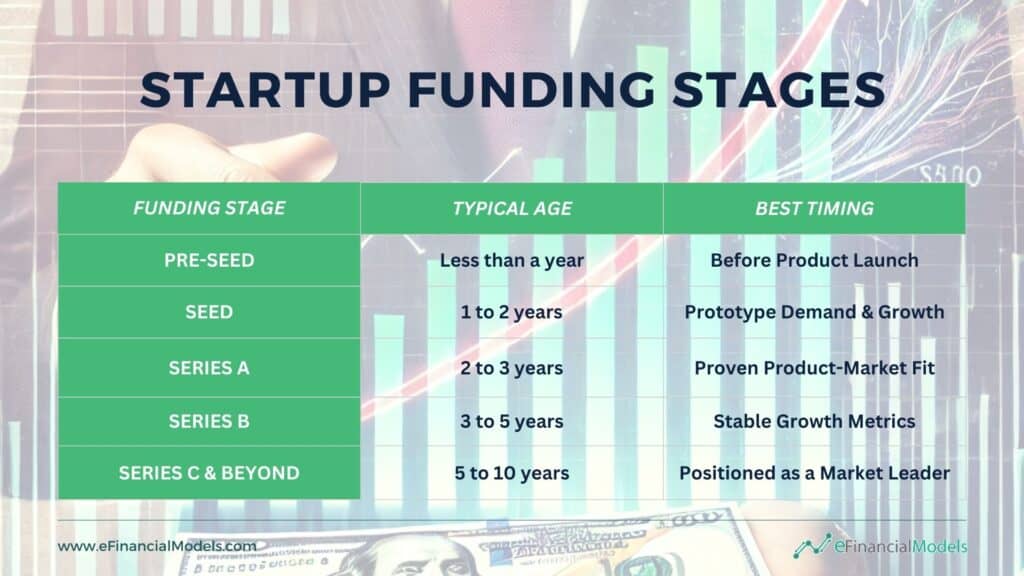
The startup funding stage outlines when startups should raise funds based on age and growth.
- Pre-seed funding is ideal to support initial ideas before your product launch, typically within the first year. For instance, a tech startup develops a concept for an AI-powered learning platform and secures pre-seed funding to build a prototype before launch.
- Seed funding follows in years one to two, helping validate demand and early growth. For example, a food delivery startup launches a prototype app and raises seed funding in year one to expand its reach and validate customer demand.
- Series A is for two to three years old startups with a proven product-market fit. Consider a two-year-old fitness app with strong user adoption, raising Series A funding to enhance features and optimize product-market fit.
- Series B suits three to five-year-old companies with stable growth metrics. Let’s say a three-year-old e-commerce company achieves consistent sales growth and secures Series B funding to scale operations and expand into new markets.
- Series C and beyond can position you as a market leader by years five to ten while scaling significantly.
Each startup funding stage matches funding to specific business milestones. As a case in point, a five-year-old renewable energy startup raises Series C funding to establish itself as an industry leader, increase production, and enter global markets.
Master the Timing: Raise Funds Strategically!
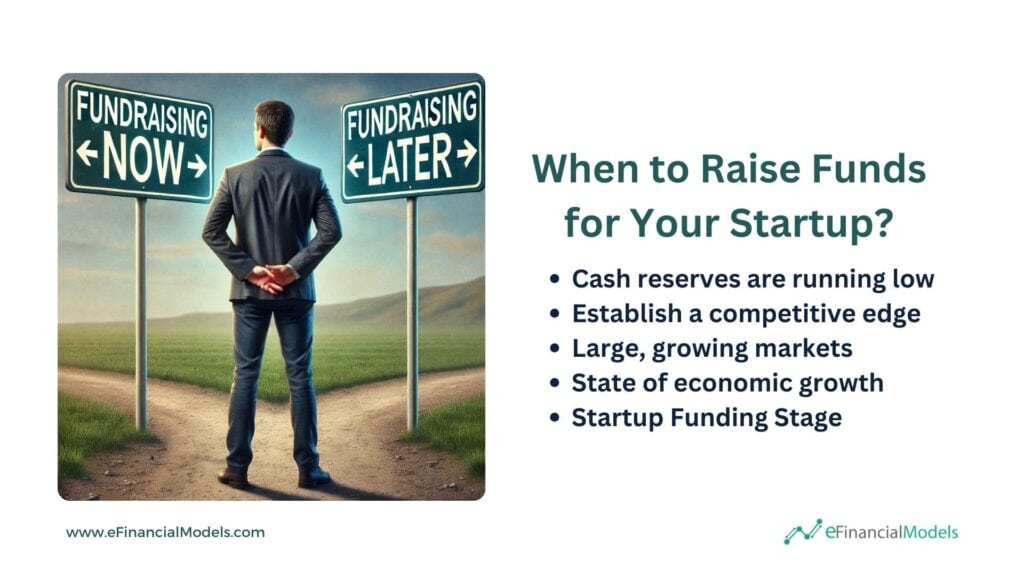
Timing is everything in raising funds for your startup. Secure capital when your cash reserves are running low to avoid operational disruptions. Seek funding to establish a competitive edge and outpace rivals. Target large, growing markets to attract investors with strong growth potential. Align fundraising efforts with economic growth periods when investor confidence is high. Finally, raise funds at the right startup funding stage—pre-seed, seed, or Series A—to match your business’s milestones and growth trajectory.
By strategically timing your fundraising, you maximize investor interest and set your startup on a path to success. Startups can strategically raise funds using financial modeling to identify the right timing and approach. A solid financial model highlights cash flow needs, growth opportunities, and valuation potential, helping founders plan effectively. It enables startups to align fundraising with key milestones, such as achieving product-market fit or entering new markets. Financial models also clarify funding requirements, ensuring founders seek the right amount from the right sources. By leveraging these insights, startups can confidently pitch to investors, maximize value, and secure the capital needed to fuel their growth.









































You might also like:
- 12 Funding Sources for Businesses and Startups
- How to Raise Series A Funding?
- 5 Practical Tips to Help Raise Funds For Startups
- Strategic Insights to Secure Series B Financing
- How to Secure Seed Financing?
- Funding Sources and Strategies for Startups
- 10-Step Financial Planning Checklist for Smart Executives
- Mastering the Art of IRR Calculation: A Comprehensive Guide for Investors
- Best Practices in Financial Modeling for Startups
- Balanced Financial Planning for Startups
- Startup Financial Models
- Financial Modeling for Startups and Small Businesses
- 5 Best Practices for Managing Days Receivables
- Funding Strategies for Healthcare Startups
- How to Make Smart Decisions with 6 Key Financial Metrics?
- Understanding What is Yield to Maturity and Why It Matters
- Understanding Debt Sizing & Project Finance Ratios
- Venture Capital vs. Private Equity: Which is Right for You
- How to Create a Business Plan for your Food Truck Business
- Free Budget Planner Template in Excel for Services Businesses