
0 ITEMS

Are Wind Energy Farms Worth the High Initial Cost?

As climate change continues to threaten our planet, the growth of renewable energy has become more important than ever. Wind energy farms, which harness the wind to generate electricity, stand out as a promising sustainable option. They allow us to capture consistent wind at scale and convert it into usable power. However, realizing effective wind energy farm projects requires robust financial planning and modeling. Building and operating wind farms demands major upfront capital expenditures and ongoing operating expenses. Without proper financial forecasting, these projects carry substantial risk. This is where wind energy financial models become invaluable.
Wind Energy Farms: Key to Global Renewable
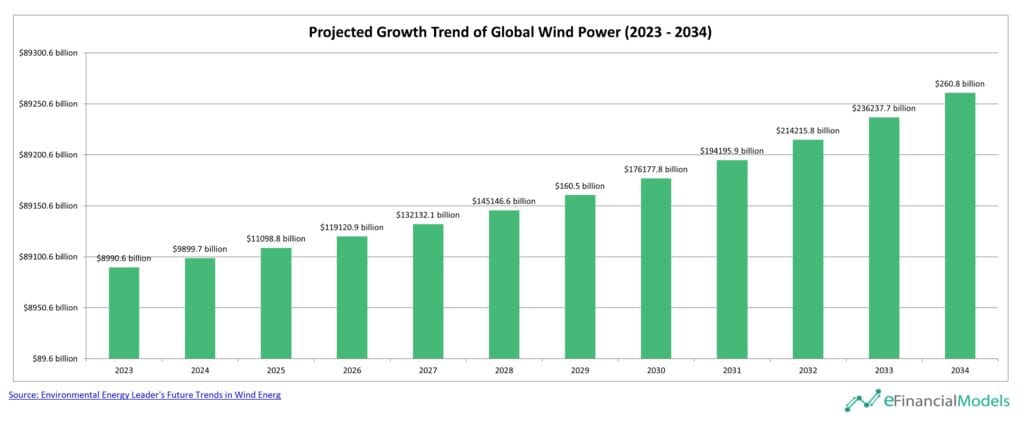
Wind energy is a clean, renewable source of power that plays a key role in reducing greenhouse gas emissions and combating climate change. It is one of the fastest-growing sources of electricity generation. Policy support, environmental concerns, and technological advancements in turbine efficiency are primary growth factors. Major markets include the United States, China, and the EU, which are driven by renewable energy goals and decarbonization mandates. Further, the Environmental Energy Leader predicts a global growth trend of the wind energy farm market from $89.6 billion in 2023 to $260.8 billion in 2034. That is a compound annual growth rate (CAGR) of 10%.
Wind energy farms, also known as wind farms or wind power plants, are areas of land or offshore locations that host multiple wind turbines. These turbines harness the kinetic energy from the wind and convert it into electricity. Each wind turbine consists of large blades that rotate when the wind blows. The spinning blades are connected to a generator, which produces electrical power. A wind energy farm can cover many square kilometers, depending on the location and the number of turbines installed. By taking advantage of windy areas, these farms provide clean, renewable energy to power our homes, businesses, and cities. By clustering turbines in a wind farm, economies of scale can be achieved, making energy production more efficient and cost-effective.
Onshore Wind Farms
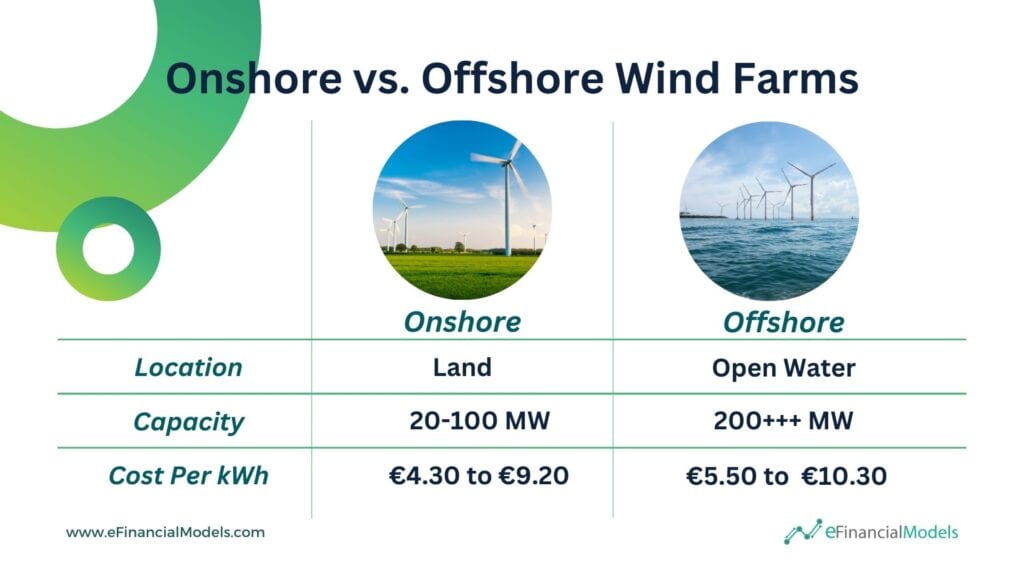
Wind energy farms can be found onshore. Onshore wind farms are located on land. They are usually built in wide open areas with fewer obstacles to the wind. They work best in regions with consistent, strong winds. Such locations include rural farmlands, plains, and even mountainsides. They are generally less costly to build than their offshore counterparts because they are more accessible. Construction costs are lower, and maintenance is more straightforward.
According to Fraunhofer ISE’s Levelized Cost of Electricity Renewable Energy Technologies (July 2024), the electricity cost per kWh from onshore wind farms ranges between €4.30 to €9.20. Wind energy farms generally feature an installed capacity between 20 and 100 MW, with 10 to 50 turbines. However, they sometimes face challenges such as visual and noise concerns from local communities. Their proximity to populated areas can spark debates around aesthetics and sound pollution.
Offshore Wind Farms
Wind energy farms can also be found offshore, where the wind tends to be stronger and more reliable. They are located out in the ocean or in large lakes. Built off the coast, offshore wind farms take advantage of the stronger and more consistent wind found over the open water. Since water has fewer obstacles than land, the wind’s path is generally smoother, leading to more efficient energy production. Offshore wind farms tend to be significantly larger, often surpassing 200 MW and comprising 50 to 200 turbines. They can produce more energy due to stronger winds. They do not take up valuable land, and they do not affect local communities in the same way onshore farms do. Yet, building turbines out in the water is challenging. The construction cost is higher, and maintaining these turbines in an ocean environment presents logistical difficulties. In fact, the electricity cost per kWh from offshore wind farms ranges between €5.50 to €10.30. Nonetheless, offshore wind farms are seen as a critical piece of the global push towards renewable energy.
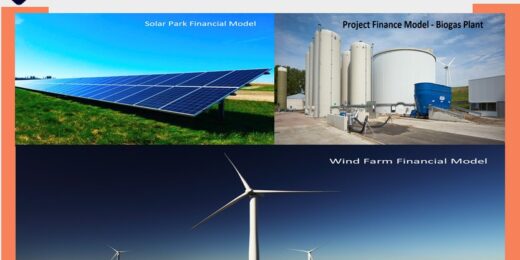
Choosing between onshore wind farms and offshore wind farms depends on several factors, including cost, efficiency, location, and environmental impact. From a financial planning and analysis perspective, evaluating these options requires a detailed assessment of capital expenditures, operating costs, and projected energy yields over time. The best solution might be using a Wind Energy Farm Financial Model. It considers the long-term return on investment (ROI), subsidies, and tax incentives available for renewable energy projects. Additionally, scenario analysis is crucial to account for uncertainties, such as fluctuating maintenance costs and regulatory changes, ensuring a well-informed decision that aligns with overall business goals and sustainability objectives.













































Key Benefits of a Wind Energy Farm
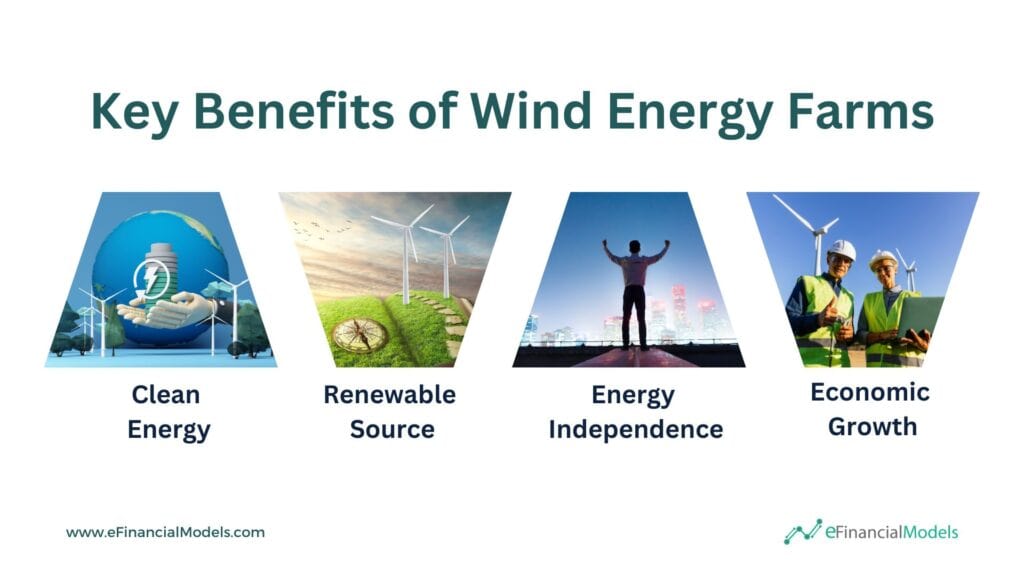
Wind energy farms are becoming a popular solution to meet the world’s growing energy needs while protecting the environment. These farms harness the power of the wind to generate clean electricity, providing many advantages for society. Let’s break down some of the key benefits of wind energy farms.
- Clean Energy: A wind energy farm produces clean energy that doesn’t pollute the air or water. Unlike fossil fuels, they don’t release harmful greenhouse gases into the atmosphere. By relying on wind, we can generate electricity while keeping our planet healthy and reducing the impact of climate change.
- Renewable Source: Wind is renewable so that it won’t run out. It’s naturally available in abundance, making wind energy a sustainable option. So, a wind energy farm can keep generating power as long as the wind blows, ensuring a steady electricity supply without depleting the earth’s resources.
- Energy Independence: Wind energy helps countries achieve greater energy independence. Using locally available wind power, nations can reduce their reliance on imported fossil fuels. This makes energy supplies more stable and less vulnerable to market fluctuations, enhancing national security and stability.
- Economic Growth: A wind energy farm contributes to economic growth by creating jobs and attracting investment. Building and maintaining these farms requires skilled workers, which boosts local economies. Additionally, wind energy can generate income for landowners and provide new opportunities in rural communities, supporting economic development.
How Wind Farms Work
Wind energy farms harness the natural power of the wind to generate clean electricity. How wind farms work involves several stages, but the core of the process revolves around wind turbines. Spread across large open areas, these collections of wind turbines provide a renewable energy source. Let’s explore how wind farms work in just three simple steps.
- Capturing Wind Energy: Wind turbines have large blades that spin when the wind blows. As the blades turn, they capture kinetic energy from the wind. This movement is crucial, setting the entire energy conversion process in motion.
- Converting Motion to Electricity: The blades are connected to a generator inside the turbine. As the blades spin, they turn a shaft connected to the generator. This movement produces mechanical energy, which the generator converts into electrical energy.
- Delivering Electricity to the Grid: The electricity flows through cables to a transformer once generated. The transformer increases the voltage so the power can be sent efficiently to the electricity grid. From there, it’s distributed to homes, businesses, and other users.

While understanding how wind farms work can be broken down into three steps, the process is more complex. Behind each turbine is careful financial analysis and meticulous financial planning. From selecting the right location to managing costs and assessing long-term profitability, building a wind farm involves layers of complex decisions. These efforts ensure that wind energy remains a viable, sustainable option for powering our future.
Is Wind Energy Expensive?
The question “Is wind energy expensive?” might not have a simple yes or no answer; wind energy requires a large initial investment but offers long-term cost savings. In 2024, wind turbine prices depend on engineering reliability and manufacturer profitability, often reaching millions of dollars per turbine. On average, the cost is estimated at $1.3 million per megawatt of capacity, with no standard pricing available. Investors aim to recover the high upfront costs over time, balancing the initial investment with the extended lifespan of wind farms. Advancements in technology are reducing costs and improving reliability.
Despite high upfront costs, wind energy is one of the most affordable renewable sources today. Is Wind Energy Expensive? Considering the full lifecycle, wind power is cheaper than fossil fuels, especially considering environmental costs. Wind turbines are economically appealing, with zero fuel costs and low ongoing expenses. As technology improves, wind energy will become even more affordable and vital in the shift to cleaner energy worldwide.
A Wind Energy Farm Financial Model can answer the question: “Is Wind Energy Expensive? ” It shows the true cost of wind energy. It breaks down all expenses and revenues. This makes it easy to see if wind energy is cost-effective. By comparing costs, you can quickly determine if wind energy is affordable for your project. The model helps investors and stakeholders decide about wind power’s financial viability.
Invest in Wind Energy Financial Models to Prove Long-Term Gains
Wind energy farms are essential to our move towards a more sustainable future. Both onshore wind farms and offshore wind farms have unique advantages and challenges, but together they can provide a substantial portion of the energy we need without harming the environment. Wind energy farms are worth the high initial cost. They offer low maintenance costs and steady long-term savings despite the upfront expenses. As technology evolves and costs decline, wind energy will likely become an even more critical part of our energy landscape.
We need to consider the long-term benefits to answer the question, “Is wind energy expensive?” Investing in wind energy today means cleaner air, reduced greenhouse gases, and a healthier planet for future generations. Wind energy farms represent progress, and by supporting their growth, we are investing in a cleaner, more sustainable world.
Wind energy financial models can provide a clear picture of the long-term financial benefits of wind energy. It calculates costs, projected revenues, and payback periods, showing how investments today lead to future savings. By analyzing cash flows and profitability, a financial model highlights when and how wind energy becomes cost-effective. It helps decision-makers understand the economic value of clean energy, ensuring that the environmental and social benefits align with strong financial returns.






























You might also like:
- Top 5 Risks of Wind Energy Parks
- How to Use Inflation Projection to Your Advantage
- Understanding the Levelized Cost of Energy Formula
- Financial Modeling for Startups and Small Businesses
- Are EV Charging Stations Profitable?
- How to Value a Business Using a Discounted Cash Flow Model
- 10-Step Financial Planning Checklist for Smart Executives
- Green Hydrogen (Electrolysis) Production Financial Model
- Understanding the Debt Service Coverage Ratio: An Essential Metric for Financial Analysis
- Financial Planning for Small Business Owners – Taking an SBA Loan
- Solar Energy Financial Model
- 10 Ideas to Increase Average Revenue Per User
- 5 Smart Ways To Manage Personal Finances In A Pandemic
- How to Successfully Plan a Hydrogen Energy Project
- Renewable Energy Financial Model Bundle
- How to Create a Price Comparison Template?
- 10 Tips to Develop a First Class Business Valuation Report
- Green Ammonia from Renewable Energy Financial Model
- Calculating Revenue Growth Rate: A Key Metric for Business Success
- Mastering Business Finance: The Three-Statement Financial Model